The Definitive Guide to Choosing the Best Whole House Interior Paint Color
Feeling overwhelmed by the paint chips at the store? Staring at swatches until your eyes cross? You’re not alone. Choosing a single, unifying paint color (or a cohesive palette) for your entire home can feel like a monumental task. You want harmony, flow, and a home that feels intentionally designed, not haphazard. But how do you pick a color that works in the bright morning light of the kitchen, the soft evening glow of the living room, and every space in between?
This guide cuts through the noise. We’re going to give you the expert insights and top recommendations you need to confidently select the perfect whole-house interior paint color. No more guessing, no more second-guessing. Let’s create a home you’ll love.
Should You Really Paint Your Entire House One Color?
It’s the dream, right? One magical color that ties everything together. While it’s a popular approach, it’s worth weighing the pros and cons to see if it’s the right fit for your home and lifestyle.
The Allure of a Single Whole-House Color
There’s a reason so many homeowners consider painting their entire interior with one shade. The benefits are compelling:
- Effortless Flow: A consistent color creates a seamless transition from room to room, making your home feel larger, more open, and incredibly cohesive.
- Simplified Decision-Making: Imagine the relief of picking just one color! It dramatically reduces stress during the selection and painting process.
- Visual Spaciousness: Without visual breaks at doorways and corners, rooms appear to stretch into one another, enhancing the feeling of space.
- Timeless Appeal: Often, the chosen whole-house colors are versatile neutrals that stand the test of time, appealing to a broad range of tastes and making future decorating easier.
- Resale Value: Neutral, cohesive interiors are incredibly appealing to potential buyers, as they can easily envision their own furnishings and style within the space.
When a Single Color Isn’t the Answer: Embracing a Cohesive Palette
While a single color offers many advantages, it’s not a universal solution. Sometimes, a house might feel a little flat or monotonous if every single wall is the same. This is where a whole-house color palette comes in.
Instead of one color, you choose a core neutral (or two very similar ones) for the majority of your main living spaces, and then select 2-3 complementary colors for bedrooms, bathrooms, or accent walls. The key is that these accent colors should have similar undertones and an appropriate LRV (Light Reflectance Value) to ensure they still harmonize beautifully with your core color. This approach allows for:
- More Personality: Introduce subtle variations that reflect the mood or function of different rooms.
- Architectural Enhancement: Use color to highlight specific features or define spaces.
- Avoiding Monotony: Break up large expanses of the same color without sacrificing flow.
- Tailoring to Light: Adapt colors slightly for rooms with vastly different natural light conditions.
Whether you opt for one perfect shade or a carefully curated palette, the goal remains the same: a beautiful, cohesive home that feels like you.

Foundations First: Understanding Key Paint Color Concepts
Before we dive into specific color recommendations, let’s arm you with the fundamental knowledge that pro designers use. Understanding these concepts will make your color selection process infinitely easier and more accurate.
Light Reflectance Value (LRV): Your Secret Weapon
This is arguably the most crucial piece of information when choosing paint colors, especially for a whole house. LRV is a measure of how much light a color reflects or absorbs. It’s expressed as a number between 0 (absolute black, absorbing all light) and 100 (pure white, reflecting all light).
- High LRV (60+): Colors with higher LRVs will make a room feel brighter, more open, and spacious because they reflect more light. These are ideal for darker rooms or smaller spaces you want to expand visually.
- Low LRV (Under 40): Colors with lower LRVs will absorb more light, making a room feel cozier, more intimate, and often more dramatic.
When selecting a whole-house color, you generally want an LRV in the mid-range (typically 60-80 for main living areas) to ensure it performs well in varying light conditions and room sizes.
The Power of Undertones: Warm, Cool, and Nuanced
Ah, undertones – the subtle yet powerful secret behind why some colors just ‘work’ and others clash. Every color has an undertone, which is the underlying hue that peeks through. For neutrals, these are typically:
- Warm Undertones: Yellow, orange, red, pink. These make a color feel inviting, cozy, and sometimes a bit traditional. Think creamy whites, beiges, and greiges with a hint of warmth.
- Cool Undertones: Blue, green, violet. These create a sense of calm, serenity, and can lean more modern or crisp. Think true grays, cool whites, and greiges with a hint of green or blue.
Why do they matter? Your paint color’s undertone must harmonize with your home’s fixed elements – things that aren’t easily changed, like flooring, countertops, cabinetry, and stonework. If your floor tiles have a prominent yellow undertone, a paint color with a strong blue undertone will likely clash. Always compare your paint swatches directly against your fixed elements!
The Impact of Natural and Artificial Light
Light is a color’s best friend and worst enemy. The same paint color can look drastically different depending on the light hitting it.
- Natural Light:
- North-facing rooms: Receive cooler, softer, indirect light. Colors here can appear muted or even grayed out. Warmer colors can help balance the cool light.
- South-facing rooms: Bathed in warm, bright, intense light all day. Colors here will appear truer and brighter. Cool colors can provide a refreshing contrast, while warm colors will be amplified.
- East-facing rooms: Get bright, warm light in the morning, which turns cooler later in the day. Colors may shift dramatically.
- West-facing rooms: Receive warm, intense light in the afternoon and evening. This can make colors appear more yellow or orange.
- Artificial Light:
- Incandescent/Warm LED (2700K-3000K): Adds a yellow-red cast, making colors appear warmer.
- Cool LED/Fluorescent (3500K-5000K): Adds a blue-green cast, making colors appear cooler or sometimes harsher.
This is why sampling is non-negotiable!

The Best Whole House Paint Colors: Our Top Picks for Timeless Appeal
Based on their versatility, enduring popularity, and ability to create a cohesive backdrop for diverse styles, these colors are consistently top performers for whole-house interiors. We’ve included options from both Sherwin-Williams and Benjamin Moore, the two most beloved paint brands among designers and homeowners.
Off-Whites: The Classic, Versatile Foundation
Off-whites are not just white; they have subtle undertones that give them warmth, depth, or crispness. They are perfect for achieving a bright, airy feel without feeling stark.
Benjamin Moore White Dove OC-17: A perennial favorite, White Dove is a soft, warm white with a hint of gray, giving it a beautiful depth that prevents it from feeling stark. Its slight creaminess provides warmth without being overtly yellow. It pairs beautifully with almost any other color.
Sherwin-Williams Alabaster SW 7008: This is a very popular, warm, inviting off-white. It has a creamy, subtle beige undertone that makes it soft and comforting, avoiding any starkness. Alabaster works well in both traditional and modern homes, providing a gentle backdrop.
Benjamin Moore Chantilly Lace OC-65: If you’re looking for a truly crisp, clean white, Chantilly Lace is your go-to. It has minimal undertones, making it a very pure white that reads true in almost any light. It’s perfect for modern, minimalist, or bright, airy aesthetics.
| Paint Color | Brand | LRV | Primary Undertone | Best Use/Vibe |
|---|---|---|---|---|
| White Dove OC-17 | Benjamin Moore | 85.38 | Soft Grey/Warm | Versatile, warm, subtle, elegant |
| Alabaster SW 7008 | Sherwin-Williams | 82 | Creamy/Beige | Soft, cozy, inviting, farmhouse-friendly |
| Chantilly Lace OC-65 | Benjamin Moore | 92.2 | Clean/True White | Modern, crisp, bright, minimalist |
Warm Neutrals & Greiges: Cozy and Inviting
These colors offer more depth than off-whites while still maintaining excellent versatility. Greiges (a blend of gray and beige) are particularly popular for their ability to bridge warm and cool elements in a home.
Sherwin-Williams Accessible Beige SW 7036: A truly versatile greige, Accessible Beige has a beautiful balance of beige and gray, with a subtle green undertone that helps it neutralize. It’s warm without being yellow, providing a soft, earthy feel that works well in almost any room.
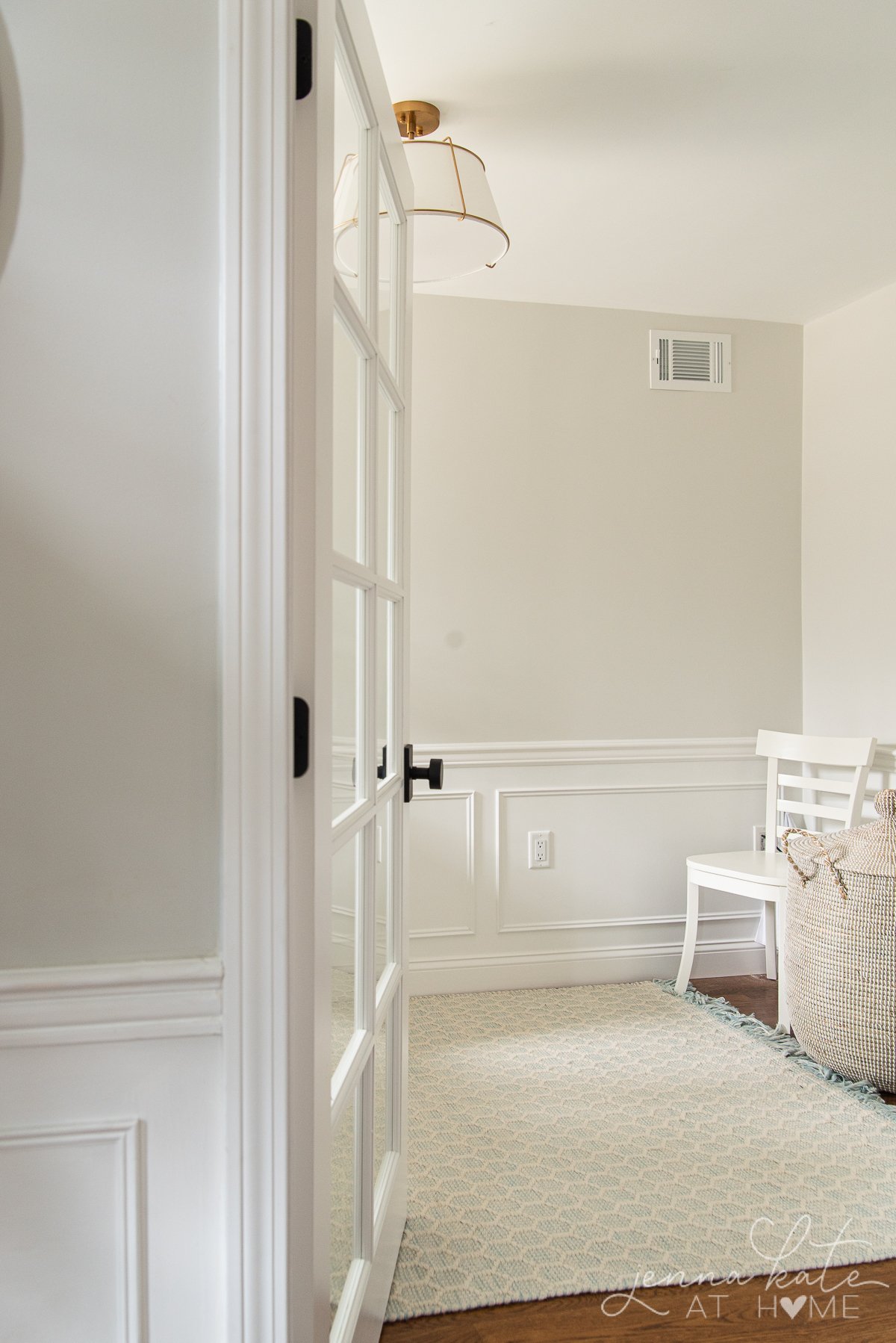
Benjamin Moore Revere Pewter HC-172: A legendary greige that can act like a chameleon, Revere Pewter shifts between a warm gray and a soft beige depending on the light. It has a slight green undertone that gives it sophistication and makes it incredibly adaptable to various fixed elements and furniture styles.
Sherwin-Williams Agreeable Gray SW 7029: As its name suggests, this color is incredibly agreeable! It’s a warm greige, leaning more towards gray but with enough beige to keep it from feeling cold. Agreeable Gray has a subtle violet undertone that softens it beautifully and makes it one of the most popular whole-house colors.
Benjamin Moore Pale Oak OC-20: This is a very light, warm greige or a ‘greige-off-white’. It’s soft and airy, often appearing as a sophisticated off-white with a touch of warmth in bright light, and more greige in lower light. It has subtle pink/violet undertones, giving it a delicate charm.
| Paint Color | Brand | LRV | Primary Undertone | Best Use/Vibe |
|---|---|---|---|---|
| Accessible Beige SW 7036 | Sherwin-Williams | 58 | Green/Neutral Beige | Balanced, earthy, versatile greige |
| Revere Pewter HC-172 | Benjamin Moore | 55.51 | Green/Taupe Greige | Classic, sophisticated, chameleonic |
| Agreeable Gray SW 7029 | Sherwin-Williams | 60 | Violet/Warm Gray | Comforting, widely popular, approachable |
| Pale Oak OC-20 | Benjamin Moore | 69.89 | Pink/Violet Greige | Airy, soft, elegant off-white/greige |
Cool Neutrals & Subtle Grays: Modern and Serene
For those who prefer a crisper, more modern aesthetic, cool neutrals and grays offer a sophisticated backdrop. They create a serene atmosphere and pair beautifully with minimalist or contemporary decor.
Sherwin-Williams Repose Gray SW 7015: This is a true gray with a slight, almost imperceptible warmth that keeps it from feeling cold. Repose Gray has subtle green/taupe undertones, making it very balanced and versatile. It’s a fantastic choice for modern or transitional homes.
Benjamin Moore Gray Owl OC-52: A very popular light gray with discernable green-blue undertones. Gray Owl is fresh, airy, and sophisticated, making rooms feel light and bright. It’s especially beautiful in rooms with good natural light where its nuanced undertones can shine.
| Paint Color | Brand | LRV | Primary Undertone | Best Use/Vibe |
|---|---|---|---|---|
| Repose Gray SW 7015 | Sherwin-Williams | 58 | Green/Taupe Gray | Balanced, versatile gray, subtle warmth |
| Gray Owl OC-52 | Benjamin Moore | 65.77 | Green/Blue Gray | Fresh, airy, sophisticated, modern |
Beyond Neutrals: Strategic Accent Colors for Cohesion
While a neutral foundation is crucial for whole-house harmony, that doesn’t mean your home has to be devoid of color! Introducing strategic accent colors in specific rooms can enhance personality without disrupting flow. Think about using a slightly more saturated version of your main color’s undertone, or a complementary hue in a bedroom, bathroom, or a specific feature wall.
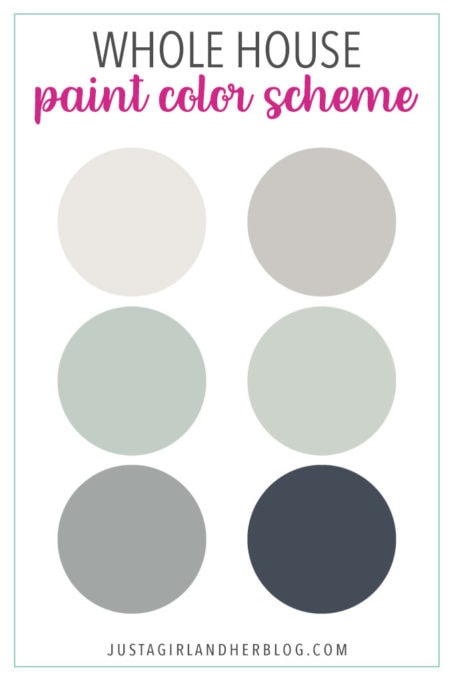
For example, if your main color is a warm greige like Accessible Beige, a muted sage green or a soft blue in a bedroom could feel incredibly harmonious. The key is to select colors that share similar depth and undertone qualities as your main neutral, creating a subtle shift rather than an abrupt jolt.
How to Choose Your Perfect Whole House Paint Color
Now that you’re armed with knowledge and some top color recommendations, let’s walk through the exact steps to pick the perfect shade for *your home.
Step 1: Assess Your Fixed Elements (Flooring, Countertops, Trim)
This is where most people go wrong. Before you even look at paint chips, identify the dominant undertones in your existing, unchangeable elements. Do your hardwood floors have a reddish hue? Are your kitchen cabinets a warm cream or a cool gray? Does your fireplace stone lean yellow or pink?
- Lay your favorite potential paint swatches next to your flooring, countertops, and any large furniture pieces that will remain.
- Observe how the undertones interact. You want them to complement, not compete.
Step 2: Consider Your Home’s Architectural Style & Furnishings
While many neutrals are versatile, some lean better with certain styles:
- Modern/Minimalist: Crisp whites (Chantilly Lace), cool grays (Gray Owl), or very light, clean greiges often work best.
- Traditional/Transitional: Warmer off-whites (White Dove, Alabaster) and classic greiges (Revere Pewter, Accessible Beige) are excellent choices.
- Farmhouse/Rustic: Soft, creamy whites (Alabaster) and warm, earthy greiges (Accessible Beige) create a cozy, authentic feel.
Also, consider your existing furniture and decor. A cohesive whole-house color should act as a beautiful backdrop, allowing your furnishings to shine.
Step 3: Understand Your Natural Light Exposure
As discussed earlier, light is everything. Take a mental inventory of your home’s natural light:
- Are most of your main living areas north-facing (cooler light) or south-facing (warmer, brighter light)?
- Do you have large windows or smaller ones?
- How do your artificial lights (especially in the evening) affect the color?
This understanding will help you lean towards colors that will perform best in your specific conditions.
Step 4: The Crucial Step – Sampling & Testing (The Right Way)
DO NOT skip this. Paint small areas (at least 2×2 feet) on several walls in different rooms. For best results, buy large peel-and-stick samples (like those from Samplize) or actual paint samples and apply them to poster board. This allows you to move them around.
- Observe Throughout the Day: Watch how the color changes in morning, afternoon, and evening light.
- Observe in Different Rooms: A color might look perfect in your bright living room but fall flat in a darker hallway.
- Compare Against Fixed Elements: Continually hold your samples up to your trim, flooring, and furniture.
- Don’t Judge on Tiny Chips: A tiny chip never tells the whole story.
Step 5: Don’t Forget Your Trim & Ceiling Colors
The trim and ceiling are integral parts of your whole-house scheme. Often, people choose a slightly brighter or purer white for trim than their wall color to provide a crisp contrast. For ceilings, a flat white or a very diluted version of your wall color (often 50% lighter) can maintain harmony. Consider:
- Matching your trim to your wall color for a modern, seamless look (use a different sheen).
- Choosing a classic bright white for trim like Benjamin Moore Chantilly Lace or Sherwin-Williams Pure White.
- Painting ceilings the same as the walls for a cozy, enveloping feel, or a standard ceiling white for a lifted effect.
Common Mistakes to Avoid When Painting Your Whole House
Even with all the right information, it’s easy to stumble. Avoid these common pitfalls for a smoother, more successful whole-house paint project:
- Not Testing Colors Adequately: This is the biggest mistake. A tiny swatch is not enough. You need large samples in your actual home, in different lighting conditions.
- Ignoring Undertones: Clashing undertones between paint and fixed elements (flooring, cabinets, furniture) will always create visual discord.
- Relying Solely on Online Photos: Screen calibration, photography lighting, and your home’s unique light mean online images are never a perfect representation. Use them for inspiration, but always sample in person.
- Forgetting About Paint Finish/Sheen: The finish drastically impacts how a color looks and performs.
- Flat/Matte: Hides imperfections, rich color, but less durable and harder to clean. Best for low-traffic areas like ceilings.
- Eggshell/Satin: Most popular for walls. Durable, washable, soft sheen. Eggshell is often preferred for whole-house walls.
- Semi-Gloss/High-Gloss: Very durable, highly reflective, easy to clean. Best for trim, doors, and cabinetry.
- Not Budgeting for Quality Paint: Good quality paint offers better coverage (requiring fewer coats), truer color, and greater durability. It’s an investment that pays off.
- Choosing a Color in Isolation: Your whole-house color should complement everything else in your home – your style, your furniture, your light. Don’t fall in love with a color just because it’s popular; ensure it’s right for your* home.
Choosing a whole-house paint color is a journey, not a sprint. By understanding the fundamentals, exploring expert-recommended shades, and diligently testing your choices, you’ll create a home that flows beautifully, feels inviting, and perfectly reflects your style. Embrace the process, trust your instincts (backed by knowledge!), and get ready to love your cohesive new look!
Frequently Asked Questions
Is it okay to paint my entire house one color?
Yes, absolutely! Painting your entire house one cohesive color is a popular design choice that creates a seamless flow, makes spaces feel larger, and simplifies decision-making. However, if you prefer more variety, a cohesive palette of 2-3 harmonizing colors is also an excellent option.
What is LRV and why is it important for whole-house paint colors?
LRV stands for Light Reflectance Value. It measures how much light a color reflects (0-100). For a whole-house color, an LRV typically between 60-80 is ideal, as it ensures the color is versatile enough to brighten darker rooms and feel balanced in brighter ones, without being too stark or too dark.
How do I deal with undertones when choosing a whole-house paint color?
Undertones (subtle hints of yellow, blue, green, etc.) are critical. You must consider the undertones of your home’s fixed elements like flooring, countertops, and cabinetry. Choose a paint color with undertones that harmonize with these existing elements to avoid clashes and ensure a cohesive look.
Should my trim be the same color as my walls?
This is a style preference. Many people choose a crisp white (like Benjamin Moore Chantilly Lace or Sherwin-Williams Pure White) for trim to create contrast. Alternatively, painting trim the same color as your walls, but in a higher sheen (like semi-gloss), creates a very modern and seamless look.
How many paint samples should I get and how should I test them?
Get at least 2-3 large samples (e.g., peel-and-stick or painted on poster board) of your top choices. Apply them to different walls in several rooms. Observe them throughout the day in various lighting conditions (morning, afternoon, evening, natural, artificial) and compare them against your fixed elements. Never judge a color from a tiny paint chip.
What’s the difference between a warm neutral and a cool neutral?
Warm neutrals (like creamy whites, beiges, and greiges with yellow/red undertones) create a cozy, inviting atmosphere. Cool neutrals (like true grays, and greiges with blue/green undertones) offer a crisper, more modern, and serene feel. The best choice depends on your home’s light, fixed elements, and desired aesthetic.
Is it better to use Benjamin Moore or Sherwin-Williams paints?
Both Benjamin Moore and Sherwin-Williams are highly regarded premium paint brands favored by professionals. They offer excellent quality, durability, and a vast array of colors. The choice often comes down to personal preference, specific color matching needs, or which brand’s local store is more convenient for you.