How to Pick a Paint Color For a Room: The Definitive Guide to Flawless Hues
Staring at a wall of tiny paint chips, each promising to be “the one,” can feel like trying to solve a Rubik’s Cube blindfolded. You’re overwhelmed, maybe a little anxious, and desperately want to avoid that gut-wrenching feeling of “I picked the wrong color.” Trust me, I’ve been there, and so has almost everyone else trying to transform their space.
Picking the perfect paint color for a room isn’t about luck; it’s about following a clear, step-by-step process that demystifies color theory and empowers your decisions. This isn’t just about finding a pretty shade; it’s about crafting an atmosphere, enhancing your home’s natural light, and creating a backdrop that truly reflects you. Ready to ditch the paint chip panic? Let’s dive in.
Phase 1: Setting the Stage – Understanding Your Vision
Before you even glance at a color swatch, you need to become an interior design detective. Your goal here is to gather clues about what your room needs and how you want it to feel.
Beyond a Pretty Shade: What Mood Do You Want to Create?
Color is a powerful psychological tool. It dictates the vibe of a room more than almost anything else. So, ask yourself: How do you want to feel when you step into this space?
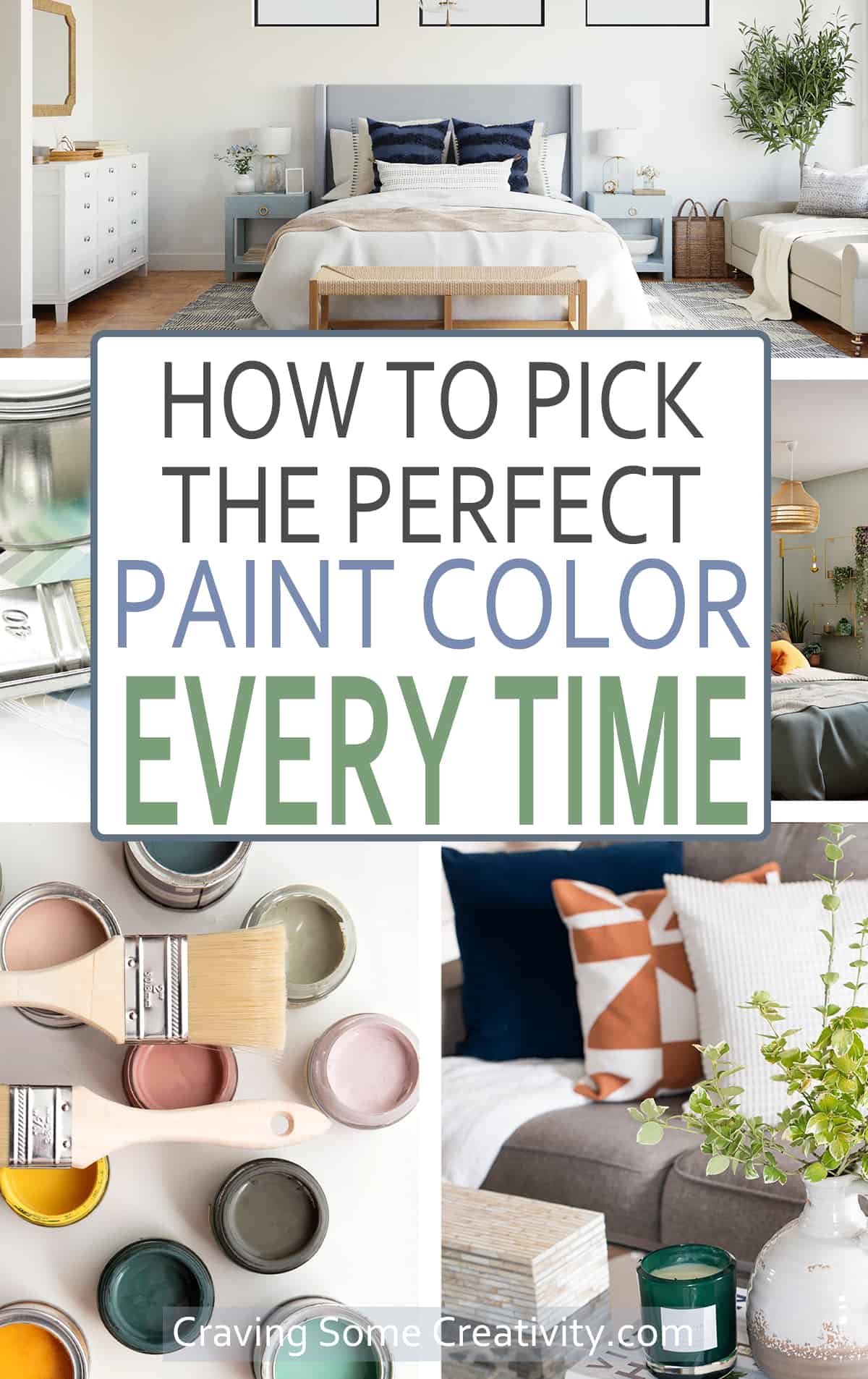
- Calm & Serene: Think soft blues, muted greens, soothing lavenders, and gentle neutrals like cream or pale gray. These are perfect for bedrooms, bathrooms, or quiet reading nooks.
- Energizing & Bold: Reds, oranges, vibrant yellows, or deep jewel tones can ignite creativity and conversation. Consider these for dining rooms, playrooms, or accent walls.
- Sophisticated & Elegant: Deep grays, charcoal, rich navy, emerald green, or even certain moody purples evoke a sense of luxury and depth. Great for formal living areas, studies, or master suites.
- Cozy & Inviting: Warm neutrals like taupe, beige, warm whites, or earthy tones such as terracotta or olive green make a room feel like a comforting hug. Ideal for living rooms, family rooms, or dining areas.
Starting Point: The Elements Already in Your Room
Your room isn’t a blank canvas. It comes with existing “fixed elements” that are trickier (or more expensive) to change than paint. These elements are your guiding stars.
- Existing Furniture & Decor: Take stock of your largest pieces – sofas, beds, rugs. What colors, patterns, and textures do they feature? Your paint color should harmonize with these. A good rule of thumb is the 60-30-10 rule: 60% dominant color (often walls), 30% secondary color (furniture), and 10% accent color (accessories).
- Flooring & Architectural Details: Is your flooring a warm hardwood, a cool-toned tile, or a plush neutral carpet? Do you have exposed brick, crown molding, or a fireplace? These permanent features have inherent colors and undertones that your paint needs to complement.
- Art & Textiles: Do you have a favorite piece of art, a vibrant throw pillow, or patterned curtains you absolutely love? These can be fantastic sources of inspiration, providing a palette you can pull from for your wall color.
The Unsung Hero: Understanding Your Room’s Light
Light is a magician, transforming colors right before your eyes. What looks perfect in the store can look drastically different on your wall at home. This isn’t paint’s fault; it’s light playing tricks.
- Natural Light Direction:
- North-facing rooms: Tend to have cooler, blue-gray light. Warm colors (yellow, red, orange undertones) can help counteract this coolness and make the room feel cozier.
- South-facing rooms: Bathed in bright, warm light all day. Almost any color works here, but cool colors (blue, green, purple undertones) can feel crisp and refreshing, while warm colors will be amplified.
- East-facing rooms: Get warm, bright light in the morning, which fades to cooler light in the afternoon. Colors will appear truer in the morning; consider a color that works well with morning light if it’s a breakfast nook.
- West-facing rooms: Receive warm, intense light in the afternoon and evening. This can make cool colors pop and warm colors feel even more vibrant.
- Artificial Lighting: Pay attention to your light bulbs. “Warm white” bulbs (2700K-3000K) enhance warm tones, while “cool white” or “daylight” bulbs (4000K-5000K+) will bring out cooler tones. Dimmers are also your friend, allowing you to adjust the mood.
Phase 2: Decoding Color – Theory & Application
Now that you’ve assessed your room, it’s time to get a little technical. But don’t worry, we’re simplifying color theory so you can wield it like a pro.
The Color Wheel: Your Best Friend (Simplified)
You don’t need to be an art student to understand the basics of the color wheel. It’s simply a tool to show how colors relate to each other.

- Warm Colors: Reds, oranges, yellows. These are energizing, advance visually, and make a room feel cozier and smaller.
- Cool Colors: Blues, greens, purples. These are calming, recede visually, and make a room feel larger and more serene.
- Analogous Schemes: Colors next to each other on the wheel (e.g., blue, blue-green, green). Harmonious and easy on the eyes.
- Complementary Schemes: Colors opposite each other on the wheel (e.g., blue and orange). High contrast, vibrant, and can be striking when used thoughtfully, often with one dominant and one as an accent.
- Monochromatic Schemes: Different shades, tints, and tones of a single color. Creates a sophisticated, cohesive, and tranquil look.
The Tricky Truth: Undertones Are Everything
This is where many paint choices go wrong. Undertones are the subtle colors beneath the surface of a seemingly neutral shade. A “gray” isn’t just gray; it might have a blue, green, or even purple undertone. A “white” can lean warm (yellow/peach undertone) or cool (blue/gray undertone).
Why they matter: If your paint’s undertone clashes with your fixed elements (flooring, cabinetry, existing furniture), the room will feel “off.” That “perfect greige” could look unexpectedly purple next to your beige sofa if it has a cool undertone.
How to spot them:
- Place the paint chip against a pure white piece of paper. This helps isolate the undertone.
- Compare several similar shades next to each other. The subtle differences will become more apparent.
- Look for the “true” color on the paint strip. Often, the darkest shade on a paint strip reveals the underlying hue more clearly.
The Power of Neutrals: More Than Just Beige
Neutrals – whites, grays, beiges, greiges (gray + beige) – are timeless for a reason. They provide a versatile backdrop, but choosing the right one is crucial.

- Warm Neutrals: Creams, ivories, sandy beiges, taupes. These have yellow, red, or orange undertones. They create a cozy, inviting atmosphere and pair beautifully with warm woods and natural fibers.
- Cool Neutrals: Grays, blues-grays, some greiges. These have blue, green, or purple undertones. They create a crisp, modern, and serene feeling, often complementing cool-toned metals and minimalist aesthetics.
Beyond Color: Choosing the Right Paint Finish (Sheen)
The finish, or sheen, of your paint impacts not just the look but also the durability and practicality of your walls. Don’t overlook this crucial step!
| Finish Name | Appearance | Durability/Cleanability | Best Uses |
|---|---|---|---|
| Flat/Matte | No sheen, absorbs light, velvety look. Hides imperfections well. | Least durable, difficult to clean without marring. | Ceilings, low-traffic areas like formal dining rooms or master bedrooms. |
| Eggshell | Slight, soft sheen, resembles an eggshell. More reflective than flat. | Good durability, somewhat washable. | Most common choice for walls in living rooms, bedrooms, and hallways. |
| Satin | Smooth, slightly glossy appearance, more reflective than eggshell. | Very durable, highly washable and scrubbable. | High-traffic areas, kitchens, bathrooms, kids’ rooms. Can be used for trim. |
| Semi-Gloss | Noticeable shine, very reflective. | Extremely durable, excellent for cleaning. Highlights imperfections. | Trim, doors, cabinetry, high-humidity bathrooms. |
| High-Gloss | Mirror-like, highly reflective finish. | Maximum durability and cleanability. Very unforgiving on wall imperfections. | Furniture, accent pieces, doors, or specialized architectural features. Less common for entire walls. |
Phase 3: The Practical Application – From Sample to Wall
You’ve done your homework. Now it’s time to put your insights to the test. This phase is critical to avoiding costly mistakes.
Don’t Guess, Test: The Indispensable Sampling Process
This is non-negotiable. Skipping samples is like buying a car without a test drive. You need to see how the color truly behaves in your space.
- Large Swatches vs. Tiny Chips: Paint chips are a starting point, but they are notorious for misleading. Invest in large peel-and-stick samples or, even better, buy small “tester” cans (typically a quart or pint).
- Paint Directly on the Wall vs. Poster Board:
- On the wall: Paint at least two large (2×2 foot) squares on different walls in the room, especially those that receive varying amounts of light. This is the most accurate way to see the color.
- On poster board: If you’re hesitant to paint directly on your wall, paint your large swatches on white poster board. Leave a white border around the color to prevent existing wall color from interfering. Move these boards around the room, placing them near your furniture and existing decor.
- Observe Colors Throughout the Day: Light changes. Observe your samples in natural morning light, midday sun, evening dusk, and with your artificial lights on. A color that sings at noon might look muddy at night, or vice-versa. Give it 24-48 hours.
The Big Decision: Narrowing Down Your Choices
You might have a few contenders now. How do you make the final cut?

- Elimination Strategy: Go back to your desired mood and existing elements. Does one color simply not align? Is one too cool or too warm? Ruthlessly eliminate the ones that don’t quite fit. Sometimes, you need to eliminate by “what it isn’t” rather than “what it is.”
- Trusting Your Gut (Within a Framework): Once you’ve done all the logical steps, step back. Which color genuinely makes you feel good? Which one feels like “home”? Your emotional response matters, but it’s best informed by the practical groundwork you’ve laid.
- Don’t Ask Too Many Opinions: While friends and family mean well, too many cooks spoil the broth. Their homes, light, and preferences are different. Gather feedback carefully, but let your well-researched decision be the final one.
Common Pitfalls to Avoid (And How To Fix Them)
Even with the best intentions, it’s easy to stumble. Here are the common traps and how to navigate around them:
- Ignoring Undertones: This is the biggest culprit behind “my gray looks purple!” or “my white looks sickly yellow!”
Fix: Always do the white paper test. Compare your chosen color against your existing fabrics, flooring, and even other paint colors. If it clashes, move on. - Testing in Poor Light or Only One Time: A single glance isn’t enough.
Fix: Observe samples over at least 24 hours in all lighting conditions – natural and artificial. - Picking Color First, Then Decor: While exciting, it limits your options.
Fix: Start with your inspiration pieces (rugs, art, furniture) that are harder to change. Use their colors as your foundation. - Falling for Trends Blindly: “Color of the Year” can be fun, but if it doesn’t suit your home or your style, you’ll regret it.
Fix: Understand the trend, but filter it through your personal preferences and the existing elements of your home. A timeless choice is often better than a fleeting one. - Painting Too Small a Sample: A tiny swatch won’t show the true depth and interaction of a color with your room’s light.
Fix: Always paint large swatches (at least 2×2 feet) or use large peel-and-stick samples.
Pro Tips from the Experts
A few extra nuggets of wisdom to ensure your paint project is a smashing success:
- Consider the ‘Flow’ Between Rooms: If you have open-concept living, think about how colors transition from one space to another. A cohesive palette often works best, even if it’s different shades of the same family or complementary neutrals.
- Don’t Forget the Ceiling: A white ceiling isn’t your only option. Consider painting it a lighter tint of your wall color for a sophisticated, enveloping feel, or even a bold contrasting color in smaller spaces for drama.
- Embrace the 60-30-10 Rule: Use it as a guideline, not a rigid law. It helps balance your dominant wall color with secondary furniture colors and smaller accent pieces.
- When in Doubt, Go Slightly Lighter: Colors often appear darker and more intense on a large wall surface than they do on a small chip. If you’re torn between two similar shades, the lighter one might be the safer bet.
- Texture Matters: Paint isn’t just color; it’s also texture. A rough plaster wall will absorb light differently than a smooth drywall, making the same color appear different.
Conclusion: Your Room, Your Perfect Palette
Choosing a paint color doesn’t have to be a source of stress. By approaching it systematically – understanding your room’s mood, light, and existing elements, decoding color theory (especially those sneaky undertones!), and rigorously testing samples – you empower yourself to make a confident decision. Remember, it’s your home, your sanctuary. Trust the process, trust your instincts (once informed!), and soon you’ll be enjoying a room that not only looks stunning but truly feels like you.
Frequently Asked Questions
How many paint colors should be in a room?
Generally, for a cohesive and balanced look, stick to 1-3 main colors within a single room. This often includes a dominant wall color, a secondary color for furniture or a feature wall, and a smaller accent color for accessories. For open-concept spaces, choose colors that flow harmoniously, perhaps different shades of the same family or complementary neutrals.

Should I pick paint color before or after furniture?
It’s almost always better to pick your paint color *after* you’ve selected your main furniture pieces, rugs, and any significant artwork. These items are typically more expensive and harder to change than paint. By choosing paint last, you ensure it complements and enhances your existing decor, rather than trying to match hard-to-find decor to a pre-selected paint color.
How does natural light affect paint color?
Natural light profoundly impacts how a paint color appears. North-facing rooms have cooler light, making colors appear more muted. South-facing rooms have warm, bright light that enhances all colors. East-facing rooms get warm morning light, while west-facing rooms get intense warm light in the afternoon. Always test paint samples in your room over 24 hours to see how the color shifts with changing light conditions.
What are paint undertones and why do they matter?
Undertones are the subtle, underlying colors present in a seemingly neutral shade (e.g., a gray with a blue undertone, or a white with a yellow undertone). They matter immensely because if the paint’s undertone clashes with the undertones of your fixed elements (flooring, cabinetry, other decor), the room will feel visually discordant or ‘off.’ Spot them by comparing the color against a pure white background or looking at the darkest shade on a paint strip.
Is it better to paint swatches on the wall or on poster board?
Both methods have merits, but painting directly on at least two different walls (especially those with varying light) is often the most accurate way to test a color. If painting directly is not an option, paint large swatches on white poster board, leaving a white border. This allows you to move the samples around the room and observe them against different elements without interference from the existing wall color.
What’s the difference between warm and cool paint colors?
Warm paint colors (reds, oranges, yellows) tend to evoke energy, warmth, and coziness, making a room feel more intimate. Cool paint colors (blues, greens, purples) generally create a sense of calm, serenity, and spaciousness. Understanding this distinction helps you choose a palette that aligns with the desired mood and feel of your room.
How can I make a small room feel bigger with paint?
To make a small room feel larger, opt for lighter, cooler paint colors. Light colors reflect more light, making walls appear to recede. Cool colors (like blues and greens) also have a receding effect. Using a monochromatic scheme (different shades of the same color) or painting the ceiling a lighter shade of the wall color can also create an expansive, open feel.