How to Paint a Room (Including the Ceiling) Like a Pro: Your Ultimate DIY Guide
Ever walked into a freshly painted room and felt that surge of satisfaction? That’s the power of paint – a transformative tool that can entirely refresh your space without a hefty renovation budget. But if you’re tackling a room, especially one that includes the ceiling, it can feel like a massive undertaking. Where do you even begin? Ceiling first? Walls? What about the trim?
Relax. You don’t need to be a seasoned pro to achieve professional-looking results. What you need is a clear plan, the right tools, and a bit of guidance. This isn’t just a list of steps; it’s your definitive guide to understanding how to paint a room, including the ceiling, like an absolute expert. Get ready to transform your space with confidence and skill.
Why Painting the Ceiling First is Non-Negotiable (And Other Pro Secrets)
Let’s cut right to the chase, because this is the single most common question, and the answer is crucial:
The Golden Rule: Always paint the ceiling first.
Why? Simple physics and efficiency. When you paint a ceiling, drips and spatters are inevitable, no matter how careful you are. If you’ve already painted your walls, those drips become a headache, forcing you into touch-ups and potentially compromising your wall finish. By tackling the ceiling first, any stray drops will land on unpainted walls, which you’re about to cover anyway. It’s a cleaner, more efficient, and less frustrating approach.

Understanding the Painting Order: Ceiling > Walls > Trim/Doors/Windows
This sequential approach ensures a smooth, clean finish for every surface:
- Ceiling: The top priority. Get this done first.
- Walls: Once the ceiling is dry, you can focus on the walls without worrying about ceiling paint mishaps.
- Trim, Doors, & Windows: These are your final, meticulous details. By saving them for last, you can achieve crisp lines against your freshly painted walls and ceiling.
Pre-Paint Patrol: Essential Preparation for Flawless Results
Think of painting as 90% preparation, 10% actual painting. Skimping on prep means sacrificing quality. Don’t do it!
Clear Out the Room: Operation De-Clutter
Move all furniture out of the room if possible. If not, consolidate it to the center and cover it thoroughly with plastic sheeting. Remove all wall decor, light fixtures, switch plates, and outlet covers. Take down curtains and blinds. You want a completely clear workspace.
Protect Everything: Your Shield Against Splatters
- Drop Cloths: Invest in canvas drop cloths. They absorb paint, won’t slip, and are reusable. Plastic sheeting is okay for covering furniture but can be slippery on floors and allows paint to pool. Lay them down carefully, overlapping slightly.
- Painter’s Tape: This is your secret weapon for crisp lines. For ceilings, you might not tape the wall if you have a steady hand, as you’ll be painting over any minor ceiling paint marks on the walls. However, you’ll definitely want to tape around baseboards, window frames, and door frames when you get to the wall painting stage. Look for high-quality tape that promises clean removal without residue or paint bleed (FrogTape is a popular choice for a reason).
Clean Surfaces: The Canvas Matters
Dust, dirt, grease, and grime are your enemies. Paint won’t adhere properly to dirty surfaces. Use a mild detergent solution (or a TSP substitute for tougher grime) and a damp sponge to wipe down walls and ceilings. Rinse with clean water and let everything dry completely before proceeding.
Repair Imperfections: Spackle, Sand, Caulk
Don’t just paint over cracks and holes – fix them! Use spackle for nail holes and small dents. For larger holes, use patching compound. Sand any patched areas smooth once dry. Use painter’s caulk to fill gaps between trim and walls, or around window frames. This creates a seamless, professional finish.
:max_bytes(150000):strip_icc()/painted-ceilings-4165829-hero-8e0053e08cb442438466ac168c169c2c.jpg "22 Painted Ceiling Ideas to Elevate the Whole Room")
Primer Time: The Foundation of a Great Finish
Is primer always necessary? Not always, but it’s often a smart move, especially if:
- You’re painting over a dark color with a lighter one.
- You’re dealing with new drywall or unpainted surfaces.
- There are stains (water, smoke, grease) that need to be blocked.
- You want to ensure optimal adhesion and a uniform finish.
There are different types of primers: water-based, oil-based, and shellac-based. Choose one compatible with your topcoat paint and suited to your specific needs.
Gear Up: Your Essential Painting Toolkit
Having the right tools makes all the difference in ease and quality. Don’t skimp here!
Paint Brushes: Your Detail Instruments
You’ll need a couple of good quality brushes for “cutting in” (painting edges and corners).
| Brush Type | Best Use | Why it’s Great |
|---|---|---|
| 2-2.5 inch Angled Sash Brush | Cutting in (edges, corners, trim) | Tapered bristles allow for precise lines and control. Essential for ceilings and wall edges. |
| 1.5-2 inch Straight Cut Brush | Smaller areas, window muntins, detail work | Good for general painting, but less precise for critical edges than angled. |
Paint Rollers: For Broad Coverage
Rollers are your workhorses for large, flat surfaces like ceilings and walls.
:strip_icc()/160356249_506603264066606_8162470665199427677_n-6cd8ab496bb346f1b124cd66a84e9b24.jpg "How to Choose a Ceiling Paint Color")
| Nap Length | Surface Type | Finish Result |
|---|---|---|
| 1/4" – 3/8" (Short) | Smooth surfaces (new drywall, plaster, smooth ceilings/walls) | Very smooth finish, minimal texture. |
| 1/2" – 3/4" (Medium) | Lightly textured surfaces (common drywall) | Good coverage with a slight orange peel texture. Most common for walls. |
| 1" – 1 1/4" (Long) | Heavily textured surfaces (stucco, popcorn ceilings) | High coverage, but will leave a more pronounced texture. |
You’ll also need a roller frame (a sturdy one that feels good in your hand) and an extension pole for reaching ceilings and high walls without straining your back or neck.
Paint Trays & Grids: Dip and Roll Smart
A plastic paint tray with a grid is essential. Don’t overload your roller; use the grid to evenly distribute paint and remove excess.
Miscellaneous Must-Haves: Don’t Forget the Small Stuff
- Ladder or Step Stool: For comfortable and safe access to high areas.
- Stir Sticks & Can Opener: Obvious, but often forgotten.
- Rags/Wipes: For immediate clean-up of drips and spills.
- Painter’s Putty Knife: For scraping or applying spackle.
- Screwdriver: For removing switch plates and outlet covers.
- Safety Glasses & Gloves: Protect your eyes and hands, especially for ceiling work.
- 5-Gallon Bucket & Paint Grid: For “boxing” your paint (mixing multiple cans together for color consistency) and using with your roller and extension pole.
Choosing Your Colors & Finishes: Beyond Just “White”
This is where your vision comes to life! Don’t just pick a color; consider the sheen, which plays a huge role in durability and appearance.
Ceiling Paint: The Flat Finish Rule
For ceilings, flat (or matte) paint is almost always the best choice. Why? Flat paint hides imperfections incredibly well. Ceilings often aren’t perfectly smooth, and a flat finish diffuses light, making minor bumps and roller marks less noticeable. Most ceiling paints are specifically formulated for this purpose, often in a bright white to maximize light reflection.
Wall Paint: Sheen Options & Where to Use Them
| Sheen | Durability | Best For | Notes |
|---|---|---|---|
| Flat/Matte | Least durable, least washable | Low-traffic areas, ceilings, formal dining rooms | Hides imperfections best, rich color appearance. |
| Eggshell/Satin | Good durability, somewhat washable | Living rooms, bedrooms, dining rooms, hallways | Most popular for walls. Offers a soft glow and decent cleanability. Satin is slightly glossier than eggshell. |
| Semi-Gloss | Very durable, highly washable | Kitchens, bathrooms, trim, doors, cabinets | Reflects light, accentuates architectural details. Requires a very smooth surface as it highlights imperfections. |
| High-Gloss | Most durable, extremely washable | Trim, doors, cabinets, furniture, specialty projects | Mirror-like finish, very striking. Best for surfaces that need to withstand heavy wear and tear. |
Paint Types: Latex (Water-Based) vs. Oil-Based
- Latex (Water-Based) Paint: This is what most DIYers use today. It’s easy to clean up with water, dries quickly, has low VOCs (volatile organic compounds), and is flexible, resisting cracking.
- Oil-Based Paint: More durable and offers a harder finish, making it traditionally popular for trim, doors, and high-traffic areas. However, it dries slowly, requires mineral spirits for cleanup, and has higher VOCs. While still used, water-based alternatives have significantly improved in durability.
Estimating Paint Quantity: The Simple Math
A good rule of thumb: one gallon of paint covers approximately 350-400 square feet with one coat. To calculate your needs:
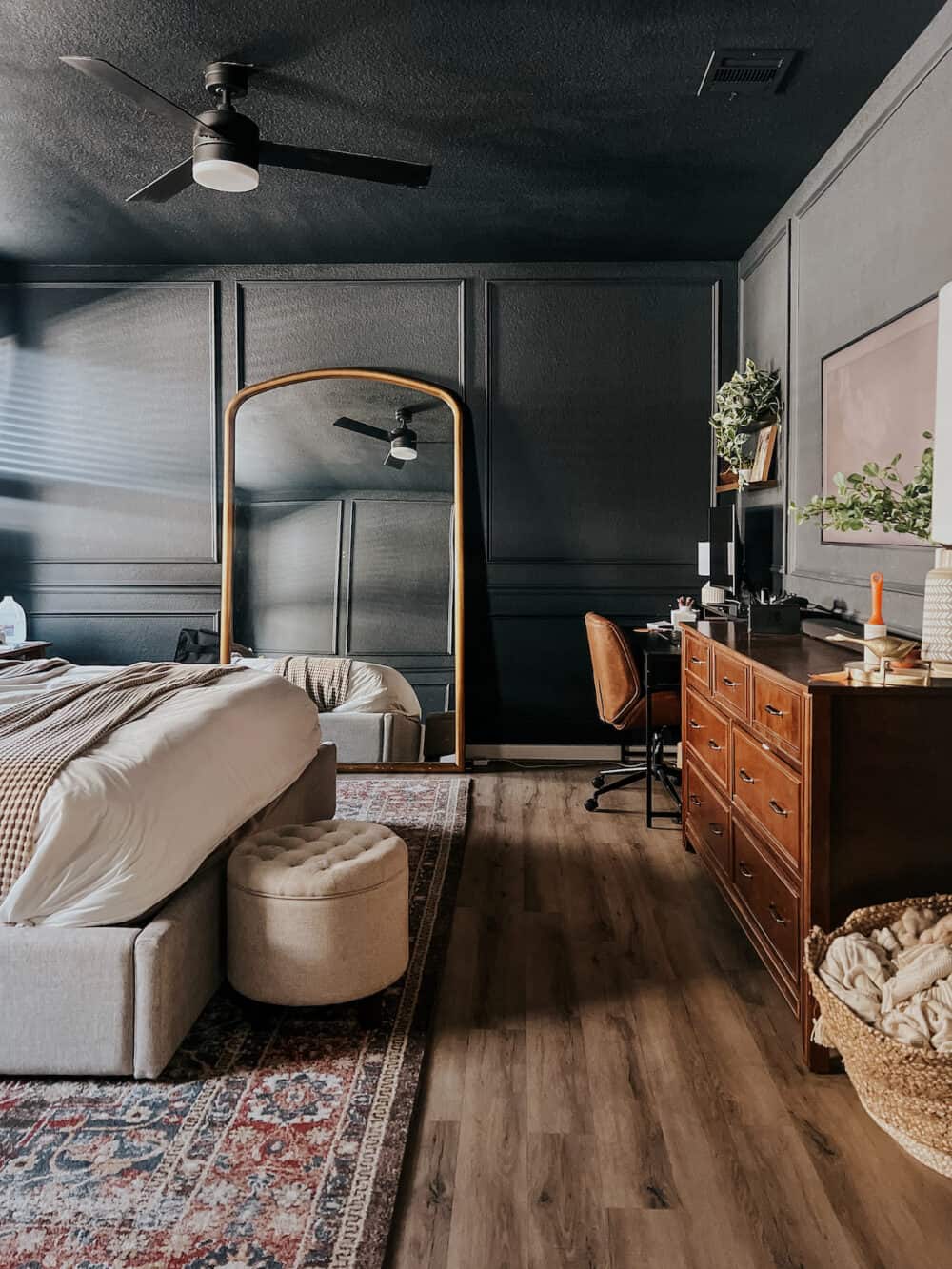
- Ceiling: Multiply the length of the room by its width.
- Walls: Add the length of all walls, multiply by the ceiling height. Subtract square footage for large windows and doors if you want to be precise, but it’s often safer to round up.
- Add them up and divide by 350-400 to get gallons needed per coat. Always plan for two coats of paint (and one coat of primer if applicable).
The Painting Process: Step-by-Step Perfection
With all your prep done and tools ready, it’s time for the fun part!
Step 1: The Ceiling – Conquer the Top
Start with a well-stirred can of ceiling paint.
- Cut In the Edges: Using your angled sash brush, carefully paint a strip (about 2-3 inches wide) around the perimeter of the ceiling where it meets the walls. Use a steady hand and a comfortable grip. Dip only the bottom third of the bristles into the paint, tap off excess, and apply with smooth, even strokes. Don’t worry too much about getting a tiny bit on the wall; remember, you’re painting the walls later.
- Roll the Ceiling: Load your roller evenly. Starting in a corner, use a “W” or “M” pattern, working in small sections (about 4×4 feet). Don’t press too hard. Overlap each pass slightly to ensure even coverage and avoid roller marks. Work quickly but deliberately to maintain a wet edge, which prevents visible lap marks.
- Second Coat: Allow the first coat to dry completely according to manufacturer instructions (usually 2-4 hours) before applying a second coat. Often, two coats are necessary for full, even coverage.
Step 2: The Walls – Color Your World
Once your ceiling is completely dry (give it a good 24 hours if you can, especially if you want to tape off the ceiling line for extra crispness), move to the walls.
- Cut In Walls: Using your angled brush, cut in along the top edge of the wall (where it meets the ceiling), around windows, doors, and where the wall meets the trim/baseboards. Take your time for clean, straight lines.
- Roll the Walls: Similar to the ceiling, use your roller and extension pole. Work in 3-4 foot sections, using the “W” or “M” pattern. Roll from floor to ceiling, overlapping slightly, to ensure consistent coverage. Maintain a wet edge to avoid lap marks.
- Second Coat: Allow the first coat to dry as per instructions before applying a second coat.
Step 3: The Trim, Doors & Windows – The Finishing Touches
This is where precision pays off. Ensure your walls are completely dry before starting this step. If you taped off the baseboards or window frames, remove the tape *before* the paint is fully cured (usually within an hour or two of applying the last coat) for the cleanest line. If the paint is fully dry, you risk peeling.
- Paint Doors and Windows: Work systematically. Start with the panels (if any), then the horizontal rails, then the vertical stiles, and finally the door frame itself. For windows, tackle the muntins (if applicable), then the frame.
- Paint Baseboards and Crown Molding: Use your angled sash brush. Load your brush with a small amount of paint and apply with long, smooth, even strokes. If you used painter’s tape to mask off the walls above the baseboards, ensure it’s pressed down firmly before painting.
- Two Coats: Trim often benefits from two coats of semi-gloss or high-gloss paint for maximum durability and sheen.
Troubleshooting & Pro Tips
- Avoiding Lap Marks: The key is to maintain a “wet edge.” Work quickly and in manageable sections, ensuring your roller always overlaps the previously painted (still wet) section.
- Dealing with Drips and Splatters: Wipe them up immediately with a damp cloth if the paint is wet. If it’s dry, a gentle scrape with a utility knife (on a non-painted surface like a window pane) or careful sanding and touch-up on a wall might be needed.
- Achieving a Smooth Finish: Use high-quality paint, a roller cover with the correct nap length for your surface, and proper application technique (not too much pressure, even coats).
- When to Remove Tape: The golden window is when the paint is still slightly wet (tacky, not fully cured). Pull the tape at a 45-degree angle slowly. If you wait until the paint is fully dry, it can bond to the tape and peel off with it.
- Proper Ventilation: Always ensure good airflow by opening windows and using fans. This helps with drying time and dissipates paint fumes.
- Don’t Skimp on Paint Quality: Cheaper paint often means more coats, poor coverage, and less durability. A good quality paint from a reputable brand can save you time and money in the long run.
Clean Up & Storage: Preserve Your Tools (and Sanity)
You’re almost done! Proper cleanup extends the life of your tools and keeps your home tidy.
Cleaning Brushes and Rollers:
- Water-Based Paint: Immediately rinse brushes and roller covers thoroughly under warm running water until the water runs clear. Use a wire brush or roller cleaning tool to remove paint from deep within the bristles/nap. Squeeze out excess water, reshape brushes, and hang them to dry.
- Oil-Based Paint: Requires mineral spirits or paint thinner. Pour some into a container, swish brushes and rollers, then rinse. Repeat until clean. Properly dispose of the used thinner.
Storing Leftover Paint:
You’ll likely have some leftover paint for future touch-ups. Label each can clearly with the color name, room it was used in, and date. Seal the lid tightly. For metal cans, place a piece of plastic wrap over the opening before securing the lid, then lightly tap the lid with a rubber mallet. Store in a cool, dry place away from extreme temperatures.
Disposing of Materials:
Check with your local waste management for guidelines on disposing of paint, paint thinner, and other hazardous materials. Empty, dried paint cans can often be recycled, but liquid paint usually requires special disposal.
How Long Does It Really Take? (And What About the Cost?)
Both are highly variable, but here’s a rough idea:
Time Estimates:
- Prep Work (Emptying, Cleaning, Taping, Patching): A small-to-medium room could take 4-8 hours. A larger room or one with many imperfections could take a full day or more.
- Painting (Ceiling, Walls, Trim – Two Coats Each): For a typical 10×12 foot room, expect 1-2 full days of actual painting time, including drying between coats. Larger rooms will, of course, take longer. Experience plays a huge role here.
- Total Project Time: Budget 2-4 days for a full room, including ceiling and trim, for a DIYer.
Cost Breakdown: DIY vs. Hiring a Pro
Painting a room yourself is significantly cheaper than hiring a professional, as labor is the biggest cost.
- Paint: Expect to spend $30-$70 per gallon for good quality latex paint. Specialty paints can be more. You’ll likely need 2-4 gallons for an average room’s walls and ceiling.
- Tools & Supplies: Brushes, rollers, trays, drop cloths, tape, spackle, caulk, etc. Budget $100-$200 for a good starter kit that will last for multiple projects.
- Total DIY Cost: Roughly $200-$500 per room, depending on paint choice and how many tools you already own.
- Hiring a Pro: Expect to pay anywhere from $500 to $1,500+ for an average room, with variations based on location, room size, and ceiling height.
The Big Reveal: Admire Your Handiwork!
There’s nothing quite like stepping back and admiring a freshly painted room, knowing you did it yourself. The transformation is real, and the satisfaction is immense. By following these steps and taking your time with preparation and application, you’ll achieve a professional-looking finish that will make you proud every time you walk into your newly refreshed space. Happy painting!