How to Paint a Bedroom Quickly (Without Cutting Corners): Your Blueprint for a Fast, Flawless Finish
Let’s be real. You want a fresh, inspiring bedroom, and you want it yesterday. The thought of a painting project stretching into a weekend (or worse, weeks!) can be enough to make anyone put it off. But what if I told you that transforming your bedroom with a fresh coat of paint doesn’t have to be a drawn-out ordeal? What if you could achieve a beautiful, professional-looking finish with surprising speed?
Forget those generic, slow-motion guides. This isn’t about rushing and making a mess; it’s about a strategic approach, smart shortcuts, and knowing the pro tips that shave hours off the clock without sacrificing quality. I’m here to give you the blueprint for painting your bedroom quickly, efficiently, and effectively.
Is “Painting a Bedroom in 30 Minutes” Realistic? Setting Expectations
You might see viral videos or headlines promising a bedroom transformation in 30 minutes. Let’s pump the brakes on that dream for a second. While incredibly skilled (and fast!) professional painters *might be able to do a basic coat in a very small, empty room in that time, for the average DIYer, it’s simply not realistic.
What is realistic? Painting a typical bedroom – including prep, two coats, and cleanup – in a single day, or even a solid half-day if you’re efficient. The key isn’t superhuman speed; it’s smart planning, quality tools, and streamlined techniques. We’re aiming for efficient, not frantic.
Here’s a realistic breakdown for a standard 10×12 ft bedroom:
- Small Bedroom (e.g., 8×10 ft): 4-6 hours (including prep and two coats).
- Medium Bedroom (e.g., 10×12 ft – 12×14 ft): 6-9 hours.
- Large Bedroom (e.g., 14×16 ft+): 9-12 hours (or longer if ceilings are high or complex).
These times assume you’re working continuously, with proper drying time between coats. The good news? We’re going to help you hit the lower end of those estimates.
The Speed Advantage: Why Smart Preparation is Your Best Friend
I know, I know. Prep work is the least glamorous part of painting. But trust me, skipping or rushing this phase is the biggest trap for a slow, frustrating, and messy job. Investing time here saves you double the time (and headaches!) later.
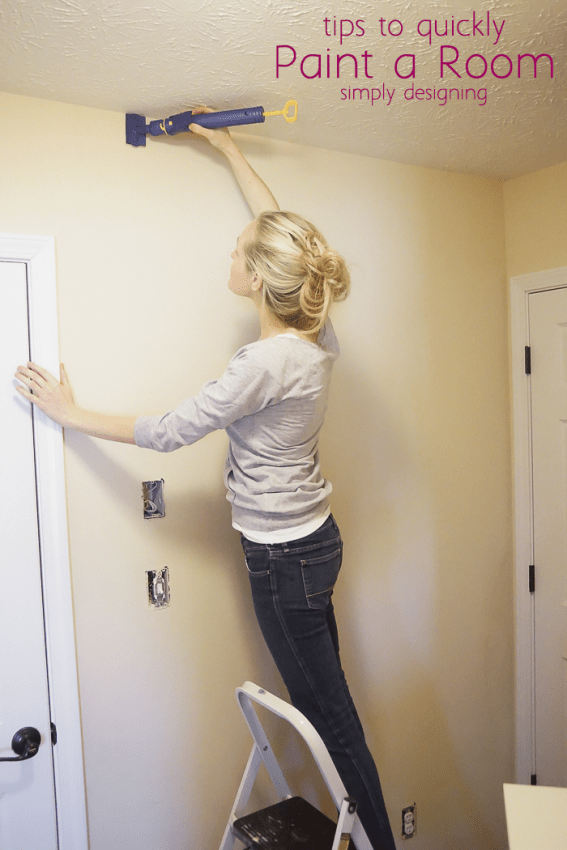
Clear the Decks: The “Less Obstacles, More Flow” Rule
Imagine trying to run a marathon through an obstacle course. That’s what painting an uncleared room feels like. Your goal here is to create an empty canvas, making it easy to move, roll, and cut without interruption.
- Remove Everything: Pictures, shelves, curtains, blinds, switch plates, outlet covers. Put them in a labeled box and get them out of the room.
- Centralize Furniture: Push all furniture to the center of the room. If it’s too big or heavy to move easily, cluster it tightly and cover it completely.
- Remove Light Fixtures: If you’re painting the ceiling, consider removing ceiling light fixtures (after turning off the power at the breaker!). Otherwise, tape them off thoroughly.
Pro Tip: Use a vacuum to quickly clean baseboards and corners before covering. Dust and cobwebs love to stick to wet paint.
Protect Your Assets: Tarping Up for Swift Cleanup
This is where you prevent hours of scrubbing drips and splatters. Don’t skimp here.
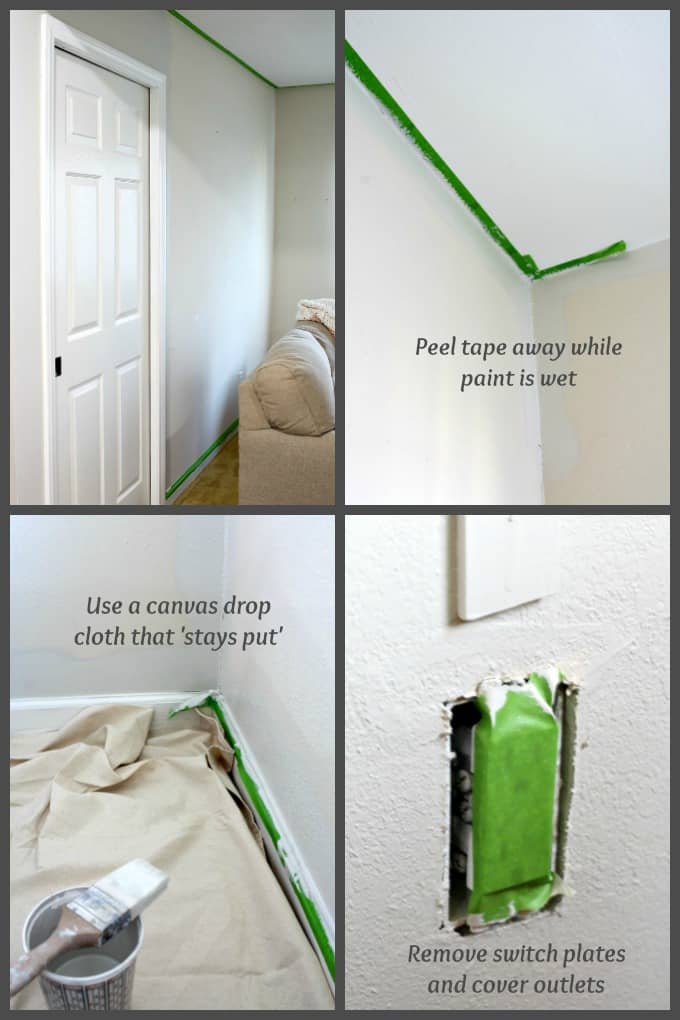
- Floor Protection: Use canvas drop cloths over plastic whenever possible. Canvas absorbs drips, preventing tracking wet paint around. Plastic can get slippery and doesn’t absorb paint, leading to puddles. Lay them close to the walls, overlapping slightly.
- Furniture Covers: Lightweight plastic sheeting or old bedsheets work well for covering furniture. Ensure they reach the floor to prevent overspray.
- Baseboard Taping (Optional but Recommended for Speed): While some pros skip tape entirely (more on that later), for a quick, clean job for most DIYers, a good quality painter’s tape on baseboards and window frames saves time on touch-ups. Press it down firmly to activate the adhesive.
The Wall Recon: Patching & Sanding for a Smooth Start
Minor imperfections can become glaring under a new coat of paint. A quick once-over now prevents major regrets later.
- Patch Small Holes: Use a spackling compound to fill nail holes and small dings. A quick-dry spackle is a huge time saver here.
- Light Sanding: Once dry, a quick pass with 120-grit sandpaper (or a sanding sponge) over patched areas smooths them out. Also, give any glossy areas or heavily textured walls a light sand to help paint adhere.
- Wipe Down: Use a damp cloth to wipe down walls, removing any sanding dust, dirt, or grease. Let them dry completely before priming/painting. This is critical for good adhesion.
| Task | Time Impact | Speed Tip | Common Pitfall (and how to avoid it) |
|---|---|---|---|
| Clearing the Room | Saves 1-2 hours of constant repositioning. | Designate a “staging area” outside the room. Use clear boxes for items. | Leaving small items: you’ll trip, knock things over, or get paint on them. |
| Protecting Surfaces | Saves 2-4 hours of cleanup/touch-ups. | Overlap drop cloths by at least 6 inches. Secure tape firmly with a putty knife. | Gaps in drop cloths or poorly applied tape lead to spills. Don’t cheap out on tape! |
| Patching & Sanding | Saves 1-3 hours of re-painting/regret. | Use quick-dry spackle. Sand lightly with a sanding sponge. Use a damp cloth for dust. | Not waiting for spackle to dry, or not wiping dust. Leads to uneven, peeling paint. |
Gear Up for Speed: Choosing the Right Tools & Materials
Think of it like this: a race car needs performance tires. You need performance painting gear. The right tools don’t just make the job easier; they make it faster and produce a better result.
Quality Paint: The Ultimate Time Saver
This is probably the single most impactful choice you can make for speed. Do not cheap out on paint.
- Better Coverage: High-quality paints have more pigment and better binders, meaning they cover in fewer coats. Often, you can get away with just two coats, where a cheap paint might need three or even four. That’s a huge time saving right there!
- Durability: They’re also more durable, meaning your quick job lasts longer.
- Primer-in-One: Many premium paints now offer a “paint and primer in one” formula. If you’re painting over a similar color or a well-prepped, previously painted surface, these can eliminate a dedicated priming step, which is a massive time saver. However, if you’re making a drastic color change or painting over raw drywall/new repairs, a separate, dedicated primer is still best.
Pro Tip: Choose a paint with a quick-drying formula if available. Some brands market their paints specifically for faster recoat times.
Brushes & Rollers: Tools of the Trade for Velocity
Your hands-on tools are crucial for speed and a clean finish.
- Angle Sash Brush: For cutting in (painting edges). A good 2.5-inch to 3-inch angled sash brush is essential. Invest in a high-quality one; it will hold more paint, give you better control, and create sharper lines, saving you taping time.
- Roller Frame: A sturdy 9-inch roller frame is standard. Consider a lightweight, ergonomic model if you’ll be painting for hours.
- Roller Covers (Naps): This is key. For smooth or lightly textured walls, a 3/8-inch nap cover is ideal. It holds enough paint for good coverage but doesn’t leave excessive texture. For textured walls, you might need a 1/2-inch nap. Synthetic covers are best for water-based (latex) paints.
- Extension Pole: Absolutely non-negotiable for speed! An extendable pole (3-6 feet) that attaches to your roller frame allows you to paint ceilings and upper walls from the floor, dramatically speeding up the rolling process and reducing ladder time.
Trays, Buckets, & Other Essentials: Streamlining Your Workflow
Small items make a big difference in flow.
- Paint Tray vs. 5-Gallon Bucket: For a bedroom, a standard 1-gallon paint tray is fine. However, if you’re doing multiple rooms or have a very large bedroom, consider a 5-gallon bucket with a paint grid. It holds more paint, meaning fewer refills.
- Roller Grid Screens: If using a 5-gallon bucket, a roller grid screen hooked to the side allows you to load and de-load your roller efficiently, preventing over-saturation.
- Painter’s Tape: Low-tack blue painter’s tape is standard.
- Caulk Gun & Paintable Caulk: For filling small gaps around trim before painting, especially if you want a super clean look (optional for speed but great for finish).
- Rags & Wet Wipes: Keep them handy for immediate clean-ups of drips or mistakes.
| Item | Quantity | Speed Benefit | Pro Tip |
|---|---|---|---|
| High-Quality Paint | Calculated needed + 10% extra | Fewer coats needed for full coverage. Better finish. | Don’t buy cheap paint! Opt for “paint & primer in one” if appropriate. |
| 2.5″ – 3″ Angled Sash Brush | 1-2 (one for cutting, one for trim if desired) | Precise cutting in, reduces need for tape/touch-ups. | Clean well, good brushes last for years. Use a brush spinner for fast drying. |
| 9″ Roller Frame & 3/8″ Nap Cover | 1 frame, 2-3 covers (per room/day) | Efficient paint application over large areas. | Pre-dampen roller cover with water for latex paint; wring out excess. |
| Extension Pole (3-6 ft) | 1 | Eliminates ladder work for rolling, saves huge time & energy. | Ensure it securely attaches to your roller frame. |
| Paint Tray or 5-Gallon Bucket w/ Grid | 1 | Organized paint supply, easy roller loading. | Use tray liners for quick cleanup; a 5-gallon bucket is faster for big jobs. |
| Painter’s Tape (if using) | 1-2 rolls (1.5″ width) | Creates crisp lines without needing a super steady hand. | Apply before painting, remove when paint is tacky-dry to prevent tearing. |
| Canvas Drop Cloths | Enough to cover entire floor | Absorbs spills, prevents tracking, speeds cleanup. | Overlap edges; avoid plastic where you’ll be walking. |
| Rags/Wet Wipes | Plenty | Immediate cleanup of drips/mistakes, preventing dry-on errors. | Keep them nearby in a small bucket of water. |
The Painting Process: Masterful Techniques for Maximum Speed
With prep done and tools ready, it’s time for the fun part. These techniques are designed to maximize your painting efficiency.
To Tape or To Cut? The “Skip the Tape” Debate
This is where pros often save significant time. Taping takes time, and if not done perfectly, can still lead to bleed-through or pull off paint when removed. Learning to “cut in” freehand is a skill that comes with practice, but it’s the fastest method once mastered.
- Freehand Cutting: Load your angled brush with paint, tap off excess. Hold the brush with a firm grip, resting your elbow or wrist for stability. Start a few millimeters from the edge, then guide the bristles directly into the corner or along the trim, letting the paint flow smoothly to create a crisp line. You’ll move slowly at first, but speed comes with confidence.
- When to Tape: If you’re a beginner, have an unsteady hand, or are using a highly contrasting color, taping provides peace of mind. Apply tape firmly along the edge of trim or ceiling, pressing down with a putty knife or your fingernail to seal it. Remove tape when the paint is tacky-dry (usually within an hour or two), not fully cured, to prevent paint from peeling with the tape.
Decision Point for Speed: If you’ve never cut in before, you might be faster taping. If you’re willing to practice a bit (start in an inconspicuous closet!), cutting in is ultimately faster. For this project, assume you’re going for speed, so if you’re comfortable, aim to cut in. If not, use tape, but apply it quickly and precisely.
Start High, Finish Low: Ceiling First, Then Walls
Always paint the ceiling first. Why? Because gravity is not your friend. Any drips or splatters from the ceiling will fall onto unpainted walls, which you can then cover. If you paint the walls first, you’ll be doing tedious clean-up on your fresh wall paint.
- Ceiling Technique: Cut in around the perimeter of the ceiling. Then, using your roller with an extension pole, roll the ceiling in overlapping “W” or “M” patterns. Work in sections, maintaining a wet edge to avoid lap marks.
The “W” Method: Rolling for Even, Fast Coverage
This is the standard, most efficient way to roll paint on walls.
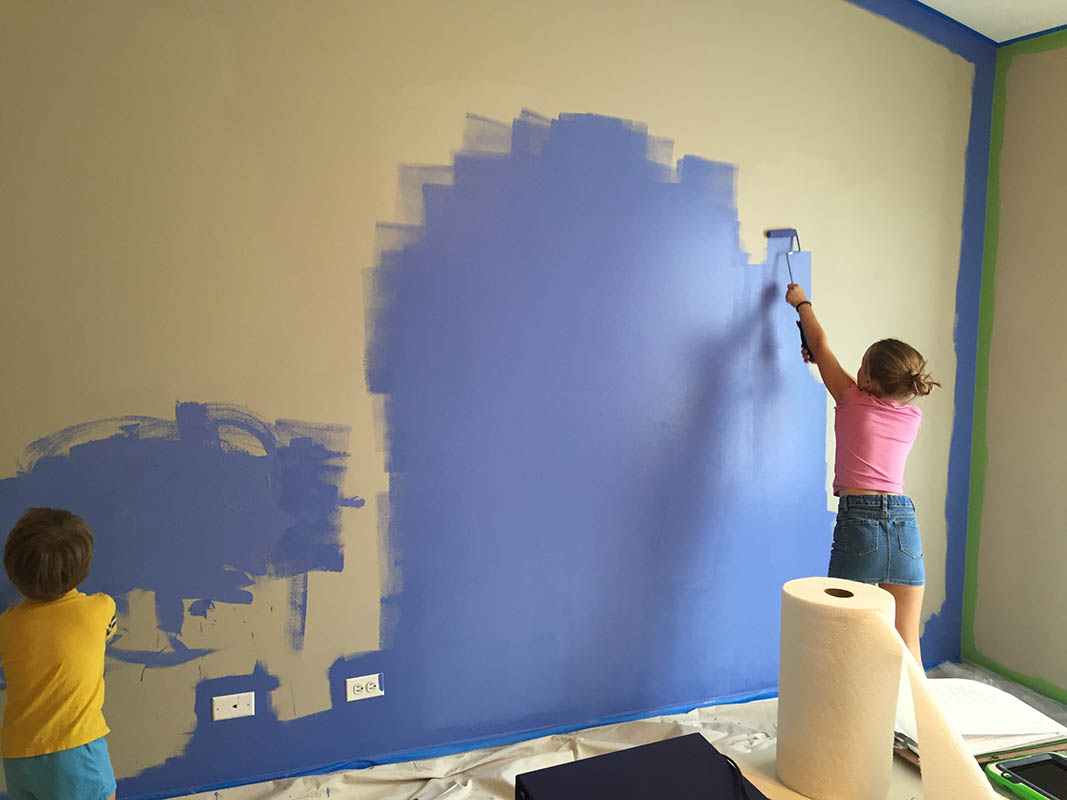
- Load Your Roller: Don’t overload, but make sure your roller cover is saturated. Roll it gently on the tray’s ramp or bucket grid to distribute paint evenly and remove excess.
- Cut In (Perimeter): Before rolling a wall, use your angled brush to cut in a 2-3 inch wide strip along the ceiling, corners, and trim. This allows the roller to get close to these edges without hitting them.
- The “W” Stroke: Starting in a corner, roll a 3×3 foot section in an overlapping “W” or “M” pattern. Don’t lift the roller off the wall. Fill in the “W” by rolling horizontally, ensuring even coverage.
- Maintain a Wet Edge: As you move to the next section, slightly overlap your previous section’s wet edge. This prevents unsightly lap marks and ensures a smooth, uniform finish. Work quickly but deliberately.
- Work Top to Bottom: Once you’ve established your “W” or “M,” make final vertical strokes from top to bottom to create a smooth, even texture.
Speed Tip: Work systematically around the room, completing one wall before moving to the next. Don’t jump around. This keeps your process organized and efficient.
Two Coats, One Vision: Minimizing Drying Time Between Coats
Most paints require two coats for full, even coverage, especially if you’re changing colors. The recoat time is crucial for speed.
- Check the Label: The paint can will specify the recoat time (e.g., “recoat in 2-4 hours”). Adhere to this. Painting too soon can pull up the first coat; painting too late can affect adhesion.
- Optimize Environment: Good ventilation (open windows, use fans) helps paint dry faster. Moderate temperatures (65-75°F or 18-24°C) and average humidity are ideal. Avoid painting in very humid conditions, as it significantly prolongs drying time.
- Keep Tools Wet: While waiting for the first coat to dry, don’t clean your brushes and rollers if you’re applying the second coat within a few hours. Wrap them tightly in plastic wrap (saran wrap) or place the roller cover in a plastic bag to keep them from drying out. You can also submerge brushes in water (for latex paints) or paint thinner (for oil-based) if the wait is longer.
Trim & Doors: The Final Touches for a Polished Look
Many people paint trim last. If you’re painting walls and trim different colors, doing trim after walls can be efficient, especially if you’re cutting in neatly. If the trim is the same color as the walls and you’re just refreshing, you can often roll right over it during the wall process for speed.
- Quick Trim Painting: Use your angled brush. Dip it in paint, tap off excess, and use long, steady strokes along the trim. For speed, don’t worry about getting paint on the floor (that’s what drop cloths are for!).
- Doors: If painting the door, remove it from its hinges and place it on sawhorses. This allows you to paint both sides and edges evenly and quickly without drips. If leaving it hung, use painter’s tape on hinges and doorknobs. Paint panels first, then horizontal stiles, then vertical stiles.
Beyond the Brush: Advanced Hacks for Serious Speed
Looking to shave even more time? These methods take a bit more investment or coordination but can really accelerate a project.
Embracing the Sprayer (If You Dare)
A paint sprayer is the absolute fastest way to apply paint, but it comes with a significant caveat: prep time for a sprayer is much, much longer.
- Pros for Speed: Paint application is incredibly fast and smooth. You can cover large areas in minutes.
- Cons for Speed: Masking everything you don’t want painted (windows, doors, trim, floors, furniture) is critical, as overspray is extensive. This masking can easily add several hours to your prep, outweighing the application speed for a single bedroom. Cleanup of the sprayer itself is also more involved than brushes and rollers.
- Recommendation: Only consider a sprayer if you’re painting multiple empty rooms, or if you’re incredibly meticulous with masking and want a factory-smooth finish. For a single occupied bedroom, it’s usually not a net time saver for the average DIYer.
The Double-Team Approach: Painting with a Partner
Two painters are definitely faster than one, especially if you coordinate well.
- Divide and Conquer: One person can focus on cutting in (edges, corners, ceiling line) while the other follows immediately with the roller, filling in the large areas. This maintains a wet edge and keeps momentum high.
- Staggered Tasks: One person can prep a second bedroom while the other finishes the first coat in the current room.
- Communication is Key: Make sure you’re not getting in each other’s way or leaving gaps.
Maintaining Momentum: Keeping Your Tools Ready
Don’t stop the flow! Between coats, or if you need a short break, keep your tools from drying out.

- Brushes: Wrap them tightly in plastic wrap or a plastic bag. For latex paints, you can also store them submerged in water (just the bristles) for a few hours.
- Rollers: Slip the roller cover off the frame and into a plastic grocery bag or a dedicated roller cover storage bag. Seal it tightly to keep air out. You can even place these in the fridge for longer breaks (overnight).
- Paint Cans/Trays: Cover paint trays tightly with plastic wrap or foil. Seal paint cans properly to prevent skinning over.
The Quick Cleanup: Don’t Let it Slow You Down
You’ve painted fast, now clean fast. Efficient cleanup is part of the “quick” process.
- Immediate Tool Cleaning: As soon as you’re done with the final coat, clean your brushes and rollers. For latex paint, warm water and a little soap are all you need. Use a brush comb to thoroughly rinse paint out of bristles. Squeeze rollers under running water until clean.
- Remove Tape Promptly: Remember, remove painter’s tape when the paint is tacky-dry, not fully cured. This is typically within 1-2 hours of the final coat. Pull at a 45-degree angle slowly and steadily.
- Gather Drop Cloths: Carefully fold drop cloths inward to trap any dried paint flakes, then remove them from the room.
- Reposition Furniture: Once paint is completely dry to the touch (check the can for full cure time before pushing furniture against* walls, but you can usually move it back into place carefully after several hours), you can start putting your room back together.
Your Speedy Bedroom Painting Timeline (Realistic Estimates)
Let’s put it all together. Here’s a sample timeline for painting a standard 10×12 ft bedroom, assuming good ventilation and quick-drying paint:
Morning (Day 1)
- 8:00 AM – 9:30 AM (1.5 hours): Prep Work
- Clear room, cover furniture, lay drop cloths.
- Patch minor holes, light sanding, wipe down walls.
- Tape (if you’re taping).
- 9:30 AM – 10:00 AM (0.5 hours): First Coat – Ceiling
- Cut in ceiling edges, roll ceiling.
- 10:00 AM – 11:30 AM (1.5 hours): First Coat – Walls
- Cut in wall edges, roll walls.
- 11:30 AM – 1:30 PM (2 hours): Drying Time
- Clean brushes for a break, cover rollers/tray.
- Grab lunch!
Afternoon (Day 1)
- 1:30 PM – 2:00 PM (0.5 hours): Second Coat – Ceiling
- Quick roll over ceiling.
- 2:00 PM – 3:30 PM (1.5 hours): Second Coat – Walls
- Cut in again (if needed), roll walls.
- 3:30 PM – 4:00 PM (0.5 hours): Final Touches & Cleanup Kick-off
- Paint trim (if separate color).
- Remove tape (while paint is tacky).
- Start cleaning brushes/rollers.
- 4:00 PM onwards: Final Drying & Room Reset
- Allow walls to dry.
- Finish tool cleaning.
- Carefully reposition light furniture, replace switch plates/pictures (after several hours to overnight).
Total Active Painting Time: Approximately 6-7 hours. Total Project Duration (start to finish on the same day): Approximately 8-9 hours, including drying breaks. This is a very achievable goal!
Final Thoughts: Fast Doesn’t Mean Flawed
Painting a bedroom quickly doesn’t mean you have to settle for sloppy results. By focusing on smart preparation, investing in quality materials, and using efficient techniques, you can drastically reduce the time and effort involved. You’re not just rushing; you’re working smarter.
So, stop putting it off! Grab your quality paint and a good extension pole, follow this blueprint, and enjoy your beautifully transformed bedroom, often in less time than you thought possible. Happy painting!
Frequently Asked Questions
What’s the absolute fastest way to paint a bedroom?
The absolute fastest way to *apply* paint is with a sprayer, but this requires significantly more setup and masking time to protect everything from overspray. For most DIYers aiming for speed without specialized equipment, the fastest method involves meticulous preparation, using high-quality paint that requires fewer coats, utilizing an extension pole for rolling, and mastering the ‘cutting in’ technique to minimize or eliminate taping.
Can I really paint a bedroom in a single day?
Yes, absolutely! A typical bedroom (10×12 ft) can often be prepped, painted with two coats, and have initial cleanup done within a single day (6-9 hours of active work, including drying time between coats). The key is efficient planning, using quick-drying paints, and maintaining a systematic workflow as outlined in this guide.
Is it okay to skip primer when painting quickly?
It depends. If you’re painting over a similar color on a previously painted, well-prepped surface, and using a high-quality ‘paint and primer in one’ formula, you can often skip a separate priming step. However, if you’re making a drastic color change, painting over raw drywall, or covering stains, a dedicated primer is still recommended for optimal coverage and adhesion, even if it adds a little time.
How do I avoid drips and roller marks when painting fast?
To avoid drips: don’t overload your brush or roller, tap off excess paint before applying, and keep a wet rag handy for immediate cleanups. To avoid roller marks: maintain a ‘wet edge’ by slightly overlapping each new roller stroke with the previous one, and finish each section with light, consistent vertical strokes. Work systematically in sections (e.g., 3×3 ft) and use an extension pole for even pressure.
What paint sheen dries fastest?
Generally, lower sheen paints (like flat or matte) tend to dry faster to the touch than higher sheen paints (satin, semi-gloss, gloss) because they contain less resin. However, the difference in recoat time for quality paints of varying sheens is often negligible. Focus more on the ‘quick-drying’ properties mentioned on the paint can itself rather than just the sheen.
Should I use a paint sprayer for speed, and what are the downsides?
A paint sprayer offers incredible speed for paint application itself, providing a smooth, even finish. However, the downside for a single bedroom is the extensive and time-consuming masking required to protect everything from overspray. Cleanup of the sprayer is also more involved than conventional tools. For a single occupied bedroom, a sprayer often isn’t a net time-saver for the average DIYer unless you’re experienced with one and meticulous with masking.
How can I clean my painting tools quickly?
For latex (water-based) paints, clean tools immediately after your final coat. Scrape excess paint off brushes and rollers, then rinse them thoroughly under warm running water. Use a brush comb to agitate bristles and remove all paint. Rollers can be squeezed under running water. A brush spinner can significantly speed up brush cleaning and drying. For short breaks between coats, wrap tools tightly in plastic wrap to prevent them from drying out.