Unlocking Serenity: The Definitive Guide to Calming Master Bedroom Paint Colors
Ever walked into your bedroom, hoping for instant peace, only to feel… well, just ‘there’? Your master bedroom should be your sanctuary, a place where the day’s stress melts away, and restful sleep comes naturally. But if the colors on your walls aren’t working with you, that feeling of calm can feel miles away.
The truth is, color is a powerful, silent language. It speaks to our subconscious, influencing our moods, energy levels, and even our sleep quality. Choosing the right paint color for your master bedroom isn’t just about aesthetics; it’s about crafting an environment that supports your well-being. And trust me, getting it right can transform your entire home experience.
As an interior design expert, I’ve seen firsthand the profound impact a well-chosen palette can have. Forget fleeting trends for a moment; we’re talking about timeless colors that genuinely soothe the soul and create a restorative haven. Ready to discover them?
Beyond Hues: Understanding Color Psychology for a Restful Retreat
Before we dive into specific shades, let’s understand the ‘why.’ What makes a color inherently ‘calming’? It’s all about color psychology – the study of how different hues affect human emotion and behavior. In your master bedroom, we want to tap into colors that promote relaxation, reduce anxiety, and encourage sleep.
The Science of Calm: How Colors Influence Your Mind
Generally, colors that are less saturated, softer, and cooler in tone tend to be more calming. Think of natural elements: the sky, the ocean, lush forests. These are often the visual cues our brains associate with peace and tranquility.
- Blues: Universally recognized for their calming properties, blues are associated with stability, peace, and serenity. Lighter, muted blues can lower heart rates and blood pressure.
- Greens: Reminiscent of nature, greens evoke feelings of balance, harmony, and renewal. They are restful to the eyes and mind.
- Neutrals (Grays, Beiges, Whites, Taupes): These colors provide a clean, uncluttered backdrop, allowing the mind to quiet down. Warm neutrals add coziness, while cool neutrals maintain a crisp, airy feel.
- Soft Pinks/Blush: While often overlooked, very pale, muted pinks can be surprisingly calming, associated with tenderness and warmth without being overly stimulating.
Conversely, highly saturated, warm colors like bright reds, oranges, or vivid yellows are often stimulating and energetic – great for a living room, not so much for a sleep sanctuary.
:max_bytes(150000):strip_icc()/tranquil-yet-sophisticated-bedroom-paint-colors-350800-hero-fad897b742b049669237b47231236dce.jpg "14 Best Bedroom Paint Colors for a Relaxing Space")
| Color Family | Psychological Impact (Calming) | Best For | Mood Evoked |
|---|---|---|---|
| Serene Blues | Reduces stress, promotes relaxation, lowers heart rate. | Creating a tranquil, spa-like atmosphere. | Peaceful, stable, serene. |
| Earthy Greens | Restorative, balancing, connected to nature, reduces eye strain. | Bringing the outdoors in, natural and fresh feel. | Harmonious, refreshing, secure. |
| Gentle Grays | Sophisticated, stable, allows other elements to shine. | Modern, minimalist, or classic elegant spaces. | Subtle, refined, grounding. |
| Warm Neutrals | Cozy, comforting, inviting, provides a soft backdrop. | Creating a warm, intimate, and comforting space. | Comforting, soft, welcoming. |
| Muted Pinks/Blush | Gentle, nurturing, subtle warmth, sophisticated. | Soft, romantic, yet understated elegance. | Sweet, comforting, tender. |
The Core Palette: Top Calming Paint Colors for Your Master Bedroom
Now for the fun part – specific color recommendations! Remember, paint colors look different in every space, so these are starting points. Always test them in your own home!
Serene Blues: Embracing Tranquility
Blues are a classic choice for bedrooms, and for good reason. They mimic the vastness of the sky and the depth of the ocean, inspiring peace.
- Benjamin Moore Palladian Blue (HC-144): This isn’t just blue; it’s a sophisticated mix of blue, green, and gray. It shifts beautifully with the light, creating an airy yet grounded feel. It’s light enough to feel refreshing but has enough depth to be truly calming. Perfect for a spa-like retreat.
- Sherwin-Williams Sea Salt (SW 6204): An incredibly popular shade, Sea Salt is a soft, muted green-blue-gray that feels utterly serene. It’s subtle, versatile, and evokes the gentle tranquility of a misty morning by the sea. It has a magical ability to feel both cool and slightly warm.
- Farrow & Ball Parma Gray (No.27): A true classic, this pale, cool blue-gray offers an understated elegance. It’s reminiscent of a clear, crisp sky, providing a clean and incredibly soothing backdrop for any style of decor.
Earthy Greens: Nature’s Embrace
Greens connect us to the natural world, fostering a sense of balance and renewal. They’re incredibly restful and versatile.
- Benjamin Moore Saybrook Sage (HC-114): This is a quintessential gray-green that brings a sophisticated earthiness to any room. It’s muted, deep, and wonderfully soothing without feeling dull. It pairs beautifully with warm woods and crisp whites.
- Sherwin-Williams Evergreen Fog (SW 9130): A softer, chameleon-like gray-green that was Sherwin-Williams’ 2022 Color of the Year. It’s organic, sophisticated, and incredibly tranquil, shifting from a muted green to a soft gray depending on the light.
- Farrow & Ball Mizzle (No.266): A complex, warm gray-green with hints of blue. It takes its name from a West Country word for a fine drizzle, perfectly capturing its soft, misty quality. It’s incredibly chic and creates a cozy, cocooning atmosphere.
Gentle Grays: Sophisticated Serenity
Grays have moved far beyond being ‘boring.’ The right gray can be the ultimate neutral, offering sophistication and a calming anchor for your space, especially those with subtle undertones.
- Sherwin-Williams Agreeable Gray (SW 7029): One of the most beloved grays for a reason. It’s a true greige – a perfect blend of gray and beige – meaning it leans warm without being yellow, providing a comforting, versatile neutral that works with almost any palette.
- Benjamin Moore Gray Owl (OC-52): This is a lighter, cooler gray with subtle hints of blue and green, giving it a fresh, airy quality. It’s crisp and clean without feeling sterile, providing a tranquil and sophisticated backdrop.
- Benjamin Moore Revere Pewter (HC-172): Another iconic greige, slightly deeper than Agreeable Gray. It’s incredibly versatile and provides a grounded, sophisticated neutral that feels both elegant and cozy.
Warm Neutrals: Cozy Comfort
For those who crave warmth but still desire calm, soft whites, creams, and pale taupes are ideal. They offer a clean slate while maintaining an inviting feel.
- Benjamin Moore Simply White (OC-117): This is a warm, crisp white that avoids feeling stark. It has a slight yellow undertone that keeps it from being cold, making it feel fresh, bright, and wonderfully serene. Perfect for a clean, Scandinavian-inspired look.
- Benjamin Moore Balboa Mist (OC-27): A beautiful, soft off-white/light gray with a very subtle violet undertone that gives it sophistication. It’s incredibly subtle, creating an ethereal and gentle atmosphere.
- Sherwin-Williams Accessible Beige (SW 7036): A go-to warm neutral that is beige without being too yellow or orange. It has a touch of gray, making it a very sophisticated and comforting backdrop. It pairs beautifully with white trim for a soft contrast.
Muted Pinks: Subtle Sophistication
Don’t dismiss pink! When chosen correctly, soft, muted pinks can be incredibly nurturing and calming, far from a childish aesthetic.
:strip_icc()/WhalesTail-3473099bd2224e18adc7553f9cd5b09d.jpg "25 Calming Bedroom Paint Colors for a Restful Retreat")
- Farrow & Ball Setting Plaster (No.231): This is a dusty, terracotta pink with a lovely chalky finish. It’s incredibly sophisticated and warm, evoking the feeling of sun-baked walls and ancient plaster. It creates an enveloping, cozy, and incredibly soothing atmosphere.
- Benjamin Moore Pink Damask (OC-72): A very pale, gentle pink with a hint of warmth. It’s subtle enough to act as a neutral but provides a soft, nurturing glow to the room.
The Undertone Unveiled: Why It’s Your Secret Weapon
You’ve heard me mention ‘undertones’ a few times, and for good reason: they are the single most important factor in how a color truly looks in your space. An undertone is the subtle hue beneath the main color that dictates whether it feels warm or cool.
The Game-Changer: Identifying Warm, Cool, and Neutral Undertones
Imagine two different gray paints. One looks crisp and almost blueish; the other feels soft and earthy. The difference? Their undertones.
- Warm Undertones: These colors will have hints of yellow, orange, or red. They feel cozy, inviting, and can make a room feel smaller and more intimate. Think of a ‘greige’ with a subtle beige-yellow warmth.
- Cool Undertones: These colors carry hints of blue, green, or violet. They feel fresh, airy, and can make a room feel larger and more open. Think of a gray with a definite blue tint.
- Neutral Undertones: True neutrals (like some very pure grays or whites) have no dominant undertone, making them highly versatile. However, many ‘neutrals’ actually lean warm or cool.
How to Spot Them: The easiest way is to hold your paint sample next to something purely white (like a piece of printer paper). The undertone will often reveal itself more clearly. Compare several shades within the same color family to see their subtle shifts. This practice will save you from choosing a ‘gray’ that unexpectedly turns purple on your walls!
Beyond the Wall: Harmonizing Your Calming Palette
Paint is just one element. To truly create a calming master bedroom, you need to think holistically. The walls set the stage, but everything else plays a supporting role.
Coordinating with Furniture and Fabrics
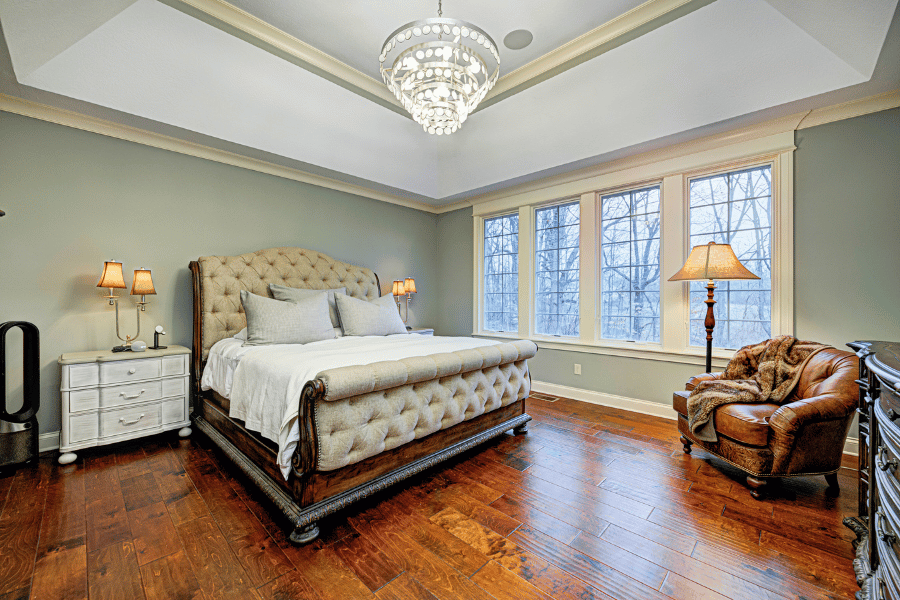
Your existing furniture, flooring, and textiles (like curtains and bedding) have their own colors and undertones. Your wall color needs to play nice with them. If your furniture has warm wood tones, a warm greige or a green with a yellow undertone might feel more harmonious than a cool blue-gray.
Consider the 60-30-10 rule in interior design:
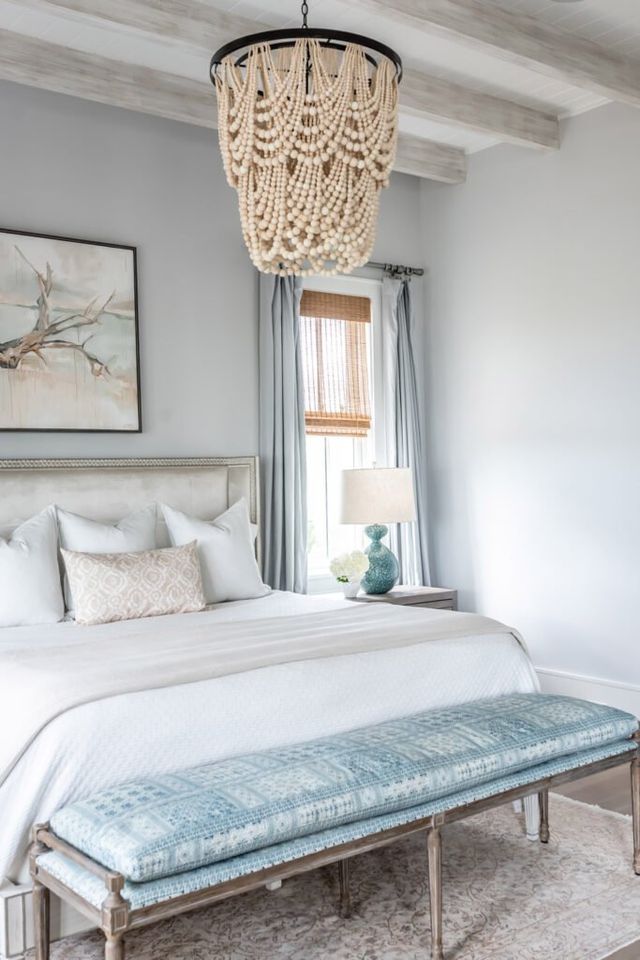
- 60% Dominant Color: This is often your wall color, or a large rug.
- 30% Secondary Color: This could be your upholstery, curtains, or a large piece of furniture.
- 10% Accent Color: Throws, pillows, artwork, decorative objects.
For a calming bedroom, keep all these percentages within a cohesive, muted palette. Don’t introduce too many competing colors; instead, rely on varying textures to add interest.
The Role of Lighting: Natural vs. Artificial
Lighting is a total game-changer for paint colors. What looks perfect in the paint store under fluorescent lights can look completely different in your bedroom.
- Natural Light:
- North-facing rooms: Receive cooler, bluish light. Warm colors can feel less yellow; cool colors can feel even colder.
- South-facing rooms: Bathed in warm, bright light throughout the day. Almost any color looks good here, but cool colors might appear warmer.
- East-facing rooms: Get warm, bright light in the morning, cooler light in the afternoon.
- West-facing rooms: Receive warm, intense light in the afternoon and evening.
- Artificial Lighting:
- Incandescent/Warm LED (2700K-3000K): Enhances warm tones, can make cool tones appear duller.
- Daylight LED (5000K-6000K): Mimics natural daylight, truer color representation but can feel sterile if overused.
- Soft White LED (3000K-3500K): A good balance, providing warmth without distorting colors too much.
Always view paint samples in your bedroom during different times of day – morning, noon, and evening – and with your typical artificial lighting on. This is non-negotiable for choosing the right calming color.
Practical Steps to Choosing Your Perfect Shade
You’ve got your ideas, now let’s get practical. This is where most people make mistakes, and it’s easily avoidable!
Test, Test, Test: The Indispensable Paint Sample
Please, for the love of a calm bedroom, do not skip this step. Buying a small sample pot and painting a swatch directly on your wall (or on a large foam board you can move around) is the single most important action you can take.
- Paint Large Swatches: Don’t just do a tiny square. Paint at least 2×2 foot squares of your top 2-3 choices. Apply two coats.
- Observe Throughout the Day: Watch how the colors change with the shifting natural light and when your artificial lights are on.
- Live with It: Leave the swatches up for a few days. How do you feel when you wake up to it? When you’re winding down?
- Compare Against Existing Elements: Hold up your bedding, a throw pillow, or a piece of art next to the swatches.
Selecting the Right Sheen for Bedroom Walls
The finish (sheen) of your paint also impacts how a color looks and performs. For a calming master bedroom, I almost always recommend lower sheens.
| Sheen Type | Reflectivity | Durability/Cleanability | Aesthetic for Bedrooms |
|---|---|---|---|
| Flat/Matte | Very low (absorbs light) | Least durable, hardest to clean (can mar easily) | Best for bedrooms. Soft, velvety, hides imperfections, creates a deep, rich color. Very calming. |
| Eggshell | Low (slight sheen, like an eggshell) | More durable than flat, moderately cleanable | Excellent alternative for bedrooms, especially high-traffic ones. Still soft but more practical. |
| Satin | Medium (noticeable sheen) | Durable, easy to clean | Generally too shiny for a calming bedroom. Can reflect too much light, creating distraction. Better for trim or high-moisture areas. |
| Semi-Gloss/Gloss | High (very reflective) | Very durable, very easy to clean | Definitely too reflective for a bedroom wall. Reserved for doors, trim, and cabinetry. |
For a truly calming effect, I recommend flat or eggshell finishes. They absorb light rather than reflecting it, creating a soft, enveloping feeling that enhances the chosen color’s depth and serenity.
Common Pitfalls to Avoid When Choosing Calming Colors
Even with the best intentions, it’s easy to stumble. Here are the traps to avoid:
Overlooking Undertones
I know I’ve stressed this, but it’s crucial. A gray with a strong blue undertone might feel too cold if you’re aiming for a warm, cozy retreat. A seemingly neutral beige might flash peach or yellow. Always be aware of the underlying color that influences the overall feel.
Choosing Too Dark or Too Bright
While deep, rich colors can be sophisticated, going too dark can make a smaller bedroom feel oppressive rather than cozy. Similarly, choosing a pastel that’s too vibrant (even if light) can be unexpectedly stimulating. Aim for muted, mid-tone shades for optimal calm.
Ignoring Natural Light
As discussed, light is everything. A gorgeous green that looks perfect on a sunny afternoon could turn murky and dull in a dimly lit, north-facing room. Always test colors in situ and observe them at various times of day.
Following Trends Blindly
While it’s great to be inspired, your bedroom is intensely personal. Don’t choose a color just because it’s ‘in.’ Choose it because it genuinely speaks to you and promotes the feeling of calm you desire. Trends come and go; your peace is permanent.

Conclusion
Your master bedroom is more than just a place to sleep; it’s a vital space for rest, rejuvenation, and personal sanctuary. The colors you choose have a profound impact on its ability to deliver that promise. By understanding color psychology, exploring proven calming palettes, paying attention to critical details like undertones and lighting, and diligently testing your choices, you can create a truly serene and restorative retreat.
Take your time, trust your instincts, and let the walls of your master bedroom become a canvas for ultimate calm. Sweet dreams await!
Frequently Asked Questions
What is the most calming color for a master bedroom?
Generally, soft, muted blues and greens are considered the most calming colors for a master bedroom due to their association with nature and serenity. Light grays and warm, soft whites or greiges also provide a very peaceful and tranquil backdrop.
How do undertones affect a paint color’s calming effect?
Undertones are crucial because they dictate whether a color feels warm or cool. A gray with a strong blue undertone will feel cooler and more crisp, while a gray with a beige or yellow undertone will feel warmer and cozier. Choosing an undertone that harmonizes with your lighting and existing decor is key to achieving a truly calming effect, preventing a color from feeling ‘off’ or jarring.
Should I use a matte or satin finish for a calming bedroom?
For a truly calming effect, a flat or matte finish is highly recommended for bedroom walls. These finishes absorb light, creating a soft, velvety look that enhances color depth and reduces glare, contributing to a tranquil atmosphere. Eggshell is a good alternative for slightly more durability without excessive sheen, while satin or higher sheens are generally too reflective for a serene bedroom.
How does natural light impact my choice of calming paint color?
Natural light significantly changes how a paint color appears. Rooms with cooler, northern light might make cool colors feel even colder, while southern light can warm them up. Always test paint samples directly on your wall and observe them at different times of day (morning, noon, evening) to see how the natural light affects the chosen hue before committing.
Can I use warm colors in a calming master bedroom?
Absolutely! While cool colors are often top choices, warm neutrals like soft beiges, pale taupes, and even very muted, dusty pinks can create an incredibly cozy and comforting, hence calming, master bedroom. The key is to choose low-saturation, gentle versions of these colors, avoiding anything too bright or overtly stimulating.
What’s the best way to test paint colors to ensure they are calming?
The best way is to paint large swatches (at least 2×2 feet) of your top 2-3 color choices directly onto your walls or on large foam boards you can move around. Observe these swatches over several days under different lighting conditions (natural morning light, afternoon sun, evening artificial light). Also, consider how you feel when you wake up or unwind with the color in sight.