How to Paint an Interior Door Like a Pro: The Ultimate Step-by-Step Guide
Your interior doors: they’re not just functional portals, they’re often overlooked canvases! Dingy, scuffed, or mismatched doors can drag down the whole vibe of a room. But imagine them transformed – crisp, clean, and perfectly complementing your decor. It’s not just a dream; it’s a perfectly achievable DIY project that can give your home an instant, affordable facelift. Ready to refresh your space without a full remodel? You’re in the right place. This guide is your no-nonsense blueprint to painting interior doors with a flawless, professional finish, even if you’ve never picked up a paintbrush before.
Why Bother Painting Your Interior Doors? More Than Just a Pretty Face
Painting your interior doors is one of those high-impact, low-cost projects that delivers serious bang for your buck. Here’s why it’s worth the effort:
- Instant Refresh: A fresh coat of paint can instantly brighten a dark hallway, make a room feel larger, or add a pop of much-needed color.
- Boost Aesthetic Appeal: Old, chipped, or discolored doors detract from even the most beautifully decorated rooms. New paint elevates the entire aesthetic.
- Personalize Your Space: Doors offer a unique opportunity to introduce accent colors, reflect your personal style, or create a cohesive look throughout your home.
- Protection & Durability: Paint isn’t just for looks; it protects the door from everyday wear and tear, moisture, and minor damage, extending its lifespan.
- Increase Property Value: Well-maintained and visually appealing interior elements, like freshly painted doors, contribute positively to your home’s overall perceived value.
Preparation is Everything: Your Blueprint for Success
I can’t stress this enough: the quality of your finish is 90% preparation. Skimp here, and you’ll regret it. Nail it, and you’ll love the results for years to come.
Assess Your Door: What Are You Working With?
Before you dive in, take a moment to understand your project. Different doors require slightly different approaches.
- New (Raw) Door: If it’s fresh out of the package, it will definitely need a good primer coat to seal the wood and provide a uniform surface for your paint.
- Previously Painted Door: Is the existing paint in good shape? If it’s peeling, chipped, or glossy, you’ll need to do more prep work like sanding and possibly scraping. If it’s smooth and dull, a light sanding is usually enough.
- Paneled vs. Flat Door: Paneled doors (with recessed or raised sections) require a specific painting order to avoid drips and ensure even coverage. Flat doors are simpler, but technique is still key.
Gather Your Arsenal: Essential Tools & Supplies
Having everything on hand before you start makes the process smoother and prevents frustrating interruptions.
- Paint: Primer (if needed), and your chosen finish coat.
- Brushes: A high-quality 2-inch angled sash brush is essential for cutting in, panels, and detailed work.
- Rollers: A 4-inch mini foam roller or a roller with a very short nap (1/4-inch to 3/8-inch) for smooth surfaces and even paint application.
- Paint Tray & Liners: Makes cleanup a breeze.
- Sanding Supplies: Medium-grit (120-150) sandpaper for rough surfaces, fine-grit (180-220) for general sanding, and very fine-grit (320-400) for sanding between coats. A sanding sponge is great for contoured areas.
- Cleaning Supplies: TSP (trisodium phosphate) cleaner or a good degreaser, clean rags, and a bucket of warm water.
- Painter’s Tape: High-quality tape for protecting hinges, trim, or floors.
- Drop Cloths/Plastic Sheeting: To protect your floors and surrounding areas.
- Screwdriver: For removing door hardware.
- Wood Filler/Putty Knife: For filling holes, dents, or imperfections.
- Dust Mask, Eye Protection, Gloves: Safety first! Especially during sanding and when using certain primers/paints.
- Sawhorses or Paint Pyramids: If you decide to remove the door, these will elevate it for easier painting.
To Remove or Not To Remove? That is the Question.
This is one of the most common dilemmas. Painting a door while it’s still hanging is faster, but removing it offers a superior finish. Here’s a breakdown to help you decide:
| Method | Pros | Cons | Best For |
|---|---|---|---|
| Door Removed |
|
|
Achieving the highest quality, professional finish, especially for multiple doors or if spraying. |
| Door In Place |
|
|
A quick refresh, less critical doors, or when you have limited time/space. |
I usually recommend removing the door if you want truly professional results. It’s a bit more work up front, but it saves headaches later.
The Great Hardware Debate: Take it Off or Tape It?
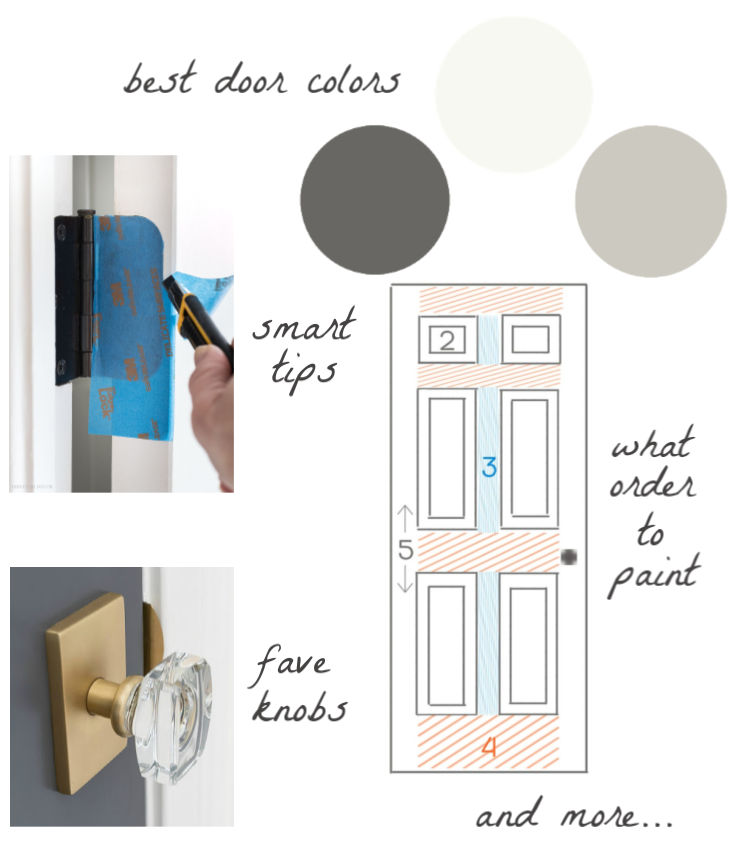
My advice? Always remove your door hardware. Knobs, hinges, strike plates, latches – take them all off. Taping around hardware, while seemingly faster, almost always leads to paint creeping underneath, ragged edges, or an obvious “painted-around” look. It’s a dead giveaway of a rushed job.
- Use a screwdriver to carefully remove hinges (keeping the pins organized), doorknobs, and any other hardware.
- Place all screws and hardware in a small plastic baggie or container, clearly labeled for each door. This prevents lost pieces and makes reinstallation a breeze.
- If you’re painting the door frame (jamb) as well, remove the strike plate from the jamb too.
Clean Slate: Prepping the Door Surface
This is where the magic (and elbow grease) happens. A clean, smooth surface is non-negotiable.
- Clean: Mix TSP (or an equivalent degreaser) with warm water according to package directions. Vigorously scrub both sides of the door to remove any grease, grime, fingerprints, or old polish. Rinse thoroughly with clean water and clean rags. Let it dry completely.
- Inspect & Fill: Look for any dents, dings, or nail holes. Use wood filler and a putty knife to fill them. Overfill slightly, then smooth. Let it dry according to manufacturer instructions.
- Sand:
- For previously painted doors: Lightly sand the entire door with 180-220 grit sandpaper or a sanding sponge. This creates a “tooth” for the new paint to adhere to. If there are drips, rough spots, or filled areas, sand these more thoroughly until smooth.
- For new, raw doors: Sand lightly with 120-150 grit to smooth any mill marks or rough patches. Then move to 180-220 grit for a finer finish.
- Wipe Down: Use a tack cloth or a damp (not wet) microfiber cloth to meticulously wipe away all sanding dust. This is crucial; any dust left behind will be painted into your finish.
Workspace Setup: Protect Your Kingdom
Whether the door is on or off its hinges, you need to protect your surroundings.
- Lay down drop cloths or plastic sheeting generously.
- Ensure good ventilation. Open windows, use a fan (pointing *out a window, not at* your wet paint).
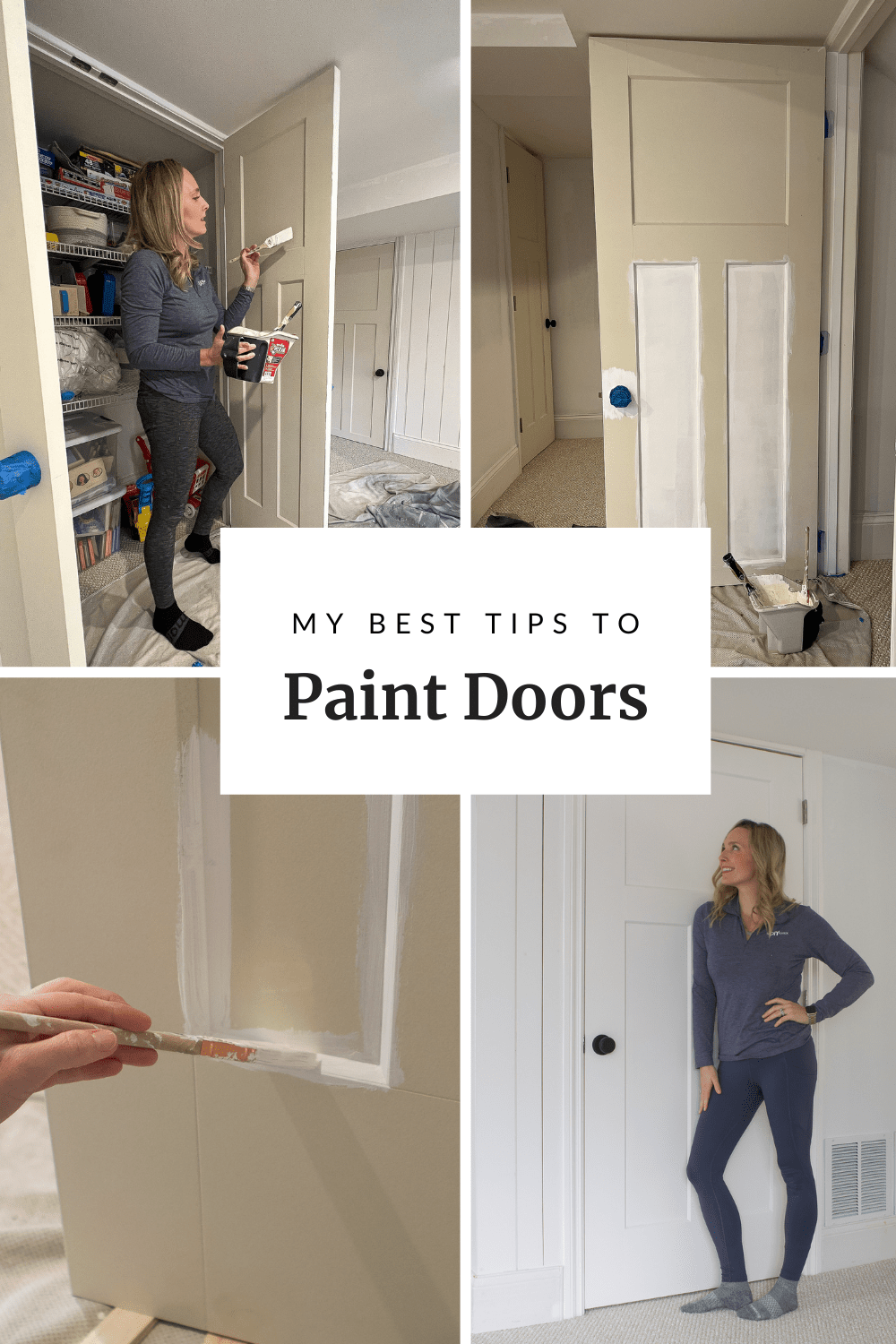
- If the door is removed, place it on sawhorses or paint pyramids. Elevating it makes painting the edges and bottom much easier and prevents it from sticking to the drop cloth.
- Tape off any areas you don’t want to get paint on (door frame, floor, adjacent walls if the door is still hanging).
Choosing Your Weapon: Paint Types and Finishes
The right paint and sheen make all the difference in durability and appearance.
Primer: The Unsung Hero
Don’t skip primer if your door needs it. It’s the foundation for a lasting finish.
| Primer Type | Benefits | Best Use Cases | Dry Time & Clean Up |
|---|---|---|---|
| Water-Based (Latex) |
|
|
1-4 hours dry; Water cleanup. |
| Oil-Based (Alkyd) |
|
|
4-24 hours dry; Mineral spirits cleanup. |
| Shellac-Based |
|
|
Minutes to dry; Denatured alcohol cleanup. |
When to use primer: Always on new, raw wood. If you’re going from a dark color to a very light one. If the existing paint is oil-based and you’re using latex. If the surface is glossy or has stains.
The Right Paint for the Job
For interior doors, you want paint that’s durable and washable. Here are the common types:
| Paint Type | Pros | Cons | Recommended For |
|---|---|---|---|
| Latex/Acrylic-Latex |
|
|
Most interior doors where convenience and good durability are desired. |
| Oil-Based Enamel |
|
|
High-traffic doors, historic homes, or for the ultimate hard, smooth finish (if odors/dry time aren’t an issue). |
| Alkyd (Water-Based Enamel/Hybrid) |
|
|
The best of both worlds – excellent durability, easy cleanup, and beautiful finish. Highly recommended for doors. |
Sheen Matters: Selecting Your Finish
The sheen (or gloss level) affects durability, cleanability, and how imperfections show. For doors, I generally recommend satin or semi-gloss.
| Sheen | Appearance | Durability & Cleanability | Best Use for Doors |
|---|---|---|---|
| Flat/Matte | No shine, hides imperfections well. | Least durable, difficult to clean, scuffs easily. | Not recommended for interior doors due to low durability. |
| Eggshell | Slight, subtle sheen, like an eggshell. | Decent durability, somewhat washable. | Acceptable for low-traffic doors if you want a minimal sheen, but satin is generally better. |
| Satin | Soft, luminous sheen, not quite shiny. | Good durability, very washable, hides minor flaws well. | A great all-around choice for interior doors; balances durability and elegance. |
| Semi-Gloss | Noticeable shine, reflects light. | Very durable, extremely easy to clean, highly scuff-resistant. | Excellent for high-traffic areas or when you want a crisp, clean, and easily maintainable finish. Shows imperfections more. |
| Gloss | High-shine, mirror-like finish. | Most durable and washable. | Best for accent doors or furniture-like finishes; highlights every imperfection so prep must be perfect. |
How Much Paint Do You Really Need?
As a general rule, a typical interior door (both sides) will require about 1 quart of paint for two coats. If you’re painting multiple doors or plan on three coats, you might opt for a gallon to ensure color consistency, but always check the paint’s coverage rates.
The Art of Painting: Step-by-Step for a Flawless Finish
Okay, all the prep is done. Now for the fun part: applying the paint! Remember, thin, even coats are always better than thick, globby ones.
Applying Primer (If Needed)
If you’re using primer, apply it exactly as you would your finish paint, following the specific order for paneled or flat doors. The goal is a thin, even coat. Let it dry completely according to the manufacturer’s instructions. Once dry, do a very light sanding with 220-320 grit sandpaper to knock down any raised grain or imperfections, then wipe off all dust with a tack cloth.
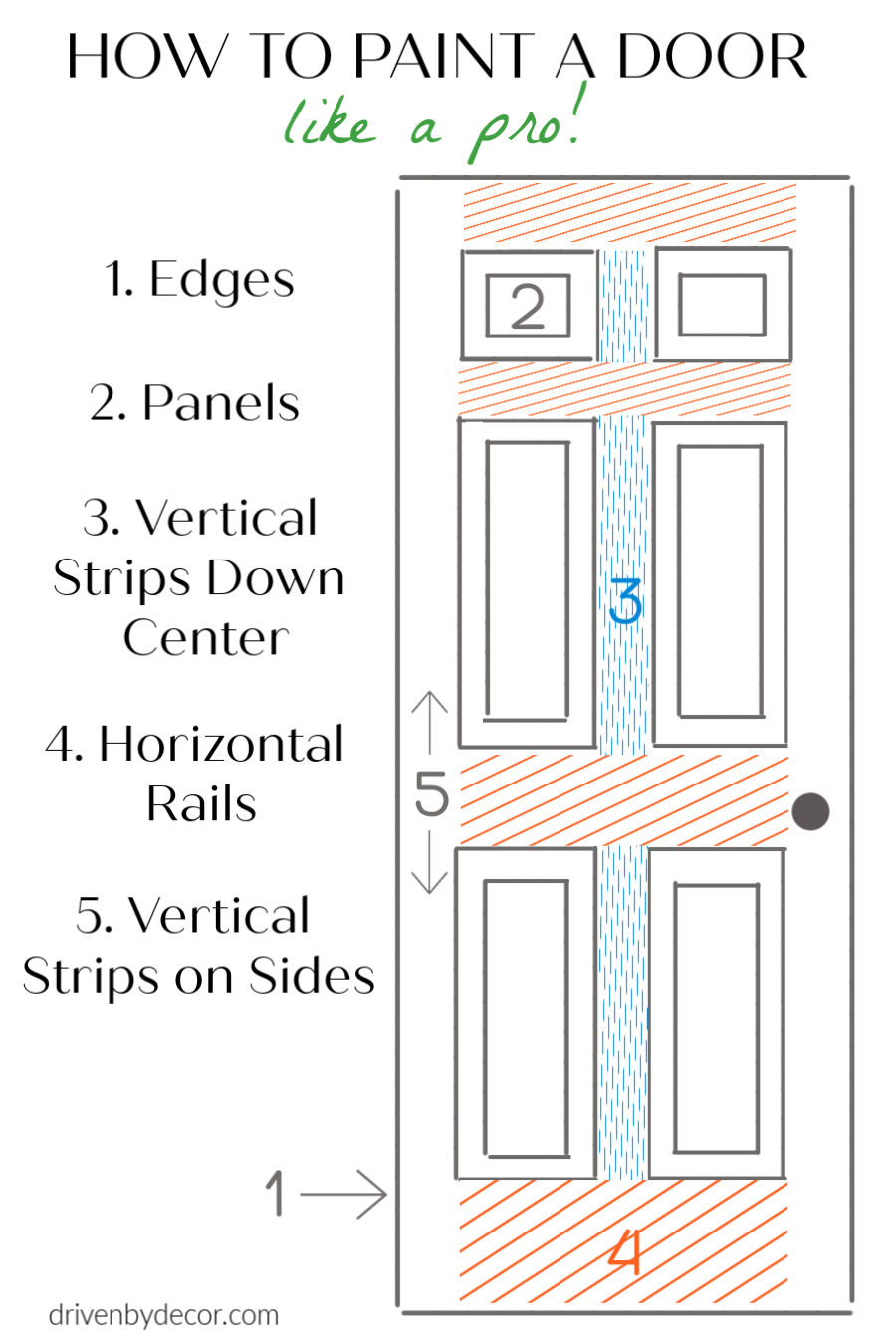
The Golden Rule: Paint Order for Paneled Doors
This is crucial for avoiding drips and getting a smooth, professional finish on doors with recessed or raised panels:
- Recessed Panels (Inside Edges): Start with your angled brush and paint the inside edges (the & ;valleys& 😉 of each panel. Work from top to bottom.
- Raised Parts of Panels: Next, paint the flat, raised surfaces of each panel.
- Horizontal Rails: Move to the horizontal sections of the door. Paint the top rail, then the middle rail(s), and finally the bottom rail.
- Vertical Stiles: Finish by painting the long vertical sections (stiles) from top to bottom, making sure to feather out any brush marks from the rails.
Pro Tip: Work in small sections, always maintaining a & ;wet edge.& ; This means your current brush stroke should always overlap a still-wet previous stroke to prevent lap marks.
Painting Flat Doors: Simplicity is Key
Flat doors are much simpler. You’ll still start with the edges, then move to the main surface.
- Edges: Paint the top, bottom, and side edges of the door first.
- Main Surface: Using your mini roller, apply paint in long, even strokes, working from top to bottom. Maintain a wet edge by slightly overlapping each pass. If you see any roller texture you don’t like, immediately follow with a very light, nearly dry pass with your brush (known as & ;back-brushing& 😉 to smooth it out.
Technique Tips for a Smooth Finish
- Don’t Overwork the Paint: Apply paint, spread it evenly, then leave it alone. Excessive brushing or rolling can lead to brush marks and roller texture.
- Light, Even Coats: Resist the urge to apply a thick coat to & ;get it done faster.& ; Thick coats sag, drip, and take longer to dry. Two or three thin coats will always look better and be more durable.
- Use a Paint Extender: For latex paints, adding a product like Floetrol (or Penetrol for oil-based paints) can significantly improve flow and leveling, giving you more & ;open time& ; to work and helping to eliminate brush marks. Follow the product’s instructions carefully.
- Cleanliness: Keep your brushes and rollers free of dried paint chunks. If you take a break, wrap your tools tightly in plastic wrap or place them in a sealed container to keep them wet.
Drying, Recoating, and the Grand Reveal
Patience is arguably the hardest part of painting, but it’s essential for a durable, beautiful finish.
Patience is a Virtue: Drying Times
Always follow the manufacturer’s instructions on your paint can for & ;recoat time& ; (the minimum time before applying another coat) and & ;dry to touch& ; time. These can vary significantly based on temperature, humidity, and paint type. Rushing this step can lead to peeling, tackiness, or an uneven finish.
Sanding Between Coats: The Pro Secret
For an ultra-smooth, furniture-like finish, lightly sand between coats (after the first coat and any subsequent coats). Use a very fine-grit sanding sponge or 320-400 grit sandpaper. This knocks down any tiny imperfections, dust nibs, or raised grain, making the next coat adhere better and look smoother. Always wipe away all sanding dust with a tack cloth before applying the next coat.
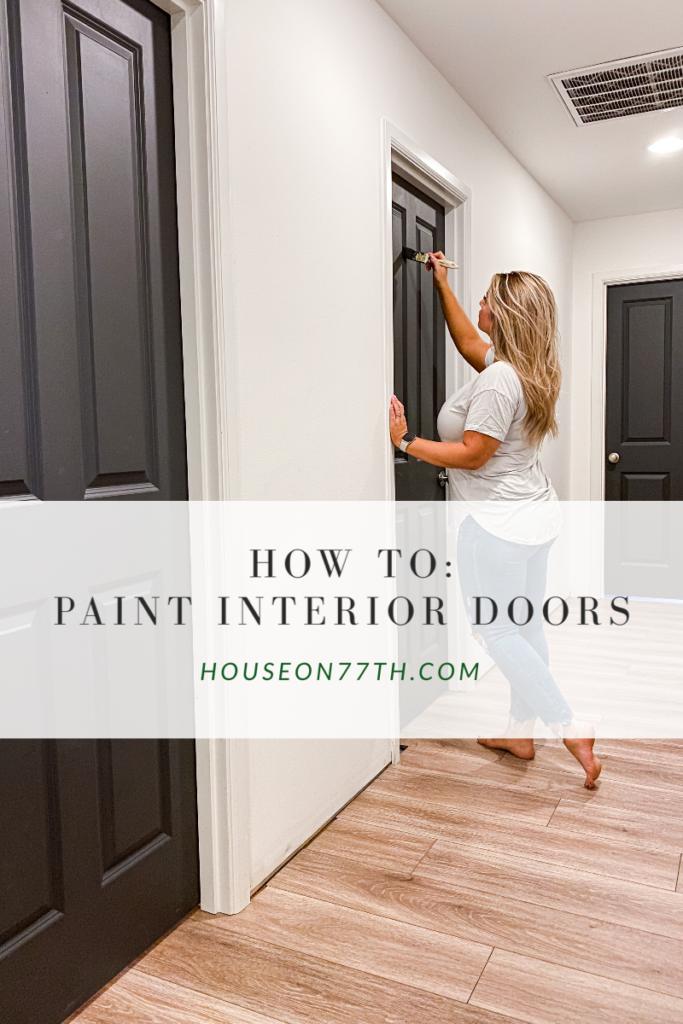
Applying Subsequent Coats
Repeat the painting process (steps 1-4 for paneled, 1-2 for flat) for your second coat. Most doors will need at least two coats for full, even coverage. If you’re making a dramatic color change or using a light color over a dark one, a third coat might be necessary. Again, prioritize thin, even coats over thick ones.
Reinstalling Hardware & Hinges
This is crucial: wait until your paint is fully CURED, not just dry to the touch, before reinstalling hardware and rehanging the door. & ;Dry to touch& ; might be a few hours, but & ;cured& ; can be anywhere from 3-7 days, sometimes longer for oil-based paints. Reinstalling too soon can cause the paint to chip, scratch, or stick to the door frame. Be gentle, and enjoy your beautiful new doors!
Troubleshooting Common Door Painting Mistakes (And How to Avoid Them)
Even the pros face challenges. Knowing how to prevent and fix common issues will save you a lot of frustration.
Brush Marks & Roller Texture
- Cause: Too much paint, wrong brush/roller nap, rushing, paint drying too fast, overworking the paint.
- Fix/Avoid: Use a high-quality angled sash brush, a smooth foam roller or very short nap roller. Apply thin coats. Add a paint extender (Floetrol). Don’t repeatedly brush over paint that’s already started to set. Lightly sand between coats.
Drips & Sags
- Cause: Applying paint too thickly, overloading your brush/roller, not spreading paint evenly.
- Fix/Avoid: Always offload excess paint from your brush/roller before applying. Work in thin, even coats. If you spot a drip while the paint is still wet, quickly brush it out. If it’s dry, you’ll need to lightly sand the drip smooth and reapply paint.
Peeling & Poor Adhesion
- Cause: Inadequate surface preparation (dirty, greasy, glossy, or unsanded), no primer when needed, painting over incompatible paint types.
- Fix/Avoid: The most common issue. Ensure the door is meticulously cleaned, degreased, and properly sanded. Use the correct primer for your door type and paint.
Sticky Doors
- Cause: Reinstalling the door or closing it too soon before the paint is fully cured. Paint on the door edges or frame.
- Fix/Avoid: Wait for the paint to completely cure (often several days, not just dry to touch). Ensure no paint builds up on the door edges that come into contact with the frame. If already sticky, apply a thin coat of paste wax to the edges after the paint is fully cured, or lightly sand the edges.
Uneven Coverage
- Cause: Not enough coats, uneven application, poor quality paint, trying to cover a dark color with a light one without primer.
- Fix/Avoid: Always apply at least two thin coats. Consider three for significant color changes. Use primer if going from dark to light. Ensure your brush/roller is consistently loaded.
Advanced Tips for a Truly Professional Finish
Want to go that extra mile? These tips can elevate your results from good to truly exceptional.
Sprayer vs. Brush & Roller: When to Level Up
While brushes and rollers are perfectly fine for a great finish, paint sprayers can offer unparalleled smoothness.
| Method | Pros | Cons | Finish Quality | Skill Level |
|---|---|---|---|---|
| Brush & Roller |
|
|
Good to Very Good (with proper technique). | Beginner to Intermediate. |
| Paint Sprayer (HVLP/Airless) |
|
|
Excellent to Flawless. | Intermediate to Advanced. |
If you’re painting many doors, renting an HVLP (High Volume Low Pressure) sprayer can be a game-changer for a truly factory-smooth finish.

Using a Paint Extender (Floetrol/Penetrol)
These additives slow down the drying time of your paint, allowing it to & ;level out& ; more before it sets. This significantly reduces brush marks and roller texture, resulting in a much smoother finish, especially with fast-drying latex paints.
The Right Lighting for Painting
Work in good, consistent lighting. Natural daylight is ideal. If you’re working indoors, use bright, even lighting to spot drips, uneven coverage, or missed spots before the paint dries.
Batch Painting for Multiple Doors
If you have several doors to paint, create an assembly line. Remove all doors and hardware at once, then clean them all, then sand them all, then prime, then paint. This streamlines the process and ensures consistent results.
Beyond the Basics: Door Painting Inspiration
Don’t just think white! Interior doors are fantastic opportunities for design:
- Bold Accent Doors: Paint an interior door a vibrant color to act as a focal point in a neutral room.
- Two-Tone Doors: Paint the interior side of a door one color and the exterior side another (matching the respective rooms). Just make sure the edge of the door matches the side that it’s visible from when closed.
- Matching Trim or Contrasting: Paint your doors the same color as your trim for a cohesive, seamless look, or choose a contrasting color to make them stand out.
Painting interior doors is a rewarding DIY project that offers immense satisfaction and a huge visual impact. With proper preparation, the right tools, and a little patience, you can achieve a finish that looks like it was done by a professional. Go on, give your doors the transformation they deserve!