How Much Wall Paint For A Room? Your Definitive Guide to Calculating Paint Needs
Staring at a blank wall, buzzing with excitement for a fresh coat of paint? Or perhaps dreading the thought of another endless DIY project? Either way, you’ve hit the common wall (pun intended) that countless painters – pros and DIYers alike – face: “How much paint do I actually need?”
It’s a simple question with a surprisingly nuanced answer. Get it wrong, and you’re either making multiple trips to the hardware store for more paint (and praying they still have your batch code!), or you’re left with half-empty cans cluttering your garage. Neither is ideal.
Forget the guesswork. This isn’t just another paint calculator. I’m going to walk you through the precise steps, expert insights, and real-world factors that will ensure you buy just the right amount of paint for your room, every single time. Let’s get those walls looking fabulous, efficiently and effectively!
The Core Calculation: How Many Square Feet Per Gallon?
Before we dive into measuring your specific room, let’s nail down the most fundamental piece of information: how far does a can of paint actually go?
Quick Answer: On average, most interior wall paints claim to cover approximately 350-400 square feet per gallon, per coat. Primer, being designed to soak into surfaces, typically covers a bit less, around 200-300 square feet per gallon, per coat.
Understanding Paint Coverage Rates
That “square feet per gallon” number isn’t just an arbitrary figure; it’s a critical metric provided by paint manufacturers. It tells you the theoretical maximum area a gallon of their specific product can cover in a single, ideal coat.
Why does it vary? Several reasons:
- Paint Quality: Higher quality paints often have better “solids content,” meaning more pigment and binders, which translates to superior hiding power and coverage. You might get away with fewer coats.
- Finish/Sheen: Generally, flatter paints are more porous and might require slightly more paint, while glossier finishes tend to spread a bit further.
- Paint Type: Specialty paints (e.g., highly durable kitchen & bath, low-VOC formulas) can have different coverage characteristics.
Always check the label on your specific paint can for the most accurate coverage rate. If it’s not explicitly stated, assume the 350-400 sq ft/gallon range for a good quality interior paint.
| Container Size | Standard Paint (Avg. Sq Ft) | Primer (Avg. Sq Ft) |
|---|---|---|
| Quart (32 fl oz) | ~87-100 sq ft | ~50-75 sq ft |
| 1 Gallon (128 fl oz) | ~350-400 sq ft | ~200-300 sq ft |
| 5 Gallons | ~1750-2000 sq ft | ~1000-1500 sq ft |
Step-by-Step: Measuring Your Room for Paint
This is where the rubber meets the road. Accurate measurements are the backbone of a successful paint project. Grab a tape measure, a notepad, and a pencil. Don’t worry, it’s simpler than it sounds!

Step 1: Measure All Wall Lengths
Start by measuring the length of each wall in the room, from corner to corner. Don’t forget any small wall sections, like those beside a doorway or an alcove. Write down each measurement. Once you have them all, add them up to get your “Total Wall Perimeter.”
Example: A room with walls measuring 12 ft, 15 ft, 12 ft, and 15 ft. Total Wall Perimeter = 12 + 15 + 12 + 15 = 54 linear feet.
Step 2: Measure Wall Height
Measure the height of the walls from the top of the baseboard to the ceiling. Most standard ceilings are 8 feet high, but many homes now feature 9 or 10-foot ceilings, and some older homes can be even taller. If your room has sloped ceilings, measure the average height or break it down into sections. For simplicity here, let’s assume a uniform height.
Example: Standard 8 feet high.
Step 3: Calculate Total Wall Area
Now, multiply your “Total Wall Perimeter” by your “Wall Height.” This gives you the gross square footage of all the walls you intend to paint, without accounting for any openings.
Formula: Total Wall Area = Total Wall Perimeter (linear feet) x Wall Height (feet)
Example: 54 linear feet (perimeter) x 8 feet (height) = 432 square feet.
Step 4: Subtract Non-Paintable Areas
You’re not painting your windows, doors, or built-in bookshelves, right? Exactly. These areas need to be subtracted from your total wall area to get your true “Paintable Area.”
Measure the height and width of each window and door. Then, multiply height x width for each to get its individual square footage. Do this for any other significant non-paintable areas.

Quick Tip: For a rough estimate, you can often use standard dimensions:
- Standard Door: ~21 sq ft (30″ x 80″)
- Standard Window: ~15 sq ft (36″ x 60″) – but windows vary wildly!
Formula: Paintable Area = Total Wall Area – (Sum of all Window Areas + Sum of all Door Areas + Sum of any other non-paintable areas)
Example: Let’s say our 12×15 room has:
- Two standard windows, each 3 ft wide x 5 ft high = 15 sq ft each. (2 x 15 = 30 sq ft)
- One standard door, 2.5 ft wide x 7 ft high = 17.5 sq ft.
Total non-paintable area = 30 sq ft + 17.5 sq ft = 47.5 sq ft.
Paintable Area = 432 sq ft (Total Wall Area) – 47.5 sq ft (Non-Paintable Area) = 384.5 square feet.
| Item | Typical Dimensions (W x H) | Approximate Area (Sq Ft) |
|---|---|---|
| Standard Interior Door | 30″ x 80″ (2.5′ x 6.67′) | ~17-21 sq ft |
| Standard Closet Door (Bifold/Sliding) | 48″ x 80″ (4′ x 6.67′) | ~26-30 sq ft |
| Small Window | 2′ x 3′ | 6 sq ft |
| Medium Window | 3′ x 5′ | 15 sq ft |
| Large Window | 4′ x 6′ | 24 sq ft |
Putting It All Together: The Paint Quantity Formula
Now that you have your “Paintable Area,” we can calculate the gallons needed. Remember that average coverage rate we discussed? Let’s use 380 sq ft/gallon for our example (it’s in the middle of the 350-400 range).
The Simple Formula:
(Paintable Area (sq ft) / Paint Coverage Rate (sq ft/gallon)) x Number of Coats = Gallons Needed
Real-World Example Walkthrough:
Let’s recap our example room:
- Room Dimensions: 12 ft x 15 ft, 8 ft ceilings.
- Calculated Paintable Area: 384.5 sq ft.
- Assumed Paint Coverage Rate: 380 sq ft per gallon.
- Desired Number of Coats: 2 (this is standard for most projects).
Calculation:
(384.5 sq ft / 380 sq ft/gallon) x 2 coats = 1.01 gallons x 2 = 2.02 gallons.
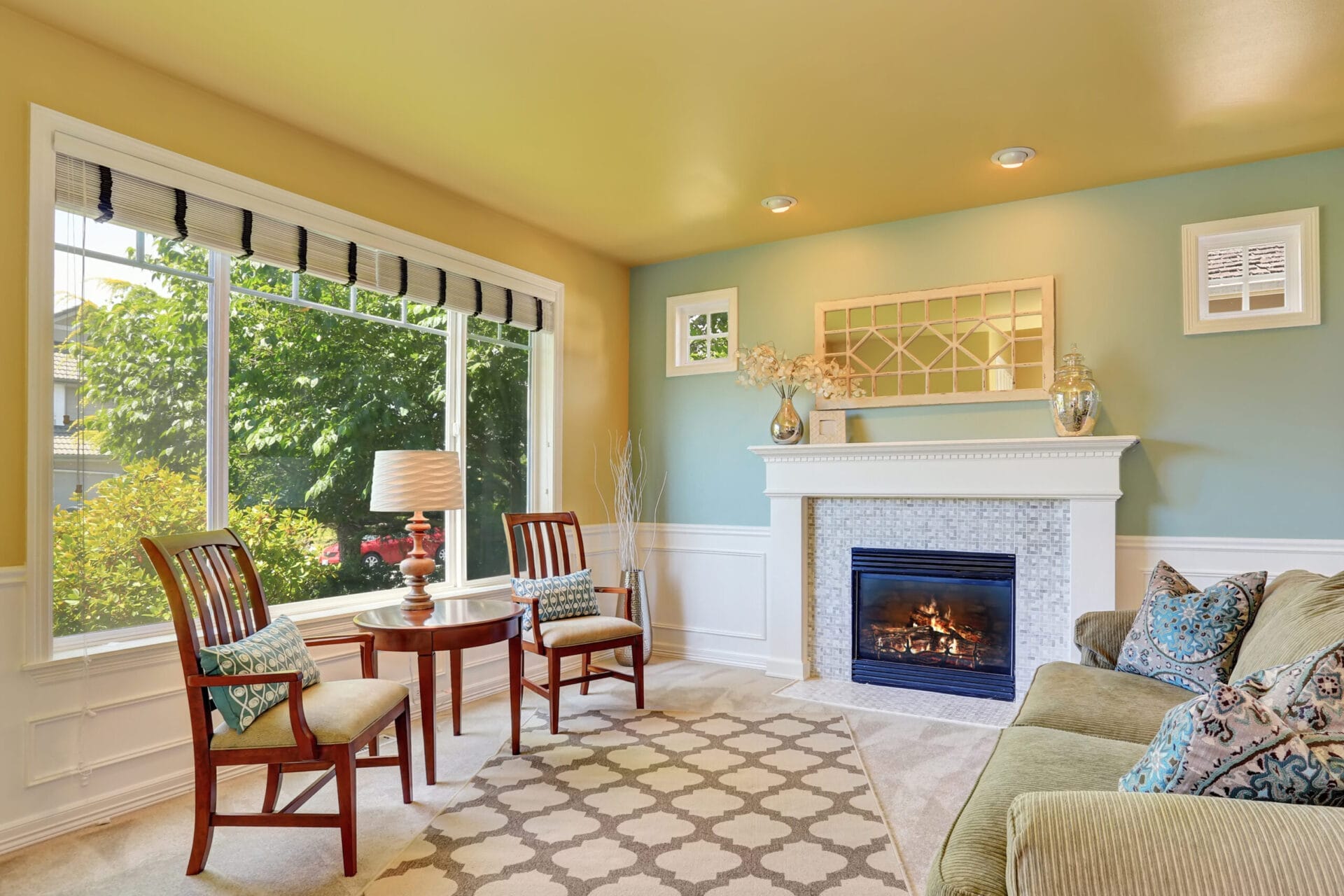
So, for this room, you’d need slightly over 2 gallons of paint for two coats. Since you can’t buy 0.02 of a gallon, you’d round up and purchase two 1-gallon cans, plus maybe an extra quart for touch-ups or a small third coat if needed in a tricky spot. Or, more simply, just buy three 1-gallon cans to be safe.
Beyond the Basics: Factors That Influence How Much Paint You Really Need
While the formula above is your essential guide, several real-world elements can significantly impact the actual amount of paint you consume. Ignoring these can lead to frustration and extra trips to the store.
Existing Wall Color vs. New Color
This is arguably the biggest variable after square footage:
- Dark to Light: Painting a dark wall a much lighter color will almost always require more coats – often three, sometimes even four – to achieve full opacity and prevent the old color from showing through. A good primer (especially a tinted one, discussed below) is crucial here.
- Light to Dark: Going from a light color to a significantly darker one can sometimes be achieved in two coats, especially with a high-quality paint. A tinted primer can also help deepen the base and reduce the number of finish coats.
- Similar Colors: If you’re painting a similar shade to the existing one, two coats are typically sufficient for a fresh, even finish.
Surface Condition & Porosity
What’s under the paint matters a lot:
- Bare Drywall: This is like a sponge. It will soak up a lot of paint, making primer absolutely essential (and sometimes even two coats of primer) before your finish coats.
- Textured Walls: Popcorn ceilings, heavily textured walls, or even light orange peel finishes have more surface area than smooth walls. This means they will absorb more paint, often requiring 10-20% more than estimates for smooth surfaces.
- Glossy Surfaces: If the previous paint was a high-gloss finish, the new paint might have trouble adhering or covering evenly. A light sanding and a bonding primer can help, but it’s another layer.
- Previously Painted Smooth Walls: If the existing paint is in good condition, clean, and not too dark for your new color, this is the easiest scenario.
Paint Quality & Type
As mentioned, quality makes a difference. Premium paints often contain more pigment and solids, leading to better “hide” (the ability to cover the underlying surface) in fewer coats. While they might cost more per gallon, they can save you time and potentially the cost of an extra coat of cheaper paint.
What about “Paint + Primer in One”? These can be excellent for refreshing walls with a similar color or for going over lightly stained areas. However, for drastic color changes or very porous surfaces, don’t expect them to perform miracles like a dedicated primer and two coats of paint would.
Number of Coats
While I’ve been calculating for two coats, it’s worth reiterating: two coats are the gold standard for a durable, professional-looking finish. One coat often looks streaky or uneven, especially when viewed in different lighting. Sometimes, three coats are genuinely necessary, especially with tricky colors like vibrant reds, yellows, or deep blues, or when going from dark to light.
Ceilings: Don’t Forget Up Top!
Many people focus solely on the walls and forget the fifth wall – the ceiling! Painting the ceiling can dramatically brighten a room and complete the look.
How to calculate ceiling area: Simply measure the length and width of the room, and multiply them. Length x Width = Ceiling Area (sq ft).

Example: For our 12×15 room, the ceiling area is 12 ft x 15 ft = 180 sq ft.
Ceilings usually require 1-2 coats of ceiling paint (which is typically a flat finish for optimal light diffusion and hiding imperfections). Using our 380 sq ft/gallon coverage rate:
(180 sq ft / 380 sq ft/gallon) x 2 coats = 0.47 gallons x 2 = 0.94 gallons.
So, you’d need approximately 1 gallon of ceiling paint for this room.
Trim & Doors
Trim (baseboards, crown molding, window casings) and doors are typically painted with a semi-gloss or high-gloss paint for durability and easy cleaning. You’ll need much less paint for these surfaces, usually quarts or even just a sample size.
How to calculate trim: Measure the linear feet of your baseboards, crown molding, and the perimeter of your doors and windows. Add them all up. A gallon of trim paint typically covers 400 linear feet (a 3-4 inch wide trim) in two coats. A quart will cover about 100 linear feet.
Example: Our 12×15 room has 54 linear feet of baseboard. Let’s say 54 ft of crown molding, plus the perimeter of two windows (say, 16 linear ft each) and one door (19 linear ft). Total linear feet for trim = 54 + 54 + (2×16) + 19 = 54 + 54 + 32 + 19 = 159 linear feet. For two coats, you’d easily get by with one quart of trim paint (which covers ~100 linear feet per coat, so 200 linear feet for two coats).
Primer: The Unsung Hero of Paint Coverage
Primer is not just an optional extra; it’s a foundational step that can save you paint, time, and headaches. Think of it as preparing the canvas for your masterpiece.
When to Use Primer:
- New Drywall or Unpainted Surfaces: Absolutely essential. Primer seals the porous drywall, preventing the first coats of paint from soaking in unevenly and looking patchy.
- Drastic Color Changes: Going from dark to light? Primer creates a uniform, light base, allowing your new color to achieve true opacity in fewer coats.
- Stains or Odors: Primers are excellent at blocking stains (water damage, smoke, crayon marks) and sealing in odors (pet, smoke). Look for specialized stain-blocking primers.
- Glossy or Difficult Surfaces: A bonding primer can help new paint adhere to slick surfaces like old oil-based paint, laminate, or even tile.
- Repairs: If you’ve patched holes or repaired drywall, those areas will be more porous and need spot priming to blend seamlessly with the rest of the wall.
Coverage Rates for Primer
As mentioned, primer typically covers less than finish paint because its job is to penetrate and seal. Expect around 200-300 square feet per gallon. Calculate primer needs based on your “Paintable Area” (walls) and “Ceiling Area” (if priming the ceiling) just like you would with paint, but factor in its lower coverage.
![How Much Does It Cost to Paint a Room? [2025 Data] | Angi](https://media.angi.com/s3fs-public/man-painting-wall-white-paint.jpg "How Much Does It Cost to Paint a Room? [2025 Data] | Angi")
Tinted Primer: If you’re painting a deep, rich color, ask your paint store to tint your primer a lighter shade of your final color. This provides a much better base for dark colors, often saving you a full coat of expensive finish paint.
Common Room Sizes & Paint Estimates (Quick Reference)
Sometimes, you just need a ballpark figure. While precise measurement is always best, this table offers quick estimates for standard room sizes, assuming 8-foot ceilings, an average number of windows/doors, and two coats of quality paint. Always round up!
| Room Size (Approximate) | Dimensions (LxW) | Estimated Paintable Wall Area (Sq Ft) | Estimated Gallons Needed (2 Coats) | Estimated Primer Needed (1 Coat, Gallons) |
|---|---|---|---|---|
| Small Bathroom | 5’x8′ | ~150-180 | 1 gallon | 1 quart |
| Small Bedroom/Office | 10’x10′ | ~250-300 | 2 gallons | 1 gallon |
| Medium Bedroom | 12’x12′ | ~320-380 | 2 gallons | 1 gallon |
| Large Bedroom/Dining Room | 12’x15′ | ~380-450 | 2-3 gallons | 1-2 gallons |
| Living Room/Great Room | 15’x20′ | ~550-650 | 3-4 gallons | 2 gallons |
| Very Large Room/Open Concept | 20’x25′ | ~800-1000 | 4-5 gallons | 3 gallons |
Smart Buying Tips & Avoiding Waste
You’ve done the math, considered the variables. Now, let’s talk about the actual purchase and what to do with any leftovers.
- Round Up, Not Down: It’s always better to have a little too much paint than not enough. Running out mid-project is frustrating, and color matching a small amount later can be tricky, especially if you’re using a specialty tint or a custom mix.
- Buy in 1-Gallon Cans for Accuracy: Unless you’re tackling a very large, open-concept space that clearly requires multiple 5-gallon buckets, buying individual gallons gives you more flexibility and reduces waste if your estimates are slightly off. Plus, 5-gallon buckets are heavy and can be harder to manage for smaller jobs.
- Keep Leftover Paint: A small amount of leftover paint is invaluable for touch-ups. Label the cans clearly with the room it was used in, the date, and any custom color names or codes.
- Proper Storage is Key: Store leftover paint in a cool, dry place, away from direct sunlight and extreme temperatures (heat or freezing). Ensure the lid is tightly sealed to prevent air from drying out the paint. Placing a piece of plastic wrap under the lid before sealing can help.
- Return Unopened Cans: Most hardware stores and paint retailers will allow you to return unopened, untinted gallons of paint with a receipt. Always check their return policy before buying in bulk.
- Consider Paint Sample Sizes for Trim: If you only need a tiny amount for trim (like a specific color for an accent door or window frame), often a quart or even a smaller sample pot (if available in your desired finish) will suffice.
When to Call a Professional Painter
While painting a room can be a rewarding DIY project, there are times when calling in the pros makes sense:
- Large or Complex Rooms: Rooms with very high ceilings, intricate architectural details, or multiple angles can be physically demanding and technically challenging.
- Specialty Finishes: If you’re dreaming of faux finishes, murals, or complex striped patterns, a professional painter has the skill and experience to execute them flawlessly.
- Time Constraints: If you’re on a tight deadline for a move-in or event, hiring help can ensure the job gets done quickly and efficiently.
- Dealing with Tricky Surfaces: Extensive wall damage, lead paint remediation, or very old, peeling paint might be best left to those with the right tools and expertise.
- Access to Quality: Professional painters often have access to higher-grade paints, tools, and techniques that can result in a superior, longer-lasting finish.
Conclusion: Paint with Confidence
Armed with a tape measure, this guide, and a little patience, you now have the knowledge to accurately calculate how much wall paint you’ll need for any room. No more frantic last-minute trips, no more wasted paint. Just smooth, beautifully colored walls and the satisfaction of a job well done. Happy painting!
Frequently Asked Questions
How many gallons of paint for a 10×12 room?
For a standard 10×12 room with 8-foot ceilings, accounting for typical windows and doors, you would generally need about 2 gallons of paint for two coats. This estimate can vary based on the existing wall color, new paint color, and surface condition.
Is one coat of paint enough?
Rarely. While some high-quality paints or similar color refreshes might seem to cover in one coat, two coats are almost always recommended for a durable, even, and professional-looking finish. It ensures true color saturation and longevity.
Should I buy a 5-gallon bucket or individual gallons?
For most single rooms, individual 1-gallon cans offer more flexibility and less potential waste. A 5-gallon bucket is typically more cost-effective for very large rooms, multiple rooms, or open-concept areas that clearly require more than 4 gallons of the same color.
Does primer count as a coat of paint?
Primer serves a different function than finish paint. While it applies like a coat, it’s not considered one of your finish coats. You still need to apply your desired number of paint coats (typically two) after the primer has dried, especially for significant color changes or unpainted surfaces.
How much paint do I need for the ceiling?
To calculate ceiling paint, multiply the room’s length by its width to get the square footage. For a 12×15 room (180 sq ft), you would likely need 1 gallon of ceiling paint for two coats, as ceiling paint often has a similar coverage rate to wall paint.
Can I use a paint calculator from a store like Lowe’s or Sherwin-Williams?
Yes, online paint calculators from major retailers like Lowe’s or Sherwin-Williams are convenient tools for a quick estimate. However, they are often simplified. This guide provides a more detailed, manual approach that allows you to understand the underlying calculations and account for more nuanced factors like surface texture or drastic color changes.
What factors make me need more paint than estimated?
Several factors can increase paint consumption: painting a dark color over a light one (or vice versa), highly porous or textured walls, using lower quality paint, needing more than two coats for desired coverage, or not adequately preparing/priming the surface.