How Many Gallons of Paint for a 12×12 Room? The Definitive Guide to a Flawless Finish
Staring at an empty 12×12 room, ready for a fresh coat of paint, but unsure how many gallons to buy? It’s a common DIY dilemma, and getting it wrong means either an extra trip to the store (wasting time and gas) or, worse, wasted paint and money. Nobody wants to run out mid-project or be stuck with five extra gallons of ‘Ocean Mist’ blue. You’re here for a clear answer, and I’m here to give it to you, along with everything you need to know to paint your 12×12 room like a pro.
For an average 12×12 room with standard 8-foot ceilings, you’ll typically need around 2.5 gallons of paint to cover the walls with two coats. This estimate accounts for minor deductions like a door and a window, and provides a small buffer for touch-ups or uneven surfaces. Keep reading, though, because your specific room might need a bit more or less, and we’ll break down exactly why.
The Quick Answer: Paint Estimates for Your 12×12 Room
Let’s cut straight to the chase. The amount of paint you need for your 12×12 room primarily depends on your ceiling height and whether you plan on applying one or two coats. Two coats are almost always recommended for durability, better color saturation, and a more professional finish.
Here’s a quick reference table for wall paint only. We’ll cover ceilings, trim, and primer separately below.
| Ceiling Height | Total Wall Area (Approx.) | Gallons Needed (1 Coat) | Gallons Needed (2 Coats) | Number of 1-Gallon Cans to Buy (2 Coats) |
|---|---|---|---|---|
| 8 Feet | 384 sq ft | 1.1 gallons | 2.2 gallons | 2-3 gallons |
| 9 Feet | 432 sq ft | 1.2 gallons | 2.5 gallons | 3 gallons |
| 10 Feet | 480 sq ft | 1.4 gallons | 2.8 gallons | 3 gallons |
(Note: Calculations based on a paint coverage rate of 350 sq ft per gallon. It’s always wise to round up when buying to ensure you have enough, especially for two coats.)
Understanding Paint Coverage: The Math Behind the Magic
To accurately estimate paint, you need to understand how coverage is measured and apply a simple calculation. Don’t worry, it’s not rocket science, just basic geometry!

How Paint Coverage is Measured
Paint manufacturers typically state that one gallon of paint will cover between 350 to 400 square feet per coat. This is your crucial baseline. However, this is an ideal number. Factors like surface texture, paint quality, and application method can cause this to fluctuate. For our calculations, we’ll use a conservative 350 sq ft per gallon to ensure you don’t run short.
Step-by-Step Calculation for a 12×12 Room (Walls Only)
Let’s walk through the exact steps to calculate the wall paint for your 12×12 room:
- Calculate the Room’s Perimeter: A 12×12 room has four walls, each 12 feet long. So, (12 ft + 12 ft + 12 ft + 12 ft) = 48 feet.
- Calculate Total Wall Area: Multiply the perimeter by your ceiling height.
- For an 8-foot ceiling: 48 ft * 8 ft = 384 sq ft
- For a 9-foot ceiling: 48 ft * 9 ft = 432 sq ft
- For a 10-foot ceiling: 48 ft * 10 ft = 480 sq ft
- Account for Doors & Windows (Deductions): While optional for minor openings, deducting large areas like doors and windows can refine your estimate. A standard door is about 21 sq ft (3’x7′), and a standard window is roughly 15 sq ft (3’x5′).
- If your 12×12 room has one door and one window, you’d deduct approximately 21 + 15 = 36 sq ft.
- Pro Tip: Unless you have multiple large openings, many painters skip these deductions, especially if planning for two coats and allowing for a small buffer. It’s better to have a little too much than too little. For the table below, we will include a typical deduction as an example.
- Determine Net Paintable Area: Subtract your deductions from the total wall area.
- Divide by Paint Coverage Rate: Use our conservative 350 sq ft per gallon.
- Multiply by Number of Coats: As mentioned, two coats are usually best.
Here’s how those calculations play out in detail for a 12×12 room, assuming one door (21 sq ft) and one window (15 sq ft) for a total deduction of 36 sq ft.
| Ceiling Height | Gross Wall Area (sq ft) | Deductions (sq ft) | Net Wall Area (sq ft) | Gallons Needed (1 Coat) | Gallons Needed (2 Coats) | Number of 1-Gallon Cans to Buy (2 Coats) |
|---|---|---|---|---|---|---|
| 8 Feet | 384 | 36 | 348 | 1.0 gallons | 2.0 gallons | 2 gallons (plus an optional quart) |
| 9 Feet | 432 | 36 | 396 | 1.1 gallons | 2.3 gallons | 3 gallons |
| 10 Feet | 480 | 36 | 444 | 1.3 gallons | 2.5 gallons | 3 gallons |
Beyond the Walls: Don’t Forget Ceilings, Trim, and Doors!
A complete room refresh isn’t just about the walls. Don’t overlook these often-forgotten elements that can drastically change the look and feel of your space.
Painting the Ceiling
The ceiling needs love too! While many opt for a simple white ceiling paint, some choose to extend their wall color or use a complementary shade. Ceiling paint coverage is similar to wall paint, but it’s a flatter surface, sometimes requiring fewer coats or less paint due to less absorption.
For a 12×12 room, the ceiling area is 12 ft * 12 ft = 144 sq ft.
| Ceiling Area (sq ft) | Gallons Needed (1 Coat) | Gallons Needed (2 Coats) | Number of Cans to Buy (2 Coats) |
|---|---|---|---|
| 144 | 0.4 gallons | 0.8 gallons | 1 Gallon |
Often, a single gallon of ceiling paint is sufficient for two coats in a 12×12 room, with some leftover for touch-ups.
Trim and Doors
Baseboards, crown molding, door frames, and doors themselves require a different approach and often a different paint sheen (like semi-gloss) for durability and ease of cleaning.
- Trim: Measure the linear footage of your baseboards and any crown molding. For a 12×12 room, you have 48 linear feet of baseboards. Add extra for door and window casings. A typical room might have 80-100 linear feet of trim.
- Doors: A standard interior door (both sides) is approximately 42 sq ft (3’x7′ x 2 sides).
Trim and door paint goes a very long way because you’re painting thin strips or relatively small flat surfaces. Generally, a single quart of trim paint is more than enough for a 12×12 room’s baseboards, door frames, and a door or two, often with plenty left over.
| Item | Approx. Area/Linear Ft | Gallons Needed (2 Coats) | Size to Buy |
|---|---|---|---|
| Baseboards (12×12 room) | 48 linear ft | Minimal | Part of 1 Quart |
| Door & Window Trim (typical 12×12 room with 1 door/1 window) | ~50-60 linear ft | Minimal | Part of 1 Quart |
| Door(s) (1 standard door, both sides) | 42 sq ft | ~0.25 gallons | 1 Quart |
| Total for Room’s Trim & Doors | ~0.5 gallons | 1 Quart (often sufficient) |
Primer: Your Secret Weapon for a Professional Finish
Do you always need primer? Not always, but often. Primer is the unsung hero of many painting projects, especially if you’re making a significant color change, painting over stains, or dealing with porous surfaces. It provides a uniform base, improves paint adhesion, and often reduces the number of paint coats needed.
When to Use Primer:
- Significant Color Change: Going from dark to light (or vice versa) almost always benefits from a good primer to prevent bleed-through.
- New Drywall or Unpainted Surfaces: These surfaces are highly porous and will absorb paint unevenly without primer.
- Stained Walls: Primer can block out water stains, smoke, or other discolorations from showing through your new paint.
- Glossy Surfaces: A bonding primer can help new paint stick to slick surfaces without sanding.
- For a Smoother Finish: Primer creates a more uniform surface, allowing your topcoats of paint to look their best.
Primer Coverage Rates:
Primer typically covers less area than paint, often ranging from 200 to 300 sq ft per gallon. We’ll use 250 sq ft per gallon for our calculations to be on the safe side.
Primer Estimate for a 12×12 Room
| Surface | Area (sq ft, Net) | Primer Coverage (sq ft/gal) | Gallons Needed (1 Coat) | Number of 1-Gallon Cans to Buy |
|---|---|---|---|---|
| Walls (8 ft ceiling) | 348 | 250 | 1.4 | 2 Gallons |
| Walls (9 ft ceiling) | 396 | 250 | 1.6 | 2 Gallons |
| Walls (10 ft ceiling) | 444 | 250 | 1.8 | 2 Gallons |
| Ceiling (12×12 room) | 144 | 250 | 0.6 | 1 Quart (or part of a 1 Gallon can) |
It’s common to buy one 5-gallon bucket of primer if you’re doing an entire room (walls and ceiling) for consistency, or two 1-gallon cans for walls and a quart for the ceiling if you want dedicated products.
![How Much Paint Do I Need? [Paint Calculator]](https://blog.renovationfind.com/wp-content/uploads/2023/12/Cover-How-much-paint-do-I-need-1.jpg "How Much Paint Do I Need? [Paint Calculator]")
Key Factors That Impact How Much Paint You Really Need
While our calculations give you a solid baseline, real-world painting isn’t always perfectly by the book. Here’s what else can influence your paint quantity:
Surface Condition (Porous vs. Smooth)
Rough or highly porous surfaces (like unprimed drywall, textured walls, or unsealed wood) will soak up more paint than smooth, previously painted, or properly primed surfaces. Factor this in; you might need an extra half-gallon if your walls are particularly thirsty.
Existing Wall Color vs. New Color (Dark to Light, Light to Dark)
- Dark to Light: This transition almost always requires a good primer and a minimum of two, sometimes even three, coats of your new lighter paint for full coverage.
- Light to Dark: While easier to cover, darker pigments might still need two coats for deep, rich color saturation.
- Similar Tones: Painting over a similar light color with another light color might sometimes get away with a single coat (though two are always recommended for durability).
Paint Type and Finish (Sheen)
Not all paints are created equal. High-quality paints often have better hiding power and can sometimes achieve good coverage in fewer coats. Different sheens can also affect coverage slightly:
- Flat/Matte: Tends to be more porous and might absorb slightly more paint.
- Eggshell/Satin: Generally offer good coverage and durability.
- Semi-Gloss/Gloss: These smoother finishes often have excellent spread rates but require meticulous application.
Number of Coats (Crucial)
This is arguably the most significant factor. While a single coat might seem appealing, it rarely provides the depth of color, uniformity, or durability you want. Always plan for two coats for the best results, which means doubling your single-coat paint estimate.
Painter’s Technique (Roller vs. Brush vs. Sprayer, Application Thickness)
A heavy-handed painter might use more paint than someone applying thin, even coats. Rollers are generally efficient, but sprayers can consume more paint due to overspray if not used correctly. Using a proper roller nap for your surface texture also helps.
Unforeseen Touch-Ups and Mistakes
Drips, missed spots, or scuffs during furniture moving are inevitable. Having a small amount of leftover paint means you can handle these without another trip to the store or, worse, noticing that the new batch of paint is slightly off-color.

Smart Buying Strategies: Saving Money and Avoiding Waste
You’ve done the math, now let’s talk about smart purchasing.
Always Buy a Little Extra (The “Murphy’s Law” of Painting)
My golden rule: round up. If your calculations say you need 2.3 gallons for two coats, buy 3 gallons. It’s far better to have a little left over for future touch-ups than to run out halfway through your second coat on a Saturday afternoon and find the paint store closed or, worse, that the exact tint isn’t available.
Consider Buying in 5-Gallon Buckets (Cost Savings)
If you’re painting a larger space, or multiple rooms with the same color, buying in 5-gallon buckets can be more cost-effective per gallon than buying individual 1-gallon cans. For a single 12×12 room, this is usually overkill unless you’re very close to needing that amount (e.g., 4+ gallons needed for multiple areas).
Sample Sizes for Color Testing
Before committing to gallons, always buy sample sizes. Paint swatches online or in stores never look the same on your actual wall under your room’s unique lighting conditions. Paint a small section, let it dry, and observe it throughout the day. This prevents costly mistakes of buying gallons of a color you end up hating.
Proper Paint Storage for Future Touch-Ups
To make your leftover paint usable for years, store it correctly:
- Seal the can tightly. Clean paint from the rim to ensure a good seal.
- Place a layer of plastic wrap over the opening before putting the lid on.
- Store cans upside down (briefly, then right side up) in a cool, dry place away from extreme temperatures (e.g., not in an uninsulated garage where it can freeze).
What to Do with Leftover Paint (Donation, Disposal)
If you have significant amounts of usable paint left over, consider donating it to local community centers, schools, or Habitat for Humanity. For small amounts or unusable paint, check your local municipal guidelines for proper disposal. Never pour paint down the drain or into storm sewers.

Pro Tips for a Smoother Painting Experience
Calculating paint is just one step. Here are some extra tips to ensure your project goes smoothly:
- Prep is Key: Clean your walls thoroughly. Fill any holes or cracks, sand them smooth, and wipe away dust. Tape off trim and ceilings meticulously. Good prep makes paint look 100 times better.
- Use High-Quality Tools: Good quality brushes and rollers make a huge difference in application, coverage, and the final finish. They also last longer.
- Ventilation: Always ensure good airflow in the room by opening windows and using fans, especially with oil-based paints, but even with low-VOC latex paints.
- Patience Between Coats: Read the label for recommended drying times between coats. Rushing can lead to peeling, uneven coverage, and a patchy finish.
- Cut In First: Paint the edges (cutting in) with a brush before rolling the main wall sections. Work in smaller, manageable areas.
The Financial Angle: Budgeting for Your 12×12 Room Paint Project
Beyond the gallons of paint, remember to factor in other costs:
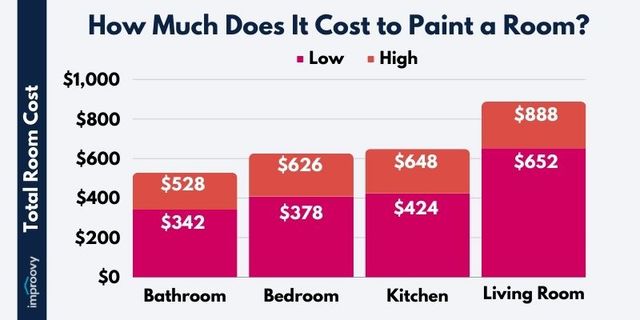
- Paint Cost: Prices vary widely, from $20-$30 per gallon for economy brands to $50-$80+ for premium paints. For a 12×12 room, this could range from $50 to $240+ for just the wall paint.
- Primer Cost: Typically $20-$40 per gallon.
- Supplies: Rollers, roller covers, brushes, painter’s tape, drop cloths, cleaning supplies, and patching compound. Budget $50-$100+ for quality supplies if you don’t have them already.
- Total DIY Cost: For a 12×12 room, expect to spend anywhere from $100 to $400+ on materials, depending on your choices.
By taking the time to calculate accurately and considering all variables, you’ll be well-prepared to tackle your 12×12 room painting project with confidence. Happy painting!
Frequently Asked Questions
Do I really need two coats of paint for a 12×12 room?
Yes, almost always. Two coats provide superior color depth, evenness, and durability. While one coat might look acceptable initially, a second coat ensures complete coverage, hides imperfections better, and offers a richer, longer-lasting finish. It’s an investment in the quality and longevity of your paint job.
How much paint do I need for the ceiling of a 12×12 room?
A 12×12 room has a ceiling area of 144 square feet. For two coats, you’ll typically need less than a full gallon, usually around 0.8 gallons. Buying a single 1-gallon can of ceiling paint will be more than sufficient, allowing for any necessary touch-ups.
Should I use primer for my 12×12 room?
Primer is highly recommended in several situations: if you’re making a significant color change (especially dark to light), painting over new or unpainted drywall, covering stains, or if the existing surface is glossy. For a 12×12 room, you’d typically need about 1.5 to 2 gallons of primer for the walls (one coat) and an additional quart for the ceiling, depending on its height.
What’s the difference between buying 1-gallon cans and a 5-gallon bucket?
Buying a 5-gallon bucket is often more cost-effective per gallon and ensures better color consistency across a large area. For a single 12×12 room, you’ll likely only need 2-3 gallons, making individual 1-gallon cans more appropriate. A 5-gallon bucket is usually better for larger projects or multiple rooms using the same color.
How do I account for doors and windows when calculating paint?
To be precise, you can calculate the square footage of doors (e.g., 3’x7′ = 21 sq ft) and windows (e.g., 3’x5′ = 15 sq ft) and subtract these areas from your total wall area. However, for minor openings in a 12×12 room, many DIYers opt to skip these deductions. The small amount of extra paint accounts for uneven surfaces, future touch-ups, or slightly higher absorption rates.
What’s the best way to store leftover paint for future touch-ups?
To keep paint fresh, ensure the can is tightly sealed by cleaning the rim before closing. Place a layer of plastic wrap over the opening before putting the lid on. Store the can in a cool, dry place away from direct sunlight and extreme temperatures (freezing or excessive heat can ruin paint). Properly stored, paint can last for several years.
Can I use the same paint for walls, trim, and ceiling?
While technically possible, it’s generally not recommended. Walls typically use a flat, eggshell, or satin finish for aesthetics. Ceilings often use a dedicated flat white ceiling paint to hide imperfections. Trim and doors benefit from a more durable, higher-sheen paint like semi-gloss or gloss, which stands up better to wear and tear and is easier to clean.