How to Paint a Stunning Rainbow on Your Bedroom Wall (The Definitive DIY Guide)
Dreaming of a bedroom that bursts with color, joy, and a touch of whimsy? A painted rainbow on your wall is an absolute game-changer, transforming any space into a vibrant sanctuary. But let’s be real: the idea of painting perfect arches and crisp lines can feel a little daunting. Forget YouTube tutorials that skip crucial steps or social media hacks that leave you guessing. You’re here for the real deal, a comprehensive roadmap to painting a rainbow mural that looks professionally done, even if you’ve never picked up a paintbrush before.
This isn’t just a “how-to.” This is your definitive guide, packed with expert tips, detailed techniques, and insider secrets to ensure your rainbow isn’t just painted, but truly mastered. We’ll cover everything from choosing your ideal rainbow style and colors to prepping your wall like a pro, executing flawless arches, and troubleshooting common hiccups. Get ready to unleash your inner artist and give your bedroom the brilliant makeover it deserves!
Before You Dip That Brush: Essential Planning & Preparation
Success in any painting project starts long before the first drop of paint hits the wall. For a rainbow mural, meticulous planning and preparation are non-negotiable. This is where you lay the groundwork for a stunning, frustration-free finish.
Dream Big: Designing Your Rainbow
The beauty of a DIY rainbow is its versatility. No two rainbows are exactly alike, and yours should reflect your unique style and the vibe you want for your bedroom.
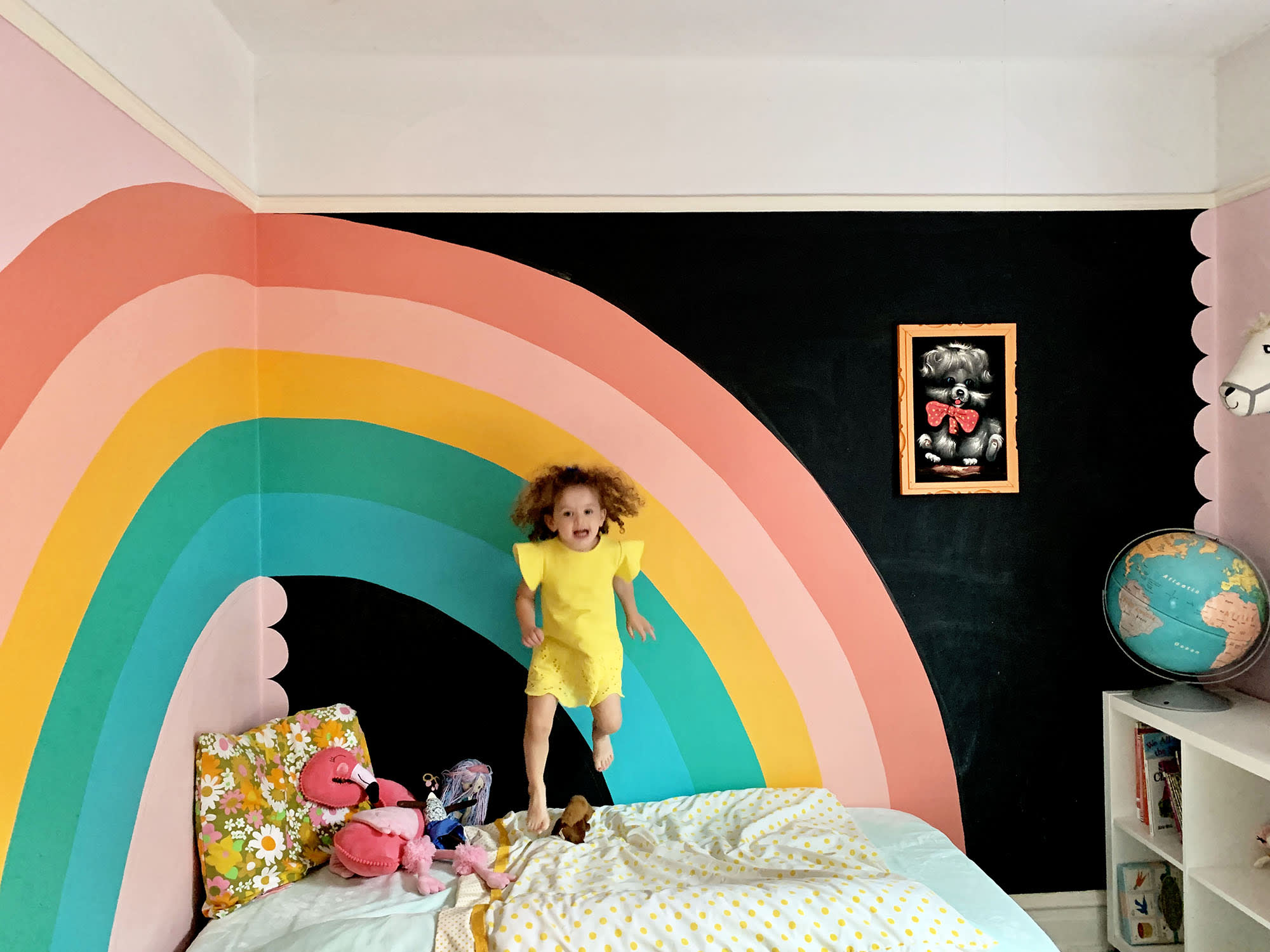
- Choosing Your Style:
- Classic Arch: The iconic, symmetrical arc spanning a wall. Timeless and impactful.
- Wavy Rainbow: Adds a playful, organic touch, perfect for a more whimsical feel.
- Accent Corner Rainbow: A smaller, often asymmetrical rainbow that starts low in a corner and curves up, framing a specific area or piece of furniture.
- Watercolor/Gradient Rainbow: Instead of crisp lines, colors subtly blend into each other for a softer, dreamy effect. Requires different painting techniques.
- Subtle Rainbow: Using muted, pastel, or even monochromatic shades for a more sophisticated, understated look.
- Color Palette Perfection: This is where your rainbow truly comes to life.
- Traditional ROYGBIV: Red, Orange, Yellow, Green, Blue, Indigo, Violet. A classic for a reason!
- Pastels: Soft, muted versions of traditional colors create a gentle, calming atmosphere. Think mint, lavender, baby pink.
- Neons/Brights: For a bold, energetic statement that pops.
- Monochromatic: Various shades of a single color, from light to dark, creating a sophisticated rainbow effect.
- Custom Palettes: Mix and match colors you love! Perhaps blues and greens for a serene ocean vibe, or warm yellows and oranges for a sunset effect.
- Consider the Room’s Existing Palette: Your rainbow should ideally complement, not clash with, your existing decor and wall color. If your walls are a strong color, you might opt for a pastel rainbow to avoid overwhelming the space.
- Placement & Scale: Visualize your rainbow on the wall.
- Full Wall Statement: Does it span an entire wall, acting as a focal point?
- Accent Piece: Is it smaller, perhaps above a bed or desk?
- Corner Feature: Does it elegantly curve around a corner?
- Height & Width: How high do you want the peak of the rainbow to be? How wide will the base be? Consider furniture placement. You don’t want your beautiful arcs hidden behind a tall bookshelf.
- Integrating with Furniture: Think about how the rainbow interacts with your bed, nightstands, dressers, or art. Will it frame them, or will they interrupt its flow?
Spend time sketching your ideas on paper or even using painter’s tape to mock up the shape on your wall. This visualization step is crucial for confidence.
Gathering Your Arsenal: Supplies List
Having the right tools and materials makes all the difference. Don’t skimp on quality, especially when it comes to tape and brushes.
Paint Types & Finishes for Rainbow Walls
| Paint Type/Finish | Description & Benefits | Best For | Considerations |
|---|---|---|---|
| Latex (Water-Based) | Easy cleanup with water, fast drying, low odor. Widely available in many colors. | Most DIY projects, bedrooms, general wall painting. | Less durable than oil-based, but modern formulations are excellent. |
| Eggshell/Satin Finish | Slight sheen, more durable and washable than flat/matte. Hides minor imperfections well. | Kids’ rooms, high-traffic areas, any bedroom needing durability. | Can highlight wall imperfections more than a flat finish if not applied smoothly. |
| Matte/Flat Finish | No sheen, absorbs light, hides imperfections beautifully. Creates a soft, sophisticated look. | Adult bedrooms, accent walls where washability isn’t a primary concern. | Less durable, harder to clean. Not ideal for very active spaces. |
| Low-VOC/Zero-VOC | Contains minimal or no Volatile Organic Compounds, reducing fumes and improving indoor air quality. | Children’s bedrooms, nurseries, anyone sensitive to paint fumes. | Can be slightly more expensive, but worth it for health and comfort. |
- Quantity: For a typical multi-color rainbow, sample pots (8oz/half-pint) are usually sufficient for each color, especially for thinner arches. If you plan very wide arches or a full-wall rainbow, you might need a quart of each. Always buy a little extra for touch-ups.
Other Essential Tools:
- Painter’s Tape: Crucial for crisp lines. Opt for a high-quality tape designed for delicate surfaces (especially if your base coat is fresh) or clean lines. FrogTape or ScotchBlue Platinum are excellent choices.
- Paint Brushes: Small, angled artist brushes (1/2 to 1 inch) for detail work and crisp edges. A smaller foam roller (4-6 inches) can speed up filling in larger sections of each arch.
- Drop Cloths/Tarps: Protect your floor and furniture from paint splatters.
- Pencil: For drawing your initial arcs.
- Long String & Push Pin/Thumbtack: For the classic string-and-pencil arch method.
- Measuring Tape & Level: For accurate placement and spacing.
- Bucket of Water & Rags: For cleanup, especially with latex paints.
- Screwdriver/Drill: To remove outlet covers and switch plates.
- Primer: If your wall is dark, heavily stained, or has never been painted before.
- Stepladder: To reach higher sections of the wall.
- Optional for advanced techniques: Small craft projector (for complex shapes), compass (for perfect circles/arcs on smaller scales).
Prepping Your Canvas: The Wall Itself
A beautifully prepped wall is the secret to a professional-looking finish. Don’t skip these vital steps.

- Clean It Up: Wipe down the entire wall with a damp cloth and mild detergent (like TSP substitute) to remove dust, dirt, and grime. Rinse thoroughly with clean water and let it dry completely.
- Repair Imperfections: Fill any holes or cracks with spackle. Sand smooth once dry. Wipe away dust.
- Prime Time (If Needed):
- If you’re painting a light rainbow over a dark wall, a white primer is essential to ensure true color vibrancy and reduce the number of paint coats needed.
- If your wall is new drywall or unpainted, prime it.
- If you’ve done extensive patching, spot prime those areas.
- Protect Your Space: Lay down drop cloths. Use painter’s tape to mask off baseboards, trim, and any adjacent walls if your rainbow doesn’t end there. Remove outlet covers and switch plates.
Mastering the Arch: Techniques for Drawing Your Rainbow
The arcs are the heart of your rainbow. Getting them right is critical. Here are three reliable methods, each with its own advantages.
Method 1: The Classic String & Pencil Technique
This is the most popular and straightforward method for creating perfect, sweeping arches.
- Find Your Center Point: Decide where the center base of your rainbow will be. This is your anchor point. Mark it lightly with a pencil.
- Anchor the String: Use a thumbtack or push pin to secure one end of a long piece of string (or fishing line) to your center point.
- Measure Your Arcs: Tie your pencil to the other end of the string. For your first (innermost) arc, measure the desired radius (distance from the anchor to the top of your arc). Hold the string taut at this length.
- Draw the First Arc: Keeping the string perfectly taut, pivot the pencil from one side of your desired rainbow width to the other, lightly drawing your first arc.
- Repeat for Subsequent Arcs: To draw the next arc, lengthen the string by the desired width of your first color band (e.g., 4-6 inches). Hold it taut again and draw your next arc. Repeat this process for all your rainbow colors.
- Check Your Work: Step back and assess your arcs. Are they even? Do they look right? Make adjustments with an eraser if needed.
Pros: Simple, effective for large arcs, minimal tools needed.
Cons: Can leave a small pinhole, requires careful string tension for even arcs.
Method 2: The Painter’s Tape & Compass Method
Great for smaller, precise arcs or if you want to avoid a pinhole.

- Establish Your Base: Use a level to draw a light horizontal line where the bottom of your rainbow will start.
- Tape Your Compass Point: Instead of a thumbtack, tape a small piece of painter’s tape to your center point on the wall.
- Create Your Compass: Cut a strip of painter’s tape (about 1-2 inches wide) to your desired radius for the innermost arc. Attach one end of this tape strip to your taped center point.
- Draw the Arc: With the tape taut, use a pencil or a small artist’s brush to lightly draw the arc along the outer edge of the tape strip.
- Repeat: For each subsequent arc, you can either create new, longer tape compasses or carefully measure and extend your pencil marks from the previous arc.
- Precision with Tape: You can also use painter’s tape to directly outline your arcs. Once your pencil lines are drawn, carefully apply tape along the *outside edge of each arc (if you’re painting inside the arc) or the inside edge (if you’re painting outside the arc). This takes patience but ensures incredibly crisp lines.
Pros: No pinhole, good for precision, painter’s tape can then be used for crisp edges.
Cons: Can be more tedious for very large arcs, requires more careful measuring.
Method 3: The Digital Projector Method (for Wavy or Complex Designs)
If you’re aiming for a wavy rainbow, a gradient, or any non-standard shape, a small craft projector is your best friend.
- Design Digitally: Create your rainbow design on a computer or tablet using graphic design software or even a simple drawing app. Ensure it’s the exact shape you want.
- Set Up Projector: Position your projector (e.g., a mini projector or art projector) so it projects your design onto the wall at the desired size and location.
- Trace Carefully: Lightly trace the projected outline of your rainbow onto the wall with a pencil.
- Refine: Once traced, turn off the projector and refine your pencil lines, ensuring they’re smooth and accurate.
Pros: Ideal for complex or irregular shapes, perfect symmetry guaranteed if your digital design is symmetrical.
Cons: Requires a projector, setup can be a bit finicky.
Rainbow Arch Drawing Techniques Comparison
| Technique | Complexity | Best For | Pros | Cons |
|---|---|---|---|---|
| String & Pencil | Low | Large, classic, even arcs. | Simple, widely used, naturally creates perfect arcs. | Leaves small anchor hole, requires careful tension. |
| Painter’s Tape Compass | Medium | Smaller, precise arcs; avoiding holes. | No holes, allows for highly accurate taping later. | More tedious for very large arcs; less fluid than string. |
| Digital Projector | High (initial setup) | Wavy, complex, highly detailed, or irregular shapes. | Unmatched precision for complex designs; versatile. | Requires a projector; digital design skills needed; setup time. |
Painting Your Masterpiece: Step-by-Step Execution
With your design drawn and your wall prepped, it’s time for the fun part! Remember, patience is your best friend here.
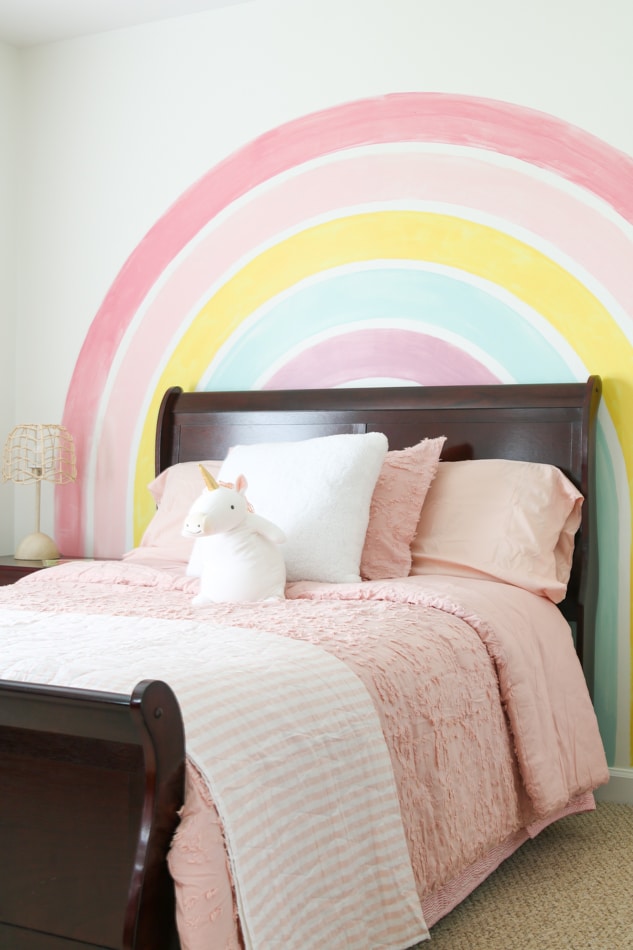
First Arch: Laying the Foundation
Decide whether to start with the innermost or outermost color. Many find it easier to start with the innermost arc and work outwards, as this allows you to always tape off the painted line.
- Tape It Up: Carefully apply painter’s tape along the outside edge of your first (innermost) rainbow arc. Press down firmly with your finger or a credit card to seal the edge and prevent bleeding. This is critical for a crisp line.
- Apply First Color: Using your angled brush, carefully paint the first color within the taped area. Use smooth, even strokes. If using a small roller, roll carefully right up to the tape line.
- “Seal” the Tape (Pro Tip!): For truly crisp lines, after applying your painter’s tape, paint a very thin layer of your base wall color* (the color currently on your wall) over the edge of the tape where your rainbow color will go. Let it dry completely. This base color will seep into any tiny gaps under the tape, effectively sealing them. Then, when you apply your rainbow color, it won’t bleed.
- Two Coats: Most colors will require two thin coats for full, even coverage. Allow the first coat to dry to the touch (check paint can instructions, usually 1-2 hours) before applying the second.
The Art of Taping & Painting Subsequent Arches
This is where patience really pays off. You’ll be repeating a similar process for each color.
- Wait for Dryness: This is perhaps the most important step. Your previous color MUST be completely dry – not just to the touch, but fully cured enough to withstand tape without peeling. This can take 4-24 hours depending on the paint type and humidity. Rushing this step is the number one cause of ruined murals.
- Tape the Next Arch: Once the previous color is dry, carefully apply a new strip of painter’s tape along the outside edge of the newly painted arc, and along the outside edge of your next pencil line. This creates the space for your second color. Ensure the tape is straight and firmly pressed down.
- Paint the Second Color: Apply your second rainbow color using the same technique as the first – two thin coats, allowing adequate drying time between coats. Remember the “seal the tape” pro tip for extra crispness!
- Repeat the Process: Continue this sequence for each subsequent color in your rainbow. Paint one color, let it dry completely, tape off the next section, paint, dry, and so on.
Technique Tips for a Flawless Finish
- Brush Strokes Matter: For smooth coverage, paint in one direction as much as possible, blending your strokes. Avoid overworking the paint, which can lead to streaks.
- Avoid Drips & Bleeding: Don’t overload your brush or roller. Wipe excess paint off before applying it to the wall. Pressing tape firmly is your best defense against bleeding.
- Multi-Coat Magic: Thin, even coats are always better than one thick, gloppy coat. Thick coats take longer to dry, are more prone to drips, and can peel when tape is removed.
- Watercolor/Gradient Effect: If you opted for a blended look, you won’t use tape for crisp lines. Instead, apply the first color, and while it’s still wet, apply the second color right next to it. Use a clean, dry blending brush (or a damp sponge) to gently feather the two colors together where they meet. Work in small sections.
The Grand Reveal: Finishing Touches & Troubleshooting
The moment of truth! Peeling off the tape is incredibly satisfying, but it needs to be done correctly.
Peeling Tape & Touch-Ups
- When to Peel: This is crucial! For the absolute crispest lines, remove the painter’s tape when the paint is dry to the touch, but not fully cured. If you wait until it’s fully cured, the paint can bond to the tape and peel off with it. If you remove it when too wet, it can smudge. Aim for an hour or two after your final coat.
- Angle of Removal: Pull the tape off slowly at a 45-degree angle, pulling it back on itself. If you pull it straight out, you risk lifting paint.
- Score the Edge (Optional but Recommended): If you’re concerned about paint lifting, use a utility knife or razor blade to lightly score along the edge of the tape where it meets the wet paint, right before you pull it. This breaks the paint film and prevents peeling.
- Touch-Ups: Once the tape is removed, inspect your lines. If there are any minor bleeds or imperfections, use a tiny artist’s brush and your base wall color to carefully clean up the edges. For areas where a rainbow color bled, let it dry, then use the base color. For small gaps in a rainbow color, use that specific paint.
Common Rainbow Painting Mistakes & How to Fix Them
- Bleeding Lines: This usually happens because the tape wasn’t pressed down firmly enough, or the “seal the tape” step was skipped. Fix by waiting for the paint to dry completely, then carefully touching up with your base wall color using a small, fine-tipped brush. Patience is key here.
- Uneven Arcs: If your initial pencil lines weren’t perfect, or your string wasn’t held taut, your arcs might look wobbly. For minor wobbles, you can try to correct with a very steady hand and a small brush during touch-ups. For major issues, consider whether you can slightly widen an arc to cover an imperfection or if a complete repaint of that section is necessary (rare, but possible).
- Patchy Coverage: Occurs from not applying enough coats, or applying coats too thinly. Reapply a thin, even coat of the appropriate color to the patchy areas, ensuring it blends seamlessly.
Caring for Your New Rainbow Wall
Your beautiful rainbow mural isn’t quite finished yet. Paint takes time to fully cure.
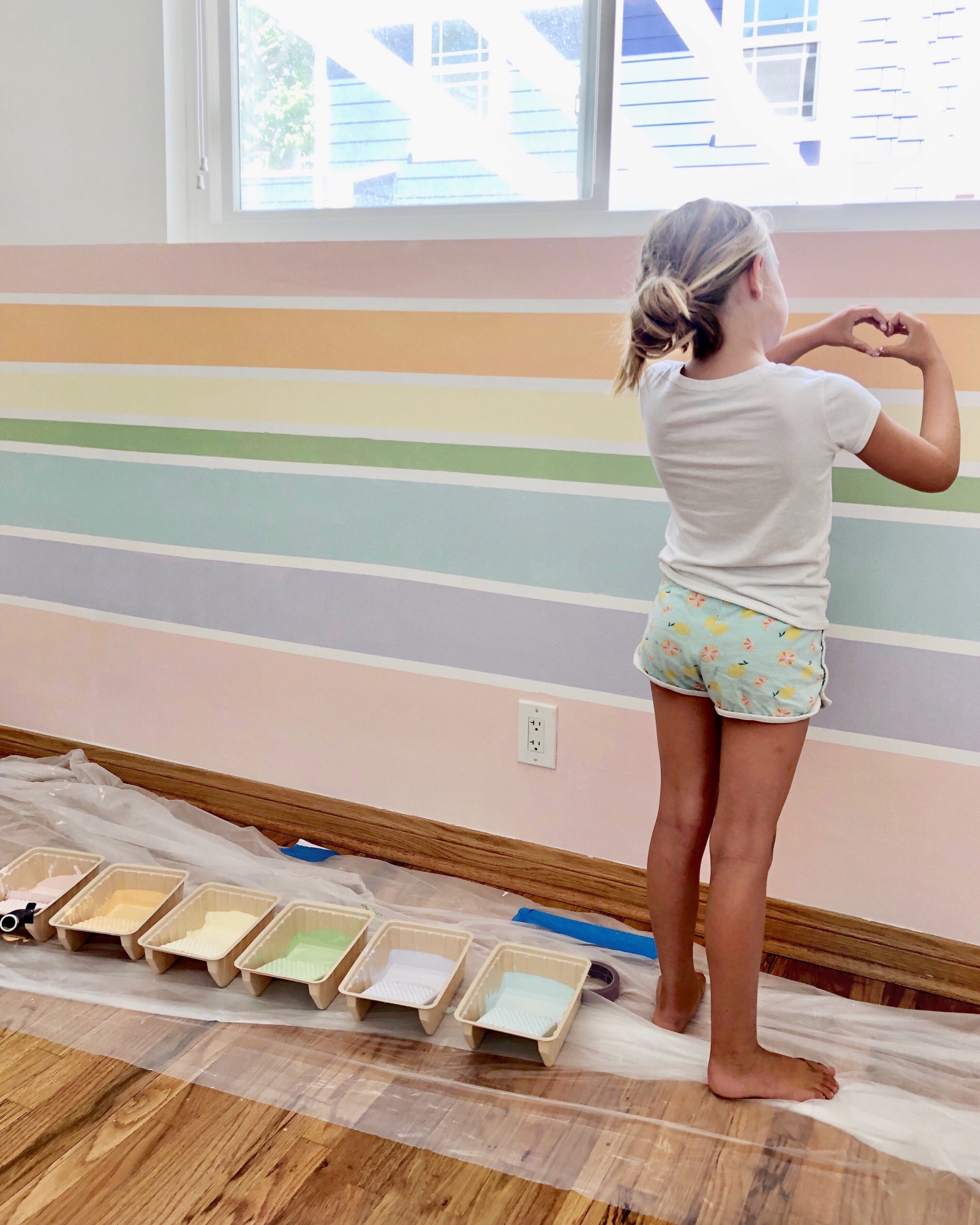
- Curing Time: While paint is dry to the touch in hours, it typically takes 2-4 weeks to fully cure and harden. During this time, be gentle with your wall. Avoid scrubbing or harsh cleaning.
- Gentle Cleaning: Once cured, if your paint finish is eggshell or satin, you can gently wipe down your wall with a soft, damp cloth if needed. Avoid abrasive cleaners or sponges, which can damage the finish.
Beyond the Brush: Making Your Rainbow Wall Shine
Your rainbow is painted, but how do you make it truly integrate into your bedroom’s aesthetic?
Integrating Your Rainbow with Bedroom Decor
- Complementary Furniture & Bedding: Pick out accent colors from your rainbow and echo them in throw pillows, blankets, rugs, or decorative accents.
- Layering with Art: Don’t be afraid to hang framed art or photos over your rainbow. Choose pieces that either pick up one of the rainbow’s colors or offer a stark, interesting contrast.
- Lighting Considerations: Natural light will make your rainbow pop. Strategically placed lamps can highlight the mural in the evenings. Color-changing LED strip lights can even cast dynamic glows that interact with your rainbow!
- Keep it Balanced: If your rainbow is a bold statement, balance it with more neutral elements elsewhere in the room to prevent the space from feeling too overwhelming.
Safety First: Painting in a Bedroom
Especially since this is a bedroom, consider these safety tips:
- Ventilation: Always ensure good ventilation by opening windows and using fans.
- Low-VOC Paints: Choose low-VOC (Volatile Organic Compound) or zero-VOC paints. These significantly reduce the amount of harmful fumes released, making for a healthier painting environment and a safer bedroom once the project is complete.
- Keep Pets & Children Away: During painting and drying, keep pets and small children out of the room.
- Proper Storage & Disposal: Store leftover paint in a cool, dry place. Dispose of paint and painting supplies according to local regulations.
Ready to Transform Your Room?
Painting a rainbow on your bedroom wall is more than just a DIY project; it’s an act of creativity and a commitment to personalizing your space. With careful planning, the right tools, and a dash of patience, you’re not just painting a wall – you’re creating a vibrant, joyful backdrop for countless memories. So, pick up that brush, embrace the colors, and let your bedroom’s true personality shine!