Gray Paint Colors for Living Rooms: The Definitive Guide to Timeless Elegance
Choosing the right paint color for your living room can feel like a high-stakes decision. And when it comes to gray, a color often lauded for its versatility, the choices can quickly become overwhelming. You’ve seen stunning gray living rooms in magazines and online, but replicating that perfect shade in your own home feels like a puzzle. You’re not alone.
Many homeowners wrestle with gray’s notorious ability to shift from a warm, inviting greige to a cold, stark blue depending on the light. The truth is, there isn’t just one ‘best’ gray. There’s a perfect gray for your living room, and finding it means understanding the nuances that transform a simple neutral into a statement of style. I’m here to cut through the confusion and equip you with the knowledge to pick a gray you’ll genuinely love, ensuring your living room feels both sophisticated and utterly livable.
Why Gray? Decoding the Living Room’s Favorite Neutral
Gray has reigned supreme in interior design for well over a decade, and for good reason. It’s more than just a neutral; it’s a chameleon, effortlessly adapting to various design styles from modern minimalist to rustic farmhouse, Scandinavian chic to classic traditional. In the living room, where comfort and style converge, gray offers a sophisticated backdrop that allows your furniture, artwork, and personal touches to truly shine.
Its enduring appeal stems from its ability to create a sense of calm and balance. Unlike stark white, which can sometimes feel clinical, or bold colors that might dominate a space, gray provides a grounding influence. It offers a canvas that feels contemporary yet timeless, making it an incredibly smart investment for a room that sees so much life.
However, gray’s versatility is also its greatest challenge. The sheer number of shades – from almost-white off-grays to deep, moody charcoals – each with its own subtle nuances, means that selecting the right one requires a thoughtful approach. That’s why understanding its underlying characteristics is key.
:strip_icc()/grey-furniture-e1f9a98e-fd3c30db563a4e118378fcdec84ba12e.jpg "20 Gray Color Schemes that Showcase the Timeless Neutral")
Understanding Gray Undertones: Your Secret Weapon
This is where most people get tripped up. You paint a swatch on the wall, and suddenly that beautiful, sophisticated gray looks baby blue, muddy green, or even purple. What’s happening? Undertones. Every gray paint color has an underlying hue that becomes more apparent in different lighting conditions. Recognizing these undertones is your single most important skill in choosing the right gray.
Cool Grays (Blue, Green, Purple Undertones)
Cool grays typically have discernible hints of blue, green, or sometimes purple. They tend to evoke a more serene, crisp, and modern feel. Think of a cloudy sky or the cool stone of a mountain.
- Blue Undertones: These grays are often described as clean or crisp. They work beautifully in spaces with a lot of natural light, especially south-facing rooms, to create a tranquil, airy atmosphere. Be cautious in north-facing rooms, as they can lean too cold or institutional.
- Green Undertones: Grays with green undertones are incredibly versatile and earthy. They pair well with natural wood tones and often feel very organic and calming. They can soften a space and prevent it from feeling too sterile, making them excellent for living rooms aiming for a natural, grounded aesthetic.
- Purple Undertones: These are the trickiest. Grays with purple undertones can look sophisticated and luxurious in the right light, often appearing as a ‘lavender gray’ or ‘plum gray.’ However, in cool light, they can sometimes read as an unexpected, less desirable shade of purple. Use with caution and always test extensively.
Warm Grays (Brown, Beige, Greige Undertones)
Warm grays, often called ‘greige,’ are a delightful blend of gray and beige (or brown). They are celebrated for their ability to bring warmth and coziness to a space, combating the potential coldness of pure gray.
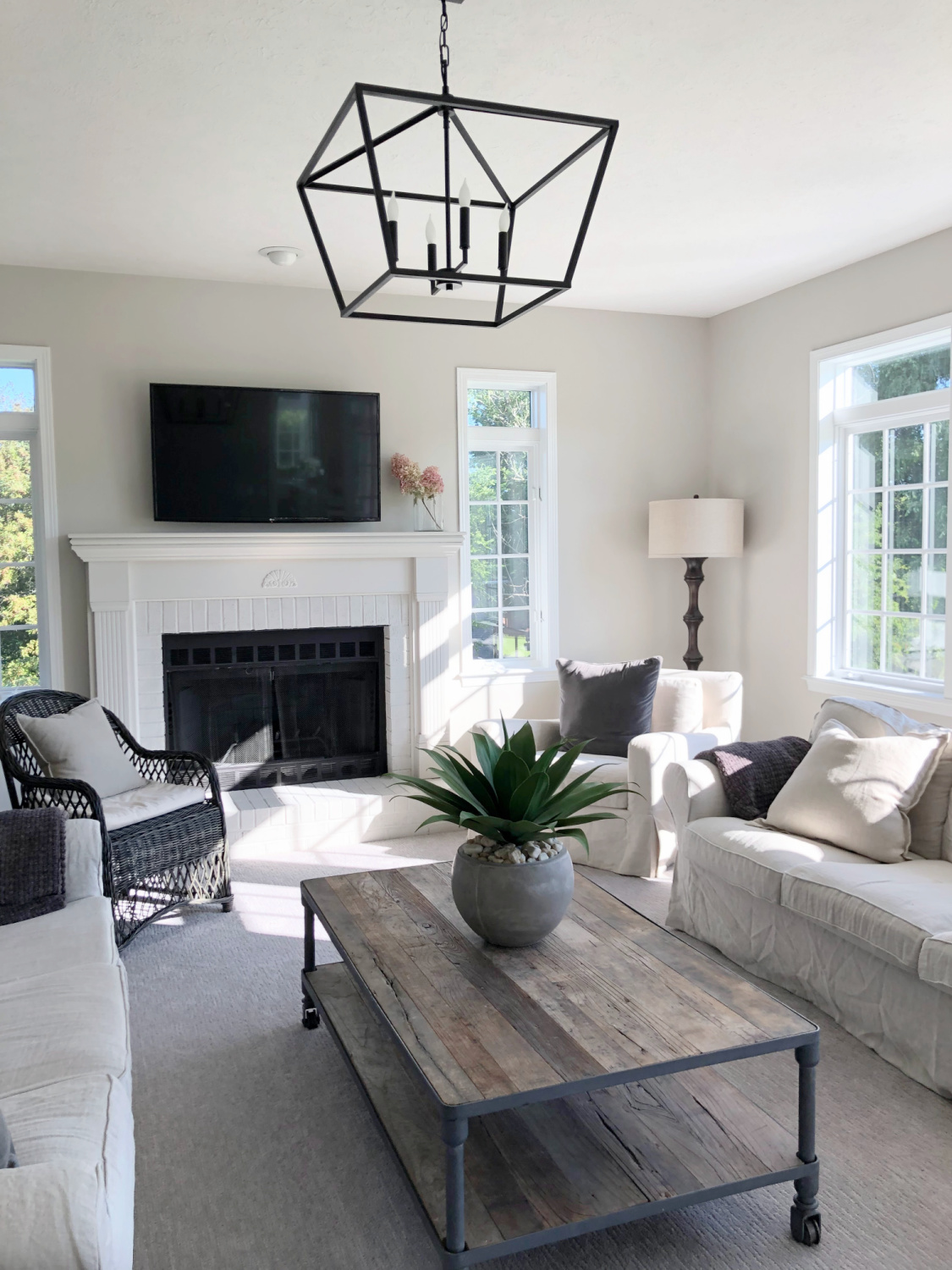
- Beige/Brown Undertones (Greige): This category is hugely popular for its welcoming and comforting vibe. Greiges are the ultimate chameleon, often appearing gray in certain lights and more beige in others. They are perfect for creating a cozy, inviting living room that still feels modern and sophisticated. They pair wonderfully with creamy whites and natural wood tones.
- Yellow Undertones: While less common, some grays can have subtle yellow or golden undertones, making them appear particularly warm and sunny. These can be great for brightening a north-facing room without sacrificing the gray aesthetic.
True Grays (Minimal Undertones)
These are the elusive ‘pure’ grays, devoid of strong discernible undertones. They are rare and often found in the mid-tone range. When you find one, it provides a very neutral, stable backdrop. However, even true grays can pick up colors from surrounding elements (furniture, flooring, outdoor greenery) or be influenced by specific lighting. They are excellent for clean, minimalist designs where you want the focus to be elsewhere.
The Impact of Light: How Your Living Room’s Exposure Transforms Gray
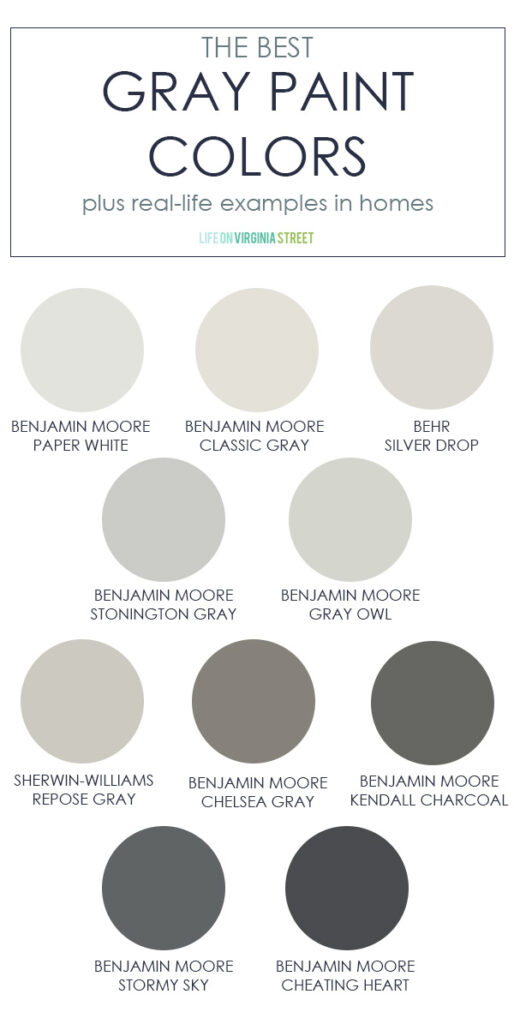
Light is the ultimate determinant of how a paint color will appear. Your living room’s natural light exposure (north, south, east, west) will dramatically influence how a gray shade reads. Ignoring this critical factor is a recipe for paint regret.
North-Facing Living Rooms: Embrace the Warmth
Rooms facing north receive cooler, indirect, and often weaker light throughout the day. This cool light tends to bring out blue or purple undertones in grays, making them feel even colder. For a north-facing living room, I almost always recommend opting for warm grays or greiges. These colors will counteract the cool light and bring much-needed warmth and coziness to the space. Look for grays with beige or brown undertones.
South-Facing Living Rooms: Play with Anything
Ah, the dream! South-facing rooms are bathed in abundant, warm, golden light all day long. This wonderful light allows you to be more flexible. You can confidently choose cooler grays (with blue or green undertones) without fear of them feeling icy, as the warm light will balance them out beautifully. Or, if you prefer, warm grays will feel even more inviting and luminous. It’s truly a choose-your-own-adventure scenario here.
East-Facing Living Rooms: Morning Magic
East-facing rooms get bright, warm, slightly yellow light in the mornings, which then fades to a cooler, softer light in the afternoon and evening. This fluctuating light means your chosen gray will look different throughout the day. Grays with green or balanced undertones often perform well here, as they can adapt to both the morning warmth and the afternoon coolness without feeling too extreme. Avoid overly cool grays that might feel stark by afternoon.
West-Facing Living Rooms: The Afternoon Glow
West-facing rooms receive minimal light in the mornings but are flooded with intense, warm, and often orange-toned light in the late afternoon and evening. This dramatic shift can be tricky. A gray that looks perfectly balanced in the morning might appear overly warm or even slightly muddy when the intense western sun hits it. Mid-tone grays with a subtle cool undertone can help balance the afternoon warmth. Alternatively, a balanced greige can become exceptionally luminous in the evening glow.
Artificial Lighting: The Unsung Hero
Don’t forget your light bulbs! The Kelvin temperature of your bulbs (e.g., 2700K warm white, 3500K neutral white, 5000K daylight) significantly impacts how your gray walls appear. Warm white bulbs (lower Kelvin) will enhance warm undertones, while cooler bulbs (higher Kelvin) will pull out blues and greens. Test your paint samples under your room’s actual artificial lighting at night, as this is often when your living room is used most.
Our Top Picks: The Best Gray Paint Colors for Living Rooms
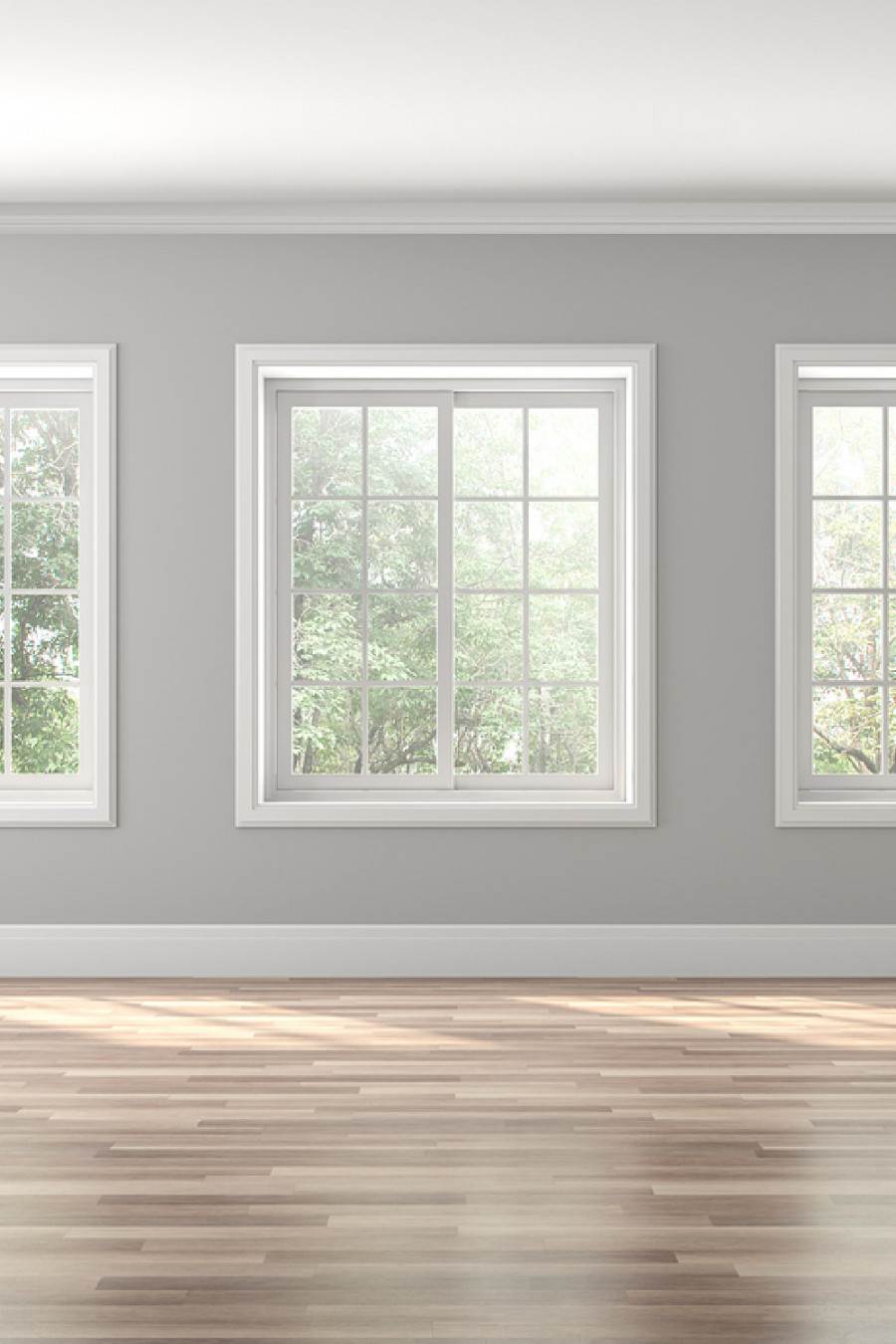
Ready for some specifics? These are some of the most beloved and versatile gray paint colors that consistently perform well in living rooms, complete with their typical undertones and best applications. Remember, always sample in your own space!
| Paint Color | Brand | Undertone | LRV (Approx.) | Best For |
|---|---|---|---|---|
| Revere Pewter HC-172 | Benjamin Moore | Warm (Greige, slight green/yellow) | 55.5 | Cozy, sophisticated living rooms, north-facing rooms, open-concept spaces. |
| Repose Gray SW 7015 | Sherwin Williams | Warm (Greige, slight purple/brown) | 58 | Versatile, balances cool and warm, modern traditional, good for varied lighting. |
| Agreeable Gray SW 7029 | Sherwin Williams | Warm (Greige, taupe) | 60 | Bright, inviting, extremely popular neutral for an airy feel, works well almost anywhere. |
| Light French Gray SW 0055 | Sherwin Williams | Cool (True gray with slight blue) | 53 | Clean, crisp, modern, great for south-facing rooms or a sophisticated backdrop. |
| Classic Gray OC-23 | Benjamin Moore | Warm (Very light greige, almost off-white) | 74.6 | Bright, airy, subtle warmth, perfect for a soft, understated look, especially in darker rooms. |
| Mindful Gray SW 7016 | Sherwin Williams | Warm (Greige, balanced) | 48 | Slightly deeper than Repose, rich, grounding, excellent contrast with white trim. |
| Balboa Mist OC-27 | Benjamin Moore | Warm (Light greige, slight purple) | 67.3 | Soft, luminous, elegant. Can pick up subtle purple in cooler light but is generally very versatile. |
| Kendall Charcoal HC-166 | Benjamin Moore | Warm (Deep charcoal, green undertone) | 14.6 | Dramatic, sophisticated, accent wall or entire room for a moody, cozy den feel. |
| Dorian Gray SW 7017 | Sherwin Williams | Warm (Mid-tone greige, slight brown) | 39 | A true mid-tone, substantial greige, perfect for a grounded, enveloping feel. |
Light Gray Living Room Paint Colors
Light grays are fantastic for making a living room feel larger, brighter, and more airy. They offer a subtle sophistication without overpowering the space. Think of them as elevated neutrals that provide a soft backdrop for your decor. Examples like Benjamin Moore’s Classic Gray or Sherwin Williams’ Agreeable Gray are incredibly popular for their ability to bring a gentle warmth and brightness.
Mid-Tone Gray Living Room Paint Colors
Mid-tone grays strike a beautiful balance, offering more presence than a light gray while avoiding the dramatic intensity of a dark shade. They can create a cozy, enveloping feel without making a room feel small. Sherwin Williams’ Repose Gray and Mindful Gray are stellar examples, offering sophisticated depth with balanced greige undertones that work well with many existing finishes.
Dark Gray Living Room Paint Colors
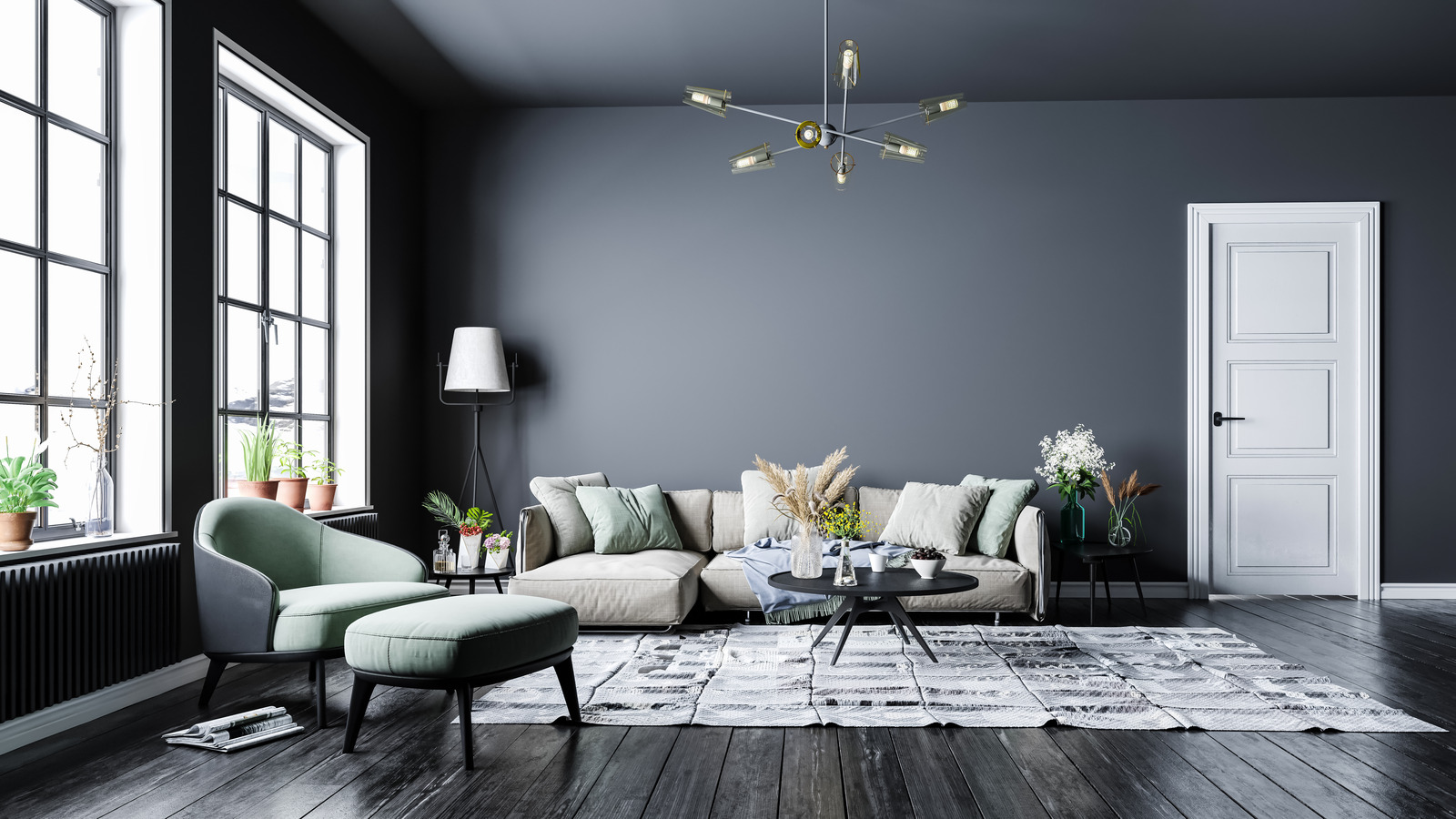
For those daring enough to go bold, dark grays can create an incredibly dramatic, intimate, and luxurious living room. Colors like Benjamin Moore’s Kendall Charcoal provide a sophisticated, moody atmosphere that pairs beautifully with rich textures and metallic accents. Dark grays work exceptionally well in rooms with ample natural light to prevent them from feeling cave-like, or in smaller, cozy spaces where you want to lean into intimacy.
Pairing Gray: Decor & Color Schemes for Your Living Room
Once your gray walls are perfect, the real fun begins: decorating! Gray is the ultimate team player, providing a versatile foundation for nearly any design aesthetic. Here’s how to build a cohesive and beautiful living room around your chosen gray.
Complementary Colors: Infuse Life
- Crisp Whites & Creams: The classic pairing. White trim and ceiling paint (e.g., Benjamin Moore’s Chantilly Lace or Sherwin Williams’ Pure White) provide a clean contrast, making the gray pop. Creams offer a softer, warmer complement.
- Blues & Greens: These are natural partners for cool grays, enhancing their serene quality. Think soft sages, dusty blues, or deep teals. Even with warm grays, these colors can provide a beautiful, calming contrast.
- Yellows & Oranges: For a vibrant touch, sunny yellows and burnt oranges can add warmth and energy to a gray space. Use them as accents in pillows, throws, or artwork to prevent the room from feeling too monochromatic.
- Pinks & Corals: Unexpected but delightful. Blush pinks and soft corals can add a touch of playful sophistication and warmth, especially with lighter grays.
- Metallics: Silver, gold, bronze, and black metals all shine against gray. Incorporate them through light fixtures, furniture legs, or decorative objects for a touch of glamour or industrial chic.
Furniture & Textiles: Texture is Key
With gray walls, texture becomes paramount to add depth and interest. Don’t be afraid to mix and match:
- Natural Wood Tones: Whether light oak, rich walnut, or reclaimed wood, natural wood furniture (coffee tables, side tables, shelving) brings organic warmth and grounds the gray palette.
- Soft Upholstery: Velvets, linens, chunky knits, and faux fur throws add softness and tactile appeal. A plush sofa in a complementary color or a contrasting neutral can be the anchor of your room.
- Leather: A cognac leather sofa or armchair provides a rich, warm counterpoint to any gray, adding a touch of timeless sophistication.
Trim & Ceiling Colors: The Finishing Touch
Typically, white is the go-to for trim and ceilings, creating a fresh, clean boundary. However, you have options:
- Crisp White Trim: This makes the gray walls stand out and feels very traditional and clean.
- Off-White Trim: For a softer transition, especially with warm grays, an off-white with subtle warm undertones (like Benjamin Moore’s White Dove) can create a more cohesive, less stark look.
- Matching Trim (Monochromatic): For a truly modern, enveloping feel, consider painting your trim the same color as your walls. This creates a seamless, high-end look that expands the perception of space.
- Light Gray Ceiling: Instead of stark white, a ceiling painted in a very light, almost off-white gray (perhaps two shades lighter than your wall color) can create a more sophisticated, continuous flow.
Accent Colors & Artwork: Personality Pops
This is where your living room truly becomes yours. Gray provides the perfect neutral stage for:
- Bold Artwork: A vibrant painting or print will immediately draw the eye and infuse personality.
- Colorful Pillows & Throws: Easy to change, these can introduce seasonal colors or simply add a burst of your favorite hues.
- Greenery: Plants, whether real or high-quality faux, bring life and freshness into a gray room, creating a biophilic connection.
- Rugs: An area rug can define your living room space and introduce color, pattern, and texture, harmonizing with or contrasting against your gray walls.
Choosing Your Perfect Gray: A Step-by-Step Approach
Now that you’re armed with knowledge, here’s a practical guide to confidently selecting the right gray for your living room.
- Assess Your Living Room’s Light: Determine if your room is north, south, east, or west-facing. Note how the light changes throughout the day. This is your foundation.
- Consider Existing Furnishings & Flooring: What large pieces of furniture, rugs, or flooring do you already have? Do they have warm or cool undertones? Your paint color should ideally complement these existing elements, not fight them. If your sofa is a cool blue, a warm greige might clash.
- Narrow Down Undertones: Based on your lighting and existing decor, decide if you’re leaning towards a warm gray (greige) or a cool gray (blue, green). This immediately eliminates hundreds of options.
- Create a Shortlist of 3-5 Colors: Research popular grays that fit your desired undertone and light reflectance value (LRV – how much light a color reflects, higher number = brighter). Use the table above as a starting point.
- Sample, Sample, Sample (Seriously!): Buy large paint swatches or small sample pots. Paint large (at least 2’x2′) swatches on multiple walls in your living room. Do not rely on tiny chips or online images.
- Observe Throughout the Day (and Night!): Live with your samples for a few days. See how they look in morning light, afternoon sun, twilight, and under artificial lights. This step is non-negotiable! Take notes. Which one makes you feel good? Which one looks ‘off’?
- Get a Second Opinion (If You Trust It!): Sometimes a fresh pair of eyes can confirm what you’re seeing. But ultimately, you have to love it.
Gray: A Timeless Choice or a Fading Trend?
The question often arises: Is gray still ‘in’? My answer is an emphatic yes, but with a nuance. The ubiquitous, sometimes cold, gray of the past decade is evolving. We’re seeing a shift towards warmer grays, greiges, and grays with subtle green undertones, reflecting a desire for more natural, comforting spaces. Dark, moody grays are also having a moment, especially for creating intimate, cozy zones.
Gray, in its essence, is a neutral. And neutrals, by definition, are timeless. While specific shades might ebb and flow with trends, the versatility and sophistication of gray ensure its place as a perennial favorite. By understanding its undertones and how it interacts with light, you’re not just choosing a trendy color; you’re selecting a timeless backdrop that can adapt to changing styles and personal preferences for years to come.
Final Thoughts: Embracing the Nuance of Gray
Choosing the perfect gray paint color for your living room doesn’t have to be a daunting task. It’s an exploration of light, undertones, and personal style. By taking the time to understand these key elements, you’ll move beyond guessing and confidently select a shade that truly enhances your home.
Remember, the goal isn’t just to pick a gray, but to choose a gray that makes your living room feel exactly as you envision it: a haven of comfort, style, and timeless elegance. Trust your instincts, embrace the sampling process, and get ready to fall in love with your newly transformed space. Happy painting!
Frequently Asked Questions
What is the most popular gray paint color for a living room?
While ‘most popular’ can vary, Benjamin Moore’s Revere Pewter (a warm greige) and Sherwin Williams’ Repose Gray (a balanced greige) are consistently top choices for living rooms due to their versatility and ability to complement various design styles and lighting conditions. They offer warmth without being too beige or too cold.
How do I choose between a warm gray and a cool gray for my living room?
Consider your living room’s natural light and existing decor. Warm grays (greiges with beige/brown undertones) are ideal for north-facing rooms or for creating a cozy, inviting feel. Cool grays (with blue/green undertones) work well in south-facing rooms or to achieve a crisp, modern aesthetic. Always sample colors on your walls to see how they react to your specific lighting.
What trim color goes best with gray living room walls?
Crisp white trim (like Benjamin Moore’s Chantilly Lace or Sherwin Williams’ Pure White) is a classic choice that creates a clean, defined look. For a softer, less stark transition, especially with warm grays, consider an off-white trim with subtle warm undertones (e.g., Benjamin Moore’s White Dove). You can also paint the trim the same gray as the walls for a modern, monochromatic effect.
Will gray paint make my living room look small or dark?
Not necessarily! Light grays with a high LRV (Light Reflectance Value) can actually make a room feel larger and brighter. Mid-tone grays can create an enveloping, cozy feel without shrinking the space. Dark grays, when used thoughtfully in a room with ample natural light or as an accent, can add drama and sophistication. The key is to consider the shade’s LRV and undertones in relation to your room’s size and light exposure.
What colors pair well with gray living room paint?
Gray is incredibly versatile. It pairs beautifully with crisp whites, creams, and natural wood tones for a classic look. For pops of color, consider blues (especially dusty blues or navy), greens (sages, emeralds), yellows, corals, or even blush pinks. Metallics like silver, gold, and bronze also create a sophisticated contrast.
How important is sampling paint colors before committing?
Sampling is CRITICAL. Paint colors look vastly different on a small chip than they do on a large wall, and they change dramatically based on your room’s unique lighting conditions (natural and artificial). Purchase sample pots and paint large swatches on multiple walls, living with them for several days to observe how the color shifts morning, noon, and night.