Grey And Blue Wall Paint Ideas: The Definitive Guide to Crafting Serene & Stylish Spaces
Feeling overwhelmed by paint chips? You’re not alone. Choosing the perfect wall color can be daunting, but some combinations stand the test of time for a reason. And when it comes to timeless elegance, versatility, and undeniable calm, few pairings rival the magic of grey and blue.
It’s the combo that brings the tranquility of a misty morning ocean or the sophisticated calm of a cloud-dappled sky right into your home. If you’re dreaming of a space that feels both grounded and expansive, deeply personal yet universally appealing, then grey and blue wall paint ideas are your answer. But it’s not as simple as just picking ‘grey’ and ‘blue.’ There are nuances, undertones, and moods to master.
This guide isn’t just a list of colors; it’s your personal design consultant, helping you navigate the subtle shifts between shades, understand the impact of light, and truly bring your vision to life. Let’s dive into creating a space you’ll genuinely love coming home to.
Understanding the Nuance: Grey-Blue vs. Blue-Grey
Before we even touch a paint swatch, let’s clear up a common misconception that makes all the difference: the distinction between grey-blue and blue-grey.
It sounds like splitting hairs, right? But in the world of color, the order of the words tells you which color is dominant. Think of it like a cocktail recipe – is it mostly vodka with a splash of cranberry, or mostly cranberry with a splash of vodka?
- Grey-Blue: This is primarily a grey paint with a noticeable blue undertone or tint. The grey is the star, providing a sophisticated, often muted backdrop, while the blue adds a subtle coolness or whisper of color. It’s grounded, understated, and often feels more neutral.
- Blue-Grey: Here, the primary color is blue, but it’s been softened and desaturated by a significant amount of grey. The blue is still prominent, creating a more distinct color statement, but the grey prevents it from being overly vibrant or childish. It’s elegant, soothing, and clearly blue, but never overtly so.
When to choose which:
- Opt for grey-blue if you want a neutral-leaning wall color that provides a subtle hint of cool color without being overtly blue. It’s fantastic for open-concept spaces or rooms where you want the furniture and art to take center stage.
- Go for blue-grey if you want a more distinct color on your walls that still maintains sophistication and calm, rather than a bold, bright blue. It works beautifully to establish a serene mood in bedrooms or a crisp, clean feel in bathrooms.
Decoding Undertones: The Secret to Perfect Blue-Greys
This is where many DIY painters get stuck. You pick a gorgeous grey-blue from a tiny swatch, paint a whole wall, and suddenly it looks… purple? Or green? That, my friend, is the sneaky power of undertones.
:max_bytes(150000):strip_icc()/Gibbs-Ave-134-9b2a24f2bc9448d7800258c65c193aa2.jpeg "40 Blue-Gray Paint Colors to Inspire Your Next Reno")
Undertones are the subtle colors beneath the surface of a paint shade that reveal themselves under different lighting conditions and when placed next to other colors. For grey and blue paints, the most common undertones are green, purple/violet, or sometimes a truer, cooler blue.
Green Undertones: The Organic & Spa-Like Feel
When your grey-blue or blue-grey has a hint of green, it leans towards a more organic, natural, and often warmer feel. Think of eucalyptus leaves or the muted tones of sea glass. These shades are incredibly popular for creating a tranquil, spa-like atmosphere.
- Feeling: Serene, grounding, refreshing, subtle warmth.
- Best For: Bathrooms, bedrooms, spaces with natural wood accents, or rooms you want to connect to the outdoors.
- Watch Out For: Can sometimes read as slightly ‘minty’ or ‘sage-like’ in very bright, cool light.
Purple/Violet Undertones: The Sophisticated & Muted Side
A touch of purple or violet adds depth and sophistication to grey-blue and blue-grey shades. These colors can feel more luxurious, cozy, and often a bit more formal. They are fantastic for adding an unexpected layer of richness.
- Feeling: Elegant, contemplative, muted, slightly romantic, deeper warmth.
- Best For: Dining rooms, master bedrooms, living rooms with rich textiles, or spaces with warm metals (brass, gold).
- Watch Out For: Can sometimes appear ‘lavender’ or ‘periwinkle’ in very cool, natural light, especially if your room has south-facing exposure.
Cooler Blue Undertones: The Crisp & Airy True Blue-Grey
Some grey-blues or blue-greys will have minimal green or purple, leaning instead into their true cool blue essence. These are often the crispest, cleanest versions, feeling very fresh and airy.
- Feeling: Crisp, clean, fresh, open, modern, distinctly cool.
- Best For: Modern interiors, minimalist spaces, children’s rooms, bright hallways, or areas where you want a truly serene, uncluttered feel.
- Watch Out For: Can feel too cold or stark in north-facing rooms with limited natural light, or if not balanced with warm textures and accents.
How to identify undertones: Always look at paint chips against a pure white background. Place them in your room, against your existing flooring, and next to your furniture. Observe them at different times of day – morning, noon, and evening – and under both natural and artificial light. This is truly the best way to uncover their hidden hues.
Choosing Your Perfect Shade: Factors to Consider
So, you’ve got a handle on grey-blue versus blue-grey and the importance of undertones. Now, how do you narrow down the endless options to *your* perfect shade? It’s all about understanding your space and your desired outcome.
Natural Light: The Ultimate Game Changer
This is arguably the most crucial factor. Light literally changes how paint colors appear. Always consider your room’s orientation:
- North-Facing Rooms: Tend to have cooler, dimmer light. Blue-greys here can feel more intense and sometimes a bit cold. Consider shades with a green or even a slight purple undertone to add warmth, or opt for a lighter blue-grey to prevent the room from feeling too dim.
- South-Facing Rooms: Bathed in warm, bright light throughout the day. This light can warm up cool blue-greys, making them appear softer and sometimes less saturated. Almost any grey-blue or blue-grey will look lovely here, but be mindful that colors might appear lighter than on the swatch.
- East-Facing Rooms: Get bright, warm light in the morning, which shifts to cooler, shadier light in the afternoon. A grey-blue with green undertones can feel invigorating in the morning and soothing later in the day.
- West-Facing Rooms: Receive warm, intense light in the afternoon and evening. This can make cool blue-greys feel more vibrant or even wash them out. Test samples carefully to see how they react to the strong afternoon sun.
Room Function: Setting the Mood
The purpose of a room heavily influences the ideal paint choice:
- Bedroom (Calming): Lean into softer, muted blue-greys or grey-blues with subtle green or purple undertones. Think tranquil, restful, and cocoon-like.
- Living Room (Inviting): Versatile grey-blues or mid-tone blue-greys work beautifully. Consider how much natural light the room gets and whether you want a formal or relaxed feel.
- Bathroom (Spa-Like): Crisp, clean blue-greys with a touch of green are perfect for creating a refreshing, serene, and clean environment.
- Kitchen (Clean & Contemporary): Lighter grey-blues can feel incredibly fresh and bright, especially when paired with white cabinetry. Deeper blue-greys can add a sophisticated focal point on an accent wall or island.
- Home Office (Focused & Serene): Mid-tone blue-greys can promote concentration and reduce stress, making them ideal for a workspace.
Existing Decor & Furnishings: Harmonizing Your Space
Your walls don’t exist in a vacuum! Take into account your existing furniture, flooring, textiles, and artwork. Are they warm or cool-toned? Do you have rich woods or crisp metallics? Your grey-blue or blue-grey should complement, not clash with, these elements.
Room Size & Ceiling Height: Playing with Perception
- Small Rooms: Lighter grey-blues can make a small room feel more expansive and open. Using a slightly lighter shade on the ceiling can also visually lift it.
- Large Rooms: Can handle deeper, moodier blue-greys without feeling oppressive. Darker shades can make a large room feel more intimate and cozy.
- Low Ceilings: Stick to lighter shades on the walls and use white or a very light tint of the wall color on the ceiling to create an illusion of height.
Popular Grey and Blue Paint Colors to Inspire You
While specific paint names can vary and look different in every home, understanding categories of popular shades can help you narrow down your search. Here’s a breakdown of common characteristics you’ll find:
Light & Airy Shades
These shades are perfect for making rooms feel larger, brighter, and more open. They’re often grey-blues with a subtle hint of blue, or very desaturated blue-greys.
| Common Characteristics | Typical Feel/Application |
|---|---|
| Very pale blue-grey, almost a ‘white’ with a cool tint. Subtle green or pure blue undertones. | Expansive, ethereal, crisp. Great for small rooms, nurseries, and coastal themes. Feels very fresh. |
| Light grey with a clear, but soft, blue undertone. Often leans slightly towards sky blue. | Calm, neutral, bright. Excellent for open-concept areas, living rooms, and creating a soft backdrop. |
Mid-Tone & Versatile Shades
These are the workhorses of the blue-grey family, offering a noticeable color presence without being too dark or too light. They often have a balanced amount of grey and blue.
| Common Characteristics | Typical Feel/Application |
|---|---|
| Muted blue with a significant grey component. Often features a subtle green undertone for added complexity. | Sophisticated, tranquil, earthy. Ideal for bedrooms, dining rooms, and spaces wanting a soothing, yet distinct color. |
| True balance of grey and blue, often with a hint of purple/violet undertone. | Elegant, contemplative, classic. Perfect for master bedrooms, studies, or living rooms desiring depth. |
Deep & Moody Shades
For those who love drama and intensity, these darker blue-greys can create incredibly impactful and cozy spaces. They typically feature a strong blue presence, deepened by grey.
| Common Characteristics | Typical Feel/Application |
|---|---|
| Rich, deep blue with a heavy dose of grey. Can have slate, charcoal, or even a deep teal undertone. | Dramatic, cozy, luxurious. Excellent for accent walls, dens, formal living rooms, or creating a cocoon-like bedroom. |
| Very dark grey with a cool, muted blue hint. Sometimes appears almost black in dim light. | Intimate, sophisticated, grounding. Use in large rooms, libraries, or to make a bold, modern statement. |
The Power of Sheen: Selecting the Right Finish
Once you’ve nailed down the color, don’t overlook the paint finish. Sheen (or ‘finish’) refers to how much light the paint reflects, and it profoundly impacts both the aesthetic and practicality of your grey and blue walls.
:max_bytes(150000):strip_icc()/BondegatanSodermalmStockholmBedroomlampchairblueFantasticFrank-d4153e01738845caaaab184e2eecf7a7-33429fc42bfa411d988f8233f04fdfde-894916cc0c654d7cba491efcec62c1ba.jpg "40 Blue-Gray Paint Colors to Inspire Your Next Reno")
| Sheen Type | Characteristics | Best For Grey & Blue Walls |
|---|---|---|
| Matte/Flat | No shine, absorbs light. Hides imperfections well. Less durable, harder to clean. | Ceilings, low-traffic areas like bedrooms, dining rooms, or for a very sophisticated, velvety look with deep blue-greys. Enhances color depth. |
| Eggshell/Satin | Soft, subtle sheen. More durable and washable than flat. Most versatile. | Living rooms, hallways, family rooms, bedrooms. The go-to choice for almost any grey and blue application due to its balance of aesthetics and practicality. |
| Semi-Gloss/Gloss | High reflectivity, very durable and easy to clean. Highlights imperfections. | Trim, doors, cabinetry, high-traffic areas like bathrooms and kitchens. Use on walls for a dramatic, modern, or lacquered effect, but be warned – every bump will show! |
Styling Your Grey and Blue Walls: Complementary Colors & Materials
Painting your walls is just the beginning. The magic truly happens when you pair your chosen grey and blue with the right complementary colors, textures, and materials. This is where you bring the whole room to life and infuse it with your personal style.
Balancing Cool with Warm: The Key to Coziness
Grey and blue are inherently cool colors, so introducing warmth is crucial to prevent a room from feeling stark or uninviting.
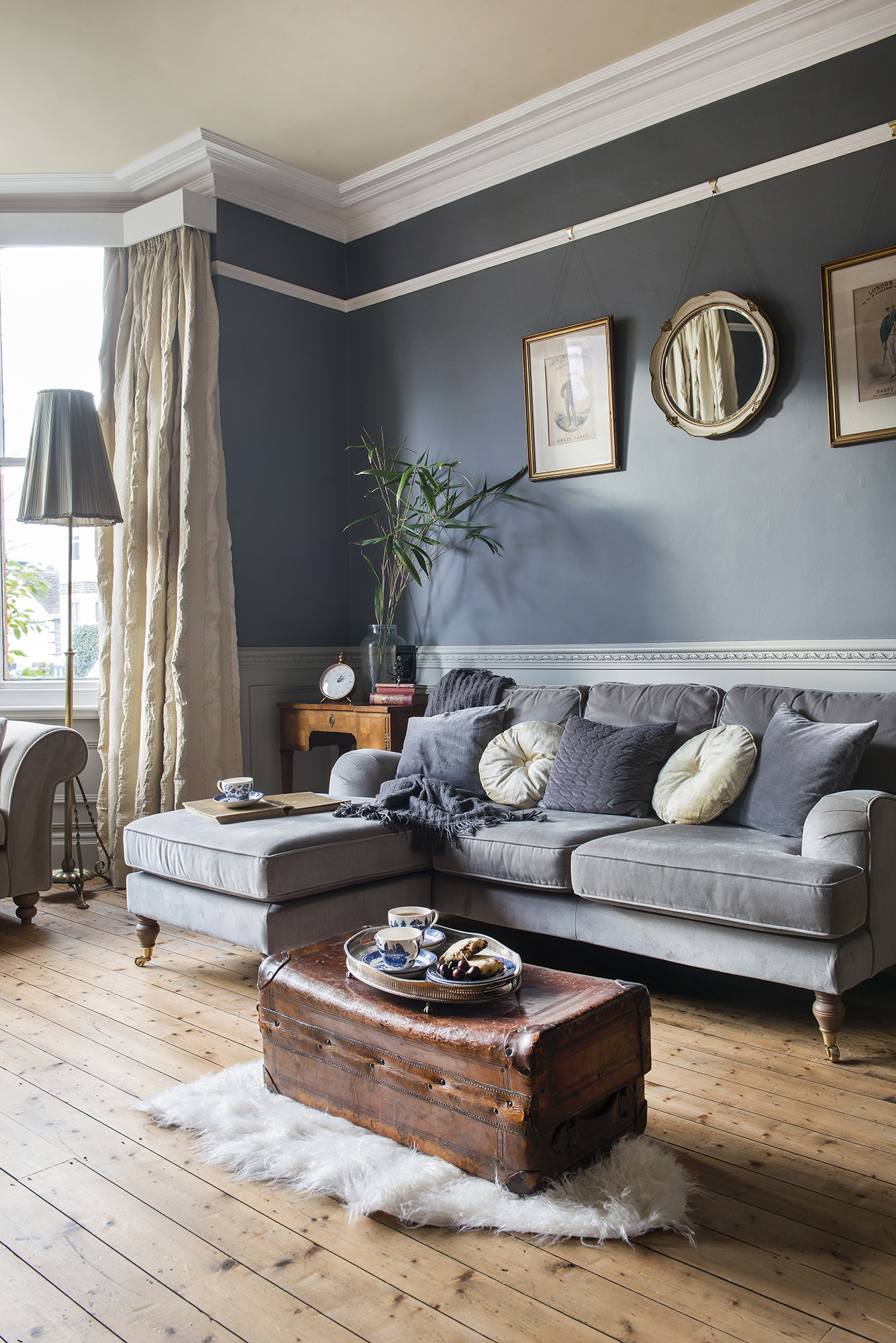
- Warm Neutrals: Think creams, soft beiges, and taupes for upholstery, rugs, or curtains. These provide a gentle contrast and soften the cool edges.
- Earthy Tones: Rich natural woods (oak, walnut, teak), woven textures like jute or rattan, and even terra cotta or clay accents add organic warmth and grounding.
Crisp Contrasts & Sophisticated Pops
- Crisp Whites: A classic for a reason. Use bright white for trim, ceilings, and internal doors to make your grey-blue walls pop. It creates a clean, fresh, and timeless look.
- Metallic Accents: Introduce gold, brass, or bronze for a touch of luxury and warmth. Silver and chrome can enhance a cooler, more modern aesthetic.
- Pops of Color: Don’t be afraid to introduce vibrant accents!
- Mustard Yellow or Ochre: Provides a sunny, energizing contrast.
- Coral or Soft Terracotta: Adds a beautiful, unexpected warmth and bohemian flair.
- Deep Green (Emerald or Forest): Creates a rich, layered, natural feel, especially with blue-greys that have a green undertone.
- Soft Pink or Blush: For a delicate, sophisticated, and slightly feminine touch, particularly lovely in bedrooms.
Texture, Texture, Texture!
Monochromatic or tonal schemes thrive on texture. Mix and match to add interest and depth:
- Soft Furnishings: Plush velvet, cozy wool, nubby linen, chunky knits.
- Rugs: Sheepskin, shag, jute, or intricately patterned oriental rugs.
- Wall Decor: Woven tapestries, abstract art with textured elements, mirrors, and varied frames.
Grey and Blue Wall Paint Ideas: Room by Room Inspiration
Let’s get specific! How do these versatile hues translate into the different spaces of your home?
The Bedroom: A Tranquil Retreat
Grey and blue are a match made in heaven for bedrooms, promoting calm and relaxation. Opt for softer, muted blue-greys or grey-blues here. An accent wall behind the bed in a slightly deeper blue-grey can create a focal point without overwhelming the space. Pair with crisp white bedding, natural wood nightstands, and soft, tactile textiles like chunky knit throws or linen curtains. Consider introducing a warm neutral rug to anchor the room.
The Living Room: Inviting & Sophisticated
For a living room, a mid-tone blue-grey can provide a sophisticated backdrop that works with many styles. If your living room is open-concept, a lighter grey-blue can tie different areas together seamlessly. Introduce warmth with leather sofas, oak coffee tables, and a few mustard yellow throw pillows. Metallic accents like a brass lamp or gold-framed mirror will elevate the elegance. Consider a slightly darker shade for an inviting feature wall.
The Bathroom: A Spa-Like Sanctuary
Blue-greys with a definite green undertone are ideal for bathrooms, mimicking the calming colors of the sea. Pair with white subway tiles, brushed nickel or chrome fixtures, and plush white towels for a clean, refreshing, spa-like feel. A deep blue-grey can make a small powder room feel surprisingly luxurious and intimate. Ensure good lighting to prevent the space from feeling too dim.
:max_bytes(150000):strip_icc()/BEHR_22.03_TRENDS_BEDROOM_KM_001_IntercoastalGray-5513b7a2e99b4b089b6d25ee2e7c1741.jpg "18 Blue-Gray Paint Colors That Are Versatile, but Never Boring")
The Kitchen: Clean & Contemporary
Lighter grey-blues can create a wonderfully clean and airy kitchen, especially when paired with white or light-colored cabinetry. Consider painting the island a deeper blue-grey for a sophisticated contrast. For a more dramatic look, deep blue-grey cabinets with white walls can be stunning. Stainless steel appliances will feel right at home, while brass hardware can add a touch of warmth and trendiness.
Home Office/Nursery: Focused & Calming
In a home office, a mid-tone grey-blue can promote focus and a sense of calm, reducing visual clutter. Pair with functional, minimalist furniture and natural light. For a nursery, soft, ethereal grey-blues or blue-greys create a peaceful and gender-neutral environment. Add whimsical art, soft lighting, and plush rugs to complete the serene space.
Hallways & Entryways: Welcoming First Impressions
Since hallways often lack natural light, lighter grey-blues can help them feel more open and welcoming. If your hallway is wide and bright, a slightly deeper blue-grey can add sophistication. Ensure adequate artificial lighting to show off the color. Add a console table with a plant and a piece of artwork to create an inviting first impression.
Tips for Painting Like a Pro (Even if You’re Not!)
Choosing the color is half the battle; applying it beautifully is the other. Here are some pro tips to ensure your grey and blue walls look their best:
- Sample, Sample, Sample: I cannot stress this enough. Buy sample pots and paint large swatches (at least 2×2 feet) on multiple walls in your room. Live with them for a few days, observing them at different times, under varying light. This is the single best way to avoid disappointment.
- Prep Work Matters: Don’t skip cleaning your walls (sugar soap works wonders!), patching any holes or cracks, and taping off trim. A smooth, clean surface is essential for a professional finish.
- Primer is Your Friend: Especially if you’re covering a dark color, changing sheen dramatically, or painting over new drywall, a good quality primer will ensure truer color representation and better adhesion.
- Invest in Quality Tools: Good brushes (for cutting in), rollers (for walls), and painter’s tape make a world of difference in application, coverage, and final look.
- Cut in First: Use your brush to paint along edges, corners, and around trim first. Then, use your roller to fill in the larger wall sections, overlapping slightly with your brushwork for a seamless finish.
- Two Thin Coats Are Better Than One Thick: This reduces drips, provides better coverage, and results in a smoother finish.
- Ventilate: Always work in a well-ventilated area, and take breaks!
Conclusion: Your Grey & Blue Journey Begins
Grey and blue wall paint ideas offer a boundless canvas for creativity, from whispered tranquility to bold sophistication. They are timeless, versatile, and deeply personal, capable of transforming any space into a haven of style and serenity.
By understanding the nuances of blue-grey versus grey-blue, decoding those tricky undertones, considering the dance of natural light, and thoughtfully pairing your chosen shade with complementary elements, you’re not just painting walls – you’re crafting an experience. So, grab those swatches, trust your instincts, and embark on your journey to a beautifully colored home. Your serene and stylish space awaits!
Frequently Asked Questions
What’s the difference between blue-gray and gray-blue paint?
Blue-gray is primarily blue, softened by a significant amount of gray, making it a distinct but muted blue. Gray-blue is primarily gray, with a subtle blue undertone or tint, making it a more neutral color with a cool hint. The dominant color is always listed first.

What colors go well with grey and blue walls?
Warm neutrals like cream, beige, and taupe provide balance. Crisp whites create a clean contrast. Earthy tones such as natural woods and woven textures add warmth. Metallic accents like gold or brass introduce luxury, while pops of color like mustard yellow, coral, or deep green can add personality.
Is blue-gray paint a warm or cool color?
Generally, blue-gray paint is considered a cool color due to its blue and gray components. However, shades with green or purple undertones can introduce a subtle warmth, making them feel less stark than a pure, cool blue-gray. Pairing with warm accents is key to balancing the room.
How does lighting affect blue and grey paint colors?
Lighting significantly impacts paint appearance. North-facing rooms with cool, dim light can make blue-greys feel more intense. South-facing rooms with warm, bright light can soften and lighten blue-greys. East-facing rooms get warm morning light, while west-facing rooms get intense afternoon light, both of which can alter how the color is perceived throughout the day.
Can I use grey and blue paint in a small room?
Absolutely! Lighter grey-blue shades can make a small room feel more expansive and airy. Deeper blue-greys can be used effectively on an accent wall to add drama and intimacy without overwhelming the space, especially when paired with lighter adjacent walls or ceilings.
What are some popular grey and blue paint colors?
Popular shades often include very pale blue-greys (almost white with a cool tint), mid-tone muted blues with green or purple undertones, and deep, rich blues desaturated with charcoal grey. Specific names vary by brand (e.g., Benjamin Moore Light Blue, Sherwin-Williams North Star, Farrow & Ball Blue Gray).
How can I warm up a room painted in a cool blue-gray?
Introduce warm elements through decor. Use natural wood furniture, add textiles in warm neutrals (beige, cream, taupe) or vibrant accents (mustard yellow, coral). Incorporate metallic finishes like brass or gold, and ensure your lighting (both natural and artificial) is considered, perhaps using warmer-toned light bulbs.