Beyond Beige: The Definitive Guide to Powerful Bedroom Color Schemes for Men
Let’s be real: trying to pick out a bedroom color scheme that feels genuinely masculine, sophisticated, and distinctly you can feel like navigating a minefield of generic advice. You’re looking for a sanctuary, a personal retreat that reflects your style – not a sterile showroom or a throwback to your college dorm. You want depth, character, and a sense of calm strength, not just another shade of ‘safe’ beige.
If you’re tired of seeing the same old ‘dark gray equals masculine’ suggestions, or you’re simply overwhelmed by endless swatches, you’re in the right place. This isn’t about slapping on a dark color and calling it a day. This is about crafting a cohesive, intentional bedroom environment where every hue, texture, and light source works in harmony to create a space that’s not just lived in, but truly owned.
We’re diving deep into the psychology, the aesthetics, and the practical application of color to help you unlock the perfect bedroom scheme. Forget the fluff; let’s build a space that speaks to your refined taste and provides the ultimate escape.
Decoding “Masculine”: What Do Men Really Want in a Bedroom Color Scheme?
Before we grab the paint swatches, let’s redefine what ‘masculine’ means in the context of interior design. It’s often misunderstood as solely dark, moody, or minimalist. While those can certainly be elements, true masculine design in a bedroom is about creating a space that feels:
- Grounded and Intentional: Colors that feel solid and purposeful, not frivolous.
- Comfortable and Inviting: A place for relaxation and rest, free from visual clutter or jarring tones.
- Reflective of Personal Style: Whether it’s rugged, refined, modern, or classic, the colors should resonate with your aesthetic.
- Sophisticated and Mature: A departure from transient trends, opting for timeless appeal.
- Functional: Colors that support the room’s primary purpose – sleep, relaxation, and personal reflection.
More Than Just Dark: Understanding the Nuances
While many men gravitate towards deeper, richer colors, it’s not a hard and fast rule. The key isn’t simply ‘dark,’ but depth and saturation. A rich forest green or a muted charcoal offers a similar grounded feeling to black or navy, but with more personality and warmth. Lighter colors can also be incredibly masculine when paired with strong textures, crisp lines, and strategic dark accents.
Think about the overall mood you want to evoke. Do you want a calming retreat? An energizing start to your day? A sophisticated lounge? Your desired mood will be the ultimate guide.
The Psychology of Color for a Man’s Space
Colors aren’t just pretty; they impact our mood and perception. Understanding this can help you make intentional choices:
| Color Family | Common Associations | Best For Achieving… |
|---|---|---|
| Blues (Navy, Teal, Dusty Blue) | Calmness, stability, wisdom, sophistication, depth. | Relaxation, focus, a classic or coastal feel. |
| Greens (Forest, Olive, Sage) | Nature, growth, tranquility, balance, wealth, adventure. | Serenity, connection to nature, a rustic or refined look. |
| Grays (Charcoal, Slate, Greige) | Balance, neutrality, sophistication, modernity, strength. | Contemporary elegance, a versatile base, industrial vibes. |
| Browns & Earth Tones (Taupe, Terracotta, Tan) | Warmth, reliability, comfort, nature, ruggedness. | Cozy warmth, rustic charm, a grounded, natural feel. |
| Black & White (Monochromatic) | Authority, elegance, minimalism, contrast, timelessness. | Bold statements, modern minimalism, graphic impact. |
The Core Palettes: Foundational Color Schemes for Men
Instead of just listing colors, let’s explore integrated schemes that capture distinct masculine aesthetics. Think of these as blueprints for your personal style.
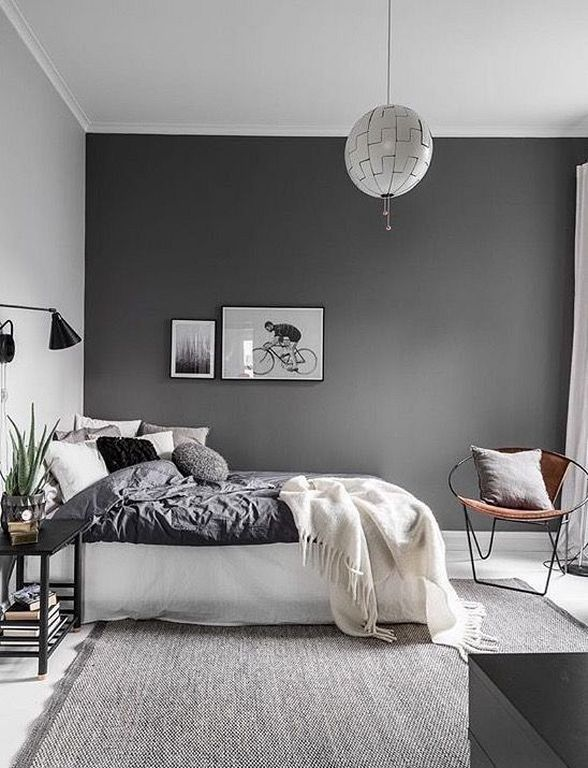
The Modern Minimalist: Serene Neutrals & Strategic Accents
For the man who appreciates clean lines, uncluttered spaces, and understated elegance, this scheme is a winner. It’s about sophisticated simplicity, not blandness.
- Main Colors: A foundation of cool grays (like a light slate or concrete gray), crisp off-whites, or a versatile greige. These create a bright, airy, yet grounded base.
- Accent Colors: Introduce depth with strategic pops of charcoal gray, a deep, muted navy blue, or even a subtle black in smaller doses (e.g., picture frames, lamp bases). Natural wood tones (light to medium) are crucial here to add warmth without disrupting the minimalist vibe.
- Textures: Keep it refined and smooth. Think plush, low-pile rugs, crisp cotton or linen bedding, polished concrete or light wood floors, and sleek metal accents (brushed nickel, matte black).
- Key Tip: To avoid a sterile feel, play with subtle variations in your chosen neutrals (e.g., a cool white ceiling with a slightly warmer off-white wall) and introduce different textures. The contrast comes from the sharpness of the lines and the purposeful placement of objects.
The Urban Industrialist: Gritty Charm & Raw Sophistication
This scheme speaks to a rugged, no-nonsense aesthetic that’s rooted in functionality and raw materials. It’s perfect for city dwellers or those who love a loft-like feel.
- Main Colors: Embrace shades like charcoal, slate gray, or a muted, deep blue-gray reminiscent of concrete or steel. An exposed brick wall (or wallpaper mimicking it) can serve as a powerful accent.
- Accent Colors: Integrate rich, warm browns from leather furniture, deep olive greens, or even a muted rust or terracotta. Black is a natural fit, especially in metal fixtures.
- Textures: This is where industrial really shines. Think exposed brick, concrete elements, distressed wood, raw metal (iron, steel, copper), and sturdy leather. Textiles should be robust – canvas, thick cotton, or wool.
- Key Tip: The balance here is between rough and refined. A raw concrete wall can be softened by a plush, deep-toned rug and comfortable leather seating. Lighting is crucial; industrial fixtures with warm bulbs add a cozy glow.
The Rugged Adventurer: Earthy Tones & Natural Comfort
Inspired by the great outdoors, this scheme is all about warmth, comfort, and a connection to nature. It’s grounded, inviting, and inherently masculine without being overtly dark.
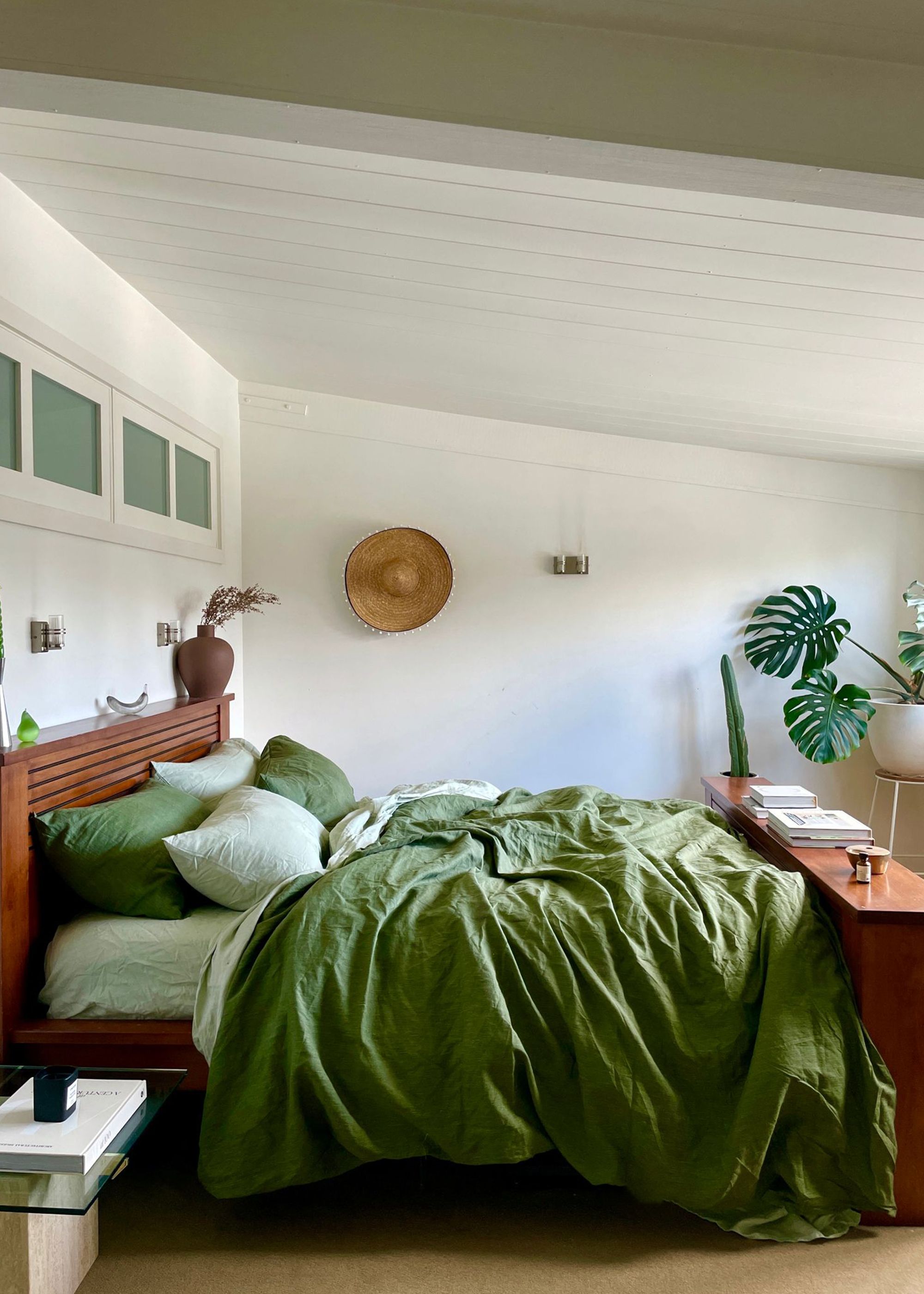
- Main Colors: Dive into deep, muted forest greens, rich olive greens, warm taupes, or inviting terracotta. A soft, dusty blue can evoke a clear sky.
- Accent Colors: Pair with the warmth of natural wood (medium to dark stains), deep rust, burnt orange, cream, or even a deep burgundy. Black can be used sparingly for defined lines.
- Textures: This scheme thrives on natural materials. Think rough-hewn wood furniture, wool blankets, linen bedding, stone elements, and worn leather. Plaid patterns can add a classic cabin feel.
- Key Tip: Layering is important here. Combine different shades of green or brown with varied textures to create depth and visual interest. Plants are a natural fit for this aesthetic, enhancing the connection to nature.
The Classic & Refined: Timeless Elegance & Deep Hues
For the man who appreciates tradition, luxury, and a sense of enduring style, this palette offers sophistication without being stuffy. It’s about creating a distinguished and comfortable retreat.
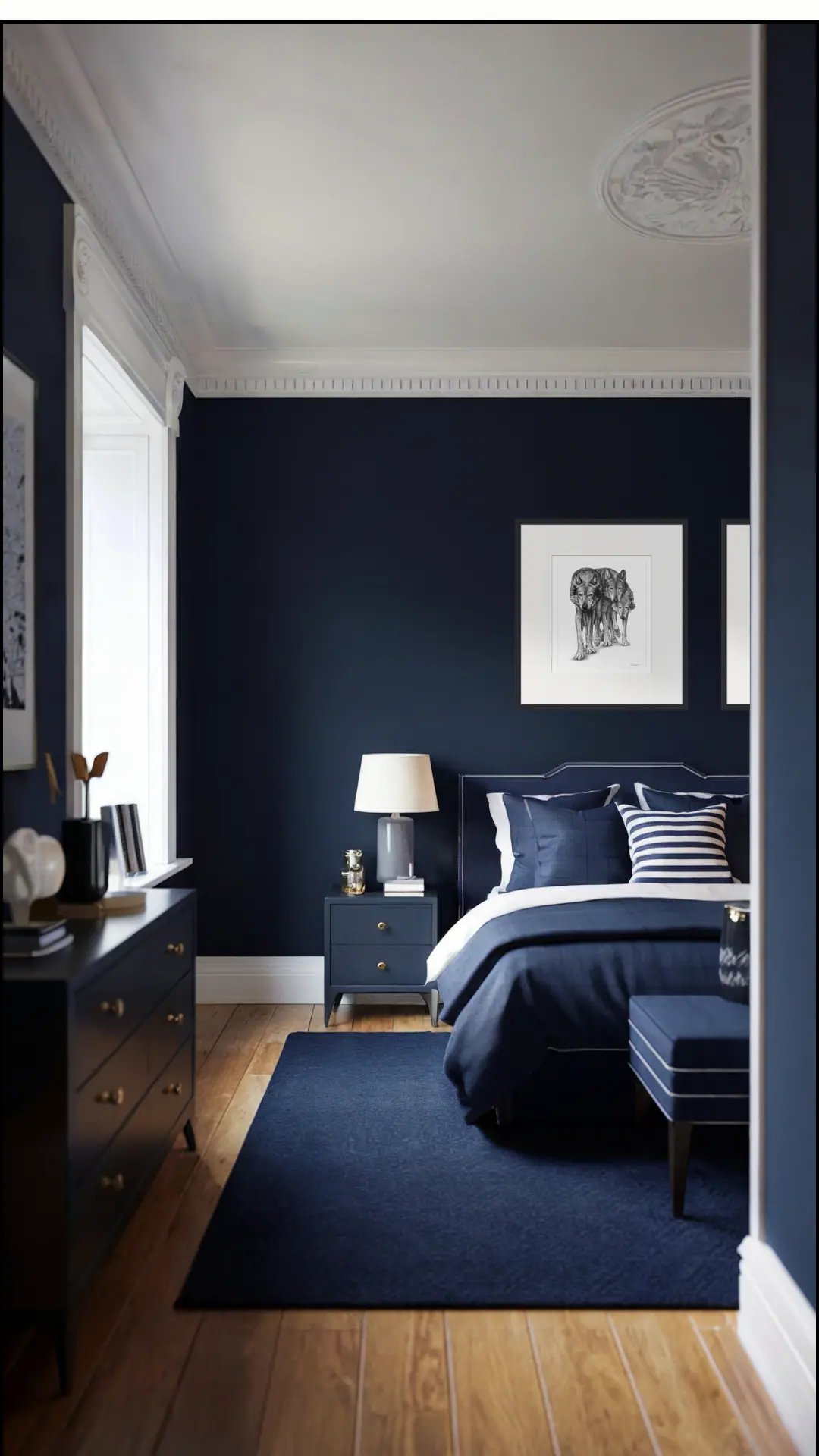
- Main Colors: Embrace rich, deep hues like classic navy blue, deep teal, or elegant hunter green. A sophisticated charcoal gray or a warm, deep greige can also serve as a foundational neutral.
- Accent Colors: Introduce opulence with brass or gold metallics, crisp cream or ivory, and deep, polished wood tones (mahogany, cherry). A touch of burgundy or rich brown can add warmth.
- Textures: Luxury is key. Think velvet upholstery, polished wood furniture, crisp Egyptian cotton or sateen bedding, and wool rugs. Leather can add a masculine edge, especially in a chesterfield sofa or accent chair.
- Key Tip: Achieving this look requires attention to detail. Ensure your chosen colors have a high saturation to convey richness. Use symmetrical arrangements and classic furniture pieces. Quality fabrics and finishes make a significant difference.
The Bold & Dramatic: High Contrast & Statement Shades
If you’re not afraid to make a statement, this scheme uses strong contrasts and impactful colors to create a truly memorable space. It’s for the man who sees his bedroom as an extension of his confident personality.
- Main Colors: Often built around a powerful deep tone like a nearly-black navy, a true black, or a very deep emerald green. These dominant colors set the mood.
- Accent Colors: The drama comes from striking accents. Think crisp white (for stark contrast), vibrant cobalt blue, a powerful mustard yellow, or even a sophisticated deep purple. Metallic accents like chrome or silver enhance the modern edge.
- Textures: High-gloss finishes, polished surfaces, smooth leather, and sleek metals. Textiles might be silk blends, sateen, or faux fur for a touch of unexpected luxury.
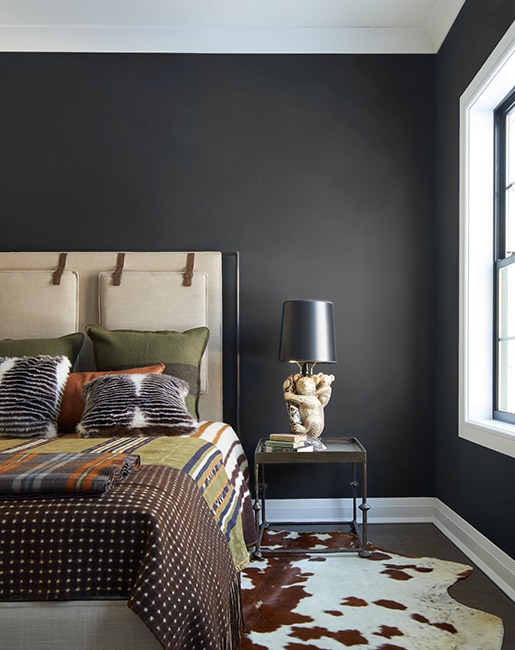
- Key Tip: This scheme demands balance. If your walls are very dark, use lighter bedding and significant white or metallic accents to prevent the room from feeling like a cave. Strategic lighting is paramount to highlight features and prevent shadows from making the room feel smaller.
| Bedroom Style Persona | Primary Wall Colors | Key Accent Colors | Dominant Textures/Materials |
|---|---|---|---|
| Modern Minimalist | Cool Grays, Crisp Off-Whites, Greige | Charcoal, Deep Navy, Light Woods | Smooth cotton, Low-pile rug, Sleek metal, Refined wood |
| Urban Industrialist | Charcoal, Slate Gray, Concrete Gray | Black, Metallics (Bronze, Iron), Leather, Brick Red | Exposed brick, Concrete, Distressed wood, Raw metal, Sturdy leather |
| Rugged Adventurer | Forest Green, Olive Green, Warm Taupe, Terracotta | Burnt Orange, Cream, Dark Woods, Plaid | Rough wood, Wool, Linen, Stone, Leather |
| Classic & Refined | Navy Blue, Deep Teal, Hunter Green, Rich Charcoal | Gold/Brass, Cream, Polished Dark Woods, Burgundy | Velvet, Polished wood, Crisp cotton, Sateen, Leather |
| Bold & Dramatic | Deep Navy/Black, Emerald Green | Crisp White, Cobalt Blue, Mustard Yellow, Silver/Chrome | High-gloss, Polished surfaces, Sleek leather, Faux fur |
Beyond the Walls: Crafting a Cohesive Color Scheme
Your bedroom color scheme isn’t just about the paint on the walls. It’s a symphony of elements. The most successful masculine spaces integrate color seamlessly with texture, lighting, and furnishings. This holistic approach is what separates a truly great design from a merely acceptable one.
The 60-30-10 Rule: Your Color Scheme Blueprint
This classic interior design principle is your best friend when building a cohesive scheme:
- 60% Dominant Color: This is your main wall color, or the largest blocks of color in the room. It sets the overall mood. Think about those main colors we discussed in the schemes above.
- 30% Secondary Color: This is used for larger pieces of furniture, drapes, an accent wall, or a significant rug. It provides contrast and interest without overwhelming the dominant color. This could be your deeper charcoal if your main is a light gray, or your rich leather if your main is an earthy green.
- 10% Accent Color: These are your pops of personality. Think throw pillows, artwork, decorative objects, or a unique lamp. This is where you can introduce bolder or brighter hues, metallics, or highly textured items.
Sticking to this ratio ensures visual balance and prevents the room from feeling chaotic or one-note.
The Power of Texture and Materials
Texture is often an overlooked element in color schemes, but for masculine spaces, it’s absolutely vital. It adds depth, warmth, and a tactile richness that flat color alone cannot achieve. Imagine a deep navy wall:
- Paired with smooth, polished wood and crisp cotton, it feels classic and refined.
- Paired with distressed leather and rough-hewn metal, it shifts to an urban industrial vibe.
- Paired with a chunky wool knit and a linen throw, it becomes soft and inviting.
Consider materials like:
- Wood: Different stains and finishes (reclaimed, polished, natural, dark) provide distinct character.
- Metal: Matte black, brushed nickel, brass, bronze, copper – each offers a different gleam and feel.
- Leather: A timeless material that adds warmth, ruggedness, or luxury.
- Textiles: Linen, wool, cotton, velvet, tweed – vary their use for bedding, rugs, and upholstery.
- Stone/Concrete: Natural, earthy, and grounding elements.
Lighting: The Unsung Hero of Color Perception
No matter how perfect your chosen color scheme, poor lighting can ruin it. Lighting dramatically alters how colors appear.
- Natural Light: A room with ample natural light can handle deeper, more saturated colors without feeling small or gloomy. North-facing rooms tend to have cooler light, while south-facing rooms get warmer, brighter light.
- Artificial Light:
- Warm White (2700K-3000K): Enhances warm colors (reds, oranges, yellows, browns) and makes cool colors (blues, greens) appear richer. Ideal for creating a cozy, relaxing atmosphere in a bedroom.
- Cool White (3500K-4100K): Can make colors appear crisper but might wash out warmer tones and make a room feel less inviting. Generally less ideal for a bedroom.
- Layered Lighting: Don’t rely on just one overhead light. Combine ambient (general room light), task (reading lamp), and accent (spotlight on art) lighting for versatility and to highlight different areas and textures. Dimmers are a game-changer for mood control.
Furniture & Decor: Integrating Existing Pieces
Chances are you’re not starting from scratch. Take stock of your existing furniture. Do you have a dark wood bed frame? A gray sofa? These pieces already contribute to your room’s color story. Choose paint and accent colors that complement, rather than clash with, these existing elements.
For example, if you have a dark wood bed, a light gray or sage green wall will provide a sophisticated contrast. If your primary furniture is neutral, you have more freedom to experiment with bolder wall colors or accent textiles.
Practical Considerations: Making Your Color Scheme Work
Even with the perfect palette in mind, real-world factors can influence your choices. Let’s tackle some common challenges.
Small Spaces, Big Impact: Color Strategies for Smaller Bedrooms
Don’t fall for the myth that small rooms *must* be white. You can still infuse character with color:
- Lighter, Desaturated Colors: Soft grays, muted blues, light greens, or off-whites can make a room feel more expansive and airy.
- Single Accent Wall: Choose one wall (often the one behind the bed) for a darker, more saturated color to add depth without overwhelming the space. Keep the other walls light.
- Monochromatic Scheme: Using varying shades of the same color can create a seamless look, blurring lines and making the room feel larger.
- Vertical Stripes: Subtly patterned wallpaper or paint can draw the eye upwards, making ceilings appear taller.
- Mirrors: Strategically placed mirrors reflect light and color, visually expanding the room.
Maximizing Natural Light vs. Creating Coziness
Your room’s orientation to natural light is crucial:
- Bright, Sunny Rooms (South-Facing): These rooms are bathed in warm light throughout the day. You can easily go for cooler, darker colors (navys, deep greens, charcoals) to balance the warmth and create a calming retreat without it feeling gloomy.
- Dimmer Rooms (North-Facing or Limited Windows): These rooms often benefit from lighter, warmer colors (warm grays, soft blues, earthy greens, off-whites) to maximize what little light they receive. Avoid very cool or very dark colors unless you’re committed to robust artificial lighting.
- Creating Coziness: For any room, especially larger ones that might feel cavernous, warm and mid-to-dark tones (deep browns, forest greens, terracotta, warm grays) instantly create a more intimate and cocoon-like atmosphere. Layered textiles and warm lighting reinforce this.
| Room Characteristic | Color Strategy | Impact/Effect | Pro Tip |
|---|---|---|---|
| Small Bedroom | Light, desaturated hues; one accent wall; monochromatic schemes. | Feels larger, airy, deepens one area. | Utilize mirrors and keep clutter minimal to enhance spaciousness. |
| Bright, South-Facing Room | Deeper, cooler tones (navys, charcoals, deep greens). | Balances warm light, creates calm, sophistication. | Avoid overly bright colors that might feel glaring in direct sun. |
| Dim, North-Facing Room | Lighter, warmer tones (soft blues, warm grays, earthy greens). | Maximizes light, feels more inviting and less gloomy. | Ensure ample artificial warm lighting; avoid very dark, cool shades. |
| Desire for Coziness/Intimacy | Mid-to-dark, warm tones (deep browns, forest greens, terracotta). | Creates a cocoon-like, comforting, and personal sanctuary. | Layer textiles (rugs, throws) and use warm, dimmable lighting. |
When to Go Dark and How to Do It Right
A dark bedroom can be incredibly dramatic and relaxing, but it requires careful execution to avoid feeling heavy or cave-like. Here’s how to master it:

- Balance with Contrast: If your walls are dark, use lighter elements elsewhere. Think crisp white bedding, a light-colored rug, natural wood furniture, or metallic accents.
- Strategic Lighting: This is non-negotiable. Layered lighting (ambient, task, accent) with dimmers and warm-toned bulbs is essential. Dark walls absorb light, so you need more intentional light sources.
- Introduce Texture: Break up large expanses of dark color with varied textures – a textured wallpaper on one wall, a chunky knit throw, a leather headboard.
- Metallic Accents: Gold, brass, copper, or polished chrome can add a reflective sparkle that prevents dark rooms from feeling flat.
- Consider Ceiling Color: Painting the ceiling a slightly lighter shade than the walls (even if it’s just a lighter version of the same color) can prevent the room from feeling completely enclosed.
Common Pitfalls to Avoid
Even with the best intentions, it’s easy to make mistakes. Watch out for these:
- Ignoring the 60-30-10 Rule: Too many competing colors can make a space feel chaotic, not curated.
- Forgetting About Lighting: As we discussed, lighting is paramount. Don’t choose colors in a brightly lit store only to find they look dull or off in your bedroom.
- Over-Reliance on Trends: While inspiration is good, chasing every trend can lead to a quickly outdated room. Focus on timeless appeal with trendy accents.
- Not Testing Samples: Paint swatches look very different on a wall than in a tiny chip. Always buy sample pots and paint large swatches on different walls, observing them throughout the day.
- Neglecting Your Existing Furniture: Your bed, dresser, and other pieces are part of the scheme. Ensure your new colors complement them.
- Sticking to Stereotypes: ‘Masculine’ doesn’t just mean black and gray. Be open to richer, more nuanced palettes.
Your Next Steps: From Inspiration to Implementation
You’ve absorbed the knowledge, you’ve envisioned the style – now it’s time to bring it to life.
Test, Test, Test: Sample Pots Are Your Best Friend
I can’t stress this enough. Buy sample pots of your top 2-3 color choices. Paint large (at least 2×2 feet) swatches on a couple of different walls in your bedroom. Observe them throughout the day, in natural light, and with your artificial lighting on. See how they interact with your flooring, existing furniture, and even your skin tone! This small investment saves you from a potentially costly mistake.
Consider Professional Help (If Needed)
If you’re still feeling overwhelmed, don’t hesitate to consult with an interior designer or a color consultant. Even a single consultation can provide invaluable guidance and save you time and stress in the long run. They can help you refine your vision and select the perfect shades.
Don’t Be Afraid to Personalize
Ultimately, your bedroom is your sanctuary. The best color scheme is one that makes you feel comfortable, relaxed, and inspired. Don’t be afraid to break a few ‘rules’ if a particular color or combination genuinely speaks to you. Incorporate artwork, photos, or objects that hold personal meaning to make the space truly yours.
You’re not just painting a room; you’re crafting an experience. Choose colors that empower you, soothe you, and reflect the incredible individual you are. Step beyond the beige, embrace the depth, and create a bedroom that’s a true reflection of your powerful style.
Frequently Asked Questions
What is the best color for a man’s bedroom?
There isn’t a single ‘best’ color, as it depends on personal preference and desired mood. However, popular and highly effective choices include deep blues (navy, teal), sophisticated grays (charcoal, slate), rich greens (forest, olive), and warm earthy tones (taupe, terracotta). These colors offer depth, calm, and a sense of grounding without being overly stereotypical.
How do I make a dark bedroom color scheme feel relaxing and not gloomy?
To make a dark scheme relaxing, introduce strong contrasts with lighter elements like crisp white bedding, a light rug, or natural wood furniture. Strategic, layered lighting (ambient, task, accent) with warm-toned bulbs is crucial, as are varied textures (velvet, wool, leather) to add depth and interest. Metallic accents can also reflect light and prevent the room from feeling flat.
Are neutral colors masculine enough for a man’s bedroom?
Absolutely. Neutral colors like cool grays, crisp off-whites, and greige can form an incredibly masculine and sophisticated base. The key is to add depth and interest through rich textures (wood, leather, metal), subtle darker accents (charcoal, deep navy), and clean, strong lines in furniture and decor. This creates a modern, minimalist, and refined aesthetic.
What accent colors work well with gray and beige in a man’s bedroom?
For gray, popular accents include deep navy, forest green, black, mustard yellow, or a rich burgundy. For beige or warmer neutrals, consider deep olive green, burnt orange, terracotta, rich browns, or even a soft, dusty blue. Metallics like bronze, brass, or matte black also provide excellent contrast and sophistication.
How many colors should I use in my bedroom color scheme?
A good rule of thumb is the 60-30-10 rule: 60% dominant color (walls), 30% secondary color (furniture, drapes, a rug), and 10% accent color (decor, pillows, artwork). This ensures a balanced and cohesive look without overwhelming the space with too many competing hues.
Can I use warm colors in a man’s bedroom?
Yes, absolutely! Warm colors like deep browns, terracotta, burnt orange, or rich burgundy can create incredibly inviting, cozy, and ruggedly masculine spaces. They work particularly well in schemes like the ‘Rugged Adventurer’ or ‘Classic & Refined,’ especially when balanced with natural textures like wood and leather.