The Ultimate Guide to Finding the Best Light Blue Paint Color for Your Master Bedroom
Staring at a wall of paint swatches can feel less like an exciting design journey and more like a high-stakes puzzle. Especially when it comes to your master bedroom – your sanctuary, your escape, the place where you unwind and recharge. You’re dreaming of a light blue, a color known for its calming, serene properties, perfect for promoting a restful night’s sleep. But which light blue? The choices are endless, and a shade that looks dreamy in the store can turn icy or drab on your walls.
Don’t fret. I’ve been there, overwhelmed by the subtle nuances between ‘Sky Blue’ and ‘Heavenly Hues.’ That’s why I’ve distilled the wisdom of color experts and real-world application to bring you the definitive guide to choosing the best light blue paint color for your master bedroom. We’re going to cut through the noise, decode undertones, and give you the actionable steps to confidently select a shade you’ll adore for years to come.
Why Light Blue is the Master Bedroom’s Secret Weapon for Serenity
Before we dive into specific shades, let’s understand why light blue is such a powerhouse for a master bedroom. It’s not just a pretty color; it’s a psychological tool for tranquility.
- Promotes Calm and Relaxation: Studies consistently show that blue tones can lower heart rate and blood pressure, creating a sense of peace. This is invaluable in a sleep space.
- Reduces Stress and Anxiety: Our brains associate blue with clear skies and calm waters, evoking feelings of stability and tranquility, which are perfect for unwinding after a long day.
- Versatile and Timeless: Light blue is incredibly adaptable. It can lean coastal, modern, traditional, or farmhouse, effortlessly complementing a wide range of decor styles without feeling trendy or dated.
- Expands Small Spaces: Lighter colors, especially blues, reflect light beautifully, making rooms feel larger, airier, and more open. This is a huge bonus for any bedroom, big or small.
- A Neutral with Personality: Unlike true neutrals (grays, beiges), light blue offers a distinct color identity while still serving as a fantastic backdrop for other colors and textures.
Navigating the Ocean of Blues: Understanding Undertones is Key
Here’s where many people stumble. A blue isn’t just a blue. Every shade carries subtle underlying colors—its undertones—that dictate how it truly appears in different lights and next to other elements in your room. Ignoring undertones is like trying to cook without tasting; you’ll end up with something… unexpected.
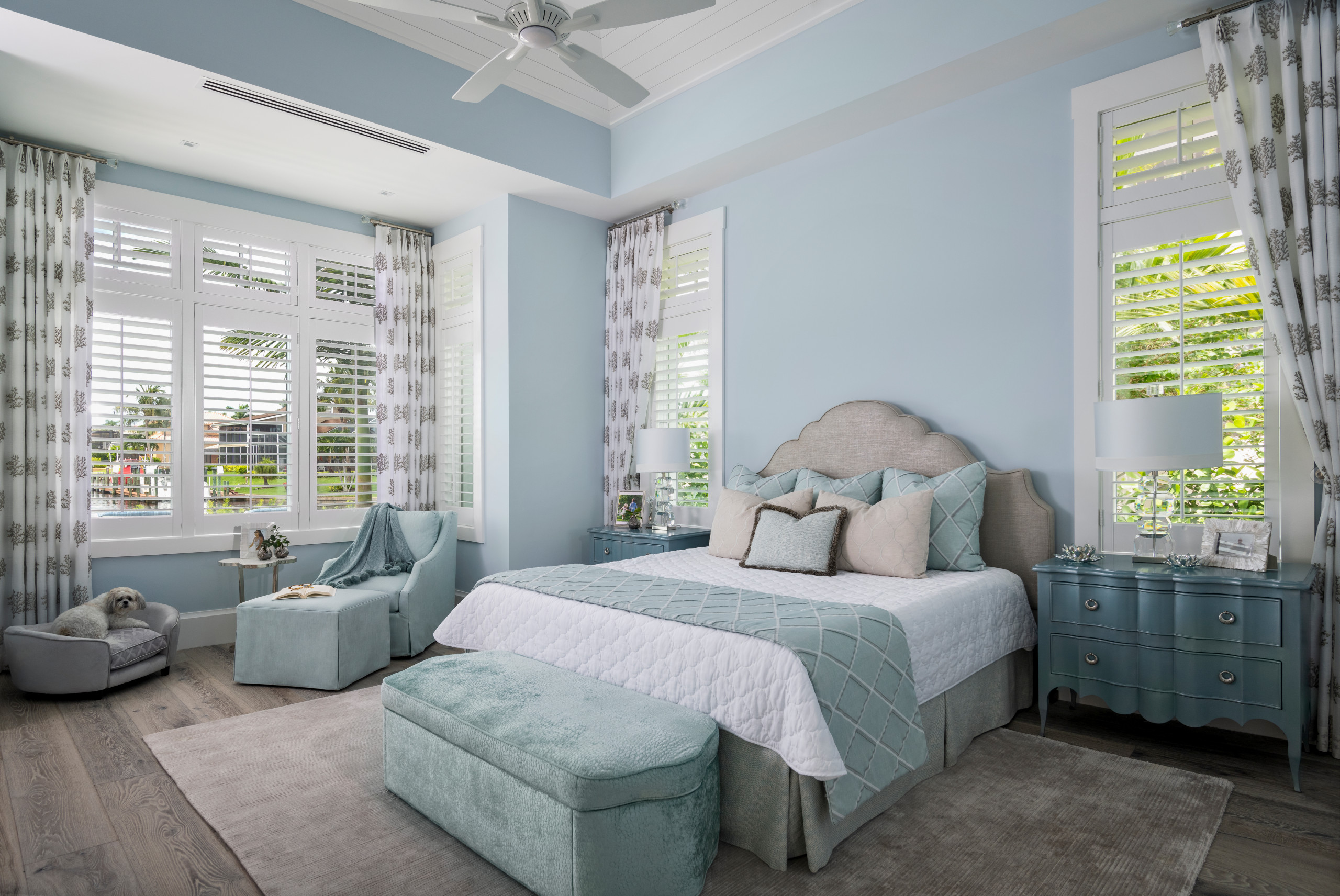
The Elusive Undertone: Why It Matters More Than You Think
Think of undertones as the secret ingredients that give blue its unique flavor. They can make a blue feel warm, cool, crisp, or muted. For a master bedroom, you want to ensure the undertone contributes to the serene atmosphere you’re after.
- Blue-Grays: Sophisticated and Calming
These blues have a significant gray component, making them appear soft, muted, and incredibly sophisticated. They are fantastic for master bedrooms because the gray calms the blue, preventing it from feeling too childish or stark. They often read as a tranquil neutral. Think Benjamin Moore Gray Cashmere or Sherwin-Williams Sea Salt. - Blue-Greens: Tranquil and Natural
Blues with a green undertone often evoke feelings of nature—the ocean, a gentle breeze, a spa retreat. They tend to be exceptionally calming and can feel warmer than true blues, especially in cooler light. They are incredibly popular for bedrooms. Consider Benjamin Moore Palladian Blue or Sherwin-Williams Rainwashed. - True Blues / Clean Blues: Crisp and Refreshing
These shades have minimal to no other dominant undertone; they are simply blue, often with a hint of white to keep them light. They can feel crisp, clean, and refreshing. For a master bedroom, ensure they are soft enough not to feel too stimulating. Benjamin Moore Ocean Air and Sherwin-Williams Upward are great examples. - Blue-Purples (often softer): A Touch of Elegance
Less common in light blues for master bedrooms, but some pale blues carry a subtle violet or lavender undertone. These can introduce an elegant, almost regal touch, but be mindful that too much purple can sometimes feel less universally calming. Farrow & Ball Parma Gray, despite its name, has clear blue with a touch of purple.
Beyond undertones, another critical factor is a paint color’s Light Reflectance Value (LRV). This number (from 0 to 100) indicates how much light a color reflects. Higher LRV means more light reflection, making a room feel brighter and larger. For a light blue master bedroom, you’ll generally be looking for blues with an LRV of 60 or higher to maintain that airy, serene feel.
Our Top Picks: The Best Light Blue Paint Colors for Master Bedrooms (and Why!)
After countless hours of research, client projects, and personal experimentation, I’ve curated a list of the most beloved and effective light blue paint colors for master bedrooms. These shades consistently deliver on serenity, versatility, and sheer beauty.
Benjamin Moore’s Calming Canvas
- Benjamin Moore Palladian Blue (HC-144): This is a classic for a reason. Palladian Blue is a soft, spa-like blue-green with a significant gray undertone. It’s incredibly adaptable, shifting beautifully with light from a muted blue to a soft green. It creates an immediate sense of calm and luxury, making it perfect for a master sanctuary. Its LRV is around 60.
- Benjamin Moore Woodlawn Blue (HC-147): Another beloved blue-green, Woodlawn Blue is a touch crisper and more saturated than Palladian Blue, yet still incredibly gentle. It leans slightly more towards blue, making it feel fresh and airy without being cold. It has a beautiful historical feel that works wonderfully in traditional and transitional spaces. LRV around 60.
- Benjamin Moore Ocean Air (2123-50): If you’re seeking a clean, serene, true light blue, Ocean Air is your pick. It has very subtle gray undertones, keeping it from feeling too bright or childish. It’s airy, delicate, and evokes a feeling of open sky, making a room feel expansive and incredibly peaceful. LRV is approximately 70.
- Benjamin Moore Quiet Moments (1563): This shade truly lives up to its name. It’s a very soft blue-green-gray, a chameleon color that can sometimes appear more gray or green depending on the light. It’s incredibly muted and sophisticated, providing a backdrop that is profoundly tranquil and barely-there, yet deeply impactful. LRV is about 60.
- Benjamin Moore Whispering Spring (2136-70): A very pale, almost ethereal blue with the faintest hint of green. Whispering Spring is perfect for those who want just a whisper of color on their walls. It makes a room feel light, airy, and incredibly fresh, ideal for a master bedroom that seeks softness and a delicate touch. LRV is high, around 78.
Sherwin-Williams’ Serene Shades
- Sherwin-Williams Sea Salt (SW 6204): An absolute icon in the world of calming colors. Sea Salt is a gorgeous blue-green-gray that shifts dramatically with the light, from a soothing sage to a soft seafoam. Its inherent complexity prevents it from ever feeling flat, making it exceptionally livable and perfect for creating a relaxed, coastal-inspired master bedroom. LRV around 63.
- Sherwin-Williams Rainwashed (SW 6211): Slightly brighter and a bit more definitively green than Sea Salt, Rainwashed is another spa-like blue-green that brings a breath of fresh air to any space. It feels clean, uplifting, and perpetually fresh, without being overtly vibrant. It’s an excellent choice for a master bedroom desiring a soft yet clear blue-green hue. LRV is approximately 59.
- Sherwin-Williams Tradewind (SW 6218): This is a clearer, slightly more saturated blue with noticeable green-gray notes. Tradewind feels crisp and refreshing, like a cool breeze, while still maintaining enough softness for a bedroom. It’s perfect for those who want a discernible blue that isn’t too bold or too muted. LRV around 61.
- Sherwin-Williams Upward (SW 6239): Sherwin-Williams’ 2024 Color of the Year, Upward, is a truly pale, clean, and optimistic light blue. It evokes a sense of peace and a gentle invitation to slow down. With subtle gray and green undertones, it’s remarkably versatile and feels incredibly soft, making it a fantastic, on-trend choice for a master bedroom. LRV is approximately 57.
- Sherwin-Williams Hinting Blue (SW 6519): As its name suggests, this is a very light, almost white-blue, ethereal shade. Hinting Blue is perfect if you want just a bare whisper of cool color that helps open up a space. It’s incredibly soft and works beautifully in rooms that receive a lot of natural light, offering a clean, understated backdrop. LRV is very high, around 77.
Other Notable Mentions
- Farrow & Ball Light Blue (No. 22): A truly sophisticated, historic color. Despite its name, Farrow & Ball’s Light Blue often reads as a soft blue-gray, with the ability to look more blue in north-facing rooms and more gray in south-facing. It creates an incredibly serene and elegant atmosphere, characteristic of Farrow & Ball’s deeply pigmented paints. LRV is around 49.
- Clare Paint Good Jeans: This popular shade from Clare is a soft, true mid-tone blue that isn’t too light but still feels fresh and calm. It has a slight gray undertone that keeps it sophisticated and grounded. It’s a dependable choice for a modern, serene master bedroom.
Comparing the Contenders: A Light Blue Master Bedroom Paint Chart
To help you visualize the differences and make a more informed decision, here’s a comparative chart of our top light blue picks. This better than generic lists, providing actionable data points for your decision-making process.
:max_bytes(150000):strip_icc()/AJ_1150_0298copy-91ea6327686844c0a0261f46697d42e5.jpg "30 Light Blue Paint Colors")
| Color Name | Brand | Undertone Profile | Approx. LRV | Ideal Mood | Best Paired With |
|---|---|---|---|---|---|
| Palladian Blue (HC-144) | Benjamin Moore | Blue-Green-Gray (Spa-like) | 60 | Calm, luxurious, serene | Cream, warm wood, brushed gold |
| Woodlawn Blue (HC-147) | Benjamin Moore | Crisp Blue-Green (Historical) | 60 | Fresh, airy, classic | White, dark wood, silver |
| Ocean Air (2123-50) | Benjamin Moore | Clean, True Light Blue | 70 | Expansive, peaceful, refreshing | Bright white, light wood, natural textures |
| Quiet Moments (1563) | Benjamin Moore | Soft Blue-Green-Gray (Muted) | 60 | Profoundly tranquil, sophisticated | Creams, dark grays, muted metallics |
| Sea Salt (SW 6204) | Sherwin-Williams | Blue-Green-Gray (Chameleon) | 63 | Relaxed, coastal, organic | White, natural fibers, rattan, warm wood |
| Rainwashed (SW 6211) | Sherwin-Williams | Slightly Brighter Blue-Green | 59 | Clean, fresh, spa-like | Crisp white, light gray, soft blush |
| Upward (SW 6239) | Sherwin-Williams | Pale, Clean Light Blue (Optimistic) | 57 | Peaceful, airy, contemporary | Off-white, light wood, silver, muted yellow |
How to Choose YOUR Perfect Light Blue: A Step-by-Step Guide
Now that you have some fantastic color candidates, let’s talk about the practical steps to ensure you pick the right one for *your master bedroom. This isn’t just about paint, it’s about creating a personalized sanctuary.
Step 1: Assess Your Natural Light
Light is the ultimate color shifter. A paint color can look wildly different depending on the direction your bedroom windows face and the amount of light they let in.
- North-Facing Rooms: These rooms typically receive cooler, indirect light throughout the day, which can make colors appear more muted or even a bit shadowy. To counteract this, consider light blues with warmer undertones, like blue-greens or blues with a hint of yellow-gray. This will prevent the room from feeling too icy.
- South-Facing Rooms: Blessed with abundant, warm light all day, south-facing rooms can handle cooler blues with gray or even subtle purple undertones without feeling cold. The warm light will balance out the inherent coolness of the blue.
- East-Facing Rooms: Experience bright, warm light in the morning, which shifts to cooler light in the afternoon. A balanced blue-green or a soft blue-gray will perform well throughout the day.
- West-Facing Rooms: Get soft morning light and intense, warm afternoon/evening light. Colors here can look dramatically different. Again, a blue with flexible undertones (like blue-green-gray) is often a safe bet.
Step 2: Consider Artificial Lighting
Your lamps and overhead fixtures also play a huge role. Pay attention to the Kelvin (K) rating of your light bulbs:
- Warm Lighting (2700K-3000K): Has a yellow/orange tint. It will warm up cool blue tones, making them appear softer.
- Cool/Daylight Lighting (4000K-5000K+): Has a bluer/whiter tint. This will enhance the blue tones and can make them appear crisper or even more intense.
Test your samples with both natural light and your typical artificial evening lighting.
:max_bytes(150000):strip_icc()/BondegatanSodermalmStockholmBedroomlampchairblueFantasticFrank-d4153e01738845caaaab184e2eecf7a7-33429fc42bfa411d988f8233f04fdfde.jpg "30 Light Blue Paint Colors")
Step 3: Factor in Existing Elements
Your paint color doesn’t live in a vacuum. It needs to harmonize with:
- Flooring: Are your floors warm wood, cool tile, or neutral carpet?
- Furniture: What are the dominant colors and materials of your bed frame, nightstands, and dressers?
- Bedding and Textiles: These are often the largest blocks of color (besides walls).
- Artwork and Decor: Consider any pieces you absolutely love and want to keep.
Take photos of your room in different lights and bring them to the paint store, or even better, bring swatches of your fabrics home.
Step 4: The Power of the Sample (and Why It’s Non-Negotiable)
This is arguably the most crucial step. Never, ever skip it. Those tiny paint chips are misleading. Buy sample pots (or large peel-and-stick samples) of your top 2-3 contenders.
- Paint Large Swatches: Apply two coats of each sample directly onto a large white poster board (at least 2’x2′) or directly onto two different walls in your bedroom. Do NOT paint directly on the wall without a white border around it; existing wall color will distort your perception.
- Observe Throughout the Day: Watch how the colors change from morning to noon to evening, and with different lights on and off.
- Place Next to Fixed Elements: Hold your samples up against your trim, headboard, and any other elements that won’t be changing.
Step 5: Don’t Forget the Finish!
The sheen of your paint drastically impacts how the color appears and its durability.
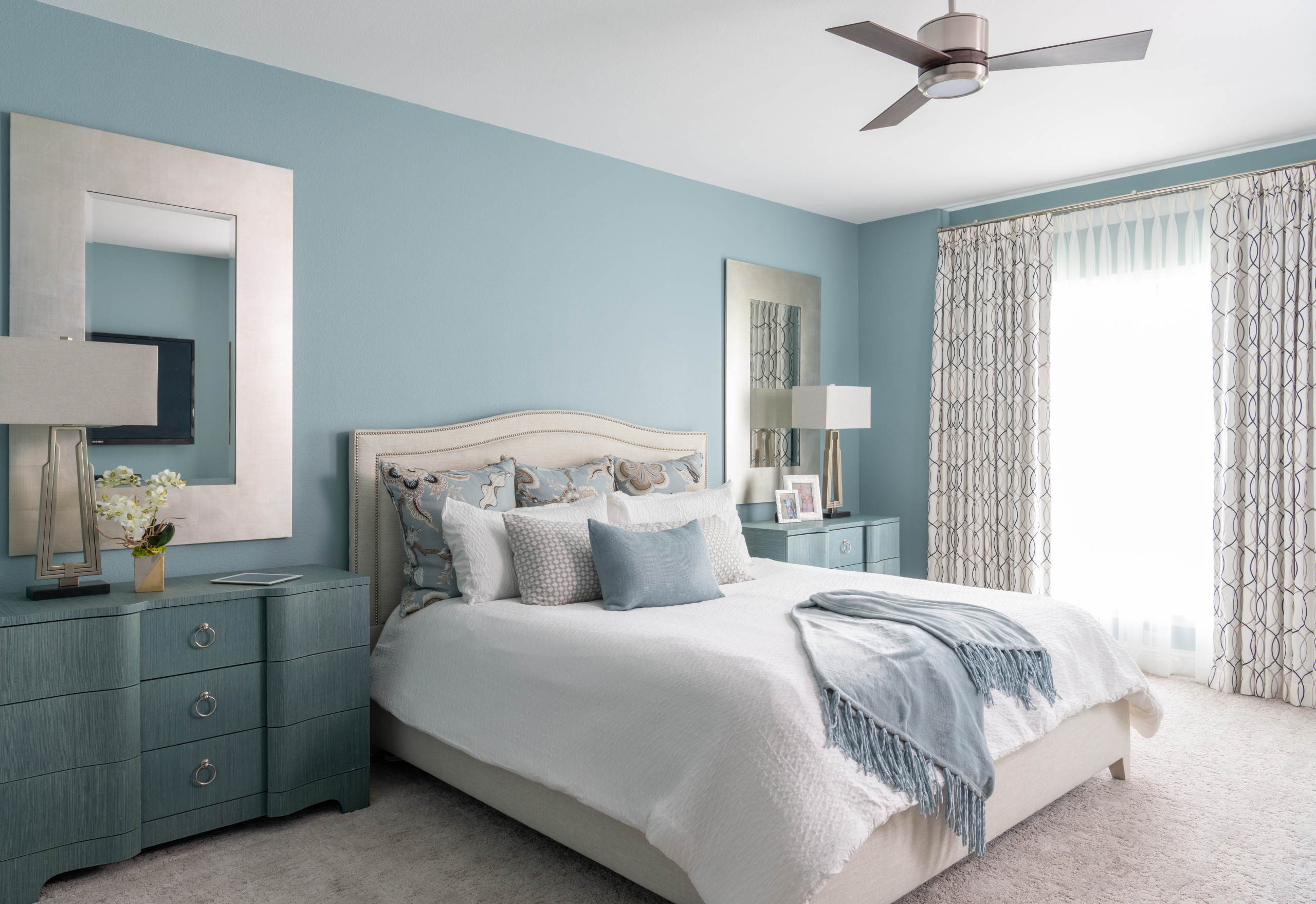
- Matte/Flat: Best for hiding wall imperfections and providing a rich, velvety depth of color. It’s less durable and harder to clean, so best for low-traffic areas like a master bedroom.
- Eggshell/Satin: The most popular choice for bedrooms. It offers a subtle sheen, is more durable and washable than flat, and still provides a beautiful color presentation. Eggshell is slightly less shiny than satin.
- Semi-Gloss: Generally too shiny for walls in a master bedroom, but it’s perfect for trim, doors, and accent features due to its high durability and washability.
For a serene master bedroom, I usually recommend Eggshell for walls and Semi-Gloss for trim. This combination provides durability where needed while maintaining a soft, inviting wall finish.
Beyond the Walls: Complementary Colors and Decor for Your Blue Sanctuary
Once your perfect light blue is on the walls, what comes next? Here’s how to furnish and accessorize to create a cohesive, calming master bedroom.
- Crisp Whites and Creams: These are natural partners for light blue. Use them in bedding, trim, and sheer curtains to enhance the airy feel and provide a clean contrast.
- Warm Neutrals: To prevent a light blue room from feeling cold, introduce warmth with beiges, tans, soft grays, and natural wood tones. Think oak nightstands, a linen headboard, or a jute rug.
- Metallics:
- Brushed Gold/Brass: Adds warmth, elegance, and a touch of luxury.
- Silver/Brushed Nickel: Reinforces the cool, modern aesthetic.
- Black: Small touches of matte black (e.g., picture frames, lamp bases) can add a striking, grounding contrast.
- Accent Colors: Introduce subtle pops of color through throw pillows, artwork, or small decorative items.
- Soft Greens: Mimic nature, especially lovely with blue-greens.
- Muted Yellows/Corals: Provide a gentle, warm contrast without being overwhelming.
- Dusty Rose/Blush: A touch of subtle femininity and softness.
- Texture is Everything: Layering textures adds depth and warmth. Think soft linen bedding, chunky knit throws, a plush rug, velvet pillows, and wooden furniture. These tactile elements prevent a light blue room from feeling sterile.
- Greenery: Living plants not only add a touch of fresh color but also improve air quality, further enhancing the sanctuary feel of your master bedroom.
Common Pitfalls to Avoid When Painting Your Master Bedroom Blue
Don’t let these common mistakes derail your journey to the perfect blue bedroom:
- Ignoring Undertones: We’ve covered this, but it bears repeating. A blue that looks pure on the chip might reveal green, purple, or gray undertones that clash with your existing decor once on the wall.
- Not Sampling: The biggest mistake! Trust me, it’s worth the small investment in samples to avoid repainting an entire room.
- Underestimating Light: Forgetting to observe samples in different lighting conditions (natural vs. artificial, morning vs. evening) can lead to a color that feels wrong for half the day.
- Overdoing It: While blue is calming, a room that’s all* blue can feel monotonous or even too cool. Balance with warm neutrals, textures, and strategic accent colors.
- Choosing the Wrong Finish: A high-gloss blue wall can be too reflective and stimulating for a serene master bedroom. Stick to flat or eggshell for walls.
- Forgetting the Ceiling: A white ceiling is classic, but a very light blue or a slightly tinted white on the ceiling can wrap the room in color and enhance the serene, enveloping feel.
Selecting the perfect light blue for your master bedroom is more than just picking a pretty color; it’s about crafting an environment that supports your well-being. By understanding undertones, carefully sampling, and thoughtfully integrating your design choices, you can create a master bedroom that is not only beautiful but truly a peaceful sanctuary. Your perfect shade of blue awaits!
Frequently Asked Questions
What undertones should I look for in a light blue paint for a master bedroom?
For a serene master bedroom, consider light blues with gray undertones (blue-grays) for sophistication, or green undertones (blue-greens) for a tranquil, natural feel. These undertones soften the blue, preventing it from feeling too cold or stark and making it more relaxing.
How does natural light affect how a light blue paint color looks?
Natural light significantly impacts paint color. North-facing rooms, with cooler light, benefit from blue-greens to avoid feeling icy. South-facing rooms, with warm light, can handle cooler, cleaner blues. East and west-facing rooms, which experience varying light, often look best with balanced blue-green-gray shades.
What’s the best paint finish for a master bedroom?
Eggshell or satin finishes are generally recommended for master bedroom walls. They offer a subtle sheen, are more durable and washable than flat paint, and still provide a beautiful depth of color without being too reflective or stimulating for a sleep space. Use semi-gloss for trim and doors.
Should I paint a sample on the wall or use a peel-and-stick swatch?
It’s crucial to use large samples. Either paint two coats onto a large white poster board (at least 2’x2′) or directly onto two different walls in your bedroom. Observe these samples throughout the day and in varying lighting conditions. Peel-and-stick swatches are also a great, mess-free alternative to traditional sample pots.
What colors pair well with light blue in a master bedroom?
Light blue pairs beautifully with crisp whites and creams for an airy feel, and warm neutrals like beiges, tans, and natural wood tones to add warmth and balance. Accents of soft greens, muted yellows, or dusty rose can introduce subtle pops of color, while metallics (gold, silver) add elegance.
Is light blue paint good for promoting sleep?
Yes, light blue is highly regarded for promoting sleep and relaxation. Its psychological association with calm skies and tranquil waters can help lower heart rate and blood pressure, creating a peaceful environment conducive to unwinding and restful sleep.
How do I make sure my light blue bedroom doesn’t feel cold?
To prevent a light blue bedroom from feeling cold, incorporate warm elements through your decor. Use warm lighting (2700K-3000K bulbs), introduce warm neutrals like wood tones, cream, or beige in furniture and textiles, and layer textures with soft fabrics like linen, wool, and velvet. Accents of warm metallics or soft, complementary colors can also add coziness.