The Ultimate Guide to Paint Colors That Make Any Room Look Bigger
Ever walked into a room and felt like the walls were closing in? That cramped, claustrophobic feeling can be a real buzzkill, especially if you’re stuck with a smaller space. But what if I told you that the secret to transforming a tiny room into an expansive oasis might be as simple as a fresh coat of paint?
It’s true! Paint isn’t just about adding color; it’s a powerful illusionist, capable of manipulating perception and making your space feel significantly larger, brighter, and more inviting. Forget knocking down walls; let’s talk about how to trick your eyes (and your guests) into seeing a grander room with the right shades.
The Core Principle: Light Reflection is Your Best Friend
Before we dive into specific colors, let’s understand the magic behind the illusion. Small rooms often feel small because they lack light or are visually cluttered. Darker colors tend to absorb light, making surfaces appear closer and shrinking the perceived space. Lighter colors, on the other hand, reflect light, pushing surfaces away visually and creating an airy, open feel.
This brings us to a crucial concept in paint selection: Light Reflectance Value (LRV). LRV is a measurement of how much light a color reflects. It’s expressed as a percentage, where 0% is absolute black (absorbing all light) and 100% is perfect white (reflecting all light). When you’re aiming to make a room look bigger, a higher LRV is generally your best friend.
Think of it this way: a paint color with a high LRV acts like a mirror, bouncing available light deeper into the room. This not only brightens the space but also blurs the edges of the walls, making them seem to recede. Understanding LRV empowers you to make informed decisions beyond just “light colors.”
:max_bytes(150000):strip_icc()/southernliving-paintcolor-maggieclarke2-57aba326ee97489db815fe21fdd8cf7f.jpg "Paint Colors To Make A Room Look Bigger: 12 Options")
The Champions: Paint Colors That Guarantee More Space
While high LRV is key, not all light colors are created equal. Certain hues naturally lend themselves to creating an expansive atmosphere due to their inherent visual properties.
1. The Power of Whites & Off-Whites: Clean Canvas, Infinite Space
There’s a reason white remains the reigning champion for small spaces. It’s the ultimate reflector, creating a clean, seamless backdrop that allows light to spread freely. But “white” isn’t just one color; it’s a spectrum!
- Crisp Whites: These are pure, unadulterated whites (often with cool undertones). They offer maximum brightness and a modern, minimalist aesthetic. Great for rooms with lots of natural light.
- Warm Whites: Infused with a touch of yellow, red, or brown, warm whites feel cozier and prevent a space from feeling sterile. Think creamy, ivory, or subtle linen tones. Perfect for rooms that get less natural light, adding an inviting glow.
- Cool Whites: With undertones of blue, green, or gray, cool whites are refreshing and crisp. They can make a room feel serene and truly expansive, pushing walls further apart visually.
Actionable Tip: To choose the right white, consider the natural light in your room. If it’s north-facing (cooler light), a warm white can balance it out. If it’s south-facing (warm light), a cool white can temper the warmth without sacrificing brightness. For an even more expansive feel, paint the ceiling the same crisp white as the walls to eliminate any visual breaks.
2. Cool Hues: The Retreat to Serenity and Expansiveness
Cool colors inherently make surfaces appear to recede, which is exactly what we want in a small room. They create a calming, open atmosphere, reminiscent of the sky or ocean.
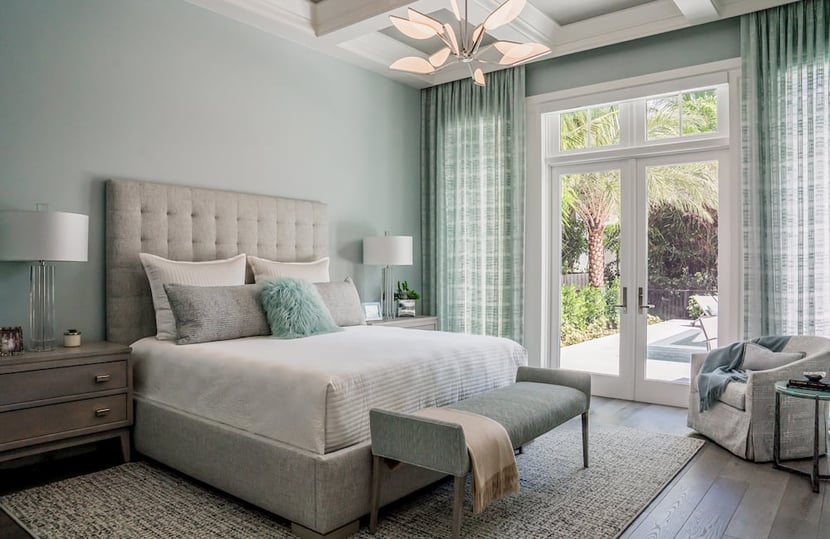
- Pale Blues: From soft sky blue to a barely-there robin’s egg, pale blues are incredibly effective. They evoke feelings of openness and tranquility, mimicking the vastness of the sky. Blues with a slight gray undertone can be particularly sophisticated and calming.n
Typical LRV: 65-80% - Soft Greens: Think sage, seafoam, or a muted mint. Greens bring nature indoors, offering a refreshing and airy feel. Like blues, they tend to recede, making walls feel further away. Greens can also be very soothing.n
Typical LRV: 60-75% - Light Grays: A perennial favorite, light grays provide a modern, sophisticated backdrop that feels neutral yet impactful. Cool grays (with blue undertones) work best for expansion, reflecting light beautifully without feeling stark. They offer a refined alternative to pure white.n
Typical LRV: 55-70%
3. Light Neutrals: Subtle Expansion, Sophisticated Foundation
Neutrals like beige, greige (gray-beige), and taupe are fantastic choices if you want warmth and sophistication without sacrificing the illusion of space. They offer a grounded, earthy feel while still reflecting ample light.
- Beiges: Opt for lighter, sandier beiges rather than deeper, darker tones. They provide a warm, inviting glow.
- Greiges: The perfect blend of gray and beige, greiges are incredibly versatile. Depending on their undertones, they can lean warmer or cooler. Choose lighter greiges for maximum impact.
- Taupes: A darker cousin to greige, taupes are warm and sophisticated. Stick to the lighter end of the spectrum for small rooms to ensure they don’t absorb too much light.
These neutrals provide a flexible foundation for decor, allowing other elements in the room to shine while ensuring the space feels open and unconfined.
| Color Family | Effect on Space | Typical LRV Range | Best For |
|---|---|---|---|
| Crisp Whites | Maximum expansion, clean, bright | 85-95% | Modern aesthetic, ample natural light |
| Warm Whites/Creams | Soft expansion, cozy, inviting | 75-85% | Rooms needing warmth, less natural light |
| Pale Blues | Receding, serene, airy, cool | 65-80% | Bedrooms, bathrooms, creating a calm retreat |
| Soft Greens | Refreshing, natural, expansive, soothing | 60-75% | Bringing the outdoors in, creating a tranquil space |
| Light Grays | Modern, sophisticated expansion, versatile | 55-70% | Any room needing a chic, subtle backdrop |
| Light Neutrals (Beige, Greige, Taupe) | Warm expansion, sophisticated, foundational | 50-70% | Living areas, bedrooms, cohesive flow |
Beyond the Walls: Strategic Painting Techniques for Visual Expansion
It’s not just about the color on the main walls. How you treat your ceilings, trim, and even a strategic accent wall can dramatically impact the perceived size of your room.
Ceilings: The Fifth Wall That Lifts Your Gaze
The ceiling is often an overlooked opportunity. Treating it correctly can add significant height to your room.
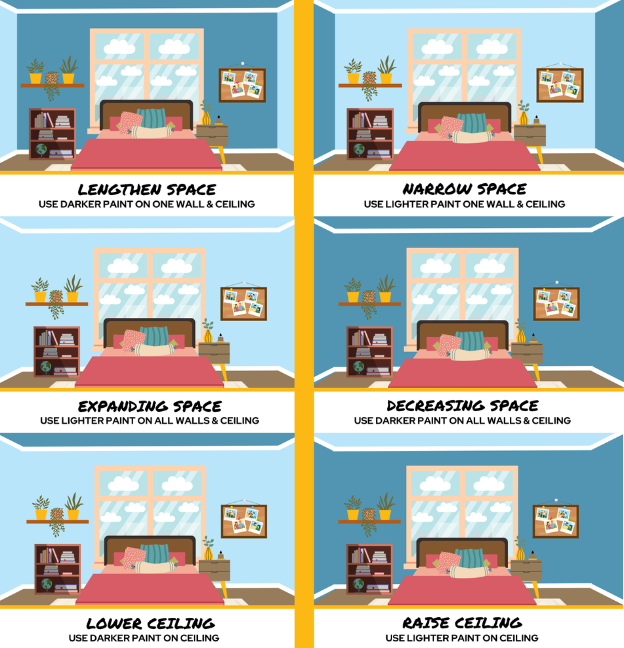
- Lighter Than Walls: This is the classic trick. Painting the ceiling a shade or two lighter than your walls (often a crisp white, even if walls are colored) visually lifts it, making the room feel taller. The contrast draws the eye upward.n
- Same Color as Walls: For a seamless, enveloping effect, paint the ceiling the exact same color as the walls. This eliminates visual breaks, making it harder for the eye to discern where the wall ends and the ceiling begins. The result is a continuous flow that can make the room feel boundless, especially with light, airy colors.n
- High-Gloss Ceiling: For the truly adventurous, a high-gloss paint on the ceiling can create a reflective, mirror-like surface that bounces light and creates incredible depth. This works best in rooms with excellent ceiling texture (no imperfections!) and a very specific design aesthetic.n
Trim & Moldings: Framing Your Space for Grandeur
Your trim, baseboards, and crown moldings are like the picture frame for your room. How you paint them matters.
- Lighter Than Walls: Painting trim a brighter white than your walls makes the walls themselves appear to recede, emphasizing their depth and creating a crisp, clean border. This is a very common and effective strategy.n
- Same Color as Walls: For a contemporary, minimalist look that emphasizes seamlessness, paint your trim and moldings the exact same color as your walls. This creates an uninterrupted flow, blurring the room’s boundaries and making it feel larger and more cohesive.n
Accent Walls: Depth, Drama, and Deception
You might think an accent wall would shrink a small room, but if done correctly, it can actually add depth and make the space feel more interesting and larger. The trick is strategic placement and color choice.
:strip_icc()/cdn.cliqueinc.com__cache__posts__275080__paint-colors-that-make-a-room-look-bigger-275080-1544741907708-image.700x0c-d90340d7ae864a1d9de7b81233f52e67.jpg "6 Paint Colors That Make a Room Look Bigger")
- Choose the Farthest Wall: Paint the wall furthest from the entrance or your primary viewpoint in a slightly darker (but still relatively light) or a contrasting cool color. This makes that wall visually recede, extending the perceived depth of the room.n
- Avoid Side Walls: Painting a side wall a darker accent color can make the room feel narrower. Stick to the end wall to draw the eye deeper into the space.n
- Keep it in the Light Family: Even an accent wall should ideally have a decent LRV. Avoid very dark, saturated colors unless you’re intentionally going for a dramatic, cozy effect (more on that later!).n
Stripes & Patterns: Vertical Lifts and Horizontal Expansions
Yes, patterns can work, but subtly!
- Vertical Stripes: They draw the eye upwards, giving the illusion of higher ceilings. Opt for subtle, tone-on-tone stripes rather than high-contrast ones.n
- Horizontal Stripes: Less common, but thin, subtle horizontal stripes on one wall can make a narrow room feel wider. Again, keep the contrast low.n
Door & Window Frames: Integrating for Flow
Painting door and window frames the same color as the walls (or a very similar light shade) reduces visual clutter and creates a sense of continuous space. If you want a crisp look, a bright white will always work to frame natural light sources.
The Crucial Role of Paint Finish (Sheen) in Making a Room Look Bigger
The type of finish, or sheen, you choose for your paint can be just as impactful as the color itself when trying to expand a room visually. Sheen dictates how much light a painted surface will reflect.
High Sheen Finishes: The Reflective Magic
The more reflective a finish, the more it will bounce light around, making a room feel brighter and larger. Think of these as your allies:
- Satin: Offers a soft, pearl-like sheen. It’s durable and easy to clean, making it a popular choice for walls in most rooms. The subtle glow helps reflect light without being overtly glossy.n
- Semi-Gloss: A step up in reflectivity from satin, semi-gloss has a distinct shine. It’s very durable and perfect for trim, doors, and cabinets, where you want a crisp, light-bouncing effect. Some designers even use it on walls in small, low-traffic areas like powder rooms to maximize light reflection.n
- High-Gloss: The most reflective finish, high-gloss acts almost like a mirror. It creates a dramatic, luminous effect that can make a small room feel incredibly expansive and luxurious. However, it also highlights every imperfection on the wall, so impeccable surface preparation is crucial. Best for accent walls, furniture, or that adventurous ceiling idea.n
Important Consideration: While high-sheen paints are excellent for reflecting light, they also reveal wall imperfections more readily. For older homes or walls that aren’t perfectly smooth, a satin finish might be the most forgiving and effective choice.
Matte & Flat Finishes: When to Use Them (and When Not To)
Matte and flat finishes absorb light rather than reflecting it. They provide a velvety, sophisticated look that can hide imperfections well. While generally not the first choice for making a room look bigger, they aren’t entirely off-limits:
- For Darker Colors: If you decide to go with a deep, dramatic color in a small space (see the myth buster section below), a flat or matte finish can enhance the richness and create a cozy, enveloping feel without the glare of reflectivity. This is about leaning into the smallness, not trying to expand it.n
- Ceilings: Flat white paint is the standard for ceilings because it hides imperfections and creates a diffused, non-glare surface above you. While a glossy ceiling can add drama, a flat ceiling won’t detract from the expansive feel of light walls.n
Myth Busters: Dark Colors in Small Rooms – Can They Work?
The conventional wisdom is that dark colors *always make a room look smaller. And largely, that’s true if not applied strategically. But here’s the twist: dark colors can work in small rooms, but with a different intention.
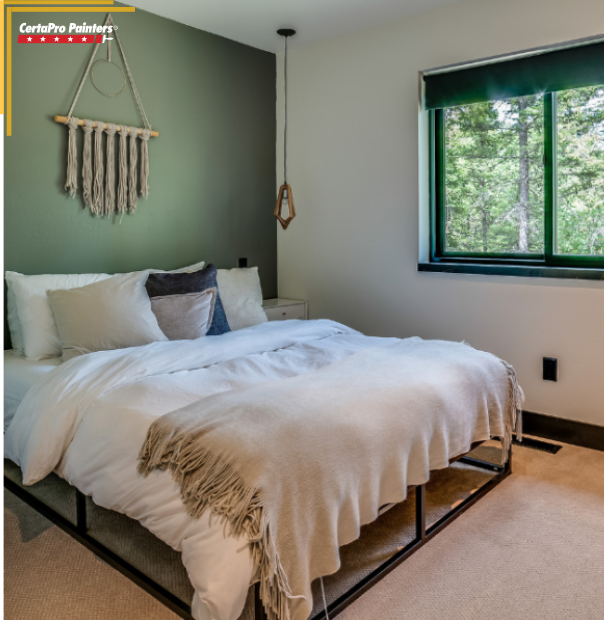
Instead of trying to make the room look bigger, you’re embracing its smallness and transforming it into a cozy, intimate, and often dramatic retreat. When a small room is painted a deep, rich color (think charcoal, navy, or emerald green), especially on all walls and trim (and sometimes even the ceiling), it can blur the room’s boundaries completely. Without clear edges, the room can feel like an inviting jewel box or a vast, star-filled night sky, rather than just a tiny box.
Keys to making dark colors work:
- Monochromatic Scheme: Paint walls, trim, and even doors the same dark color. This eliminates visual breaks.
- High Sheen: Use a satin or semi-gloss finish to allow some light reflection and prevent the room from feeling completely flat.
- Ample Lighting: Crucial! Layered lighting (ambient, task, accent) will prevent the room from feeling like a cave.
- Light Furniture & Decor: Contrast the dark walls with lighter furniture, mirrors, and metallic accents to provide relief and visual interest.
So, while dark colors don’t expand* a room in the traditional sense, they can create a stunning, enveloping effect that makes its size irrelevant. It’s a bold choice, but one that can yield incredible results.
Beyond Paint: Complementary Design Elements to Amplify Space
Paint is a powerful tool, but it works even better when combined with other smart design choices. Think of these as paint’s best supporting cast members:
Strategic Lighting: Natural and Artificial
- Maximize Natural Light: Keep windows unobstructed. Use sheer curtains or blinds that can be fully pulled back.
- Layered Artificial Light: Don’t rely on a single overhead fixture. Use sconces, floor lamps, and table lamps to distribute light evenly and eliminate dark corners, which can make a room feel smaller.
- Uplighting: Floor lamps that cast light upwards can make ceilings appear higher.
Mirrors: Reflective Power, Placement
Mirrors are perhaps the oldest trick in the book for expanding space. They reflect light and create the illusion of another room or window. Place a large mirror opposite a window or a beautiful focal point to double its impact.
Minimalist Decor & Furniture: Decluttering, Scale
- Declutter: Visual clutter is the enemy of small spaces. Keep surfaces clear and choose furniture with hidden storage.
- Right Scale: Don’t try to cram oversized furniture into a small room. Choose pieces that are appropriately scaled and have slender profiles (e.g., furniture with exposed legs).
- Legs Up: Furniture with visible legs creates an airy feel by allowing light and sightlines underneath.
- Glass & Acrylic: Transparent furniture pieces blend into the background, taking up less visual space.
Flow & Connectivity: Open Sightlines
Maintain clear pathways and sightlines. Avoid blocking views into adjacent rooms or hallways. The easier the eye can travel, the larger the space will feel.
Your Paint-to-Expand Cheat Sheet: Key Takeaways
To sum it all up, here are the non-negotiable strategies for making your room look bigger with paint:
- Embrace High LRV: Choose paints that reflect light, generally those with an LRV above 50-60%.
- Go Light & Cool: Whites, off-whites, pale blues, soft greens, and light grays are your most reliable allies.
- Consider Undertones: Pay attention to whether your chosen color has warm or cool undertones and how it interacts with your room’s natural light.
- Ceiling & Trim Synergy: Paint ceilings lighter than walls, or the same color as walls for a seamless effect. Paint trim lighter or the same as walls to define or blend.
- Strategic Accent Walls: Use a slightly darker or cool accent color on the farthest wall to create depth.
- Leverage Sheen: Satin, semi-gloss, and high-gloss finishes will bounce more light around, enhancing the illusion of space.
- Think Holistically: Paint works best when supported by good lighting, strategically placed mirrors, and a decluttered, well-proportioned furniture layout.
- Don’t Fear the Dark (If Intentional): Dark colors can create a cozy, intimate vibe, but it’s a different goal than making a room feel expansive.
Ready to Transform Your Small Space?
You don’t need a renovation to make your small room feel grand. With the right paint choices and a few clever techniques, you can manipulate perception and create the spacious, inviting atmosphere you’ve been dreaming of. Grab some swatches, test them in your space, and get ready to witness the incredible power of paint!