Painting a room feels like a fresh start, doesn’t it? But before you grab that roller, there’s one question that always pops up: “How much paint do I actually need?” Overbuying means wasted money and leftover cans gathering dust. Underbuying means frustrating trips back to the store, potentially with mismatched paint batches.
If you’re staring at a 12×12 room, you’re in the right place. This isn’t just a generic paint calculator; it’s your definitive, human-first guide to getting the exact amount of paint you need, saving you time, money, and headaches. Let’s get this done right, together.
How Much Paint Do You REALLY Need for a 12×12 Room? Your Definitive Guide
Let’s cut to the chase. For a standard 12×12 foot room with 8-foot high ceilings, you’ll typically need around 2 gallons of paint for two coats on the walls. If you’re also painting the ceiling, add another 1 gallon for two coats. And don’t forget the primer, which often requires an additional gallon for both walls and ceiling.
This is a good starting point, but painting isn’t one-size-fits-all. Factors like ceiling height, surface condition, paint quality, and whether you’re using primer or painting trim will all influence your final quantity. We’re going to break down every single detail so you can confidently buy exactly what you need.
The Quick Answer: Paint Needs for a Standard 12×12 Room
Before we dive into the nitty-gritty calculations, here’s a quick reference table for common scenarios in a 12×12 room. This assumes a standard door and window, and a good quality paint that covers approximately 350-400 square feet per gallon per coat.
| Ceiling Height | Number of Coats | Walls Only (Gallons) | Walls + Ceiling (Gallons) | Walls + Ceiling + Primer (Gallons) |
|---|---|---|---|---|
| 8 Feet | 1 Coat | 1 Gallon | 1.5 Gallons | 2.5 Gallons |
| 8 Feet | 2 Coats | 2 Gallons | 2.5 – 3 Gallons | 3.5 – 4 Gallons |
| 9 Feet | 2 Coats | 2 – 2.5 Gallons | 3 – 3.5 Gallons | 4 – 4.5 Gallons |
| 10 Feet | 2 Coats | 2.5 – 3 Gallons | 3.5 – 4 Gallons | 4.5 – 5 Gallons |
Keep in mind, these are estimates. For truly accurate numbers, follow our detailed calculation steps below!
Demystifying the Math: Step-by-Step Calculation for Your 12×12 Room
Calculating paint doesn’t require a master’s degree in geometry. It’s simple math, and I’ll walk you through each step. Grab a tape measure, a pen, and paper!
Step 1: Measure Your Walls Like a Pro
First, we need the total square footage of your walls. A 12×12 room means each wall is 12 feet long. Let’s assume a standard 8-foot ceiling height for this example.

- Calculate the Perimeter: (Length + Width) x 2 = Perimeter.
For a 12×12 room: (12 ft + 12 ft) x 2 = 24 ft x 2 = 48 linear feet. - Calculate Wall Square Footage: Perimeter x Height = Wall Square Footage.
48 linear feet x 8 ft (ceiling height) = 384 square feet.
So, the walls of a 12×12 room with 8-foot ceilings are approximately 384 sq ft.
Step 2: Account for Doors and Windows (Subtracting Unpainted Areas)
You won’t paint over your doors and windows (unless you’re going for a very bold, uniform look!). Subtracting these areas will give you a more accurate paint quantity.
- Standard Door: Roughly 21 square feet (3 ft wide x 7 ft high).
- Standard Window: Varies, but often around 15 square feet (3 ft wide x 5 ft high).
For our 12×12 room, let’s assume one door and one average window:
384 sq ft (walls) – 21 sq ft (door) – 15 sq ft (window) = 348 square feet of paintable wall surface.
Step 3: Don’t Forget the Ceiling (If You’re Painting It!)
Ceilings often get overlooked, but painting them can dramatically brighten a room. The calculation is straightforward:
- Ceiling Square Footage: Length x Width = Ceiling Square Footage.
12 ft x 12 ft = 144 square feet.
Add this to your wall total if you’re painting both: 348 sq ft (walls) + 144 sq ft (ceiling) = 492 square feet total surface area.
Step 4: The Magic of Multiple Coats
Unless you’re doing a quick refresh with the exact same color and a high-quality paint-and-primer-in-one, you’ll almost always need two coats for a uniform, durable, and vibrant finish. If you’re drastically changing colors, especially going from dark to light, you might even need three coats.
- Total Square Footage for One Coat: 492 sq ft (walls + ceiling).
- Total Square Footage for Two Coats: 492 sq ft x 2 = 984 square feet.
Step 5: Convert Square Footage to Gallons
Now that we have the total square footage, we need to know how much one gallon of paint covers. This varies significantly by paint quality and type.
| Type of Paint / Surface | Typical Coverage (Sq Ft per Gallon) |
|---|---|
| High-Quality Interior Paint | 350 – 400 sq ft |
| Medium-Quality Interior Paint | 250 – 350 sq ft |
| Primer | 200 – 300 sq ft |
| Textured/Porous Surfaces | Lower end of range |
| Smooth/Sealed Surfaces | Higher end of range |
Let’s use a conservative average of 350 sq ft per gallon for good quality interior paint.
984 sq ft (total for two coats) / 350 sq ft/gallon = 2.81 gallons.
Always round up! You can’t buy 0.81 of a gallon. So, for our example 12×12 room with 8-foot ceilings, one door, one window, and two coats on both walls and ceiling, you’d need approximately 3 gallons of paint.
Factors That Dramatically Affect Your Paint Quantity
The calculation above is solid, but it’s crucial to understand the variables that can swing your paint needs up or down. Don’t skip this section – it could save you another trip to the store!
Surface Condition & Type
- Bare Drywall: Extremely porous. It will soak up a lot of paint, making primer essential and often requiring more paint for subsequent coats.
- Textured Walls: Popcorn ceilings or heavily textured walls require more paint because of their increased surface area and ability to hold paint in crevices.
- Previously Painted Walls: If the surface is smooth, clean, and a similar color, coverage will be better. Glossy surfaces might need light sanding or a bonding primer for paint to adhere properly.
Paint Quality & Coverage
You truly get what you pay for here. Higher-quality paints generally offer:
- Better Pigmentation: Stronger color coverage means fewer coats, especially when changing colors.
- Higher Solids Content: Less water, more actual paint, leading to thicker, more durable films and better hide.
- Paint-and-Primer-in-One: While convenient, these often perform best when going over similar colors or clean, previously painted surfaces. For drastic changes or bare surfaces, a dedicated primer is still king.
Color Change
- Dark to Light: This is the biggest paint consumer. You’ll definitely need primer (often tinted) and likely 2-3 coats of your new color.
- Light to Dark: Generally easier. Primer may not be strictly necessary, and 2 coats of your new color should suffice.
- Similar Colors: A fresh coat of the same or very similar color usually only requires 1-2 coats.
Applicator Type
- Rollers: Most efficient for large wall areas. Different nap sizes (thickness) affect paint application. A thicker nap holds more paint but can apply it thicker, potentially reducing coverage slightly or requiring more paint per area.
- Brushes: Used for cutting in edges and intricate areas. They apply paint less efficiently than rollers, but the area they cover is small.
- Sprayers: Fastest application but lead to more overspray and wasted paint. Professional painters often factor this waste into their estimates. For a DIY project, rollers are generally more paint-efficient.
Sheen Level
While not a huge factor, different sheens can behave slightly differently:
- Flat/Matte: Tends to be more porous and might soak up slightly more paint, especially on first coats.
- Eggshell/Satin/Semi-Gloss: These have a smoother, less porous finish, which can sometimes lead to slightly better coverage on subsequent coats.
Room Obstacles
Built-in shelves, intricate fireplace surrounds, or decorative moldings mean more cutting in and less continuous rolling. While you might not subtract their area, these features can slow you down and might require a bit more paint due to careful application.
The Primer Question: Do You Really Need It for a 12×12 Room?
Primer is the unsung hero of a great paint job. It creates a uniform surface, ensures better adhesion, and improves the final color’s vibrancy. Often, it’s worth the extra step and cost, even in a small 12×12 room.

When Primer is Non-Negotiable:
- Bare Drywall/New Plaster: These surfaces are extremely absorbent and will soak up gallons of paint if not primed first.
- Drastic Color Change: Going from dark red to light beige? Primer (especially a tinted one matching your new base color) will save you at least one coat of expensive finish paint.
- Stains or Odors: Water stains, smoke damage, or pet odors require a specialty stain-blocking primer to prevent them from bleeding through your new paint.
- Glossy Surfaces: High-gloss paint, ceramic tiles, or smooth paneling need a bonding primer to give the new paint something to stick to.
- Patchwork: If you’ve done a lot of patching with spackle or joint compound, those areas will absorb paint differently than the surrounding wall, leading to uneven sheen. Primer evens this out.
How Much Primer for a 12×12 Room
Primer typically covers slightly less than finish paint, usually around 200-300 sq ft per gallon. Let’s use our previously calculated total surface area for walls and ceiling (492 sq ft).
- Primer for Walls + Ceiling: 492 sq ft / 250 sq ft/gallon (average primer coverage) = 1.97 gallons.
Again, rounding up, you’d need 2 gallons of primer for a 12×12 room if you’re priming both the walls and ceiling for one coat.
| Surface Area | Estimated Sq Ft (12×12 room, 8ft ceiling, 1 door, 1 window) | Estimated Primer Needed (1 Coat – Gallons) |
|---|---|---|
| Walls Only | 348 sq ft | 1.5 Gallons (Round up from ~1.4) |
| Ceiling Only | 144 sq ft | 0.5 – 1 Gallon (Often sold in quarts, so a quart might suffice) |
| Walls + Ceiling | 492 sq ft | 2 Gallons (Round up from ~1.97) |
Remember, this is for one coat of primer. If you have particularly challenging surfaces or are doing a severe color change, a second coat of primer might be beneficial, doubling these estimates.
Don’t Forget the Details: Trim, Doors, and Windows
The main walls and ceiling are one thing, but the trim, doors, and window frames also need love (and paint!). These areas typically use a different paint type (often semi-gloss or high-gloss enamel) and require much less quantity.
Trim (Baseboards & Crown Molding)
To estimate trim, measure the linear feet of all your baseboards and any crown molding. For a 12×12 room, the perimeter is 48 linear feet. If you have both baseboards and crown molding, that’s 96 linear feet.
Trim paint often has better coverage, around 400-500 sq ft per gallon, but you’re painting a much smaller surface area.
- A typical 3-inch wide baseboard for 48 linear feet is (48 ft * 0.25 ft) = 12 sq ft.
- For two coats: 24 sq ft.
Realistically, a quart of trim paint (which covers about 80-100 sq ft) is usually more than enough for two coats of baseboards and crown molding in a 12×12 room, with plenty left for touch-ups.
Doors
A standard interior door is roughly 3 ft x 7 ft = 21 sq ft per side. If you’re painting both sides, that’s 42 sq ft. For two coats, you’re looking at 84 sq ft of coverage needed for one door.

With a quart of trim paint covering up to 100 sq ft, one quart should be sufficient for one door (both sides, two coats) and still cover your baseboards.
Windows
Window frames and sills also fall under the ‘trim’ category. Their small surface area is usually covered by the same quart of trim paint you’re using for doors and baseboards.
| Item | Approx. Area (12×12 room) | Estimated Paint Needed (2 Coats) |
|---|---|---|
| Baseboards (48 linear ft, 3″ wide) | 24 sq ft | Included in 1 Quart |
| Crown Molding (48 linear ft, if applicable) | ~24 sq ft | Included in 1 Quart |
| 1 Door (both sides) | 84 sq ft | Included in 1 Quart |
| 1 Window Frame/Sill | ~20-30 sq ft | Included in 1 Quart |
| Total Trim & Doors | ~150-170 sq ft | 1 Quart (will be plenty) |
Putting It All Together: Comprehensive Paint Estimates for Your 12×12 Room
Now, let’s combine everything we’ve learned into a comprehensive table, giving you the full picture for different scenarios and ceiling heights. This assumes two coats of paint on all surfaces and one coat of primer where specified, using average coverage rates (350 sq ft/gallon for paint, 250 sq ft/gallon for primer).
| Ceiling Height | Walls (2 Coats, Gallons) | Ceiling (2 Coats, Gallons) | Primer (Walls + Ceiling, 1 Coat, Gallons) | Trim/Doors (2 Coats, Quarts) | TOTAL PAINT (Approx. Gallons) | TOTAL PRIMER (Approx. Gallons) |
|---|---|---|---|---|---|---|
| 8 Feet | 2 | 1 | 2 | 1 | 3 – 3.5 | 2 |
| 9 Feet | 2 – 2.5 | 1 | 2 – 2.5 | 1 | 3.5 – 4 | 2 – 2.5 |
| 10 Feet | 2.5 – 3 | 1 | 2.5 – 3 | 1 | 4 – 4.5 | 2.5 – 3 |
Note: “Total Paint” is for walls, ceiling, and trim. “Total Primer” is for walls and ceiling. These are rounded up to the nearest half-gallon or full gallon where appropriate to ensure you have enough. Always buy an extra quart or half-gallon for touch-ups!
Budgeting for Your 12×12 Room Paint Project
Beyond the paint itself, there are other costs to consider. Whether you DIY or hire a pro, here’s a breakdown of what to expect financially for your 12×12 room.
DIY Costs
This is generally the most budget-friendly option, assuming you have the time and tools. Here’s a realistic look:
- Paint: Interior latex paint ranges from $30-$70 per gallon for good quality, specialty paints (e.g., zero-VOC, antimicrobial) can be $70-$100+.
- Primer: $20-$40 per gallon.
- Supplies:
- Brushes: $10-$30 each for good quality angled brushes.
- Rollers & Frames: $5-$15 for frames, $5-$10 per roller cover (get a few!).
- Painter’s Tape: $5-$10 per roll (FrogTape or similar is worth it!).
- Drop Cloths: $10-$30 for canvas (reusable) or $5-$10 for plastic sheets.
- Spackle/Joint Compound & Putty Knife: $5-$15.
- Cleaning Supplies: $5-$10 (sugar soap, sponges).
- Sandpaper/Sanding Sponge: $5-$10.
| Item | Low Estimate | High Estimate |
|---|---|---|
| Paint (3-4 gallons) | $90 | $400 |
| Primer (2 gallons) | $40 | $80 |
| Trim Paint (1 quart) | $15 | $30 |
| Tools & Supplies | $50 | $150 |
| TOTAL DIY COST | $195 | $660 |
Hiring a Professional
Professional painters offer convenience, expertise, and a flawless finish. The cost for a 12×12 room can vary significantly based on your location, the painter’s experience, the amount of prep work needed, and whether you supply the paint or they do.
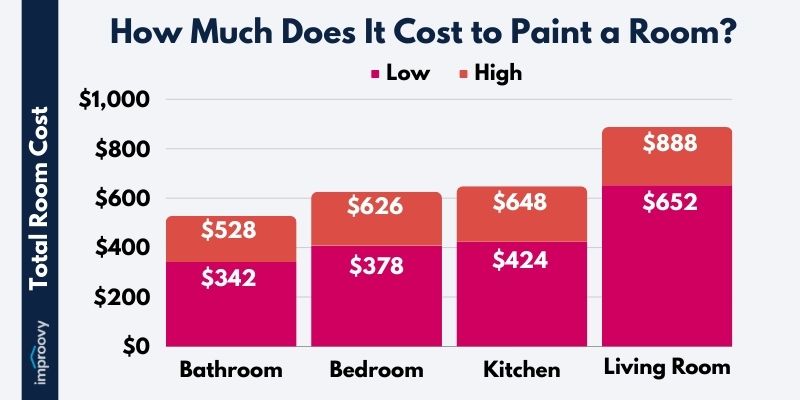
- Typical Range: Expect anywhere from $300 to $1,000 for a 12×12 room.
- Factors Affecting Cost:
- Prep Work: Extensive patching, sanding, or cleaning will increase labor time.
- Ceiling/Trim: Painting these adds to the cost.
- Height: Very tall ceilings (10ft+) require more equipment and time.
- Number of Coats: More coats = more labor.
- Paint Quality: If the painter supplies the paint, higher quality will increase the material cost.
For a standard 12×12 room with 8-foot ceilings, you can generally expect to pay between $500 and $800 for a professional job, including materials and labor.

Pro Tips to Make Your Paint Project a Breeze
Armed with your paint quantity, here are some invaluable tips to ensure your project goes smoothly:
- Buy Samples: Never commit to a color without trying it first. Paint large swatches on different walls (or on poster board) and observe them throughout the day in various lighting conditions.
- Prep is Key: Seriously, don’t skip this. Clean your walls, fill holes, sand rough spots, and tape off meticulously. A well-prepped surface is 80% of a good paint job.
- Ventilation Matters: Open windows, use fans. Good airflow helps paint dry evenly and quickly, and it’s essential for your health, especially with conventional paints.
- Proper Technique: Cut in edges first, then roll. Use a “W” or “M” pattern with your roller to ensure even coverage, overlapping slightly on each pass.
- Store Leftover Paint Correctly: Seal cans tightly, label them (room, date, color name), and store them in a cool, dry place away from direct sunlight and freezing temperatures.
- Don’t Skimp on Quality (Paint & Tools): Investing in good quality paint means better coverage and a more durable finish. Good brushes and rollers make the job easier and yield professional-looking results.
Common Mistakes to Avoid When Painting
Even seasoned DIYers can make these blunders. Learn from them and save yourself hassle!
- Skipping Primer When Needed: As discussed, this can lead to uneven color, poor adhesion, and requiring many more coats of expensive finish paint.
- Not Prepping Surfaces Properly: Dirt, grease, and crumbling old paint will prevent new paint from adhering, leading to peeling and a shoddy finish.
- Buying Too Little or Too Much Paint: This guide is designed to help you avoid this! Err slightly on the side of too much – unopened cans can usually be returned, and a little extra is invaluable for touch-ups.
- Ignoring Dry Times: Applying a second coat before the first is fully dry can lead to paint peeling, bubbling, and an uneven finish. Patience is a virtue in painting.
- Using Cheap Tools: Flimsy brushes shed bristles, cheap rollers leave lint, and poor tape allows bleed-through. Quality tools are an investment that pays off.
- Painting in the Wrong Conditions: Extreme heat, cold, or humidity can affect paint drying times and finish quality. Always check the manufacturer’s recommendations.
There you have it! Painting a 12×12 room is a manageable project, and with these calculations and tips, you’re well-equipped to tackle it like a pro. Remember, a little planning goes a long way in achieving that perfect, fresh look you’re after. Happy painting!
Frequently Asked Questions
How many gallons of paint do I need for a 12×12 room with 8-foot ceilings?
For a standard 12×12 room with 8-foot high ceilings, you’ll generally need approximately 2 gallons of paint for two coats on the walls. If you’re also painting the ceiling, add another 1 gallon for two coats, bringing the total to about 3 gallons for both walls and ceiling.
Should I use primer for a 12×12 room?
Yes, primer is highly recommended for optimal results, especially if you’re painting bare drywall, making a drastic color change (dark to light), covering stains, or painting over a glossy surface. For a 12×12 room, expect to need about 2 gallons of primer for one coat on both walls and ceiling.
How much paint does one gallon typically cover?
One gallon of high-quality interior paint typically covers between 350 to 400 square feet per coat. Primer usually covers slightly less, around 200 to 300 square feet per gallon.
Does painting a dark color over a light color require more paint?
No, painting a dark color over a light color usually requires the standard two coats. However, going from a dark color to a significantly lighter color will almost always require a tinted primer and at least 2-3 coats of the new paint to achieve full, even coverage.
How do I account for doors and windows when calculating paint?
To get a more accurate estimate, calculate the total wall square footage, then subtract the area of doors and windows. A standard door is about 21 sq ft (3×7 ft), and an average window is around 15 sq ft. This reduces the total paintable surface area.
How much paint is needed for trim in a 12×12 room?
For baseboards, crown molding, a door, and a window frame in a 12×12 room, a single quart of trim paint is usually more than enough for two coats. Trim paint has excellent coverage, and the surface area is relatively small.
Is it cheaper to DIY or hire a professional to paint a 12×12 room?
DIY is generally cheaper, costing roughly $195 to $660 for materials and basic tools. Hiring a professional for a 12×12 room typically ranges from $500 to $800, including labor and materials, offering convenience and a professional finish.