Master the Gradient: How to Paint Stunning Ombre Walls with Two Colors
Dreaming of a wall that whispers tranquility and style, a seamless blend of colors that feels both modern and timeless? You’re picturing an ombre wall. But perhaps the idea of achieving that smooth, gradient fade with just two colors feels a little daunting. Maybe you’ve seen tutorials that complicate things with three, four, or even five different paint shades. Forget that.
I’m here to tell you that painting a breathtaking two-color ombre wall is not only achievable but immensely satisfying. It’s an accessible DIY project that can transform any room into a serene sanctuary or a vibrant statement piece. No complex color mixing required beyond what you’ll learn right here.
In this definitive guide, I’ll walk you through every step, from selecting your perfect pair of colors to the precise blending techniques that ensure a flawless, professional-looking finish. We’ll demystify the process, tackle common challenges, and equip you with the confidence to create your own ombre masterpiece. Let’s make that gradient dream a reality.
Why Choose a Two-Color Ombre? The Allure of Simplicity
When it comes to ombre, less can often be more. While multi-color gradients are beautiful, a two-color approach offers a unique blend of elegance and impact. It simplifies the color selection process and makes the blending less intimidating.
The Psychology of Gradient
A well-executed two-color ombre creates a visual journey across your wall. It can make a room feel taller (with a light color on top) or more grounded (with a darker color at the bottom). The smooth transition from one shade to another evokes a sense of calm and fluidity, far more soothing than abrupt color blocks.
Design Versatility
From subtle, monochromatic transitions to bold, contrasting statements, two colors offer incredible versatility. Think soft creams blending into warm grays for a serene bedroom, or vibrant blues fading into sunny yellows for an energetic play space. The possibilities are truly endless, allowing you to tailor the mood precisely to your vision without overwhelming the eye.

Before You Dip a Brush: Essential Planning for Your Ombre Wall
Successful ombre painting is 80% preparation and 20% execution. Don’t skip these crucial planning steps!
Picking Your Perfect Pair: Two-Color Theory for Ombre
Choosing your colors is perhaps the most exciting part! For a two-color ombre, you’ll generally want to select shades that have some relationship, making the transition feel natural.
- Analogous Colors: These are colors next to each other on the color wheel (e.g., blue and green, yellow and orange). They blend beautifully and create a harmonious, subtle gradient. This is often the easiest starting point for beginners.
- Monochromatic Ombre: Using two different shades of the same color (e.g., light blue and dark blue). This creates a sophisticated, refined gradient that’s almost foolproof for blending.
- Complementary Colors (Use with Caution): Colors opposite each other on the color wheel (e.g., blue and orange, red and green). While they create high contrast, blending them directly can sometimes result in muddy or brown transition zones if not handled carefully. If you choose complementary colors, ensure they are muted or select tones that are slightly desaturated to prevent jarring clashes.
Pro Tip: For a smooth transition, pick one lighter color and one darker color. The contrast helps the gradient stand out, but ensure they share similar undertones (warm or cool) for the most pleasing blend.
Considering Room Lighting and Mood
Natural and artificial light will dramatically impact how your ombre looks. Test swatches on your wall at different times of day. A darker color at the bottom can ground a room, while a lighter color receding upwards can make a ceiling feel higher. Think about the mood you want to create: serene, energetic, sophisticated, playful.
Gathering Your Arsenal: The Right Tools & Materials
Having the right tools is non-negotiable for a smooth ombre finish. Don’t skimp on quality here; it makes a huge difference.
- High-Quality Interior Latex Paint: One lighter color, one darker color. Opt for an eggshell or satin finish for durability and a slight sheen that helps with blending. Flat paint absorbs too quickly and makes blending harder.
- Paint Trays: At least three – one for each of your two colors, and one for a blended intermediate color.
- Paint Rollers: Two-three roller frames and several roller covers (nap size 3/8″ to 1/2″ for smooth to semi-smooth walls). You’ll want one for each color, and potentially a fresh one for the blend.
- High-Quality Paint Brushes: A 2-3 inch angled sash brush for cutting in and detail work, and a separate clean, dry, fluffy blending brush (a dry paintbrush or a wide, soft bristle brush) specifically for softening transitions.
- Empty Container/Bucket: For mixing your transitional third color from your two chosen paints.
- Measuring Cups/Sticks: For precise color mixing ratios.
- Painter’s Tape: High-quality, low-tack tape (like FrogTape or 3M Delicate Surfaces) to protect trim and adjacent walls.
- Drop Cloths: To protect your floors and furniture.
- Ladder or Step Stool: For reaching high areas comfortably and safely.
- Sponge (Optional): A damp sponge can also be used for blending.
- Spray Bottle with Water: Essential for keeping paint edges wet during blending.
- Stir Sticks: For thoroughly mixing your paint.
- Rags/Wipes: For quick cleanups.
The Canvas Awaits: Prepping Your Wall for Ombre Magic
A clean, smooth, and properly prepared surface is the foundation of a beautiful ombre effect.
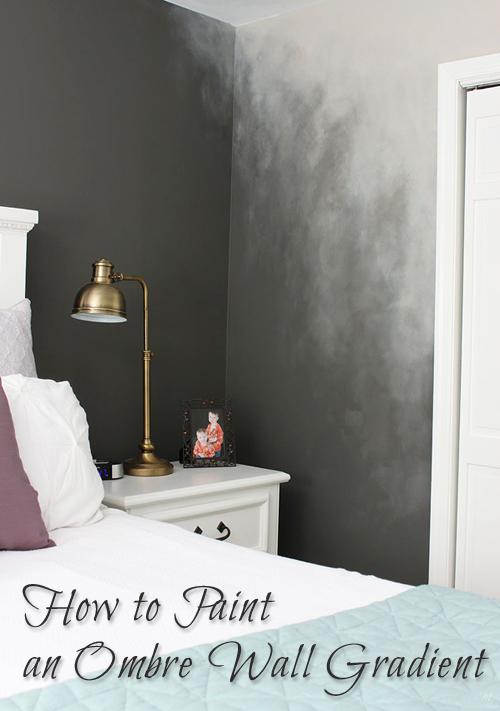
Cleaning and Repairing
Wipe down your wall with a damp cloth or a mild cleaner (like TSP substitute) to remove dust, dirt, and grime. Allow it to dry completely. Fill any holes or cracks with spackle, sand smooth once dry, and wipe away any dust.
Priming for Success
If your wall is new, unpainted, very dark, or stained, a coat of primer is a must. Primer creates a uniform surface, ensures better paint adhesion, and can help your colors appear truer. If you’re painting over a light, clean wall, you might be able to skip primer.
Marking Your Territory: Defining Your Ombre Zones
Before any paint goes on, visualize where your colors will transition. For a two-color ombre, you’ll have a dominant color (top or bottom), your secondary color, and a middle transition zone where they seamlessly blend. Most commonly, walls are divided into thirds (though this is flexible based on your desired look):
- Measure the height of your wall.
- Divide by three. This gives you three equal sections.
- Lightly mark the division lines with a pencil. These marks are guidelines, not hard stops. Your goal is a gradual blend, not stripes.
Example: If your wall is 9 feet tall, you’d mark lines at 3 feet and 6 feet from the floor (or ceiling, depending on your starting point). The middle 3-foot section will be your primary blending zone.
The Art of the Blend: Step-by-Step Guide to Two-Color Ombre Painting
This is where the magic happens! For a truly seamless two-color ombre, the secret lies in creating a third transitional shade and maintaining a wet edge. This is the most reliable method for achieving professional results with minimal frustration.
Method 1: The “Wet Edge” Roller Blend with a Transitional Shade (Recommended)
This method minimizes harsh lines and provides the smoothest transition. Let’s assume you’re going from light at the top to dark at the bottom.
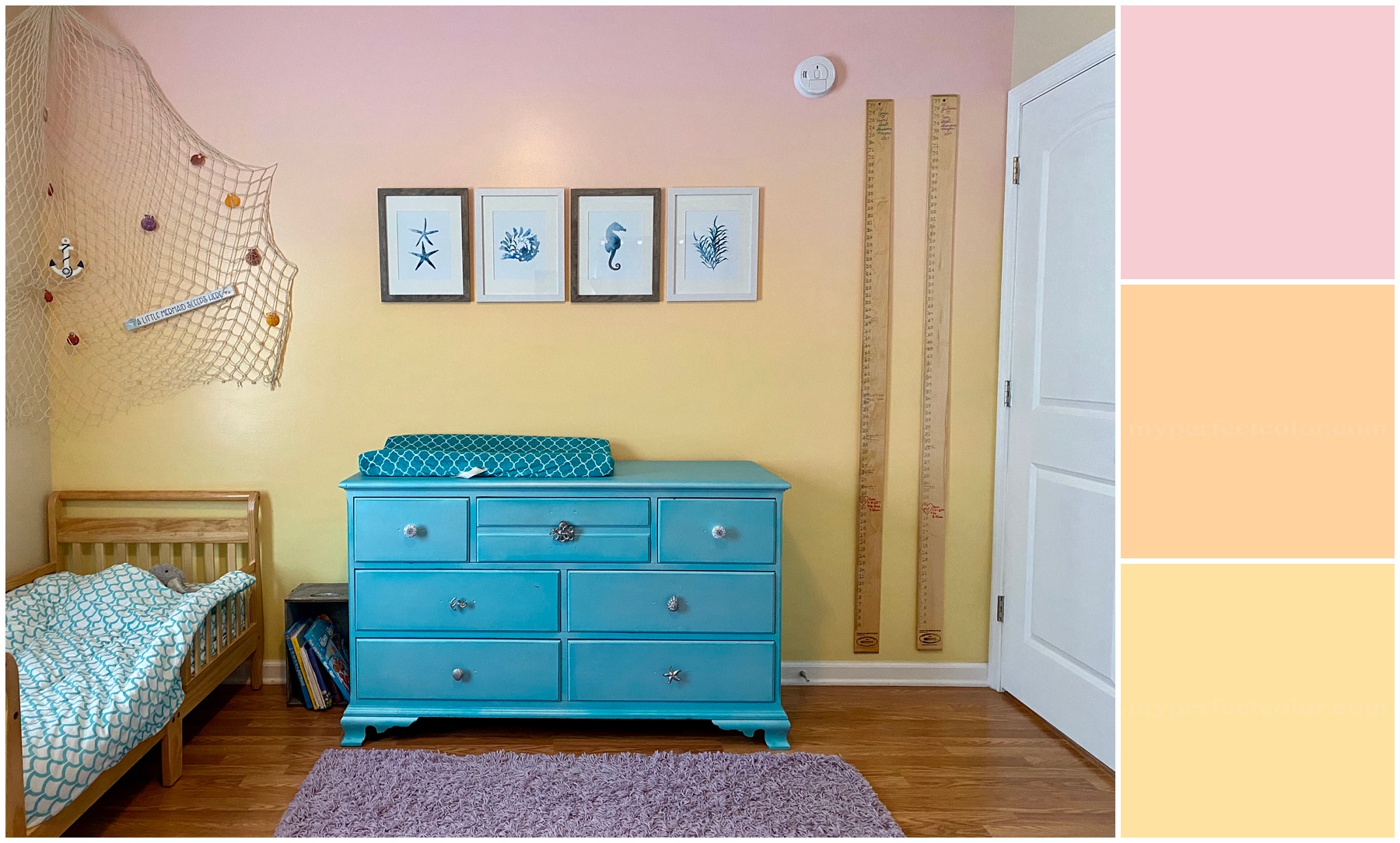
- Mix Your Transitional Color: In a clean empty container, mix equal parts (e.g., 1 cup of each) of your lighter color and your darker color. Stir thoroughly. This is your crucial middle shade that bridges the gap. Pour each of your three colors (light, dark, mixed) into separate paint trays.
- Apply Your Lighter Color: Start by painting the top third of your wall with your lighter color. Use a roller, cutting in edges with your angled brush. Extend this color slightly into the middle third, maybe an extra 6-12 inches, creating a soft, undefined edge. Don’t worry about perfection here, just get the coverage down. Allow this coat to dry completely if you want a cleaner base, or proceed while slightly tacky if you’re confident in your speed. For the best result, let it dry and then apply a second coat to the top third, working quickly.
- Apply Your Darker Color: Now, paint the bottom third of your wall with your darker color. Again, use a roller and cut in. Extend this color slightly upwards into the middle third, overlapping the lighter color’s edge by 6-12 inches.
- Introduce the Transitional Color (The Bridge): Now comes your mixed middle shade. Using a fresh roller, apply this transitional color to the middle third of the wall, ensuring you roll it over the edges where your light and dark colors meet. You want to overlap both the lighter color above and the darker color below by a good 12-18 inches, creating substantial wet-on-wet areas.
- The Blending Ballet: This is the critical step. While all three paint zones (light, mixed, dark) are still wet, use a clean, dry blending brush (a wide, soft bristle brush or a clean, dry paint brush).
- Start at the top transition: Lightly brush horizontally where the light color meets the transitional color, using gentle, feathery strokes. Work in small sections, always brushing into the wet paint.
- Move to the bottom transition: Repeat the process where the transitional color meets the darker color, brushing horizontally to soften the line.
- Periodically step back and assess. If a section starts to dry, lightly mist it with water from your spray bottle to reactivate the paint, then continue blending. The goal is to diffuse the hard lines into a soft, blurry transition.
- Refine and Repeat: Continue blending and refining until you achieve the seamless look you desire. Work your way across the wall section by section, always keeping a wet edge. You might need to add a little more of the light, dark, or transitional paint in certain spots if you’ve over-blended or have a dry patch. Just remember to work quickly and blend into wet paint.
Method 2: The “Dry Brushing” Fade (More Subtle and Less Defined)
This method creates a very soft, almost ethereal fade, but can be harder to control for beginners seeking a defined gradient. It’s best for very close monochromatic shades.
- Apply your base color (e.g., lighter) to the entire wall and let it dry completely.
- Apply your secondary color (e.g., darker) to the desired section (e.g., bottom third). Don’t worry about a perfect edge.
- While the secondary color is still wet, take a clean, dry paintbrush. Dip it *very lightly into the secondary color, then offload most of the paint.
- Begin to feather the brush upwards (or downwards) from the wet edge of the secondary color into the dry base color, using soft, sweeping strokes. The minimal paint on the brush will create a translucent, gradual fade.
- Repeat, reloading the brush minimally, until you achieve your desired subtle blend.
Method 3: The “Mist and Mingle” (Advanced for Seamlessness)
This technique is often combined with Method 1, using water to keep paint workable and aid blending. It’s particularly useful for larger walls or slower painters.
- Follow steps 1-4 of Method 1 (apply light, dark, and transitional paints, overlapping).
- Instead of relying solely on a dry brush, frequently mist the areas you are blending with a fine spray of water from your spray bottle. This keeps the paint wet and extends its open time, making it much easier to work and diffuse brush strokes.
- Immediately after misting, use your clean, dry blending brush to gently feather the colors together with horizontal strokes. The water helps the pigments flow and merge more naturally.
- Be careful not to oversaturate the wall with water, as this can cause drips or dilute the paint too much. A light mist is all you need.
Here’s a quick comparison of the blending techniques:
| Technique | Difficulty | Finish | Best For |
|---|---|---|---|
| Wet Edge Roller with Transitional Shade | Moderate | Seamless, professional gradient | All skill levels, distinct two-color ombre |
| Dry Brushing Fade | Easy to start, harder to perfect | Subtle, ethereal, less defined blend | Monochromatic schemes, very subtle transitions |
| Mist and Mingle | Moderate to Advanced | Extended work time, very soft blend | Large walls, warmer climates, combining with Method 1 |
Troubleshooting Common Ombre Wall Painting Mishaps
Even experienced painters encounter challenges. Here’s how to tackle them:
Streaks and Harsh Lines
This is the most common issue. It usually means the paint was drying too quickly, or you didn’t overlap enough, or your blending brush was too loaded with paint.
Fix: If caught early (paint still tacky), mist with water and re-blend with a clean, dry blending brush. For dry, distinct lines, you may need to apply a thin layer of your transitional color over the harsh line and immediately blend outwards.
Uneven Blending
Some areas look blended, others not so much.
Fix: It often comes down to inconsistent pressure or speed. Work in smaller, manageable sections. If one section is dry, don’t try to blend into it. Instead, apply a very thin* coat of the appropriate color (or the transitional shade) to the dry area, then immediately blend into the adjacent wet paint. Patience and consistent, light strokes are key.

Paint Dripping
Too much paint on your roller or brush, or too much water from your spray bottle.
Fix: Immediately wipe drips with a damp cloth. Always offload excess paint from rollers and brushes. Use a fine mist with your spray bottle, not a stream.
Wrong Color Choice Outcomes
Your colors might not blend as expected, or the transition looks muddy. This is especially common with certain complementary colors.
Fix: If you’re seeing muddy results, it often means the colors are reacting poorly when mixed wet. You might need to adjust your approach to a more segmented blend, or accept that those specific colors don’t blend well. For future projects, always test color swatches on a scrap piece of drywall or poster board before committing to the wall.
Pro Tips for a Flawless Ombre Finish
Elevate your ombre from good to absolutely stunning with these expert insights:
- Work in Manageable Sections: Don’t try to paint and blend an entire wall at once, especially if it’s large. Break it down into vertical strips, working about 3-4 feet wide at a time, ensuring you complete the blending within that strip before moving to the next. Always blend into the wet edge of the previous section.
- Patience is Key, But Speed is Your Friend: This sounds contradictory, but it’s not. Be patient with your blending strokes, but work efficiently to keep the paint wet. Have all your tools and paints ready before you start rolling.
- Observe Lighting During Painting: Natural light changes throughout the day. Try to paint during consistent lighting conditions (e.g., mid-morning to afternoon) or with good, consistent artificial lighting. This helps you judge the blend accurately.
- Don’t Overwork the Paint: Too much blending will not only make the paint gummy but can also lift it off the wall. Once you achieve a satisfactory blend, move on. Less is often more.
- Keep Your Blending Brush Clean (but Dry!): Wipe off excess paint from your blending brush frequently on a clean rag. You want it to diffuse color, not transfer it. Never use a wet blending brush unless you’re intentionally adding water (Mist & Mingle method).
- Practice First: If you’re nervous, try a small practice board or even a hidden section of the wall (like inside a closet) to get a feel for the technique and how your chosen colors blend.
Maintaining Your Ombre Masterpiece
Once your wall is dry and beautiful, a little care will keep it looking fresh for years.
- Cleaning Advice: For light dust, a soft, dry microfiber cloth is usually enough. For marks or smudges, gently wipe with a damp (not soaking wet) cloth and a mild, non-abrasive cleaner. Avoid harsh scrubbing, especially in the blended areas, as this can wear away the top layers of paint.
- Touch-Ups: If you need to touch up a small area, use the exact paint color that was applied to that zone (light, dark, or transitional). Blend carefully with a small, dry brush, feathering the edges to minimize a noticeable patch.
Painting an ombre wall with two colors is a rewarding project that adds personality and artistic flair to your home. With careful planning, the right tools, and the blending techniques I’ve shared, you’re well-equipped to create a stunning focal point that will undoubtedly garner compliments. Embrace the process, trust your eye, and enjoy the transformative power of a perfectly gradient wall!
Frequently Asked Questions
Can I really paint an ombre wall with only two colors, or do I need three?
Yes, absolutely! While some guides suggest three or more pre-mixed paints, this guide focuses on using two primary colors and then *creating* a crucial third transitional shade by mixing equal parts of your two main colors. This method simplifies color selection and still ensures a beautiful, seamless gradient blend.

What’s the best type of paint finish for an ombre wall?
An eggshell or satin finish is generally recommended. These finishes have a slight sheen that helps keep the paint wet longer, making it easier to blend colors seamlessly. Flat paint tends to absorb too quickly, making blending much more challenging and prone to harsh lines.
How do I prevent harsh lines and streaks when blending?
The key is to work quickly, keep your paint edges wet (using a spray bottle with water if needed), and use a clean, dry blending brush with very light, feathery horizontal strokes. Make sure you’re overlapping your paint sections generously before blending. If lines appear, lightly mist and re-blend immediately.
Should I paint from top to bottom or bottom to top?
It largely depends on your desired effect. Painting lighter colors at the top and fading to darker colors at the bottom can make a room feel taller and more expansive. Reversing this creates a more grounded, cozy feel. The blending technique remains the same regardless of direction, but consistently working in one direction (e.g., top-down for each section) is recommended.
How long does it take for an ombre wall to dry completely?
While paint is usually dry to the touch within 1-2 hours, it typically takes 24-48 hours for the paint to fully cure and harden, especially in areas with thicker application due to blending. Avoid touching or placing furniture against the wall during this curing period to prevent damage.
Can I use any two colors for an ombre wall?
While technically you can, some color combinations blend more harmoniously than others. Analogous colors (next to each other on the color wheel) or monochromatic shades are the easiest and most effective for a smooth gradient. Complementary colors can be tricky and may result in muddy transitions if not chosen and blended carefully. Always test your colors on a swatch board first!