The Ultimate Guide to Finding Nice Wall Colors for Your Bedroom: Create Your Dream Retreat
Staring at a blank wall or a color you’ve grown to despise? Choosing the ‘nice’ wall color for your bedroom feels like a monumental decision. It’s not just paint; it’s the backdrop to your most personal space, the canvas for your sleep, relaxation, and intimate moments. A truly ‘nice’ bedroom color can transform your room from just a place to sleep into a serene sanctuary, a cozy haven, or a vibrant escape.
But with an endless spectrum of shades, how do you find *your nice? It’s not about following fleeting trends; it’s about understanding what makes a color sing in your space, align with your desires, and contribute to your well-being. This guide will help you decode the language of color, empowering you to choose a bedroom wall color you’ll genuinely love for years to come.
What Makes a Bedroom Wall Color “Nice”? It’s All About the Vibe
Before we dive into specific shades, let’s talk about what ‘nice’ really means in the context of a bedroom. It’s highly subjective, yet there are universal principles at play.
Understanding Your Personal “Nice”: Your ideal bedroom color isn’t necessarily the color of the year. It’s the hue that evokes the feeling you crave most in your bedroom. Do you dream of a tranquil oasis, a romantic hideaway, an energizing morning start, or a sophisticated retreat? Pinpointing this desired emotion is your first, crucial step.
The Power of Mood: How Colors Influence Sleep, Relaxation, and Romance: Colors aren’t just visual; they’re psychological. They impact our nervous system, influencing everything from our heart rate to our mood. For a bedroom, this is paramount. Cool, muted tones often promote relaxation, while warm, rich hues can foster intimacy. Understanding this connection is key to creating a truly harmonious space.

Top Categories of “Nice” Bedroom Colors & Their Impact
Let’s explore the palettes that consistently earn top marks for bedroom appeal, categorized by the dominant mood they create.
The Serene & Sleep-Inducing Palette (Blues, Greens, Soft Grays)
These colors are the heavy hitters when it comes to promoting calm and relaxation, ideal for winding down after a long day.
- Blues: Calming, Vast, Promotes Rest. Often associated with the sky and ocean, blue is a natural sedative for the eyes and mind. Lighter blues can feel airy and expansive, while deeper blues offer a sense of security and depth.
- Sky Blue: Light, airy, truly tranquil. Perfect for creating a dreamy, open feel.
- Robin’s Egg Blue: A cheerful yet soothing blue-green that brings a touch of vintage charm and freshness.
- Dusty Blue: More muted, sophisticated, and less overtly vibrant, offering gentle calm.
- Navy (as an accent): While too dark for all walls in many bedrooms, a navy accent wall adds dramatic sophistication and coziness, especially in larger, well-lit rooms.
- Greens: Nature-Inspired, Balanced, Refreshing. Greens connect us to nature, offering a sense of balance and renewal. They can be incredibly versatile, from crisp and clean to earthy and deep.
- Sage Green: Universally loved for its soothing, organic quality. It’s a soft, muted green that works beautifully with natural materials.
- Mint Green: Light, fresh, and slightly playful, excellent for a bright, uplifting feel.
- Olive Green: Deeper and more sophisticated, providing an earthy, grounding presence.
- Eucalyptus: A slightly greyed-out green, offering a very sophisticated and calm vibe.
- Soft Grays: Sophisticated, Versatile, Tranquil. Gray has shed its drab reputation and emerged as a top neutral. Its versatility allows it to blend with almost any decor style, acting as a serene backdrop.
- Dove Gray: A classic, light gray that feels clean and modern without being cold.
- Warm Gray (Greige): A gray with beige or brown undertones, offering the sophistication of gray with added warmth.
- Light Charcoal: For those seeking a deeper, more enveloping gray, a light charcoal can be surprisingly comforting and chic, especially with ample natural light.
| Color Family | Specific Shade Examples | Primary Mood/Effect | Best For | Design Tips |
|---|---|---|---|---|
| Blue | Sky Blue, Dusty Blue, Robin’s Egg | Calming, relaxing, expansive, peaceful | Master bedrooms, guest rooms, small rooms (lighter shades) | Pair with warm whites and natural wood; avoid overly bright blues for sleep. |
| Green | Sage, Mint, Olive, Eucalyptus | Harmonious, refreshing, grounding, natural | Rooms needing a touch of nature, gender-neutral spaces, modern organic styles | Works well with plants, metallics (gold/brass), and neutral textiles. |
| Gray | Dove Gray, Warm Gray (Greige), Light Charcoal | Sophisticated, tranquil, versatile, modern | Contemporary bedrooms, rooms with colorful art/decor, spaces needing a neutral base | Ensure a warm undertone to avoid coldness; layer with textures for coziness. |
The Warm & Cozy Embrace (Warm Neutrals, Earth Tones)
These colors are like a comforting hug, perfect for creating an inviting, intimate, and secure atmosphere.
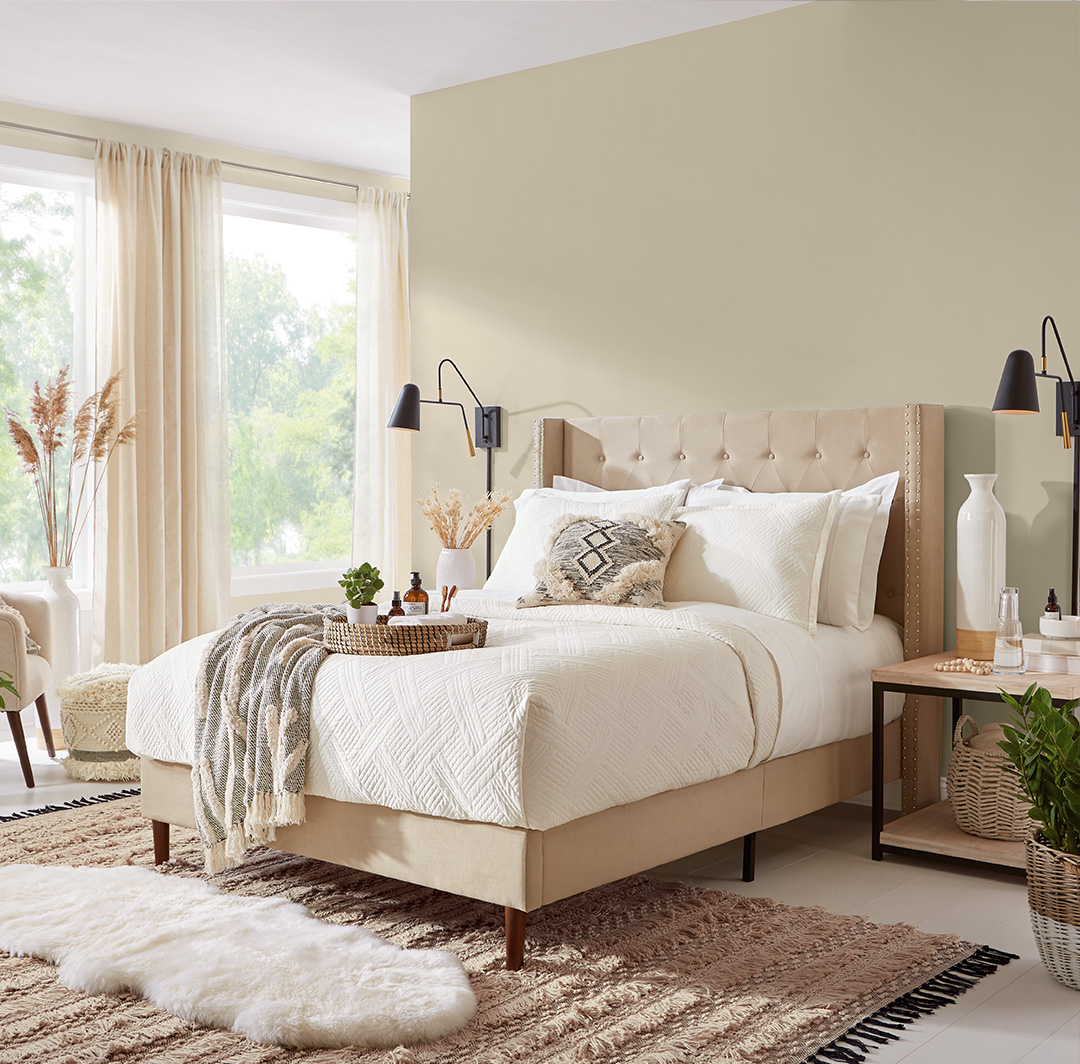
- Warm Whites & Creams: Classic, Inviting, Airy. Forget sterile, clinical whites. Warm whites have subtle undertones of yellow, pink, or beige that prevent them from feeling stark. They reflect light beautifully, making rooms feel larger and brighter.
- Off-White: A white with just a hint of color to soften it.
- Ivory: A slightly deeper, creamy white that feels luxurious and warm.
- Beige: A timeless neutral, ranging from sandy to deeper tan, providing warmth without being overwhelming.
- Pale Peach/Apricot: A very soft, almost neutral peach can add subtle warmth and a gentle, rosy glow.
- Taupes & Greiges: Sophisticated Neutral, Grounding. These chameleon colors blend gray and beige (greige) or gray and brown (taupe), offering complex neutrals that adapt to different lighting and decor. They provide a grounding presence that feels effortlessly chic.
- Greige: The ultimate transitional neutral, balancing cool and warm tones.
- Warm Taupe: Deeper than greige, bringing more brown to the mix for a truly earthy, grounding feel.
- Soft Terracottas & Blushes: Subtle Warmth, Romantic. For those who desire a touch of color that still feels gentle and inviting, these shades offer warmth and a hint of romance.
- Blush Pink: A muted, sophisticated pink that feels romantic and delicate, not overtly feminine.
- Light Terracotta or Clay: Earthy, sun-baked tones that add warmth and a bohemian touch without being too bold.
| Color Family | Specific Shade Examples | Primary Mood/Effect | Best For | Design Tips |
|---|---|---|---|---|
| Warm Whites/Creams | Off-White, Ivory, Beige | Inviting, airy, classic, bright | Small rooms, rooms with less natural light, minimalist designs | Layer with textures (linens, knits) to prevent flatness; pair with natural wood. |
| Taupe/Greige | Greige, Warm Taupe | Sophisticated, grounding, versatile, cozy | Modern farmhouses, traditional homes, transitional styles | Excellent base for almost any accent color; timeless appeal. |
| Soft Terracotta/Blush | Blush Pink, Light Terracotta | Romantic, gentle, earthy, warm | Boho chic, romantic themes, guest rooms | Pair with white, cream, or light wood tones to keep it fresh and not overwhelming. |
The Elegant & Luxurious Statement (Deeper Hues, Jewel Tones – for accents)
For those who prefer a more dramatic, enveloping, and luxurious bedroom, deeper colors can create a truly stunning effect. Use these with caution, often best as an accent or in well-lit, larger spaces.
- Deep Blues & Greens: Sophisticated, Moody. Think beyond pastels. Rich, saturated blues and greens can create a cocoon-like effect that feels incredibly chic and cozy.
- Midnight Blue: Intense and dramatic, ideal for a sophisticated, enveloping feel. It can surprisingly promote deep sleep.
- Hunter Green/Forest Green: Earthy yet regal, offering a profound connection to nature and a sense of calm strength.
- Rich Grays & Charcoals: Dramatic, Grounding. Deeper grays move beyond neutral to make a statement, providing a grounding, modern backdrop.
- Charcoal Gray: A powerful, modern neutral that provides a strong foundation.
- Deep Teal: A captivating blend of blue and green, offering both serenity and a touch of exotic luxury.
Important Note: While these deeper hues can be incredibly ‘nice,’ they often work best in larger bedrooms with ample natural light or used on a single accent wall to prevent the room from feeling too dark or enclosed. Pair them with lighter ceilings, trim, and bedding to balance the intensity.
:strip_icc()/WhalesTail-3473099bd2224e18adc7553f9cd5b09d.jpg "25 Calming Bedroom Paint Colors for a Restful Retreat")
Beyond Color: Essential Factors for Choosing Your Bedroom’s Perfect Hue
Color isn’t chosen in a vacuum. Several practical elements in your bedroom profoundly influence how a paint color looks and feels.
Natural Light: Your Room’s Best Friend (or Foe)
This is arguably the most critical factor. The direction your room faces determines the quality and quantity of natural light it receives, which can drastically alter how a paint color appears.
- North-facing rooms: Receive cooler, softer, indirect light. Colors here can appear muted or even grayed-out. Opt for warmer tones (yellow, red, orange undertones) to counteract the coolness and bring warmth.
- South-facing rooms: Bathed in abundant, warm, bright light throughout the day. Almost any color will look great here, but cool colors (blues, greens, grays) can help temper the intensity.
- East-facing rooms: Get bright, warm morning light, which turns cooler and dimmer in the afternoon. Consider colors that look good in both conditions. Soft blues and greens can feel refreshing in the morning and soothing later.
- West-facing rooms: Receive warm, intense afternoon and evening light. Colors here will appear much warmer in the late day. Cool colors can balance this, or embrace the warmth with soft terracotta or blush tones.
How light changes color perception: A color sample might look perfect in the store, but fluorescent lights are very different from natural daylight. Always test samples in your room!
Room Size & Ceiling Height: Creating Illusions with Color
Color has a powerful ability to manipulate perception of space.
- Light vs. Dark for Expansion/Coziness: Generally, lighter colors make a room feel larger and more open by reflecting light. Darker colors tend to absorb light, making a room feel smaller and cozier. If you have a small bedroom but crave a dramatic effect, consider a deep hue on an accent wall, or use it only if the room has abundant natural light.
- Ceiling Considerations: Painting the ceiling the same color as the walls (or a slightly lighter shade of the same color) can create a seamless, expansive feel, especially in rooms with lower ceilings. A classic white ceiling provides contrast and can visually lift the ceiling.
Existing Decor & Furniture: The Harmony Principle
Your wall color needs to play nicely with what’s already in the room. You’re not starting from scratch, so don’t ignore these anchors.
:max_bytes(150000):strip_icc()/tranquil-yet-sophisticated-bedroom-paint-colors-350800-hero-fad897b742b049669237b47231236dce.jpg "14 Best Bedroom Paint Colors for a Relaxing Space")
- Matching Undertones: Look at your furniture, bedding, and artwork. Do they have warm undertones (yellow, red, orange) or cool undertones (blue, green, gray)? Choose a wall color with similar undertones to ensure harmony. A cool gray wall with warm wood furniture can clash if the undertones aren’t carefully considered.
- Creating Contrast: Sometimes, contrast is good! A light wall color can make dark furniture pop. A deeper wall can make light bedding feel crisp and inviting. Aim for intentional contrast, not accidental clashes.
- Complementary Colors: Think about the color wheel. If your bedding is primarily blue, a soft terracotta or blush wall can provide a beautiful, subtle complementary warmth.
The Role of Paint Sheen: Matte, Eggshell, Satin, Semi-Gloss
The finish of your paint profoundly impacts how the color looks and performs. It’s not just about aesthetics; it’s about durability and practicality.
- Matte/Flat: Offers a velvety, non-reflective finish that hides imperfections well and provides a sophisticated, modern look. It’s often chosen for bedrooms for its soft appearance. However, it’s less durable and harder to clean.
- Eggshell: Has a very subtle sheen, resembling an eggshell. It’s more durable than flat, easier to clean, and still provides a soft appearance, making it a popular choice for bedrooms.
- Satin: Has a noticeable, smooth sheen. It’s more durable and washable than eggshell, making it a good option for high-traffic areas or homes with children/pets, but the sheen can be more reflective in a bedroom.
- Semi-Gloss: A high-sheen, highly durable finish, typically reserved for trim, doors, and cabinets. It’s generally too reflective for bedroom walls, as it can highlight imperfections and feel less cozy.
For most bedrooms, matte or eggshell are the top choices due to their ability to create a soft, inviting atmosphere and hide minor wall imperfections.
How to Confidently Choose and Test Bedroom Paint Colors
Choosing paint isn’t a one-and-done decision. It’s a process that, when followed correctly, guarantees satisfaction.
Step 1: Gather Inspiration & Narrow Down Options.
- Scroll Pinterest, browse design magazines, visit paint company websites. Look for rooms that evoke the feeling you want.
- Identify common themes or specific colors that consistently catch your eye.
- Aim for 3-5 strong contenders to start with.
Step 2: Get Samples – The Non-Negotiable Step.
:max_bytes(150000):strip_icc()/Haywoodmade-7_11_23-9-9862376265fd401f87ace8fc1c5f45b0.jpg "18 Bedroom Paint Colors That Will Turn Your Space Into a Haven")
- Buy small sample pots of your top choices. Never, ever judge a color solely by a tiny paint chip.
- Most paint brands offer samples for a few dollars. It’s the best money you’ll spend on your project.
Step 3: Test Swatches on Multiple Walls.
- Paint generous swatches (at least 2’x2′) directly onto your bedroom walls. Do this on walls that receive different amounts of light throughout the day.
- Don’t forget to apply two coats to get a true representation of the color.
- If you’re hesitant to paint directly on the wall, paint large poster boards, and tape them up. This allows you to move them around.
Step 4: Observe Through the Day & Night.
- Live with the samples for at least 24-48 hours.
- Watch how the colors change under natural light (morning, midday, afternoon, evening) and artificial light (lamps, overheads). A color that looks great in bright daylight might turn muddy or too vibrant under your bedroom lamps.
- Consider how the colors interact with your existing flooring, furniture, and window treatments.
Step 5: Trust Your Gut (and Your Design Principles).
- After observation, which color makes you feel the most comfortable, serene, or whatever ‘nice’ means to you?
- Don’t be afraid to eliminate options. If a color causes hesitation, it’s probably not the one.
- Remember the principles: light, room size, existing decor. Does your chosen color enhance or detract from these elements?
Nice Color Combinations & Accent Ideas for Bedrooms
A ‘nice’ bedroom often involves more than just a single wall color. Thoughtful combinations can elevate the space.
- Monochromatic Magic: Layers of the Same Color. This approach uses various shades, tints, and tones of a single color. For example, a light sage green on the walls, a slightly darker olive green for bedding, and a very pale mint green for accessories. This creates depth and sophistication while maintaining a cohesive, calming feel.
- Complementary Contrast: Subtle Pops. Instead of stark contrasts, think subtle complements. If your walls are a cool blue, introduce warmth with bedding or pillows in soft coral or peach. If you have warm beige walls, add depth with muted sage or dusty blue accents.
- Accent Walls: When and How to Use Them Effectively. An accent wall can introduce a deeper, bolder ‘nice’ color without overwhelming the room.
- Behind the Bed: This is the most common and effective placement, drawing the eye to the headboard and creating a focal point.
- With a Feature: Highlight an architectural feature like a built-in bookshelf or a fireplace.
- Choosing the Color: The accent color should complement the main wall color. It can be a darker shade of the same hue or a complementary color that adds a subtle pop. Avoid choosing a random color that doesn’t relate to anything else in the room.
| Main Wall Color | Complementary Accent Idea | Overall Effect |
|---|---|---|
| Soft Blue | Cream, Light Terracotta, Warm Wood Tones | Tranquil yet inviting, balanced serenity |
| Sage Green | Blush Pink, Gold, Warm Whites | Earthy calm with a touch of gentle elegance |
| Warm Gray (Greige) | Dusty Blue, Muted Plum, Deep Green | Sophisticated neutrality with subtle depth |
| Blush Pink | Greige, White, Light Gray, Sage Green | Softly romantic and fresh |
| Off-White/Cream | Almost anything! Deep Blue, Forest Green, Charcoal, Terracotta | Clean canvas with pops of personality; bright and adaptable |
Common Mistakes to Avoid When Choosing Bedroom Wall Colors
Even with the best intentions, it’s easy to stumble. Dodge these common pitfalls:
- Choosing in a Store: The lighting in a retail environment is completely different from your home. What looks perfect under fluorescent lights will likely look different in your bedroom.
- Not Testing Samples: This is the most frequent and costly mistake. A small chip is never enough. Always get samples and paint them on your actual walls.
- Ignoring Undertones: Colors are complex. A ‘gray’ might have blue, green, or even purple undertones that can unexpectedly clash with your existing decor. Pay close attention to these subtle nuances.
- Forgetting Lighting: As discussed, natural and artificial light are game-changers. What looks great at noon might be unappealing under your bedside lamp.
- Chasing Trends Blindly: While trends offer inspiration, your bedroom should reflect your taste and promote your* desired mood. A color that’s ‘in’ might not be ‘nice’ for you.
- Overlooking the Paint Sheen: Choosing the wrong finish can ruin the look of even the perfect color. Matte or eggshell are generally superior for bedroom walls.
Your Serene Bedroom Awaits
Choosing a ‘nice’ wall color for your bedroom isn’t just about aesthetics; it’s about crafting an environment that supports your well-being. By understanding the psychological impact of colors, considering your room’s unique characteristics, and diligently testing your choices, you can confidently select a hue that truly makes your bedroom your favorite place to be.
Take your time, trust your instincts, and enjoy the transformative power of a perfectly chosen paint color. Your dream bedroom retreat is within reach.
Frequently Asked Questions
What is the most popular color for a bedroom?
While trends shift, soft blues and greens, along with warm grays (greige) and warm whites, consistently remain popular choices for bedrooms due to their calming and versatile qualities. These colors promote relaxation and blend well with various decor styles.
What color makes a bedroom look bigger?
Lighter colors, especially those with cool undertones like pale blues, mint greens, and crisp whites, tend to make a bedroom feel more spacious and airy by reflecting light. Using a light color on both walls and ceiling can further enhance this expansive effect.
Should all walls in a bedroom be the same color?
Not necessarily. Painting all walls the same color creates a cohesive and enveloping feel. However, an accent wall (often behind the bed) in a complementary or slightly darker shade can add depth, drama, and a focal point without overwhelming the room. It depends on the desired aesthetic and room size.
What paint finish is best for bedroom walls?
For bedroom walls, a matte or eggshell finish is generally recommended. Matte offers a soft, non-reflective, velvety look that hides imperfections well, while eggshell provides a slight sheen with increased durability and ease of cleaning, still maintaining a soft appearance.
How do I choose a bedroom color that goes with my existing furniture?
Consider the undertones of your existing furniture (warm or cool) and choose a wall color with similar undertones for harmony. Alternatively, select a complementary color to create a pleasing contrast. Always test paint samples on your wall next to your furniture to see how they interact in your room’s specific lighting.
Can dark colors be nice in a bedroom?
Absolutely! Dark colors like navy blue, deep forest green, or charcoal gray can create a sophisticated, cozy, and luxurious ‘cocoon-like’ atmosphere, especially in larger bedrooms or those with ample natural light. They can also promote a sense of deep calm. It’s often recommended to use them on an accent wall or balance them with lighter trim and bedding.
How long should I test paint samples before deciding?
It’s best to live with paint samples on your walls for at least 24-48 hours. This allows you to observe how the colors change throughout the day and night under different natural and artificial lighting conditions, ensuring you make a confident decision.