The Definitive Guide to the Best Blue-Gray Paint Colors for Your Bedroom
Staring at a blank bedroom wall, scrolling through endless paint swatches online, and still feeling utterly overwhelmed? You’re not alone. Choosing the perfect paint color for your sanctuary, especially something as nuanced as blue-gray, can feel like a high-stakes decision. You want a space that whispers calm, embraces sophistication, and genuinely helps you unwind. A color that’s both stylish and timeless, but also feels uniquely ‘you’.
Good news: you’ve landed in the right spot. I’m here to cut through the noise and guide you to the absolute best blue-gray paint colors specifically for your bedroom. Forget the generic lists; we’re diving deep into undertones, LRVs, and practical application so you can confidently transform your bedroom into the peaceful retreat you deserve. Let’s create that dreamy space together.
Why Blue-Gray Reigns Supreme in the Bedroom
So, what makes blue-gray such a powerhouse choice for bedrooms? It’s not just a trend; it’s a beautifully balanced hue that hits all the right notes for creating a tranquil and elegant sleeping environment. It combines the calming, expansive qualities of blue with the grounding, sophisticated feel of gray, resulting in a color that’s incredibly versatile and deeply comforting.
The Psychology of Blue-Gray for Sleep and Serenity
Think about it. Blue is universally associated with peace, tranquility, and open spaces like the sky and ocean. It has a proven psychological effect of lowering heart rates and promoting relaxation, making it an ideal candidate for a sleep space. Gray, on the other hand, brings a sense of stability, maturity, and understated elegance. When these two colors merge, blue-gray delivers a unique blend:
- Calming & Relaxing: The blue tones gently soothe your mind, perfect for de-stressing before bed.
- Sophisticated & Timeless: The gray undertones elevate the color, preventing it from feeling juvenile or overly vibrant. It’s a grown-up, elegant choice that won’t quickly go out of style.
- Versatile: It acts as a fantastic neutral, pairing beautifully with a wide array of other colors, textures, and design styles, from modern minimalist to cozy farmhouse.
- Expansive: Lighter shades of blue-gray can make a smaller bedroom feel larger and airier.
Understanding Undertones: The Key to Your Perfect Shade
This is where many people get tripped up. Blue-gray isn’t just one color; it’s a spectrum. The subtle hint of another color peeking through – the undertone – completely changes how a blue-gray paint appears in your room. Understanding these undertones is crucial for avoiding buyer’s remorse.
- Green Undertones: These blue-grays often feel more organic, earthy, and natural. They can bring a spa-like tranquility or a coastal breeze into your bedroom. If you love a connection to nature, this is your sweet spot.
- Purple/Violet Undertones: When blue-gray leans purple, it adds a touch of richness, drama, and sometimes a whisper of warmth. These shades can feel luxurious, regal, and deeply enveloping, especially in evening light.
- True Gray Undertones: These are the crispest, cleanest blue-grays. They tend to be cooler and more modern, offering a straightforward, no-fuss elegance. If you want a clear, cool backdrop, look for these.
The undertone will often reveal itself most clearly when you place the paint swatch next to a pure white or pure gray object. What you see there might surprise you!
Decoding LRV: Light Reflectance Value and Your Bedroom
LRV, or Light Reflectance Value, is a critical number that tells you how much light a paint color reflects. It ranges from 0 (absolute black) to 100 (pure white). In a bedroom, LRV is incredibly important because it dictates how light or dark, airy or cozy your space will feel.
- High LRV (above 60): These are lighter blue-grays that reflect a lot of light. They’re excellent for smaller bedrooms, rooms with limited natural light, or when you want a very airy, open feel.
- Medium LRV (40-60): These offer a balanced approach. They provide noticeable color without making the room feel heavy. They’re a safe bet for many bedrooms, offering good depth and warmth.
- Low LRV (below 40): These are deeper, more saturated blue-grays. They absorb more light, creating a more intimate, cozy, and dramatic atmosphere. Best for larger bedrooms or rooms with ample natural light where you want to create a den-like retreat.
Knowing the LRV helps you predict how a color will behave in your specific bedroom, especially when paired with your unique lighting conditions.
:max_bytes(150000):strip_icc()/Gibbs-Ave-134-9b2a24f2bc9448d7800258c65c193aa2.jpeg "40 Blue-Gray Paint Colors to Inspire Your Next Reno")
Our Top Picks: The Best Blue-Gray Paint Colors for a Dreamy Bedroom
Alright, let’s get to the good stuff! After countless hours of research, client projects, and staring at swatches myself, I’ve curated a list of the very best blue-gray paint colors that consistently deliver in bedrooms. These aren’t just pretty colors; they’re colors chosen for their ability to foster relaxation, add sophistication, and adapt to various design styles. I’ve included options from leading brands, each with its unique personality.
Here’s a quick overview of our top contenders:
| Brand | Paint Color | LRV | Primary Undertone | Bedroom Vibe |
|---|---|---|---|---|
| Benjamin Moore | Stonington Gray HC-170 | 59.76 | True Gray/Slight Blue | Crisp, airy, modern traditional |
| Sherwin Williams | North Star SW 6246 | 62 | Blue/Cool Gray | Light, refreshing, coastal inspired |
| Benjamin Moore | Boothbay Gray HC-165 | 43.26 | Blue/Green | Earthy, serene, slightly cozy |
| Sherwin Williams | Lullaby SW 9136 | 57 | Blue/Soft Green | Soft, comforting, genuinely relaxing |
| Benjamin Moore | Gray Cashmere 2138-60 | 61.54 | Green/Blue | Subtle, sophisticated, airy |
| Sherwin Williams | Niebla Azul SW 9137 | 55 | Blue/True Gray | Understated elegance, calming depth |
| Behr | Intercoastal Gray PPU25-14 | 55 | Blue/Green | Approachable, fresh, versatile |
| Farrow & Ball | Light Blue No. 22 | 54 | Green/Silver | Chic, historic, ethereal |
1. Benjamin Moore ‘Stonington Gray’ HC-170
This is a classic for a reason, and it’s a personal favorite for bedrooms. Stonington Gray is a wonderfully balanced blue-gray with a true gray base and just enough blue to give it life. Its LRV of nearly 60 makes it a lighter option, meaning it won’t weigh down your room. It feels crisp, clean, and incredibly fresh without being cold.
Why it’s a bedroom winner: It’s the epitome of sophisticated calm. Stonington Gray creates an immediate sense of order and tranquility. It’s light enough to feel expansive in smaller rooms but has enough depth to provide a comforting backdrop. It shifts beautifully throughout the day, looking slightly bluer in natural light and a touch grayer in artificial light.
Ideal pairings: This color shines with bright whites (for trim or bedding), warm wood tones (like oak or walnut), and accents of soft creams or even subtle navy. It’s fantastic for modern, traditional, or even transitional bedroom styles.
2. Sherwin Williams ‘North Star’ SW 6246
If you’re leaning towards a blue-gray that truly feels like a breath of fresh air, North Star is your go-to. With an LRV of 62, it’s a lighter shade that leans more into its blue side, but still retains a noticeable gray undertone to keep it grounded. It’s often described as a soft, cool blue-gray that avoids being overtly baby blue.
Bedroom appeal: North Star is wonderfully refreshing, making it perfect for creating a serene, almost coastal-inspired bedroom retreat. It feels clean and bright, ideal for rooms that might not get a ton of natural light, or for those who simply crave an airy, expansive feel. It contributes to a sense of peace and openness.
Complements: Pair it with crisp white trim, light natural woods, and textiles in soft blues, greens, or even muted corals for a subtle pop of color. It also looks great with silver or chrome accents.
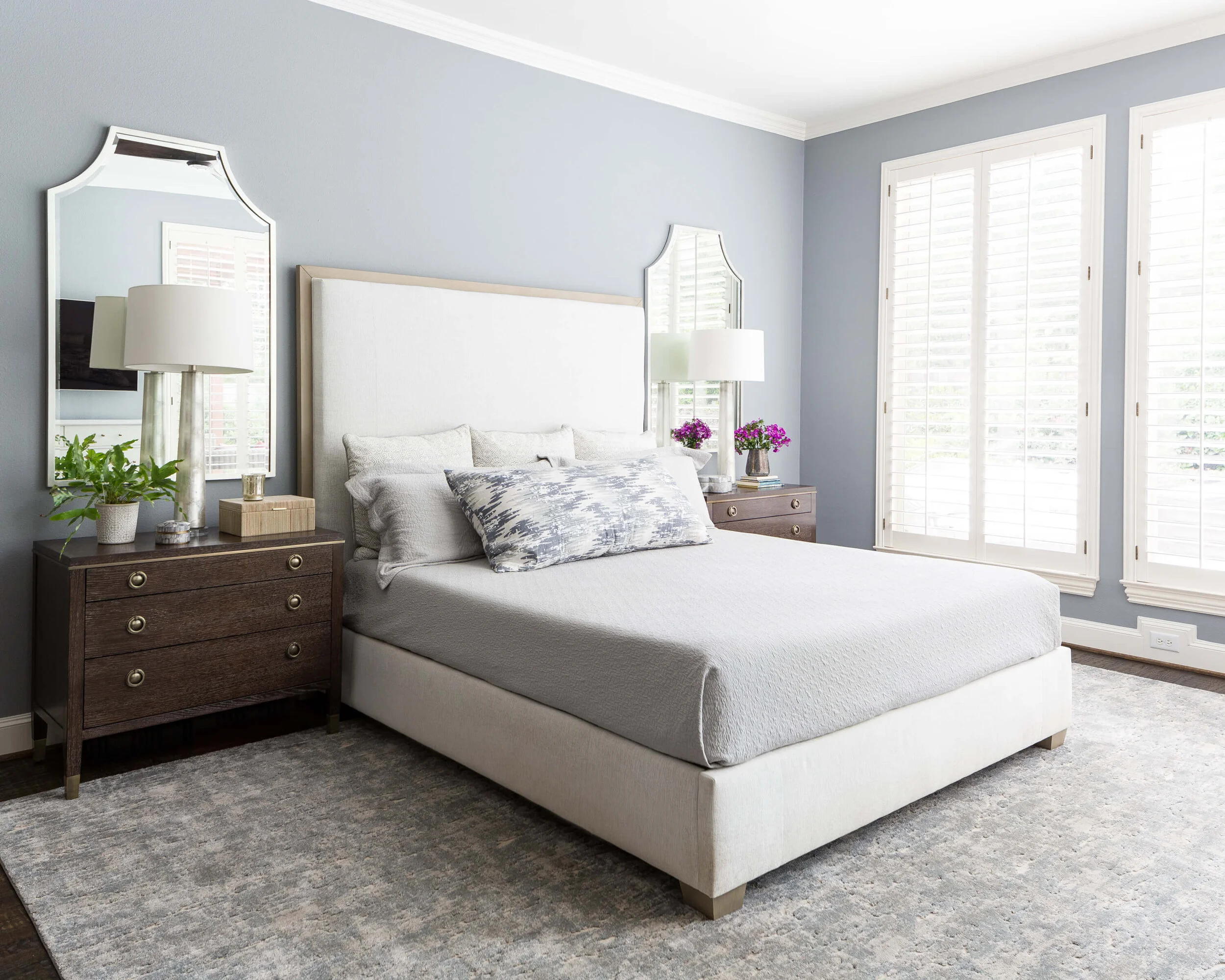
3. Benjamin Moore ‘Boothbay Gray’ HC-165
Boothbay Gray is a stunning, mid-tone blue-gray with a distinct green undertone. Its LRV of 43 places it firmly in the medium range, meaning it offers more noticeable color and a cozier feel than some of its lighter counterparts. It’s an incredibly sophisticated and grounding color that brings a natural, almost spa-like ambiance to a bedroom.
Its unique charm for bedrooms: The subtle green undertone gives Boothbay Gray a unique warmth and organic quality. It feels incredibly calming and earthy, making it perfect for creating a deeply serene and naturalistic sleeping environment. It’s a color that truly envelopes you, without feeling dark or overwhelming.
Design considerations: Excellent with warm wood tones, natural fibers like linen and jute, and cream or off-white accents. If you love a modern farmhouse, Scandinavian, or coastal look, this shade will sing.
4. Sherwin Williams ‘Lullaby’ SW 9136
The name says it all, doesn’t it? Lullaby is designed to evoke a sense of calm and relaxation, making it an exquisite choice for a bedroom. This is a soft, mid-tone blue-gray with a subtle green undertone, similar to Boothbay Gray but often perceived as a touch softer and slightly more blue. With an LRV of 57, it’s light enough to feel airy yet has enough color to be substantial.
Focusing on its promise for sleep: Lullaby truly lives up to its name. It creates an atmosphere of gentle tranquility, promoting rest and quiet contemplation. It’s a color that supports deep relaxation, feeling comforting and embracing without being heavy.
Warm vs. cool elements: While inherently a cool color, its green undertone gives it a natural warmth that prevents it from feeling stark. It pairs beautifully with both cool and warm accents, making it incredibly adaptable.
5. Benjamin Moore ‘Gray Cashmere’ 2138-60
Gray Cashmere is a sophisticated, chameleon-like blue-gray that leans heavily into a green undertone. With an LRV of 61.54, it’s a lighter option that feels incredibly subtle and refined. This color has an ethereal quality, often appearing more gray in some lights and distinctly green-blue in others.
Sophisticated appeal: This is a fantastic choice if you want a color that’s elegant and understated but still has a unique personality. It’s not overtly blue, green, or gray, but rather a perfect marriage of all three. It feels like a high-end, bespoke shade that elevates the entire bedroom.
:max_bytes(150000):strip_icc()/BondegatanSodermalmStockholmBedroomlampchairblueFantasticFrank-d4153e01738845caaaab184e2eecf7a7-33429fc42bfa411d988f8233f04fdfde-894916cc0c654d7cba491efcec62c1ba.jpg "40 Blue-Gray Paint Colors to Inspire Your Next Reno")
How it shifts with light: Pay close attention to this one. In north-facing rooms, it might lean a touch more green-gray. In south-facing rooms, its blue qualities might become more prominent. This shifting nature is part of its charm, but also why sampling is paramount.
6. Sherwin Williams ‘Niebla Azul’ SW 9137
Niebla Azul (Spanish for “Blue Mist”) is a wonderfully serene and slightly deeper blue-gray, with an LRV of 55. It’s a very clean blue-gray, with a true gray base that keeps the blue from becoming too saccharine. It has an understated elegance that feels incredibly sophisticated and calming.
Depth and character: This isn’t a wispy blue-gray; it has substance. Niebla Azul provides a beautiful depth to a room, creating a cozy envelope without making the space feel small. It’s a confident color that supports relaxation and a feeling of groundedness.
Versatility: This color is a fantastic backdrop for a wide range of decor styles. It can look crisp and modern with minimalist furniture, or classic and elegant with more traditional pieces. It’s also an excellent choice for a master bedroom, giving it a luxurious hotel-like feel.
7. Behr ‘Intercoastal Gray’ PPU25-14
Often recommended as a blue-gray even with “gray” in its name, Behr’s Intercoastal Gray is a popular and accessible option. With an LRV of 55, it’s a solid mid-tone that features a noticeable blue-green undertone. It’s a lovely, fresh color that feels very livable and inviting.
Approachable and fresh: This is a great choice if you’re looking for a blue-gray that is both calming and bright. The touch of green keeps it feeling organic and natural, preventing it from tipping into sterile territory. It’s a dependable, crowd-pleasing color that consistently delivers a pleasant, serene atmosphere.
Wide appeal: Given its availability and broad appeal, Intercoastal Gray is an excellent choice for various home styles and offers a budget-friendly option without compromising on beauty. It’s often seen in coastal and transitional designs.
8. Farrow & Ball ‘Light Blue’ No. 22
For those who appreciate the nuanced, historic quality of Farrow & Ball paints, ‘Light Blue’ No. 22 is a sublime blue-gray with a distinct green and silver undertone. Despite its name, it’s truly a complex, sophisticated blue-gray. Its LRV of 54 gives it a lovely depth.

Chic, historic, ethereal: This color has a remarkable ability to shift with the light, often appearing more blue in brighter light and a softer green-gray in dimmer conditions. It creates an incredibly chic and ethereal atmosphere, reminiscent of old European estates. It’s perfect for a bedroom that aims for timeless elegance and a hint of grandeur.
Unique chalky finish: Farrow & Ball paints are known for their rich pigmentation and unique chalky finish, which gives this blue-gray an unparalleled softness and depth that lesser paints simply can’t achieve. This makes it feel incredibly luxurious and comforting in a bedroom setting.
Choosing YOUR Perfect Blue-Gray: A Step-by-Step Guide
Now that you’ve seen some of the best contenders, how do you narrow it down to *your* perfect shade? This is a process, not a sprint. Follow these steps to make a confident decision.
Assess Your Bedroom’s Natural Light
Natural light is the single biggest factor influencing how a paint color will look. It changes throughout the day and year, transforming colors in subtle yet significant ways.
- North-Facing Rooms: Receive cool, indirect light. Blue-grays here will often appear cooler, sometimes leaning more gray or even slightly purple. Consider blue-grays with warmer (green) undertones to balance the cool light, or embrace the crisp coolness.
- South-Facing Rooms: Bathed in warm, bright light all day. Here, blue-grays will look warmer and brighter, often showing off their blue qualities more. You can go for cooler blue-grays to balance the warmth or embrace a brighter, clearer blue-gray.
- East-Facing Rooms: Get bright, warm morning light, then cooler light in the afternoon. A blue-gray will look its best in the morning, potentially turning a bit flatter or grayer later in the day.
- West-Facing Rooms: Get cool light in the morning, then intense, warm light in the afternoon/evening. A blue-gray can look quite different, perhaps very blue in the morning and then more distinctly gray as the warm afternoon light hits it.
Always observe your samples at different times of day to see how the light plays with the color.
Consider Your Existing Decor and Furniture
Your paint color needs to live in harmony with what’s already in your bedroom. Unless you’re doing a complete overhaul, your bedding, curtains, rug, and furniture (especially wood tones) are important considerations.
- Warm Woods (e.g., cherry, mahogany): A cooler blue-gray can create a beautiful contrast, making the wood tones pop. Or, a blue-gray with a slight green undertone can blend more harmoniously.
- Cool Woods (e.g., ash, light oak): These often pair beautifully with most blue-grays, enhancing the cool, contemporary feel.
- Fabric Tones: Do you have warm cream bedding, crisp white curtains, or a colorful rug? Hold your paint samples up against these items to ensure they complement each other.
- Metals: Silver, chrome, and brushed nickel tend to harmonize well with blue-grays. Gold and brass can provide a lovely warm accent against cooler blue-grays.
The Absolute Must: Sampling, Sampling, Sampling!
I cannot stress this enough. Looking at a tiny swatch online or in a store is NOT enough. Colors appear differently on a screen and under store lighting than they will on your walls.
- Buy Sample Pots: Invest in sample pots of your top 2-3 blue-gray contenders.
- Paint Large Swatches: Paint large (at least 2’x2′) swatches directly onto your walls, or onto large pieces of poster board that you can move around. Don’t paint directly next to your existing wall color, as it can skew your perception. Leave some white space in between.
- Observe Throughout the Day: Live with the samples for at least 24-48 hours. See them in natural light, at noon, in the evening with your lamps on, and even in the dead of night if you’re curious how it feels when you walk in.
- Compare Against Everything: Hold your chosen samples against your bedding, headboard, flooring, and any artwork.
This step will save you from costly repainting and ensure you truly love your final choice.
:max_bytes(150000):strip_icc()/BEHR_22.03_TRENDS_BEDROOM_KM_001_IntercoastalGray-5513b7a2e99b4b089b6d25ee2e7c1741.jpg "18 Blue-Gray Paint Colors That Are Versatile, but Never Boring")
Think About Paint Sheen for Bedrooms
The finish, or sheen, of your paint can significantly impact the overall look and durability. For bedrooms, specific sheens are generally preferred:
- Flat/Matte: This finish absorbs light, giving a very soft, velvety, and sophisticated look. It’s excellent for hiding wall imperfections. However, it’s less durable and harder to clean, so it’s best for low-traffic areas like adult bedrooms where scuffs are less likely.
- Eggshell/Satin: These are the most popular choices for bedrooms. They offer a slight sheen, making them more durable and easier to clean than flat paints, while still providing a soft, elegant finish. Eggshell is slightly less shiny than satin.
- Semi-Gloss/Gloss: Generally too shiny for bedroom walls, as they reflect a lot of light and can make imperfections more noticeable. Best reserved for trim, doors, or furniture.
For a truly enveloping, serene bedroom, I usually recommend a flat or eggshell finish for blue-gray walls.
Styling Your Blue-Gray Bedroom: Beyond the Walls
The paint is just the beginning! Once your blue-gray walls are looking magnificent, it’s time to complete the vision with thoughtful decor. Your goal is to create a cohesive, inviting, and relaxing atmosphere.
Complementary Colors and Textures
Blue-gray is a fantastic neutral, meaning it plays well with a vast array of colors. Think of it as your canvas.
- Crisp Whites & Creams: For trim, ceilings, bedding, and curtains. These create a clean, fresh contrast and enhance the blue-gray’s calming properties.
- Warm Woods: Introduce elements like a wooden headboard, nightstands, or even a decorative ladder. The natural warmth of wood prevents the room from feeling too cool.
- Metallics: Silver, chrome, and brushed nickel reinforce the cool elegance. For a touch of warmth and glamour, try brass or gold in small accents like lamp bases or picture frames.
- Contrasting Pops: If you want to introduce a complementary color, consider muted coral, soft blush pink, mustard yellow, or even a deep emerald green. Use these sparingly in throw pillows, a small piece of art, or a decorative object.
- Textures: Don’t underestimate texture! Layers of linen, chunky knits, velvet, and sheepskin add warmth, depth, and comfort, making the room feel more inviting.
Lighting the Way to Serenity
Lighting is crucial in a bedroom, especially with blue-gray walls. It can dramatically alter the perception of your chosen paint.
- Warm Lighting (2700K-3000K): Opt for light bulbs with a warmer color temperature. This will prevent your blue-gray from looking too stark or cold and will create a cozy, inviting glow that’s perfect for winding down.
- Layered Lighting: Don’t rely on just one overhead light. Incorporate bedside lamps for reading, an accent lamp for ambiance, and perhaps a dimmer switch on your overhead fixture. This allows you to adjust the mood and brightness throughout the day and evening.
Creating a Unified Look
Bring everything together by repeating colors and textures in various elements. For example, if you have warm wood nightstands, choose a similar tone for a picture frame or a small decorative bowl. If your bedding is a soft cream, repeat that cream in a throw blanket or an accent pillow. This creates visual harmony and makes the bedroom feel intentional and beautifully curated.
Final Thoughts: Embrace Your Blue-Gray Sanctuary
Choosing the best blue-gray paint for your bedroom is more than just picking a color; it’s about crafting an environment that nurtures you. It’s about creating a space where you can truly relax, recharge, and wake up feeling refreshed. Blue-gray offers an unparalleled blend of calm, sophistication, and versatility, making it an exceptional choice for this most personal of rooms.
Trust your instincts, take your time with samples, and most importantly, enjoy the process of bringing your vision to life. You’re not just painting walls; you’re designing your haven. And with the right blue-gray, that haven will be nothing short of spectacular.