How Many Litres (or Gallons!) of Paint Do You Really Need for a Small Bedroom? The Definitive Guide
Ever stood in the paint aisle, staring at dozens of cans, utterly bewildered by how much to buy for your small bedroom? You’re not alone. It’s one of the most common dilemmas for DIYers, and getting it wrong means either an extra trip to the store mid-project or, worse, a pile of expensive leftover paint you don’t need.
While your search might have started with ‘litres’ (a common measurement elsewhere), here in the US, we’re typically thinking in ‘gallons’. Don’t worry, I’ll give you both. But for simplicity and practicality, our calculations will primarily be in gallons, with easy conversions to litres. My goal? To turn you into a paint estimating pro, so you can tackle your small bedroom project with confidence, avoiding wasted time and money.
This isn’t just another paint calculator. I’m going to arm you with the knowledge to understand *why you need a certain amount, how to measure accurately, and what hidden factors can throw off your estimates. Let’s get your small bedroom looking its best!
The Quick Answer: A Ballpark Estimate for Your Small Bedroom
Let’s cut to the chase. For a typical small bedroom, measuring around 10 feet by 10 feet (3m x 3m) to 10 feet by 12 feet (3m x 3.6m) with standard 8-foot (2.4m) ceilings, here’s a quick estimate:
- For Walls Only (2 Coats): You’ll likely need about 1 gallon (approx. 3.785 litres) of paint. This assumes a standard paint with good coverage on a primed or previously painted surface.
- For Walls and Ceiling (2 Coats Each): You’re looking at roughly 2 gallons (approx. 7.57 litres). The ceiling adds significant surface area, requiring its own dedicated paint.
- For Walls, Ceiling, and Trim (2 Coats Walls/Ceiling, 1 Coat Trim): Plan for about 2 gallons (approx. 7.57 litres) for walls and ceiling, plus a quart (approx. 0.946 litres) for trim. Trim requires specialized paint and much less volume.
Important Conversion: For our US-focused calculations, remember that 1 US gallon = 3.785 litres. So, when I refer to a gallon, you can easily convert it to litres for your understanding.
This is a starting point. Your specific room dimensions, paint type, surface condition, and desired finish will all play a role. Read on to learn how to refine this estimate into a precise plan.
Stop Guessing! The Step-by-Step Formula for Accurate Paint Calculation
Generic calculators are fine, but they don’t teach you the ‘why’. Let’s break down the process into simple, actionable steps so you can calculate with confidence, no matter the room.
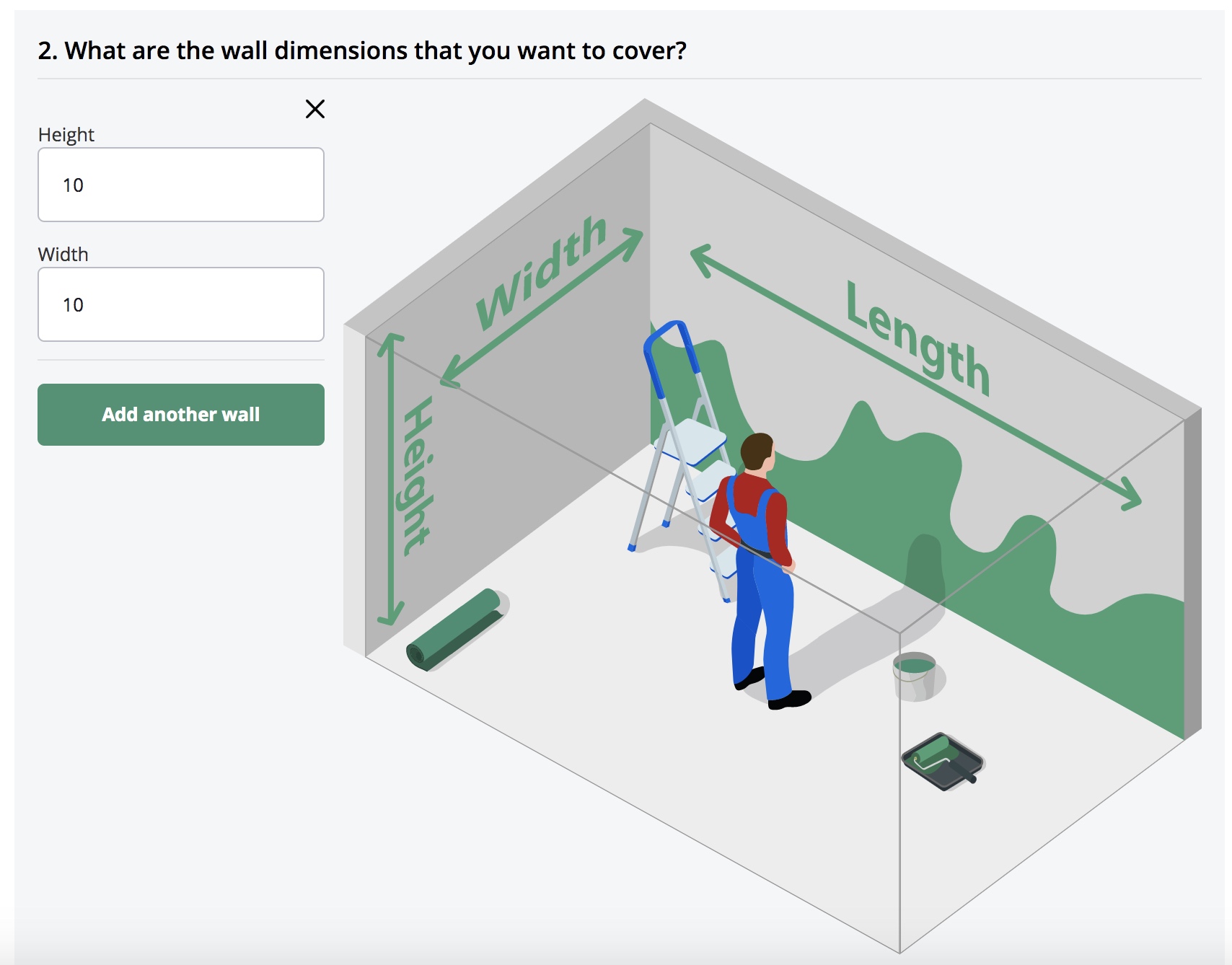
Step 1: Measure Your Room Like a Pro
Accuracy here is key. Grab a tape measure, a pencil, and paper. Don’t eyeball it!
- Length: Measure the length of each wall.
- Width: Measure the width of each wall.
- Height: Measure the distance from the floor to the ceiling. Ensure you measure in a few spots, as ceilings aren’t always perfectly level.
Pro-Tip: Always measure twice! It saves a lot of headaches later. If you’re measuring in feet, keep everything in feet. If you’re using meters, stick with meters until the very end for conversion.

Step 2: Calculate the Wall Surface Area
This is the biggest chunk of your paint project. We need the total perimeter of the room multiplied by the height.
Formula: (Length + Width) x 2 x Height = Total Wall Area
Let’s use a common small bedroom example: 10 feet long, 12 feet wide, with 8-foot ceilings.
Calculation:
n(10 ft + 12 ft) x 2 x 8 ft
n(22 ft) x 2 x 8 ft
n44 ft x 8 ft = 352 square feet
So, our sample small bedroom has a total wall area of 352 square feet before we account for openings.
Step 3: Account for Windows and Doors (Subtractions)
Unless you’re planning to paint over your windows and doors (please don’t!), you need to subtract their area from your total wall surface. This is where many DIY calculators are vague or assume standard sizes.
Measure the length and width of each window and door. Then, multiply Length x Width for each to get its individual area.
Example for our 10×12 ft bedroom:
nAssume one standard door: 30 inches x 80 inches (2.5 ft x 6.67 ft) = 16.68 sq ft
nAssume one standard window: 36 inches x 48 inches (3 ft x 4 ft) = 12 sq ft
Total deductions: 16.68 sq ft + 12 sq ft = 28.68 square feet
Adjusted Wall Area: 352 sq ft – 28.68 sq ft = 323.32 square feet
Here’s a handy table for typical window and door sizes if you need a quick estimate:
| Item | Typical Dimensions (Feet) | Approximate Area (Sq Ft) |
|---|---|---|
| Standard Interior Door | 2.5′ x 6.67′ (30″x80″) | 16.7 |
| Standard Bedroom Window | 3′ x 4′ (36″x48″) | 12 |
| Large Bedroom Window | 4′ x 5′ (48″x60″) | 20 |
Step 4: Don’t Forget the Ceiling!
Many first-time painters forget the ceiling, or assume leftover wall paint will suffice. That’s a mistake! Ceilings often need specific ceiling paint (usually flatter finishes) and contribute significantly to the total area.
Formula: Length x Width = Ceiling Area
Using our 10×12 ft bedroom example:
Calculation:
n10 ft x 12 ft = 120 square feet
So, your ceiling will add another 120 square feet to the painting equation.
Step 5: Consider Trim, Baseboards, and Crown Molding
Trim typically gets painted with a different type of paint (e.g., semi-gloss for durability) and usually only requires one coat. You’ll calculate this in linear feet.
Measure the length of all baseboards, window frames, door frames, and any crown molding. Add these lengths together.
Example for our 10×12 ft bedroom:
nPerimeter of room for baseboards: (10 ft + 12 ft) x 2 = 44 linear feet
nDoor frame: approx. 18 linear feet (2 sides + top)
nWindow frame: approx. 14 linear feet (2 sides + top + bottom)
Total Trim (linear feet): 44 + 18 + 14 = 76 linear feet
You’ll need far less paint for trim. A quart of trim paint typically covers about 100-150 linear feet with one coat, or 50-75 linear feet with two coats, for an average 6-inch wide trim. For our small bedroom, a single quart (approx. 0.946 litres) should be more than enough for two coats on all trim.
Beyond Square Footage: Critical Factors That Influence Paint Quantity
Calculating square footage is just the beginning. Several other crucial elements directly impact how much paint you’ll actually use. Ignore these at your peril!
Number of Coats: The Double-Up Rule
This is perhaps the most overlooked factor. Almost every painting project, regardless of what the can says, will require two coats for an even, durable, and rich finish. One coat often looks patchy, especially with color changes.
- Light to Dark: You might get away with two solid coats.
- Dark to Light: This is where things get tricky. Going from a deep red to a pale gray, for instance, might require a tinted primer plus two or even three coats of your new color to fully obscure the old one.
- Poor Quality Paint: Cheaper paints often have lower pigment concentration and less solids, leading to weaker coverage and necessitating more coats.
So, whatever area you calculate, be prepared to multiply your paint needs by two for walls and ceilings (and sometimes even three if you’re making a dramatic color change without a good primer).
Paint Coverage Rate: Not All Paints Are Equal
Every can of paint has a ‘coverage rate’ listed on the label, usually in square feet per gallon. This is your guide, but remember it’s often an ideal* scenario.
- Standard Coverage: Most paints promise 350-400 square feet per gallon (approx. 32.5-37 square meters per 3.785 litres) for one coat.
- Premium Paints: Higher quality paints often boast better coverage due to more solids and pigments, sometimes reaching 400-450 sq ft per gallon.
- Paint & Primer in One: While convenient, these usually still perform best with two coats, especially on unprimed surfaces or significant color changes. Their ‘primer’ function is more about adhesion than deep stain blocking.
Here’s a general guide to paint coverage:
| Paint Type/Quality | Coverage Per Gallon (Sq Ft) | Coverage Per Litre (Sq Meters) | Notes |
|---|---|---|---|
| Budget-Friendly Interior | 250-350 | 23-32 | Often requires more coats |
| Standard Quality Interior | 350-400 | 32-37 | Good balance of price & performance |
| Premium/High-End Interior | 400-450+ | 37-42+ | Excellent coverage, fewer coats needed |
| Primer | 200-300 | 18.5-28 | Often thicker, designed for adhesion/sealing |
Surface Condition & Type: The Thirsty Walls
The surface you’re painting makes a huge difference:
- New Drywall or Unprimed Plaster: These surfaces are incredibly porous and will literally soak up the first coat of paint. You’ll need a dedicated primer coat first, or expect your first coat of paint to act as a “sacrificial” primer, meaning you’ll use much more.
- Textured Walls: Popcorn ceilings or heavily textured walls have significantly more surface area than smooth walls. This means they’ll require more paint – sometimes 20-30% more – to ensure all the nooks and crannies are covered.
- Previously Painted (Similar Color): This is the easiest scenario. A good cleaning and light sanding are usually all that’s needed before two coats of new paint.
- Glossy Surfaces: If you’re painting over a high-gloss finish, you’ll need to degloss and scuff sand, then prime with an adhesion primer, otherwise your new paint won’t stick properly.
Priming is Your Friend: Don’t skip primer, especially on new, repaired, or highly contrasting surfaces. It seals the surface, promotes adhesion, and ensures your topcoats look their best while often reducing the number of paint coats needed.

Color Change: From Dark to Light?
As mentioned, changing a dark wall to a light one is challenging. Without a good primer, you’ll be fighting the old color through multiple coats, wasting time and paint. Ask your paint store to tint your primer a similar shade to your new topcoat. This significantly helps obscure the old color and reduces the number of topcoats required.
Application Method: Brush, Roller, or Sprayer?
How you apply the paint impacts usage:
- Rollers: Most common and efficient for walls and ceilings. A good quality roller nap holds and distributes paint well. Different nap sizes are for different textures (shorter for smooth, longer for textured).
- Brushes: Essential for cutting in, trim, and detail work. Generally, brushes apply thicker coats, but they’re not efficient for large areas.
- Sprayers: Fastest for large areas, but they tend to use more paint due to overspray and require significant masking. Not typically cost-effective or practical for a single small bedroom unless you already own one and are very experienced.
Putting It All Together: A Real-World Small Bedroom Example
Let’s take our example bedroom (10 ft x 12 ft with 8 ft ceilings, one standard door, one standard window) and calculate the paint needed, assuming two coats of a good quality paint covering 375 sq ft per gallon (approx. 34.8 sq meters per 3.785 litres), and one coat of primer if needed, covering 250 sq ft per gallon (approx. 23.2 sq meters per 3.785 litres).
1. Wall Area (Net):
- Total Wall Area: 352 sq ft
- Deductions (Door + Window): 28.68 sq ft
- Net Wall Area: 323.32 sq ft
2. Ceiling Area:
- Length x Width: 10 ft x 12 ft = 120 sq ft
3. Trim (Linear Feet):
- Baseboards, Door Frame, Window Frame: 76 linear feet
Paint Calculation for Our Small Bedroom:
A. For Walls:
- Net Wall Area: 323.32 sq ft
- For Two Coats: 323.32 sq ft x 2 = 646.64 sq ft
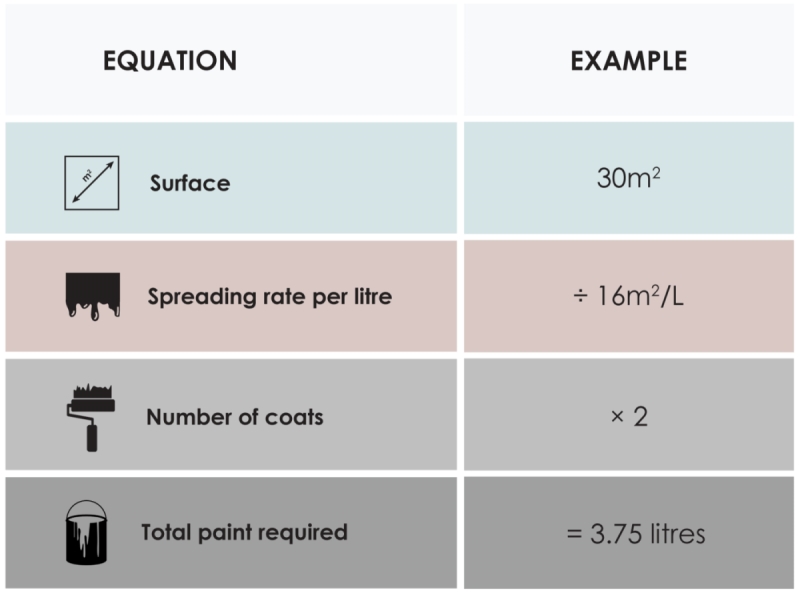
- Paint Needed: 646.64 sq ft / 375 sq ft/gallon = 1.72 gallons
- Recommendation: 2 gallons (approx. 7.57 litres)
B. For Ceiling:
- Ceiling Area: 120 sq ft
- For Two Coats: 120 sq ft x 2 = 240 sq ft
- Paint Needed: 240 sq ft / 375 sq ft/gallon = 0.64 gallons
- Recommendation: 1 gallon (approx. 3.785 litres) (You’ll have some leftover, but it’s the smallest container size after a quart)
C. For Trim:
- Linear Feet: 76 ft
- Assuming 150 linear feet per quart for two coats (average for 6″ trim): 76 ft / 150 ft/quart = 0.51 quarts
- Recommendation: 1 quart (approx. 0.946 litres) of trim paint
D. Optional: For Primer (if needed for new drywall or major color change):
- Total area to prime (Walls + Ceiling): 323.32 sq ft + 120 sq ft = 443.32 sq ft
- Primer Needed (one coat): 443.32 sq ft / 250 sq ft/gallon = 1.77 gallons
- Recommendation: 2 gallons (approx. 7.57 litres) of primer
Total Paint Summary for our 10×12 ft Small Bedroom:
| Item | Quantity (Gallons) | Quantity (Litres) |
|---|---|---|
| Wall Paint | 2 gallons | 7.57 litres |
| Ceiling Paint | 1 gallon | 3.785 litres |
| Trim Paint | 1 quart (0.25 gallons) | 0.946 litres |
| Optional Primer | 2 gallons | 7.57 litres |
Don’t Get Caught Short: The Importance of Buying a Little Extra
You’ve done the math, you’ve got your precise numbers. Now, here’s a crucial piece of advice: always buy slightly more than your calculation suggests. I’m talking about a 10-15% buffer.
Why?
- Touch-Ups & Repairs: Life happens. Dings, scuffs, and nail holes will appear. Having a small amount of matching paint on hand for quick touch-ups is invaluable.
- Color Consistency: Paint is mixed in batches. Even slight variations can occur between different cans of the same color. If you run out halfway through your second coat and have to buy another can later, you risk a subtle color difference (called ‘flashing’) on your wall. Buying all your paint at once from the same batch guarantees consistency.
- Spills & Accidents: No matter how careful you are, a small spill or drip can happen. That extra bit of paint acts as insurance.
- Unexpected Porosity: Sometimes, a wall might be thirstier than anticipated, especially if you’re painting over old, flat builder-grade paint.
It’s always better to have a little too much than not enough. Unopened, well-stored paint can last for years.
Smart Buying Tips for Your Small Bedroom Paint Project
Beyond quantity, making smart choices about the paint itself can impact your project’s success and budget.
- Buy by the Gallon: While you can get quarts, gallons are almost always a better value per fluid ounce. Only buy quarts for trim or very small accent projects where a gallon would be excessive.
- Check for Sales & Discounts: Paint stores and home improvement centers frequently have sales. Sign up for newsletters or check flyers before you buy. Some offer ‘contractor packs’ or discounts on multiple gallon purchases.
- Understand Paint Finishes (Sheen): The sheen affects durability, washability, and how light interacts with your walls.
| Finish/Sheen | Characteristics | Best Uses for a Bedroom |
|---|---|---|
| Flat/Matte | No shine, hides imperfections well, less durable/washable. | Ceilings, low-traffic areas, to create a soft, sophisticated look. |
| Eggshell | Subtle sheen, more durable than flat, good washability. | Most common for bedroom walls, strikes a good balance. |
| Satin | Smooth, velvety sheen, highly durable and washable. | Walls in high-traffic kids’ rooms, sometimes accent walls. |
| Semi-Gloss | Noticeable shine, very durable, easy to clean. | Trim, doors, window frames – anywhere durability is key. |
Common Paint Calculation Mistakes to Avoid
Even with all this information, it’s easy to trip up. Here are the most frequent mistakes I see:
- Forgetting the Ceiling: This is a big one! It’s a significant surface area and often needs its own paint type.
- Underestimating Coats: Thinking one coat will do it for walls is almost always a pipe dream. Always plan for two.
- Not Accounting for Porous Surfaces: New drywall or unprimed plaster will drink paint. Always prime first.
- Ignoring Texture: Heavily textured walls need more paint. Period.
- Buying Exact Amounts: As we discussed, a 10-15% buffer is your best friend.
- Not Factoring in Trim: While trim takes less paint, it needs a different type and sheen, so don’t lump it in with your wall paint.
- Assuming All Paints Cover Equally: Cheaper paints often require more coats, potentially negating any initial savings.
By being aware of these pitfalls, you’re already ahead of the game!
Ready to Transform Your Small Bedroom?
You’ve officially graduated from guesswork to smart estimation. While a quick answer might be appealing, truly understanding how much paint you need for your small bedroom – whether you’re thinking in litres or gallons – involves a bit of measuring, a dash of math, and an understanding of the factors that influence coverage.
Now, you’re not just buying paint; you’re making an informed decision. Go forth, measure with confidence, and enjoy the satisfying transformation of your freshly painted small bedroom!