How Much Paint Do I Need For A Bedroom? (The Definitive Guide)
Ever stood in the paint aisle, staring at a dizzying array of gallon cans, wondering if one is enough, or if three is too many? You’re not alone. Figuring out exactly how much paint you need for a bedroom project is one of the most common DIY dilemmas. Get it wrong, and you’re either running back to the store mid-project (the worst!) or left with half-used cans cluttering your garage.
Here’s the deal: it’s not just about the size of your bedroom. Many factors play into the final count – from your current wall color to the texture of your surfaces. But don’t sweat it. I’m going to walk you through a foolproof method to calculate your exact needs, ensuring your bedroom transformation is smooth, stress-free, and perfectly painted.
Quick Answer: The Average Bedroom Baseline
Let’s get straight to a common scenario. For an average 10×12 foot bedroom with standard 8-foot ceilings, you’ll typically need:
- 2 gallons of paint for two coats on the walls.
- 1 gallon of primer if you’re making a significant color change, painting over new drywall, or dealing with stains.
This is a solid starting point, but remember, it’s an estimate. The precise amount depends on the details we’re about to dive into. Consider this your helpful hint, not your final shopping list!
Why “Just Guessing” Is a Bad Idea (And How to Get it Right)
I get it, quick estimates are tempting. But relying on a hunch can lead to more headaches than it saves. Buying too little paint means an urgent, inconvenient trip to the store, often disrupting your painting flow. Even worse, if you can’t find the exact same batch, you risk noticeable color differences (called ‘flashing’) on your walls. It’s a subtle but infuriating mismatch that can ruin the whole look.
Buying too much paint, on the other hand, wastes money. While it’s good to have a little extra for touch-ups, accumulating multiple half-empty cans isn’t ideal for your budget or storage space. My goal is to equip you with the knowledge to make an informed decision, so you buy just what you need, with a smart buffer.
Your Step-by-Step Guide to Calculating Bedroom Paint Needs
This isn’t rocket science, but it does require a tape measure and a little patience. Follow these steps for an accurate calculation:
Step 1: Measure Your Walls (The Foundation)
The first thing we need is the total surface area of your walls. Grab a tape measure and a notepad.

- Measure the Length of Each Wall: Go around your bedroom and measure the length of each wall from corner to corner.
- Measure the Height of Your Walls: Measure from the floor to the ceiling. Standard ceiling height is 8 feet, but many homes have 9, 10, or even 12-foot ceilings.
Now, let’s do some simple math:
- Calculate the Total Perimeter: Add up the lengths of all your walls. For a rectangular room, it’s (Length + Width) x 2.
- Calculate the Total Wall Area: Multiply the total perimeter by your wall height.
Formula: (Wall Length 1 + Wall Length 2 + Wall Length 3 + Wall Length 4) x Wall Height = Total Wall Area (in square feet)
Example: Your bedroom is 10 feet wide by 12 feet long, with 8-foot ceilings.
- Perimeter: (10 ft + 12 ft) x 2 = 44 feet
- Total Wall Area: 44 ft x 8 ft = 352 square feet
Step 2: Account for Doors and Windows (Subtracting the Unpainted)
You’re not painting your doors or windows, so we need to subtract their area from your total wall area. This is where many DIYers make mistakes, leading to overestimating paint needs.
- Measure Each Door: Standard doors are often 3 feet wide by 7 feet tall (21 sq ft).
- Measure Each Window: Standard windows vary greatly, but a common size might be 3 feet wide by 4 feet tall (12 sq ft). Measure yours specifically.
Calculate the area of each door and window, then add them up to get the total area of openings. Subtract this from your total wall area.
Formula: Total Wall Area – (Total Door Area + Total Window Area) = Net Wall Area to Paint
Example (continuing from above): Your 10×12 bedroom has one standard door (21 sq ft) and two standard windows (12 sq ft each, so 24 sq ft total).
- Total Openings Area: 21 sq ft (door) + 24 sq ft (windows) = 45 sq ft
- Net Wall Area to Paint: 352 sq ft – 45 sq ft = 307 square feet
Step 3: Don’t Forget the Ceiling (If You’re Painting It)
If you’re refreshing the ceiling too, it’s a separate calculation. This one’s easy!

Formula: Room Length x Room Width = Ceiling Area (in square feet)
Example: Your 10×12 bedroom.
- Ceiling Area: 10 ft x 12 ft = 120 square feet
Step 4: Understand Paint Coverage Rates (The Manufacturer’s Promise)
Paint manufacturers usually state the coverage rate per gallon on the can. This is crucial! Most paints cover around 350 to 400 square feet per gallon, per coat. However, this can vary:
- Quality of Paint: Higher-quality paints often have better hiding power and may stretch further.
- Sheen: Flat paints tend to cover slightly less than glossier finishes.
- Brand: Always check the specific can you plan to buy.
Here’s a general guide:
| Paint Product Type | Typical Coverage Per Gallon (Sq Ft) | Notes |
|---|---|---|
| Standard Latex/Acrylic Paint | 350 – 400 | For smooth, primed surfaces. |
| Primer | 200 – 300 | Varies greatly by type (stain-blocking, bonding, etc.). |
| Paint & Primer in One | 300 – 350 | Often requires two coats for best results, especially with color changes. |
| High-Quality/Thick Paint | 400 – 450+ | May offer better single-coat coverage, but two coats are usually still recommended. |
Step 5: Factor in the Number of Coats (Usually Two!)
This is critical. Very rarely does one coat of paint suffice for a professional, durable finish. Most painting projects require two coats of paint for even coverage, true color representation, and enhanced durability. You might need more if:
- You’re painting a dark color over a very light one, or vice-versa.
- You’re drastically changing the color (e.g., bright red to soft grey).
- The existing surface is very porous or uneven.
- You’re using a lower-quality paint.
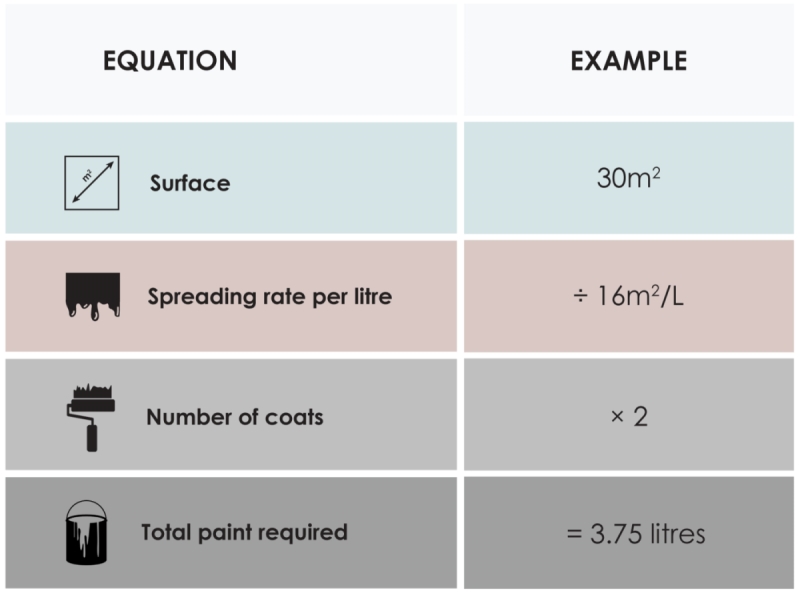
So, take your net wall area (and ceiling area, if applicable) and multiply it by the number of coats you plan to apply. For most bedroom projects, plan for two coats of finish paint.
Step 6: Primer: Your Secret Weapon (And How Much You Need)
Don’t skip primer! It’s not just an extra step; it’s a foundation for a beautiful, long-lasting paint job. You definitely need primer if:
- You’re painting new, unprimed drywall.
- You’re making a dramatic color change (e.g., dark to light).
- The walls have stains (water, smoke, grease) that need to be sealed.
- You’re painting over a glossy finish to provide adhesion for the new paint.
Primer typically covers less than finish paint, often around 200-300 square feet per gallon. Calculate your primer needs based on the net wall area (and ceiling, if priming it) divided by the primer’s coverage rate. Usually, one coat of primer is sufficient.
Step 7: The “Oops” Factor: Adding a Buffer
Even with the best calculations, it’s smart to add a little extra. Things happen: a small spill, an area that needs an unexpected third coat, or future touch-ups. I recommend adding a 10-15% buffer to your total paint quantity. This small cushion prevents frantic store runs and ensures color consistency.
To do this, multiply your total paint quantity (after considering coats) by 1.10 (for 10% extra) or 1.15 (for 15% extra).
Bringing It All Together: A Practical Example
Let’s use our 10×12 foot bedroom with 8-foot ceilings, one standard door (21 sq ft), and two standard windows (24 sq ft total) as an example. We want to paint the walls a new color (requiring primer and two coats of paint) and the ceiling (two coats of paint, no primer needed).
Assumptions:
- Paint coverage: 375 sq ft/gallon
- Primer coverage: 250 sq ft/gallon
Here’s the breakdown:
| Calculation Step | Details | Result (Sq Ft) |
|---|---|---|
| 1. Total Wall Area | (10+12)x2 x 8ft = 44 x 8 | 352 sq ft |
| 2. Subtract Openings | 352 – (21 + 24) | 307 sq ft (Net Wall Area) |
| 3. Ceiling Area | 10 x 12 | 120 sq ft |
| Primer Needed (Walls) | 307 sq ft / 250 sq ft/gallon | 1.23 gallons |
| Paint Needed (Walls – 2 coats) | (307 sq ft x 2 coats) / 375 sq ft/gallon | 1.64 gallons |
| Paint Needed (Ceiling – 2 coats) | (120 sq ft x 2 coats) / 375 sq ft/gallon | 0.64 gallons |
| Total Paint (Walls & Ceiling) | 1.64 + 0.64 | 2.28 gallons |
| Add 10% Buffer for Paint | 2.28 x 1.10 | 2.51 gallons |
Conclusion for this example: You would need to buy 1 gallon of primer (since you can’t buy 1.23 gallons, and one gallon is close enough for a single coat of primer) and 3 gallons of paint for the walls and ceiling (rounding up from 2.51 gallons). It’s always better to round up to the next full gallon.
Advanced Considerations That Impact Your Paint Quantity
Beyond the basic measurements, a few other factors can surprisingly swing your paint needs up or down.
Current vs. New Color: The Power of Contrast
- Dark to Light: If you’re going from a deep, rich hue to a pale, airy shade, expect to need an extra coat (or a high-quality primer) to ensure the old color doesn’t bleed through. This is where primer truly shines.
- Light to Dark: While it might seem like a dark color would require more paint, it often covers lighter shades more efficiently. Still, two coats are usually best for depth and richness.
- Similar Tones: Painting a similar color family? You might get away with slightly less paint or achieve good coverage with two standard coats.
Surface Texture: The Thirsty Wall Effect
Smooth walls are a painter’s dream. Textured surfaces, on the other hand, are literal paint sponges. Think of:

- New Drywall: Extremely porous and will soak up paint like crazy. Always prime new drywall.
- Popcorn Ceilings or Heavily Textured Walls: The peaks and valleys of these surfaces dramatically increase the actual surface area. You’ll likely need 20-30% more paint than for a smooth wall of the same measured dimensions.
- Rough Plaster or Previously Unpainted Surfaces: These will also absorb more paint. Primer is your friend here too.
Paint Quality and Sheen: More Than Just a Look
You often get what you pay for in paint. Higher-quality paints (often labeled ‘premium’ or ‘ultra-premium’) typically have better pigments, binders, and solids. This means:
- Better Hiding Power: They cover existing colors more effectively, sometimes reducing the need for multiple coats.
- Better Spread Rate: A gallon might truly cover closer to 400 sq ft or even more.
- Greater Durability: A well-applied two-coat system with quality paint will last longer and clean better.
Paint sheen also plays a role. Flatter finishes tend to be more absorbent and might require slightly more paint, while glossier finishes can spread a bit further due to their smoother texture.
Accent Walls: A Special Calculation
Planning a bold accent wall in your bedroom? Calculate its area separately. You might only need a quart or a sample pot for a small accent, rather than a full gallon, especially if it’s a deep color. Simply measure the length and height of that specific wall and use the standard coverage calculations, remembering to factor in two coats and a small buffer.
Trim and Doors: Don’t Forget the Details
If you’re painting trim, baseboards, crown molding, or the door itself, calculate these areas separately. These are often painted with a different type of paint (e.g., semi-gloss) and usually only require a quart or even a pint. As a rough guide, one quart of paint can typically cover the trim in an average-sized bedroom.
Paint Application Method: Roller vs. Sprayer
How you apply the paint matters. Rollers and brushes are generally more efficient in terms of paint usage. If you’re using a paint sprayer, be prepared for increased paint consumption. Sprayers create a fine mist, and some paint is lost to overspray or atomization. You might need 20-30% more paint when spraying compared to rolling.
Understanding Paint Types and Finishes
While the calculation of how much paint you need is primary, understanding the type and finish (sheen) will impact how much coverage you actually achieve and the final look and durability of your bedroom walls.
Common Interior Paint Types
- Latex/Acrylic Paints: These are water-based and by far the most popular for interior walls. They dry quickly, clean up with water, and are low in VOCs (Volatile Organic Compounds), making them a healthy choice for bedrooms.
- Oil-Based/Alkyd Paints: Less common for walls due to longer drying times and cleanup with mineral spirits, but they offer exceptional durability and a harder finish, often used for trim or high-traffic areas. Not usually recommended for general bedroom walls due to strong fumes.
Paint Sheens for Bedrooms
The sheen (or finish) refers to how much light the paint reflects. It affects durability, cleanability, and the visual depth of the color. For bedrooms, most people lean towards lower sheens for a softer, more calming atmosphere.
| Sheen Name | Characteristics | Best Use for Bedrooms |
|---|---|---|
| Flat/Matte | No sheen, absorbs light. Hides imperfections well. Least durable, hardest to clean. | Ceilings, low-traffic adult bedrooms. Creates a sophisticated, velvety look. |
| Eggshell | Slight, subtle sheen, like an eggshell. More durable than flat, easier to clean. | Most popular choice for bedroom walls. Great balance of elegance and practicality. |
| Satin | Smooth, velvety finish with a soft sheen. Highly durable and easy to clean. | Children’s bedrooms, accent walls, high-traffic areas, or for a subtle glow. |
| Semi-Gloss | Noticeable shine, very durable, and extremely washable. | Trim, doors, window frames, or specific modern/dramatic accent walls. |
| High-Gloss | Mirror-like, high-shine finish. Most durable and easiest to clean. | Not typically used for entire bedroom walls; best for furniture, trim, or dramatic statement pieces. |
For most bedrooms, I recommend an eggshell finish. It offers a beautiful, soft look that’s still durable enough to handle everyday life, and it’s far easier to clean than a flat paint.

Smart Buying Tips to Avoid Waste (and Headaches)
You’ve done the math, you know your needs. Now, let’s talk about the actual purchase.
- Round Up, Not Down: Always round your final gallon count up. If your calculation suggests 2.28 gallons, buy 3 gallons. Running out mid-project is far worse than having a little extra.
- Keep the Lid On (Literally): Store leftover paint in its original can, sealed tightly. Flip the can upside down briefly after sealing to create an airtight seal with the wet paint. Label it with the room, date, and color name/number. This is invaluable for future touch-ups!
- Save Receipts and Paint Codes: If you need to buy more, having the receipt and exact paint code (usually on a sticker on the lid) ensures you get an exact match.
- Consider Sample Sizes: Before committing to gallons, buy small sample pots to test colors on your actual walls. Light, furniture, and other decor can dramatically change how a color looks.
- Disposal: Don’t pour leftover paint down the drain. If you have significant amounts of leftover, check with your local waste management for proper disposal or recycling options. Small amounts can be dried out and disposed of with regular trash.
Painting a bedroom can be incredibly rewarding, and getting the paint quantity right is a huge part of a successful, stress-free project. By taking a few extra minutes to measure and calculate, you’ll save yourself time, money, and frustration. Happy painting!
Frequently Asked Questions
How many gallons of paint do I need for a 10×12 bedroom?
For an average 10×12 foot bedroom with 8-foot ceilings, you will typically need about 2 gallons of paint for two coats on the walls. If you are also painting the ceiling, you might need an additional gallon, bringing the total to 3 gallons of paint.
Does a 12×12 room need 2 gallons of paint?
A 12×12 foot room with 8-foot ceilings (approx. 384 sq ft of wall surface, accounting for openings) would generally require about 2 gallons of paint for two coats. Always calculate your specific room dimensions and factor in ceilings, doors, and windows for accuracy.
How much paint do I need for a 12×10 room with 9 ft ceilings?
For a 12×10 room with 9-foot ceilings, the total wall area is approximately 400-430 square feet (after subtracting typical doors/windows). You would likely need 2 gallons of paint for two coats on the walls, possibly a little over, so rounding up to 3 gallons with a buffer would be wise, especially if also painting the ceiling.
How do you calculate paint for a room with different ceiling heights?
If you have varying ceiling heights (e.g., vaulted ceilings), you need to measure the height of each wall section individually. Measure the length of the base of that wall, and multiply it by its average height. Sum up all these individual wall areas. The ceiling area will also be more complex to calculate; consider breaking it into simpler geometric shapes (rectangles, triangles) and calculating each area, then adding them together.
How much does a gallon of paint cover?
A gallon of interior latex or acrylic paint typically covers between 350 to 400 square feet per coat on smooth, primed surfaces. This coverage can decrease on very textured or porous surfaces, or when using lower-quality paints.
Is one coat of paint enough for a bedroom?
Rarely. While some high-quality paints or similar color changes might achieve decent coverage in one coat, it’s generally recommended to apply two coats of paint for a durable, even, and true-to-color finish. Two coats provide better hiding power, richness, and longevity.
Do I need primer for a bedroom?
You need primer if you’re painting new drywall, making a dramatic color change (especially dark to light), covering stains, or painting over a glossy finish. Primer helps paint adhere better, improves coverage, and seals surfaces, preventing color bleed-through or stain reappearance. If you’re painting a similar color over an existing clean, matte surface, you might get away with a ‘paint & primer in one’ product, though two coats are still usually best.