Why Dark Grey Paint for Your Bedroom Walls is a Masterstroke (And How to Get It Right)
Staring at blank bedroom walls, dreaming of a serene escape or a bold statement? If you’ve been contemplating dark grey, you’re onto something truly transformative. Forget what you think you know about dark colors making spaces feel small. When chosen and applied correctly, dark grey in a bedroom isn’t just a trend; it’s a timeless design choice that evokes sophistication, intimacy, and profound calm. But picking the *right* dark grey for your personal sanctuary? That’s where the magic – and the occasional headache – begins. I’m here to guide you through it, so your bedroom transforms into the luxurious haven you deserve.
The Allure of Dark Grey in the Bedroom: More Than Just a Trend
There’s a compelling reason designers constantly turn to dark grey for bedrooms. It’s not just about aesthetics; it’s about atmosphere, mood, and even sleep quality.
Why Choose Dark Grey? The Psychology of Color for Sleep, Sophistication, and Intimacy
- A Sanctuary for Sleep: Darker colors absorb light rather than reflect it, which can create a cocoon-like environment. This helps minimize visual distractions, promoting relaxation and potentially deeper sleep. It’s like wrapping your room in a comforting blanket.
- Instant Sophistication: Dark grey inherently projects elegance and maturity. It’s the ultimate neutral that never feels boring, offering a rich backdrop that allows artwork, furniture, and textiles to truly pop.
- Cultivating Intimacy: Dark walls reduce the visual boundaries of a room, making it feel more encompassing and cozy. This creates a sense of intimacy and enclosure, perfect for a private space like a bedroom. It feels like a warm hug, rather than a vast, open expanse.
- Versatile Canvas: Despite its depth, dark grey is incredibly versatile. It pairs beautifully with almost any accent color, from vibrant jewel tones to soft pastels, giving you endless decor possibilities.
Setting the Mood: From Serene Sanctuary to Bold Statement
The beauty of dark grey lies in its ability to adapt to your desired mood. Do you envision a tranquil retreat, minimalist and calming? Or perhaps a dramatic, luxurious boudoir? Dark grey can deliver both.
- Serene Sanctuary: Opt for dark greys with subtle blue or green undertones. Pair them with soft, muted textiles, natural wood, and diffused lighting. The result is a calming, almost spa-like atmosphere that encourages relaxation.
- Bold Statement: Choose deep charcoal greys, even those with slight black undertones. Combine with rich textures like velvet, metallic accents (gold, brass), and striking artwork. This creates a powerful, glamorous, and undeniably chic space.
Decoding Dark Grey: Undertones Are Everything
This is where many people get tripped up. Grey isn’t just grey. Every shade carries subtle undertones that will dictate how the color reads in your room, especially under different lighting conditions. Understanding these undertones is the single most critical step to choosing a dark grey you’ll love.
Cool Undertones: Blue, Green, Purple (Modern, Crisp, Calming)
Cool greys are often described as crisp, modern, and soothing. They have a tendency to recede, which can actually make a room feel expansive. If you have a south-facing room with lots of warm, bright light, a cool dark grey can help balance it out.
- Blue Undertones: Think stormy skies or deep ocean. These greys are incredibly calming and often feel fresh. They pair beautifully with cool whites, silver accents, and natural textures.
- Green Undertones: These greys are earthy and grounding. They bring a subtle connection to nature, making a room feel organic and serene. Excellent for creating a cozy, muted vibe.
- Purple Undertones: Less common but incredibly sophisticated, these greys lean towards a moody, luxurious feel. They work wonderfully with rich jewel tones and metallic accents for a dramatic effect.
Warm Undertones: Brown, Red, Beige (Cozy, Inviting, Earthy)
Warm greys are often referred to as ‘greige’ when lighter, but in their darker iterations, they bring a comforting, inviting warmth to a space. They can be perfect for north-facing rooms that tend to feel colder, injecting a much-needed sense of coziness.
- Brown/Beige Undertones: These are the ultimate ‘cozy’ dark greys. They bridge the gap between grey and brown, creating a nuanced, earthy tone that feels incredibly inviting. They pair well with other warm neutrals, wood tones, and natural fibers.
- Red Undertones: Though rare, some dark greys can have subtle reddish-brown hints, adding a rustic, antique warmth. These are less common but can be stunning in certain contexts.
True Grey: The Elusive Neutral
A true, pure grey with no discernible undertone is difficult to find because most greys are created by mixing black and white with a touch of another color. If you do find one, it will likely appear very stark and industrial. For a bedroom, a grey with a slight undertone almost always feels more livable and inviting.

The Light Factor: How Natural & Artificial Light Transforms Dark Grey
Light is the ultimate chameleon for paint colors. What looks perfect on a swatch in the store can look drastically different on your wall. This is especially true for dark greys.
North-Facing Rooms: Embracing the Cool
Rooms facing north receive cooler, indirect light throughout the day. A dark grey with warm undertones (brown, beige) can counteract this coolness, bringing a comforting warmth. Conversely, a cool dark grey might feel too stark or icy in a north-facing room unless that’s the ultra-modern look you’re going for.
South-Facing Rooms: Taming the Warmth
South-facing rooms are bathed in abundant, warm, golden light. Here, a cool dark grey (blue, green undertones) can help to balance out the warmth, preventing the room from feeling too yellow or overheated. A warm dark grey in a south-facing room might appear too brown or beige.
East & West-Facing Rooms: Dynamic Shifts
- East-Facing: Gets bright, warm morning light, then cooler light in the afternoon. A versatile, balanced dark grey (perhaps one with very subtle green undertones) can work well here, adapting to the changing light.
- West-Facing: Receives cooler morning light, then intense, warm afternoon and evening light. A dark grey that can handle both extremes, perhaps a slightly cool grey that isn’t too stark, could be a good choice.
Artificial Lighting: Enhancing or Diminishing Your Chosen Shade
Don’t forget your light bulbs! Different bulb temperatures can dramatically alter how your dark grey appears.
- Warm White (2700K-3000K): Will bring out the warm undertones in your grey, making it feel cozier.
- Neutral White (3500K-4000K): Offers a truer representation of the color, closer to natural daylight.
- Cool White (5000K+): Will emphasize cool undertones and can make warm greys appear dull.
Consider dimmers for your bedroom lighting to control the ambiance throughout the day and evening.
Choosing Your Perfect Dark Grey: A Step-by-Step Guide
Ready to narrow down the options? Follow these steps to confidently choose a dark grey that feels just right for your bedroom.
Step 1: Consider Your Room’s Size and Ceiling Height
It’s a myth that dark colors always make a room feel small. In fact, a deep, uniform color on all walls can blur the boundaries, creating an illusion of depth and making a small room feel like a cozy, expansive jewel box. However, if you’re truly worried about claustrophobia, consider these:
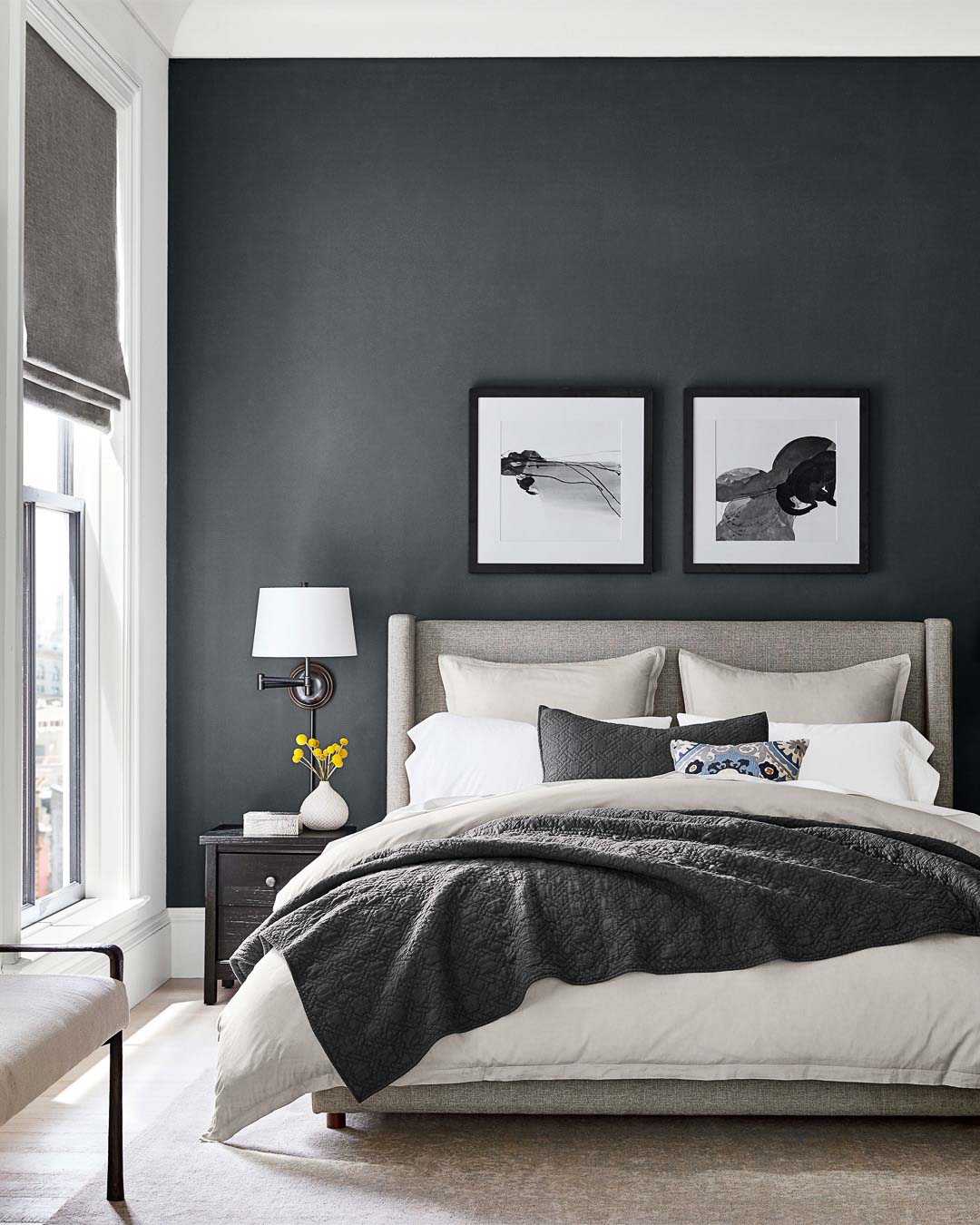
- All Walls: For most average to large bedrooms, painting all walls dark grey creates a luxurious, enveloping feel.
- Accent Wall: In very small rooms, or if you’re hesitant, a single dark grey accent wall behind the headboard can create drama without overwhelming the space.
- Ceiling: Painting the ceiling a slightly lighter shade or even the same dark grey (especially if it’s a very tall ceiling) can create an incredible, sophisticated cocoon effect.
Step 2: Evaluate Existing Decor and Furnishings (Furniture, Bedding, Flooring)
Your walls are just one element. Look at what’s already in your room:
- Furniture: Do you have dark wood, light wood, painted furniture, or upholstered pieces? A dark grey can beautifully highlight light wood and brass, or seamlessly blend with darker pieces for a monochromatic look.
- Bedding: Your bed is often the focal point. If your bedding is bright white, a deep grey wall will make it pop. If it’s patterned, ensure the grey complements the colors within the pattern.
- Flooring: Are your floors warm-toned wood, cool-toned carpet, or a neutral rug? Choose a dark grey that harmonizes with your flooring’s dominant tone.
Step 3: Define Your Desired Mood (Serene, Dramatic, Cozy)
Revisit the mood you want to create:
- Serene: Look for dark greys with blue or green undertones, perhaps Benjamin Moore’s Kendall Charcoal for its subtle warmth, or a muted grey-green.
- Dramatic: Lean into deeper charcoals with cool, almost black undertones, like Sherwin-Williams Peppercorn or Farrow & Ball Railings.
- Cozy: Explore warm greys with brown or beige undertones, such as Sherwin-Williams Iron Ore or Benjamin Moore Chelsea Gray.
Step 4: Sample, Sample, Sample! (The Non-Negotiable Step)
I cannot stress this enough. Buy sample pots and paint large swatches (at least 2’x2′) on multiple walls in your bedroom. Observe them at different times of day, under natural light and artificial light. See how they interact with your furniture and textiles. This step is critical to avoid disappointment!
Designer-Loved Dark Grey Paint Colors for Bedrooms (With Undertones & Best Uses)
To help you kickstart your sampling process, here are some widely praised dark grey paint colors, each with its own unique personality, perfect for a bedroom setting. Remember, always test them in your own space!
| Paint Color | Brand | Undertone | Vibe / Best Use for Bedrooms |
|---|---|---|---|
| Kendall Charcoal (HC-166) | Benjamin Moore | Warm (Brown/Green) | Incredibly popular, sophisticated, and adaptable. Creates a cozy, grounding feel. Excellent with natural wood and linen. |
| Peppercorn (SW 7674) | Sherwin-Williams | Cool (Blue/Black) | A truly dramatic, moody charcoal that leans towards black without being stark. Modern and luxurious, pairs well with crisp whites and metallics. |
| Railings (No. 31) | Farrow & Ball | Cool (Blue) | A softer alternative to black, with strong blue undertones. Creates an architectural, enveloping, and cozy atmosphere. Highly sophisticated. |
| Irony | Clare Paint | Neutral/Slightly Warm | A balanced, deep charcoal that reads as a true dark grey. Versatile and grounding, works in various light conditions. Modern yet inviting. |
| Iron Ore (SW 7069) | Sherwin-Williams | Warm (Greige/Brown) | A very deep, earthy charcoal with significant brown undertones, almost a soft black. Creates a rich, inviting, and intimate feel. Perfect for a cozy bedroom. |
| Chelsea Gray (HC-168) | Benjamin Moore | Warm (Green/Beige) | A classic, balanced mid-to-dark grey with noticeable warm undertones. Very livable and versatile, offering a soft yet strong presence. |
| Highline Shadow | Backdrop Paint | Cool (Blue) | A sophisticated, cool dark grey with noticeable blue undertones, giving it an urban, tranquil feel. Great for creating a serene, modern space. |
| Black Magic (PPG1001-7) | PPG | Deep Cool (Black/Blue) | Almost black, but with just enough blue to save it from being harsh. Incredibly bold, luxurious, and dramatic. For those who want true depth. |
Complementary Colors & Decor: Making Dark Grey Shine
Once your dark grey walls are in place, the real fun begins: decorating! Dark grey is a phenomenal canvas, allowing you to play with a wide array of colors and textures.
Pops of Color: Mustard, Blush Pink, Emerald Green
- Mustard Yellow: Adds an unexpected, vibrant warmth that prevents dark grey from feeling cold. Think mustard throw pillows, an accent chair, or bold artwork.
- Blush Pink: A soft, romantic contrast. Pink adds femininity and warmth, creating a sophisticated and gentle balance.
- Emerald Green: Rich and luxurious, emerald green pairs beautifully with dark grey, evoking a sense of drama and natural elegance. Consider velvet curtains or an upholstered headboard.
- Deep Teal/Navy: For a more monochromatic, serene feel, layer in deep blues. This creates depth and a calming, cohesive palette.
Neutral Accents: Cream, White, Wood Tones
To prevent your dark grey bedroom from feeling too heavy, balance it with lighter neutrals.
- Crisp White: For ceilings, trim, and bedding, white offers a clean contrast that feels fresh and modern against dark grey.
- Soft Cream/Ivory: If you prefer a warmer, softer contrast than stark white, cream or ivory bedding, rugs, or lampshades can be incredibly inviting.
- Natural Wood Tones: Light to medium-toned woods (oak, maple) bring organic warmth and texture, preventing the room from feeling flat. Darker woods can also work for a more dramatic, moody effect.
Metallic Touches: Gold, Brass, Silver (Adding Glamour)
Metallics are your best friend in a dark grey bedroom, adding sparkle and luxury.

- Gold/Brass: Warm metallics stand out beautifully against cool dark grey, injecting a touch of glamor and warmth. Think picture frames, lamp bases, or drawer pulls.
- Silver/Chrome: For a sleek, modern, and cooler aesthetic, silver or chrome accents can complement cool dark greys perfectly.
Textures Galore: Velvet, Linen, Wool (Layering for Warmth)
Texture is paramount in a dark room. It adds depth and visual interest, making the space feel rich and layered, not flat.
- Velvet: Luxurious and soft, velvet curtains, pillows, or an upholstered headboard add instant opulence.
- Linen: Breathable and natural, linen bedding or sheer curtains provide a relaxed, organic contrast.
- Wool/Knit: Chunky knit throws or a wool rug bring undeniable coziness and tactile warmth.
- Faux Fur: For an extra touch of luxury and comfort, a faux fur throw or rug can elevate the space.
The Right Sheen: Picking a Paint Finish for Your Bedroom Walls
The finish you choose is just as important as the color itself. It affects durability, how the color appears, and the overall feel of the room.
Matte/Flat: The Sophisticated Choice (Hides Imperfections, Deep Color)
This is often my top recommendation for dark bedroom walls. Flat or matte finishes absorb light rather than reflect it, which:
- Makes the color appear deeper, richer, and truer.
- Hides minor wall imperfections (which dark colors can sometimes accentuate).
- Creates a soft, sophisticated, velvety look that is perfect for a cozy, intimate bedroom.
The trade-off is that it’s less durable and harder to clean than shinier finishes.
Eggshell/Satin: Durable & Easy to Clean (Subtle Sheen)
If you need more durability (e.g., kids’ rooms, high-traffic areas, or you just like to wipe down walls), eggshell or satin are excellent compromises. They offer:
- A very subtle, low sheen that reflects a touch more light than matte.
- Better durability and washability.
- Still a relatively soft look that works well in a bedroom without being distracting.
Avoid Glossy: Generally Too Reflective for Bedrooms
I would generally advise against semi-gloss or high-gloss finishes for bedroom walls. While they are incredibly durable and easy to clean, they also:
- Reflect a lot of light, which can detract from the enveloping, calming feel you want in a dark bedroom.
- Highlight every single imperfection on your walls, which can be frustrating with a dark color.
Save these for trim, doors, or furniture where durability and easy wiping are paramount.

Practical Tips for Painting with Dark Colours
Painting with dark colors requires a little extra care, but the payoff is worth it.
Primer is Your Best Friend
Do NOT skip primer, especially if you’re painting over a lighter color or a patched wall. A high-quality, tinted primer (ask your paint store to tint it to a mid-grey) will:
- Provide a uniform base, preventing lighter patches from showing through.
- Reduce the number of topcoats you’ll need, saving you time and money.
- Ensure truer color payoff.
More Coats, Less Stress
Expect to apply at least two, and possibly three, coats of your dark grey paint for full, rich coverage. Don’t try to achieve full opacity in one thick coat; this can lead to drips and unevenness. Thin, even coats are key.
Low VOC Paints: Breathe Easy in Your Sanctuary
Since this is your bedroom – a space for rest and rejuvenation – consider opting for low VOC (Volatile Organic Compound) or zero VOC paints. These paints emit fewer harmful chemicals into the air, contributing to better indoor air quality and a healthier sleep environment. Many major brands now offer excellent low VOC options without compromising on color or durability.
Common Concerns Addressed: Will Dark Grey Make My Bedroom Feel Too Small?
This is the most common apprehension I hear about dark colors, and it’s largely unfounded when applied thoughtfully.
The Illusion of Depth: How Dark Colors Can Expand Space
Counterintuitively, a uniform dark color can actually blur the edges of a room, making it harder for the eye to discern where the walls end and the ceiling begins. This creates an illusion of depth, making the room feel more expansive and cocooning, rather than confining.
Strategic Use: Accent Wall vs. All Walls
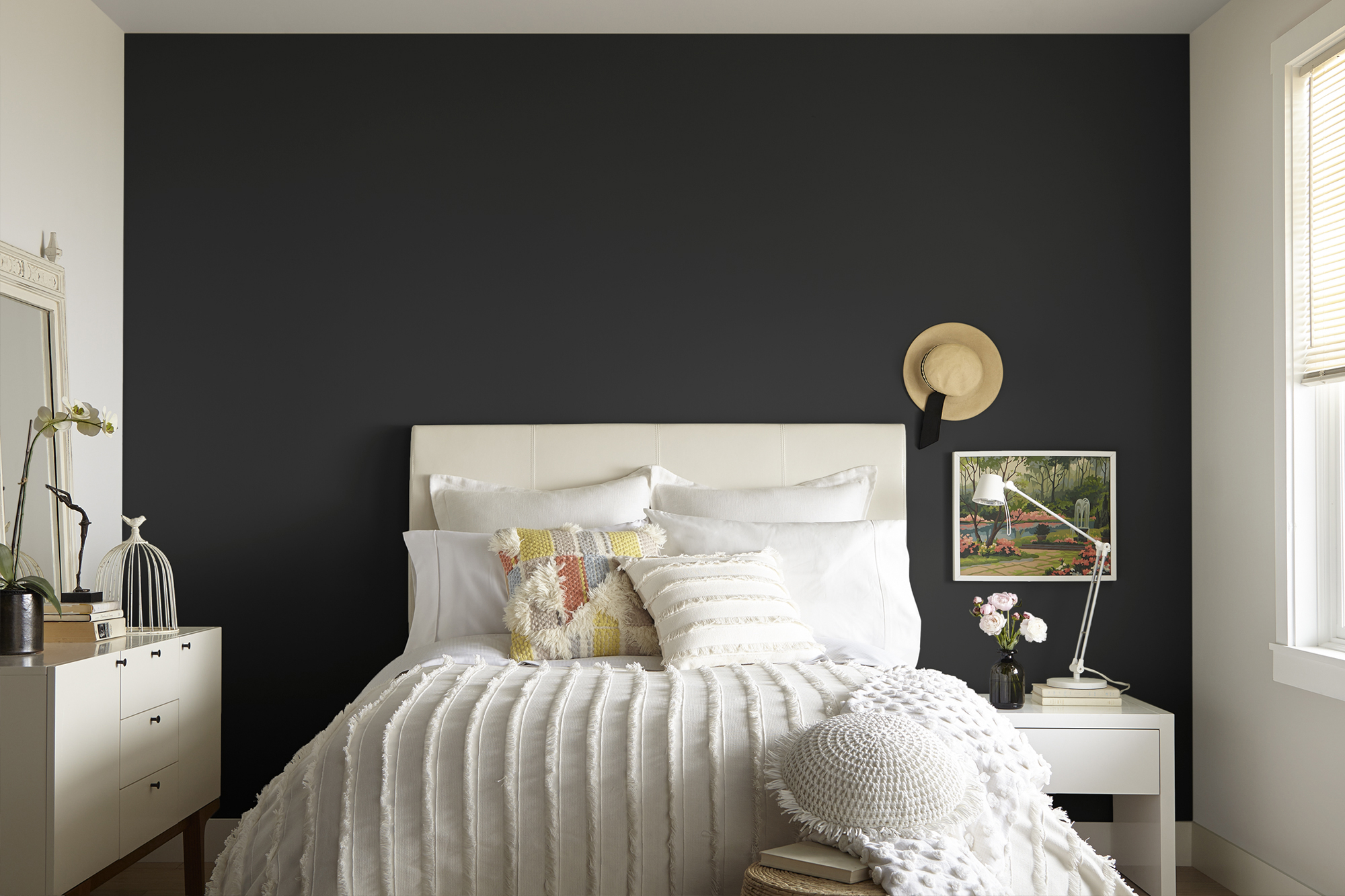
If you’re really hesitant, starting with an accent wall behind your headboard is a great way to introduce drama without committing to all four walls. However, I often find that clients who start with an accent wall end up loving the color so much they paint the rest of the room!
Balancing with Light Elements: Curtains, Bedding, Ceiling
The key to preventing a dark grey bedroom from feeling oppressive is balance. Introduce plenty of lighter elements:
- Ceiling: Keep the ceiling a crisp white or a very light grey to lift the room visually.
- Trim & Doors: White trim and doors create a clean frame against the dark walls.
- Bedding: Opt for white, cream, or light-colored bedding to provide a bright focal point.
- Curtains: Light, sheer curtains or blinds can soften the light and prevent the room from feeling cave-like during the day.
- Mirrors: Strategically placed mirrors will reflect light and visual space, making the room feel larger and brighter.
The Final Verdict: Embrace the Drama, Enjoy the Serenity
Choosing dark grey paint for your bedroom walls is a bold, beautiful decision that can transform your space into a luxurious, serene, and deeply personal retreat. By understanding undertones, considering your room’s unique light, and balancing with thoughtful decor, you can create a bedroom that not only looks stunning but also serves as the ultimate backdrop for rest and rejuvenation. Don’t be afraid to embrace the drama and the undeniable sophistication that dark grey brings. Your perfect night’s sleep awaits!
Frequently Asked Questions
Is dark grey a good color for a bedroom?
Absolutely! Dark grey is an excellent choice for bedrooms because it creates a sophisticated, intimate, and serene atmosphere. Its light-absorbing qualities can promote better sleep by reducing visual distractions, making the room feel like a cozy, enveloping sanctuary.
What colors go well with dark grey bedroom walls?
Dark grey walls pair beautifully with a variety of colors. For pops of color, consider mustard yellow, blush pink, or emerald green. For softer contrasts, use crisp white, soft cream, or natural wood tones. Metallics like gold, brass, or silver also add elegance and sparkle.
Will dark grey paint make my bedroom look smaller?
Not necessarily. While a common concern, dark colors can actually blur the boundaries of a room, creating an illusion of depth that can make a small room feel like a cozy, expansive jewel box rather than confining. Balancing with lighter elements like white trim, light bedding, and mirrors prevents it from feeling oppressive.
What type of lighting works best with dark grey walls?
Layered lighting is key. Use a mix of ambient, task, and accent lighting. Warm white bulbs (2700K-3000K) enhance coziness, while neutral white (3500K-4000K) offers truer color. Dimmers are highly recommended to control the mood throughout the day. Avoid harsh, cool-toned lighting unless you desire a very stark, modern look.
What paint finish is best for dark grey bedroom walls?
A matte or flat finish is generally recommended for dark bedroom walls. It absorbs light, making the color appear deeper, richer, and more sophisticated, while also hiding minor wall imperfections. Eggshell or satin can be a good compromise for slightly more durability and washability, but avoid high-gloss finishes which can be too reflective for a calming bedroom.
How do I choose the right undertone for my dark grey paint?
Observe your room’s natural light. North-facing rooms with cool light benefit from warm grey undertones (brown, beige) for coziness. South-facing rooms with warm light can be balanced by cool grey undertones (blue, green) for freshness. Always buy sample pots and paint large swatches on your walls to see how the undertones react in your specific lighting conditions throughout the day.
Can I use dark grey in a bedroom with limited natural light?
Yes, you absolutely can! Instead of trying to fight the lack of light, embrace it. Dark grey can create an incredibly cozy and intimate retreat in a room with limited natural light. Focus on strategic artificial lighting, reflective elements like mirrors, and contrasting lighter textiles to prevent the space from feeling too dark or enclosed.