The Definitive Guide to Green Paint Colors for Your Kitchen Walls
Thinking about green for your kitchen walls? You’re onto something truly special. Green isn’t just a fleeting trend; it’s a timeless, versatile choice that can completely transform the heart of your home into a space that feels fresh, inviting, and uniquely yours. But with an entire spectrum of greens out there – from serene sages to bold emeralds – how do you pick the perfect one?
As an expert color strategist, I’ve seen firsthand how a well-chosen green can elevate a kitchen from merely functional to absolutely fabulous. This isn’t about simply slapping paint on a wall; it’s about creating an atmosphere, enhancing your home’s natural light, and making your kitchen a place you genuinely love to be. Forget the endless swatches and decision paralysis. We’re diving deep into the world of green kitchen paint, giving you the insights and confidence to choose a color that will sing in your space.
Ready to discover the green that will bring your kitchen to life? Let’s get started.
Why Green Belongs in Your Kitchen: More Than Just a Pretty Color
There’s a reason green resonates so deeply, especially in a kitchen. It’s not just an aesthetic choice; it’s a psychological one. Here’s why green is a powerhouse color for the heart of your home:
- Nature’s Embrace: Green is the color of nature, bringing a sense of the outdoors in. In a room often filled with hard surfaces and modern appliances, green introduces an organic, grounding element that promotes relaxation and well-being.
- Calm & Balance: Studies show green can have a calming effect, reducing stress and promoting a sense of harmony. Imagine starting your day in a kitchen that radiates tranquility – sounds pretty good, right?
- Versatility & Timelessness: Unlike some colors that come and go with trends, green possesses an enduring quality. From classic farmhouse to sleek contemporary, there’s a shade of green to complement virtually any kitchen style.
- Enhances Appetite (Subtly): While not as direct as red or yellow, certain greens, particularly warmer, earthy tones, can subtly enhance the feeling of freshness and health associated with food, making your kitchen a more inviting place for cooking and dining.
- Acts as a Neutral: Many muted greens, like sage or olive, can function almost like a neutral, providing a sophisticated backdrop that pairs beautifully with a wide array of other colors, materials, and textures.
Decoding Green: Understanding Undertones and Their Impact
This is where many people get tripped up. Green isn’t just “green.” Every shade carries an undertone – a subtle hint of another color that profoundly influences how it appears in your space. Understanding these undertones is critical to choosing a green that truly works with your existing elements.
:max_bytes(150000):strip_icc()/7.-CREDIT-LAUREY-W.-GLENN--37a212359bf043e2ac8cc7743bceae11.jpeg "17 Best Green Kitchen Wall Ideas To Revamp Your Space")
Cool Undertones: Blue and Gray Greens
These greens lean towards blue or gray, giving them a crisp, fresh, and often more modern feel. Think of colors like mint, celadon, seafoam, or a sage with a strong gray base. They are:
- Refreshing: Perfect for small kitchens, making them feel more expansive and airy.
- Serene: Evoke a sense of calm and cleanliness.
- Modern: Pair beautifully with cool whites, grays, chrome, stainless steel, and brushed silver hardware.
- Light Reflecting: Often make a room feel brighter, especially in natural light.
Warm Undertones: Yellow and Brown Greens
These greens have hints of yellow, brown, or gold, making them feel inviting, cozy, and often more traditional or earthy. Examples include olive, moss, chartreuse, or a sage with a noticeable yellow tint. They are:
- Inviting: Great for larger kitchens to create a sense of intimacy and warmth.
- Grounding: Connect well with natural materials like wood, brick, and warm metals.
- Earthy: Complement creams, beiges, terracotta, and gold or brass hardware.
- Cozy: Can make a room feel more snug, especially in spaces with less natural light.
When you’re sampling, observe how the green changes throughout the day. A green with a blue undertone might appear more blue in north-facing light, while a yellow-based green might intensify its warmth in direct sunlight.
Finding Your Hue: Popular Green Paint Categories for Kitchens
To help you navigate the vast world of green, let’s break down the most popular categories you’ll encounter for kitchen walls, complete with specific shades to look for.
1. Light & Airy Greens: The Fresh Start
These are the greens that make your kitchen feel like a breath of fresh air. They’re often pastel or very muted, offering a subtle hint of color without overwhelming the space.
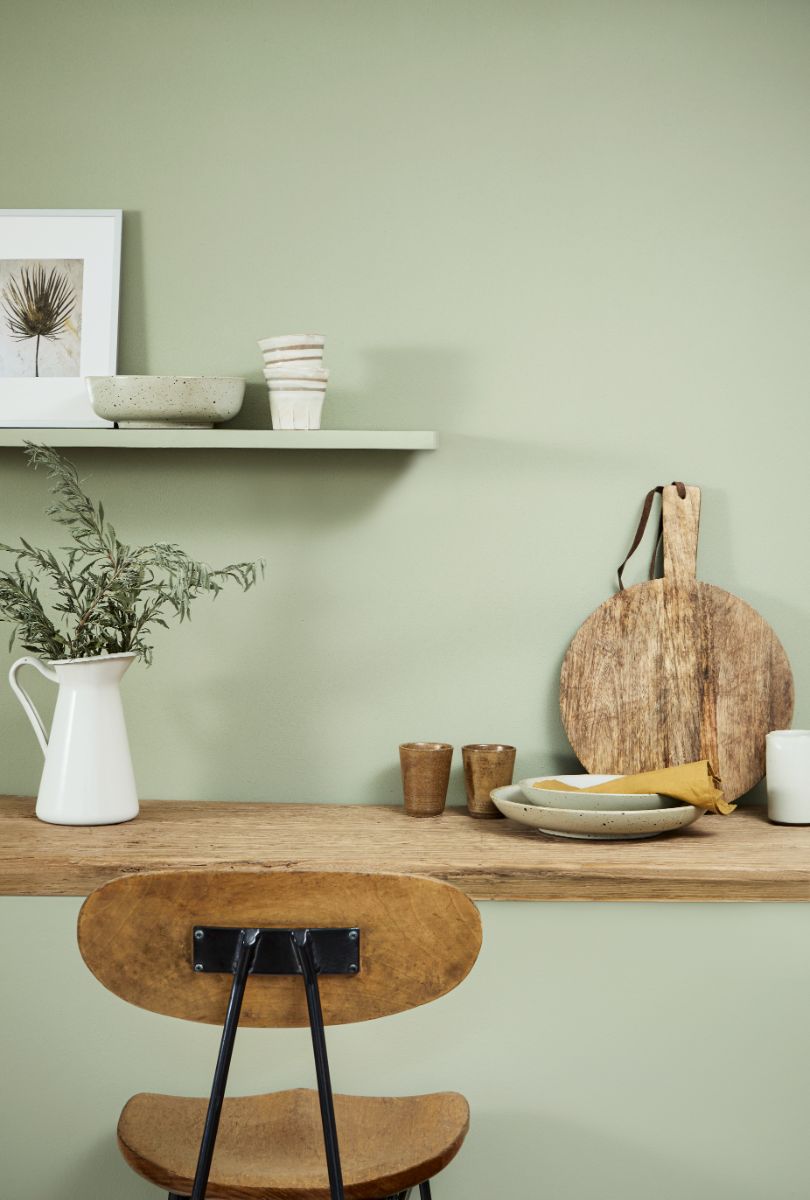
- Common Shades: Mint, Celadon, Pale Sage, Seafoam, Light Pistachio. Think Benjamin Moore’s ‘Palladian Blue’ (which reads as a light blue-green) or Sherwin-Williams’ ‘Sea Salt’.
- Best For: Smaller kitchens, kitchens with limited natural light, modern minimalist designs, cottage or shabby-chic styles.
- Impact: Makes a space feel more expansive, clean, and incredibly fresh.
- Pair With: White or light-colored cabinets, light wood tones (maple, birch), stainless steel appliances, chrome or brushed nickel hardware.
2. Muted & Earthy Greens: The Sophisticated Serenity
Earthy greens are the workhorses of the green palette. They’re versatile, sophisticated, and create a wonderfully calming atmosphere. These shades often have gray or brown undertones, making them feel grounded and natural.
- Common Shades: Sage Green, Olive Green, Moss Green, muted Forest Green. Consider Benjamin Moore’s ‘Saybrook Sage,’ Sherwin-Williams’ ‘Evergreen Fog’ (a popular choice for its gray-green balance), or Farrow & Ball’s ‘Pigeon’ (a stunning blue-gray-green).
- Best For: Transitional kitchens, farmhouse styles, traditional designs, or those going for a bohemian vibe. They work well in kitchens of all sizes.
- Impact: Creates a sense of calm, sophistication, and a deep connection to nature.
- Pair With: Creamy whites, natural wood cabinets (oak, walnut), dark accents, brass or antique gold hardware, marble or butcher block countertops.
3. Deep & Dramatic Greens: The Statement Makers
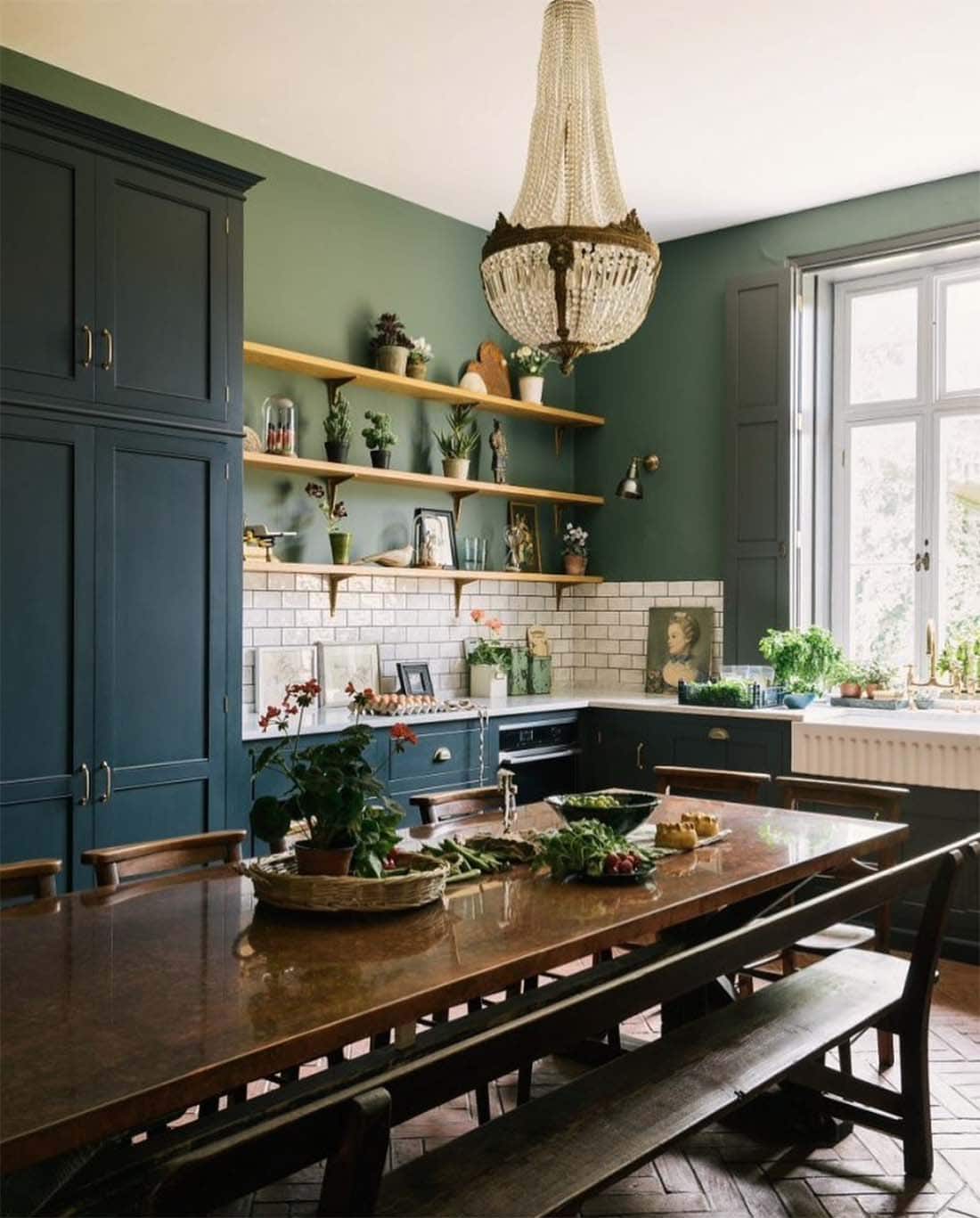
If you’re looking to make a bold, luxurious statement, deep greens are your answer. These rich, saturated shades add depth, drama, and a touch of timeless elegance. They demand attention in the best way possible.
- Common Shades: Emerald Green, Hunter Green, Forest Green, Deep Teal-Green. Look at Benjamin Moore’s ‘Vintage Vogue,’ Sherwin-Williams’ ‘Rockwood Shutter,’ or Farrow & Ball’s ‘Green Smoke.’
- Best For: Larger kitchens, accent walls, kitchens with high ceilings, or those aiming for a moody, opulent, or grand aesthetic.
- Impact: Elegant, cozy, luxurious, and incredibly inviting.
- Pair With: Dark wood cabinets, crisp white or black accents, rich metallic hardware (polished brass, copper), quartz or granite countertops, statement lighting. Ensure ample lighting to prevent the space from feeling too dark.
4. Vibrant & Playful Greens: The Energy Boosters
For those who aren’t afraid of a little personality and a lot of energy, vibrant greens bring a joyful, fresh punch to the kitchen. These are less about serenity and more about lively character.
- Common Shades: Lime Green, Kelly Green, Bright Jade, Chartreuse, Spring Green. While less common for entire kitchen walls, a small dose can make a huge impact.
- Best For: Modern, eclectic, retro-inspired kitchens, or as a spirited accent in a neutral space.
- Impact: Energetic, fun, unique, and truly personality-driven.
- Pair With: White, black, gray, or natural wood tones to balance the vibrancy. Use sparingly or as an accent to avoid overwhelming the space.
The Green Kitchen Wall Color Comparison Chart
To help you visualize and compare your options, here’s a quick reference guide incorporating popular green categories and considerations:
| Color Category | Common Shades | Primary Undertones | Ideal Kitchen Style | Best Lighting | Complementary Colors & Materials | Mood/Vibe |
|---|---|---|---|---|---|---|
| Light & Airy | Mint, Celadon, Pale Sage, Seafoam, Light Pistachio | Blue, Gray | Modern, Minimalist, Cottage, Coastal | All (especially good for low light) | White, light wood, stainless steel, chrome, silver hardware | Fresh, clean, expansive, serene |
| Muted & Earthy | Sage, Olive, Moss, Evergreen Fog, October Mist, ‘Pigeon’ | Gray, Brown, Yellow | Transitional, Farmhouse, Traditional, Bohemian | All (adapts well) | Cream, natural wood, dark accents, brass, bronze, marble | Calm, sophisticated, grounded, natural |
| Deep & Dramatic | Emerald, Hunter, Forest, Deep Teal, ‘Vintage Vogue’, ‘Green Smoke’ | Blue, Black, Gray | Luxury, Traditional, Modern Classic, Eclectic | Bright, ample artificial or natural light | Dark wood, white, black, gold, copper, quartz, granite | Elegant, moody, inviting, luxurious |
| Vibrant & Playful | Lime, Kelly, Bright Jade, Chartreuse, Spring Green | Yellow, sometimes Blue | Modern, Eclectic, Retro, Contemporary | Bright, direct light | White, black, gray, natural wood, chrome, bold patterns | Energetic, fun, unique, lively |
Beyond the Color: Essential Kitchen Paint Considerations
Choosing the right green is only half the battle. For a truly successful kitchen transformation, you need to consider the practicalities of paint in this high-traffic, high-moisture environment.
Paint Finish Matters: Durability Meets Aesthetics
The sheen of your paint isn’t just about how shiny it looks; it dictates its durability and ease of cleaning – critical factors for a kitchen.
- Eggshell or Satin: These are your best friends for kitchen walls. They offer a subtle sheen that’s elegant yet incredibly durable and washable. They can withstand splashes, grease, and regular cleaning without losing their luster.
- Matte or Flat: While beautiful for their non-reflective, velvety look, these finishes are generally not recommended for kitchen walls. They are less durable, harder to clean, and prone to showing scuffs and marks. Save these for low-traffic areas like bedrooms.
- Semi-Gloss: Highly durable and very easy to clean, semi-gloss is often used on trim, cabinets, and doors in kitchens. For walls, it can be a bit too shiny for some tastes and tends to highlight imperfections more readily.
Lighting is Key: How Green Reacts to Your Environment
I cannot stress this enough: paint colors look different in every space. The same green will appear completely different in a north-facing kitchen with cool, indirect light versus a south-facing kitchen bathed in warm, direct sunlight.
- Natural Light: Observe your kitchen’s natural light throughout the day. Does it get morning sun (warm, yellow tones), afternoon sun (intense, bright), or consistent indirect light (cooler, more muted)?
- Artificial Light: Your light bulbs matter! Warm white bulbs (2700K-3000K) can enhance yellow undertones, while cool white or daylight bulbs (4000K-5000K) can bring out blue or gray undertones.
- Reflections: Pay attention to what’s outside your windows. A lush green garden can cast a green hue into your kitchen, influencing how your chosen paint color appears.
Coordinating Elements: Building a Harmonious Space
Your green walls won’t exist in a vacuum. They need to harmonize with your existing kitchen elements. Take stock of these before committing to a color:
- Cabinetry: Do you have white, dark wood, light wood, or painted cabinets? A vibrant green might clash with a very traditional wood tone, while a muted sage could be a perfect complement.
- Countertops & Backsplash: Are they cool-toned marble or granite? Warm-toned butcher block or quartz? The veining, flecks, and overall color of these surfaces will dictate which green undertone will look best.
- Flooring: Light or dark? Wood, tile, or laminate? Ensure your green selection doesn’t fight with the floor’s dominant color or pattern.
- Hardware & Fixtures: Brass, gold, brushed nickel, chrome, matte black – these metallic accents have a strong influence. Warm greens often shine with brass/gold, while cool greens pair beautifully with silver tones or black.
- Appliances: Stainless steel, black, or white appliances also play a role in the overall palette.
Your Green Kitchen Journey: Practical Tips for Success
Now that you’re armed with knowledge, here’s how to put it into action and confidently choose your perfect green.
- Never Skip the Samples (The Golden Rule): This is the single most important step. Paint large swatches (at least 2’x2′) directly onto your kitchen walls, or use large peel-and-stick samples. Don’t rely on tiny paint chips.
- Observe Throughout the Day: Live with your samples for a few days. See how they look in morning light, afternoon sun, at dusk, and under your artificial lighting. Colors will shift!
- Test Next to Existing Elements: Place your samples directly next to your cabinets, countertops, and flooring. This will instantly reveal any clashes or harmonies you might not notice otherwise.
- Consider the Flow: If your kitchen opens into other rooms, think about how the green will transition with your home’s existing color palette. Do you want a dramatic contrast or a seamless flow?
- Don’t Be Afraid to Get Expert Help: If you’re truly stuck, consider a virtual or in-person color consultation. A fresh pair of expert eyes can save you time, money, and stress.
- Prep Your Walls Properly: No matter how beautiful the paint, poor preparation will ruin the finish. Clean your walls thoroughly, patch any holes, sand uneven spots, and prime if necessary (especially if you’re making a dramatic color change).
Common Pitfalls to Avoid When Painting Your Kitchen Green
Even with the best intentions, it’s easy to make mistakes. Here are some common traps to steer clear of:

- Choosing from a Tiny Swatch: What looks perfect on a 1-inch square can be overwhelming or entirely different on an entire wall. Always sample.
- Ignoring Undertones: Selecting a beautiful green only to find its hidden blue or yellow undertone clashes horribly with your warm wood cabinets or cool gray countertops is a common, frustrating error.
- Forgetting About Existing Elements: Falling in love with a green online without considering how it interacts with your permanent fixtures (cabinets, flooring, counters) is a recipe for regret.
- Overdoing It: While a full green kitchen can be stunning, too much of a strong green without balance from neutrals, natural textures, or contrasting elements can feel suffocating or dated. Consider painting only upper walls, or using green as an accent.
- Using the Wrong Paint Finish: Opting for a flat paint in a kitchen will quickly lead to scuffs, stains, and difficulty cleaning, undermining your beautiful color choice.
- Painting Without a Plan: A cohesive design plan, even a simple one, ensures your green walls contribute to your overall vision, rather than feeling like an isolated decision.
Bringing It All Together: Your Dream Green Kitchen Awaits
Choosing the right green paint color for your kitchen walls is an exciting journey, and one that promises a truly rewarding outcome. Green offers unparalleled versatility, bringing a sense of calm, freshness, and sophistication that few other colors can match. By understanding undertones, exploring different categories of green, and paying attention to practical considerations like paint finish and existing elements, you’re now equipped to make a confident, informed decision.
Don’t rush the process. Take your time, sample generously, and trust your instincts. Your kitchen is the heart of your home, and with the perfect shade of green, it will become a vibrant, beautiful space where memories are made, and meals are shared. Get ready to fall in love with your kitchen all over again!
Frequently Asked Questions
Is green a good color for kitchen walls?
Absolutely! Green is an excellent choice for kitchen walls. It brings a sense of calm, nature, and freshness, making the space feel inviting and vibrant. Many shades of green, from light sage to deep forest, are versatile and can complement various kitchen styles, enhancing both mood and aesthetics.
What are the most popular green paint colors for kitchens?
Popular green shades for kitchens include versatile muted greens like Sage Green and Olive Green for their earthy, calming appeal. Lighter options such as Mint and Celadon are favored for their airy, fresh feel, while bold choices like Emerald or Forest Green offer a dramatic, sophisticated look.
What colors go well with green kitchen walls?
Green kitchen walls pair beautifully with a wide range of colors. Neutrals like white, cream, gray, and natural wood tones are classic complements. For accents, consider brass, gold, or copper with warm greens, and silver, chrome, or black with cool greens. Earthy tones like terracotta or deep blues can also create a harmonious palette.

Should kitchen walls be painted with a matte or satin finish?
For kitchen walls, a satin or eggshell finish is highly recommended over matte. These finishes offer better durability, resist moisture, and are significantly easier to clean, which is crucial in a high-traffic, splash-prone area like the kitchen. Matte finishes tend to show scuffs and stains more readily.
How does natural light affect how green paint looks in a kitchen?
Natural light significantly impacts how green paint appears. North-facing rooms typically have cooler, indirect light that can enhance blue or gray undertones in green. South-facing rooms receive warmer, direct light that can amplify yellow or brown undertones. East-facing rooms get warm morning light, while west-facing rooms get warm afternoon light. Always sample your chosen green on different walls and observe it throughout the day.
Can I use green paint on my kitchen cabinets instead of just the walls?
Yes, absolutely! Painting kitchen cabinets green is a fantastic way to introduce color and personality. Muted greens like sage or olive are incredibly popular for cabinets, creating a sophisticated and grounded look. Deep greens like forest or emerald can create a dramatic, luxurious statement. Just be sure to use a durable, high-quality cabinet paint specifically designed for heavy use and easy cleaning.
What shade of green makes a kitchen look bigger?
To make a kitchen look bigger, opt for light and airy greens with cool undertones, such as mint, celadon, or a very pale sage. These shades reflect light more effectively, creating a sense of expansiveness and openness. Pair them with white or light-colored cabinets and minimal clutter for the maximum enlarging effect.