The Ultimate Guide to Green Color For Bedroom Walls: Create Your Serene Sanctuary
Ever walked into a room and felt an immediate sense of peace? For many, that feeling comes naturally when surrounded by green. And nowhere is that feeling more desired than in your bedroom – your personal sanctuary for rest, rejuvenation, and escape. If you’ve been dreaming of a bedroom that feels like a breath of fresh air, a quiet forest retreat, or a vibrant garden escape, then choosing a green color for your bedroom walls is an incredibly smart move. But with a spectrum as vast as nature itself, how do you pick the perfect green?
Forget the overwhelming paint swatches and generic advice. I’m here to guide you through the lush world of green bedroom walls, from soothing sages to dramatic emeralds, ensuring you create a space that’s not just beautiful, but deeply restorative.
Why Green? Unlocking the Power of Nature in Your Bedroom
It’s not just a trend; it’s a timeless truth. Green has always been synonymous with nature, growth, and tranquility. Bringing this color into your bedroom isn’t just a design choice; it’s an investment in your well-being.
The Psychology of Green: Calm, Renewal, and Rest
Think about stepping into a lush forest or gazing across a peaceful meadow. What do you feel? Likely a sense of calm, balance, and renewal. Green is universally recognized for its restorative qualities. Psychologically, it’s a color that signifies harmony, balance, and stability. It’s known to:
- Reduce stress and anxiety: Its association with nature triggers a calming response.
- Promote relaxation: Unlike stimulating reds or energizing yellows, green encourages tranquility.
- Aid concentration and creativity: While not typically a bedroom goal, a subtle green can foster a clear mind.
- Encourage rest: It helps create an environment conducive to deep, peaceful sleep.
Health and Wellness Benefits
Beyond the mental effects, embracing green in your bedroom can contribute to a healthier home environment. While the paint itself doesn’t offer direct health benefits (always choose low-VOC paints!), the visual impact of green can help regulate mood and foster a sense of well-being that positively impacts sleep quality and overall health. It connects us to the outdoors, even when we’re inside, providing a grounding effect that’s crucial in our often-overstimulated lives.

Choosing Your Green: Navigating the Spectrum of Shades
The beauty of green lies in its incredible versatility. There isn’t just one ‘green’ – there are hundreds, each with its own personality and impact on a room. Let’s break down the most popular categories to help you find your perfect match.
Light & Pastel Greens: Airy and Expansive
If you’re aiming for a bedroom that feels bright, airy, and quietly refreshing, light and pastel greens are your go-to. These shades work wonders in smaller rooms or spaces with limited natural light, making them feel more expansive and open.
- Mint Green: Fresh, vibrant, and slightly playful. It brings a crisp energy without being overpowering. Perfect for a cheerful, cottage-style, or retro bedroom.
- Pistachio: A soft, muted green with a hint of warmth. It’s sophisticated and soothing, pairing beautifully with natural woods and creamy whites.
- Soft Sage: The quintessential calming green. Sage has gray undertones that make it incredibly versatile and timeless. It’s perfect for a serene, minimalist, or spa-like retreat.
Mid-Tone Greens: Versatile and Grounding
Mid-tone greens strike a perfect balance between light and dark, offering a sense of grounding and comfort without overwhelming the space. They are incredibly adaptable and can suit a wide range of design styles.
- Olive Green: Rich, earthy, and warm. Olive green evokes a Mediterranean or rustic feel. It pairs wonderfully with deep reds, burnt oranges, and natural textures.
- Moss Green: A deeper, more saturated earthy green, reminiscent of forest floors. It creates a cozy, enveloping atmosphere, ideal for a traditional or nature-inspired bedroom.
- Hunter Green: A classic, deep, and noble green. Hunter green offers a sophisticated and timeless backdrop, especially when combined with dark wood furniture and luxurious fabrics.
Dark & Jewel-Toned Greens: Dramatic and Luxurious
For those who crave drama, luxury, and an intimate, cocoon-like atmosphere, dark and jewel-toned greens are absolutely stunning. They add depth and sophistication, making a statement that feels both bold and comforting.
- Emerald Green: A vibrant, opulent jewel tone that exudes elegance and glamour. Perfect for creating a luxurious, art-deco, or maximalist bedroom.
- Forest Green: A deep, rich, and truly natural shade. Forest green creates a profound sense of calm and connection to nature, ideal for a cozy, cabin-like, or traditional aesthetic.
- Teal-Green: A captivating blend of green and blue, offering a serene yet sophisticated feel. Teal-green is versatile, working well in both modern and bohemian spaces, especially when paired with metallics or vibrant patterns.
Sage Green: The Modern Classic
Let’s take a moment for sage green, because it’s arguably the most popular green for bedrooms right now, and for good reason. Its inherent gray undertones make it incredibly versatile and sophisticated. It’s not too bright, not too dark, and inherently calming. Sage green works beautifully with a wide array of decor styles, from modern farmhouse to Scandinavian minimalism, and it pairs effortlessly with crisp whites, warm woods, and soft grays. It’s the ultimate ‘safe but stylish’ choice for a serene bedroom.
:max_bytes(150000):strip_icc()/OutlineInteriors_credit_MargaretRajic-b0a6f1831bce442e80f142412938f48e.jpg "20 Green Bedroom Ideas From Interior Designers")
Green with Undertones: Blue, Yellow, or Gray?
This is where picking paint gets tricky, but it’s crucial! Every green has an undertone that subtly influences its appearance. Understanding these can make all the difference:
- Blue Undertones: Greens with blue undertones (think teal, seafoam, some mints) tend to feel cooler, crisper, and more refreshing. They pair well with other cool colors and crisp whites.
- Yellow Undertones: Greens with yellow undertones (like olive, moss, chartreuse) feel warmer, more organic, and earthy. They create a cozy, inviting atmosphere and often work best with warm neutrals and natural wood tones.
- Gray Undertones: Greens with gray undertones (most sage greens, muted forest greens) are the most sophisticated and subdued. They are incredibly versatile, offering a calming, neutral backdrop that adapts well to various lighting conditions and decor styles.
Factors to Consider Before You Paint
Choosing a shade is only half the battle. How that green behaves in your specific room depends on several environmental factors. Ignore these, and you might end up with a color that looks completely different from the swatch.
Room Size: Making Small Spaces Work
A common concern: can you use dark green in a small bedroom without making it feel like a cave? Absolutely! While light colors generally make a room feel larger, dark colors can create a wonderfully intimate, cozy, and luxurious atmosphere, even in compact spaces. The trick is to embrace the moodiness. Pair a deep forest or emerald green with strategic lighting, reflective surfaces (like a large mirror), and lighter bedding or furniture to create contrast. Painting the ceiling the same dark color can even blur the lines of the room, making it feel like an endless, enveloping cocoon rather than a small box.
Natural Light: North, South, East, West Facing Rooms
The direction your bedroom windows face dramatically impacts how paint colors appear throughout the day.
- North-Facing Rooms: Receive cooler, softer light. Warm greens (with yellow undertones like olive or moss) can prevent the room from feeling too cold.
- South-Facing Rooms: Bathed in warm, bright light all day. Almost any green works here, but cooler greens (with blue undertones) can help balance the warmth.
- East-Facing Rooms: Get bright morning light, then cooler light in the afternoon. A balanced green (like a true sage) or a slightly warmer light green can be lovely.
- West-Facing Rooms: Receive warm, golden light in the afternoon and evening. Cooler greens can offer a beautiful contrast, or embrace the warmth with an earthy green.
Artificial Lighting: Warm vs. Cool Bulbs
Your light bulbs also play a significant role. Warm white bulbs (2700K-3000K) will enhance yellow undertones and make greens feel cozier. Cool white bulbs (4000K-5000K) will bring out blue undertones, making greens appear crisper and cooler. Test your chosen green with the actual light bulbs you’ll be using in the room, both during the day and at night.

Paint Finishes: Sheen for Sleep Spaces
The finish, or sheen, of your paint isn’t just about durability; it affects how light reflects off the walls and, consequently, how the color appears. For bedrooms, consider these:
- Matte/Flat: Absorbs light, creating a rich, velvety, and sophisticated look. It hides imperfections well but is less durable and harder to clean. Ideal for low-traffic areas like bedrooms.
- Eggshell/Satin: Offers a slight sheen, making it more durable and easier to clean than flat. Eggshell is a popular choice for bedrooms, providing a soft glow without being too reflective.
- Semi-Gloss/Gloss: Highly reflective and very durable. Generally too shiny for bedroom walls, as the reflection can be distracting. Best for trim or doors.
For a truly enveloping, serene feel, a matte or eggshell finish is usually the best choice for green bedroom walls.
Crafting Your Green Bedroom Aesthetic: What Pairs Best?
Once your green walls are in place, the real fun begins: decorating! Green is surprisingly versatile, acting as a fantastic backdrop for a multitude of color palettes and design styles.
Complementary Colors: The Perfect Palettes
To create a harmonious and stylish green bedroom, consider these pairing ideas:
- Neutrals (White, Cream, Beige, Gray): A timeless and fail-safe option. Crisp white trim makes any green pop, while creamy beiges and warm grays soften the look, creating a cozy and sophisticated atmosphere.
- Warm Metallics (Gold, Brass, Copper): Instantly elevates green, adding a touch of luxury and glamour. Think gold picture frames, brass light fixtures, or a copper planter.
- Soft Pinks & Blushes: A delightful and unexpected combination. The warmth of pink beautifully complements green’s coolness, creating a fresh, romantic, and modern aesthetic.
- Deep Blues & Teals: For a serene, nature-inspired palette. Combining green with various shades of blue (especially navy or indigo) creates a sophisticated, calming, and deeply restorative space, mimicking sky and earth.
- Earthy Tones (Terracotta, Rust, Burnt Orange): Ideal for warmer greens like olive or moss, bringing a Mediterranean or bohemian vibe.
Materials & Textures: Enhancing the Green Vibe
Texture is just as important as color in creating a rich, layered bedroom environment.
:max_bytes(150000):strip_icc()/Rebecca-Shehorn_Photography_Miranda-Schroeder-106-682x1024-573989c0cb65408ab166d269215534db-7f12a1befcbc4b649bfc3229f2701ec9.jpg "35 Gorgeous Green Bedrooms That Prove The Hue Is A Classic")
- Natural Woods: Light oak, walnut, or even painted distressed wood furniture grounds the green and enhances its organic feel.
- Linen: Drapes, bedding, or upholstery in natural linen add a relaxed, soft, and breathable texture that complements any green.
- Velvet: For a touch of luxury, velvet pillows, an upholstered headboard, or a throw in a complementary color add richness and depth, especially with darker greens.
- Woven Rattan & Jute: Baskets, rugs, or light fixtures made from these materials bring in organic texture and a relaxed, bohemian, or coastal feel.
- Metallics & Glass: Use strategically in lighting, mirrors, or decorative objects to add sparkle and sophistication, particularly with jewel-toned greens.
Design Styles: From Modern Minimalist to Bohemian Luxe
Green walls can adapt to almost any design aesthetic:
- Modern Minimalist: Opt for a muted sage or soft pistachio, paired with clean lines, minimal decor, and white or light wood furniture.
- Bohemian: Embrace earthy olive or moss green, layering with global textiles, rattan furniture, and an abundance of plants.
- Traditional/Classic: Deep hunter or forest green walls create an elegant backdrop for antique furniture, rich fabrics, and classic art.
- Farmhouse: A soft, dusty green paired with distressed wood, rustic textures, and cozy textiles fits perfectly.
- Art Deco/Glam: Bold emerald green walls with gold accents, velvet textures, and geometric patterns scream sophistication.
Expert Tips for Painting Your Green Bedroom
Ready to pick up that brush? Here are some final pointers to ensure your green bedroom project is a success.
Sampling is Key: Don’t Skip This Step
I cannot stress this enough: always sample your paint colors. Purchase small pots of your top 2-3 green choices and paint large swatches (at least 2’x2′) on different walls in your bedroom. Observe them throughout the day and night, in different lighting conditions, and with your existing furniture and decor. What looks perfect on a tiny chip can look entirely different on a whole wall.
Accent Wall vs. All Four Walls
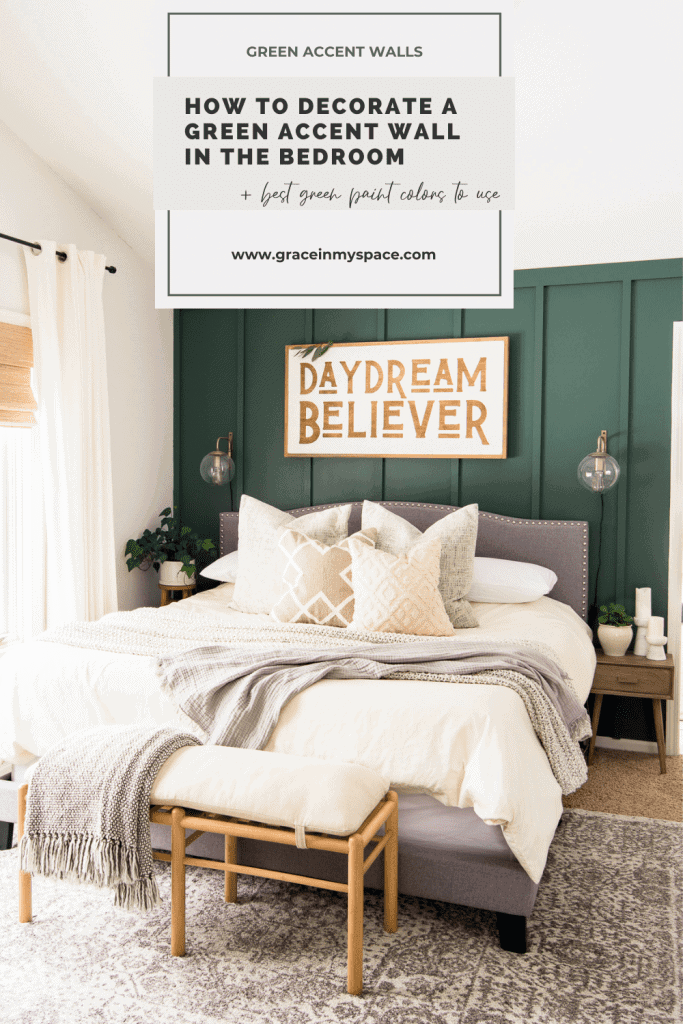
If you’re hesitant about committing to green for the entire room, an accent wall is a fantastic compromise. Choose the wall your headboard rests against, or a wall with a prominent architectural feature. This allows you to introduce the calming power of green without overwhelming the space. However, for that truly immersive, serene sanctuary feel, painting all four walls (and even the ceiling!) in a muted green can be incredibly impactful and cozy.
Common Mistakes to Avoid
- Ignoring Undertones: Not realizing your green has a strong blue or yellow undertone can clash with your existing decor.
- Forgetting Lighting: Failing to test samples in both natural and artificial light will lead to disappointment.
- Too Much Green: While it’s a bedroom, balance is key. Break up green walls with contrasting trim, artwork, or furniture.
- Choosing the Wrong Sheen: High-gloss on bedroom walls can be distracting and highlight imperfections. Stick to matte or eggshell.
- Not Prepping Walls Properly: Clean, smooth, primed walls are essential for an even, professional finish.
Transforming your bedroom with a green color palette is more than just redecorating; it’s about creating a personal retreat that nurtures your mind and body. Whether you opt for a whispering sage, a grounding olive, or a dramatic emerald, embracing green will bring a refreshing sense of calm and natural beauty to your most sacred space. Go forth, choose your green, and create the bedroom sanctuary you deserve!
| Green Shade Category | Mood & Vibe | Ideal Pairing Colors | Best For Room Type/Light |
|---|---|---|---|
| Light & Pastel Greens (e.g., Mint, Pistachio, Soft Sage) | Airy, refreshing, gentle, serene, expansive | Crisp White, Cream, Light Gray, Soft Pink, Blonde Wood | Small rooms, North-facing rooms, Modern minimalist, Cottage style |
| Mid-Tone Earthy Greens (e.g., Olive, Moss, Hunter) | Grounding, cozy, natural, sophisticated, comforting | Warm White, Beige, Terracotta, Deep Red, Dark Wood, Gold | Medium to large rooms, Traditional, Rustic, Bohemian, South/West-facing |
| Dark & Jewel-Toned Greens (e.g., Emerald, Forest, Teal-Green) | Dramatic, luxurious, intimate, bold, enveloping | Black, Navy Blue, Gold/Brass, Charcoal Gray, Deep Plum, Rich Wood | Larger rooms (or small rooms for intimacy), Art Deco, Glam, Modern, East-facing |
| Sage Green (Specific Category) | Calm, balanced, sophisticated, timeless, versatile | White, Cream, Warm Gray, Blush Pink, Natural Wood, Bronze | Any room size, Any light, Scandinavian, Modern Farmhouse, Spa-like |
Frequently Asked Questions
What is the best shade of green for a bedroom?
The ‘best’ shade of green depends on your desired mood and room specifics. For a serene, calming feel, soft sage or muted olive are excellent choices. If you want an airy, fresh look, consider mint or pistachio. For drama and luxury, deep forest or emerald green can create a stunning, intimate sanctuary. Always consider your room’s natural light and size.
Does green paint make a bedroom look bigger or smaller?
Light and pastel greens, like soft sage or mint, tend to make a bedroom feel more expansive and airy, especially in smaller spaces. Darker greens, such as forest or emerald, can create a more intimate, cozy, and luxurious feel, rather than making the room appear smaller in a negative way. The key is to balance dark walls with appropriate lighting and contrasting decor.
What colors pair well with green bedroom walls?
Green is incredibly versatile. It pairs beautifully with neutrals like crisp white, warm cream, beige, and light gray for a classic look. For added luxury, gold, brass, and copper accents work wonderfully. Soft pinks and blushes create a fresh, modern contrast. Deep blues and teals enhance a serene, nature-inspired palette, while earthy tones like terracotta complement warmer greens.
Is green a good color for sleep?
Yes, green is an excellent color for promoting sleep and relaxation. Its association with nature, growth, and tranquility has a calming effect on the mind, reducing stress and anxiety. Studies suggest that colors reminiscent of natural environments, like green, can contribute to a more peaceful and restorative sleep environment.
Should I use a matte or satin finish for green bedroom walls?
For bedroom walls, a matte or eggshell (very low sheen satin) finish is generally recommended. Matte paint absorbs light, creating a rich, sophisticated, and velvety look that helps to hide imperfections. Eggshell offers a slight sheen, making it more durable and easier to clean than flat, while still maintaining a soft, subtle glow suitable for a calming bedroom environment. High-gloss finishes are typically too reflective and distracting for bedrooms.
How do I choose between an emerald green and a sage green for my bedroom?
Consider the mood you want to create. Emerald green is a vibrant, luxurious jewel tone perfect for a dramatic, glamorous, or maximalist bedroom that feels bold and rich. Sage green, on the other hand, is a muted, earthy green with gray undertones, ideal for a serene, spa-like, or modern minimalist bedroom focused on calm and subtlety. Emerald makes a statement, while sage provides a comforting backdrop.