How Much Paint For A Bedroom? Your Definitive Guide to Calculating Paint Needs
Ever stood in the paint aisle, staring at a rainbow of colors, utterly clueless about how many gallons you actually need for your bedroom? You’re not alone. It’s a common dilemma, leading to either multiple trips back to the store or a garage full of half-used cans. Neither is ideal, right?
Getting the paint quantity right isn’t just about saving money; it’s about saving time, hassle, and the environment. Overbuying wastes resources, and underbuying means frustrating delays in your project. This guide is here to cut through the guesswork and equip you with the knowledge to calculate your bedroom’s paint needs like a seasoned pro.
Let’s get your bedroom transformation started without a hitch!
The Quick Answer: How Much Paint Do I REALLY Need?
Before we dive deep into formulas, let’s give you a quick, actionable estimate. For an average-sized bedroom (think 10×12 feet to 12×14 feet) with standard 8-foot ceilings, you’re generally looking at:
- Walls (2 coats): Approximately 1.5 to 2 gallons.
- Ceiling (1-2 coats): An additional 0.5 to 1 gallon.
- Trim & Doors (1-2 coats): Typically a quart to half-gallon.
So, for a complete bedroom refresh including walls, ceiling, and trim, budget for roughly 2 to 3 gallons of paint, possibly more if you’re doing a drastic color change or have very high ceilings. But that’s just a rule of thumb. Let’s get more precise.
Here’s a snapshot of common bedroom sizes and their approximate paint needs for two coats on walls, one coat on the ceiling, and one coat on trim/doors:
| Room Size (Approximate) | Approx. Wall SF (Net) | Est. Paint (Walls, 2 coats) | Est. Paint (Ceiling, 1 coat) | Est. Paint (Trim/Door, 1 coat) | Total Est. Paint Gallons |
|---|---|---|---|---|---|
| Small Bedroom (e.g., 10×10 ft, 8ft ceiling) | ~280-300 sq ft | 1 gallon | 0.25-0.5 gallon | 1 quart | 1.5 – 2 gallons |
| Medium Bedroom (e.g., 12×12 ft, 8ft ceiling) | ~320-350 sq ft | 1-1.5 gallons | 0.5 gallon | 1 quart | 2 – 2.5 gallons |
| Large Bedroom (e.g., 14×16 ft, 8ft ceiling) | ~450-500 sq ft | 1.5-2 gallons | 0.5-1 gallon | 1 quart – 0.5 gallon | 2.5 – 3.5 gallons |
| Master Bedroom Suite (e.g., 20×20 ft, 9ft ceiling) | ~650-700 sq ft | 2 gallons | 1 gallon | 0.5-1 gallon | 3.5 – 4.5 gallons |
Small Bedroom (e.g., 10×10 ft)
A typical small bedroom, often used as a guest room or child’s room, might measure around 10 feet by 10 feet with an 8-foot ceiling. For two coats on the walls, you’re looking at about 1 gallon of paint. If you add the ceiling and trim, plan for an additional quart to half-gallon.
Medium Bedroom (e.g., 12×12 ft)
This is a common size for many bedrooms. For a 12×12 foot room with 8-foot ceilings, you’ll likely need 1 to 1.5 gallons for two coats on the walls. Factor in an extra half to full gallon for the ceiling and trim, bringing the total to around 2 to 2.5 gallons.

Large Bedroom (e.g., 14×16 ft)
Larger bedrooms, perhaps with higher ceilings, will naturally require more. A 14×16 foot room with an 8-foot ceiling would need about 1.5 to 2 gallons for two coats on the walls. With ceiling and trim, you’re likely in the 2.5 to 3.5 gallon range.
Master Bedroom Suite (e.g., 20×20 ft or larger)
Master bedrooms can be substantial, often exceeding 20×20 feet, and may include architectural features, taller ceilings, or even an attached sitting area. For such a space, expect to need at least 2 gallons for two coats on the walls, and potentially another 1.5 to 2.5 gallons for the ceiling and extensive trim. Total: 3.5 to 4.5+ gallons.
The Nitty-Gritty: Calculating Your Bedroom’s Surface Area Like a Pro
While the quick estimates are handy, getting truly accurate means doing a little math. Don’t worry, it’s simpler than it sounds!
Step 1: Measure Your Walls (The Foundation)
The first step is to figure out the total square footage of your walls. Grab a tape measure, a pencil, and some paper.
How to do it:
- Measure the length of each wall.
- Add these lengths together to get the total perimeter.
- Measure the height of your walls from floor to ceiling.
- Multiply the total perimeter by the wall height.
Formula: (Length of Wall 1 + Length of Wall 2 + Length of Wall 3 + Length of Wall 4) x Wall Height = Total Wall Square Footage
Or, more simply:
(Perimeter) x (Wall Height) = Total Wall Square Footage

Example: If your bedroom is 12 feet long, 10 feet wide, and has 8-foot high ceilings:
- Perimeter = (12 ft + 10 ft) x 2 = 44 ft
- Wall Height = 8 ft
- Total Wall SF = 44 ft x 8 ft = 352 sq ft
Step 2: Account for Doors and Windows (The Deductions)
You won’t be painting over doors and windows (unless you’re feeling particularly rebellious). These areas need to be subtracted from your total wall square footage. A good rule of thumb is that a standard door is about 21 square feet (3×7 ft) and a standard window is about 15 square feet (3×5 ft). You don’t need to be hyper-precise; rough estimates are usually fine.
Formula: Total Wall SF – (Door SF + Window SF) = Net Wall Square Footage
Example (continuing from above): Your 12×10 ft bedroom has one door and two windows.
- Total Wall SF: 352 sq ft
- Door SF: 21 sq ft (3×7 ft)
- Window SF: 15 sq ft each, so 2 x 15 sq ft = 30 sq ft
- Total Deductions = 21 sq ft + 30 sq ft = 51 sq ft
- Net Wall SF = 352 sq ft – 51 sq ft = 301 sq ft
This Net Wall Square Footage is the number you’ll use for wall paint calculations.
Step 3: Don’t Forget the Ceiling (The Often Overlooked Area)
Many people paint walls but forget about the ceiling, or assume leftover wall paint will be enough. Unless you’re specifically not painting the ceiling, you need to calculate its area too.
Formula: Room Length x Room Width = Ceiling Square Footage
Example (continuing from above):
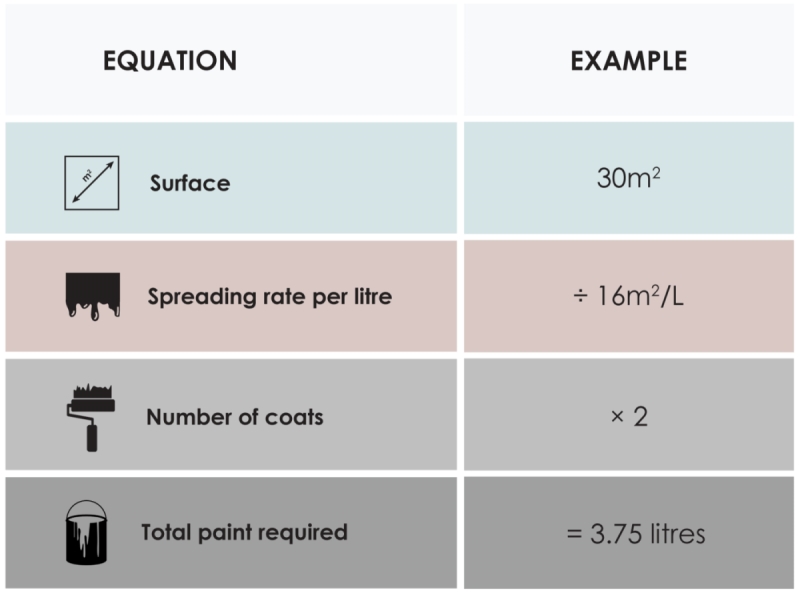
- Room Length: 12 ft
- Room Width: 10 ft
- Ceiling SF = 12 ft x 10 ft = 120 sq ft
Step 4: Trim, Baseboards, and Moldings (The Details)
Trim, baseboards, crown molding, and door/window frames usually get a different type of paint (and often a different color or sheen). These are measured in linear feet, not square feet.
How to do it:
- Measure the length of all baseboards.
- Measure the length of all crown moldings (if present).
- Measure the perimeter of each door frame and window frame.
- Add these lengths together.
General Rule: For a standard 8-foot ceiling, trim is usually about 0.5 feet high. If you want to convert linear feet to approximate square footage for trim, multiply the total linear feet by the average trim height (e.g., 0.5 ft).
Example (continuing from above):
- Baseboards: Perimeter of room = 44 linear ft
- Door frame: Roughly 2.5 ft wide x 7 ft high = 2.5 + 2.5 + 7 = 12 linear ft (excluding the bottom)
- Window frames: Two windows, each roughly 3 ft wide x 5 ft high. Perimeter = (3+3+5+5) = 16 linear ft per window. Two windows = 32 linear ft.
- Total Linear Feet for Trim = 44 (baseboards) + 12 (door) + 32 (windows) = 88 linear ft.
For estimating paint, professional painters often budget 1 quart for every 100-150 linear feet of trim for two coats, depending on trim width.
Beyond Square Footage: Other Critical Factors Affecting Paint Quantity
Calculations give you a baseline, but real-world painting has variables. Missing these can throw off your estimate significantly.
Number of Coats: The Double-Edged Brush
Most paint projects require at least two coats for full coverage, color accuracy, and durability. However, this isn’t always the case:
- Similar Color, Good Condition: If you’re painting a similar shade over a well-prepped wall, you might get away with one coat, especially with high-quality paint.
- Drastic Color Change (Dark to Light): Going from a dark color to a light one almost always requires primer + 2 coats of paint, or even 3 coats of paint without primer, to achieve true color.
- Drastic Color Change (Light to Dark): While less common to need extra coats, a very light base might still show through if the dark paint isn’t highly pigmented, potentially requiring 3 coats.
- New Drywall or Porous Surfaces: These always need a primer coat followed by at least two paint coats.
Always assume two coats for walls and one coat for ceilings/trim unless you have specific reasons otherwise. Remember, each additional coat essentially doubles the paint needed for that surface.

Paint Type and Sheen: Not All Gallons Are Equal
- Coverage Rates: A gallon of paint typically covers 350-400 square feet per coat. However, cheaper paints might cover less, and premium paints with built-in primer might cover more (or achieve better coverage in fewer coats). Always check the label on your specific paint can for its recommended coverage rate.
- Primer-in-One Paints: These can be great for light-to-light color changes or walls in good condition, potentially saving a coat. But for drastic changes, a dedicated primer is often better.
- Sheen: While sheen doesn’t drastically change coverage, higher sheens (like semi-gloss) tend to be applied in thinner coats than flatter sheens (like matte or eggshell), and they can sometimes highlight imperfections more, leading to needing more careful application or touch-ups.
Surface Condition: Smooth Canvas vs. Textured Terrain
The smoother your walls, the less paint they absorb, and the more evenly your paint will spread. Textured walls (e.g., knockdown, popcorn ceiling) or very porous surfaces (like unprimed drywall) will soak up significantly more paint. Factor in an extra 10-20% if your surfaces are heavily textured or very absorbent.
Applicator Choice: Brush, Roller, or Sprayer?
- Brushes & Rollers: These are the most common for DIY bedroom projects and are generally efficient, delivering paint precisely. Rollers are best for large flat surfaces, brushes for cutting in and trim.
- Paint Sprayers: While incredibly fast, sprayers produce a fine mist, resulting in a fair amount of overspray (paint that doesn’t adhere to the surface). Sprayers can use 1.5 to 2 times more paint than rollers and brushes, especially if you’re not experienced. Consider this if you’re planning to spray.
Color Change: From Midnight Blue to Bright White?
This is where primer becomes your best friend. Painting a light color over a dark one will almost certainly require a dedicated primer coat to block out the old color and provide a neutral base for the new. Without primer, you’re looking at 3-4 coats of your finish paint, which is far more expensive and time-consuming.
How Much Primer Do I Need For a Bedroom?
Primer is the unsung hero of a great paint job. It promotes adhesion, hides imperfections, blocks stains, and ensures true color. Don’t skip it, especially if:
- You’re painting new drywall.
- You’re going from a very dark color to a very light one.
- Your walls have stains or odors you want to seal in.
- You’re painting over glossy surfaces.
Primer generally has a similar coverage rate to paint, usually 200-300 square feet per gallon (some specialty primers cover less, some more). Since you typically only apply one coat of primer, you’ll need one gallon of primer for every 350-400 square feet of *total* surface area you plan to prime.
Rule of Thumb: For most bedrooms, 1 gallon of primer will be sufficient for all walls and the ceiling (one coat).
Putting It All Together: A Practical Example Walkthrough
Let’s walk through a common scenario to bring all these calculations to life.
Imagine you have a bedroom that is 13 feet long, 11 feet wide, with 8-foot ceilings. It has one door (3×7 ft) and one window (4×5 ft). You plan to paint the walls from a medium gray to a light beige (2 coats), paint the ceiling white (1 coat), and refresh the trim with a bright white (1 coat).
| Area to Paint | Dimensions / Calculation | Square Footage (SF) / Linear Feet (LF) | Est. Gallons (Per Coat) | Total Coats | Total Est. Gallons |
|---|---|---|---|---|---|
| Walls | Perimeter: (13+11)x2 = 48 ft. Wall SF: 48×8 = 384 SF. Door: 3×7 = 21 SF. Window: 4×5 = 20 SF. Deductions: 21+20 = 41 SF. Net Wall SF: 384 – 41 = 343 SF. |
343 SF | ~1 gallon (for 350-400 SF coverage) | 2 coats | 2 gallons |
| Ceiling | Room Length x Room Width = 13×11 | 143 SF | ~0.5 gallon (for 143 SF coverage) | 1 coat | 0.5 gallon |
| Trim/Doors | Baseboards: 48 LF. Door frame: ~12 LF. Window frame: ~14 LF. Total Trim: 48+12+14 = 74 LF. |
74 LF | ~1 quart (for 75-100 LF coverage) | 1 coat | 1 quart (0.25 gallon) |
| Primer (Walls & Ceiling) | Net Wall SF + Ceiling SF = 343 + 143 | 486 SF | ~1.5-2 gallons (for 200-300 SF/gallon coverage) | 1 coat | 2 gallons |
| TOTAL ESTIMATED PAINT & PRIMER: | 2 gallons (walls) + 0.5 gallon (ceiling) + 0.25 gallon (trim) + 2 gallons (primer) = 4.75 gallons | ||||
Based on this example, you’d want to purchase 2 gallons of wall paint, 1 gallon of ceiling paint (to be safe and account for roller tray/minor spills), 1 quart of trim paint, and 2 gallons of primer. Always round up to the next full container size for safety!

Don’t Get Caught Short: Tips for Buying Paint Like a Pro
You’ve done the math, now go shopping with confidence!
- Always Buy a Little Extra: This is perhaps the most crucial tip. Buy at least an extra quart beyond your calculation, or an extra gallon if your project is large. Paint colors, even from the same brand, can have slight variations between batches (called ‘dye lots’). If you run out halfway through a wall, the new can might not perfectly match, creating a noticeable line. Leftover paint is invaluable for touch-ups down the line.
- ‘Boxing’ or ‘Blending’ Paint: If you’re using more than one gallon of the same color, especially for a large continuous wall, pour all the cans into a larger bucket and mix them together. This ‘boxes’ the paint, ensuring a perfectly consistent color throughout your project.
- Check Return Policies: Many stores allow returns of unopened, untinted paint. Tinted paint is generally non-returnable, so be sure of your color choice!
- Utilize Paint Calculators (Wisely): Online paint calculators from brands like Sherwin-Williams or Benjamin Moore are useful for quick estimates. However, they don’t always factor in all the nuances (like drastic color changes or heavily textured walls). Use them as a starting point, then apply your newfound knowledge from this guide!
- Consider Sample Sizes: Before committing to gallons, buy small sample pots of your chosen colors and paint swatches on your walls. Observe them in different lighting conditions throughout the day. This step can save you from a costly mistake.
Common Mistakes to Avoid When Estimating Paint
Even with careful planning, it’s easy to make small errors. Steer clear of these common pitfalls:
- Forgetting the Ceiling or Trim: These areas are distinct and often require different paint types or colors. Failing to include them in your calculations will leave you short.
- Underestimating Coats for Drastic Color Changes: Going from dark to light, or covering vibrant hues, almost always demands primer and multiple coats. Don’t assume two coats will be enough.
- Not Accounting for Porous or Textured Surfaces: New drywall, plaster, or heavily textured walls will drink up more paint. Add an extra 10-20% to your estimate for these surfaces.
- Buying Exactly the Calculated Amount: As mentioned, always err on the side of caution and buy a little extra. It’s far better to have a quart leftover for touch-ups than to run out mid-project.
- Ignoring the Paint Can’s Coverage Rate: While 350-400 sq ft/gallon is a good average, always check the specific can you’re buying. Coverage can vary by brand, paint line, and finish.
- Skipping Primer When Needed: Primer isn’t always optional. It’s a crucial step for achieving professional results, especially with new surfaces or significant color shifts, and it can actually reduce the amount of finish paint you need.
Painting a bedroom can be incredibly rewarding. By taking a few extra minutes to accurately calculate your paint needs, you’ll ensure your project goes smoothly, efficiently, and with a beautiful, lasting finish. Happy painting!
Frequently Asked Questions
Is one gallon of paint enough for a bedroom?
For walls only, one gallon might be enough for a small bedroom (10×10 ft) with two coats, especially if the new color is similar to the old. However, for medium to large bedrooms, or if you’re painting the ceiling and trim, you’ll likely need more, typically 1.5 to 3.5 gallons in total depending on size and surfaces.
Should I always buy extra paint?
Yes, always buy a little extra paint – at least an additional quart or half-gallon beyond your calculations. This provides a buffer for touch-ups, minor spills, or if you misjudged coverage. It’s crucial because paint colors can vary slightly between batches, making it hard to match later if you run out.
How much does primer impact paint quantity?
Primer is essential when going from a dark color to a light one, painting new drywall, or covering stains. While primer itself adds to the total liquid you buy, it often reduces the number of finish paint coats needed, especially for drastic color changes. A gallon of primer usually covers 200-300 sq ft per coat, and typically only one coat is needed.
Does paint sheen affect how much paint I need?
Generally, paint sheen doesn’t drastically change the overall coverage rate per gallon. However, higher sheens like semi-gloss are often applied in thinner coats and can sometimes be less forgiving with imperfections, potentially leading to more careful application or minor touch-ups. Always check the specific paint can’s coverage rate.
What’s the difference between square footage and linear footage in painting?
Square footage (SF) measures a two-dimensional area (length x width or height), used for walls, ceilings, and floors. Linear footage (LF) measures a one-dimensional length, used for trim, baseboards, and moldings. You calculate paint for SF and often budget paint for LF (e.g., 1 quart per 100-150 LF of trim).
Can I return unopened paint cans?
Most hardware and paint stores will accept returns of unopened, untinted (white base) paint cans. However, once paint has been tinted to a specific color, it’s typically considered a custom order and is non-returnable. Always check the store’s specific return policy before purchasing.
How do professionals estimate paint?
Professionals use precise measurements of all surfaces, factoring in deductions for doors/windows, wall height, ceiling area, and linear feet for trim. They also account for surface condition, paint type, number of coats, and any drastic color changes that would require primer or extra coats. They often add a buffer for waste and touch-ups, similar to the advice in this guide, to ensure they never run short on a job.