Unlock the Illusion: Bedroom Paint Ideas to Make Your Space Feel Bigger and Brighter
We’ve all been there: staring at our bedroom walls, wishing for just a few more feet of space. A cozy bedroom is lovely, but a cramped one? Not so much. The good news is, you don’t need a costly renovation or a magic wand to make your bedroom feel more expansive. Sometimes, all it takes is a brush and a strategic splash of color.
As an interior design expert, I’ve seen firsthand how paint can be the most powerful, yet affordable, tool in your decor arsenal. It’s not just about covering a surface; it’s about crafting an experience, manipulating perception, and creating the illusion of more square footage. In this comprehensive guide, I’ll walk you through the very best bedroom paint ideas designed to make your space feel dramatically bigger and brighter, transforming your small sanctuary into an open, airy retreat.
The Core Principle: How Paint Tricks the Eye
Before we dive into specific colors, it’s crucial to understand why certain paint choices work their magic. It’s all about optical illusions, light reflection, and the way our brains process color:
- Light Reflection: Lighter colors are champions of reflection. They bounce natural and artificial light around the room, making walls appear to recede and expanding the visual boundaries of your space. Think of it like a bright, open sky – it feels boundless.
- Receding Colors: Cool tones, primarily blues and greens, have a unique quality. They optically recede, meaning they appear further away than they actually are. This creates a sense of depth and distance, pushing your walls outward without moving an inch.
- Advancing Colors: Conversely, warm tones (reds, oranges, yellows) are considered advancing colors. They tend to draw walls inward, making a space feel cozier but potentially smaller. While we’ll focus on cool and light tones, there are clever ways to incorporate warmth without sacrificing spaciousness.
The Go-To Palette: Light & Bright Paint Colors for Spacious Bedrooms
When in doubt, reaching for lighter, brighter hues is always a solid strategy for expanding your bedroom. These colors are the foundation of many spacious designs.
Classic Whites and Off-Whites
This is your ultimate starting point. Whites and off-whites are the undisputed champions of making a room feel bigger. They reflect the maximum amount of light, blurring corners and making walls seemingly disappear into the distance.
- Why they work: They create a seamless backdrop, allowing your eye to travel uninterrupted around the room. The absence of strong color keeps the space feeling open and uncluttered.
- Beyond stark white: Don’t limit yourself to sterile, gallery white. Explore the nuanced world of off-whites. Consider a creamy ivory for warmth, a soft alabaster for a touch of elegance, or a crisp bone white with a hint of gray for modern sophistication. The right undertone can prevent a room from feeling too cold.
- Tip: Match your trim color to your wall color for an even more expansive, uninterrupted look.
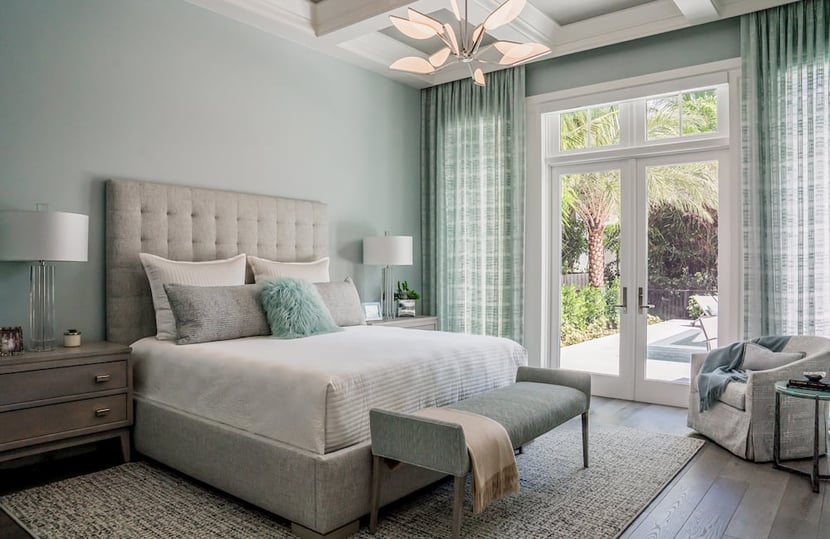
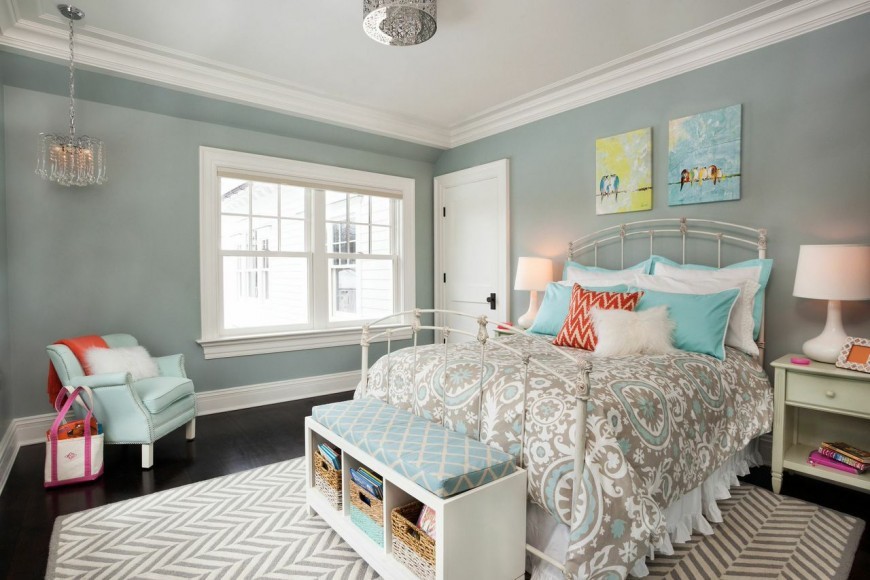
Serene Pale Blues and Greens
Remember those receding colors? Pale blues and greens are prime examples. They evoke the vastness of the sky and the tranquility of nature, making them perfect for bedrooms.
- Why they work: These cool tones create an illusion of depth, pushing the walls away from you. They’re also inherently calming, which is ideal for a sleep sanctuary.
- Color ideas: Think sky blue, a gentle seafoam green, or a muted sage. These shades bring a breath of fresh air into a room without being overpowering. They work beautifully with natural wood tones and crisp white linens.
Sophisticated Light Grays and Greiges
Gray has been a design darling for years, and for good reason. Light grays, especially those with cool undertones, can make a room feel incredibly spacious and chic.
- Why they work: Light grays are excellent at reflecting light and provide a modern, airy feel. Greige (a blend of gray and beige) offers the best of both worlds, providing warmth without encroaching on your perceived space.
- Color ideas: A whisper gray can feel crisp and clean, while a stony greige offers a subtle earthiness. Look for shades with blue or green undertones for maximum receding effect.
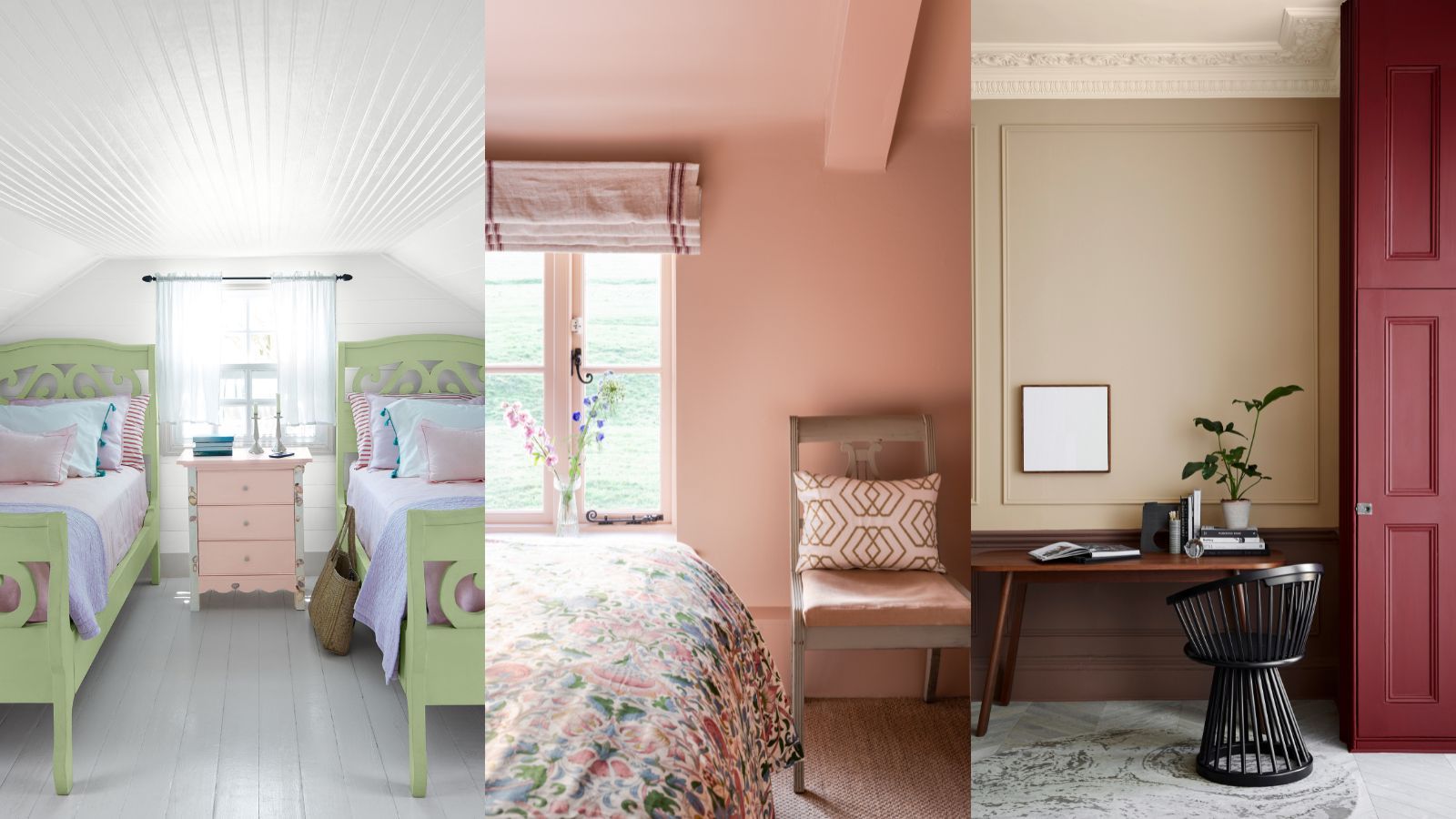
Soft Pastels and Muted Tones
Don’t be afraid to add a touch of personality with pastels. The key is to keep them muted and airy, rather than vibrant and saturated.
- Why they work: Soft pastels offer color without heaviness. They reflect light well and can create a cheerful, yet expansive, atmosphere.
- Color ideas: A pale lavender, a delicate blush pink, or a very light, almost white lemon yellow can brighten and expand a room. Ensure the saturation is low to maintain the illusion of space.
The Unexpected Genius: Using Dark Colors to Expand Space
This might sound counterintuitive, as most advice screams “light colors only!” But here’s a secret: dark colors, used strategically, can absolutely make a small bedroom feel bigger. It’s about creating depth and blurring boundaries, not absorbing light.
The Cave Effect: When Dark Walls Work Wonders
Imagine standing in a deep, dark cave. You can’t quite tell where the walls end, right? That’s the principle here. Dark colors, especially deep blues, charcoals, or forest greens, can make walls seem to recede into an infinite distance.
- Why they work: They absorb light rather than reflecting it, which blurs the corners and edges of a room. This lack of defined boundaries creates an illusion of depth and vastness. It’s particularly effective in rooms with ample natural light, which prevents the space from feeling too oppressive.
- Considerations: This technique is bold and requires careful planning. It works best with high ceilings and/or plenty of natural light to prevent it from feeling like a dungeon. Pair with light furniture and textiles to create contrast.
Strategic Dark Accent Walls
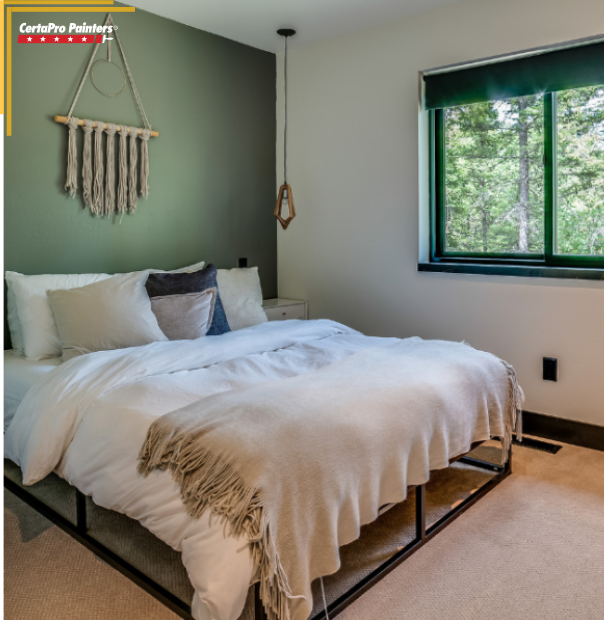
If painting all four walls dark feels too daunting, an accent wall is your best friend. Choose the longest wall in your bedroom, or the wall behind your headboard, and paint it a deep, rich color.
- Why they work: A dark accent wall creates a focal point and draws the eye deep into the room, instantly adding a perception of depth. It makes that particular wall appear further away, extending the room visually.
- Implementation: Keep the other three walls light and airy (using any of the colors from our first section). This contrast enhances the illusion of depth created by the dark wall.
Monochromatic Magic with Darker Tones
A monochromatic scheme involves using varying shades of the same color. When applied with darker tones, it can create a sophisticated, seamless look that expands space.
- Why they work: By using slightly different shades of the same deep color on walls, trim, and even the ceiling, you eliminate sharp lines and visual breaks. This fluidity makes it harder for the eye to pinpoint where one surface ends and another begins, thus blurring boundaries and making the room feel larger.
- Example: Imagine walls in a deep charcoal, with trim in a slightly lighter slate gray, and a ceiling in a very pale almost white gray.
Beyond Wall Color: Advanced Painting Techniques for Maximized Space
Paint isn’t just for walls. Leveraging your ceiling, trim, and even creative patterns can significantly impact how big your bedroom feels.
Ceiling Tricks: The Fifth Wall Phenomenon
The ceiling is often overlooked, but it’s a powerful tool in your spatial illusion kit.
- Lighter than walls: The classic approach. Painting your ceiling a lighter color (often white or a very pale version of your wall color) makes it feel higher, drawing the eye upwards.
- Same color as walls: This bold move blurs the line between walls and ceiling, making it difficult for the eye to find a stopping point. The result is a seamless, enveloping effect that can make the room feel much larger, especially with light colors. It can also enhance the “cave effect” with dark colors.
- Contrasting light color: A very pale blue or even a light silver on the ceiling can create a sky-like effect, making the ceiling appear to float away.
Trim, Doors, and Moldings: The Frame Effect
How you treat your architectural details can either chop up a room or allow it to flow seamlessly.
- Paint trim the same color as walls: This is my go-to for maximizing space. When trim, doors, and baseboards blend with the walls, there are no visual interruptions. Your eye glides effortlessly, making the room feel expansive and cohesive.
- Slightly lighter trim: If you want a little definition without breaking up the space too much, choose a trim color that’s a shade or two lighter than your walls.
- Avoid stark white trim with dark walls: Unless you’re going for a very specific, high-contrast look, stark white trim against dark walls can “frame” the room and make it feel smaller. Consider a slightly darker, muted trim for a more cohesive, expansive feel.
Optical Illusions: Stripes and Color Blocking
Pattern isn’t off-limits, but it needs to be used intelligently.
- Vertical stripes: These are fantastic for adding perceived height. Paint thin, subtle vertical stripes in slightly varying shades of the same light color to draw the eye up.
- Horizontal stripes: While they can add width, horizontal stripes can also make a room feel shorter if not done carefully. Use very subtle, broad horizontal stripes in pale, receding colors if you dare, ideally on a single accent wall.
- Color blocking: A clever technique is to paint the lower third of your wall a slightly darker, grounding color and the upper two-thirds a lighter, expansive shade. This can make the ceiling feel higher and add visual interest without crowding the space.
Gloss and Sheen: Reflecting Your Way to Bigger Space
The finish of your paint matters just as much as the color itself.
- Higher sheens: Satin, semi-gloss, and even high-gloss paints are more reflective. They bounce light around the room, making it appear brighter and more open. This is especially effective on ceilings or for accent walls.
- Matte finishes: While popular for their sophisticated, velvety look, matte paints absorb light. Use them for general walls where you want a softer look, but pair them with reflective elements elsewhere.
- Balance is key: A fully high-gloss room might feel overwhelming. Consider matte walls with a satin or semi-gloss ceiling and trim for a balanced approach that maximizes light reflection where it counts.
Harmonizing Your Bedroom: Factors Beyond Paint
While paint is powerful, it works best in concert with other elements to truly maximize the feeling of space.
Natural Light: Your Best Friend
The amount of natural light your bedroom receives will influence how your chosen paint color appears.
- Maximize exposure: Keep window treatments light and airy, opting for sheer curtains or blinds that can be fully pulled up.
- Reflect light: Position mirrors opposite windows to reflect natural light deeper into the room, enhancing the effect of your light-colored walls.
Artificial Lighting: Enhancing the Illusion
Good lighting can amplify the spaciousness created by your paint choices.

- Layered lighting: Combine ambient (ceiling light), task (reading lamps), and accent (wall sconces, picture lights) lighting.
- Strategically placed lights: Use uplights to wash walls with light, making them appear taller, or place lamps in corners to push shadows back and expand the perceived width of the room.
Furniture and Decor
- Proportionate and minimal: Choose furniture that fits the scale of the room. Avoid oversized pieces that overwhelm the space. Keep clutter to a minimum.
- Leggy furniture: Furniture with exposed legs allows light to pass underneath, creating a sense of openness.
- Blend, don’t contrast: Furniture that is similar in color to your walls will blend in, making the room feel less cluttered and more expansive.
Your Paint Journey: Tips for Success
Test, Test, Test
Never commit to a color without testing it first. Paint large swatches (at least 2×2 feet) on several walls in your bedroom.
- Observe throughout the day: See how the color changes with natural light in the morning, afternoon, and evening, as well as under artificial lighting.
- Consider adjacent rooms: How does the color flow (or not flow) with connecting spaces?
Prep Work Pays Off
The success of your paint job, and therefore the illusion of space, relies heavily on good preparation.
- Clean walls: Ensure surfaces are clean, dry, and free of dust and grime.
- Patch and prime: Fill any holes or cracks, and use a good quality primer, especially if you’re making a dramatic color change or painting over glossy surfaces.
Don’t Fear Experimentation
Remember, it’s just paint! If you try a technique or color and it doesn’t quite hit the mark, you can always repaint. The most important thing is to have fun with the process and create a bedroom that feels like a spacious, serene escape for you.
Here’s a quick summary of how different paint approaches impact your bedroom’s perceived size:
| Color Category / Technique | Effect on Perceived Space | Ideal Sheen | Best Use Case |
|---|---|---|---|
| Light Neutrals (Whites, Off-Whites) | Reflects light, expands boundaries, creates openness. | Matte, Eggshell, Satin | All walls, Ceiling, Trim |
| Pale Cool Tones (Blues, Greens, Light Greys) | Recedes visually, creates depth and tranquility. | Matte, Eggshell | All walls, Accent walls, Pair with light neutrals |
| Dark & Deep Tones (Charcoal, Navy, Forest Green) | Blurs boundaries, creates illusion of infinite depth. | Matte (for cave effect), Eggshell | Accent wall, All walls (with high natural light), Pair with light decor |
| Monochromatic Schemes | Creates seamless flow, visual unity, and expansive feel. | Varying (Matte on walls, Satin on trim) | Walls, Trim, Ceiling (using shades of one color) |
| Ceiling Lighter Than Walls | Lifts the ceiling, adds perceived height. | Flat, Matte | Ceiling (especially with standard ceiling heights) |
| Same Color Trim/Walls | Creates continuity, avoids visual breaks, seamless look. | Matte, Eggshell, Satin | Walls and Trim (for maximum expansive effect) |
Ultimately, transforming your small bedroom into a spacious sanctuary is a delightful journey of color and creativity. By understanding the psychology behind paint and applying these strategic ideas, you’re not just painting walls—you’re crafting an illusion, expanding your world, and designing a space that truly feels like a breath of fresh air. So grab that brush, pick your palette, and get ready to unlock the hidden potential of your bedroom!