The Definitive Guide to Choosing the Best Paint Color for Your Windowless Powder Room
Ah, the windowless powder room. It’s often the unsung hero of the home – a quick pit stop for guests, a private moment for you. But without the blessing of natural light, these small spaces can feel like a design puzzle. They can be dark, feel cramped, and sometimes, frankly, a little uninspired. But I’m here to tell you that this often-overlooked room holds immense potential for personality and sophisticated design, and it all starts with the right paint color.
So, what’s the best paint color for a powder room with no windows? The answer isn’t a single shade, but rather a strategic approach. It’s about harnessing the power of artificial lighting, understanding color psychology, and choosing a hue that not only brightens but also elevates the space. Whether you crave a bright, airy illusion, a moody and dramatic jewel box, or a playful burst of color, we’ll dive deep into making your windowless powder room a showstopper.
Understanding Your Windowless Powder Room’s Unique Challenges
Before we pick up a paintbrush, let’s acknowledge the unique hurdles a windowless powder room presents. By understanding these, we can turn potential pitfalls into design advantages.
The Lack of Natural Light: A Game Changer
Natural light is a designer’s best friend. It shifts throughout the day, revealing different nuances of color, making spaces feel alive and expansive. In its absence, every paint color you choose will be seen exclusively under artificial light. This means that gorgeous blue you love in your sun-drenched living room might look entirely different in your windowless powder room. It’s not just about brightening; it’s about controlling the light source you *do* have.
Small Space Syndrome: Illusion vs. Reality
Most powder rooms are inherently small. The common wisdom is always to paint small rooms light colors to make them feel bigger. While this can work, it’s not the only truth. Sometimes, trying to make a small, dark space feel ‘big’ with a sterile white can actually make it feel clinical or stark. Instead, we can create an illusion of depth, coziness, or dramatic impact that transcends its actual dimensions.
Functionality & Atmosphere: What’s Your Vibe?
A powder room is a utilitarian space, but it’s also an opportunity for a splash of luxury or a touch of whimsy. What kind of feeling do you want to evoke?
- Do you want guests to feel refreshed and energized?
- Do you want a sophisticated, intimate escape?
- Or perhaps a bold, unexpected statement that surprises and delights?
Your desired atmosphere will heavily influence your color choices.
The Crucial Role of Artificial Lighting in Windowless Spaces
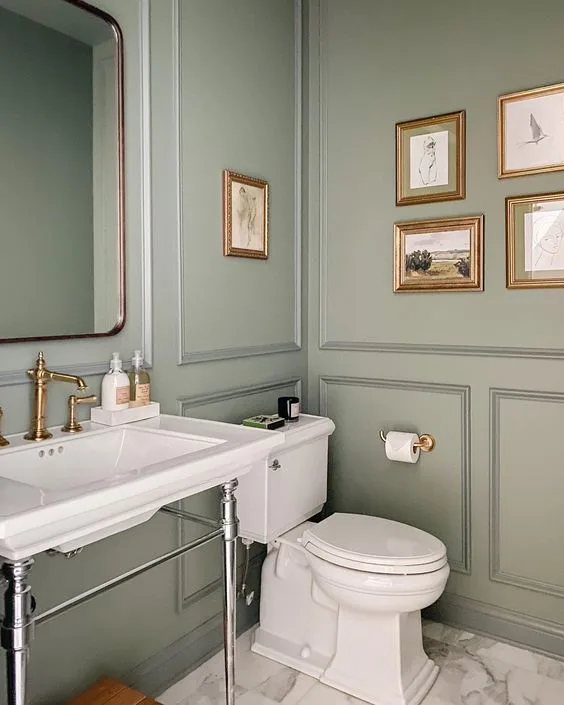
This is where your strategy for a windowless powder room truly begins. Forget about how a color looks in daylight; focus entirely on how it performs under artificial illumination. It’s not just about how many light fixtures you have, but the type and temperature of light they emit.
Types of Light Bulbs & Their Impact on Color
Different bulb types cast different glows:
- Incandescent: These are being phased out, but if you have them, know they cast a very warm, yellow light. They can make cool colors appear dull and warm colors appear even warmer, sometimes veering into orange.
- Halogen: Often seen as a truer, brighter white light, similar to natural daylight, but with a slight yellowish cast. They render colors fairly accurately.
- LED (Light Emitting Diode): This is your most versatile option. LEDs come in a vast range of color temperatures, are energy-efficient, and have a long lifespan.
Color Temperature (Kelvin): Your Secret Weapon
Color temperature, measured in Kelvins (K), describes how warm or cool a light source appears. This is paramount for a windowless room.
- 2700K – 3000K (Warm White/Soft White): Emits a cozy, yellowish glow, similar to traditional incandescent bulbs. Great for creating a warm, inviting atmosphere. It enhances reds, oranges, and yellows, but can dull blues and greens.
- 3500K – 4000K (Neutral White/Cool White): A balanced white light that’s less yellow than warm white but not stark blue. It renders colors more accurately and can make a room feel brighter and cleaner without being clinical.
- 5000K+ (Daylight): A crisp, bluish-white light that mimics natural daylight. While it makes colors pop, it can be too stark and cold for a cozy powder room.
For most powder rooms, I recommend staying in the 2700K to 3500K range. 2700K-3000K for a very warm, intimate feel, and 3000K-3500K for a brighter, truer representation of your chosen paint color while still maintaining warmth.
Layering Light: Ambient, Task, and Accent
Don’t rely on a single overhead light. Layering light is essential:
- Ambient Light: A central fixture or recessed lights provide overall illumination.
- Task Light: Sconces on either side of the mirror (or a well-lit vanity bar) are crucial for flattering illumination without harsh shadows.
- Accent Light: A small picture light over artwork or a decorative pendant can add mood and highlight features.
Ensure all bulbs in the room have the same Kelvin temperature to avoid conflicting color casts.
Top Paint Color Strategies for Windowless Powder Rooms
Now that we understand the power of light, let’s explore the best color strategies to make your windowless powder room sing.
Strategy 1: The Bright & Airy Illusion (Neutrals & Soft Hues)
This is the classic approach and for good reason: it works. High-LRV (Light Reflectance Value) colors bounce artificial light around, creating a sense of openness and brightness. But don’t settle for boring!
- Soft Whites: Not all whites are created equal. Look for whites with subtle warm undertones (yellow, pink) to avoid a stark, institutional feel under artificial light. Cool whites can appear icy or grayish.
- Off-Whites & Creams: These add a layer of softness and warmth.
- Greiges & Light Greys: The chameleon of colors, greiges (grey + beige) and light greys can be incredibly sophisticated. Pay close attention to their undertones (green, blue, or purple) as these will become more prominent without natural light.
- Pale Blues & Greens: These cool, soothing colors can mimic a serene, spa-like atmosphere. They need careful lighting to avoid appearing dull.
Recommended Colors:
Benjamin Moore: Simply White (OC-117), White Dove (OC-17), Pale Oak (OC-20)
Sherwin-Williams: Accessible Beige (SW 7036), Agreeable Gray (SW 7029), Sea Salt (SW 6204)
Farrow & Ball: Wimborne White (No. 239), Pavilion Gray (No. 242)
Strategy 2: Embrace the Drama (Deep & Moody Hues)
This is my favorite strategy for smaller, windowless spaces. Instead of fighting the lack of light, lean into it! A deep, rich color can transform a powder room into a sophisticated, jewel-box escape. It creates an intentional, intimate atmosphere, where shadows add to the depth rather than detract from it.
- Deep Blues: Think navy, indigo, or even a dark teal. They evoke a sense of calm and luxury.
- Charcoals & Near-Blacks: These create a dramatic, modern statement. They can surprisingly make the walls recede, blurring the lines of the small space.
- Rich Greens: Hunter green, forest green, or deep olive greens bring an organic, grounded feel.
- Plums & Berries: For a truly opulent and unique statement, a deep eggplant or burgundy can be stunning.
Recommended Colors:
Benjamin Moore: Hale Navy (HC-154), Salamander (2050-10), Cushing Green (HC-125)
Sherwin-Williams: Tricorn Black (SW 6258), Naval (SW 6244), Evergreen Fog (SW 9130)
Farrow & Ball: Hague Blue (No. 30), Down Pipe (No. 26)
Strategy 3: Playful Pops & Vibrant Statements (Bold Colors)
A powder room is the perfect place to experiment with a color you might be hesitant to use in a larger space. It’s a low-commitment area to inject personality and fun.
- Emerald Green or Deep Teal: Sophisticated, yet full of life.
- Vivid Coral or Terra Cotta: Warm, inviting, and unexpected.
- Sunny Yellow: A dose of cheerfulness, but use sparingly and test carefully, as yellow can sometimes look sickly without natural light.
- Fuchsia or Ruby Red: Bold, energetic, and undeniably memorable.
Recommended Colors:
Benjamin Moore: Caliente (AF-290), Aegean Teal (2136-40), Newburg Green (HC-158)
Sherwin-Williams: Ravishing Coral (SW 6612), Roycroft Bottle Green (SW 2846)
| Strategy | Color Types | Pros for Windowless Rooms | Cons for Windowless Rooms | Key Lighting Consideration |
|---|---|---|---|---|
| Bright & Airy Illusion | Soft Whites, Off-Whites, Greiges, Light Grays, Pale Blues/Greens | Maximizes perceived space; reflects artificial light effectively; feels clean & fresh. | Can appear stark, dull, or clinical without careful lighting; may lack personality if not accessorized well. | Avoid overly cool whites (5000K+); use warmer light (2700K-3500K) to prevent a sterile look. |
| Embrace the Drama | Deep Blues, Charcoals, Forest Greens, Plums, Near-Blacks | Creates an intimate, sophisticated ‘jewel box’ effect; blurs boundaries of small space; adds depth & luxury. | Requires intentional lighting to avoid feeling cave-like; can absorb light if not properly lit; might not appeal to everyone. | Ample, layered lighting is critical; warmer light (2700K-3000K) enhances richness; consider reflective surfaces. |
| Playful Pops & Vibrant Statements | Emerald, Teal, Coral, Sunny Yellow, Fuchsia, Ruby Red | Injects strong personality; creates a memorable, unique space; high impact with low commitment. | Can be overwhelming if not balanced; requires careful color selection to avoid clashing with fixtures; yellows can appear sickly. | Neutral white light (3000K-4000K) generally renders these colors most accurately without distortion. |
Beyond the Walls: Essential Design Elements for Windowless Powder Rooms
Paint is powerful, but it’s part of a larger symphony. These elements can amplify your chosen color and overcome the challenges of a windowless space.
The Magic of Reflective Surfaces
Reflective surfaces are your best friends in a windowless room. They bounce light around, creating an illusion of space and brightness.
- Oversized Mirrors: Don’t just use a standard vanity mirror. Consider a large, decorative mirror that nearly fills a wall. It will reflect the artificial light and create depth.
- Metallics: Chrome, polished nickel, brass, or even a touch of gold in fixtures, hardware, or decorative items will catch and distribute light beautifully.
- Glass & Acrylic: Glass shelves, a glass-topped vanity, or acrylic accessories add sparkle and lightness.
Trim & Ceiling Colors: The Fifth Wall
- Matching Walls: Painting the trim and even the ceiling the same color as the walls (especially with darker, moody colors) can blur the boundaries of the room, creating an immersive, expansive feeling rather than chopping up the space.
- Contrasting Whites: For lighter wall colors, a crisp white trim can provide definition. Just ensure the white’s undertones complement the wall color.
- A Lighter Ceiling: If you’re going with a dramatic wall color, a slightly lighter version of that color on the ceiling, or even a very soft white, can lift the ceiling visually.
Fixtures & Hardware: Jewelry for Your Space
Your faucet, towel bar, and cabinet pulls are like the jewelry of the room. Choose finishes that complement your paint color and lighting scheme. Warm metals like brass or gold can add richness to deep blues or greens, while cool metals like chrome or polished nickel can brighten softer neutrals.
Texture & Pattern: Adding Depth
Even without windows, you can add visual interest:

- Wallpaper: A bold, small-scale pattern on one wall or even all four can be a stunning focal point. Look for metallic or slightly glossy finishes to reflect light.
- Wainscoting: Adds architectural detail and breaks up wall space. Paint the wainscoting a different shade or white for contrast.
- Towels & Artwork: These small touches introduce color and texture without committing to a full wall.
Paint Finish: More Than Just a Pretty Sheen
The sheen of your paint makes a significant difference, especially in a room without natural light. It impacts durability, cleanability, and, crucially, how light is reflected.
Matte & Flat: The Sophisticated Choice
Flat or matte finishes absorb light, giving colors a deeper, richer appearance. They are excellent for hiding imperfections on walls. However, they are generally less durable and harder to clean, which can be a concern in a high-traffic powder room. They work beautifully for creating a cozy, enveloping feel with dark colors.
Eggshell & Satin: The Workhorse
These finishes offer a slight sheen, making them more durable and washable than matte. Eggshell has a very subtle luster, while satin has a soft, pearl-like glow. They strike a great balance between hiding minor imperfections and providing enough reflectivity to help brighten the room. Satin is often my top recommendation for powder rooms.
Semi-Gloss & High-Gloss: The Reflective Powerhouses
These are the most reflective and durable finishes. Semi-gloss has a distinct shine, and high-gloss is almost mirror-like. They are incredibly easy to clean and can bounce artificial light effectively, making a room feel brighter and more expansive. However, their high reflectivity means they will highlight every imperfection on your walls, so meticulous prep is key. They can be stunning for trim, doors, or even a feature wall if the walls are perfectly smooth.
My Recommendation: For walls in a windowless powder room, aim for an eggshell or satin finish. They provide enough reflectivity to aid brightness while offering practical durability and washability. Use semi-gloss for trim and doors for a crisp, contrasting, and ultra-durable finish.
Practical Tips for Choosing and Testing Paint Colors
Don’t rush this crucial step. Testing is non-negotiable for a windowless space.
Don’t Judge a Swatch by its Card: The Power of Samples
Those tiny paint chips are a starting point, not a definitive answer. Invest in paint samples (either small cans or peel-and-stick samples) of your top 2-3 choices. Paint large swatches (at least 2’x2′) on different walls in your powder room. Better yet, paint them on large white poster boards that you can move around.
Observe these samples at different times of day and, most importantly, under the exact artificial lighting you plan to use. A color might look vibrant under the store’s bright fluorescents but dull or strangely tinted under your home’s 2700K LEDs.

Consider Undertones Seriously
Undertones are the subtle colors within a dominant color. In a windowless room, undertones can become magnified. For example:
- Grays: Can have blue, green, or even purple undertones. A gray with a blue undertone might look icy; one with a green undertone might feel more organic.
- Whites: Can lean yellow, pink, blue, or gray. A white with a yellow undertone will feel warmer; a blue undertone can appear stark.
If you’re unsure, compare your chosen color against a pure white or a truly neutral gray. This often reveals the hidden undertones.
The Paint App & Digital Visualizers: A Starting Point
Many paint brands offer apps or online visualizers that let you ‘try on’ colors digitally. These can be helpful for narrowing down choices and getting a general idea, but they are never a substitute for physical samples in your actual space.
Take Your Time: A Small Investment for a Big Impact
Choosing the right paint color for a windowless powder room is an investment in your home’s aesthetic and your guests’ experience. Don’t rush it. The few extra dollars and days spent on samples and careful consideration will pay off immensely in a stunning, perfectly personalized space.
Busting Powder Room Paint Myths
Let’s debunk some common misconceptions that might be holding you back from your perfect powder room.
Myth: Dark Colors Always Make a Small Space Smaller
Reality: This is perhaps the biggest myth in interior design. While true that dark colors absorb light, if done intentionally with proper layered lighting and reflective surfaces, dark colors can actually make a small room feel more expansive and intimate. By blurring the corners and making the walls recede, you remove the hard boundaries of the room, creating a sense of depth and endlessness, rather than a cramped box. Think of a night sky – it feels vast, not small.
Myth: White is Always the Brightest Option
Reality: In a room devoid of natural light, a pure, unadulterated white can often fall flat. Without the changing quality of sunlight to bring it to life, white can appear stark, clinical, or even take on a dull, grayish cast under certain artificial lights. You need to be very intentional with your white choice, opting for one with warm undertones, and pairing it with excellent lighting to achieve that bright and airy feel.
Myth: One Coat is Enough for a Small Room
Reality: Unless you’re repainting with the exact same color, almost every paint job requires two coats for true color depth, uniformity, and durability. This is especially true in a windowless room where every inch of the wall is exposed to direct artificial light. A single coat often looks streaky or uneven, and the underlying primer or previous color can show through, distorting your chosen hue.
Bringing It All Together: Your Powder Room Transformation
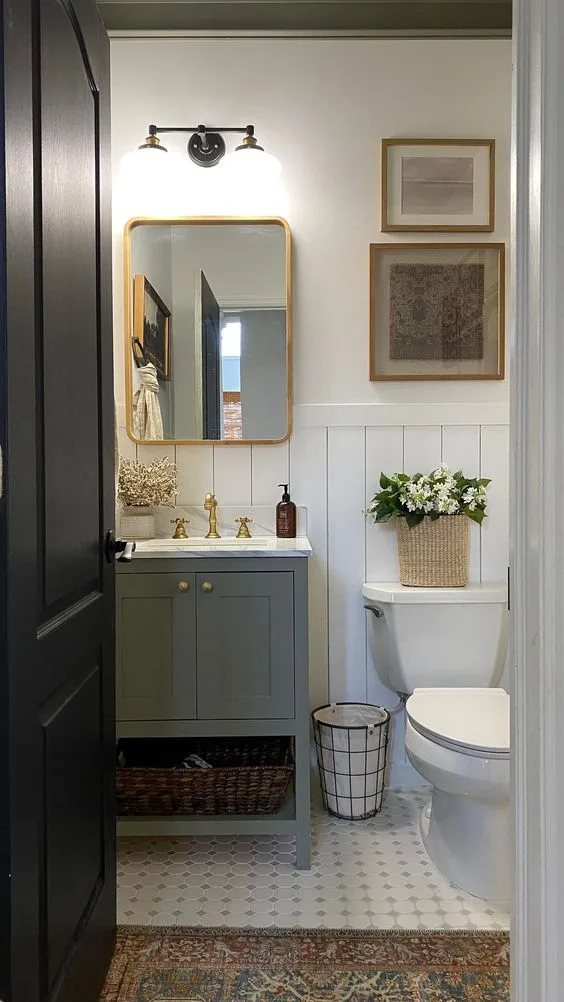
Your windowless powder room doesn’t have to be an afterthought. With a thoughtful approach to paint color, careful consideration of artificial lighting, and the strategic use of reflective elements, you can transform it into a striking, memorable space. Remember to test your colors, embrace the unique challenges, and don’t be afraid to make a bold statement. Whether you choose a serene neutral, a dramatic deep hue, or a vibrant pop of color, your powder room can become a testament to your excellent design sensibilities.
Frequently Asked Questions
What is the most recommended paint finish for a windowless powder room?
For walls, an eggshell or satin finish is generally recommended. These provide a subtle sheen that reflects artificial light without highlighting every wall imperfection, while also offering good durability and washability. For trim and doors, a semi-gloss finish is ideal for its superior durability and crisp look.
Should I use warm or cool artificial lighting in a windowless powder room?
It depends on your desired atmosphere. Warm white light (2700K-3000K) creates a cozy, inviting feel and enhances warm paint colors. Neutral white light (3000K-3500K) offers a brighter, cleaner look that renders colors more accurately. For most powder rooms, a range between 2700K-3500K is best to avoid a stark or clinical feel.
Can I use dark paint colors in a small, windowless powder room?
Absolutely! This is a fantastic strategy. Dark colors can create an intimate, sophisticated ‘jewel box’ effect, blurring the room’s boundaries and adding depth rather than making it feel smaller. The key is to pair dark walls with ample, layered artificial lighting and reflective surfaces like mirrors and metallic fixtures to prevent it from feeling like a cave.
How do I test paint colors effectively in a windowless room?
Never rely solely on tiny paint chips. Purchase paint samples (small cans or peel-and-stick) and apply them to large poster boards or directly onto different walls in the powder room. Crucially, observe these samples exclusively under the artificial lighting you plan to use, both during the day and evening, to see how the color truly behaves.
What role do mirrors play in a windowless powder room’s design?
Mirrors are incredibly powerful in windowless spaces. An oversized or strategically placed mirror will reflect the artificial light, making the room feel significantly brighter and more expansive. They also add visual interest and can serve as a focal point, drawing the eye and diverting attention from the lack of windows.
Is white always the best option for brightening a windowless room?
Not necessarily. While light colors reflect light, a pure, stark white can often appear flat, dull, or even clinical without natural light to give it life. It might also take on unwanted gray or blue casts under certain artificial lights. If choosing white, opt for one with subtle warm undertones and ensure your artificial lighting is warm enough to make it inviting rather than sterile.