Unlock Your Space: The Definitive Guide to Bedroom Paint Colors That Make Any Room Look Bigger
Dreaming of a bedroom that feels more expansive, airy, and open, even if it’s on the smaller side? You’re not alone. The right paint color isn’t just about aesthetics; it’s a powerful tool that can fundamentally alter your perception of space. Forget the old adage that only white makes a room feel bigger. While light colors are certainly champions of expansion, a truly strategic approach involves understanding how different hues, sheens, and even painting techniques can play tricks on the eye, transforming your compact sanctuary into a spacious retreat.
I’m here to tell you that making your bedroom look bigger with paint is entirely achievable. This isn’t just about slapping on a light shade; it’s about a nuanced understanding of color psychology, light reflection, and clever design. We’ll dive into the tried-and-true classics, explore some counter-intuitive but incredibly effective bold choices, and equip you with the knowledge to make your bedroom feel significantly larger than its square footage suggests.
The Core Principle: How Paint Colors Trick Your Brain (and Your Walls)
Before we jump into specific colors, let’s understand the science behind the illusion. Paint colors don’t physically expand your room, but they can profoundly impact how your brain perceives its size and depth. It’s all about how light interacts with surfaces and how our eyes interpret those interactions.
The Illusion of Light Reflection
This is the most common and often the simplest principle. Lighter colors have a higher Light Reflectance Value (LRV), meaning they bounce more light around a room. When light hits a pale wall, it scatters, creating a sense of openness and pushing the walls visually further away. Imagine a brightly lit hall versus a dimly lit cave; the former feels expansive, the latter enclosed. Light paint colors mimic this effect, making boundaries seem less defined and the room feel less confined.
The Art of Blurring Boundaries
Here’s where it gets interesting, and often counter-intuitive. Darker, rich colors, when applied strategically, can also make a room feel bigger – not by reflecting light, but by absorbing it. When all surfaces (walls, trim, ceiling) are painted in a deep, uniform color, the edges of the room become less distinct. Your eye struggles to find a defined stopping point, blurring the room’s boundaries and creating an immersive, infinite quality, often referred to as the ‘cave effect’. This can make a small room feel less cramped and more like a cozy, expansive void.
The Power of Monochromatic Schemes
Whether light or dark, a monochromatic (or closely tonal) color scheme minimizes visual breaks. When your walls, trim, and even furniture blend harmoniously, your eye flows effortlessly around the space without interruption. This seamlessness prevents the room from feeling ‘chopped up’ into smaller segments, contributing to an overall sense of spaciousness and cohesion.
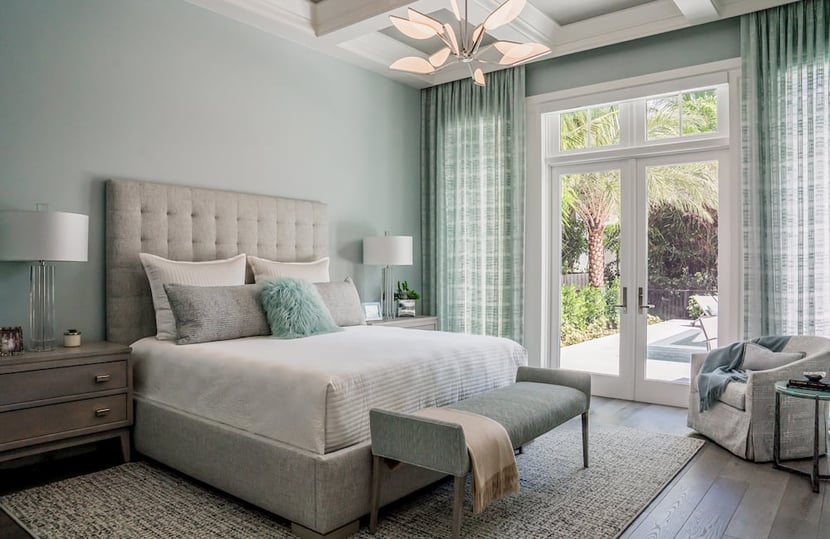
Light & Airy: The Go-To Colors to Expand Your Bedroom Visually
Let’s start with the classic, reliable choices that harness the power of light reflection. These colors are your best friends for creating an immediate sense of openness and brightness.
Whispering Whites & Off-Whites
The purest form of light reflection. Whites and off-whites are perennial favorites for a reason. They bounce the maximum amount of light, making walls recede and creating an expansive, airy feel. The key is to choose the right white – one that doesn’t feel stark or cold.
- Benjamin Moore Chantilly Lace (OC-65): A crisp, clean white with virtually no discernible undertones. It’s bright and refreshing, ideal for modern or minimalist spaces.
- Benjamin Moore White Dove (OC-17): A softer, warmer off-white with a touch of gray, preventing it from feeling sterile. It’s incredibly versatile and inviting.
- Sherwin-Williams Pure White (SW 7005): A true, balanced white that works beautifully in almost any setting, providing a clean canvas.
- Benjamin Moore Swiss Coffee (OC-45): A creamy, warm white that provides a cozy, sophisticated glow without leaning too yellow.
Pro Tip: Warm whites (with hints of yellow or pink) create a cozy, inviting atmosphere, while cool whites (with blue or gray undertones) lean more crisp and modern. Consider your room’s natural light and desired mood.
Serene Grays & Greiges
Grays and greiges (a blend of gray and beige) offer the sophistication of a neutral without the starkness some perceive in pure white. They reflect light well while adding a layer of subtle complexity.
- Benjamin Moore Gray Owl (2137-60): A popular, light gray with subtle green-blue undertones that make it feel fresh and airy.
- Benjamin Moore Silver Satin (856): A delicate, ethereal gray that leans soft and creamy, making rooms feel elegantly spacious.
- Sherwin-Williams Agreeable Gray (SW 7029): The ultimate greige, perfectly balanced between warm and cool, making it incredibly adaptable and universally loved for its ability to open up a space.
- Sherwin-Williams Repose Gray (SW 7015): A slightly cooler, more defined gray than Agreeable Gray, with subtle violet undertones that give it depth while still feeling light.
- Benjamin Moore Revere Pewter (HC-172): A classic, mid-tone greige that can feel substantial yet still very open and inviting in well-lit rooms.
Here’s a quick comparison of some popular light grays and greiges:
| Name | Brand | Key Undertone | Effect on Space |
|---|---|---|---|
| Gray Owl | Benjamin Moore | Green-Blue | Fresh, airy, modern expansion |
| Silver Satin | Benjamin Moore | Creamy Gray | Elegant, soft, subtle spaciousness |
| Agreeable Gray | Sherwin-Williams | Taupe/Greige (Balanced) | Warm, adaptable, broad appeal, visual openness |
| Repose Gray | Sherwin-Williams | Slight Violet/Blue | Cooler, clean, defined expansion |
Calming Blues & Greens
Light blues and greens are naturally receding colors, meaning they visually pull back the walls, creating a sense of depth and tranquility. They evoke the vastness of the sky and sea, making them perfect for a bedroom where serenity and perceived space are key.
:strip_icc()/cdn.cliqueinc.com__cache__posts__275080__paint-colors-that-make-a-room-look-bigger-275080-1544741908875-image.700x0c-0bea3998926c4ba68d279af7abecd028.jpg "6 Paint Colors That Make a Room Look Bigger")
- Benjamin Moore Palladian Blue (HC-144): A gorgeous blend of blue, green, and gray that feels incredibly soothing and expansive.
- Benjamin Moore Healing Aloe (1562): A very light, muted green with a touch of gray, delivering a spa-like, open feel.
- Sherwin-Williams Sea Salt (SW 6204): A popular, chameleon-like color that shifts between a pale green, blue, and gray depending on the light, always feeling fresh and open.
- Sherwin-Williams Rainwashed (SW 6211): A slightly more saturated, but still very light, blue-green that brings a beautiful, airy quality to a room.
Pro Tip: Stick to soft, muted pastels rather than vibrant, saturated hues. Intense colors can advance, making walls feel closer, while muted versions recede beautifully.
Barely-There Beiges & Taupes
If you prefer warmth but still want the benefits of a light-reflecting color, subtle beiges and taupes are excellent choices. They offer a comforting embrace while still preventing the room from feeling closed in.
- Sherwin-Williams Accessible Beige (SW 7036): A truly versatile, warm beige that avoids being too yellow or too muddy, making a room feel larger and more inviting.
- Benjamin Moore Edgecomb Gray (HC-173): A fantastic greige that often reads as a warm, light beige, offering a sophisticated and open feel.
- Benjamin Moore Pale Oak (OC-20): A very light, warm greige that can appear almost off-white in bright light, providing a subtle warmth and expansiveness.
Bold & Beautiful: Leveraging Dark Colors to Create Depth and Spaciousness
Now for the exciting part – defying convention! While light colors expand by reflection, dark colors can create an illusion of greater depth by blurring where the room ends. This strategy requires a bit more courage but the payoff can be stunning.
The “Cave Effect” – Painting All Surfaces
This technique involves painting the walls, trim, and even the ceiling in the same deep, rich color. The goal is to eliminate visual breaks and create an immersive, continuous experience where the eye can’t easily distinguish corners or edges. This makes the boundaries of the room less defined, creating a sensation of greater depth and an almost infinite quality.
- Deep Blues: Think a rich, velvety blue like Benjamin Moore Hale Navy (HC-154) or Sherwin-Williams Naval (SW 6244). These colors are inherently receding and can make a room feel like a cozy, yet boundless, night sky.
- Charcoal Grays: A sophisticated charcoal like Benjamin Moore Onyx (2133-10) or Sherwin-Williams Iron Ore (SW 7069) can create a dramatic, luxurious cocoon that feels more spacious than a bright, cluttered small room.
- Rich Greens: Deep forest or emerald greens (e.g., Farrow & Ball Studio Green No. 93) can connect you with nature, offering a calming, enveloping space that feels wonderfully expansive.
Pro Tip: For this strategy, consider a slightly higher sheen (like satin or eggshell) on the walls if you want some light reflection within the dark color, or a matte finish for a truly sophisticated, velvety, and depth-inducing effect. Lighting is crucial here – ensure you have ample artificial light to brighten strategic areas.
Strategic Accent Walls
Another way to use dark colors is on a single accent wall. By painting the wall furthest from the entrance or the wall you want to make a focal point in a deep, receding color, you can create a false sense of depth. Your eye is drawn to the accent wall, and its dark hue makes it appear further away than it is, pushing the visual boundary of the room.
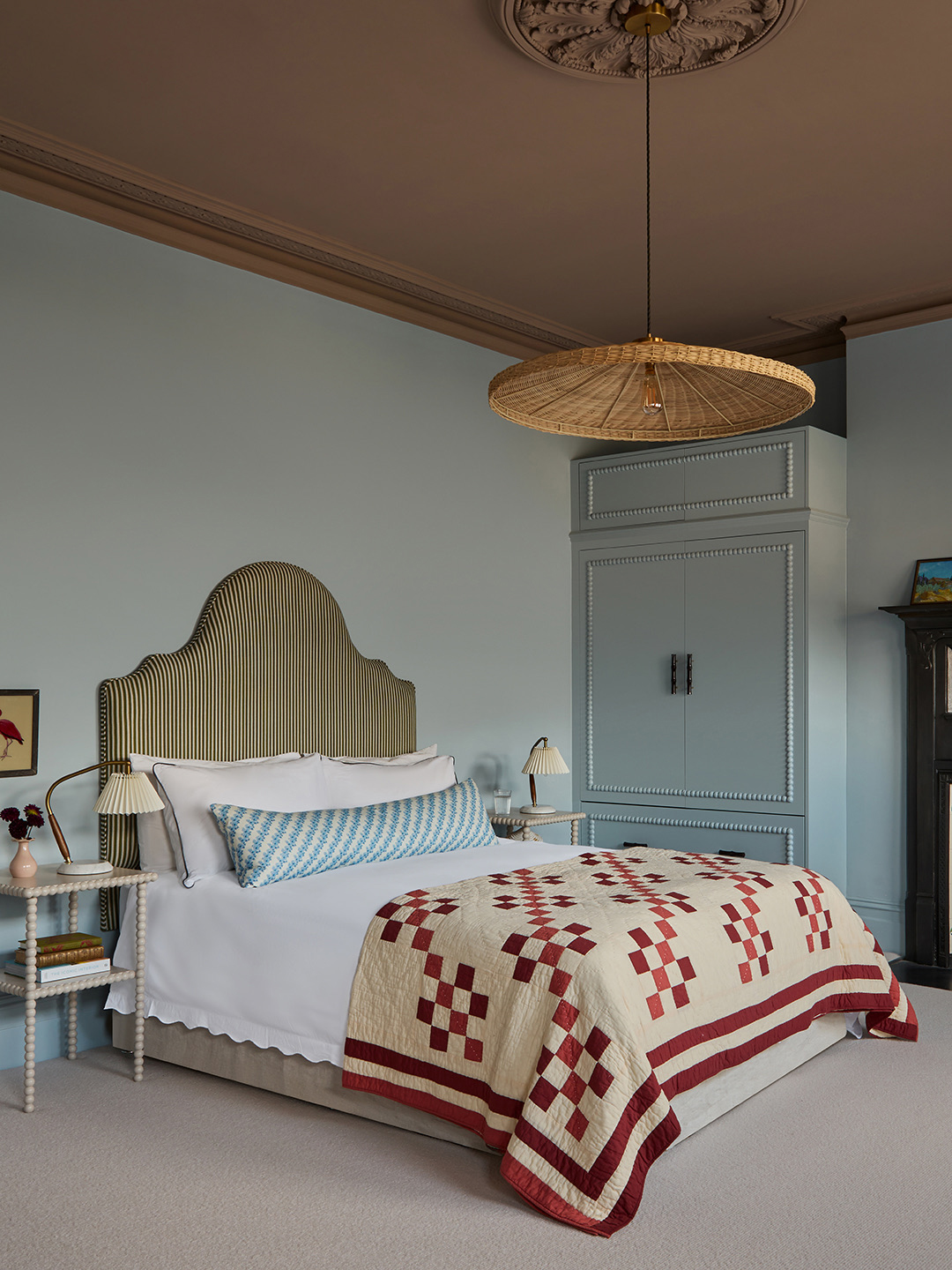
- Choose a wall that’s naturally a focal point, perhaps behind the bed.
- Ensure the adjacent walls are painted in a much lighter, complementary color to maximize the contrast and the receding effect.
- This method works particularly well in rectangular rooms where you want to emphasize length.
Beyond Color: Essential Design Techniques for a Bigger Bedroom Illusion
Paint color is incredibly powerful, but it’s not the only trick up our sleeve. Combining smart color choices with other design elements will amplify the feeling of spaciousness in your bedroom.
The Magic of Paint Sheen
The finish of your paint plays a significant role in how light is reflected and how large a room feels. Higher sheens reflect more light, further enhancing the illusion of space.
| Sheen Level | Reflectivity | Impact on Spaciousness | Ideal Use in Small Bedroom |
|---|---|---|---|
| Matte/Flat | Lowest | Absorbs light, creates depth, hides imperfections, cozy feel. Can make dark colors feel more expansive. | Walls (especially with dark colors for cave effect), ceilings. |
| Eggshell | Low-Medium | Slight sheen, durable, soft glow. Good balance for light colors to enhance openness without being too shiny. | Walls (most common for bedrooms). |
| Satin | Medium | Noticeable sheen, very durable, reflects more light than eggshell, creating a brighter, more expansive feel. | Walls (if you want more luminosity), trim, doors. |
| Semi-Gloss | High | Very reflective, brightens significantly. Can make surfaces appear further away, but too much sheen on all walls can feel overwhelming. | Trim, doors, accent furniture. |
Unifying Walls, Trim, and Ceiling
As discussed with the ‘cave effect’, painting walls, trim, and even the ceiling in the same color (or very similar tones) eliminates visual stop-and-start points. This creates a seamless flow that tricks the eye into perceiving an uninterrupted, larger space. White trim against colored walls, while classic, can visually “chop up” a small room. Consider painting trim in the same color as the walls for a modern, expansive look, or a slightly lighter/darker shade of the same hue.
Strategic Ceiling Colors
Your ceiling is often called the ‘fifth wall’ and it’s a powerful player in the illusion of space:
- Lighter than Walls: Painting the ceiling a lighter shade than your walls (often a crisp white) can make it feel higher and visually lift the room.
- Same as Walls: For the ‘cave effect’ with dark colors, painting the ceiling the same color as the walls blurs the boundaries upwards and outwards, creating that immersive, infinite feel.
- A Bold Accent (Limited Use): In very specific cases, painting a ceiling a dramatic, deep color can create a ‘jewelry box’ effect, drawing the eye up and creating unexpected depth. Use with caution in truly small spaces.
Lighting is Everything
Even the perfect paint color will fall flat without adequate lighting. Light literally illuminates the illusion of space.
- Maximize Natural Light: Keep window treatments light and sheer, or opt for blinds that disappear when open. Avoid heavy drapes that block precious daylight.
- Layered Artificial Light: Don’t rely on a single overhead fixture. Incorporate ambient lighting (recessed lights, ceiling fixtures), task lighting (bedside lamps), and accent lighting (sconces, picture lights) to eliminate dark corners and create depth.
- Up-lighting: Lamps that cast light upwards can make ceilings appear higher.
Declutter & Scale Furniture
Even the most perfectly painted room will feel small if it’s overflowing with stuff. Minimalism is your friend here.
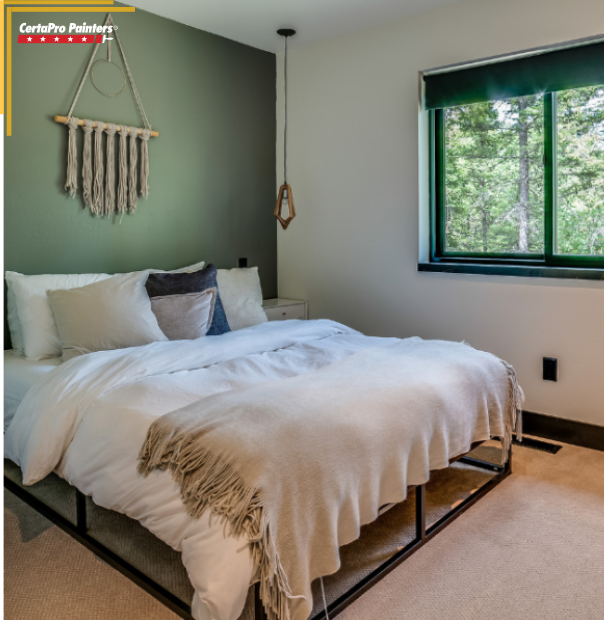
- Edit Ruthlessly: Remove anything that doesn’t serve a purpose or bring you joy.
- Multi-functional Pieces: Ottoman with storage, beds with built-in drawers.
- Leggy Furniture: Pieces with exposed legs allow light to pass underneath, making the floor visible and creating a sense of openness.
- Vertical Storage: Utilize wall space with floating shelves or tall, narrow bookcases to draw the eye up.
Mirrors and Reflective Surfaces
Mirrors are the ultimate visual expanders. They literally double your space and bounce light around. Strategically place a large mirror opposite a window or a focal point to maximize its effect. Other reflective surfaces like glass tabletops, metallic accents, or polished finishes can also contribute to a brighter, more open feel.
Your Bedroom’s Blueprint: Choosing the Right Colors for Your Space
While I’ve given you a wealth of options, the ‘perfect’ color for your bedroom depends on a few unique factors.
Room Orientation & Natural Light
- North-Facing Rooms: Tend to receive cooler, indirect light. Warm whites, creamy beiges, or grays with warm undertones can prevent them from feeling too cold.
- South-Facing Rooms: Bathed in warm, abundant light. Almost any color works here, but cool tones can help balance the warmth, or you can lean into the warmth with richer hues.
- East/West-Facing Rooms: Get strong light at different times of the day. Consider how the color will look in both morning and evening light.
- Minimal Light: For rooms with few or small windows, light-reflecting whites, pale blues, or very light greens are usually the safest bet to avoid a cave-like feel (unless you are intentionally going for the dark ‘cave effect’).
Existing Decor & Furniture
Your paint color needs to live harmoniously with your existing furniture, bedding, and accessories. Take samples home and see how they interact with your current pieces. Do you want the paint to blend in and create a calm backdrop, or do you want it to make a statement while still expanding the space?
Personal Preference & Mood
Ultimately, this is your bedroom, your sanctuary. What mood do you want to evoke? Calm and serene? Cozy and enveloping? Bright and energizing? Let your personal taste guide you, knowing that even bold choices can be used to make a room feel bigger if applied thoughtfully.
Testing, Testing, 1, 2, 3
I cannot stress this enough: always, always, always test your paint colors! Buy sample pots and paint large swatches (at least 2’x2′) on several walls in your bedroom. Observe them throughout the day in different lighting conditions – natural light, artificial light, morning, noon, and night. Colors look drastically different on a tiny chip than they do on an entire wall, and how they interact with your room’s unique lighting is paramount.
Common Mistakes to Avoid When Painting a Small Bedroom
Even with the best intentions, it’s easy to make mistakes that can undermine your goal of a larger-feeling room. Here are a few to steer clear of:
:max_bytes(150000):strip_icc()/southernliving-paintcolor-maggieclarke2-871ca5df136841b2a9da4a443163f1d0-b59cade194e1425696d26d64c3b550f0.jpg "Paint Colors To Make A Room Look Bigger: 12 Options")
Ignoring Undertones
A seemingly neutral gray can suddenly look purple or green in your specific lighting. A white can appear too yellow or too blue. Always be aware of the subtle undertones of a color, as they dramatically impact the final look and feel of the room.
Too Much Contrast
While an accent wall can work, using too many contrasting colors or creating sharp visual breaks (e.g., a bright white ceiling with dark walls, and a different color trim) can visually chop up a small space, making it feel smaller and more cluttered.
Overlooking Sheen
Choosing a flat finish for a light color might not give you the light-reflecting power you need. Conversely, using a high-gloss finish on all walls with a dark color without proper lighting can feel overwhelming rather than expansive.
Forgetting the Ceiling
The ceiling is not an afterthought! Treating it as just another surface, especially when going for a dark ‘cave effect’, or consciously choosing a lighter shade to lift it, is crucial for maximizing the illusion of space.
Ready to Transform Your Bedroom?
Making a bedroom look bigger with paint is less about magic and more about understanding a few key principles of color, light, and perception. Whether you lean towards the serene expansiveness of a pale blue, the crisp freshness of an off-white, or the dramatic depth of a unified dark hue, the power is in your hands to create a bedroom that feels perfectly proportioned and wonderfully spacious.
Don’t be afraid to experiment, trust your instincts, and always test your colors. With these strategies, you’re well on your way to a bedroom that feels open, airy, and utterly inviting. Happy painting!
”