Unpacking UK Painting Costs: How Much to Paint a Room Across the Pond?
So, you’re eyeing a property in the UK, or perhaps you’re just curious about renovation costs for a friend’s place over there. Whatever your reason for looking across the Atlantic, one question often pops up early in any home improvement project: “How much for painting a room in the UK?”
It’s a straightforward question with a less-than-straightforward answer. From the quaint cottages of Cornwall to the bustling flats of London, painting costs can swing wildly. But don’t worry, I’m here to give you the definitive lowdown. We’ll cut through the confusion, break down the numbers, and equip you with everything you need to understand UK room painting expenses, whether you’re considering a DIY weekend or hiring a professional.
Let’s get straight to the brass tacks.
The Quick Answer: Average Cost to Paint a Room in the UK
If you’re looking for a ballpark figure, a professional painter and decorator in the UK will typically charge anywhere from £300 to £1,200 to paint a standard-sized room. This broad range accounts for variables like room size, location, and the type of finish you’re after. For a more detailed initial glance, check out this table:
| Room Type | Estimated Size (Approx.) | Average Cost Range (Professional, Materials Included) | Typical Duration |
|---|---|---|---|
| Small Room (e.g., WC, small utility) | Up to 6-8m² | £250 – £450 | 0.5 – 1 day |
| Medium Room (e.g., Bedroom, Study) | 8-12m² | £400 – £800 | 1 – 2 days |
| Large Room (e.g., Living Room, Open-plan Kitchen/Diner) | 12m² – 20m²+ | £700 – £1,200+ | 2 – 3+ days |
Keep in mind, these are averages. The actual price you pay can be significantly higher or lower depending on a multitude of factors, which we’ll dive into next.
Deep Dive: Factors That Drive UK Room Painting Prices
Why such a wide range, you ask? Because painting isn’t just about slapping some colour on a wall. It’s a craft influenced by several key elements. Understanding these will help you gauge whether a quote is fair or if you’re being taken for a ride.
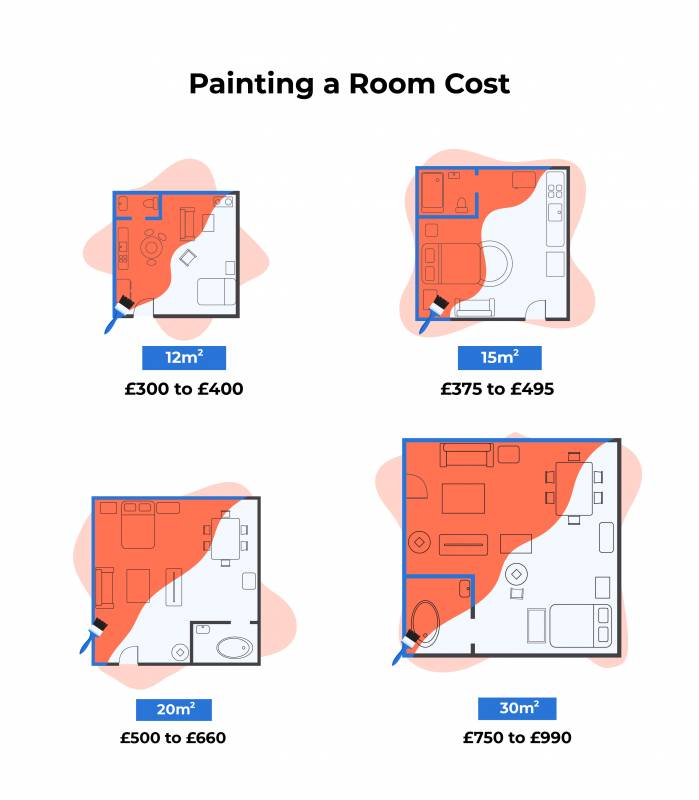
Room Size and Complexity
This is probably the most obvious factor. A bigger room means more surface area to paint, more paint needed, and more labour hours. But it’s not just about square meters on the floor plan; it’s about the entire painting surface.
- High Ceilings: Taller walls mean more painting, and potentially special equipment like scaffolding or taller ladders, increasing both material and labour costs.
- Intricate Features: Period properties in the UK often boast beautiful coving, cornices, dado rails, picture rails, and sash windows. These architectural details require meticulous cutting-in and more time.
- Number of Surfaces: Are you painting just the walls, or also the ceiling, skirting boards, door frames, and window frames? Each additional surface adds complexity and time.
| Room Size/Complexity | Description | Estimated Cost Impact |
|---|---|---|
| Small, Simple Room | Basic walls, ceiling, skirting, 1 door, 1 window. | Low (Base cost) |
| Medium, Standard Room | Average bedroom with walls, ceiling, woodwork, standard features. | Medium (+10-25% over small simple) |
| Large, Complex Room | High ceilings, coving, multiple windows/doors, accent walls, intricate features. | High (+30-60% over medium standard) |
Location, Location, Location: Regional Variations Across the UK
Just like real estate, painting costs are heavily influenced by geography. Labour rates, which make up a significant portion of the total cost, vary significantly across the UK.
- London and South East: Unsurprisingly, these areas command the highest prices due to higher living costs and demand. A painter’s day rate in London could be £300-£400, sometimes more.
- Major Cities (e.g., Manchester, Bristol, Edinburgh): Prices here will be higher than rural areas but generally lower than London, perhaps £250-£350 per day.
- Rural Areas and Smaller Towns: You’ll likely find the most competitive rates here, with day rates potentially starting from £180-£250.
| UK Region | Average Painter Day Rate | Typical Medium Room Cost Range |
|---|---|---|
| London / South East | £300 – £400+ | £600 – £1,200 |
| Other Major Cities (e.g., Manchester, Birmingham, Edinburgh) | £250 – £350 | £500 – £900 |
| Northern England, Scotland (outside cities), Wales | £180 – £280 | £400 – £700 |
The Quality of Paint and Materials
Paint isn’t just paint. The cost of materials can vary massively, impacting your overall budget. Think about it like this: are you buying an everyday supermarket brand or a premium artisan product?
- Budget Paints: Brands like Wickes own-label or some Dulux trade paints can be as low as £15-£25 for 2.5 litres. They might require more coats or offer less durability.
- Mid-Range Paints: Standard Dulux, Crown, or Leyland paints typically fall into the £30-£50 per 2.5 litres range. Good coverage and durability for most homes.
- Premium Paints: Farrow & Ball, Little Greene, or Annie Sloan paints are often coveted for their unique depth of colour and finish. Be prepared to pay £60-£100+ for 2.5 litres. While expensive, they often offer excellent coverage and a luxurious feel.
- Specialty Paints: Anti-mould, kitchen and bathroom specific, durable/washable, or low-VOC (Volatile Organic Compounds) paints also tend to be on the higher end due to their enhanced properties.
| Paint Type | Typical Price (2.5L / 5L) | Key Characteristics |
|---|---|---|
| Budget/Standard Emulsion | £15-£30 (2.5L), £25-£40 (5L) | Basic coverage, limited durability, good for rentals/quick refreshes. |
| Mid-Range Quality Paint | £30-£50 (2.5L), £45-£70 (5L) | Good coverage, decent durability, wide colour selection. |
| Premium/Designer Paint | £60-£100+ (2.5L), £90-£160+ (5L) | Superior depth of colour, excellent finish, often more durable, unique pigments. |
| Specialty Paints (e.g., Kitchen/Bathroom, Durable) | £40-£80+ (2.5L) | Specific properties like moisture resistance, increased scrubbability, low odour. |
Preparation is Key: Why Prep Work Matters (and Costs)
Any good decorator will tell you that 80% of a great paint job is in the prep. If the walls aren’t properly prepared, even the most expensive paint will look shoddy. Prep work includes:
- Filling Cracks and Holes: Minor imperfections need to be filled and sanded smooth.
- Stripping Wallpaper: A time-consuming and messy job that can add a significant chunk to your bill, potentially £100-£250+ per room depending on the wallpaper type and condition.
- Sanding and Cleaning: Ensuring a smooth, dust-free surface for paint adhesion.
- Priming/Undercoating: Essential for new plaster, very dark walls, or when switching from oil-based to water-based paints.
If your room is in poor condition, requiring extensive filling, sanding, or wallpaper removal, expect to pay more for the extra labour time.
Labour Costs: Understanding Painter & Decorator Day Rates
The cost of hiring a painter is primarily driven by their daily rate. As discussed, this varies regionally, but also by experience and reputation. A highly sought-after decorator with years of experience and a stellar portfolio will naturally charge more than a newly qualified painter.

Most independent painters will charge a day rate. For larger projects, they might provide a fixed quote after a site visit. Always ask for a detailed breakdown of labour and material costs.
Number of Colours and Finishes
Using multiple colours, especially for accent walls or intricate designs, increases the time needed for masking, cutting-in, and cleaning brushes. Similarly, different finishes (e.g., matte on walls, gloss on woodwork, silk on ceilings) each require care and separate application methods.
Stick to a single colour throughout the room, or just one accent wall, to keep costs down.
Condition of the Existing Walls
Are your walls freshly plastered, or are they peeling, flaky, or stained? Fresh plaster is a relatively easy surface to paint, requiring just a mist coat (diluted paint) as a primer before two full coats. Old, flaking paint, however, needs scraping, sanding, and potentially a stabilising primer, all of which add time and material costs.
Additional Services & Hidden Costs
Sometimes, what seems like a simple paint job can uncover other needs. Always clarify what’s included in your quote:
- Furniture Moving: Will the painter move furniture, or do you need to clear the room yourself?
- Floor and Furniture Protection: This should always be included, but confirm it.
- Minor Repairs: Beyond filling small holes, larger plaster repairs or woodwork fixes might incur additional charges.
- Waste Disposal: Confirm who is responsible for disposing of old paint tins, dust sheets, and other waste.
DIY vs. Professional: A Cost and Effort Comparison for UK Painting
The eternal question: should you tackle it yourself or call in the pros? There are clear pros and cons for both, especially when looking at the costs in the UK.
The DIY Route: Saving Money, Spending Time
Opting to paint a room yourself can save you significantly on labour costs, which, as we’ve seen, are a major component of the total price. For a small to medium room, you might only spend £50-£150 on materials (paint, brushes, rollers, masking tape, dust sheets, filler).
Pros:
- Significant Cost Savings: You eliminate professional labour fees entirely.
- Flexibility: Work at your own pace, on your own schedule.
- Personal Satisfaction: The pride of a job well done.
Cons:
- Time and Effort: Painting is physically demanding and time-consuming, especially with proper prep.
- Skill Level: A professional finish requires technique, patience, and attention to detail. Cutting-in neatly, avoiding drips, and achieving a smooth, even coat can be harder than it looks.
- Tools & Materials: You’ll need to purchase all equipment, which can add up if you don’t already own them.
- Potential Mistakes: Poor prep or application can lead to a less durable, aesthetically unpleasing finish, potentially requiring a costly redo.
Hiring a Professional Painter in the UK: What You Get for Your Money
While more expensive upfront, hiring a professional often pays dividends in quality and peace of mind.
Pros:
- Quality Finish: Professionals deliver crisp lines, smooth finishes, and consistent colour.
- Speed and Efficiency: They can complete jobs much faster than a DIYer, often within a day or two for a single room.
- Experience and Knowledge: They know the best products, techniques, and how to handle unexpected issues.
- Less Stress and Effort for You: No messy clean-up, no backaches.
- Guaranteed Work: Reputable painters often offer guarantees on their workmanship.
Cons:
- Higher Upfront Cost: The main deterrent for many.
- Scheduling: You’re tied to their availability.
| Room Size | Estimated DIY Cost (Materials Only) | Estimated Professional Cost (Labour & Materials) | DIY Time (Approx.) | Pro Time (Approx.) |
|---|---|---|---|---|
| Small Room | £50 – £100 | £250 – £450 | 1-2 days | 0.5-1 day |
| Medium Room | £100 – £150 | £400 – £800 | 2-3 days | 1-2 days |
| Large Room | £150 – £250+ | £700 – £1,200+ | 3-5 days | 2-3 days |
A Detailed Breakdown: What’s Included in a Painting Quote?
When you receive a quote from a UK painter and decorator, it should ideally be comprehensive. Here’s what you should expect to be included:
- Surface Preparation: This is crucial. It covers cleaning walls, filling minor cracks and holes, sanding smooth, and sometimes stripping old wallpaper (though this might be an extra line item for extensive work).
- Priming: Application of appropriate primer or mist coat, especially on new plaster or difficult surfaces.
- Number of Coats: Typically two coats of emulsion for walls and ceilings, and one or two coats for woodwork (after appropriate undercoating).
- Paint Type: The quote should specify the type and brand of paint to be used. Sometimes they’ll include paint within their price, other times they’ll ask you to supply it.
- Protection: Thorough masking of all non-painted surfaces (windows, doors, electrical sockets) and protection of floors and furniture with dust sheets.
- Clean-up: At the end of the job, the site should be left tidy, with all equipment removed and surfaces wiped down.
- Waste Disposal: Confirmation of who handles the disposal of empty paint cans and other waste.
Always ask for a written quote that clearly itemises these points. Avoid verbal agreements for anything more than a small, simple job.
Smart Strategies to Save Money on Your UK Painting Project
Even if you decide to hire a professional, there are ways to keep the costs manageable:
- Get Multiple Quotes: This is paramount. Contact at least three local painters and decorators in the UK. This gives you a good range and helps you understand what’s considered a fair price in your area.
- Do the Prep Work Yourself: If you’re willing to put in some elbow grease, you can save a considerable amount. Clear the room, move furniture, remove old wallpaper, and do basic filling and sanding. Just ensure you do a good job, as poor prep can hinder the painter’s work and still incur charges.
- Buy Your Own Paint: Some decorators prefer to source their own paint (often getting trade discounts), but others are happy for you to supply it. If you can find a good deal on your desired brand, this can save you money, especially on premium paints. Discuss this with your painter beforehand.
- Paint During Off-Peak Seasons: Summer is usually the busiest time for decorators. You might get a better rate during quieter periods like autumn or winter (avoiding the Christmas rush).
- Negotiate for Bundled Services: If you have multiple rooms or other decorating jobs (e.g., wallpapering, minor plastering), ask for a reduced rate for booking several services together.
- Simplify the Job: Stick to one or two colours, avoid intricate feature walls, and choose standard emulsion finishes to reduce complexity and time.
What to Expect During the Painting Process
Knowing the typical flow can help you prepare and manage your expectations:
- Initial Consultation: The painter visits your home to assess the room(s), discuss your requirements (colours, finishes), and note any specific challenges (e.g., extensive prep needed).
- Quoting: You’ll receive a detailed, written quote outlining the scope of work, materials included, timescale, and total cost.
- Preparation Phase: Once the quote is accepted, the painter will begin the crucial prep work – clearing the room (if not done by you), protecting surfaces, filling, sanding, and priming. This can take up to half the total project time.
- Painting Phase: The actual application of paint, usually starting with ceilings, then walls, and finally woodwork. Multiple coats will be applied with drying time in between.
- Inspection and Clean-up: Once all coats are dry, the painter will typically do a final check, touch up any areas, remove masking tape and dust sheets, and clean up. You should also inspect the work to ensure you’re happy with the finish.
Is Repainting a Room in the UK a Good Investment?
Absolutely! Repainting a room offers a fantastic return on investment, both aesthetically and financially, whether you’re living in the property or preparing it for sale in the UK.
- Enhanced Aesthetics: A fresh coat of paint instantly brightens a room, makes it feel cleaner, and allows you to update the style.
- Increased Property Value: For sellers, a well-painted home is more appealing to potential buyers, often leading to quicker sales and potentially a better price. Neutral colours are usually recommended for this purpose.
- Protection: Paint protects your walls and woodwork from wear and tear, moisture, and even some environmental damage, extending the life of your surfaces.
Final Brushstrokes: Making Your UK Painting Decision
Deciding how much to spend on painting a room in the UK comes down to your budget, time, and desired finish. While DIY can save you money, the quality and speed of a professional are often worth the investment, especially for significant rooms or if you value your time.

Always do your research, get multiple quotes, and understand exactly what you’re paying for. With careful planning, you can achieve a beautifully refreshed room without breaking the bank, leaving you to enjoy your updated space – whether it’s for you or for the next owner across the pond.
Frequently Asked Questions
What is the average cost to paint a single room in the UK?
The average cost to professionally paint a standard-sized room (e.g., a bedroom) in the UK ranges from £400 to £800. This includes labour and materials, but costs can vary significantly based on room size, complexity, location, and paint quality.
How long does it typically take a professional to paint a room in the UK?
A professional painter can usually complete a standard medium-sized room (walls, ceiling, and woodwork) in the UK within 1 to 2 days. Smaller rooms might take less than a day, while larger or more complex rooms could require 2-3 days or more, depending on prep work needed.
Is it cheaper to buy my own paint for a professional painter in the UK?
Sometimes. While professional painters often get trade discounts on paint, you might find a good deal on your preferred brand during a sale. Discuss this with your painter beforehand; some prefer to supply their own paint to ensure quality and compatibility, while others are happy for you to provide it. Always compare prices.
Do UK painters charge more in London compared to other regions?
Yes, absolutely. Painting costs, especially labour rates, are significantly higher in London and the South East compared to other regions of the UK. A painter’s daily rate in London could be £300-£400+, whereas in northern England or Wales, it might be £180-£280.
What factors increase the cost of painting a room in the UK?
Several factors drive up costs, including larger room size, high ceilings, intricate architectural features (coving, cornices), extensive preparation work (e.g., wallpaper stripping, significant plaster repair), using premium or specialty paints, choosing multiple colours, and hiring a painter in a high-cost area like London.
How can I save money on painting a room in the UK?
To save money, consider doing the preparation work yourself (clearing the room, basic filling, sanding), getting multiple quotes from different painters, supplying your own paint (if your painter allows), opting for a single colour and standard finishes, and scheduling your project during off-peak seasons (autumn/winter, excluding holidays).
What’s included in a typical UK painting quote?
A comprehensive UK painting quote should include surface preparation (cleaning, minor filling/sanding), priming (if needed), application of specified paint coats for walls, ceilings, and woodwork, protection of non-painted surfaces and furniture, and basic clean-up. Always ensure the quote is written and clearly itemises these services.