How to Paint a Room to Make It Look Bigger: Your Ultimate Guide to Creating Expansive Spaces
Ever walked into a room and felt like the walls were closing in? Or perhaps you’ve longed for that spacious, airy feeling but are stuck with a smaller footprint? You’re not alone. Many homeowners grapple with compact rooms, but here’s a secret: you don’t need a sledgehammer to expand your living space. You just need a paintbrush and the right strategy.
Painting a room isn’t just about changing its color; it’s about manipulating perception. With a few clever techniques, you can trick the eye, blur boundaries, and introduce a sense of depth and openness that makes even the coziest room feel dramatically larger. Ready to transform your cramped quarters into an expansive sanctuary? Let’s dive in.
The Core Principle: Harnessing Light and Illusion
At its heart, making a room look bigger with paint is about leveraging two powerful forces: light reflection and optical illusion. Light colors reflect more light, instantly brightening a space and pushing walls visually further apart. Optical illusions, on the other hand, play tricks on your brain, making ceilings seem higher or walls appear deeper than they are.
Think of yourself as a magician, and your paint cans as your tools. By understanding how certain colors interact with light and how patterns influence perception, you can create an illusion of space that’s both effective and beautiful. Forget knocking down walls; let’s master the art of paint-based expansion.
The Foundation: Picking Your Expansive Color Palette
Choosing the right colors is the single most impactful step in making a room feel larger. It’s not just about ‘light colors,’ it’s about the *right light colors and how they interact.
Embrace Light, Cool Hues
When it comes to creating spaciousness, light and cool colors are your best friends. These hues tend to recede visually, making walls appear further away than they actually are. They also reflect maximum light, brightening the room and erasing shadows that can make a space feel enclosed.
- Whites and Off-Whites: These are the classic choices for a reason. Crisp whites like ‘Chantilly Lace’ or ‘Simply White’ instantly bounce light around. For a softer, less stark feel, consider off-whites with a hint of gray, beige, or greige, like ‘White Dove’ or ‘Swiss Coffee.’
- Pale Blues: Evoke the sky and ocean, inherently suggesting openness and calm. Think ‘Palladian Blue’ or a serene ‘Sea Salt.’
- Light Grays: Modern and versatile, light grays with cool undertones (blue or green) can create a sophisticated, airy backdrop. ‘Gray Owl’ or ‘Revere Pewter’ (a greige that leans cool) are popular choices.
- Soft Greens: Nature-inspired greens like ‘Healing Aloe’ or ‘Celery Salt’ bring tranquility and a refreshing sense of space.
- Delicate Lavenders/Pinks: Very pale lavenders or blush pinks can add a touch of warmth while still feeling light and ethereal.
Understanding Undertones
This is where many DIY painters go wrong. A ‘light gray’ isn’t just a light gray. It has an undertone that can dramatically alter its effect. For spaciousness, favor colors with cool undertones (blue, green, purple). These undertones enhance the receding effect of the color. Warm undertones (yellow, orange, red) in light colors can still work, but they tend to make walls feel a little closer or cozier.
When picking swatches, view them in your room’s natural and artificial light at different times of day. A color that looks cool and airy in the store might reveal a peachy undertone under your warm evening lamps. Trust your eyes in your specific space.
| Color Family | Ideal Undertone | Why It Works for Spaciousness | Example Shade(s) |
|---|---|---|---|
| Whites | Cool (Gray, Blue) | Maximum light reflection, creates seamless boundaries. | Benjamin Moore ‘Chantilly Lace’, Sherwin-Williams ‘Pure White’ |
| Grays | Blue, Green | Receding effect, sophisticated, airy feel. | Benjamin Moore ‘Gray Owl’, Farrow & Ball ‘Skimming Stone’ |
| Blues | Green, Gray | Evokes sky/water, inherently open and calming. | Sherwin-Williams ‘Sea Salt’, Benjamin Moore ‘Palladian Blue’ |
| Greens | Blue, Gray | Natural, refreshing, serene, adds depth. | Benjamin Moore ‘Healing Aloe’, Clare Paint ‘Chill’ |
The Power of Monochromatic or Tonal Schemes
One of the most effective ways to make a small room feel larger is to create a monochromatic or tonal color scheme. This means using varying shades, tints, and tones of a single color. When walls, trim, and even some furniture blend seamlessly, the eye glides across the space without interruption, creating an illusion of expansive continuity.
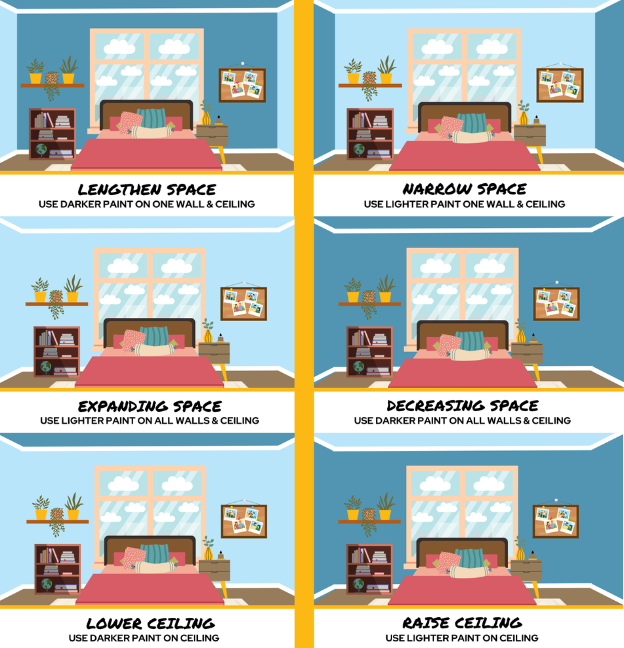
For example, if you choose a very light blue-gray for your walls, paint your trim a slightly lighter tint of that same color, and your ceiling an even lighter, almost white version. This subtle shift in tone creates depth without introducing harsh lines that chop up the space.
Mastering Paint Placement for Optical Illusions
It’s not just what color you paint, but where you paint it. Strategic application can dramatically alter a room’s perceived dimensions.
Paint Walls and Ceiling the Same Light Color
This is a go-to technique for small rooms, especially those with lower ceilings. By painting the walls and ceiling the exact same light color (usually a crisp white or a very pale, cool hue), you blur the boundary between the vertical and horizontal planes. The eye struggles to find a stopping point, creating a seamless, uninterrupted expanse that feels taller and more open.
How to do it: Use the same paint color and sheen for both. This creates a soft, continuous envelopment. This technique is particularly effective in bathrooms, hallways, or small bedrooms where you want to maximize the feeling of airiness.
Lighter Ceiling, Mid-Tone Walls, Darker Floor (or vice versa)
This classic interior design principle is often called the “sky effect” or “landscape effect.”
- Lighter Ceiling, Mid-Tone Walls, Darker Floor: Mimics the natural world – light sky, mid-tone horizon, darker ground. This grounding effect makes the room feel stable, while the light ceiling visually lifts the height.
- Darker Ceiling, Lighter Walls (Use with extreme caution): This is a bolder, more advanced technique. Painting the ceiling a slightly darker, cooler shade than the walls can create a sense of infinite depth above you, almost like looking into a night sky. However, if done incorrectly or with too dark a color, it can make the ceiling feel oppressive and lower. Reserve this for rooms with very high ceilings or when trying to create a specific moody, enveloping effect rather than pure expansion.
Painting Trim and Doors to Expand Space
Don’t underestimate the impact of your trim and doors.
- Match Trim to Walls: For maximum spaciousness and a seamless look, paint your trim (baseboards, crown molding, window frames) the exact same color as your walls. This eliminates visual breaks, allowing the eye to flow uninterrupted around the room, making it feel larger.
- Paint Doors the Same Color as Walls: Similar to trim, painting interior doors the same color as the surrounding wall minimizes their presence. This is especially effective for closet doors or doors that break up a continuous wall, making them ‘disappear’ into the background.
- Subtle Variation: If you desire a bit of contrast, use a slightly lighter shade of your wall color for the trim, or vary the sheen (e.g., matte walls, satin trim in the same color). Avoid stark white trim with significantly darker walls in small rooms, as this creates strong lines that visually shrink the space.
Strategic Accent Walls for Depth
An accent wall isn’t just for adding visual interest; it can also be a powerful tool for manipulating perceived space. The trick is knowing which wall to accent.
- Pushing Back the Farthest Wall: In a rectangular room, painting the farthest short wall a slightly darker or cooler shade than the other walls can create an illusion of depth, making that wall appear to recede. This can make a square room feel more rectangular or add interest to a long, narrow space by giving it a sense of perspective.
- Widen a Narrow Room: If you have a very long, narrow room, painting the two shorter opposing walls a slightly darker or warmer tone than the longer walls can make those shorter walls visually ‘advance,’ making the room feel wider and less like a bowling alley.
Crucial Tip: Choose an accent color that is still part of your overall expansive palette. Avoid jarring, overly dark, or warm colors that will make the wall feel like it’s looming.
Vertical Stripes for Height, Horizontal for Width (Use with Caution)
Stripes are classic optical illusions, but they require careful application in small spaces.
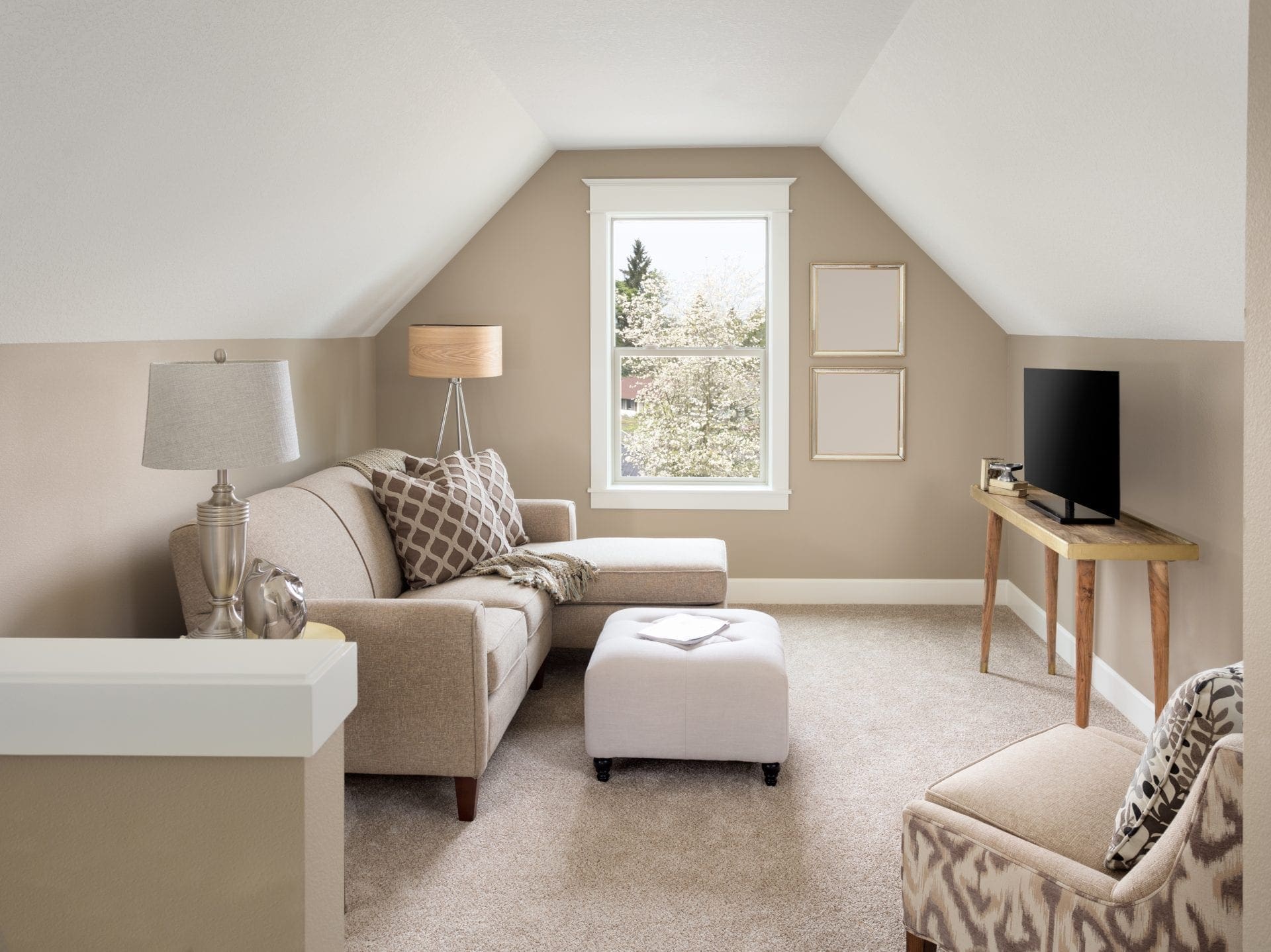
- Vertical Stripes for Height: Can make ceilings feel taller, drawing the eye upwards. For an expanding effect, use subtle, tone-on-tone stripes (e.g., a matte finish stripe alternating with a satin finish stripe of the same color, or two very close shades of the same light color). Avoid bold, high-contrast vertical stripes, which can feel busy and overwhelm a small space.
- Horizontal Stripes for Width: Can make a room feel wider, but also shorter. Again, use subtle, light-on-light horizontal stripes. This technique is best reserved for rooms that are already quite tall but feel too narrow.
In most small room scenarios, the seamlessness of solid light colors or monochromatic schemes will be more effective than stripes.
The Unsung Hero: Paint Finish and Sheen
The finish, or sheen, of your paint plays a significant role in how light interacts with your walls, and thus, how spacious a room feels.
High Sheen for Light Reflection
Generally, the higher the sheen, the more light the paint will reflect. This makes satin, semi-gloss, and gloss finishes excellent choices for maximizing brightness and creating an expansive feel.
- Satin: Offers a soft, luminous glow without being overly reflective. It’s durable and easy to clean, making it a popular choice for walls in busy areas.
- Semi-Gloss: Bounces even more light, creating a crisper, more reflective surface. Often used on trim, doors, and cabinets, but can be used on walls for a high-impact, reflective effect. Be aware it highlights imperfections more.
- Gloss: The most reflective finish, almost mirror-like. Best reserved for specific architectural features, doors, or furniture in a small room, as its high reflectivity can be overwhelming on all walls.
Matte Finishes for Subtle Depth
While high sheens reflect light, a matte or flat finish absorbs it. Does this mean you should avoid them in small rooms? Not necessarily.
A very light, cool matte paint can create a soft, velvety depth that can still feel open, especially if the room has ample natural light. The lack of shine can make walls feel like they recede further. However, matte finishes are less durable and harder to clean, so consider traffic and use.
The best approach is often a combination: matte or eggshell on walls for a sophisticated softness, and a higher sheen (satin or semi-gloss) on trim to add subtle definition and light bounce without breaking up the visual flow.
| Paint Sheen | Reflectivity for Space | Pros for Small Rooms | Cons for Small Rooms | Best Use Case |
|---|---|---|---|---|
| Flat/Matte | Low | Soft, velvety depth; can make very light colors recede. | Absorbs light; less durable; highlights marks. | Low-traffic areas, ceilings, very light colors. |
| Eggshell/Satin | Medium | Good light reflection; soft glow. | Can show some imperfections; less durable than higher sheens. | Most wall surfaces, balanced approach. |
| Semi-Gloss | High | Excellent light reflection; durable, easy to clean. | Highlights all imperfections; can be too shiny on large walls. | Trim, doors, cabinets, high-moisture areas. |
| High-Gloss | Very High | Mirror-like reflection; dramatic effect. | Exaggerates every flaw; can be overwhelming. | Accent furniture, small architectural details, highly stylized spaces. |
Beyond Paint: Complementary Design Elements
While paint is your primary tool, remember that it works best in concert with other design choices. To truly maximize the feeling of space, consider these complementary elements:
- Maximize Natural Light: Keep windows unobstructed. Opt for sheer curtains or blinds that can be fully opened. The more natural light, the brighter and more expansive the room will feel.
- Layered Artificial Lighting: Don’t rely on a single overhead light. Incorporate ambient (general), task (for activities), and accent (to highlight features) lighting. Well-lit corners eliminate shadows that make a room feel smaller.
- Strategic Mirror Placement: A large mirror placed opposite a window or a key architectural feature will reflect light and views, literally doubling the perceived size of the room.
- Minimalist Decor: Clutter is the enemy of spaciousness. Keep decor simple, purposeful, and decluttered. Open shelving rather than heavy cabinets, and fewer, larger pieces of art rather than many small ones.
- Low-Profile Furniture: Choose furniture with visible legs and lower profiles. This allows more floor space to be seen, making the room feel more open.
- Consider Glass and Acrylic: Furniture pieces made of glass or clear acrylic ‘disappear’ into the room, taking up less visual space.
Before You Dip That Brush: Essential Prep Tips
Even the most brilliant paint strategy will fall flat without proper preparation. Don’t skip these crucial steps:
- Clean Surfaces Thoroughly: Dust, grime, and grease prevent paint from adhering properly. Wash walls with a mild cleaner and allow them to dry completely.
- Repair Imperfections: Spackle nail holes, sand rough spots, and repair any cracks. Higher sheen paints will highlight every flaw, so meticulous prep is key.
- Prime Walls: Especially important if you’re going from a dark color to a light one, or if you have new drywall. Primer ensures even color, better adhesion, and prevents stains from bleeding through. Tinting your primer to a shade lighter than your topcoat can save you a coat of paint.
- Test Swatches: Buy sample pots! Paint a good-sized swatch (at least 2’x2′) on several walls and observe them throughout the day. Light changes, and so will the perceived color.
- Protect Your Space: Use painter’s tape on trim and drop cloths on floors and furniture. A clean job is a happy job.
Common Mistakes That Shrink Your Room (and How to Avoid Them)
Even with the best intentions, it’s easy to make choices that inadvertently make your small room feel even smaller. Watch out for these pitfalls:
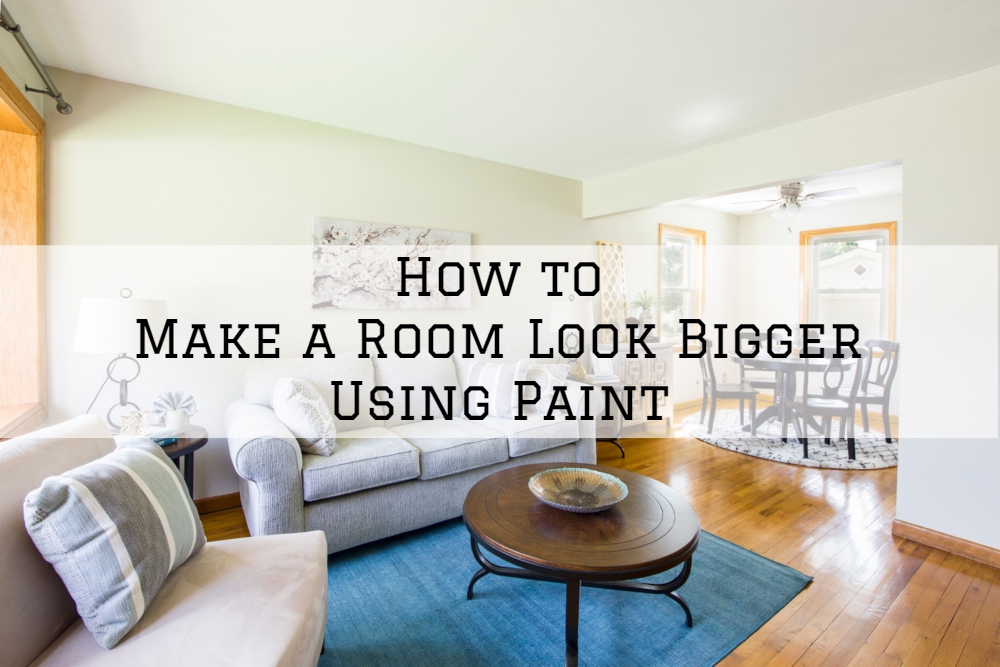
- Too Many Dark, Warm Colors: While a single dark accent wall can create depth, painting all walls in a dark or overly warm, rich color will absorb light and make the room feel like a cave.
- Contrasting Trim That Chops Up Space: Painting trim a stark white against a medium-tone wall in a small room creates strong horizontal and vertical lines that visually break up the wall, making it feel smaller.
- Ignoring the Ceiling: A dark or incorrectly colored ceiling can visually lower the room, negating any efforts to expand the walls. Always treat the ceiling as an extension of your spaciousness strategy.
- Over-Accessorizing: Even with light walls, too many small knick-knacks, busy patterns, or large, heavy curtains can clutter the visual field and shrink the room.
- Poor Lighting: A dimly lit room, regardless of paint color, will always feel smaller and more enclosed.
Painting a room to make it look bigger is a powerful design trick that requires a thoughtful approach. By understanding the psychology of color, the magic of light, and the impact of strategic application, you can transform your most compact spaces into airy, inviting havens. So, grab your brushes, choose your expansive palette, and get ready to witness the incredible illusion of more space. Happy painting!
”
}
{ “content”: “
How to Paint a Room to Make It Look Bigger: Your Ultimate Guide to Creating Expansive Spaces
Ever walked into a room and felt like the walls were closing in? Or perhaps you’ve longed for that spacious, airy feeling but are stuck with a smaller footprint? You’re not alone. Many homeowners grapple with compact rooms, but here’s a secret: you don’t need a sledgehammer to expand your living space. You just need a paintbrush and the right strategy.
Painting a room isn’t just about changing its color; it’s about manipulating perception. With a few clever techniques, you can trick the eye, blur boundaries, and introduce a sense of depth and openness that makes even the coziest room feel dramatically larger. Ready to transform your cramped quarters into an expansive sanctuary? Let’s dive in.
The Core Principle: Harnessing Light and Illusion
At its heart, making a room look bigger with paint is about leveraging two powerful forces: light reflection and optical illusion. Light colors reflect more light, instantly brightening a space and pushing walls visually further apart. Optical illusions, on the other hand, play tricks on your brain, making ceilings seem higher or walls appear deeper than they are.
Think of yourself as a magician, and your paint cans as your tools. By understanding how certain colors interact with light and how patterns influence perception, you can create an illusion of space that’s both effective and beautiful. Forget knocking down walls; let’s master the art of paint-based expansion.
The Foundation: Picking Your Expansive Color Palette
Choosing the right colors is the single most impactful step in making a room feel larger. It’s not just about ‘light colors,’ it’s about the right light colors and how they interact.
Embrace Light, Cool Hues
When it comes to creating spaciousness, light and cool colors are your best friends. These hues tend to recede visually, making walls appear further away than they actually are. They also reflect maximum light, brightening the room and erasing shadows that can make a space feel enclosed.
- Whites and Off-Whites: These are the classic choices for a reason. Crisp whites like ‘Chantilly Lace’ or ‘Simply White’ instantly bounce light around. For a softer, less stark feel, consider off-whites with a hint of gray, beige, or greige, like ‘White Dove’ or ‘Swiss Coffee.’
- Pale Blues: Evoke the sky and ocean, inherently suggesting openness and calm. Think ‘Palladian Blue’ or a serene ‘Sea Salt.’
- Light Grays: Modern and versatile, light grays with cool undertones (blue or green) can create a sophisticated, airy backdrop. ‘Gray Owl’ or ‘Revere Pewter’ (a greige that leans cool) are popular choices.
- Soft Greens: Nature-inspired greens like ‘Healing Aloe’ or ‘Celery Salt’ bring tranquility and a refreshing sense of space.
- Delicate Lavenders/Pinks: Very pale lavenders or blush pinks can add a touch of warmth while still feeling light and ethereal.
Understanding Undertones
This is where many DIY painters go wrong. A ‘light gray’ isn’t just a light gray. It has an undertone that can dramatically alter its effect. For spaciousness, favor colors with cool undertones (blue, green, purple). These undertones enhance the receding effect of the color. Warm undertones (yellow, orange, red) in light colors can still work, but they tend to make walls feel a little closer or cozier.
When picking swatches, view them in your room’s natural and artificial light at different times of day. A color that looks cool and airy in the store might reveal a peachy undertone under your warm evening lamps. Trust your eyes in your specific space.
| Color Family | Ideal Undertone | Why It Works for Spaciousness | Example Shade(s) |
|---|---|---|---|
| Whites | Cool (Gray, Blue) | Maximum light reflection, creates seamless boundaries. | Benjamin Moore ‘Chantilly Lace’, Sherwin-Williams ‘Pure White’ |
| Grays | Blue, Green | Receding effect, sophisticated, airy feel. | Benjamin Moore ‘Gray Owl’, Farrow & Ball ‘Skimming Stone’ |
| Blues | Green, Gray | Evokes sky/water, inherently open and calming. | Sherwin-Williams ‘Sea Salt’, Benjamin Moore ‘Palladian Blue’ |
| Greens | Blue, Gray | Natural, refreshing, serene, adds depth. | Benjamin Moore ‘Healing Aloe’, Clare Paint ‘Chill’ |
The Power of Monochromatic or Tonal Schemes
One of the most effective ways to make a small room feel larger is to create a monochromatic or tonal color scheme. This means using varying shades, tints, and tones of a single color. When walls, trim, and even some furniture blend seamlessly, the eye glides across the space without interruption, creating an illusion of expansive continuity.
For example, if you choose a very light blue-gray for your walls, paint your trim a slightly lighter tint of that same color, and your ceiling an even lighter, almost white version. This subtle shift in tone creates depth without introducing harsh lines that chop up the space.
Mastering Paint Placement for Optical Illusions
It’s not just what color you paint, but where* you paint it. Strategic application can dramatically alter a room’s perceived dimensions.
Paint Walls and Ceiling the Same Light Color
This is a go-to technique for small rooms, especially those with lower ceilings. By painting the walls and ceiling the exact same light color (usually a crisp white or a very pale, cool hue), you blur the boundary between the vertical and horizontal planes. The eye struggles to find a stopping point, creating a seamless, uninterrupted expanse that feels taller and more open.
How to do it: Use the same paint color and sheen for both. This creates a soft, continuous envelopment. This technique is particularly effective in bathrooms, hallways, or small bedrooms where you want to maximize the feeling of airiness.
Lighter Ceiling, Mid-Tone Walls, Darker Floor (or vice versa)
This classic interior design principle is often called the “sky effect” or “landscape effect.”
- Lighter Ceiling, Mid-Tone Walls, Darker Floor: Mimics the natural world – light sky, mid-tone horizon, darker ground. This grounding effect makes the room feel stable, while the light ceiling visually lifts the height.
- Darker Ceiling, Lighter Walls (Use with extreme caution): This is a bolder, more advanced technique. Painting the ceiling a slightly darker, cooler shade than the walls can create a sense of infinite depth above you, almost like looking into a night sky. However, if done incorrectly or with too dark a color, it can make the ceiling feel oppressive and lower. Reserve this for rooms with very high ceilings or when trying to create a specific moody, enveloping effect rather than pure expansion.
Painting Trim and Doors to Expand Space
Don’t underestimate the impact of your trim and doors.
- Match Trim to Walls: For maximum spaciousness and a seamless look, paint your trim (baseboards, crown molding, window frames) the exact same color as your walls. This eliminates visual breaks, allowing the eye to flow uninterrupted around the room, making it feel larger.
- Paint Doors the Same Color as Walls: Similar to trim, painting interior doors the same color as the surrounding wall minimizes their presence. This is especially effective for closet doors or doors that break up a continuous wall, making them ‘disappear’ into the background.
- Subtle Variation: If you desire a bit of contrast, use a slightly lighter shade of your wall color for the trim, or vary the sheen (e.g., matte walls, satin trim in the same color). Avoid stark white trim with significantly darker walls in small rooms, as this creates strong lines that visually shrink the space.
Strategic Accent Walls for Depth
An accent wall isn’t just for adding visual interest; it can also be a powerful tool for manipulating perceived space. The trick is knowing which wall to accent.
- Pushing Back the Farthest Wall: In a rectangular room, painting the farthest short wall a slightly darker or cooler shade than the other walls can create an illusion of depth, making that wall appear to recede. This can make a square room feel more rectangular or add interest to a long, narrow space by giving it a sense of perspective.
- Widen a Narrow Room: If you have a very long, narrow room, painting the two shorter opposing walls a slightly darker or warmer tone than the longer walls can make those shorter walls visually ‘advance,’ making the room feel wider and less like a bowling alley.
Crucial Tip: Choose an accent color that is still part of your overall expansive palette. Avoid jarring, overly dark, or warm colors that will make the wall feel like it’s looming.
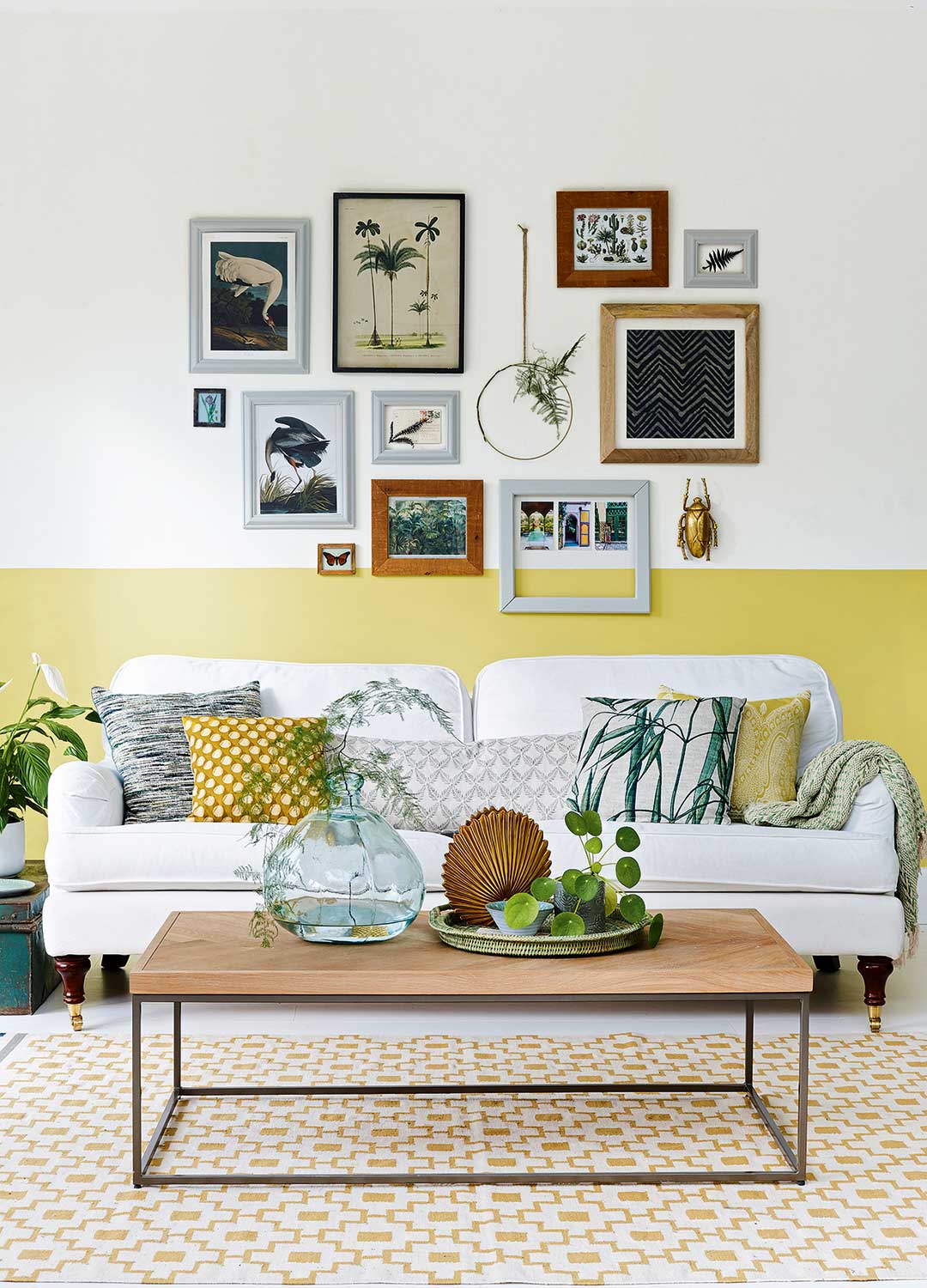
Vertical Stripes for Height, Horizontal for Width (Use with Caution)
Stripes are classic optical illusions, but they require careful application in small spaces.
- Vertical Stripes for Height: Can make ceilings feel taller, drawing the eye upwards. For an expanding effect, use subtle, tone-on-tone stripes (e.g., a matte finish stripe alternating with a satin finish stripe of the same color, or two very close shades of the same light color). Avoid bold, high-contrast vertical stripes, which can feel busy and overwhelm a small space.
- Horizontal Stripes for Width: Can make a room feel wider, but also shorter. Again, use subtle, light-on-light horizontal stripes. This technique is best reserved for rooms that are already quite tall but feel too narrow.
In most small room scenarios, the seamlessness of solid light colors or monochromatic schemes will be more effective than stripes.
The Unsung Hero: Paint Finish and Sheen
The finish, or sheen, of your paint plays a significant role in how light interacts with your walls, and thus, how spacious a room feels.
High Sheen for Light Reflection
Generally, the higher the sheen, the more light the paint will reflect. This makes satin, semi-gloss, and gloss finishes excellent choices for maximizing brightness and creating an expansive feel.
- Satin: Offers a soft, luminous glow without being overly reflective. It’s durable and easy to clean, making it a popular choice for walls in busy areas.
- Semi-Gloss: Bounces even more light, creating a crisper, more reflective surface. Often used on trim, doors, and cabinets, but can be used on walls for a high-impact, reflective effect. Be aware it highlights imperfections more.
- Gloss: The most reflective finish, almost mirror-like. Best reserved for specific architectural features, doors, or furniture in a small room, as its high reflectivity can be overwhelming on all walls.
Matte Finishes for Subtle Depth
While high sheens reflect light, a matte or flat finish absorbs it. Does this mean you should avoid them in small rooms? Not necessarily.
A very light, cool matte paint can create a soft, velvety depth that can still feel open, especially if the room has ample natural light. The lack of shine can make walls feel like they recede further. However, matte finishes are less durable and harder to clean, so consider traffic and use.
The best approach is often a combination: matte or eggshell on walls for a sophisticated softness, and a higher sheen (satin or semi-gloss) on trim to add subtle definition and light bounce without breaking up the visual flow.
| Paint Sheen | Reflectivity for Space | Pros for Small Rooms | Cons for Small Rooms | Best Use Case |
|---|---|---|---|---|
| Flat/Matte | Low | Soft, velvety depth; can make very light colors recede. | Absorbs light; less durable; highlights marks. | Low-traffic areas, ceilings, very light colors. |
| Eggshell/Satin | Medium | Good light reflection; soft glow. | Can show some imperfections; less durable than higher sheens. | Most wall surfaces, balanced approach. |
| Semi-Gloss | High | Excellent light reflection; durable, easy to clean. | Highlights all imperfections; can be too shiny on large walls. | Trim, doors, cabinets, high-moisture areas. |
| High-Gloss | Very High | Mirror-like reflection; dramatic effect. | Exaggerates every flaw; can be overwhelming. | Accent furniture, small architectural details, highly stylized spaces. |
Beyond Paint: Complementary Design Elements
While paint is your primary tool, remember that it works best in concert with other design choices. To truly maximize the feeling of space, consider these complementary elements:
- Maximize Natural Light: Keep windows unobstructed. Opt for sheer curtains or blinds that can be fully opened. The more natural light, the brighter and more expansive the room will feel.
- Layered Artificial Lighting: Don’t rely on a single overhead light. Incorporate ambient (general), task (for activities), and accent (to highlight features) lighting. Well-lit corners eliminate shadows that make a room feel smaller.
- Strategic Mirror Placement: A large mirror placed opposite a window or a key architectural feature will reflect light and views, literally doubling the perceived size of the room.
- Minimalist Decor: Clutter is the enemy of spaciousness. Keep decor simple, purposeful, and decluttered. Open shelving rather than heavy cabinets, and fewer, larger pieces of art rather than many small ones.
- Low-Profile Furniture: Choose furniture with visible legs and lower profiles. This allows more floor space to be seen, making the room feel more open.
- Consider Glass and Acrylic: Furniture pieces made of glass or clear acrylic ‘disappear’ into the room, taking up less visual space.
Before You Dip That Brush: Essential Prep Tips
Even the most brilliant paint strategy will fall flat without proper preparation. Don’t skip these crucial steps:
- Clean Surfaces Thoroughly: Dust, grime, and grease prevent paint from adhering properly. Wash walls with a mild cleaner and allow them to dry completely.
- Repair Imperfections: Spackle nail holes, sand rough spots, and repair any cracks. Higher sheen paints will highlight every flaw, so meticulous prep is key.
- Prime Walls: Especially important if you’re going from a dark color to a light one, or if you have new drywall. Primer ensures even color, better adhesion, and prevents stains from bleeding through. Tinting your primer to a shade lighter than your topcoat can save you a coat of paint.
- Test Swatches: Buy sample pots! Paint a good-sized swatch (at least 2’x2′) on several walls and observe them throughout the day. Light changes, and so will the perceived color.
- Protect Your Space: Use painter’s tape on trim and drop cloths on floors and furniture. A clean job is a happy job.
Common Mistakes That Shrink Your Room (and How to Avoid Them)
Even with the best intentions, it’s easy to make choices that inadvertently make your small room feel even smaller. Watch out for these pitfalls:
- Too Many Dark, Warm Colors: While a single dark accent wall can create depth, painting all walls in a dark or overly warm, rich color will absorb light and make the room feel like a cave.
- Contrasting Trim That Chops Up Space: Painting trim a stark white against a medium-tone wall in a small room creates strong horizontal and vertical lines that visually break up the wall, making it feel smaller.
- Ignoring the Ceiling: A dark or incorrectly colored ceiling can visually lower the room, negating any efforts to expand the walls. Always treat the ceiling as an extension of your spaciousness strategy.
- Over-Accessorizing: Even with light walls, too many small knick-knacks, busy patterns, or large, heavy curtains can clutter the visual field and shrink the room.
- Poor Lighting: A dimly lit room, regardless of paint color, will always feel smaller and more enclosed.
Painting a room to make it look bigger is a powerful design trick that requires a thoughtful approach. By understanding the psychology of color, the magic of light, and the impact of strategic application, you can transform your most compact spaces into airy, inviting havens. So, grab your brushes, choose your expansive palette, and get ready to witness the incredible illusion of more space. Happy painting!