How to Paint a New Interior Door: Your Definitive Guide to a Flawless Finish
So, you’ve got a brand-new interior door (or several!) and you’re ready to transform it with a fresh coat of paint. Exciting, right? But also, maybe a little intimidating. You want that smooth, professional look – not sticky edges, visible brush marks, or a finish that chips the first time someone bumps it. I get it. Painting a door isn’t just slapping on some color; it’s about creating a durable, beautiful surface that stands up to daily life.
Unlike painting an old, previously finished door, tackling a new interior door comes with its own set of considerations. Is it raw wood? Pre-primed? Does it have a factory finish? Each scenario demands a slightly different approach to ensure your hard work results in a truly flawless, long-lasting finish. This isn’t just another DIY guide; this is your comprehensive roadmap to painting new interior doors with confidence, achieving that coveted, brush-mark-free, durable finish you’ll be proud of.
Why “New” Doors Require a Specific Approach
When you’re painting a brand-new interior door, you’re starting with a clean slate, which is both a blessing and a subtle challenge. The term “new” can mean a few things, and understanding these distinctions is crucial for proper prep:
- Raw Wood Doors: These are unfinished, porous, and thirsty for paint. They absolutely require a good quality primer to seal the wood, prevent grain raise, and ensure proper paint adhesion.
- Pre-Primed Doors: Many new doors come with a thin, factory-applied primer. While convenient, this primer isn’t always the highest quality. It’s often a basic skim coat meant for *any paint application, not necessarily the best adhesion for your chosen topcoat. A light scuff-sand and often a high-quality bonding primer over the factory primer can significantly improve durability and finish.
- Factory-Finished Doors (Rare for interior, but possible): If your new door has any kind of glossy, smooth factory finish, it will need a thorough degreasing and significant sanding or a specialized bonding primer to allow new paint to stick.
The goal with new doors is two-fold: durability and a smooth, brush-mark-free finish. New doors are often high-traffic areas, so choosing the right materials and techniques to withstand bumps, scuffs, and daily wear is paramount. A fresh, new door deserves a finish that looks like it came from the factory, only better – because you painted it.
Essential Supplies for Painting New Doors (Don’t Skimp Here!)
The secret to a professional-looking painted door lies as much in your supplies as in your technique. Investing in quality tools and materials will pay dividends in the final result.
The Right Paint: Beyond Just “Interior”
Not all interior paints are created equal, especially for doors. You need something tough, washable, and capable of a smooth finish. Look for paints designed for trim and cabinets.
- Water-Based Alkyd/Urethane Alkyd (Hybrid): This is my top recommendation for DIYers. These paints offer the easy cleanup and low VOCs of latex with the hardness, durability, and smooth, self-leveling finish of oil-based paints. They dry slowly enough to minimize brush marks but faster than traditional oil. Brands like Sherwin Williams ProClassic, Benjamin Moore Advance, and Behr Urethane Alkyd Enamel are excellent choices.n
- High-Quality Acrylic-Latex (with additives): While traditional latex can be too soft and prone to blocking (sticking to the frame), modern premium acrylic-latex paints formulated for trim can work if you choose a higher sheen and allow for proper cure time. Look for terms like “door & trim enamel” or “cabinet & trim paint.” Avoid basic flat or eggshell latex.n
- Oil-Based (Traditional Alkyd): These paints offer exceptional durability and a beautiful, smooth finish, but they come with drawbacks: strong fumes, longer dry times, and tricky cleanup (mineral spirits). If you prioritize ultimate durability and don’t mind the hassle, they’re still a valid option, but water-based alkyds often achieve similar results with less fuss.n
Sheen Matters: For interior doors, satin or semi-gloss is generally preferred. These sheens are more durable, easier to clean, and highlight architectural details beautifully. Semi-gloss is especially good for high-traffic areas and allows for maximum washability. Avoid flat or eggshell for doors – they show dirt and scuffs too easily.
Primer: The Foundation of a Flawless Finish
Don’t skip primer, even on pre-primed doors!
- Raw Wood: You absolutely need a good quality primer to seal the wood, prevent tannin bleed-through, and provide a uniform surface for paint adhesion. A water-based all-purpose primer or a shellac-based primer (for maximum stain blocking) works well.
- Pre-Primed Doors: A light scuff sand followed by a high-quality bonding primer (like Zinsser B-I-N Shellac-Base or Kilz Adhesion) will create a superior base for your topcoat, ensuring maximum durability and chip resistance. This is especially important if you’re making a drastic color change.
- Shiny/Glossy Factory Finish: A bonding primer is non-negotiable here.
Tools of the Trade: Brushes, Rollers, and Sprayers
- Brushes: A high-quality 2-inch or 2.5-inch angled sash brush (synthetic bristles for water-based paints) is essential for cutting in and painting paneled doors. Brands like Wooster, Purdy, or Corona are worth the investment. It makes a huge difference in avoiding brush marks.n
- Rollers: For flat surfaces, a 4-inch or 6-inch high-density foam roller or a microfiber roller with a very thin nap (3/16″ or 1/4″) is ideal. These leave the smoothest finish, minimizing texture. Avoid standard nappy rollers, as they create an “orange peel” texture.n
- Sprayers: If you want the absolute smoothest, factory-like finish, a paint sprayer (HVLP or airless) is the way to go. This requires more setup, masking, and practice, but the results are unparalleled. Not usually necessary for one or two doors, but for multiple, it’s a time-saver and finish-enhancer.n
Prep & Protection Gear
- Sanding Sponges/Paper: 220-grit for initial sanding, 320-grit for sanding between coats. A fine-grit sanding sponge conforms well to profiles.
- Wood Filler/Putty: For filling any dents, nail holes, or imperfections.
- Painter’s Tape: High-quality painter’s tape for masking hinges or surrounding trim if painting on hinges.
- Drop Cloths/Plastic Sheeting: To protect floors and surrounding areas.
- Screwdriver/Drill: For removing door hardware.
- Sawhorses: If you choose to remove the door and paint it horizontally.
- Cleaner: TSP (trisodium phosphate) substitute or a good degreaser to clean the door.
- Tack Cloths: Essential for removing sanding dust before priming/painting.
- Safety Gear: Mask, gloves, safety glasses.
Choosing Your Painting Method: On Hinges vs. Removed
How you set up your door for painting significantly impacts the quality of your finish and your overall effort. There are three main approaches:
| Method | Pros | Cons | Best For | Finish Quality |
|---|---|---|---|---|
| 1. Painting Door On Hinges | Quickest setup, no heavy lifting, less space needed. | Risk of drips/runs, difficult to paint edges cleanly, can’t easily paint both sides at once. | Single door, minor refresh, beginners. | Good, but prone to minor imperfections. |
| 2. Removing Door & Painting Flat | Easiest to achieve smooth, even coats; allows for gravity to aid leveling; paint both sides more efficiently (once first side is dry). | Requires sawhorses/workspace, heavy lifting, door is out of commission for a while. | Multiple doors, seeking a very smooth finish, intermediate DIYers. | Excellent, very professional. |
| 3. Removing Door & Painting Vertically (Spraying) | Finest, most factory-like finish; fastest application; can paint multiple doors simultaneously. | Requires a paint sprayer, significant masking/ventilation, learning curve. | Many doors, perfectionists, experienced DIYers/professionals. | Superior, true factory finish. |
My Recommendation for New Doors: For a truly durable and beautiful finish on new doors, removing the door and painting it flat on sawhorses (Method 2) offers the best balance of effort and results for most DIYers. If you’re tackling multiple doors and want the absolute best finish, a sprayer (Method 3) is a game-changer.
Step-by-Step: Prepping Your New Door for Paint
Prep is not just important; it’s critical, especially for new doors. This is where you lay the groundwork for that professional finish.
Step 1: Remove Hardware (Or Mask It)
Seriously, just take it off. Remove the doorknob, hinges, and any other hardware. It’s much faster and easier than meticulously taping around them, and the finish will look significantly cleaner. Use a small container to keep all screws and pieces together.
Step 2: Clean the Door Thoroughly
Even new doors can have dust, fingerprints, or manufacturing residues. Wipe down the entire door (front, back, and all four edges) with a mild degreaser or TSP substitute. Rinse with clean water and let it dry completely. This ensures maximum adhesion for your primer and paint.
Step 3: Fill Imperfections & Sand Smooth
- Inspect for Dents/Holes: New doors can still have minor imperfections from shipping or manufacturing. Fill any small dents, gouges, or nail holes with wood filler. Let it dry completely, then sand smooth with 220-grit sandpaper.n
- Sanding is NOT Optional: Even if your door is pre-primed, a light but thorough sanding with 220-grit sandpaper is essential. This creates a “tooth” for the primer/paint to adhere to, ensuring a strong bond and a smooth finish. For raw wood, sanding also helps smooth out any grain raise. Don’t press too hard; just scuff the surface.n
- Clean Dust: After sanding, wipe down the entire door with a tack cloth or a damp cloth to remove all* sanding dust. Dust is the enemy of a smooth finish!n
Step 4: Prime (If Necessary)
- Raw Wood Doors: Apply a high-quality water-based or shellac-based primer. Follow manufacturer’s instructions for dry time. Aim for one thin, even coat.n
- Pre-Primed Doors (Strongly Recommended): Even if pre-primed, a coat of bonding primer (like a shellac-based or advanced water-based bonding primer) will provide superior adhesion, especially if you’re going from light to dark or vice versa. This also evens out any inconsistencies in the factory primer.n
- Sanding After Primer: Once the primer is fully dry, very lightly sand the entire surface with 320-grit sandpaper or a fine sanding sponge. This removes any slight imperfections or raised grain from the primer coat. Wipe clean with a tack cloth.n
Step 5: Tape Off Areas & Protect Surroundings
If you opted to paint the door on its hinges, carefully tape off the hinges, door frame, and floor with painter’s tape and drop cloths. If the door is removed, protect your sawhorses and flooring beneath.
The Painting Process: Achieving a Professional, Brush-Mark-Free Finish
Now for the fun part! Remember, thin, even coats are always better than one thick, gloopy one.
Applying Your First Coat: Techniques for Success
Whether you’re brushing, rolling, or spraying, consistency is key. For paneled doors, there’s a specific order that helps prevent drips and ensures full coverage:
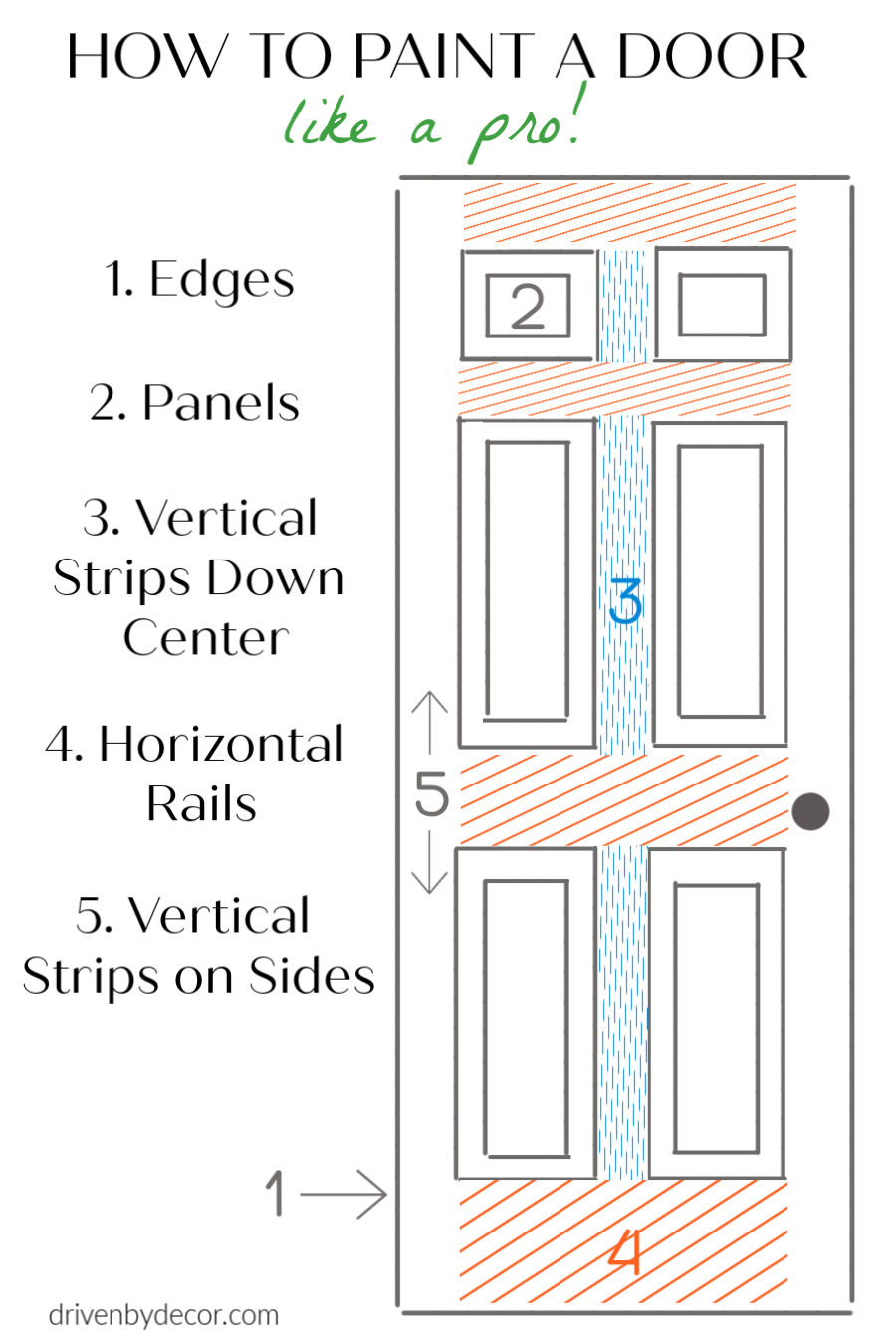
- Panels First: Start by painting the recessed panels (the inner rectangles). Use your angled brush to paint the inside edges, then the flat centers. Brush from top to bottom, then smooth out your strokes.n
- Cross Rails: Next, paint the horizontal sections (cross rails) of the door. Use your roller for the flat parts and brush to smooth. Work from top to bottom.n
- Vertical Stiles: Finally, paint the vertical sections (stiles) that run the full height of the door. Again, use your roller for the flat parts and your brush for the edges, always working from top to bottom.n
- Edges: Don’t forget the top, bottom, and side edges of the door! Paint these last, being careful not to get paint on the freshly painted faces.n
Rolling & Brushing Technique:
- Load Lightly: Don’t overload your brush or roller. Excess paint leads to drips and thick coats.n
- Smooth Strokes: Apply paint in smooth, even strokes. With a roller, work in a ‘W’ pattern, then fill in. With a brush, use consistent pressure.n
- “Lay Off” Strokes: After applying paint to a section, use a lightly loaded brush or roller (or just the tip of your brush) to make one final, light pass in one direction (usually vertically) over the entire section. This helps level the paint and eliminate brush marks.n
- Work Quickly: Water-based paints dry relatively fast. Work in sections, maintaining a wet edge to avoid lap marks.n
Sanding Between Coats: The Secret to Smoothness
Once your first coat of paint is fully dry (check manufacturer’s recommendation, usually 4-8 hours), lightly sand the entire door again with 320-grit sandpaper or a fine sanding sponge. This might seem counter-intuitive, but it knocks down any tiny imperfections, dust nibs, or slight texture, creating an incredibly smooth surface for the next coat. Wipe thoroughly with a tack cloth afterwards.
Applying Subsequent Coats
Repeat the painting process for your second coat. Most doors will require at least two coats of paint for full, even coverage and maximum durability, especially if you’re going from a light primer to a darker topcoat. Sometimes three coats are necessary, particularly if you’re dramatically changing the color.
Drying & Curing: Don’t Rush It!
This is often overlooked but crucial for durability. Paint goes through two stages: drying and curing.
- Dry Time: How long before the paint is dry to the touch and can be recoated.n
- Cure Time: How long it takes for the paint to reach its full hardness and durability. This can be anywhere from 7 to 30 days, especially for water-based alkyds. During this time, the paint is still vulnerable to scratches and dents.n
Resist the urge to reinstall hardware or hang the door back in its frame too soon. If you rush, the paint can stick to the frame (blocking) or chip easily.
Common Mistakes to Avoid When Painting New Doors
Steer clear of these common pitfalls for a better outcome:
- Not Sanding: Even pre-primed doors need a scuff. Lack of sanding is the primary cause of poor adhesion and a less-than-smooth finish.n
- Using the Wrong Paint/Primer: Basic wall paint or a poor primer won’t provide the durability or smooth finish required for doors.n
- Applying Thick Coats: This leads to drips, runs, uneven drying, and an “orange peel” texture. Multiple thin coats are always superior.n
- Rushing Drying/Curing Times: Patience is a virtue in painting. Waiting for paint to fully dry and cure prevents damage and blocking.n
- Ignoring Door Edges: These are often forgotten but are highly visible. Paint all six sides (front, back, and four edges).n
- Painting Hardware On: It looks amateurish and makes future maintenance a nightmare. Take the extra five minutes to remove hardware.n
- Using a Nappy Roller: Unless you want an orange peel texture, stick to high-density foam or very short nap microfiber rollers for doors and trim.n
Post-Painting Care & Maintenance
Once your door is fully cured, it will be much more resistant to damage. For cleaning, use a mild soap and water solution with a soft cloth. Avoid abrasive cleaners or harsh chemicals, especially on freshly cured paint, as they can damage the finish.
Final Touches: Hardware Reinstallation
After your door has cured (or at least had significant dry time, like 24-48 hours), it’s time to reinstall the doorknob and hinges. Be gentle and use the correct tools to avoid scratching your beautiful new finish. Stand back and admire your handiwork – a perfectly painted new interior door that looks like it was professionally done!
n