The Definitive Guide to Choosing the Best Color for Your Bedroom Ceiling
Ever walked into a beautifully decorated bedroom only to find your eyes drawn upwards, feeling a subtle disconnect or perhaps a sudden sense of calm? That’s the power of the ‘fifth wall’ – your bedroom ceiling. While often an afterthought, relegated to a default coat of white, your ceiling color wields incredible influence over the mood, perceived size, and even the quality of your sleep in your most personal sanctuary.
Choosing the ‘best’ color isn’t about following a fleeting trend; it’s about crafting an environment that perfectly aligns with your sleep goals, aesthetic preferences, and the unique characteristics of your space. Forget generic advice. We’re diving deep into how to transform your bedroom ceiling from a blank canvas into a strategic element of your dream retreat.
Why Your Bedroom Ceiling Color Matters More Than You Think
It’s easy to focus on the four walls, the bed, and the decor. But ignoring the ceiling is like leaving a critical piece of your bedroom’s puzzle unfinished. It’s not just a surface; it’s an active participant in how you experience the room.
The Forgotten Fifth Wall: Its Impact on Mood & Sleep
Think about it: when you lie down in bed, what’s the first thing you see? Your ceiling. Its color and finish are paramount in shaping your subconscious experience. A stark, blinding white can feel clinical and wakeful, while a soft, soothing hue can envelop you in a cocoon of tranquility. This isn’t just about pretty colors; it’s about creating a restorative sleep environment.
Beyond Aesthetics: Psychological Effects of Ceiling Hues
Color psychology plays a significant role here. Certain colors evoke specific emotions and physiological responses. Blues and greens are often associated with calmness and nature, promoting relaxation. Warmer, richer tones can create intimacy and coziness. Even subtle differences in shade can impact your mood, your perceived energy levels, and ultimately, how well you unwind for sleep.
The Illusion of Space: How Color Manipulates Perception
Want your room to feel taller or more expansive? Or perhaps you crave a cozy, den-like atmosphere? The color you choose for your ceiling is a powerful tool for manipulating perception. Light colors generally reflect more light, making a room feel airier and more open, while darker colors absorb light, often making a ceiling feel lower and more intimate. Understanding this dynamic is key to achieving your desired bedroom vibe.
Understanding Your Bedroom’s Personality: Key Factors to Consider
Before you even pick up a swatch, you need to become an expert on your bedroom. Its inherent characteristics will guide your color choices.
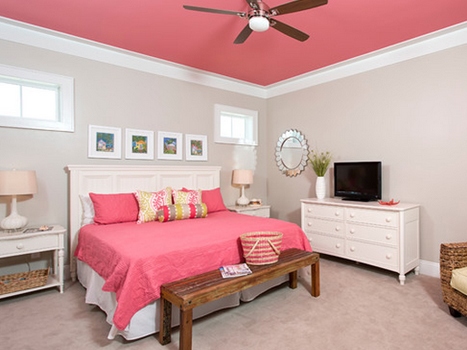
Room Size and Ceiling Height: Expanding or Cozying Up
- Small Rooms/Low Ceilings: To create the illusion of height and space, opt for lighter colors, often lighter than your walls, or even the same color as your walls to blur boundaries.
- Large Rooms/High Ceilings: You have more freedom here. Darker colors can bring down a soaring ceiling, making a vast room feel more intimate and inviting.
Natural Light Availability: Brightening or Softening
- Bright, Sunny Rooms: If your bedroom is flooded with natural light, you can afford to use slightly darker or more saturated colors on the ceiling without making the room feel dim. Cool tones might help balance intense sunlight.
- Dim Rooms/North-Facing: Light-reflecting colors are your best friend. Whites, soft pastels, or very pale tints can bounce what little light there is around the room, making it feel brighter and less cave-like. Avoid anything too dark that will absorb precious light.
Existing Wall Colors & Decor: Harmony vs. Contrast
Your ceiling shouldn’t exist in a vacuum. Consider:
- Harmony: Do you want the ceiling to blend seamlessly with your walls, creating a cohesive, unbroken flow?
- Contrast: Do you want to make a statement, define the ceiling as an architectural feature, or create a ‘lid’ effect?
- Overall Palette: Ensure your chosen ceiling color complements the existing color scheme of your walls, bedding, furniture, and artwork.
Desired Mood: Serene, Energizing, or Intimate?
What feeling do you want your bedroom to evoke? This is perhaps the most crucial question for a sleep space.
- Serene & Relaxing: Lean towards cool, muted tones like blues, greens, and soft grays.
- Cozy & Intimate: Consider warm whites, greiges, or even deeper, enveloping shades for a cocoon effect.
- Subtly Uplifting: Very pale, desaturated pastels can add a gentle lift without being stimulating.
Personal Preference: Trust Your Gut (with a Little Guidance)
Ultimately, this is your bedroom. While design principles offer excellent guidance, your personal comfort and aesthetic preference should always be paramount. If a color makes you feel uneasy or restless, it’s not the right choice for your sleep sanctuary, no matter how ‘on-trend’ it might be.
The Best Bedroom Ceiling Colors: A Deep Dive into Popular Choices
Let’s move from theory to practical application. Here’s a breakdown of popular color categories, their effects, and when they shine brightest on a bedroom ceiling.
| Color Category | Specific Examples | Psychological Effect | Ideal Bedroom Scenario | Pros | Cons |
|---|---|---|---|---|---|
| Classic & Timeless: Whites & Off-Whites | Chantilly Lace, Pure White, White Dove, Swiss Coffee, Decorator’s White | Clean, crisp, expansive, fresh. Can be stark if too cool. | Small rooms, low ceilings, rooms needing brightness, modern aesthetics. | Versatile, reflects light, creates height, timeless appeal. | Can feel sterile or cold if wrong shade, lacks personality for some. |
| Serene & Soothing: Blues & Greens | Pale Sky Blue, Soft Sage Green, Muted Teal, Sea Salt | Calming, relaxing, reminiscent of nature, promotes tranquility. | Any bedroom aiming for a spa-like, restful atmosphere. | Excellent for sleep, creates a peaceful vibe, unique without being overwhelming. | Too dark or saturated can feel heavy; requires complementary wall colors. |
| Elegant & Enveloping: Grays | Light Gray, Greige, Warm Gray, Pale Pewter | Sophisticated, calming, versatile, can feel cool or warm depending on undertones. | Modern, minimalist, or transitional bedrooms. Good for balancing bold wall colors. | Adds depth without being too dark, complements many palettes, chic. | Can feel flat or dull if too much of one tone; avoid sterile cool grays. |
| Unexpected Delights: Pastels & Subtle Tints | Blush Pink, Soft Lavender, Pale Yellow (very light), Buttercream | Gentle, charming, can be romantic, playful or subtly uplifting. | Children’s rooms, whimsical aesthetics, brightening north-facing rooms. | Adds character, can feel cozy, offers a soft glow. | Can appear childish if not chosen carefully; risk of feeling dated if too saturated. |
| Bold & Dramatic: Darker Hues | Deep Navy, Forest Green, Charcoal, Plum | Intimate, luxurious, enveloping, cozy, dramatic. | Bedrooms with high ceilings, ample natural light, or a desire for a moody, sophisticated vibe. | Creates a unique statement, very cozy, excellent for sleep in the right context. | Can make small rooms feel claustrophobic, absorbs light, requires careful lighting design. |
Classic & Timeless: Whites and Off-Whites
White ceilings are a classic for a reason. They reflect light, making rooms feel larger and brighter. But ‘white’ isn’t just one color. Consider:
- Bright White (e.g., Benjamin Moore’s Chantilly Lace, Sherwin-Williams’ Pure White): Crisp, clean, excellent for modern spaces, but can feel stark or cold if not balanced with warm furnishings or ample natural light. Ideal for creating an expansive feel.
- Warm White (e.g., Benjamin Moore’s White Dove, Swiss Coffee): These whites have subtle beige or yellow undertones, making them feel softer, creamier, and more inviting. They prevent a room from feeling sterile and pair beautifully with warm wall colors.
- Cool White (e.g., Benjamin Moore’s Decorator’s White, Sherwin-Williams’ Extra White): With gray or blue undertones, these whites complement cool-toned wall colors and can feel very fresh and airy. Be cautious not to make the room feel too chilly.
Serene & Soothing: Blues and Greens
Nature-inspired hues are perfect for promoting relaxation and sleep. They evoke open skies, calm waters, and lush foliage.
- Pale Sky Blue: Universally calming, reminiscent of a clear day. Makes a room feel open and airy, promoting tranquility.
- Soft Sage Green: Grounding and natural, sage green is muted and sophisticated. It brings a sense of organic peace without being too vibrant.
- Muted Teal: A blend of blue and green, muted teal offers a slightly deeper, sophisticated calm. It works wonderfully with neutral or even some warm tones.
Elegant & Enveloping: Grays
Grays have risen in popularity for their versatility and modern appeal. On a ceiling, they can add depth without feeling heavy.
:max_bytes(150000):strip_icc()/painted-ceilings-4165829-hero-8e0053e08cb442438466ac168c169c2c.jpg "22 Painted Ceiling Ideas to Elevate the Whole Room")
- Light Gray: A sophisticated alternative to white. A pale gray can soften a room, adding a contemporary touch while still reflecting light.
- Warm Gray (Greige): A beautiful blend of gray and beige, greige offers warmth and elegance. It’s incredibly versatile and creates a cozy, inviting feel.
- Charcoal Gray (for specific moods): In rooms with high ceilings or abundant light, a very dark, matte charcoal can create a dramatic, intimate, and sophisticated ‘lid’ effect, perfect for a moody, luxurious bedroom.
Unexpected Delights: Pastels and Subtle Tints
Don’t be afraid to venture into very light, desaturated versions of other colors. These can add a whisper of personality.
- Blush Pink: A very pale, dusty pink can feel incredibly soft, romantic, and nurturing without being overtly feminine.
- Soft Lavender: Known for its calming properties, a light, muted lavender can create a dreamy, tranquil atmosphere.
- Pale Yellow: Use with extreme caution. A *very* pale, buttery yellow can bring a subtle warmth and cheeriness to a dull room, but anything too vibrant will be stimulating. Aim for the lightest hint of color.
Bold & Dramatic: Darker Hues (Not for Everyone, But Potent)
While counter-intuitive for some, a dark ceiling can create an incredibly cozy, luxurious, and enveloping space, especially in bedrooms with high ceilings or a desire for true intimacy.
- Deep Navy: Evokes a night sky, offering a sense of calm and depth. Pairs beautifully with crisp whites and natural wood tones.
- Rich Forest Green: Grounding and sophisticated, a deep green creates a luxurious, earthy cocoon.
- Charcoal/Black: For the truly daring. A matte black or very dark charcoal ceiling can virtually disappear at night, making the room feel infinite, or create an incredibly intimate, sophisticated box. Requires careful consideration of lighting and room size.
Matching Your Ceiling Color: When to Blend, When to Contrast
Once you have a color in mind, how do you integrate it with the rest of your room?
Color-Drenching: Walls and Ceiling the Same Color
This bold technique involves painting your walls and ceiling the exact same color (often in different finishes for subtle contrast).
Pros: Creates an incredibly cohesive, immersive, and often cozy ‘cocoon’ effect. Blurs the boundaries of the room, making it feel larger in an enveloping way, not just expansive. Great for dramatic, moody bedrooms.
Cons: Can make a room feel smaller or darker if the color is deep and the room lacks light. Requires careful color selection to avoid an overwhelming feel.
Lighter Than Walls: The Traditional Approach
This is the most common method: paint the ceiling a lighter shade than your walls, often a lighter tint of the wall color or a crisp white.
Pros: Makes the ceiling appear higher, brightens the room, and maintains an airy feel. Provides a clear visual break between walls and ceiling.
Cons: Can sometimes feel predictable or generic if not chosen with intention.
Contrasting Color: Adding Interest and Defining Space
Choosing a ceiling color that directly contrasts with your walls can make a strong design statement.
Pros: Highlights architectural features, adds visual interest, can define the ceiling as a design element. Excellent for adding a pop of unexpected color or bringing down a very high ceiling.
Cons: Can visually lower the ceiling if the contrast is too stark or the color too dark. Requires careful color pairing to ensure harmony.
The 60-30-10 Rule Adaptation for Ceilings
Interior designers often use the 60-30-10 rule: 60% dominant color (walls), 30% secondary color (furniture/textiles), 10% accent color (accessories). For ceilings, you might consider the ceiling as part of the 60% dominant (color-drenching), or as part of the 30% secondary (a softer complementary hue), or even as a 10% accent (a bold, contrasting statement).
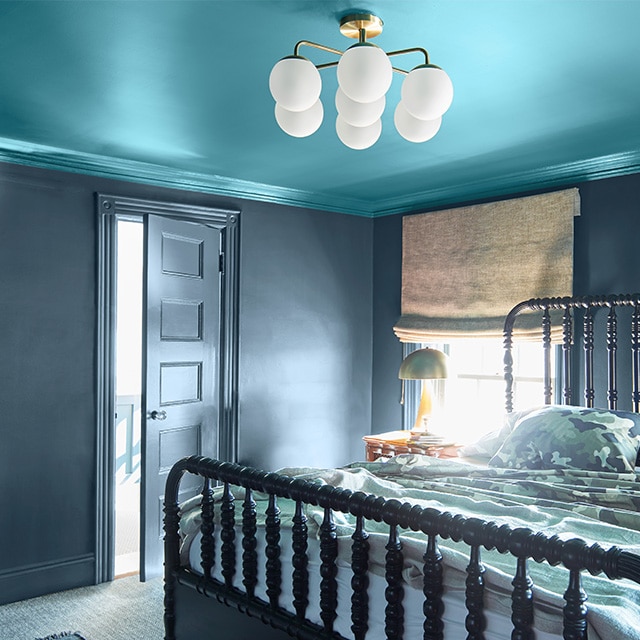
Ceiling Paint Finishes: Matte, Eggshell, or Beyond?
The sheen of your paint affects how light reflects off the surface, which is particularly important for a ceiling.
Flat/Matte Finish: The Go-To for Ceilings
Why it’s best: A flat or matte finish absorbs light rather than reflecting it. This helps to conceal minor imperfections, lumps, and bumps that are almost inevitable on a ceiling. It provides a soft, non-reflective surface that contributes to a serene bedroom atmosphere.
Ideal for: Almost all bedroom ceilings, especially older homes with imperfect surfaces.
Eggshell/Satin: When You Need Durability (and don’t mind a subtle sheen)
Why consider it: These finishes have a very subtle sheen, making them slightly more durable and washable than matte. If you have a perfectly smooth ceiling or need to wipe it down frequently (e.g., in a child’s room), eggshell might be an option.
Caveat: The subtle sheen can highlight imperfections, so ensure your ceiling surface is pristine.
Gloss/Semi-Gloss: Bold Statements (Rare but Impactful)
Why it’s rare: High-gloss finishes are highly reflective and will magnify every single imperfection on your ceiling. They are incredibly difficult to apply perfectly.
When to use: Only for very specific, dramatic design statements in modern, architectural homes with perfectly smooth, prepared ceilings. It creates a mirror-like effect that can be stunning but is rarely suitable for a typical bedroom aiming for calm.
Expert Tips for Nailing Your Bedroom Ceiling Color Choice
Ready to make a decision? Here’s how to ensure you get it right.
Test, Test, Test: The Swatch Method
Never skip this step! Paint large swatches (at least 2’x2′) on pieces of poster board and tape them to your ceiling. Observe them at different times of day (morning, afternoon, night) and under different lighting conditions (natural light, lamps, overhead lights). Colors look drastically different on a horizontal surface compared to a vertical wall.
Consider Your Lighting: Natural and Artificial
The type and amount of light in your room will dramatically alter how a color appears. Warm light bulbs will make cool tones appear warmer, and vice-versa. Ensure your test swatches are viewed under the actual lighting you’ll be using in the room.
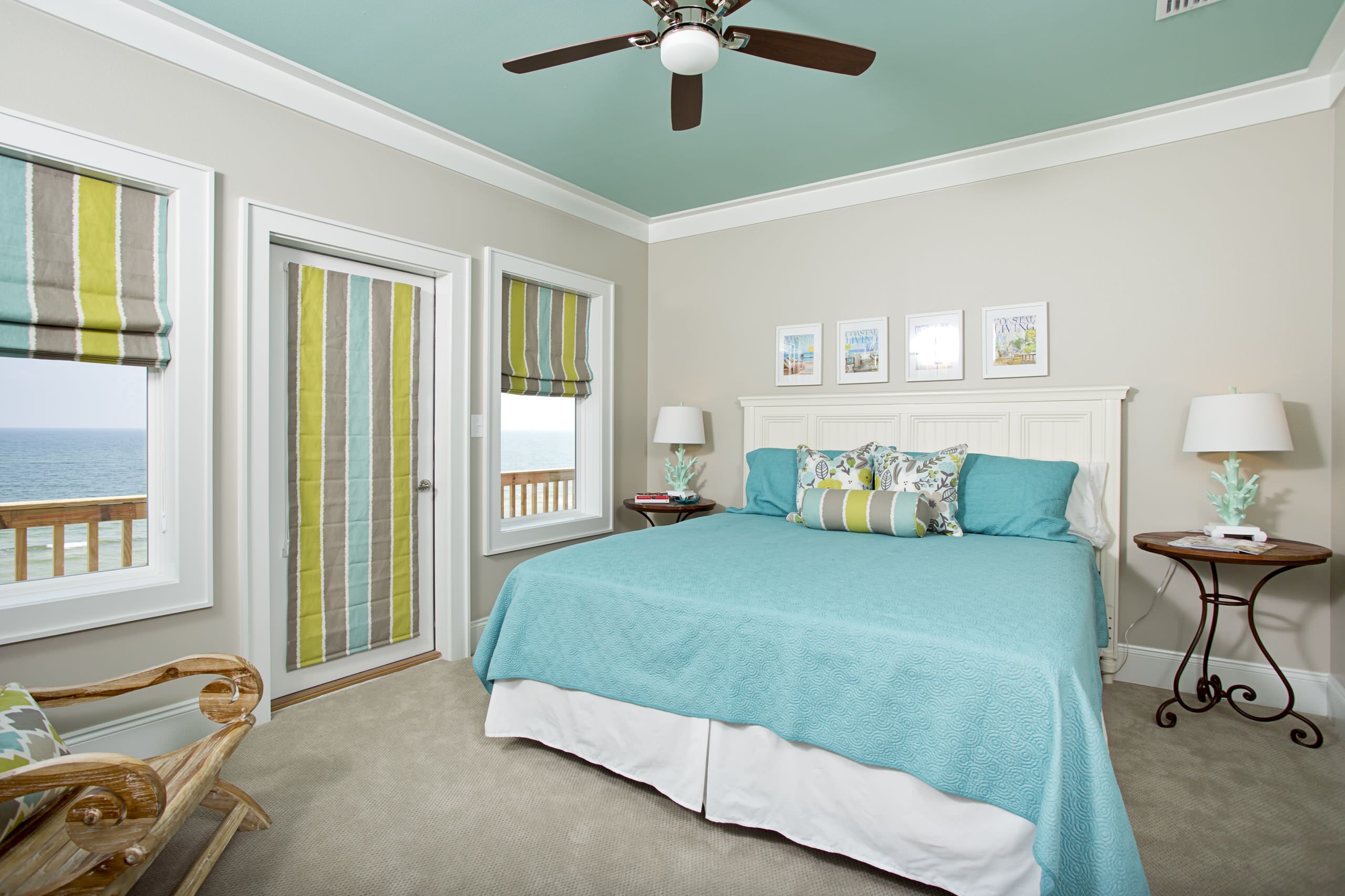
Don’t Forget the Trim: Harmony is Key
Do you have crown molding or ceiling trim? This usually gets painted the same color as your window and door trim, typically a crisp white. Ensure your ceiling color choice complements this existing trim color, whether blending softly or providing a gentle contrast.
Get Inspired: Look Beyond the Walls
Gather inspiration from magazines, Pinterest, and design blogs. Pay attention to how ceilings are treated in rooms that evoke the feeling you desire. But always remember to adapt, not just copy, for your unique space.
Trust Your Intuition: It’s Your Sanctuary
After all the analysis and testing, choose the color that makes you feel most at ease and happy. Your bedroom is your personal retreat, and its ceiling should contribute to your ultimate comfort and relaxation.
Colors to Approach with Caution (or Avoid) in the Bedroom Ceiling
While personal preference is key, some colors are generally not conducive to a restful bedroom environment when used on the ceiling.
Bright, Stimulating Hues (Reds, Oranges)
Colors like bright reds, oranges, and highly saturated yellows are known to be energizing and stimulating. While fantastic in a dining room or living area, they can disrupt the calm needed for sleep when overhead. They can feel oppressive or even anxiety-inducing when you’re trying to wind down.
Overly Dark Colors (in small, low-light rooms)
While dark ceilings can be wonderfully dramatic and cozy in the right context (high ceilings, ample light), applying them to a small bedroom with limited natural light can make the room feel much smaller, heavier, and even claustrophobic. If you love dark colors, consider a medium-dark tone or restrict them to an accent wall in a small room.
Final Thoughts: Elevate Your Sleep, One Ceiling at a Time
Your bedroom ceiling is more than just a lid on a box; it’s an integral part of your personal narrative and well-being. By thoughtfully considering factors like room size, light, desired mood, and the psychological impact of color, you can transform this often-overlooked surface into a powerful design element. Invest the time in selecting the perfect hue, and you’ll not only elevate your room’s aesthetic but also enhance your nightly rest, making your bedroom truly the sanctuary you deserve.
:strip_icc()/160356249_506603264066606_8162470665199427677_n-6cd8ab496bb346f1b124cd66a84e9b24.jpg "How to Choose a Ceiling Paint Color")
Frequently Asked Questions
Should a bedroom ceiling always be white?
No, while white is a classic and versatile choice that reflects light and makes a room feel larger, it’s not a strict rule. Many designers now advocate for colored ceilings to add personality, create a specific mood, or enhance the room’s aesthetic. The best color depends on your desired outcome and the room’s characteristics.
Can a dark ceiling make a bedroom feel smaller?
Yes, a dark ceiling can make a room feel smaller because dark colors absorb light and visually bring the ceiling down. However, this isn’t always a negative; it can create a cozy, intimate, and sophisticated ‘cocoon’ effect, especially in rooms with high ceilings or ample natural light where intimacy is desired.
What’s the best paint finish for a bedroom ceiling?
The best paint finish for a bedroom ceiling is typically a flat or matte finish. These finishes absorb light rather than reflecting it, which helps to conceal minor imperfections on the ceiling surface and creates a soft, non-reflective appearance that is ideal for a restful environment.
How does ceiling height influence color choice?
For low ceilings, lighter colors are usually preferred as they reflect light and create the illusion of height. For high ceilings, you have more flexibility; darker colors can be used to visually lower the ceiling, making the room feel more intimate and less cavernous.
Is it okay to match the ceiling color to the wall color?
Absolutely! Painting your ceiling the same color as your walls (known as ‘color-drenching’) creates a cohesive, immersive, and enveloping feel. This can blur the room’s boundaries, making it feel larger and cozier in an intentional way, perfect for creating a truly unified sanctuary.
What ceiling colors promote better sleep?
Colors known for their calming and serene properties are best for promoting sleep. These typically include soft blues, pale greens, muted lavenders, warm grays, and soft, warm off-whites. These hues help create a tranquil atmosphere conducive to winding down and resting.
How do I test bedroom ceiling paint colors effectively?
To test effectively, paint large swatches (at least 2’x2′) of your chosen colors on poster boards. Tape these to your ceiling and observe them throughout the day and night under both natural and artificial lighting. Colors look different on horizontal surfaces and change with light, so this step is crucial before committing.