How Much Paint Do You REALLY Need for One Bedroom Wall? Your Definitive Guide
Staring at that blank bedroom wall, dreaming of a bold accent color or a calming new hue? You’ve got the vision, but then the practical question hits: “How much paint do I actually need?” It’s a classic DIY dilemma. Buy too little, and you’re mid-project with a half-painted wall and a mad dash back to the store. Buy too much, and you’re stuck with cans gathering dust, or worse, wasteful spending.
Forget the guesswork. This isn’t about vague estimates or generic calculators that don’t consider your specific accent wall. We’re going to break down exactly how to calculate the perfect amount of paint, ensuring your bedroom wall transformation is smooth, efficient, and perfectly coated.
The Quick Answer: Paint for a Standard Accent Wall
Let’s get straight to it. For a standard bedroom accent wall, typically measuring around 10 feet wide by 8 feet high (80 square feet), you’ll likely need about 1/2 to 3/4 of a gallon of paint for two coats, assuming standard paint coverage and a medium color change. If your wall is larger, say 12 feet wide by 9 feet high (108 square feet), you’ll push closer to a full gallon, especially with a primer coat.
But here’s the kicker: this is a quick estimate. The actual amount depends on several factors we’ll dive into. Most paint is sold in quarts (1/4 gallon) and gallons. For a single accent wall, you’ll often find yourself buying either a quart or a full gallon, with the gallon usually being the more cost-effective choice if you need more than a quart.
Why “One Gallon” Isn’t Always the Right Answer (And How to Get It Right)
The common wisdom for a small room might be “one gallon.” While a gallon is often enough for a typical bedroom accent wall, relying solely on that can lead to problems. You could either:
- Underbuy: Running out of paint mid-project is frustrating. Color matching later can be tricky, and drying times mean delays.
- Overbuy: You waste money and resources. Leftover paint takes up space, and disposing of it properly isn’t always straightforward.
The goal is to buy the right amount. Not too little, not too much. This requires a few simple measurements and an understanding of how paint works.

The Formula: Your Step-by-Step Guide to Calculating Paint for ONE Wall
Calculating your paint needs is easier than you think. Follow these steps for pinpoint accuracy:
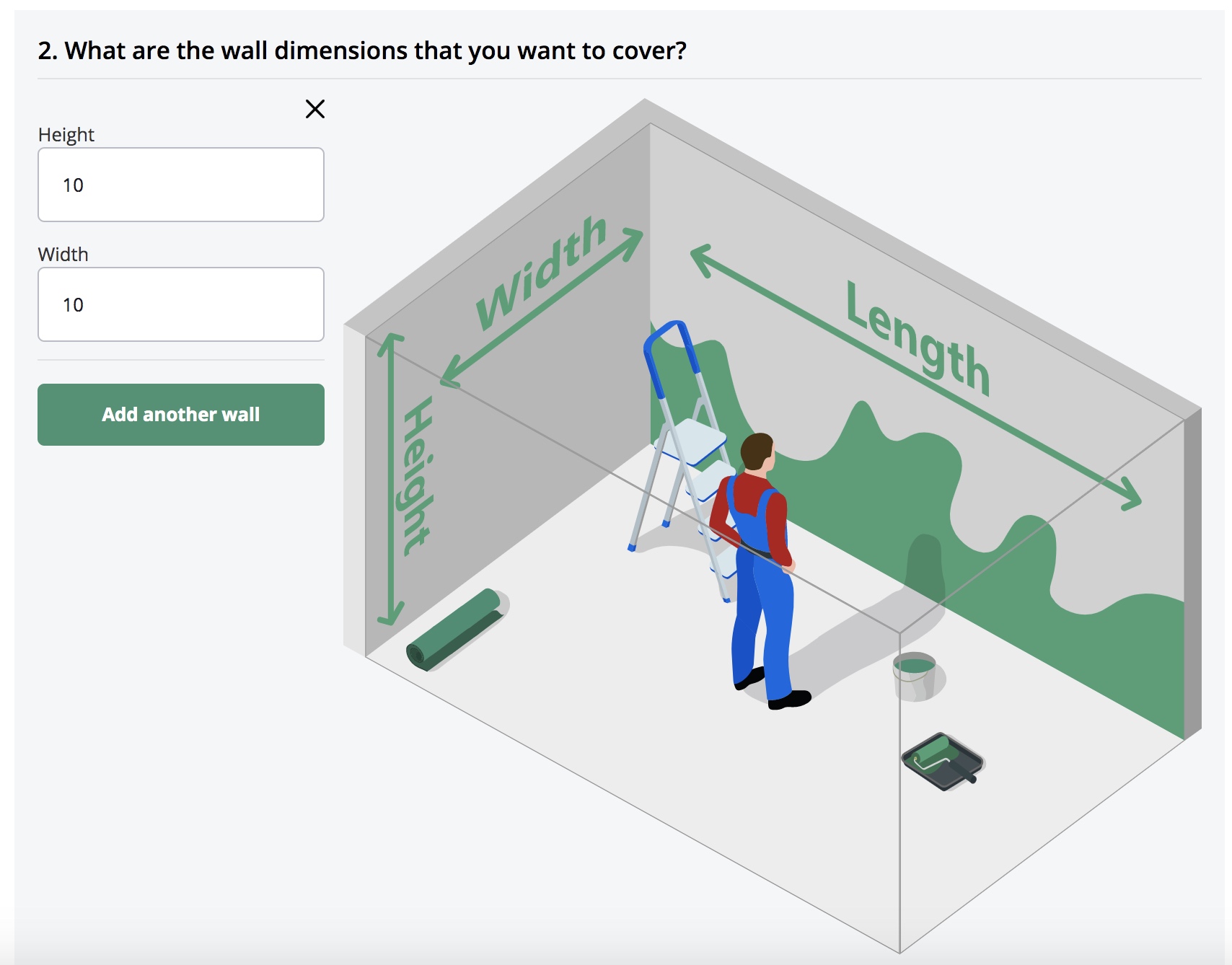
Step 1: Measure Your Wall (Accurately!)
Grab a tape measure, a pencil, and a notepad. You need two dimensions for your chosen accent wall:
- Height: Measure from the top of your baseboard to the ceiling.
- Width: Measure from one corner to the other.
Then, multiply these two numbers together to get your total square footage.
Example: A wall that is 8 feet high and 10 feet wide = 8 x 10 = 80 square feet.
Pro Tip: Don’t eyeball it! Even a foot or two can make a difference in your paint quantity. If your wall isn’t perfectly rectangular (e.g., an angled ceiling), break it down into simpler shapes (rectangles, triangles) and add the square footage together.
Step 2: Account for Windows and Doors (Don’t Paint What Isn’t There)
If your accent wall has a window or a door, you don’t need to paint those surfaces. Deduct their square footage from your wall’s total.

- Measure the height and width of each window and door.
- Calculate their individual square footage.
- Subtract this from your total wall square footage.
Example: Your 80 sq ft wall has a window that is 3 feet wide by 4 feet high (3 x 4 = 12 sq ft).
nYour paintable area becomes: 80 sq ft – 12 sq ft = 68 square feet.
Rule of Thumb: For very small openings (like a tiny built-in nook or a single small wall vent), you might skip the deduction. But for anything larger than a couple of square feet, it’s worth subtracting.
Step 3: Understand Paint Coverage (The Gallon-to-Square-Foot Ratio)
This is where paint brands and types come into play. Most quality paints will state their coverage on the can, usually ranging from 350 to 400 square feet per gallon for one coat. Primer typically covers less, around 200-300 square feet per gallon.
Here’s a general guide:
| Paint Type/Brand (Typical) | Approx. Coverage Per Gallon (1 Coat) | Notes |
|---|---|---|
| Standard Interior Latex Paint (e.g., Glidden, Behr Premium Plus) | 350 – 400 sq ft | Good quality, common choice. |
| Premium Interior Paint (e.g., Benjamin Moore Aura, Sherwin-Williams Emerald) | 375 – 425 sq ft | Often thicker, better hide, can sometimes cover more. |
| Paint & Primer in One | 300 – 375 sq ft | Convenient, but two coats usually still needed for best results. |
| Interior Primer | 200 – 300 sq ft | Essential for bare surfaces or drastic color changes. |
Factors influencing coverage:
- Paint Quality: Higher quality paints often have better pigments and binders, leading to better coverage in fewer coats.
- Paint Finish: Flat and matte finishes tend to cover slightly more due to their porous nature, while high-gloss paints may require more careful application and potentially more coats for full opacity.
- Original Wall Color: Painting over a very dark color with a very light color (or vice-versa) will require more coats, thus more paint.
- Surface Texture: Textured walls (like popcorn ceilings or heavily stuccoed walls) are thirsty! They absorb more paint and cover less per gallon. Smooth walls are much more efficient.
Step 4: Factor in the Number of Coats (Crucial for a Flawless Finish)
This is probably the most overlooked step. While a paint can might say “covers 350-400 sq ft per gallon,” that’s almost always for one coat. For a professional, durable, and truly uniform finish, you’ll almost always need two coats of paint.

Why two coats?
- Color Depth: One coat often looks streaky or uneven, especially with significant color changes. Two coats provide rich, consistent color.
- Durability: Multiple coats create a stronger, more resilient surface that stands up better to scuffs and cleaning.
- Even Finish: It helps hide minor imperfections and ensures a smooth, uniform sheen across the entire wall.
So, take your paintable square footage and multiply it by the number of coats you plan to apply (usually 2). If you’re also using primer, calculate its coverage separately for one coat.
Example: Your 68 sq ft wall needs two coats of paint. Total coverage needed = 68 sq ft x 2 = 136 square feet.
Now, divide this total by the paint’s coverage per gallon. If your paint covers 375 sq ft/gallon:
136 sq ft / 375 sq ft/gallon = 0.36 gallons.
Since most paint comes in quarts (0.25 gallons) and gallons (1 gallon), 0.36 gallons means you’ll need more than a quart but less than a full gallon. In this scenario, buying a gallon is your safest bet, giving you plenty for touch-ups.
Step 5: Add a Little Extra (The 10-15% Buffer)
Even with careful calculations, life happens. Spills, unexpected extra coats for tricky spots, future touch-ups, or even minor repairs down the line. It’s always smart to add a 10-15% buffer to your final calculated amount.
Example: If you calculated 0.36 gallons, adding a 15% buffer means: 0.36 gallons * 1.15 = 0.414 gallons.
This reinforces the idea that for a single accent wall, a full gallon is almost always the most practical purchase, ensuring you have enough and a little extra for peace of mind.
Real-World Examples: How Much Paint for Common Accent Wall Sizes?
Let’s put this into practice with some common bedroom accent wall dimensions. These estimates assume a smooth, pre-primed surface, two coats of quality paint (375 sq ft/gallon coverage), and a 15% buffer. We’ll also consider that paint is generally sold in quarts (0.25 gallons) and gallons (1 gallon).
| Wall Dimensions (H x W) | Approx. Paintable Area (sq ft) | Est. Paint Needed (2 coats, no primer) | Est. Paint Needed (1 coat primer + 2 coats paint) | Recommended Purchase |
|---|---|---|---|---|
| 8 ft x 10 ft | 80 sq ft | 0.49 gallons | 0.86 gallons (0.29 primer + 0.57 paint) | 1 gallon (for safety & touch-ups) |
| 9 ft x 12 ft | 108 sq ft | 0.66 gallons | 1.16 gallons (0.36 primer + 0.80 paint) | 1 gallon (may be tight if priming), or 2 gallons if you prefer generous buffer. |
| 10 ft x 15 ft | 150 sq ft | 0.92 gallons | 1.62 gallons (0.50 primer + 1.12 paint) | 2 gallons (especially if priming or dark color change) |
| 8 ft x 10 ft (with 3×4 ft window) | 68 sq ft | 0.42 gallons | 0.73 gallons (0.23 primer + 0.50 paint) | 1 gallon |
Key Takeaway: For most standard accent walls, a single gallon will be sufficient for two coats of paint. If you’re also using a dedicated primer or painting a particularly large or textured wall, consider picking up an additional quart of paint or a full second gallon for safety, especially if it’s a critical, high-visibility project.
Beyond the Gallon: Factors That DEVOUR or SAVE Your Paint
While the formula gives you a solid estimate, understanding these nuances can make or break your project’s efficiency and final look.
Surface Texture
Imagine painting a smooth chalkboard versus a sponge. That’s the difference texture makes! A smooth wall will use less paint because the surface isn’t absorbing much. A highly textured wall (like stucco, orange peel, or even heavily spackled and sanded areas) will soak up paint like crazy. You’ll need significantly more paint per square foot, and potentially an extra coat, to achieve uniform coverage. Consider using a heavy-nap roller cover for textured surfaces to ensure the paint gets into all the nooks and crannies.
Paint Quality & Finish
You get what you pay for. Higher-quality paints generally have better pigments and binders, offering superior coverage and durability. This means fewer coats, potentially saving you time and even money in the long run. Cheap paint might require three or even four coats to look decent, negating any initial savings.
- Flat/Matte Finishes: These tend to hide imperfections well and can sometimes offer slightly better initial coverage due to their porous nature. However, they are less durable and harder to clean.
- Eggshell/Satin Finishes: A good balance of durability and subtle sheen, these are popular for bedrooms. Coverage is typically standard.
- Semi-Gloss/Gloss Finishes: These reflective finishes highlight imperfections, so impeccable prep work and often more careful, thinner coats are required, potentially using a bit more paint for full opacity and smoothness. They are highly durable and washable.
Color Change
This is a huge factor! If you’re going from:
- Dark to Light: Expect to need at least two, possibly three, coats of your new light color. A good quality primer (tinted if possible, towards your final light color) is almost essential here to block the old dark color and reduce the number of finish coats.
- Light to Dark: This is generally easier. Two coats are usually sufficient, but a tinted primer can help deepen the color faster and reduce your paint consumption.
- Similar Tones: Painting a light grey over a beige? Two coats should be perfectly fine, perhaps even one if the quality is high and the colors are very close.
Primer Usage
Primer isn’t just for new drywall. It’s your secret weapon for a professional finish and efficient paint usage.
- When to Use Primer: New, unpainted drywall; bare wood; glossy surfaces (after sanding); drastically changing colors (especially dark to light); covering stains; painting over repairs or patched areas.
- How Primer Helps: It creates a uniform surface for the paint to adhere to, blocks stains, provides better coverage for subsequent paint coats (especially when tinted), and can smooth out minor surface differences. Essentially, primer saves you paint by making your topcoats work more efficiently.
Application Method
- Roller: The most common and efficient method for large wall areas. Different nap sizes are available for different textures.
- Brush: Essential for cutting in edges, corners, and around trim. Generally uses less paint but is slower.
- Sprayer: Offers the fastest application and smoothest finish, but there’s significant overspray and more paint waste due to atomization and masking requirements. For a single accent wall, it’s rarely worth the setup and cleanup.
Pro Tips for Painting Your Bedroom Accent Wall Like a Master
Knowing how much paint you need is step one. Here are some tips to ensure your project goes smoothly:
- Prep is EVERYTHING: Clean your wall thoroughly. Fill any holes or cracks, sand smooth, and wipe away dust. Tape off trim, ceilings, and adjacent walls meticulously with painter’s tape. Lay down drop cloths. Good prep means a better finish and less cleanup.
- Cut In First: Use a high-quality angled brush to paint (cut in) along the edges where your wall meets the ceiling, adjacent walls, and trim. Do this before rolling the main section of the wall.
- Roll Evenly: Load your roller evenly and apply paint in ‘W’ or ‘M’ patterns, then fill them in with vertical strokes, overlapping slightly. Work in manageable sections.
- Allow Proper Drying Time: Read the can! Applying a second coat too soon can lead to peeling, cracking, or uneven finishes. Patience is a virtue here.
- Ventilate: Open windows and use fans to ensure good air circulation, which helps with drying and reduces fumes.
- Don’t Skimp on Tools: Good quality brushes, rollers, and painter’s tape make a world of difference in application ease and results.
Don’t Forget the Details: Tools & Accessories
While we’re focused on paint quantity, remember that having the right tools makes the job much easier and the finish much better. Here’s a quick checklist:
- Painter’s Tape: For clean lines along edges and trim.
- Drop Cloths/Plastic Sheeting: Protect your floors and furniture.
- Rollers and Roller Covers: Choose the right nap for your wall texture (e.g., 3/8-inch for smooth walls, 1/2-inch for lightly textured).
- Paint Brushes: Angled brushes (2-inch or 2.5-inch) are great for cutting in.
- Paint Tray and Liners: For easy paint loading and cleanup.
- Stir Stick: To thoroughly mix your paint.
- Utility Knife or Putty Knife: For opening cans and light scraping.
- Screwdriver: To remove outlet and switch covers.
- Sanding Sponge/Block: For smoothing wall repairs.
- Spackle/Joint Compound: For filling holes and cracks.
- Clean Rags: For spills and drips.
Saving Money (and Your Sanity): Buying the Right Amount
Accurately calculating your paint needs isn’t just about avoiding frustration; it’s about being smart with your budget and resources. Buying exactly what you need (plus that smart buffer) means:
- No Wasted Money: Paint can be expensive. Don’t buy gallons you won’t use.
- Less Waste: Environmentally conscious painting means minimizing excess materials. Proper disposal of paint can be a hassle and harmful if not done correctly.
- Confidence: Starting a project knowing you have enough supplies removes a major source of stress.
Ready to Transform Your Bedroom Wall?
Painting an accent wall is one of the most impactful and affordable ways to transform a bedroom. Now that you’re armed with the knowledge of exactly how much paint you’ll need, you can approach your project with confidence and get ready to enjoy a beautifully refreshed space. Measure twice, calculate once, and get ready to roll!