How to Paint an Accent Wall in Your Bedroom: The Definitive DIY Guide for a Stunning Refresh
Feeling like your bedroom is a little… bland? Like it’s missing that spark, that personal touch that truly makes it your sanctuary? You’re not alone. Many bedrooms, despite being our most intimate spaces, often end up being functional rather than inspirational. But what if I told you there’s a relatively simple, incredibly impactful way to inject personality, depth, and a whole lot of style into your sleeping quarters, all by yourself?
Enter the accent wall. Forget dated trends; a well-executed accent wall is a timeless design move, especially in a bedroom. It’s your chance to play with color, create a focal point, and truly define the mood of your space without committing to a full room overhaul. And the best part? It’s a completely achievable DIY project. I’m going to walk you through every step, from picking the perfect shade to the final brushstroke, ensuring your bedroom accent wall turns out exactly as you envisioned.
Why an Accent Wall in Your Bedroom? More Than Just Color
Before we dive into the nitty-gritty of painting, let’s explore why an accent wall is particularly brilliant for a bedroom. It’s not just about slapping a different color on one wall; it’s about strategic design that enhances your personal haven.
Adding Depth & Dimension
Imagine a room where all four walls are the same light, neutral shade. While pleasant, it can sometimes feel a bit flat. An accent wall, especially in a deeper or contrasting hue, immediately introduces visual depth. It pulls your eye in, making the room feel more intentional and less like a blank canvas. This is particularly effective in smaller bedrooms, where it can create an illusion of space by drawing the eye to the furthest point.
Creating a Focal Point
Every well-designed room needs a focal point – something that anchors the space and guides your eye. In a bedroom, this is often the bed itself. By painting the wall behind your headboard, you naturally amplify this area, turning your bed into the undisputed star of the room. It frames your sleeping zone, giving it a sense of importance and luxury.
:max_bytes(150000):strip_icc()/SPR-bedroom-accent-wall-ideas-7099564-6d9b6deeb2bd466cbb965459bf99ad5c.jpg "25 Bedroom Accent Wall Ideas to Try at Home")
Reflecting Personal Style & Mood
Your bedroom should be a reflection of you. An accent wall is a fantastic opportunity to infuse your personal style without overwhelming the entire space. Love bold colors but scared of a whole room of them? An accent wall is your perfect compromise. Want to evoke a sense of calm? A deep, serene blue accent wall can achieve that beautifully. It’s a chance to experiment and truly make the room feel like *yours.
Enhancing Sleep Environment (Color Psychology)
This is where bedroom accent walls really shine. Different colors evoke different psychological responses. In a bedroom, you’re often aiming for tranquility, relaxation, or coziness. A thoughtfully chosen accent color can significantly contribute to these feelings, helping to create a serene backdrop conducive to rest. For example, cool blues and greens are known for their calming effects, while deep grays or rich jewel tones can create a sophisticated, cocoon-like atmosphere.
Step 1: The Art of Choosing Your Accent Wall Wisely
This is arguably the most critical decision after picking your color. The wrong wall can make your room feel off-balance; the right wall can elevate the entire space.
Which Wall to Pick? The “Focal Point” Rule
Generally, you want to pick the wall that naturally draws the eye or the one you want to highlight. Here are the most common and effective choices:
- Behind the Headboard: The Classic Choice. This is the most popular and often the most successful. It visually anchors your bed, turning it into the room’s central feature. When you walk into the room, your eyes are immediately drawn to this area, giving the space an instant sense of purpose and design. It also creates a cozy, framed feeling around your sleeping area.
- Opposite the Bed: For Drama or Viewing. If your bed is against a plain wall and you have a TV or a beautiful piece of art on the opposite wall, making that an accent wall can work. It creates a bold statement that you face directly. However, be mindful of how a bold color might impact your perceived screen brightness or overwhelm a delicate artwork.
- A Wall with Architectural Features: Built-ins, Windows, or Alcoves. Do you have a wall with beautiful built-in shelving, a fireplace (uncommon in bedrooms, but possible!), or a unique window frame? Painting this wall can highlight these features, making them stand out and feel more intentional. It’s a way to draw attention to existing character.
- Avoiding Overwhelm: Don’t Pick the Busiest Wall. Resist the urge to pick a wall with too many doors, windows, or complex architectural elements. A busy wall will break up the accent color too much, losing its impact and potentially making the room feel chaotic rather than cohesive. The goal is to simplify and highlight, not complicate.
Step 2: Mastering Color Selection for Your Bedroom Sanctuary
Choosing the right color is where the magic happens. This isn’t just about what you like; it’s about what works for your space and, crucially, for your sleep.
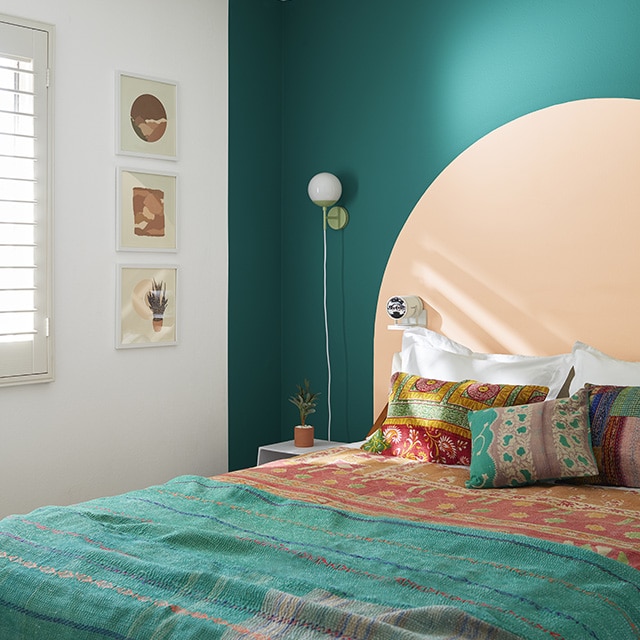
Understanding Color Psychology in Bedrooms
- Cool Tones (Calming): Blues, greens, and purples are renowned for their serene qualities. A deep navy can feel sophisticated and cozy, while a soft sage green can bring a sense of nature and tranquility. These are excellent choices for promoting relaxation and sleep.
- Warm Tones (Cozy, Energizing): Reds, oranges, and yellows can be stimulating. While a vibrant red might be too energetic for a bedroom, muted terra-cotta, rich ochre, or a deep blush can create a warm, inviting, and intimate atmosphere. Use these with caution, focusing on softer or deeper versions for a calming effect.
- Deep & Dramatic vs. Soft & Subtle: A dark charcoal gray, emerald green, or sapphire blue can create a luxurious, enveloping feel, almost like a cocoon. These are fantastic for larger rooms or if you want a sophisticated, moody vibe. Softer pastels or muted earth tones offer a gentler accent, bringing warmth and depth without overpowering the room. They work well in smaller spaces or if you prefer a light, airy feel with a touch of character.
Harmonizing with Existing Decor
Your accent wall shouldn’t exist in a vacuum. Consider your existing bedding, furniture, curtains, and artwork. Is there a color in your duvet cover you want to pull out? Does your rug have a subtle tone that could be amplified? Aim for a color that complements, contrasts harmoniously, or enhances your current palette. You don’t want your accent wall to clash; you want it to unite the room.
Testing Your Colors: The Swatch Test (Crucial Step!)
PLEASE, do not skip this. Paint colors look drastically different on a tiny chip than they do on a large wall, affected by light, surrounding colors, and even the sheen. Buy a few sample pots of your top contenders. Paint large swatches (at least 2’x2′) on your chosen accent wall. Observe them throughout the day and night. See how they look in natural daylight, under artificial lamps, and even in dim light. This step is invaluable and will save you from potential regret.
Paint Sheen & Finish: What’s Best for Bedrooms?
The finish of your paint impacts both its appearance and durability. For a bedroom, you generally want something that looks good but is also relatively easy to maintain.
| Sheen Type | Appearance | Durability | Best For Bedroom Accent Walls |
|---|---|---|---|
| Flat/Matte | No shine, velvety, hides imperfections well. | Least durable, difficult to clean, susceptible to scuffs. | Excellent for a sophisticated, soft look, especially with dark colors. Less practical if you have kids or pets who might scuff walls. |
| Eggshell | Very subtle, low sheen, like an eggshell. | More durable than flat, somewhat washable. | A popular choice for bedrooms; offers a soft appearance with better cleanability than flat. A great all-rounder. |
| Satin | Smooth, slightly glossy appearance, reflects a bit more light. | Good durability, washable, more resistant to moisture. | Excellent for higher traffic areas or if you want a subtle sheen. Can be a bit too reflective for some bedroom aesthetics, but very practical. |
| Semi-Gloss | Noticeable shine, very reflective. | Very durable, highly washable, resistant to scuffs. | Generally too shiny for main bedroom walls; best reserved for trim, doors, or specific architectural features on an accent wall if you want to highlight them further. |
Step 3: Gathering Your Arsenal – Essential Tools & Materials
Having the right tools makes all the difference for a smooth, professional-looking job. Don’t skimp here; quality tools will yield quality results.
| Tool/Material | Purpose |
|---|---|
| Accent Wall Paint | Your chosen color and sheen! Ensure you buy enough for at least two coats. |
| Primer (Optional but Recommended) | Ensures better adhesion, truer color, and even finish, especially when going from dark to light or vice-versa. |
| Painter’s Tape (e.g., FrogTape, ScotchBlue) | Crucial for crisp, clean lines where your accent wall meets other walls, ceiling, and baseboards. Spend a bit more for quality tape. |
| Angled Paint Brush (1.5″ – 2.5″) | Essential for “cutting in” – painting precise lines along edges, corners, and ceilings where rollers can’t reach. Get a good quality one with natural or synthetic bristles depending on paint type. |
| Paint Roller Frame & Covers (9″) | For quickly and evenly applying paint to the large, flat areas of the wall. Choose roller covers (naps) appropriate for your wall texture (e.g., 3/8″ for smooth walls, 1/2″ for slightly textured). |
| Paint Tray & Liners | Holds paint for your roller. Liners make cleanup a breeze. |
| Drop Cloths or Plastic Sheeting | To protect your floor, furniture, and any non-paintable surfaces from drips and splatters. Canvas drop cloths are more durable and less slippery than plastic. |
| Screwdriver | For removing switch plates and outlet covers. |
| Sanding Block or Fine-Grit Sandpaper | For smoothing out any wall imperfections or rough spots after cleaning/repairs. |
| Spackle or Joint Compound | For filling small nail holes and minor dings. |
| Damp Cloths/Sponges & Mild Cleaner | For cleaning your wall before painting and wiping up any immediate spills. |
| Paint Stir Stick | To thoroughly mix your paint before and during use. |
Step 4: Preparing Your Bedroom Wall for Perfection
Good prep work isn’t glamorous, but it’s the foundation of a flawless finish. Skipping these steps is the quickest way to end up with a DIY disaster.
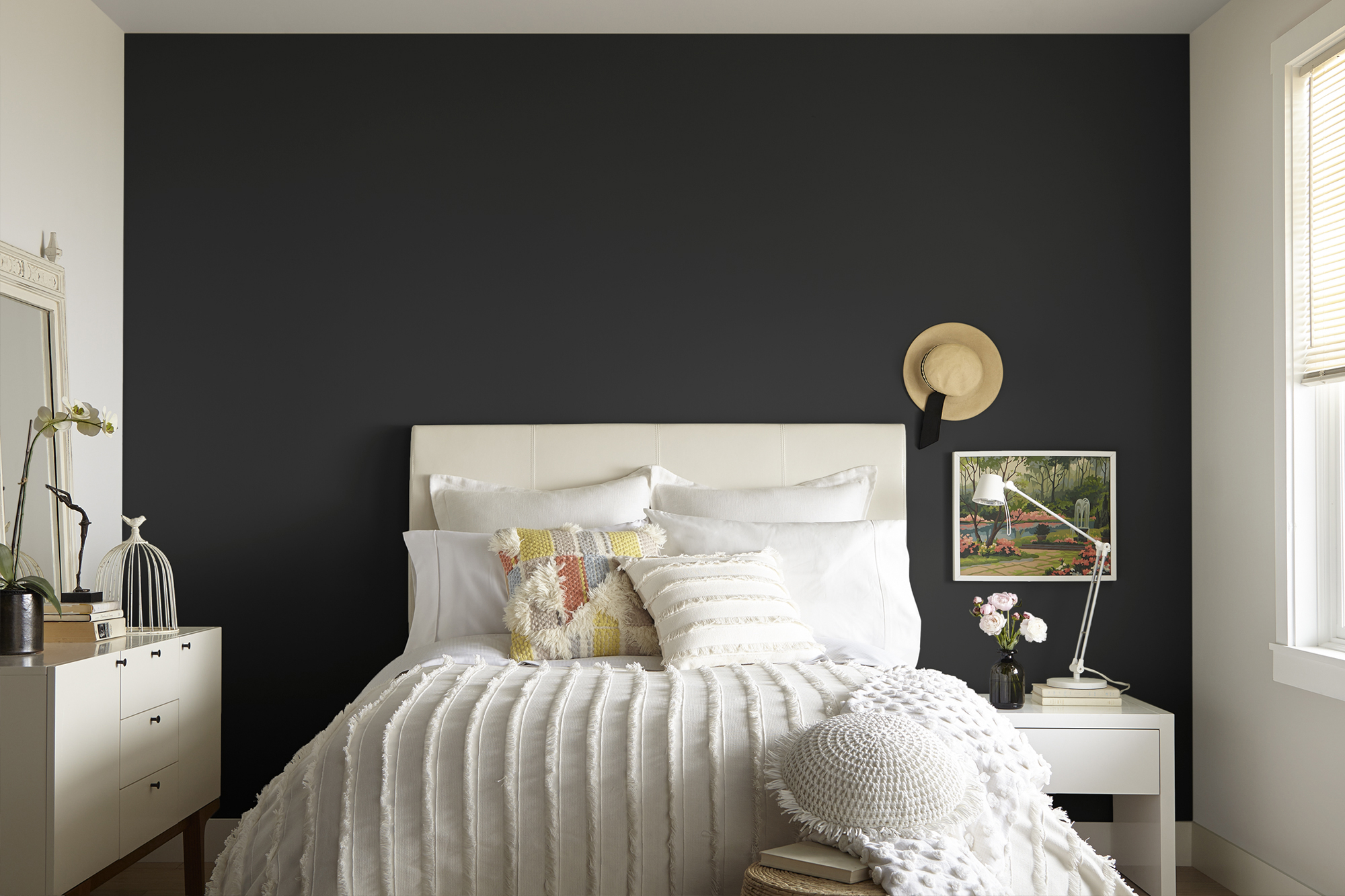
Clear the Area & Protect Furniture
Move all furniture away from the wall you’re painting. Ideally, push everything to the center of the room or out entirely. Cover any remaining furniture with drop cloths or plastic sheeting. Lay drop cloths generously on the floor, extending them beyond the baseboards. Remove any wall decor, picture frames, or shelving.
Clean the Wall: Dust, Grease, Grime
Dust and dirt are paint’s worst enemies. Use a damp cloth or sponge with a mild all-purpose cleaner (or a solution of warm water and a little dish soap) to thoroughly wipe down your accent wall. Pay attention to areas near headboards or nightstands where oils from skin or hair products might accumulate. Rinse with clean water and allow the wall to dry completely.
Repair Imperfections: Holes, Cracks
Fill any nail holes or small cracks with spackle or joint compound. Use a putty knife to apply, smooth it flush with the wall, and let it dry. Once dry, lightly sand the patched areas until smooth. Wipe away any sanding dust with a damp cloth.
Tape Off Edges Like a Pro: The Critical Role of Painter’s Tape
This is where precision pays off. Use high-quality painter’s tape to create crisp lines. Apply tape along the ceiling line, the baseboards, and any adjacent walls that you don’t want painted. Press the tape firmly with your finger or a putty knife to create a tight seal, preventing paint from bleeding underneath. Don’t stretch the tape as you apply it, or it might snap back and lift.
Step 5: Priming for Success (Don’t Skip This!)
Primer is the unsung hero of many painting projects. While some paints claim to be “paint and primer in one,” a dedicated primer often delivers superior results.
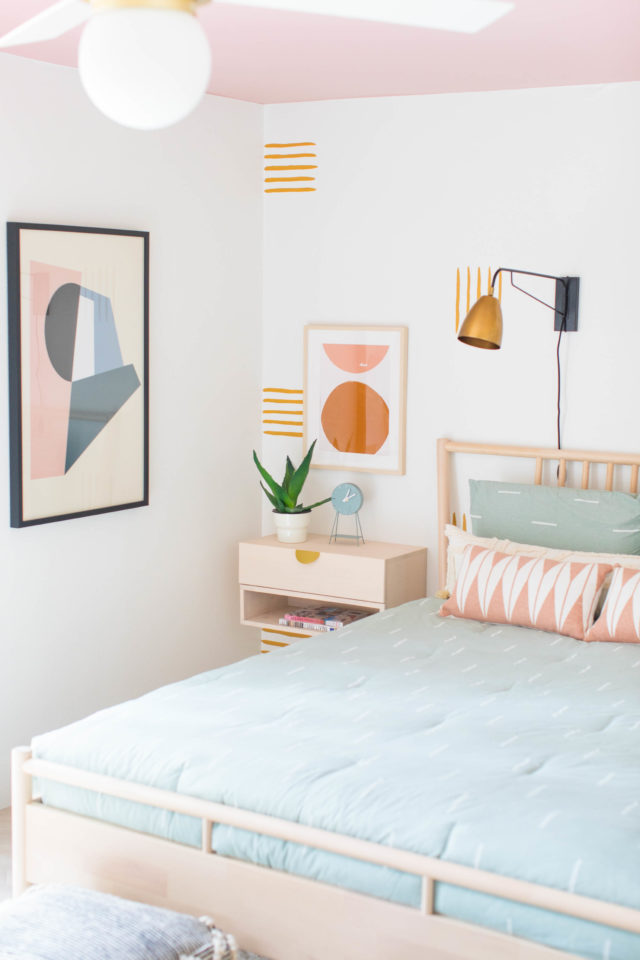
When is Primer Essential?
- Dramatic Color Changes: If you’re going from a very dark color to a very light one, or vice-versa, primer provides a neutral, uniform base. This helps the new color achieve its true tone in fewer coats.
- New Drywall or Patched Areas: Primer seals porous surfaces, ensuring even paint absorption and preventing a splotchy finish.
- Sheen Changes: If you’re painting over a glossy finish with a flat paint, primer helps the new paint adhere better.
- Stains: If your wall has water stains or other discolorations, a stain-blocking primer is a must to prevent them from bleeding through your new paint.
Benefits of a Good Primer
Primer creates a uniform surface for your paint, enhances its adhesion, and helps you achieve your desired color in fewer topcoats, ultimately saving you time and money on paint. Apply it just like you would paint, using your brush for cutting in and a roller for the main surface. Allow it to dry completely according to manufacturer instructions.
Step 6: The Painting Process – Rolling & Cutting In with Confidence
Alright, the moment of truth! With your prep done, painting is the fun part.
Pouring Paint & Loading Rollers
Stir your paint thoroughly with a stir stick until it’s uniformly mixed. Pour a moderate amount into your paint tray (don’t overfill). Dip your roller into the paint, rolling it back and forth on the textured part of the tray to evenly saturate the roller and remove excess. You want the roller loaded but not dripping.
Cutting In: Corners, Edges, Ceiling Line
Grab your angled brush. This is for all the areas your roller can’t reach. Carefully paint a strip (about 2-3 inches wide) along the ceiling line, the baseboards, and the taped edges of your accent wall. Use a steady hand and load your brush with enough paint to flow smoothly without dripping. Take your time here; clean lines are key to a professional look.
Rolling the Main Surface: W-Pattern, Even Coats
Once you’ve cut in, use your roller for the large sections. Start by rolling a ‘W’ or ‘M’ pattern on the wall, then fill in the pattern with vertical strokes, working from wet edge to wet edge. This technique helps ensure even coverage and prevents roller marks. Work in small sections, always keeping a wet edge to avoid lap marks. Apply moderate pressure; don’t press too hard. Aim for thin, even coats rather than one thick, gloppy coat.

Drying Times & Second Coats
Refer to your paint can for recommended drying times between coats – typically 2-4 hours. It’s crucial to let the first coat dry completely before applying the second. Most accent walls, especially with a dramatic color change, will require at least two coats for full, opaque coverage and a rich, even finish. Some deep colors might even benefit from a third.
Removing Tape: The “Wet” vs. “Dry” Debate
This is a common point of contention among DIYers! For the cleanest lines, I recommend removing painter’s tape while the final coat of paint is still slightly wet*. This prevents the paint from drying and forming a skin over the tape, which can cause the paint to peel off with the tape. If the paint has fully dried, you can try scoring the edge of the tape with a utility knife before peeling to prevent tearing, but removing it while slightly damp is usually best.
Step 7: The Grand Reveal – Finishing Touches & Cleanup
You’re almost there! Step back and admire your handiwork.
Inspecting Your Work
Once the tape is removed and the paint is dry, carefully inspect your wall. Look for any drips, smudges, or areas that might need a small touch-up. Small imperfections are common and usually easily fixed.
Touch-Ups
For minor touch-ups, use a small artist’s brush or a cotton swab. Apply paint sparingly, blending it into the surrounding area. If you find any paint bleed under the tape, carefully scrape it away with a razor blade (for small drips) or paint over it with your original wall color using a very fine brush.
Cleaning Tools
Clean your brushes and rollers immediately after painting. For latex paint, warm soapy water works wonders. Work the paint out of the bristles and roller nap until the water runs clear. Hang brushes to dry or store them flat. Rollers can be spun dry or left to air dry. Proper cleaning ensures your tools last for future projects.
Beyond the Basic Accent Wall: Creative Ideas for Your Bedroom
Once you’ve mastered the basic accent wall, the possibilities for your bedroom are endless:
- Geometric Patterns: Use tape to create bold stripes, chevron patterns, or abstract geometric shapes for a modern, artistic look.
- Two-Tone Walls: Paint the top half of the wall one color and the bottom half another, often separated by a chair rail or a crisp painted line.
- Textured Finishes: While this guide focuses on paint, consider wallpaper with a subtle texture or even faux wood paneling for an accent wall that adds tactile interest.
- Mural/Stenciling: For the truly adventurous, a hand-painted mural or a stenciled design can turn your accent wall into a true work of art.
Common Mistakes to Avoid When Painting an Accent Wall
Even seasoned DIYers can make mistakes. Here are the big ones to watch out for:
- Skipping Prep Work: A dirty or unprepared wall leads to paint that won’t adhere properly, an uneven finish, and visible imperfections. Don’t rush cleaning, patching, or sanding!
- Wrong Tape or Poor Application: Cheap tape or tape that isn’t pressed down firmly will result in messy, bleeding lines, completely ruining the crisp edge you’re aiming for. Invest in good tape and apply it meticulously.
- Inadequate Paint Coats: One coat of paint, especially with a color change, almost never looks good. It will be streaky and lack depth. Always plan for at least two, sometimes three, thin, even coats.
- Poor Color Choice Harmony: An accent wall that clashes with your existing decor or makes the room feel unbalanced will stick out for all the wrong reasons. Use those sample pots and consider the whole room.
- Rushing the Process: Painting is a patient craft. Don’t rush drying times, don’t rush applying tape, and don’t rush the actual painting. Taking your time will yield far superior results.
A well-executed accent wall in your bedroom isn’t just a paint job; it’s a statement. It’s an opportunity to infuse your personal style, create a calming retreat, and transform your most personal space into a designer-inspired haven. With the right planning, tools, and a bit of confidence, you’re now equipped to tackle this project and wake up to a bedroom you truly love. Happy painting!