Unlocking Serenity: The Definitive Guide to Gray Color Combinations for Your Bedroom
Let’s be real. Choosing the perfect color for your bedroom can feel like a high-stakes decision. It’s not just a wall color; it’s the backdrop to your dreams, your sanctuary, the place you unwind after a long day. And while countless colors vie for attention, one stands out as the unsung hero of versatility and sophistication: gray.
But here’s the kicker: just picking “gray” isn’t enough. The magic happens when you pair it with the right complementary hues. Done well, gray creates a serene, stylish, and deeply personal space. Done poorly, it can feel drab or uninspired. Don’t worry, I’m here to guide you. Forget the sterile, cold reputation some grays get; we’re going to dive deep into creating a bedroom that feels like a warm, comforting hug, or a sleek, modern retreat – whatever your heart desires.
Why Gray? The Ultimate Neutral for Bedroom Bliss
If you’re wondering why gray continually tops the charts for bedroom design, it’s simple: versatility and emotional impact. Gray is the ultimate chameleon. It can be calming, sophisticated, modern, rustic, warm, or cool. Unlike stark white, which can sometimes feel clinical, or bold colors that might overstimulate, gray offers a grounding presence. It’s the perfect canvas, allowing other colors, textures, and furniture to truly shine.
In a bedroom, this neutrality translates to uninterrupted relaxation. It doesn’t demand attention, but rather provides a soothing backdrop that promotes tranquility. Plus, it’s incredibly forgiving, making it easy to adapt your decor as your tastes evolve without repainting your entire room.
Mastering Gray: Understanding Undertones and Shades
Before we jump into combinations, let’s talk about the nuances of gray itself. Not all grays are created equal. Understanding their undertones is the secret sauce to successful pairing. Think of it like this: gray isn’t just black and white mixed; it often has subtle hints of other colors peeking through.
Cool Grays: The Modern & Serene Vibe
Cool grays have undertones of blue, green, or even purple. They tend to feel crisp, airy, and modern. Think of a stormy sky or a sleek urban loft. These grays are fantastic for creating a calm, collected, and contemporary atmosphere. They work beautifully with other cool tones or can provide a stark contrast to warm accents.
Warm Grays: The Cozy & Inviting Feel
On the flip side, warm grays (often called “greige”) have undertones of brown, yellow, or red. These grays feel incredibly inviting, cozy, and organic. They prevent a room from feeling too sterile and are perfect for creating a snug, welcoming retreat. If you’re after a farmhouse aesthetic or a space that feels more traditional, warm grays are your go-to.
Light vs. Dark Grays: Impact on Space and Mood
The depth of your gray also plays a huge role:
- Light Grays: Open up a space, make it feel larger and brighter. Ideal for smaller bedrooms or those lacking natural light. They evoke an airy, ethereal quality.
- Medium Grays: Offer a balanced feel – sophisticated without being too imposing. They’re incredibly versatile and work well with most color combinations.
- Dark Grays (Charcoal, Slate): Create drama, intimacy, and a sense of grounding. Best in larger rooms or paired with ample lighting and lighter accents to avoid feeling cavernous. They can make a bedroom feel incredibly luxurious and cocooning.
The Best Gray Color Combinations for Every Bedroom Mood
Now, for the main event! Here are my top picks for gray color combinations, designed to help you achieve the bedroom of your dreams. Each combination comes with a mood, an explanation of why it works, and actionable design tips.
| Combination | Achieved Mood | Best Gray Undertone | Key Design Elements to Incorporate |
|---|---|---|---|
| Gray & White | Timeless, Clean, Minimalist, Airy | Any (Cool for crisp, Warm for soft) | Layered textures (linens, knits), wood tones, metallic accents (silver, gold), varied white shades. |
| Gray & Blue | Tranquil, Serene, Sophisticated, Coastal | Cool Grays | Navy bedding, dusty blue throws, natural wood, silver accents, ocean-inspired art. |
| Gray & Green | Organic, Refreshing, Calming, Nature-Inspired | Warm or Cool Grays | Live plants, botanical prints, sage or emerald textiles, natural wood, rattan, earth tones. |
| Gray & Blush Pink | Soft, Romantic, Gentle, Modern Feminine | Light Warm Grays | Velvet cushions, brass accents, floral art, creamy whites, soft lighting. |
| Gray & Mustard Yellow/Gold | Energetic, Chic, Eclectic, Vibrant (as accent) | Medium to Dark Cool Grays | Accent pillows, throws, abstract art, gold metallic lamps, geometric patterns. |
| Gray & Deep Plum/Lavender | Luxurious, Dramatic, Regal, Serene | Medium to Dark Cool Grays | Velvet upholstery, silver or dark wood, subtle patterns, mood lighting, fresh flowers. |
| Gray & Orange/Terracotta | Earthy, Warm, Inviting, Mediterranean/Boho | Light to Medium Cool Grays | Textured throws, terracotta pottery, natural fibers, brass, graphic prints. |
| Gray & Black | Bold, Sleek, Modern, Dramatic, Urban | Light to Medium Grays | Metal accents, graphic art, white linens, rich textures (faux fur), minimalist furniture. |
| Monochromatic Gray | Sophisticated, Layered, Understated Luxury, Calm | Any (blend of shades) | Diverse textures (wool, silk, linen), reflective surfaces (mirrors, glass), subtle patterns, varying gray tones. |
1. Gray & White: Timeless Elegance and Minimalist Calm
This is the classic for a reason. Gray and white together create a bedroom that is crisp, clean, and undeniably elegant. It’s a pairing that feels both fresh and timeless, perfect for those who crave a serene and uncluttered space.
:strip_icc()/poppy-red-mink-gray-bedroom-4fe0569b-b3c4aed1be2f4128a987f9c0d380d1b1.jpg "20 Gray Color Schemes that Showcase the Timeless Neutral")
Mood: Clean, airy, sophisticated, minimalist.
Why it works: White provides a sharp contrast to gray, making the space feel bright and expansive. It prevents gray from feeling too heavy and adds a sense of purity. This combination is incredibly flexible, allowing you to play with different shades of both gray and white.
Design tips:
- Layer those textures: Since you’re working with a limited color palette, texture becomes your best friend. Think chunky knit throws, linen bedding, a faux fur rug, or velvet pillows.
- Vary your whites: Don’t just stick to stark white. Introduce off-whites, creams, and ivories to add subtle depth and warmth.
- Introduce metallics: Silver, chrome, or even brushed gold accents can add a touch of glamour without overpowering the calm aesthetic.
- Add wood tones: Natural wood furniture (light oak, warm walnut) prevents the room from feeling too sterile and introduces organic warmth.
2. Gray & Blue: Tranquil Retreats and Coastal Calm
Gray and blue are a match made in heaven for creating a genuinely tranquil and sophisticated bedroom. Both colors are inherently calming, and when combined, they evoke the serene feeling of the sky or ocean.
Mood: Serene, peaceful, sophisticated, coastal, masculine or feminine depending on blue shade.
Why it works: Blue is a natural complement to cool grays, enhancing their calming properties. Warmer grays can be beautifully balanced by cooler blues, creating a harmonious contrast.
Design tips:
- Navy blue: Paired with a light or medium gray, navy brings depth and a sophisticated, almost nautical feel. Think navy bedding or an accent wall.
- Dusty or muted blue: For a softer, more ethereal look, combine light gray walls with dusty blue textiles or accent furniture.
- Teal or robin’s egg blue: Introduce these vibrant blues as pops of color through cushions, artwork, or decorative objects against a neutral gray backdrop for a touch of lively freshness.
- Balance with neutrals: Use white or cream in bedding and trim to prevent the blues and grays from feeling too heavy.
3. Gray & Green: Nature-Inspired Harmony and Renewal
Bringing the outdoors in is a timeless design principle, and pairing gray with green is a fantastic way to achieve it. This combination feels fresh, organic, and incredibly calming, reminiscent of a peaceful forest or a lush garden.
Mood: Organic, refreshing, calming, natural, renewing.
Why it works: Green symbolizes nature, growth, and tranquility, perfectly complementing gray’s grounding qualities. Different shades of green can create vastly different moods, all of which are harmonious with gray.
Design tips:
:max_bytes(150000):strip_icc()/MaryPatton_Lupton-16-4552f4762d9e43fe9868882545f655d6.jpeg "15 Best Gray Bedroom Color Schemes and Design Ideas")
- Sage green: Combine light gray with soft sage green for an incredibly soothing, spa-like feel. Use it on bedding, curtains, or even a subtle accent wall.
- Emerald or forest green: For a more dramatic and luxurious look, pair a rich, dark gray with deep emerald or forest green velvet accents, furniture, or a bold art piece.
- Live plants: Incorporate actual plants to enhance the natural vibe. Their varied textures and living greens add instant life.
- Natural materials: Wood, rattan, and linen textures will reinforce the organic feel of this combination.
4. Gray & Blush Pink: Soft Romance and Gentle Warmth
If you’re looking for a bedroom that feels soft, romantic, and incredibly chic, gray and blush pink is an exquisite choice. This pairing has shed its overly feminine reputation and now stands as a symbol of modern elegance and gentle warmth.
Mood: Soft, romantic, gentle, sophisticated, cozy, modern feminine.
Why it works: The coolness of gray perfectly balances the warmth and sweetness of blush pink, preventing it from feeling saccharine. It creates a harmonious contrast that is both inviting and refined.
Design tips:
- Accent, don’t overwhelm: Use blush pink primarily in textiles – pillows, throws, a rug, or an upholstered headboard – against gray walls or bedding.
- Metallic accents: Brass or rose gold hardware and decor pieces look absolutely stunning with this combination, adding a touch of sophisticated glamour.
- Introduce creamy whites: Use creamy white for trim, bedding, or lampshades to soften the transition between gray and pink.
- Velvet textures: Blush pink velvet adds an instant touch of luxury and softness, enhancing the romantic feel.
5. Gray & Mustard Yellow (or Gold): Pops of Personality and Modern Vibrancy
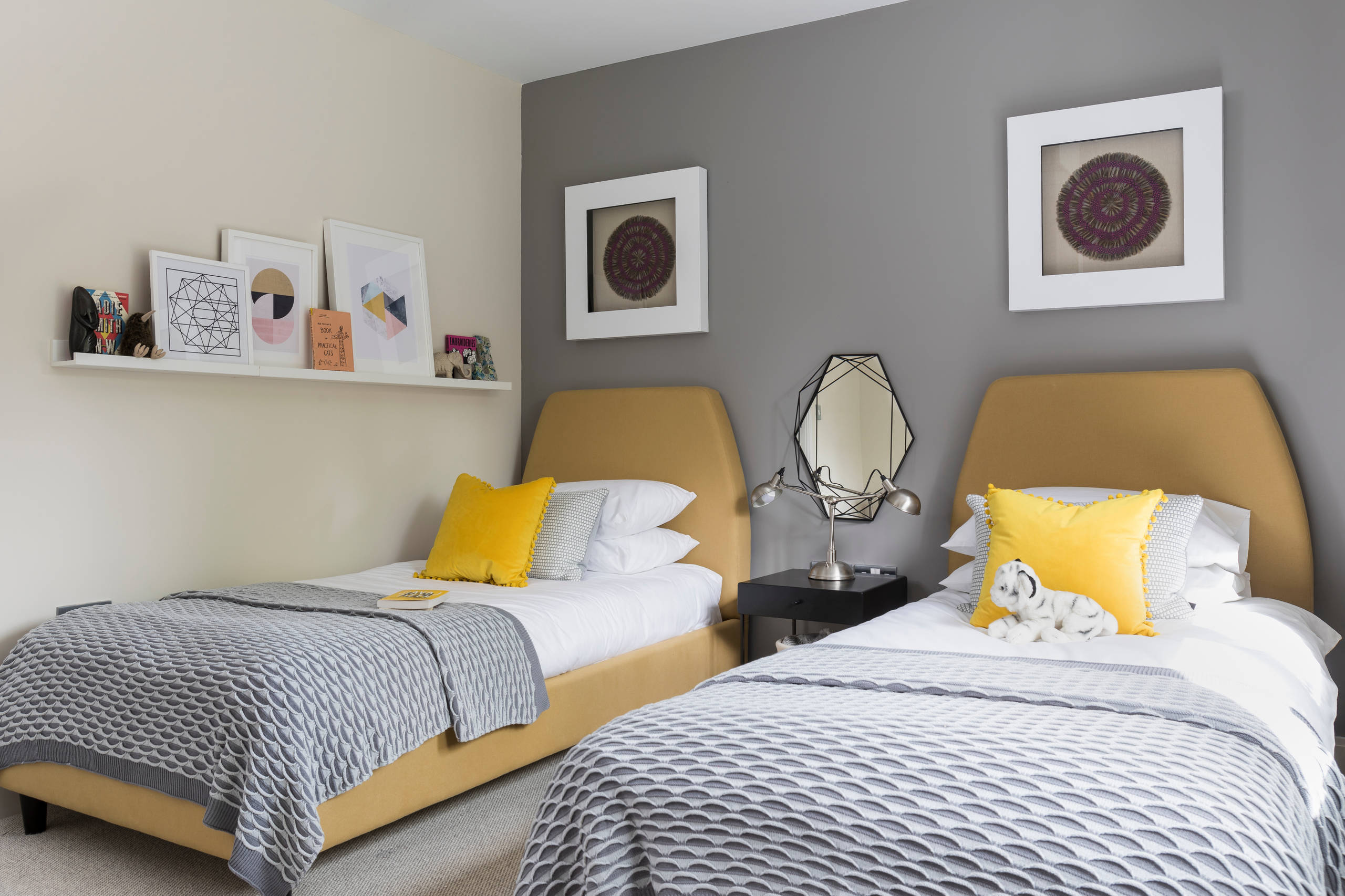
For those who crave a bit more personality and modern flair, pairing gray with mustard yellow or gold is an unexpected delight. It’s bold, chic, and can instantly elevate a neutral gray space from calm to captivating.
Mood: Energetic, chic, eclectic, vibrant (as an accent), sophisticated.
Why it works: The warmth and vibrancy of mustard yellow or the gleam of gold provide a striking contrast against the coolness of gray, creating a dynamic and visually interesting space. It adds a much-needed focal point and energy.
Design tips:
- Use as an accent: Mustard yellow or gold is best used in smaller doses. Think throw pillows, a unique lamp, a piece of artwork, or a statement chair.
- Pair with darker grays: A charcoal or deep slate gray wall provides a perfect moody backdrop for mustard to truly pop.
- Mix finishes: If using gold, mix with matte black or dark wood furniture for a contemporary edge.
- Consider patterns: Geometric patterns incorporating gray and mustard can add a playful, modern touch.
6. Gray & Deep Plum/Lavender: Luxurious Depth and Regal Serenity
If you’re aiming for a bedroom that feels both opulent and deeply serene, look no further than the combination of gray with deep plum or a rich lavender. This pairing exudes sophistication and a touch of dramatic luxury.
Mood: Luxurious, dramatic, regal, serene, introspective.
Why it works: Plum and lavender, with their underlying red and blue tones, offer a beautiful richness that complements gray’s neutrality. Deep plums add warmth and intimacy, while lavenders bring a soft, dreamlike quality.
Design tips:
- Textural opulence: Introduce plum or lavender through luxurious textures like velvet, silk, or satin bedding and curtains.
- Accent wall: Consider a deep plum accent wall against lighter gray walls to create a dramatic focal point.
- Metallic complements: Silver, chrome, or even pewter accents enhance the regal feel of this combination.
- Soft lighting: Dimmers and warm lighting are crucial to highlight the richness of these colors and maintain a serene mood.
7. Gray & Orange/Terracotta: Earthy Warmth and Mediterranean Flair
For a bedroom that feels sun-drenched, inviting, and wonderfully earthy, combine gray with shades of orange or terracotta. This pairing offers a delightful contrast of cool and warm, perfect for a bohemian, rustic, or Mediterranean-inspired space.
Mood: Earthy, warm, inviting, vibrant, bohemian, Mediterranean.
Why it works: Orange, particularly in its muted or rustic forms (terracotta, rust), brings immense warmth and a grounded, natural feel that beautifully offsets the coolness of many grays. It creates a sense of comfort and vibrancy.
Design tips:
- Embrace terracotta: Use terracotta pottery, textured throws, or a subtly patterned rug to introduce this earthy orange.
- Burnt orange accents: Introduce burnt orange through cushions, a statement armchair, or even a piece of abstract art.
- Natural fibers: Linen, cotton, and woven textures will enhance the organic, tactile feel of this combination.
- Balance with lighter grays: Lighter grays allow the warmth of orange to truly shine without overwhelming the space.
8. Gray & Black: Bold Sophistication and Modern Drama
If you’re aiming for a sleek, ultra-modern, and undeniably sophisticated bedroom, gray and black is a powerful duo. This combination is all about intentional design, strong lines, and a dramatic urban aesthetic.
Mood: Bold, sleek, modern, dramatic, urban, minimalist.
Why it works: Black provides ultimate contrast and definition against gray, instantly elevating the space with a sense of formality and high design. It’s a statement combination that speaks of confidence and understated luxury.
Design tips:
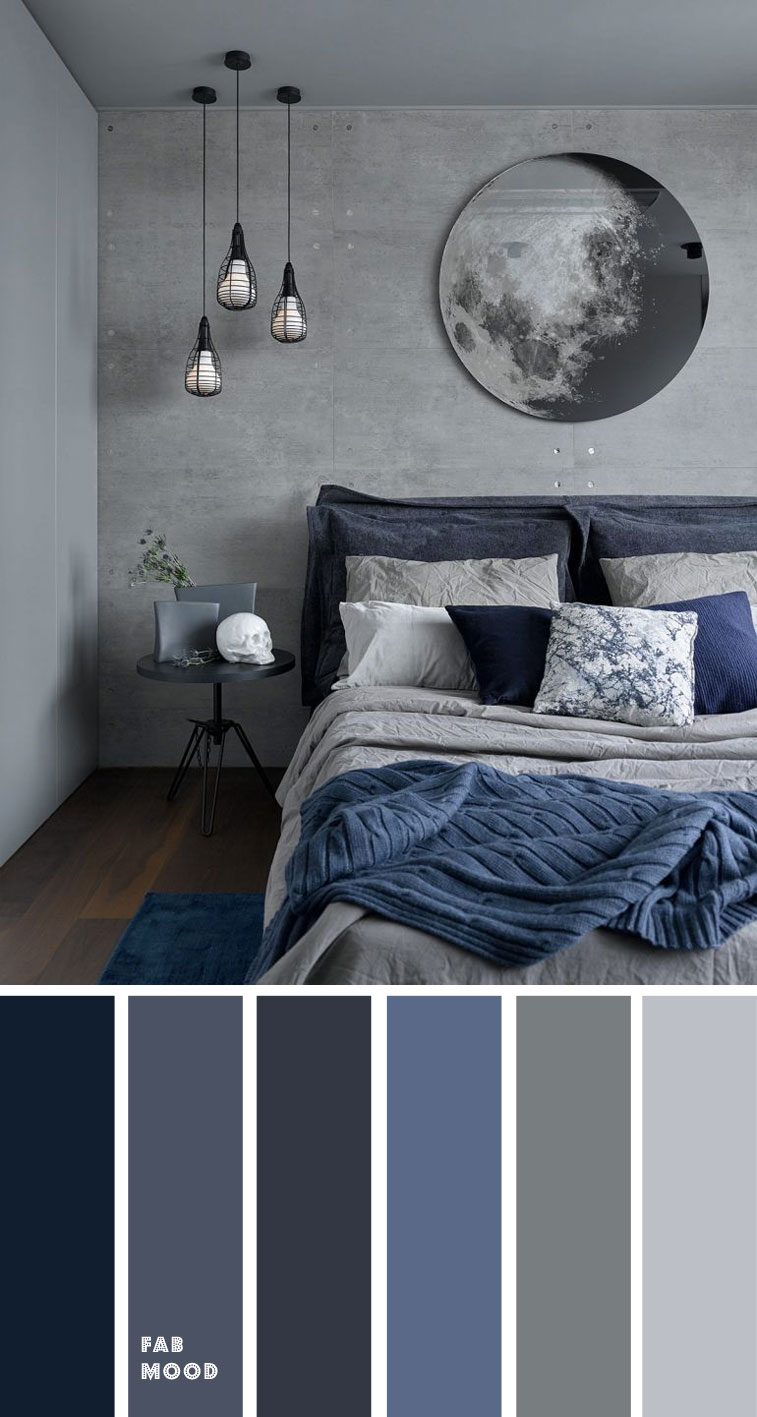
- Strategic use of black: Black is best used in smaller, impactful doses: a bed frame, picture frames, light fixtures, or a single accent wall.
- Vary gray shades: Use a lighter gray for walls and deeper grays in bedding or rugs to create subtle shifts in tone.
- White for relief: Crisp white bedding or trim can prevent the room from feeling too dark or heavy, adding a necessary visual break.
- Focus on texture: Introduce different textures – faux fur, sleek metal, matte black finishes – to add depth without relying on color.
9. Monochromatic Gray: Layered Depth and Understated Luxury
Who says you need another color to make gray interesting? A monochromatic gray bedroom, using various shades of gray, can be incredibly sophisticated, serene, and deeply luxurious. It’s all about layering and playing with subtle differences.
Mood: Sophisticated, layered, understated luxury, calm, architectural.
Why it works: By using different shades of gray (light, medium, dark) and varying undertones (cool, warm) within the same space, you create depth and visual interest without introducing another hue. It’s a minimalist approach that maximizes impact.
Design tips:
- Mix your grays: Combine a light gray wall with a charcoal upholstered headboard, medium gray bedding, and a silver-gray rug.
- Texture is paramount: This is where texture truly shines. Think chunky knits, smooth silk, plush velvet, rough linen, and sleek metallics.
- Reflective surfaces: Mirrors, glass tabletops, or metallic accents add shine and help bounce light around, preventing the space from feeling flat.
- Subtle patterns: Incorporate patterns that are tone-on-tone (e.g., a gray damask wallpaper, a textured gray rug) for added visual interest without introducing new colors.
Beyond Paint: Incorporating Gray Combinations Through Design Elements
Your bedroom’s color story doesn’t end with wall paint. In fact, some of the most impactful changes come from thoughtfully chosen elements throughout the room. Here’s how to weave your chosen gray combination into every aspect of your design:
Textiles & Bedding: The Easiest Way to Introduce Color
Your bedding is the largest single element in your bedroom and often the easiest to change. Use it to introduce your chosen accent color. For instance, if you have light gray walls, a deep navy duvet cover or a blush pink throw can instantly define your color scheme. Don’t forget curtains, rugs, and throw pillows – they’re perfect for layering colors and textures.
Furniture: How Different Finishes Complement Gray
The material and finish of your furniture can significantly impact your gray color combination. Light woods (birch, natural oak) pair beautifully with lighter, airier gray schemes. Dark woods (walnut, mahogany) add depth and sophistication, often working well with deeper grays or providing warmth to cooler ones. Painted furniture (white, black, or even a subtle accent color) can either blend seamlessly or provide a striking contrast.
Lighting: Setting the Mood and Highlighting Colors
Lighting is crucial in a gray bedroom. Good lighting can bring your chosen colors to life, while poor lighting can make even the best combination feel dull. Consider:
- Natural light: Maximize it! Sheer curtains can filter light beautifully without blocking it entirely.
- Layered lighting: Combine overhead lighting with ambient lamps (table lamps, floor lamps) and task lighting (reading lamps) to create different moods.
- Bulb temperature: Warm white bulbs (2700K-3000K) create a cozy, inviting atmosphere, perfect for most bedrooms. Cool white bulbs (4000K+) can make grays feel crisper but might feel too stark for a relaxing space.
Artwork & Accessories: Pops of Color and Personal Touches
Artwork, vases, decorative objects, and even books can be powerful tools for injecting your accent color. They allow for small, controlled bursts of color that can be easily changed when you want a refresh. This is also where you can truly let your personality shine, choosing pieces that resonate with you and reinforce the mood you’re aiming for.
Practical Tips for Choosing Your Perfect Gray Combo
Ready to make your choice? Here are a few final pointers to ensure you nail your gray bedroom combination:

- Consider Your Room’s Natural Light: Rooms with abundant natural light can handle darker grays and more intense accent colors. North-facing rooms, which get cooler light, often benefit from warmer grays and brighter accents to prevent feeling chilly.
- Think About Existing Elements: Don’t ignore your flooring, built-in cabinetry, or any furniture you’re keeping. These existing elements are part of your color palette and should influence your gray choice and its pairings.
- Test Swatches (Paint and Fabric!): This is non-negotiable. Paint large swatches on different walls and observe them throughout the day in various lighting conditions. Do the same with fabric samples for bedding and curtains.
- Don’t Be Afraid to Mix Shades and Textures: A truly rich room isn’t one-dimensional. Layering different shades of gray and combining varied textures is key to creating depth and interest.
- Aim for Balance: Even with a bold accent color, the goal is harmony. Ensure your chosen colors feel balanced within the space. Often, an 80/20 or 70/30 rule (dominant color/accent color) works well.
Common Gray Bedroom Decorating Mistakes to Avoid
Even with the best intentions, it’s easy to stumble. Here are a few common pitfalls to steer clear of:
- Ignoring Undertones: This is the biggest culprit for a “cold” or “muddy” gray room. A warm gray with cool blue accents can clash. Always consider those subtle background colors in your gray.
- Too Much of One Color/Shade: A monochromatic scheme works when you vary shades and textures. If everything is the exact same medium gray, it will fall flat.
- Forgetting Texture: Especially in neutral schemes, a lack of texture leads to a dull, uninviting space. Add textiles, wood grains, metals, and different finishes.
- Poor Lighting Choices: As mentioned, lighting can make or break a gray room. Ensure you have ample light, and choose bulbs with a warm color temperature to avoid a sterile feel.
- Overlooking the Ceiling: Don’t just paint it white by default. A very light gray, or even a soft accent color, can complete the room’s envelope beautifully.
Conclusion: Your Gray Bedroom Awaits
Gray in the bedroom is far from boring; it’s a foundation for endless possibilities. From the crisp minimalism of gray and white to the dramatic flair of gray and plum, your ideal serene sanctuary is within reach. By understanding gray’s nuances, strategically choosing your complementary colors, and paying attention to texture and lighting, you can craft a space that not only looks stunning but genuinely supports your rest and well-being. So, go ahead – embrace the power of gray, and create a bedroom that’s perfectly, beautifully you.
Frequently Asked Questions
What shades of gray are best for bedrooms?
The best gray shade depends on the desired mood and existing light. Light grays (e.g., Benjamin Moore’s ‘Classic Gray’) make small rooms feel larger and brighter, creating an airy feel. Medium grays (e.g., Sherwin-Williams’ ‘Repose Gray’) are versatile and sophisticated. Dark grays (e.g., Farrow & Ball’s ‘Down Pipe’) create drama and intimacy, ideal for larger spaces or accent walls. Always consider the gray’s undertones (cool with blue/green, warm with brown/yellow) to match your desired aesthetic.
How do I make a gray bedroom feel warm and inviting?
To warm up a gray bedroom, opt for gray paints with warm undertones (greige). Incorporate warm accent colors like blush pink, mustard yellow, terracotta, or deep plum. Introduce natural wood furniture, gold or brass metallic accents, and layered textiles in cozy materials like wool, cashmere, and faux fur. Warm lighting (2700K-3000K bulbs) is also crucial for a snug ambiance.
Can I use dark gray in a small bedroom?
Yes, you can use dark gray in a small bedroom, but strategically. It can create a ‘cocooning’ effect, making the space feel intimate and luxurious rather than cramped. To prevent it from feeling too heavy, balance dark gray walls with plenty of white or light-colored bedding, furniture, and trim. Ensure ample lighting, including layered ambient and task lighting, and incorporate reflective surfaces like mirrors to bounce light around.
What colors should I avoid combining with gray in a bedroom?
While gray is highly versatile, be cautious with overly bright, saturated primary colors like neon green or harsh red, as they can clash with gray’s calming nature and detract from a serene bedroom environment. Also, avoid pairing cool grays with muddy, undefined warm colors that lack vibrancy, as this can result in a drab, uninspired look. Always consider the undertones; a cool gray with a clashing warm-toned accent can feel off.
How can I add personality to a gray bedroom?
Adding personality to a gray bedroom is all about thoughtful layering. Introduce vibrant or unique accent colors through textiles (pillows, throws), artwork, and decorative accessories. Incorporate varied textures like velvet, linen, chunky knits, and wood grains. Choose unique furniture pieces, add personal photos, or display travel souvenirs. Unique lighting fixtures or an accent wall with wallpaper can also infuse character.
Is gray a good color for promoting sleep?
Yes, gray is considered an excellent color for promoting sleep. Its neutral and calming qualities create a serene and balanced environment, free from visual overstimulation. Lighter, cooler grays can evoke a sense of spaciousness and tranquility, while deeper, warmer grays or greiges can create a cozy, cocoon-like feeling, both conducive to rest. The key is to pair it with other soothing colors and textures.
What kind of lighting works best in a gray bedroom?
Layered lighting is best for a gray bedroom to create different moods and avoid flatness. Combine ambient overhead lighting (preferably on a dimmer) with task lighting (bedside lamps for reading) and accent lighting (picture lights or sconces). Opt for light bulbs with a warm color temperature (around 2700K-3000K) to create a cozy, inviting glow that prevents gray from appearing cold or stark. Natural light should also be maximized where possible.