Beyond the Bachelor Pad: The Definitive Guide to Bedroom Paint Colors for Men
Your bedroom isn’t just a place to crash; it’s your personal sanctuary, your command center, your retreat. It’s where you start and end your day, and the colors on its walls play a massive role in setting the tone for your entire life. If you’re tired of bland, uninspiring walls, or you’re moving beyond the stereotypical ‘bachelor pad’ look, you’re in the right place.
Choosing the perfect paint color for a man’s bedroom goes far beyond simply picking a dark shade. It’s about crafting an atmosphere that reflects your style, provides comfort, and supports your lifestyle. Whether you crave a serene escape, an energized workspace, or a sophisticated lounge, the right color can transform your space. I’m here to guide you through the process, moving past generic advice to give you actionable insights and inspiring ideas.
Decoding “Masculine”: What Do Men Really Look for in a Bedroom Color?
Let’s be real: the term “masculine bedroom” often conjures up images of dark grays, stark whites, or deep blues. While these are certainly popular and valid choices, they don’t encompass the full spectrum of what men truly seek in their personal space. Your bedroom should be an extension of your personality, not a one-size-fits-all stereotype.
It’s More Than Just Dark Tones
While darker, richer hues can certainly add depth and sophistication, many men also appreciate lightness, warmth, and even subtle pops of color. The key isn’t darkness; it’s intention. It’s about creating a mood, reflecting functionality, and providing comfort that resonates with you.
Key Elements of a Man’s Personal Space
When I think about what makes a bedroom truly great for a man, these elements often come to mind:
- Functionality: A space that serves its purpose, whether that’s sleeping, working, or relaxing.
- Comfort: A cozy, inviting atmosphere that promotes rest and relaxation.
- Sophistication: A sense of maturity and refined taste, without being overly ornate.
- Calmness: A haven from the daily grind, promoting peace and mental clarity.
- Energy: For some, a subtle vibrancy that inspires and invigorates.
- Individuality: A reflection of personal hobbies, interests, and overall aesthetic.
The right paint color can underpin all of these elements, setting the stage for a room that feels authentically yours.
The Core Palette: Timeless Bedroom Paint Colors for Men
Ready to explore some tried-and-true colors that transcend trends? These are the classics, refined and ready for your personal touch. Remember, every color has nuances, and I’ll help you uncover them.
Sophisticated Neutrals: The Foundation of Any Style
Neutrals are anything but boring when chosen with intent. They provide a versatile backdrop, allowing your furniture, art, and personal items to shine while maintaining a sense of calm and sophistication.
-
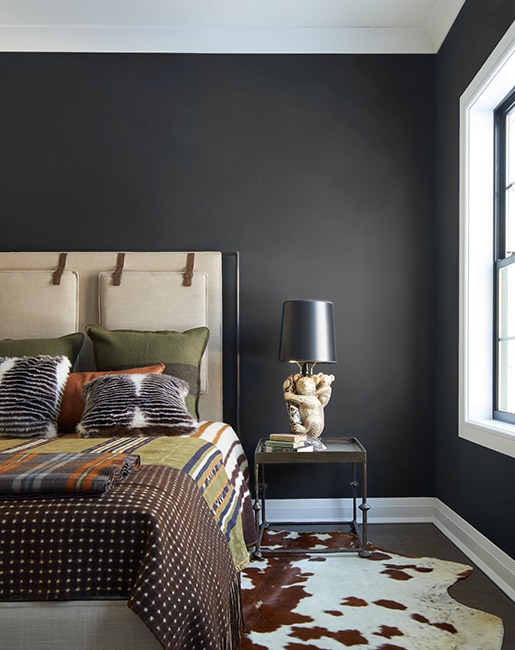
Deep Grays & Charcoal: These aren’t just colors; they’re statements. A rich charcoal gray provides a sense of grounding and modern elegance. It’s incredibly versatile, pairing beautifully with both warm woods and cool metals. Think of it as the ultimate power neutral – strong, confident, and endlessly adaptable. Consider a charcoal gray with a subtle blue or green undertone for added depth.How to use it: On all four walls for a dramatic, enveloping feel, or as an accent wall to highlight a bed frame or artwork.
-
Warm Greiges & Taupes: If pure gray feels too cold, greige (a blend of gray and beige) or taupe offers a fantastic alternative. These colors bridge the gap between warm and cool, creating an inviting, cozy atmosphere without sacrificing sophistication. They have an organic, earthy feel that makes a room feel instantly more welcoming. They are especially good at complementing natural materials like wood and leather.How to use it: Ideal for smaller rooms where you want warmth without darkness, or as a soothing backdrop for a minimalist aesthetic.
-
Crisp Off-Whites: Forget stark, sterile white. I’m talking about off-whites with subtle undertones – perhaps a hint of cream, greige, or even a barely-there blue. These colors brighten a space, make it feel larger, and provide a clean, fresh canvas. They’re perfect for minimalist, industrial, or Scandinavian-inspired bedrooms, allowing textures and finishes to take center stage.How to use it: For a clean, open feel, particularly in rooms with abundant natural light. Pair with dark trim for a sharp contrast.
Cool & Collected: Blues That Bring Serenity
Blue is consistently a top choice for bedrooms, and for good reason. It’s associated with calmness, stability, and intelligence – ideal qualities for a restful retreat.
-
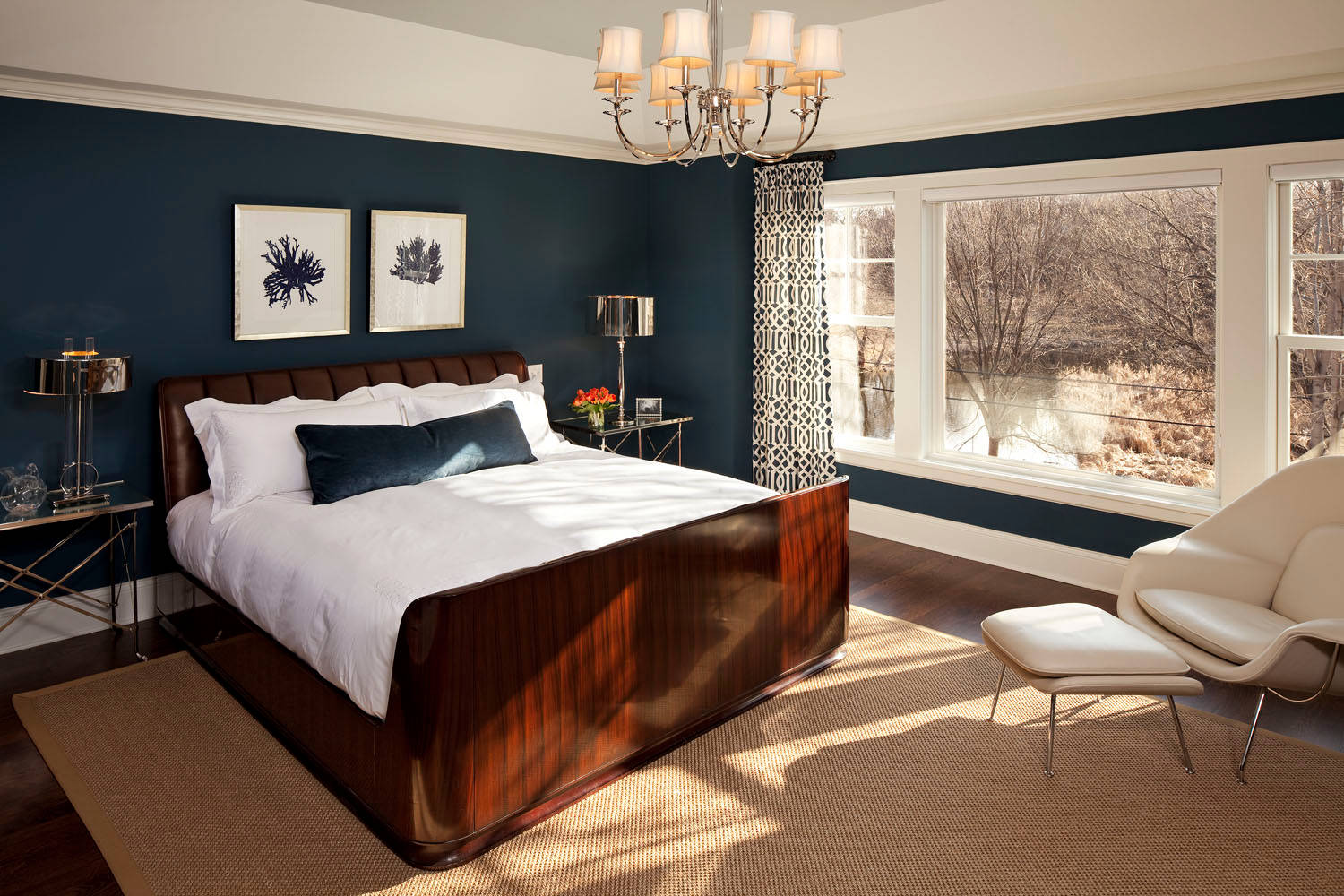
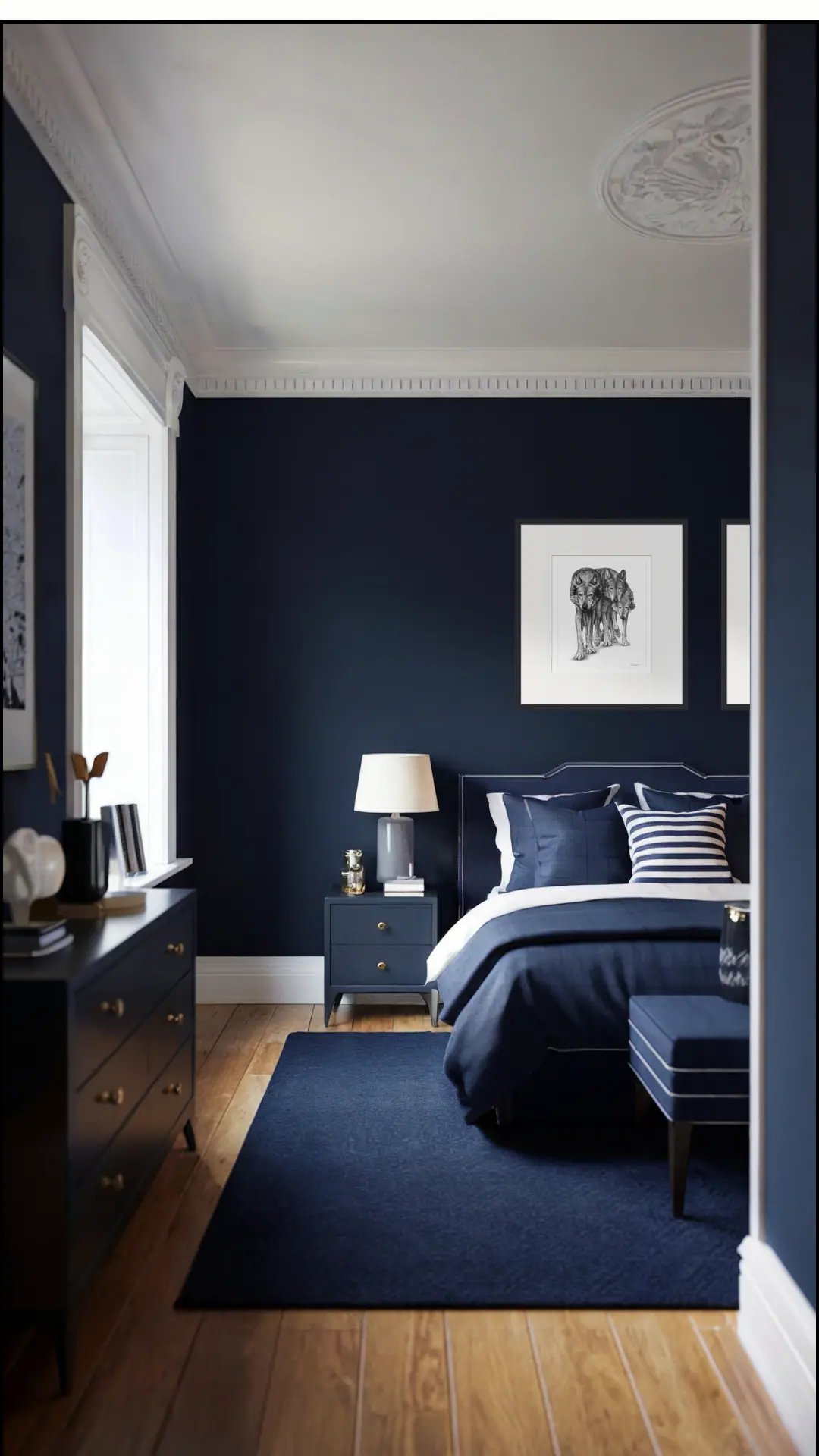
Navy & Deep Blues: Classic, elegant, and deeply calming. A rich navy blue provides a sense of authority and sophistication. It’s a fantastic choice for creating a cozy, den-like atmosphere, especially when paired with warm lighting and rich textures. While dark, it often feels less imposing than black, offering a gentler depth.How to use it: On an accent wall behind the bed, or on all walls in a larger room to create a cocooning effect. Balance with lighter bedding and furniture.
-
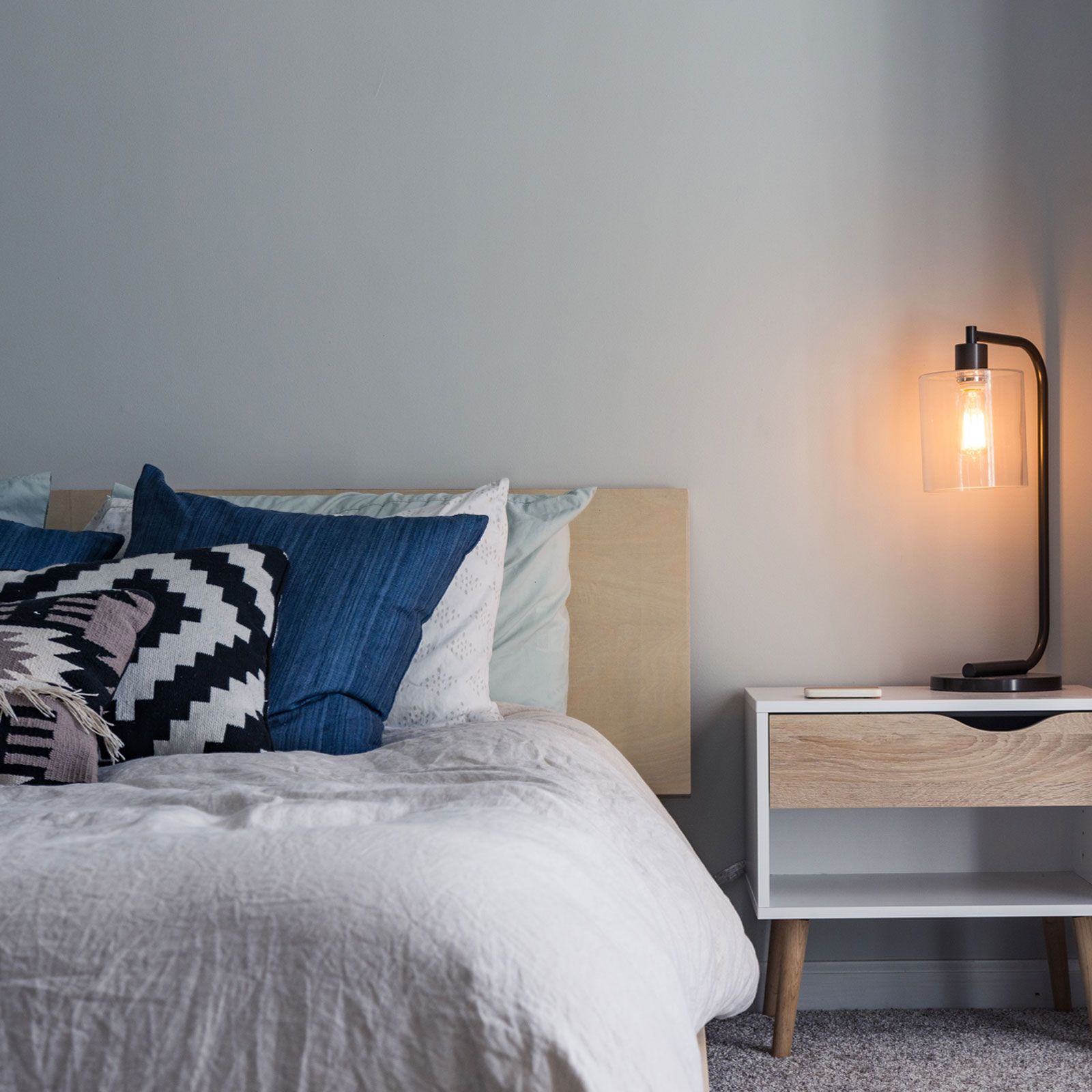
Dusty Blues & Teal: For a more nuanced approach, consider a dusty blue or a muted teal. Dusty blues have a soft, almost vintage quality that feels sophisticated and relaxed, while teal introduces a hint of green, making it feel richer and more complex. These colors can evoke a sense of coastal tranquility or modern chic, depending on their undertones and what you pair them with.How to use it: A great choice for bringing subtle color without overwhelming the space. Works well with both warm wood tones and crisp whites.
Earthy & Grounded: Connecting with Nature
Bringing elements of the outdoors in can create an incredibly soothing and organic environment. Earthy tones are having a major moment, and for good reason – they connect us to nature, promoting a sense of peace.
-
Rich Greens (Forest, Olive, Sage): From the deep tranquility of forest green to the soothing serenity of sage, greens are incredibly versatile. Forest green offers depth and a touch of drama, perfect for a sophisticated, nature-inspired retreat. Olive green brings a muted, organic warmth, while sage is light, airy, and inherently calming. They pair beautifully with wood, leather, and natural fibers.How to use it: Sage is excellent for all walls in any room size. Deeper greens work best on an accent wall or in larger rooms to maintain balance.
-
Warm Browns & Terracottas: Often overlooked, warm browns and terracottas can create an incredibly inviting and rustic atmosphere. Think of a rich, chocolate brown for a luxurious, masculine library feel, or a burnt terracotta for a hint of Southwestern warmth. These colors are fantastic for creating a cozy, cabin-like vibe, especially when paired with rough-hewn wood furniture and robust textures.How to use it: Best used strategically, perhaps an accent wall or in a room with ample natural light to prevent it from feeling too heavy.
Bold & Intentional: Making a Statement
Sometimes, you want more than just a backdrop. You want a color that makes a definitive statement. These bolder choices are for the man who isn’t afraid to express himself.
-
Deep Blacks (Accent Walls): Black might seem intimidating, but when used correctly, it’s the epitome of modern sophistication and drama. A matte black accent wall can make artwork pop, emphasize architectural features, or create a truly intimate, cinematic feel. It’s about contrast and intention, not darkness.How to use it: Strictly as an accent wall, paired with lighter neutrals on other walls to prevent the room from feeling oppressive. Ensure good lighting.
-
Burgundy & Deep Reds (Accents): A deep, muted burgundy or a rich, sophisticated plum can inject passion and luxury into a space. These aren’t bright, energetic reds, but rather deep, complex hues that add a sense of opulence and warmth. They are best used as an accent to add an unexpected layer of richness.How to use it: On a small accent wall, or through textiles and art, rather than on all four walls, to avoid overwhelming the space.
Beyond the Hues: Factors to Consider for Your Perfect Shade
Picking a color from a swatch is one thing; seeing it on your walls is another. Several practical factors will influence how your chosen color looks and feels in your specific bedroom.
Natural Light is Your Best Friend (or Foe)
The direction your bedroom windows face dramatically affects how paint colors appear throughout the day.
- North-facing rooms: Receive cool, indirect light. Colors will appear darker and cooler. Combat this with warmer tones (greiges, warm whites, greens) to prevent the room from feeling perpetually chilly.
- South-facing rooms: Bathed in warm, bright light all day. Almost any color looks good here, but cool colors (blues, cool grays) can help temper the warmth, while warm colors will feel even more vibrant.
- East-facing rooms: Get bright, warm morning light, which turns cooler and dimmer in the afternoon. Consider colors that look good in both warm and cool light, or lean into the morning sun with fresh blues or greens.
- West-facing rooms: Receive warm, intense light in the afternoon and evening. This is where cooler shades can truly sing, balancing the golden glow of the setting sun.
Room Size & Ceiling Height
It’s a classic interior design rule for a reason: dark colors tend to make a room feel smaller and cozier, while light colors make it feel more expansive. If you have a small bedroom but love a deep navy, consider using it on just one accent wall and keeping the others lighter. For high ceilings, carrying the wall color up onto the ceiling (or using a slightly lighter shade of the wall color) can create a seamless, enveloping effect, bringing the perception of the ceiling down slightly for a cozier feel.
Existing Furniture & Decor
Don’t paint in a vacuum. Your bedroom probably already has key pieces – a bed frame, dresser, rug, or curtains. The best paint color will complement these elements, creating a cohesive look.

- Do you have a lot of dark wood? Consider lighter, contrasting wall colors to balance it.
- Is your furniture minimalist and modern? A bold accent wall or a serene neutral might be ideal.
- Are there strong patterns in your bedding or artwork? A simpler, more muted wall color will let those patterns shine without competing.
Your Personal Style & Lifestyle
This is arguably the most important factor. Your bedroom should reflect YOU.
- Minimalist? Crisp off-whites, light grays, or subtle greiges.
- Industrial? Charcoal gray, concrete gray, or even a strategic black accent.
- Rustic/Cozy? Warm browns, olive greens, or earthy terracottas.
- Modern & Sleek? Deep blues, sophisticated grays, or monochromatic schemes.
- Do you use your bedroom for more than just sleeping? If you read or work there, consider colors that promote focus (like certain blues or greens) or those that are less distracting.
Paint Finish (Sheen Matters)
The finish, or sheen, of your paint isn’t just about aesthetics; it impacts durability and how light interacts with the color.
- Matte/Flat: Absorbs light, creates a soft, sophisticated look, and hides imperfections well. Less durable, so best for low-traffic areas like bedrooms.
- Eggshell/Satin: Slightly more reflective and durable than matte, making it easier to clean. A popular choice for bedrooms, offering a subtle glow.
- Semi-Gloss/Gloss: Highly reflective and very durable, but also highlights imperfections. Best for trim, doors, or accent pieces, not typically entire walls in a bedroom.
Bringing it All Together: Color Combinations & Accent Strategies
You don’t have to stick to just one color. Thoughtful combinations and accent strategies can add depth, interest, and even more personality to your space.
The Power of the Accent Wall
An accent wall is a single wall painted in a different color, often bolder or darker, to create a focal point. It’s an excellent way to introduce a dramatic color without committing to it on all four walls.Best placement: Typically the wall behind your bed, drawing attention to this central feature. It can also work on a wall with a window or a significant architectural feature.
Complementary Color Schemes
Complementary colors are opposite each other on the color wheel (e.g., blue and orange, green and red). Using them together, often with one dominant and one as an accent, creates high contrast and energy. For a bedroom, I often recommend a softer approach – perhaps a deep blue wall with subtle terracotta accents in pottery or throw pillows, rather than a full orange wall.
Monochromatic Magic
This involves using different shades, tints, and tones of a single color. For example, a light gray wall with a charcoal gray accent wall, or varying shades of blue through paint, bedding, and accessories. This creates a cohesive, sophisticated, and deeply calming effect with plenty of visual interest. It’s a foolproof way to add depth without introducing new colors.
Incorporating Textures & Materials
Paint color is just one part of the equation. The materials and textures in your room will interact with the paint, enriching the overall feel.Think about:
- Wood: Light woods (maple, birch) or dark woods (walnut, mahogany).
- Metals: Cool (chrome, stainless steel) or warm (brass, copper).
- Fabrics: Rough linen, smooth silk, chunky knits, soft velvet.
- Other materials: Exposed brick, concrete, leather, glass.
A deep blue wall will feel different next to a light oak bed frame than it will next to a dark metal industrial one. Consider how your chosen paint color will harmonize with these elements.
Expert Insights: Choosing Paint Colors for Your Masculine Sanctuary
Let’s consolidate some of these ideas into a quick-reference guide and some final pro tips to ensure you nail your bedroom transformation.
| Color Family | Mood Evoked | Best Paired With | Ideal Style | Key Considerations |
|---|---|---|---|---|
| Deep Grays/Charcoal | Sophisticated, Grounded, Modern | Warm woods, cool metals, crisp whites, pops of vibrant color | Modern, Industrial, Minimalist | Can make small rooms feel cozier; ensure good lighting. |
| Navy/Deep Blues | Calming, Authoritative, Classic, Serene | White trim, light wood, brass accents, tan leather | Classic, Coastal, Contemporary | Great for creating a cocooning effect; needs balance with lighter elements. |
| Sage/Olive Greens | Organic, Tranquil, Earthy, Refreshing | Natural woods, creamy whites, black accents, rattan | Nature-inspired, Rustic, Bohemian, Modern Organic | Highly versatile; sage is lighter and good for all walls, olive adds depth. |
| Warm Greiges/Taupes | Inviting, Adaptable, Balanced, Cozy | Any color scheme, dark woods, white linens, metallic accents | Transitional, Traditional, Modern Farmhouse | Excellent alternative to pure gray; good for rooms needing warmth. |
| Crisp Off-Whites | Clean, Expansive, Fresh, Serene | Bold furniture, dark trim, textures, artwork, natural light | Minimalist, Scandinavian, Contemporary | Choose one with a warm undertone to avoid feeling stark; highlights architectural details. |
Test, Test, Test: Don’t Skip the Swatch!
This is my number one piece of advice. Paint swatches (not just tiny chips) on your actual walls. Paint a good 12×12 inch square, or even larger. Observe them at different times of day – morning, noon, evening – and under both natural and artificial light. Colors look dramatically different in various lighting conditions and against existing elements in your room. What looks perfect in the store might look completely different on your wall.
Don’t Fear the Dark Side (Responsibly)
Dark colors in a bedroom can be incredibly sophisticated and cozy. They create a sense of envelopment that promotes relaxation. The trick is to balance them. If you go for dark walls, ensure you have:
- Adequate lighting (both natural and artificial).
- Lighter elements in the room (bedding, rugs, art, trim).
- Mirrors to bounce light around.
Dark doesn’t have to mean dreary; it can mean deeply luxurious and inviting.
The Ceiling is Your Fifth Wall
Often, the ceiling defaults to white. But consider its potential. Painting your ceiling a very light shade of your wall color (e.g., a light gray ceiling with a medium gray wall) can create a seamless, integrated look that makes the room feel taller and more cohesive. Alternatively, a crisp white ceiling can act as a natural boundary, making wall colors pop.
The Final Stroke: Making Your Bedroom Truly Yours
Choosing bedroom paint colors for men isn’t about following rigid rules or falling into stereotypes. It’s about empowering you to create a space that feels right – a reflection of your personality, your needs, and your vision of comfort and style. Whether you gravitate towards the timeless elegance of a deep navy, the grounding calm of a sage green, or the sleek sophistication of charcoal, remember that the best color is the one that makes you feel at home, relaxed, and truly yourself.
So, grab some swatches, trust your instincts, and get ready to transform your bedroom into the ultimate masculine sanctuary you deserve.
“}