How Many Hours to Paint a 12×12 Room? Your Definitive Time & Efficiency Guide
So, you’re staring at a 12×12 room, maybe it’s a bedroom, a home office, or a small living space, and a fresh coat of paint is calling its name. But then the big question hits: “How many hours is this actually going to take me?”
If you’ve ever painted a room, you know it’s not just about slapping paint on walls. There’s prep, drying time, a second coat, and the often-overlooked clean-up. Get it wrong, and you’re looking at days of frustration; get it right, and you could transform your space efficiently.
The truth is, there’s no single, universally agreed-upon answer because so many variables come into play. But don’t worry, I’m here to give you a clear, realistic breakdown based on real-world experience. We’ll cover everything from precise time estimates for each step to critical factors that can speed up or slow down your project, whether you’re a seasoned DIYer or hiring a pro.
The Quick Answer: Painting Time for a 12×12 Room (DIY vs. Pro)
Let’s cut right to it. For a standard 12×12 room with 8-foot ceilings (approximately 384 square feet of wall space), here’s a realistic time estimate:
- DIY Painter (2 Coats, Walls Only): Expect anywhere from 8 to 16 hours. This often spans two days, accounting for drying time and taking a reasonable pace.
- DIY Painter (2 Coats, Walls, Ceiling & Trim): This jumps to 12 to 24 hours, likely over two to three days.
- Professional Painter (2 Coats, Walls Only): A pro can typically get this done in 4 to 8 hours, often completing it within a single workday.
- Professional Painter (2 Coats, Walls, Ceiling & Trim): For a comprehensive job, a professional might take 6 to 12 hours, usually finishing in one day or a day and a half.
Why such a range? Because painting is a sequence of tasks, and each has its own time sink. Here’s a quick overview of how the time stacks up:
| Task | DIYer (Estimated Hours) | Professional (Estimated Hours) |
|---|---|---|
| Prep Work (Moving furniture, cleaning, patching, taping) | 2 – 4 hours | 1 – 2 hours |
| First Coat (Cutting in & Rolling walls) | 2 – 4 hours | 1 – 2 hours |
| Drying Time (Between coats) | 2 – 4 hours (active waiting) | 2 – 4 hours (active waiting) |
| Second Coat (Cutting in & Rolling walls) | 2 – 4 hours | 1 – 2 hours |
| Clean-Up (Removing tape, cleaning tools, moving furniture) | 1 – 2 hours | 0.5 – 1 hour |
| TOTAL (Walls Only) | 9 – 18 hours | 5.5 – 11 hours |
These numbers are a starting point. Let’s dive deeper into each stage to understand the nuances.
Understanding the Painting Process: A Step-by-Step Time Breakdown
Painting isn’t a sprint; it’s a series of methodical steps. Skipping any one of them can cost you more time and frustration later. Here’s a detailed look at where your hours will go.
Phase 1: Preparation (The Unsung Hero of Speed)
This is where most DIYers underestimate the time commitment. Professionals know that 80% of a great paint job is in the prep. Skimp here, and your finish will suffer, and you might even have to redo sections.
- Moving Furniture & Covering Surfaces (30-60 minutes): Clear out as much as possible. Move heavy items to the center of the room and cover everything meticulously with drop cloths. Don’t forget light fixtures and ceiling fans.
- Cleaning Walls (15-30 minutes): Dust, grime, and oils can prevent paint adhesion. A quick wipe down with a damp cloth (and maybe a little TSP substitute for greasy spots) is crucial. Let it dry completely.
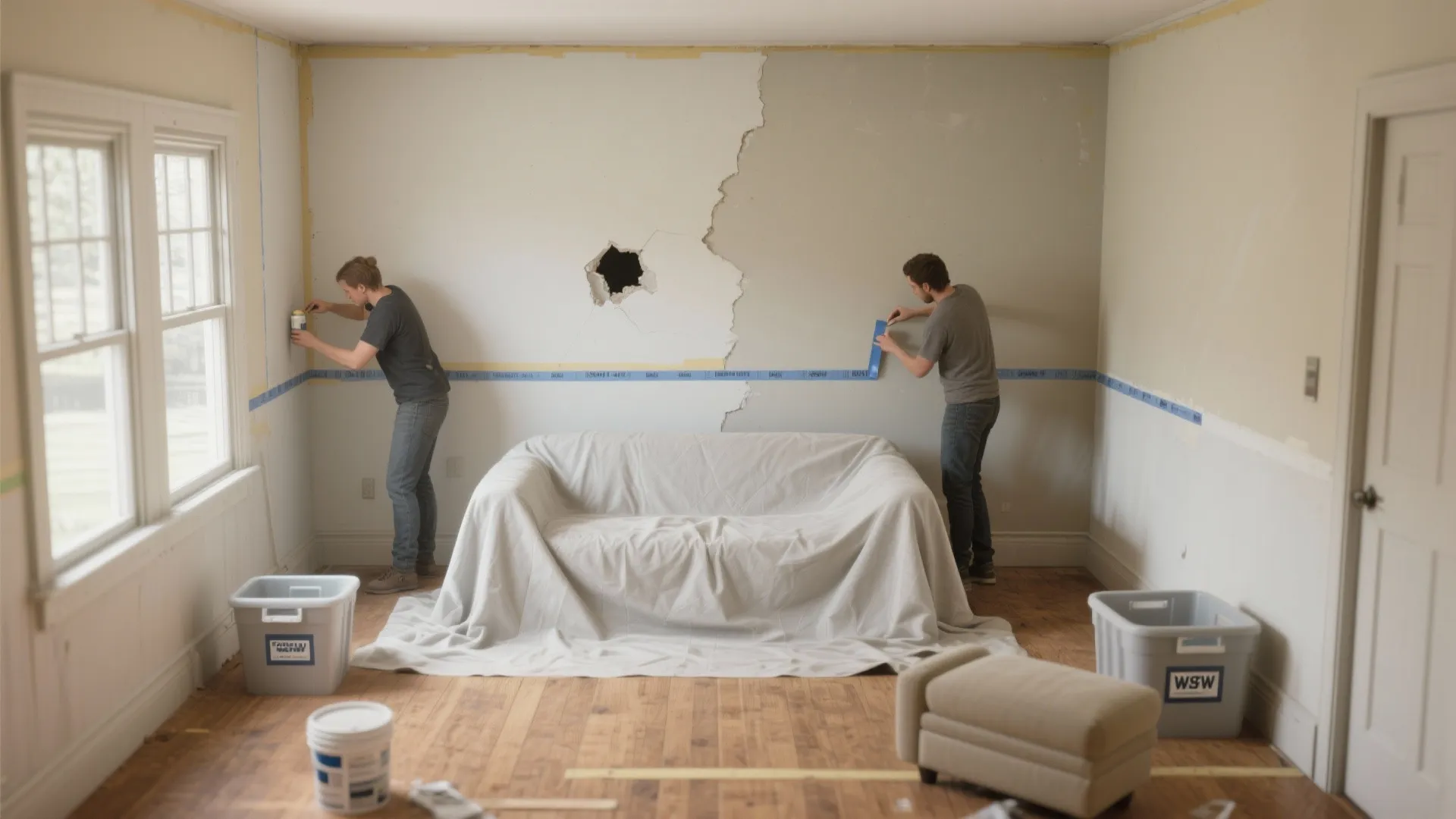
- Patching & Sanding (30-90 minutes, highly variable): Fill nail holes, repair cracks, and smooth out any imperfections. This step can take significantly longer if your walls are in rough shape. Sand smooth after patching, then wipe away dust.
- Taping & Masking (30-60 minutes): Protect trim, baseboards, windows, and doors with painter’s tape. Don’t rush this; clean, straight lines here mean less touch-up later.
- Primer Application (If needed: 60-120 minutes + drying): If you’re painting over a dark color with a light one, covering stains, or painting bare drywall, primer is essential. This adds another coat’s worth of application time PLUS its own drying time (often 1-2 hours).
Efficiency Tip: Before you even pick up a brush, completely clear the room of small items. Use large plastic sheets to cover furniture tightly. For minor wall repairs, choose quick-drying spackle.
Phase 2: Painting – First Coat (The Main Event)
Now for the satisfying part! But even here, technique matters for speed and quality.
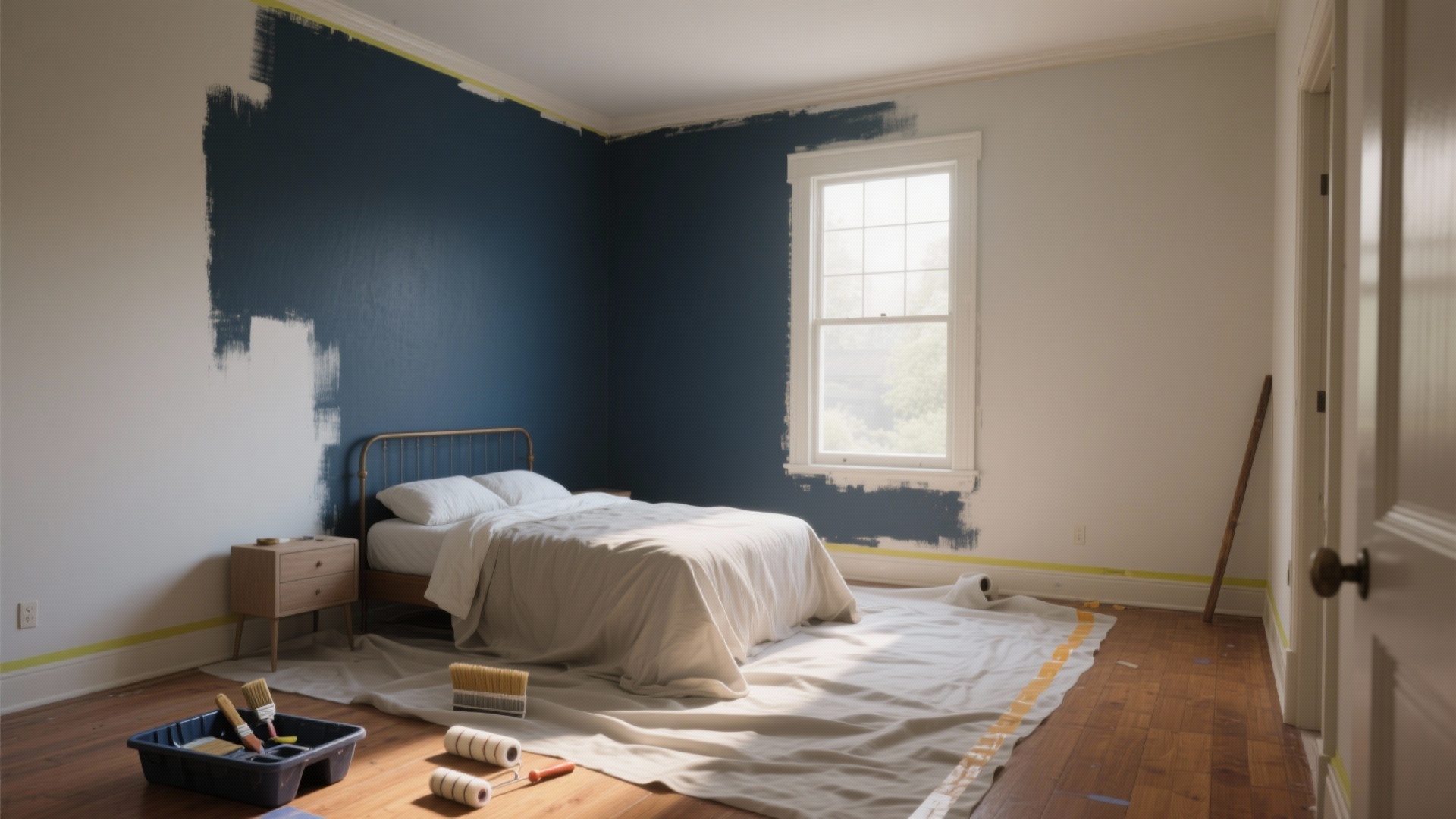
- Cutting In (Edges, Corners, Trim: 60-120 minutes): This is the detail work – using a brush to paint along the edges where the walls meet the ceiling, trim, and around windows/doors. Pros are incredibly fast and precise here; DIYers typically take more time to ensure clean lines.
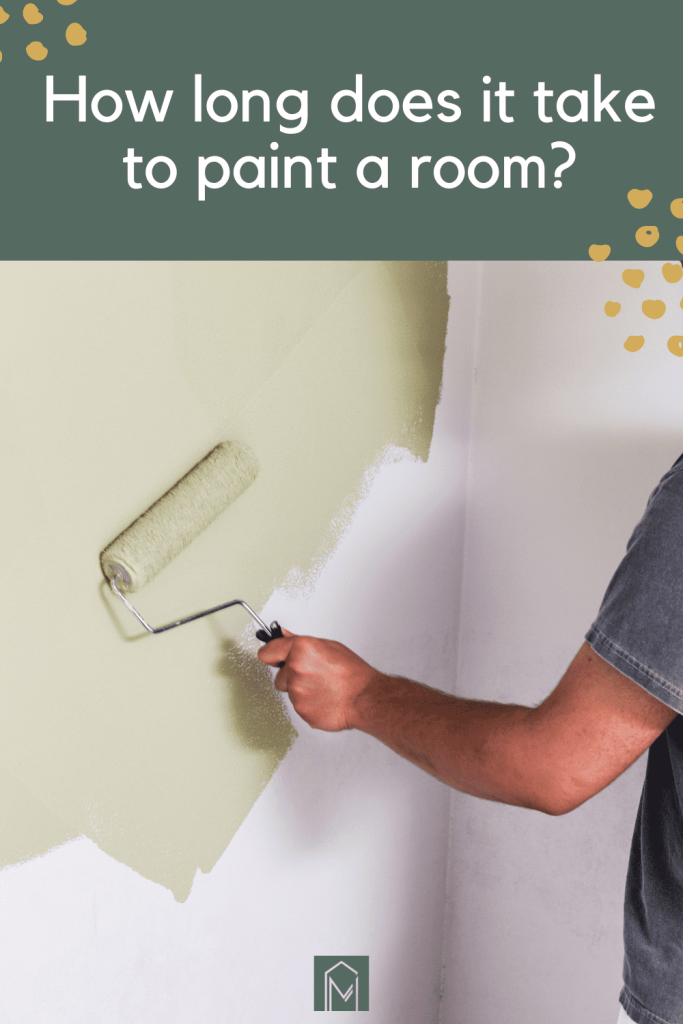
- Rolling Walls (30-60 minutes): Once the edges are cut in, you can use a roller to cover the larger wall surfaces. Work in W or M patterns, overlapping slightly to ensure even coverage.
- Drying Time (2-4 hours): This is passive time, but critical. Most latex paints require at least 2-4 hours (sometimes more, especially in humid conditions) before a second coat can be applied. Don’t rush it, or you’ll pull up the first coat.
Efficiency Tip: Use a high-quality angled brush for cutting in – it holds more paint and gives better control. Load your roller properly (not dripping, not too dry) and maintain a wet edge to avoid lap marks.
Phase 3: Painting – Second Coat (For a Flawless Finish)
Unless you’re using a very high-quality paint over a very similar existing color, a second coat is almost always necessary for depth of color, durability, and a professional-looking finish.
- Cutting In (Re-touch: 30-60 minutes): Often quicker than the first coat as you’re just reinforcing existing lines.
- Rolling Walls (30-60 minutes): Similar to the first coat, focusing on even application.
- Drying Time (Another 2-4 hours): Again, let this coat dry fully before proceeding.
Efficiency Tip: If you’re painting multiple rooms or spreading the project over days, wrap your brushes and rollers tightly in plastic wrap or store them in an airtight bag/container in the fridge. This keeps them moist and ready for the next day, saving cleaning time.
Phase 4: Clean-Up (Don’t Forget This!)
The job isn’t done until everything is put away and the room is livable again.
- Removing Tape, Cleaning Tools, Putting Furniture Back (30-90 minutes): Remove painter’s tape while the paint is still slightly tacky (but not wet) for the cleanest lines. Clean brushes and rollers thoroughly with water (for latex paint) or appropriate solvent. Return furniture.
Efficiency Tip: Have a dedicated clean-up station ready. Clean brushes and rollers immediately after their final use to prevent paint from drying on them, making them much easier to clean.
Critical Factors That Influence Painting Time (And How to Manage Them)
While the step-by-step breakdown gives you a baseline, many elements can shift those hours significantly. Understanding these factors will help you set realistic expectations and plan effectively.
Room Dimensions & Features (Walls, Ceiling, Trim, Doors, Windows)
A “12×12 room” can mean different things. Are you just painting the four walls? What about the ceiling? Baseboards? Window frames? Door frames and the door itself?
Painting anything beyond the flat wall surfaces adds considerable time due to the need for more precise brushwork and additional masking. Painting a ceiling, for instance, requires specialized tools (roller extension poles) and often more effort, as it’s an overhead job.
| Feature Added | Additional Time (DIYer) | Additional Time (Professional) |
|---|---|---|
| Ceiling (1 coat) | 1.5 – 3 hours | 0.5 – 1.5 hours |
| Baseboards/Trim (per average 12×12 room) | 1 – 2 hours | 0.5 – 1 hour |
| One Door (both sides, frame) | 1 – 2.5 hours | 0.5 – 1.5 hours |
| One Window (frame, sills) | 0.5 – 1.5 hours | 0.25 – 0.75 hours |
| Adding a second coat to any of the above | ~50-75% of first coat time | ~50% of first coat time |
Surface Condition & Prep Work Required
Are your walls pristine, or do they look like a battlefield? Extensive patching, sanding, or cleaning will naturally inflate your prep time. Peeling paint, heavily textured walls, or walls with a lot of grime require extra effort.
Number of Paint Coats
Most projects require two coats for a rich, uniform color, especially when changing colors significantly (e.g., from dark blue to light beige). A third coat isn’t uncommon for very vibrant colors, or if you’re going from a very dark to a very light shade. Each additional coat adds application time plus its own drying time.

Your Experience Level (DIY vs. Professional)
This is arguably the biggest differentiator. A professional painter brings years of experience, honed techniques, and the right tools. They can cut in faster, roll more efficiently, and minimize mistakes, drastically reducing overall project time. As a DIYer, you’re on a learning curve, which means you’ll naturally take longer, but you save on labor costs.
Number of Painters
While two people can theoretically paint a room twice as fast as one, there are diminishing returns. Two DIYers can definitely speed things up, especially if one handles prep and cutting in while the other rolls. However, too many cooks can spoil the broth – coordination becomes key. Professionals often work in teams, where tasks are highly organized for maximum efficiency.
Paint Type & Quality
Higher-quality paints often offer better coverage, meaning you might achieve a good finish in fewer coats. Some paints also have faster drying times or are designed for single-coat coverage (though two coats are almost always recommended for durability and finish). Specialty paints (e.g., those with strong odors, or requiring specific application techniques) can also extend timelines.
Tools and Equipment
Having the right tools can make a huge difference. Good quality brushes, proper roller covers for your paint and surface texture, extendable poles, paint trays with liners, and effective drop cloths all contribute to efficiency. Trying to make do with old, worn-out tools will inevitably slow you down and compromise the finish.
Environmental Conditions (Temperature & Humidity)
Painting in very high humidity or low temperatures can significantly extend drying times, pushing your project into an extra day or more. Ideal conditions are usually moderate temperatures (65-75°F or 18-24°C) with low to moderate humidity. Good ventilation also helps speed up drying and dissipate fumes.
DIY vs. Hiring a Professional: Weighing Your Options
Deciding whether to tackle the project yourself or call in the cavalry is a fundamental choice that directly impacts your time investment, cost, and final result.
| Factor | DIY Painting | Professional Painting |
|---|---|---|
| Time Investment | Higher (8-24+ hours for a 12×12 room) | Lower (4-12 hours for a 12×12 room) |
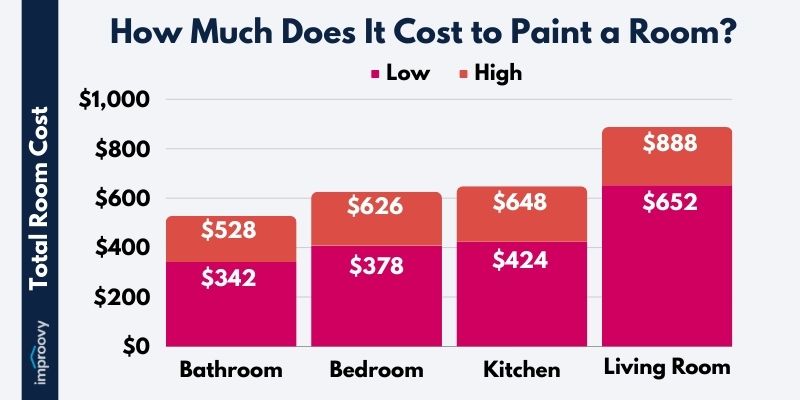
| Cost | Lower (materials only, $50-$200) | Higher (materials + labor, $300-$800+) |
| Quality of Finish | Variable (depends on skill & patience) | Consistently high (due to experience & tools) |
| Required Skill/Effort | High (physical labor, attention to detail) | Minimal (you supervise, they work) |
| Convenience | Low (you manage every step) | High (they handle everything) |
When to DIY: Choose DIY if you enjoy home improvement, have the time and patience, are on a tight budget, or simply want the satisfaction of doing it yourself. It’s a great way to learn a new skill!
When to Hire a Pro: Opt for a professional if your time is more valuable than the money saved, you need a flawless finish, the room has complex features (high ceilings, intricate trim), you have physical limitations, or you just want the job done quickly and without stress.
Essential Supplies for Painting a 12×12 Room (And a Note on Cost)
To ensure your project goes smoothly and efficiently, having all your supplies ready before you start is crucial. Here’s a checklist for a 12×12 room (assuming 8-foot ceilings, needing about 2 gallons of paint for two coats on walls only, and 1 gallon for the ceiling).
- Paint: 2-3 gallons (for walls, 2 coats, plus maybe a ceiling). Cost: $60-$150 per gallon, depending on quality.
- Primer: 1 gallon (if needed). Cost: $20-$40 per gallon.
- Painter’s Tape: Several rolls of good quality tape (e.g., FrogTape or ScotchBlue). Cost: $8-$15 per roll.
- Drop Cloths: Canvas or plastic to protect floors and furniture. Cost: $10-$40 (canvas is reusable and less slippery).
- Paint Rollers: A sturdy roller frame and several roller covers (nap size depends on wall texture, 3/8” or 1/2” is common). Cost: $15-$30 for frame and covers.
- Paint Brushes: High-quality angled brush (2-inch or 2.5-inch) for cutting in. Cost: $10-$25 each.
- Paint Tray & Liners: Reusable tray with disposable liners for easy cleanup. Cost: $5-$10 for tray, $5-$10 for liners.
- Extension Pole: Attaches to your roller for reaching high spots without a ladder. Cost: $20-$40.
- Spackle & Putty Knife: For patching holes and cracks. Cost: $5-$15.
- Sandpaper or Sanding Block: Fine-grit for smoothing patched areas. Cost: $5-$10.
- Cleaner: TSP substitute or a mild detergent for wall cleaning. Cost: $5-$15.
- Rags/Wipes: For spills and drips. Cost: $5-$10.
- Utility Knife/Box Cutter: For cutting tape. Cost: $5-$10.
- Ladder/Step Stool: For reaching edges and high spots.
Total Material Cost: For a DIY 12×12 room, you can expect to spend anywhere from $150 to $400+ on materials, largely depending on paint quality and how many new tools you need to buy.
Pro Tips for Faster, More Efficient Painting (Even for DIYers!)
Want to shave off some hours and get a cleaner finish? Here are some insider tips:
- Prep, Prep, Prep: I can’t stress this enough. A well-prepped room allows for seamless painting. Spend the time upfront, and you’ll save it tenfold in correcting mistakes later.
- Invest in Quality Tools: A good brush holds more paint and provides cleaner lines. Quality roller covers apply paint more evenly. These tools don’t just feel better; they perform better and save time.
- Cut In First, Then Roll: Complete all your cutting in around the ceiling, trim, and corners before you start rolling the main wall sections. This methodical approach is faster and ensures better coverage.
- Work in Sections: Mentally divide your walls into manageable sections. Paint from top to bottom, keeping a wet edge to avoid visible roller marks.
- Maintain a Wet Edge: When rolling, try to always roll into the previously painted, still-wet section. This prevents unsightly lap lines or streaks, which are notoriously difficult to fix.
- Ventilation is Your Friend: Open windows and use fans (facing out, not blowing directly on wet paint) to improve airflow. This helps paint dry faster and reduces fumes. Just be careful not to introduce too much dust.
- Clean As You Go: Wipe up drips and spills immediately with a damp rag. It’s much easier to clean wet paint than dried paint. Keep a small bucket of soapy water and rags handy.
- Don’t Overload Your Brush/Roller: Too much paint leads to drips and runs, wasting time. Too little means uneven coverage and more trips back to the tray. Find that sweet spot!
- Use a “Paint Pail” or Small Container for Cutting In: Instead of lugging your gallon can, pour a smaller amount of paint into a specialized paint pail with a handle. It’s lighter and easier to manage while cutting in.
Painting a 12×12 room is a rewarding project that significantly refreshes your space. While the time commitment can seem daunting, breaking it down into manageable steps and understanding the factors at play will help you plan effectively. Whether you choose the DIY route for satisfaction and savings or hire a professional for speed and a flawless finish, a clear plan is your best tool for success.
Remember, patience and thoroughness, especially in the prep stages, are far more valuable than rushing. Take your time, enjoy the process, and soon you’ll be admiring your beautifully transformed 12×12 room!