How Much Paint For A Small Bedroom? Your Definitive Guide to Getting it Right
Painting a bedroom can be one of the most transformative and satisfying DIY projects. But before you even think about roller covers and paint trays, there’s one question that always pops up: “How much paint do I actually need for this small bedroom?”
It’s a deceptively simple question with a few critical layers. Buy too little, and you’re making a dreaded mid-project run to the hardware store, hoping they still have your shade. Buy too much, and you’re stuck with extra cans taking up space, or worse, wasting money.
Don’t sweat it. I’m going to walk you through exactly how to calculate your paint needs, tailored specifically for small bedrooms. We’ll cover everything from the quick estimate to detailed calculations, ensuring you tackle your project with confidence and the perfect amount of paint.
The Quick Answer: How Much Paint Do You REALLY Need?
Let’s get straight to it. For most small bedrooms, assuming standard 8-foot ceilings and painting just the walls with two coats, you’ll likely need 1 to 2 gallons of paint. If you’re tackling the ceiling as well, or if there’s a significant color change (like painting a dark wall light), you might push into 2 to 3 gallons. Primer adds another layer to that, often requiring an additional gallon.
This is a rule of thumb, but it’s a great starting point. Here’s a quick reference table based on common small bedroom sizes:
| Bedroom Size (ft, 8ft Ceiling) | Approx. Wall Area (sq ft after deductions) | 1 Coat (Gallons) | 2 Coats (Gallons) | 2 Coats + Primer (Gallons) |
|---|---|---|---|---|
| 8×10 | 250 | 1 | 1-2 | 2 |
| 10×10 | 285 | 1 | 2 | 2 |
| 10×12 | 320 | 1 | 2 | 2-3 |
| 12×12 | 355 | 1-2 | 2-3 | 3 |
Deductions for one standard door and one standard window, assuming an average paint coverage of 350 sq ft per gallon. Always round up to the nearest full gallon or quart.

As you can see, for a small bedroom, you’re rarely going to need more than 3 gallons for walls and ceiling, even with primer and two coats. But let’s dive into why these numbers fluctuate and how you can get your estimate even more precise.
Beyond the Basics: Factors That Influence Your Paint Quantity
Calculating paint isn’t just about throwing a dart at a wall (pun intended!). Several factors play a significant role in how much paint your small bedroom will truly gobble up. Understanding these will help you avoid miscalculations.
Room Dimensions & Surface Area (The Foundation)
This is where it all begins. You need to know the dimensions of your room to calculate the total surface area that needs paint. Don’t just eyeball it; grab a tape measure!
The Number of Coats (Usually Two!)
Think you can get away with one coat? Think again. While some high-quality paints promise “one-coat coverage,” it’s almost always a marketing dream for most scenarios. Here’s why two coats are usually non-negotiable:
- True Color: The first coat preps the surface, but the second coat is where the true, rich color of your chosen paint truly shines through.
- Even Coverage: Two coats ensure a uniform finish, hiding any streaks, roller marks, or subtle imperfections from the first coat.
- Durability: An extra coat adds to the longevity and washability of your paint job, which is especially important in a high-traffic or kid’s bedroom.
Budget for two coats for almost all your surfaces – walls, ceilings, and even trim. Primer counts as a base coat in terms of coverage, but not usually in terms of color richness.
Paint Coverage Rate (The Manufacturer’s Promise)
Every can of paint has a label that tells you its approximate coverage rate, usually expressed in “square feet per gallon” (sq ft/gallon). This is how much area a single gallon is expected to cover with one coat. Typical ranges are:
- 250-400 sq ft per gallon: This is the most common range for standard latex paints.
- Higher end (350-400 sq ft): Usually for premium paints with better pigments and binders.
- Lower end (250-300 sq ft): More common for budget paints, or if you’re dealing with very porous or textured surfaces.
Always check the specific paint can you plan to use, as this number is crucial for accurate calculations.
Surface Condition & Texture (The Thirsty Walls)
The surface you’re painting makes a huge difference:
- New Drywall: Extremely porous. It will soak up a lot of paint, making primer absolutely essential.
- Unpainted Wood: Also very porous. Primer is a must.
- Previously Painted Walls (Smooth): If the walls are smooth, clean, and in good condition, paint will go further.
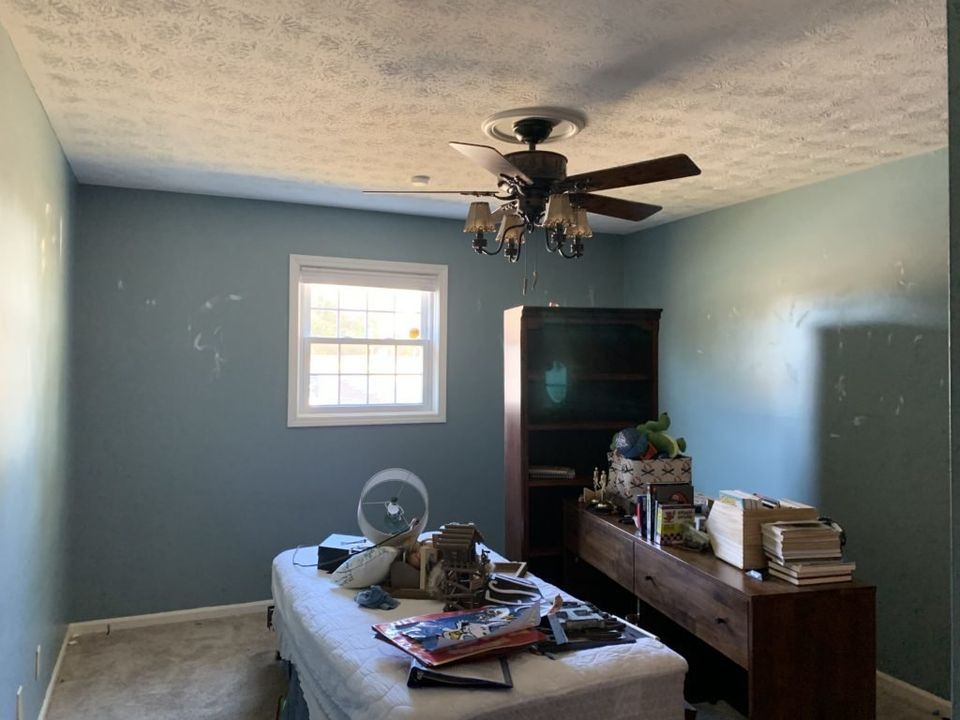
- Textured Walls (e.g., Popcorn Ceiling, Orange Peel): These surfaces have more… well, surface! They require more paint to fill all the nooks and crannies, potentially reducing coverage by 10-20% per gallon.
Color Change (Light to Dark, Dark to Light)
Trying to cover a dark, deep red with a crisp, light white? You’ll likely need more paint, and a tinted primer is highly recommended. Tinted primer helps block the old color and gives your new, lighter shade a better base to adhere to, saving you an extra coat or two of the more expensive topcoat paint.
Paint Finish/Sheen (Not Just for Looks)
While not a massive factor, the paint’s sheen can subtly influence coverage. Generally:
- Flat/Matte: Tends to be slightly thicker and can sometimes offer better one-coat hiding, but is less durable.
- Eggshell/Satin: Most common for bedrooms, offers good coverage and durability.
- Semi-Gloss/Gloss: Thinner, often requiring more coats for full opacity, but highly durable and easy to clean (more common for trim).
Doors & Windows (Don’t Forget the Details!)
The good news is that you generally subtract the area of doors and windows from your total wall area, as you won’t be painting them the wall color (unless you are, which means you calculate them separately!). A standard interior door is roughly 21 sq ft (32″x80″). A common bedroom window might be around 12-15 sq ft.
Trim & Ceilings (The Often-Missed Areas)
Ceilings and trim are separate painting projects:
- Ceilings: Should be calculated as a separate area (Length x Width). If you’re painting it the same color as the walls, account for it in your total. If it’s white, you’ll need separate ceiling paint.
- Trim: Baseboards, door frames, and window frames are usually painted with a different color (often white) and finish (semi-gloss). You’ll typically buy a separate quart or half-gallon for trim, which goes a long way.
Your Step-by-Step Paint Calculation for a Small Bedroom
Ready to roll up your sleeves and get precise? Here’s a simple, step-by-step guide to calculating exactly how much paint you need for your small bedroom.
Step 1: Measure Your Room Accurately
Grab a tape measure, a pen, and paper. You’ll need three measurements:
- Length of the Room: Measure from one wall to the opposite wall.
- Width of the Room: Measure the other dimension.
- Height of the Walls: Measure from the floor to the ceiling.
Example: Let’s say your small bedroom is 10 feet long, 10 feet wide, and has 8-foot high ceilings. This is a very common small bedroom size.
Step 2: Calculate Total Wall Surface Area
To find the total square footage of your walls, use this formula:
(Length + Width) x 2 x Height = Total Wall Area
Using our example (10x10x8 ft):

- (10 ft + 10 ft) x 2 = 40 linear feet (This is the perimeter of your room)
- 40 linear feet x 8 ft (height) = 320 square feet of total wall area
Step 3: Account for Doors and Windows
Next, measure the dimensions of any doors and windows within those walls. We’ll subtract these areas because you won’t be painting them with the wall color (unless you are, in which case, skip this step and just add their area to your total!).
- Standard Door: Roughly 32 inches x 80 inches, or about 2.67 ft x 6.67 ft = ~18 sq ft.
- Standard Window: Roughly 3 ft x 4 ft = 12 sq ft.
Example: If our 10×10 bedroom has one standard door and one standard window:
- 18 sq ft (door) + 12 sq ft (window) = 30 sq ft in deductions
- 320 sq ft (total wall area) – 30 sq ft (deductions) = 290 sq ft of net wall area to paint
Step 4: Determine Ceiling Area
Calculating the ceiling area is much simpler:
Length x Width = Ceiling Area
Example: For our 10×10 ft bedroom:
- 10 ft x 10 ft = 100 square feet of ceiling area
Step 5: Factor in Coats, Primer & Paint Coverage Rate
Now, let’s bring in those crucial variables:
- Number of Coats: As discussed, assume 2 coats for walls. For ceilings, sometimes 1 coat is enough if it’s a refresh of a similar color, but 2 coats is always safer for a perfect finish. Let’s plan for 2 coats on walls and 1 on the ceiling for this example.
- Primer: If your walls are new, very dark, or stained, you’ll need primer. If so, factor in an additional coat for the primer (use its specific coverage rate, usually similar to paint but check the can). For our example, let’s assume no primer is needed for simplicity.
- Paint Coverage Rate: Check your paint can. For this example, we’ll use an average of 350 sq ft per gallon for one coat.
Step 6: Do the Math! (With an Example)
Let’s compile everything for our 10x10x8 ft bedroom, needing 2 coats on walls and 1 coat on the ceiling, with paint covering 350 sq ft/gallon:
| Category | Measurement/Formula | Calculation | Area (sq ft) | Paint Needed (Gallons, est. 350 sq ft/gal) |
|---|---|---|---|---|
| 1. Wall Perimeter | (Length + Width) x 2 | (10 + 10) x 2 | 40 linear ft | – |
| 2. Total Wall Area (before deductions) | Perimeter x Height | 40 ft x 8 ft | 320 sq ft | – |
| 3. Door Area (standard 32″x80″) | 32/12 ft x 80/12 ft | 2.67 ft x 6.67 ft | 18 sq ft | – |
| 4. Window Area (standard 3ft x 4ft) | 3 ft x 4 ft | 3 ft x 4 ft | 12 sq ft | – |
| 5. Total Deductions | Door Area + Window Area | 18 + 12 | 30 sq ft | – |
| 6. Net Wall Area to Paint | Total Wall Area – Deductions | 320 – 30 | 290 sq ft | – |
| 7. Ceiling Area | Length x Width | 10 ft x 10 ft | 100 sq ft | – |
| 8. Total Area for 1st Coat (Walls + Ceiling) | Net Wall Area + Ceiling Area | 290 + 100 | 390 sq ft | – |
| 9. Total Area for 2nd Coat (Walls Only) | Net Wall Area | 290 sq ft | – | |
| 10. Grand Total Area to Cover (all coats) | Area 1st Coat + Area 2nd Coat | 390 + 290 | 680 sq ft | – |
| 11. Estimated Gallons Needed | Grand Total Area / Paint Coverage Rate | 680 / 350 sq ft/gallon | – | ~2 Gallons (1.94, rounded up) |
So, for our example 10×10 ft small bedroom, you’d need roughly 2 gallons of paint for the walls (two coats) and ceiling (one coat).
Step 7: Don’t Forget Trim, Doors, and Accent Walls (If Applicable)
Your main calculation covers the bulk of the room, but remember these details:
- Trim: Baseboards, crown molding, and door/window casings. Measure the total linear footage. A quart of trim paint typically covers about 100 sq ft or 200 linear feet (two coats). For a small bedroom, one quart is usually more than enough.
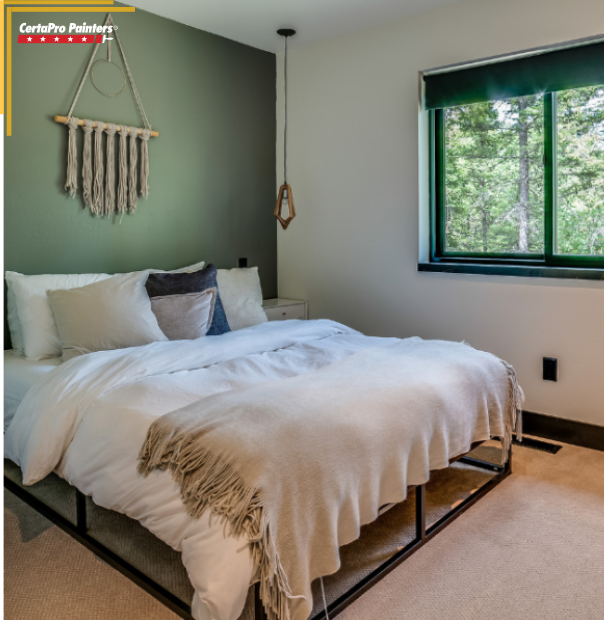
- Accent Wall: If you’re painting one wall a different color, calculate that wall’s area separately and purchase a separate quart or gallon in that accent color.
Common Small Bedroom Scenarios & Paint Estimates
To make things even easier, here’s a summary of estimated paint quantities for various small bedroom sizes and common painting scopes. These estimates assume an 8-foot ceiling, two coats for walls, one coat for ceilings/trim, and an average paint coverage of 350 sq ft/gallon. Remember to adjust if your paint has a different coverage rate or if your ceiling height varies.
| Bedroom Size (Length x Width) | Walls Only (2 Coats) | Walls + Ceiling (2 Coats Walls, 1 Coat Ceiling) | Walls + Ceiling + Trim (2 Coats Walls, 1 Coat Ceiling, 1 Coat Trim) |
|---|---|---|---|
| 8×10 ft | 1-2 Gallons | 2 Gallons | 2-3 Gallons |
| 10×10 ft | 2 Gallons | 2 Gallons | 3 Gallons |
| 10×12 ft | 2 Gallons | 2-3 Gallons | 3 Gallons |
| 12×12 ft | 2-3 Gallons | 3 Gallons | 3-4 Gallons |
Pro Tips for Painting a Small Bedroom
Calculating paint is just step one. Here are some seasoned painter tips to make your small bedroom project smooth and successful:
- Always Buy a Little Extra (and Know the Return Policy): It’s far better to have a bit too much than to run out halfway through your second coat. Most stores allow returns on unopened cans of standard colors. This buffer is especially valuable for touch-ups down the line.
- Don’t Skimp on Quality Paint or Primer: Premium paints often offer better coverage, durability, and a more vibrant color. A good primer creates a uniform base, reduces the number of topcoats needed (especially for drastic color changes), and ensures better adhesion. It’s an investment that saves you time and frustration.
- Consider Sample Pots for Color: Before committing to a full gallon, grab a few sample pots of your favorite colors. Paint swatches on different walls and observe them at various times of day. Small bedrooms can be particularly sensitive to how light affects color.
- Prep Work is Everything: Cleaning walls, filling holes, sanding rough spots, and taping off trim will make your painting go faster and look infinitely better. A small room amplifies imperfections, so don’t skip the prep!
- Ventilation is Key: Small bedrooms can feel stuffy quickly. Always ensure good airflow by opening windows and using fans to help with drying times and minimize fumes.
- Don’t Forget Your Tools: Rollers, brushes, painter’s tape, drop cloths, a stir stick, and a paint can opener are non-negotiable. Having the right tools makes the job easier and the finish professional.
- Use a Paint Calculator as a Guide: Many paint brands offer online calculators. These are great for a quick estimate, but always double-check with your own measurements and considerations.
What to Do with Leftover Paint
So, you’ve finished painting, and you have half a gallon left. What now?
- Proper Storage: Seal the can tightly. Turn it upside down for a few seconds to create an airtight seal, then store it in a cool, dry place away from direct sunlight and extreme temperatures (like a basement or utility closet, not an uninsulated garage). Properly stored, latex paint can last for several years.
- Future Touch-Ups: Even with the best prep, life happens. Dings, scuffs, or small repairs will inevitably occur. A little leftover paint means you’re ready for quick, seamless touch-ups.
- Responsible Disposal: If you have only a small amount left that’s not worth saving, or if the paint has gone bad, dispose of it responsibly. Most municipalities have hazardous waste collection sites or events. Never pour paint down the drain or throw liquid paint in the regular trash. Allow small amounts to dry out completely in the can (add kitty litter or sand to speed it up) before disposing of it.
Painting a small bedroom is an achievable and rewarding project. By taking a few extra minutes to accurately calculate your paint needs, you’ll save yourself time, money, and hassle, ensuring a beautiful, professional-looking result you can be proud of. Now grab that measuring tape and get planning!