Find Your Serenity: The Ultimate Guide to the Best Gray Color for Your Bedroom
Feeling overwhelmed by the sheer number of gray paint chips? You’re not alone. Choosing the "best" gray for your bedroom can feel like finding a needle in a haystack, especially when every swatch looks different under your own lighting. But here’s the secret: there isn’t one single "best" gray. There’s only the best gray for your bedroom, your unique light, and your personal style.
Gray isn’t just a trend; it’s a timeless, versatile neutral that offers a perfect canvas for creating a tranquil, sophisticated, or even dramatic bedroom sanctuary. From whispers of barely-there gray to deep, moody charcoal, the right shade can transform your sleep space into a haven of calm. This guide will cut through the noise, helping you understand the nuances of gray so you can confidently pick the perfect hue that truly makes your bedroom sing.
Understanding Gray: It’s Not Just Black and White
If you’ve ever painted a room gray only for it to look blue, green, or even purple, you’ve experienced the magic (or mischief!) of undertones. Understanding these subtle shifts is the first step to mastering gray.
The Elusive Undertone: Your Gray’s Secret Identity
Every gray has a hidden color bias, a whisper of another shade that becomes more apparent in different lights or when paired with other colors. Ignoring these undertones is the quickest way to a disappointing paint job.
- Warm Grays (Beige/Brown Undertones): These grays lean towards greige (gray + beige) or have subtle brown or taupe hints. They feel incredibly cozy, inviting, and sophisticated. They combat the coldness of north-facing rooms beautifully and pair wonderfully with natural wood tones and warmer decor palettes. Think of them as a gentle hug for your walls.
- Cool Grays (Blue/Green/Purple Undertones): These are the grays that give you that crisp, serene, often spa-like feel.
- Blue Grays: Often perceived as calming and elegant. They can make a room feel expansive and airy.
- Green Grays: Earthy and grounded, these can bring a subtle organic touch to your space.
- Purple Grays: These are rarer but can lend a sophisticated, almost glamorous air, often appearing as a "greige" with a hint of lavender.
- True Grays (Minimal Undertone): These are the elusive "pure" grays, a balance between black and white with very little discernible underlying color. They can read as very modern, industrial, and clean, but they are also the most sensitive to surrounding colors and lighting, making them prone to showing a subtle undertone you might not expect.
Cool grays are fantastic for bright, south-facing rooms or to balance vibrant accent colors.
The Impact of Light: How Gray Changes Throughout the Day
Light is a gray paint’s best friend and worst enemy. The same gray can look entirely different from morning to night, or from one room to another. Understanding your room’s natural light is non-negotiable.
- North-Facing Rooms: These rooms typically receive cooler, indirect light throughout the day, which can make grays appear even colder or bring out strong blue/green undertones. To counteract this, opt for warmer grays (greiges) that have beige or yellow undertones to add warmth and prevent the room from feeling chilly.
- South-Facing Rooms: Blessed with bright, warm sunlight for most of the day, these rooms can handle a wider range of grays. You can lean into cooler grays here to balance the intensity of the light, or even experiment with darker shades without making the room feel dim.
- East-Facing Rooms: These rooms get beautiful, warm morning light, which then fades to a cooler, more subdued light in the afternoon. A balanced gray with subtle undertones (either warm or cool, depending on your preference) works well, as the light shifts considerably.
- West-Facing Rooms: Expect cooler light in the morning and intense, warm, golden light in the afternoon and evening. Again, a versatile gray that can adapt to these shifts is ideal. If you spend evenings in your bedroom, consider how the gray looks in that warm afternoon glow.
Artificial Lighting: Don’t forget your light bulbs! Warm white bulbs (2700K-3000K) can bring out the warmer undertones in gray, while cool white/daylight bulbs (4000K-5000K) will emphasize cool undertones and make the gray appear crisper, sometimes even starker.
LRV Explained: How Light Reflectance Value Guides Your Choice
LRV, or Light Reflectance Value, is a scale from 0 (absolute black) to 100 (pure white) that measures how much light a color reflects. For a bedroom, LRV is a crucial consideration.
- High LRV (60+): These are lighter grays that reflect a lot of light, making a room feel larger, airier, and brighter. Excellent for smaller bedrooms or those with limited natural light.
- Medium LRV (30-59): These grays offer a good balance, providing depth without making the room feel too dark. They’re versatile and can work in many different lighting conditions.
- Low LRV (Under 30): Darker grays absorb more light, creating a moody, dramatic, and incredibly cozy atmosphere. Best for larger bedrooms or those with ample natural light, or if you intentionally want a cave-like, sleep-inducing sanctuary.
Top Picks: Designer-Approved Gray Paint Colors for Bedrooms
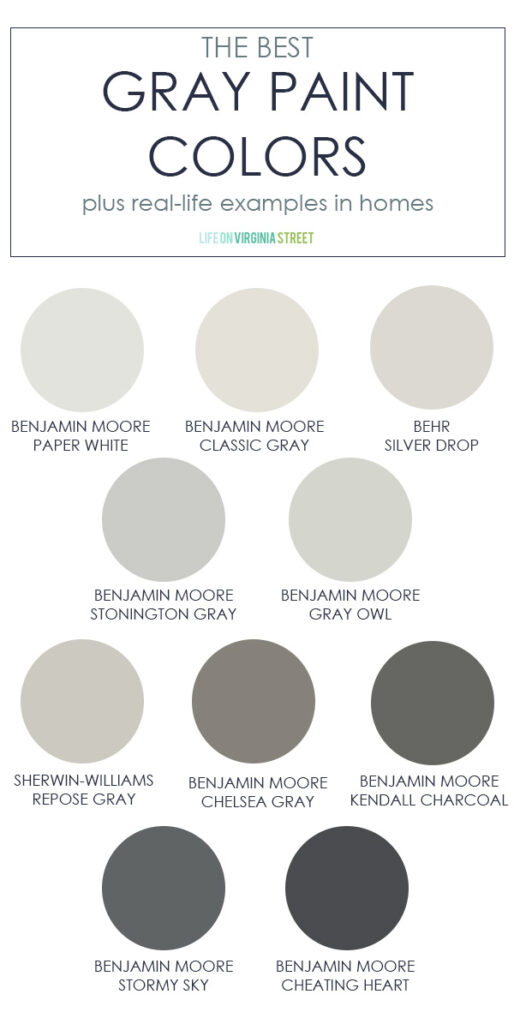
Ready for some specific recommendations? I’ve compiled a list of popular, highly-regarded gray paint colors that designers frequently turn to for bedrooms. This table is designed to help you quickly identify shades that might align with your desired mood and room conditions, cutting across specific brands to give you a holistic view.
| Paint Color | Brand | Undertone | General Lightness (LRV Hint) | Best For | Mood Created | Notes/Considerations |
|---|---|---|---|---|---|---|
| Agreeable Gray SW 7029 | Sherwin-Williams | Warm (Greige/Taupe) | Medium-Light | Almost any room, especially north-facing; complements warm woods. | Cozy, comforting, versatile, inviting. | A top seller for a reason. Rarely disappoints, but can lean more beige in some lights. |
| Repose Gray SW 7015 | Sherwin-Williams | Cool (Slight Green/Blue) | Medium-Light | Well-lit rooms, modern aesthetics, complements cooler decor. | Serene, sophisticated, crisp. | A true gray with subtle cool hints; very popular for a clean look. |
| Classic Gray OC-23 | Benjamin Moore | Warm (Slight Violet/Greige) | Very Light | Small rooms, low light, minimalist designs. | Soft, airy, bright, ethereal. | Appears almost off-white in bright light; a barely-there gray. |
| Edgecomb Gray HC-173 | Benjamin Moore | Warm (Greige/Taupe) | Medium | North-facing rooms, traditional or transitional decor. | Warm, inviting, earthy, sophisticated. | A solid, balanced greige; can lean more beige in very warm light. |
| Silver Satin OC-26 | Benjamin Moore | Cool (Slight Blue/Purple) | Light | Bright rooms, minimalist, airy spaces. | Clean, crisp, modern, luminous. | A very pale, sophisticated cool gray that can look almost white. |
| Gray Cashmere 2138-60 | Benjamin Moore | Cool (Green/Blue) | Medium-Light | Rooms needing a serene, spa-like feel; coastal or tranquil themes. | Soothing, calm, ethereal, spa-like. | A beautiful gray with a noticeable, yet soft, green-blue cast. |
| Mindful Gray SW 7016 | Sherwin-Williams | Warm (Greige/Green) | Medium | Versatile, complements both warm and cool elements. | Balanced, grounded, sophisticated. | A darker cousin to Agreeable Gray, with a touch more green. |
| Urbane Bronze SW 7048 | Sherwin-Williams | Warm (Brown/Bronze) | Very Dark | Accent wall, large bedrooms with ample light, dramatic spaces. | Moody, grounding, luxurious, cocoon-like. | Technically a very dark greige, almost black-brown; offers incredible depth. |
Remember, these are starting points. Always, always, always test the paint in your own space!
Choosing Your Perfect Gray: A Step-by-Step Blueprint
Picking paint can feel like a huge commitment. But with a systematic approach, you can narrow down your options and make a choice you’ll love for years to come.
Step 1: Assess Your Room’s Natural Light
We’ve discussed this, but it bears repeating. Stand in your bedroom at different times of the day. Notice the quality of light. Is it bright and direct? Soft and indirect? Does it change dramatically from morning to evening? This understanding is foundational to selecting the right gray undertone.
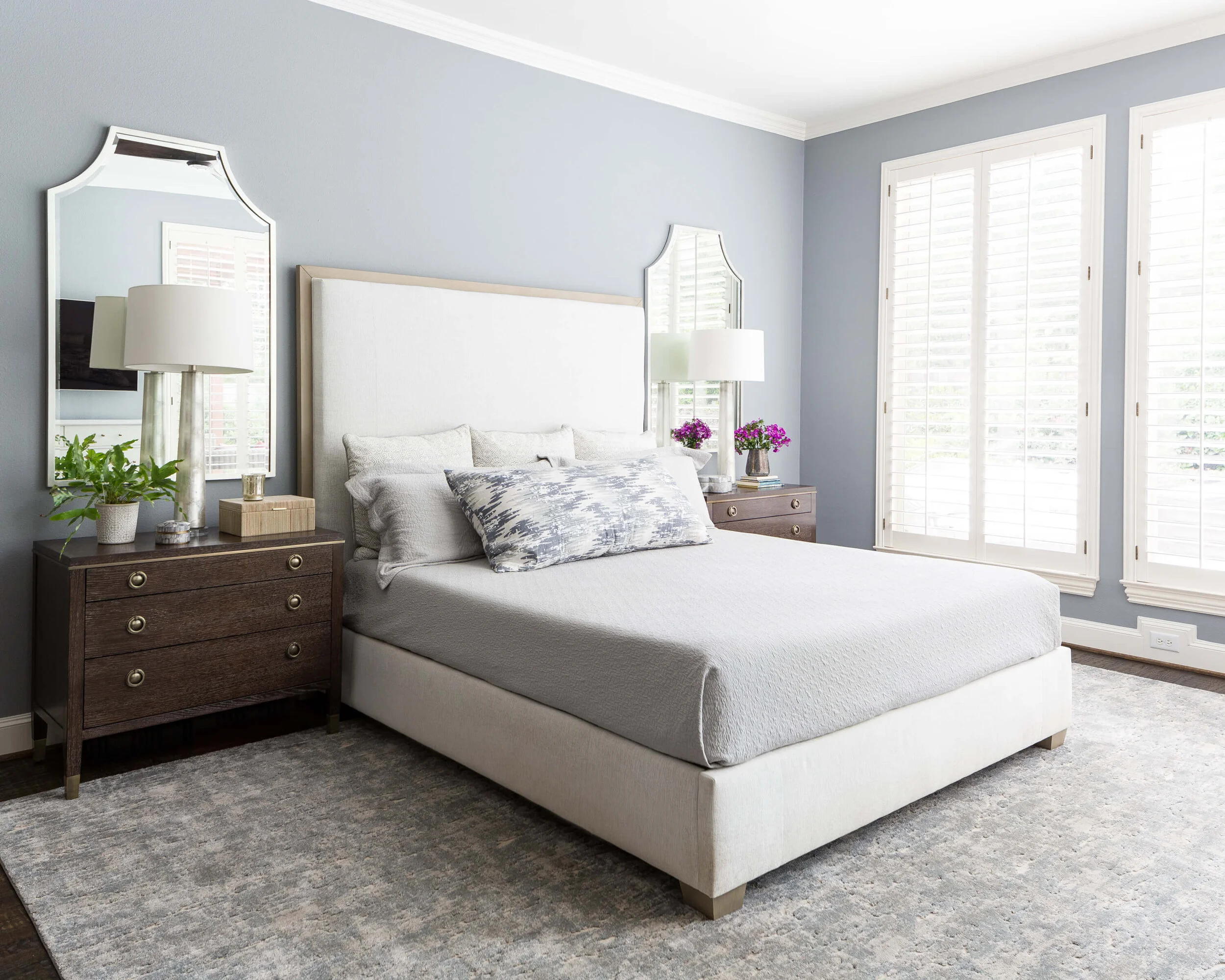
- North-facing rooms: Lean into warmer grays or greiges to add a touch of coziness.
- South-facing rooms: You have flexibility! Consider cooler grays to balance the bright light or embrace warm grays for ultimate warmth.
- East/West-facing rooms: Look for balanced grays that can transition well with the shifting light.
Step 2: Consider Existing Decor & Textiles
Unless you’re planning a complete overhaul, your gray paint needs to play nice with what’s already in the room. Look at your bedding, furniture, flooring, and window treatments.
- Do your existing pieces have warm wood tones (oak, maple, cherry)? A warm gray or greige will likely harmonize best.
- Do you have cool-toned furniture (espresso, black, chrome) or bedding (blues, whites)? A cooler gray might be a perfect match.
- Is your flooring warm (hardwood) or cool (tile, carpet with cool undertones)? Let that guide your choice.
The goal is a cohesive feel, not a clash of undertones.
Step 3: Define Your Desired Mood
What feeling do you want to evoke when you step into your bedroom?
- Calm & Serene: Light to medium cool grays with blue or green undertones (e.g., Benjamin Moore Gray Cashmere, Sherwin-Williams Repose Gray).
- Cozy & Inviting: Warm grays or greiges (e.g., Sherwin-Williams Agreeable Gray, Benjamin Moore Edgecomb Gray). Deeper, warmer grays can also create a "cocoon" effect.
- Modern & Crisp: True grays or very light, almost white grays with minimal undertones (e.g., Benjamin Moore Silver Satin).
- Dramatic & Luxurious: Darker grays, especially those with subtle depth (e.g., Sherwin-Williams Urbane Bronze for a deep greige, or a rich charcoal gray).
Step 4: Test, Test, Test (The Essential Swatch Strategy)
This is arguably the most crucial step. Never, ever pick a paint color from a tiny chip. Paint swatches directly onto your wall, or on large poster boards (at least 12"x12") that you can move around the room.
- Paint at least two coats to see the true color.
- Observe the swatches at different times of day: morning, afternoon, and evening, with both natural and artificial light.
- Compare them against your existing furniture and bedding.
- Don’t just look at the gray alone; step back and look at it in context with the entire room.
What looks perfect at the paint store can be a total disaster at home. A few dollars spent on sample pots will save you hundreds on repainting.
Step 5: Don’t Forget the Finish: Sheen Matters in a Bedroom
The paint’s sheen (or finish) impacts how the color appears and how durable it is. For a bedroom, you generally want something that creates a soft, restful ambiance.
:max_bytes(150000):strip_icc()/shades-of-gray-on-your-bedroom-walls-350785-hero-01-55d5d26725fd4f58b8f60a16dec4519a.jpg "The 11 Best Gray Paint Colors for a Stylish Bedroom")
- Matte/Flat: This finish has virtually no sheen. It absorbs light, giving colors a rich, velvety appearance, and helps to hide wall imperfections. It’s a popular choice for bedrooms because of its soft, sophisticated look, but it’s less durable and harder to clean than higher sheens.
- Eggshell/Satin: These offer a very subtle, low-level sheen, reminiscent of an eggshell or silk fabric. They are more durable and washable than flat paints, making them a practical choice for bedrooms without sacrificing much of the soft look. Eggshell is slightly less shiny than satin.
- Semi-Gloss: Highly durable and easy to clean, but very shiny. Generally not recommended for entire bedroom walls as the high sheen can be distracting and less conducive to a restful atmosphere. Best reserved for trim, doors, or furniture.
For walls, matte or eggshell are usually your best bets for creating a serene bedroom environment.
Pairing Power: What Goes With Gray in a Bedroom?
Once you’ve nailed your perfect gray, the fun continues with bringing the room to life. Gray is a fantastic neutral because it pairs beautifully with almost anything.
Accent Colors That Pop: Elevating Your Gray Palette
The right accent colors can dramatically change the feel of your gray bedroom.
- For Cool Grays: Introduce warm accents to prevent the room from feeling too sterile. Think soft blush pinks, warm golds, burnt oranges, deep mustards, or even rich purples. White and creamy off-whites also create a fresh, crisp contrast.
- For Warm Grays (Greiges): These grays often sing with cooler, more saturated colors. Navy blues, deep emerald greens, teals, crisp whites, or even charcoal blacks can add depth and sophistication.
- Monochromatic Magic: Don’t be afraid to layer different shades of gray with varying textures for a sophisticated, calming, and truly cohesive look.
Textural Layers: Softening the Look
Texture is vital, especially when working with neutrals. It adds depth, warmth, and visual interest, preventing a gray room from feeling flat or sterile.
- Soft Furnishings: Luxurious throws (faux fur, chunky knit), linen bedding, velvet pillows, and thick rugs instantly add warmth and comfort.
- Natural Elements: Introduce wood (light or dark), woven baskets, and indoor plants for an organic touch.
- Metallics: Gold, brass, copper, or silver accents can add a touch of glamour or modern edge, depending on your chosen gray’s undertone.
Lighting the Way: Enhancing Gray with Illumination
Beyond natural light, your artificial lighting scheme can drastically affect your gray walls.
- Layered Lighting: Don’t rely on just one overhead light. Incorporate bedside lamps, floor lamps, and even dimmer switches to create different moods.
- Bulb Temperature: As mentioned, warmer bulbs (2700K-3000K) create a softer, cozier glow, which is often preferred in a bedroom, especially with cool grays. Cooler bulbs (4000K+) will make grays appear sharper and more utilitarian.
- Strategic Placement: Use uplighting or wall sconces to highlight texture on your gray walls or create dramatic shadows.
Common Gray Bedroom Dilemmas & Solutions
Even with the best planning, sometimes a gray can throw you a curveball. Here are a couple of common issues and how to tackle them.
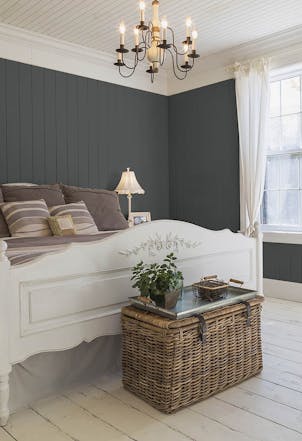
"My Gray Looks Blue!" (or Green, or Purple)
This is the most frequent complaint! It almost always comes down to undertones interacting with your room’s unique lighting conditions. A gray that looked perfectly neutral on a small chip might reveal its cool blue or green undertone when applied to a large wall, especially in a north-facing room or under cool artificial light.
Solution: If it’s too late for repainting (or you’re not ready for that), you can try to neutralize the undertone with your decor. If your gray looks too blue, introduce warm-toned lighting (2700K bulbs), warm wood furniture, or accents in blush, coral, or warm gold. These will often balance the cool tone. If it looks too green, red-toned accents can help cancel it out.
"It Feels Too Cold/Dark"
If your chosen gray, especially a cool or darker shade, is making your bedroom feel less like a sanctuary and more like a cave, don’t despair.
Solution:
- Introduce Warmth: Layer in plenty of warm textures like a thick rug, faux fur throws, velvet pillows, and wooden furniture.
- Amp Up the Light: Add more light sources. Ensure you have warm-toned light bulbs. Consider mirrors to reflect light and make the room feel brighter.
- Add Bright Accents: Introduce pops of bright, cheerful colors like sunny yellow, crisp white, or even a vibrant emerald green (if your gray has warm undertones) to lift the mood.
- If all else fails: Consider an accent wall in a different, lighter color, or even wallpaper to break up the gray.
Your Gray Oasis Awaits
Choosing the best gray color for your bedroom doesn’t have to be a guessing game. By understanding undertones, assessing your light, defining your mood, and most importantly, testing your samples, you’re well-equipped to select a shade that will bring you joy and tranquility. Gray is more than just a color; it’s a foundation for creating a deeply personal and stylish space. So grab those swatches, trust your instincts, and get ready to transform your bedroom into the gray oasis of your dreams.
Frequently Asked Questions
What is the most popular gray paint color for bedrooms?
While popularity can shift, Sherwin-Williams Agreeable Gray (SW 7029) is consistently ranked as one of the most popular greiges due to its balanced warm undertones that work well in diverse lighting conditions and complement a wide range of decor styles. Benjamin Moore’s Classic Gray (OC-23) and Edgecomb Gray (HC-173) are also extremely popular for their soft, welcoming feel in bedrooms.
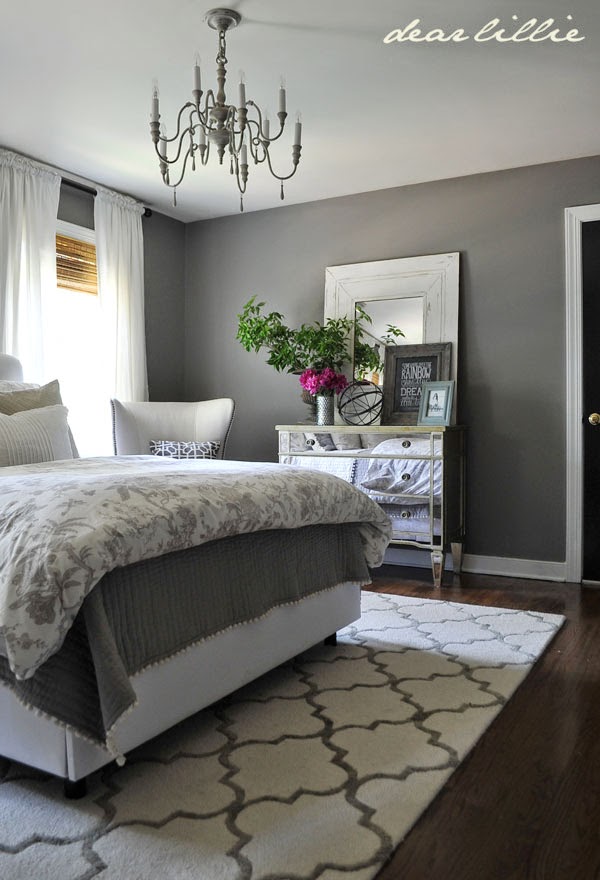
Should I choose a warm gray or a cool gray for my bedroom?
The best choice depends on your room’s natural light and desired mood. For north-facing rooms with cool, indirect light, a warm gray (greige with beige/brown undertones) will add coziness. For bright, south-facing rooms, a cool gray (with blue/green undertones) can balance the light and create a serene, crisp atmosphere. Ultimately, test both in your space to see which feels right for you.
How does natural light affect how gray paint looks in a bedroom?
Natural light dramatically influences gray paint. North-facing rooms receive cool light, enhancing blue/green undertones. South-facing rooms get warm, bright light, which can make cool grays appear more neutral and warm grays feel even cozier. East-facing rooms have warm morning light and cooler afternoon light, while west-facing rooms have cool mornings and warm, intense afternoons. Always swatch your chosen grays and observe them throughout the day.
What kind of paint finish is best for a bedroom?
For bedrooms, a matte or eggshell finish is generally recommended. Matte paint has no sheen, absorbing light to create a soft, velvety, and sophisticated look that helps hide imperfections. Eggshell offers a very subtle sheen, is more durable and washable than matte, and still provides a low-key, comforting ambiance. Avoid high-gloss finishes on walls for a bedroom, as they can be too reflective and distracting.
Can I use dark gray paint in a small bedroom?
Yes, you absolutely can! While lighter colors often make small rooms feel larger, a dark gray can create a surprisingly cozy, sophisticated, and intimate "cocoon" effect. The key is to ensure adequate layered lighting (both natural and artificial) and to balance it with lighter accent colors, mirrors, and varied textures to prevent it from feeling too oppressive. Consider using dark gray on an accent wall if painting all four walls feels too bold.
How do I make sure my gray paint doesn’t look flat or boring?
To prevent gray from looking flat, focus on texture and layered decor. Introduce varying textures through bedding (linen, knit, velvet), rugs, curtains, and furniture materials (wood, metal). Add pops of accent colors that complement your chosen gray’s undertone. Utilize layered lighting (overhead, task, ambient) with warm-toned bulbs, and incorporate natural elements like plants. These details add depth and visual interest, making your gray bedroom feel rich and inviting.