Transform Your Space: The Definitive Guide to Painting a Room Two Different Colors, Divided Perfectly
Dreaming of a room with personality, depth, and a touch of designer flair? Painting a room with two different colors, divided, is one of the most effective and accessible ways to achieve just that. It’s more than just aesthetics; it’s about creating zones, highlighting architectural features, and injecting a dynamic energy that a single color simply can’t match. But let’s be honest: the idea of a perfectly straight, crisp dividing line can feel a bit daunting. Fret not! This isn’t just a basic how-to; it’s your comprehensive roadmap to a stunning, professional-looking two-tone wall transformation.
I’m going to walk you through every critical step, from choosing your perfect palette and division style to the ninja techniques for achieving lines so sharp they could cut glass. Forget wobbly tape and bleeding paint; we’re aiming for perfection. Ready to banish boring walls forever?
Why Divide? The Power of Two-Tone Walls
Before we dive into the nitty-gritty, let’s understand why this design choice is so powerful. It’s not just a trend; it’s a timeless technique that designers have used for centuries to manipulate perception and enhance aesthetics.
Design Impact and Benefits
- Adds Depth and Dimension: Two colors instantly break up a monotonous wall, making the room feel more interesting and layered.
- Creates Visual Interest: It’s an immediate focal point, drawing the eye and making a statement without needing excessive decor.
- Manipulates Space: A horizontal divide can make ceilings appear higher or lower, and rooms feel wider or cozier. Vertical divides can add height or emphasize architectural elements.
- Defines Zones: In open-plan spaces, different color zones can subtly suggest a dining area from a living space, or a reading nook from a sleeping area.
- Highlights Features: Use a contrasting color to draw attention to a beautiful fireplace, a gallery wall, or unique molding.
- Expresses Personality: It’s a fantastic way to combine two favorite colors or reflect different aspects of your style within a single room.
Popular Two-Tone Wall Styles
While the horizontal split is iconic, it’s far from your only option. Understanding different division styles will help you choose the best look for your space.
| Style | Description | Best For | Design Impact |
|---|---|---|---|
| Horizontal Split | The wall is divided into a top and bottom section, often at chair rail height or two-thirds up. | Living rooms, dining rooms, bedrooms. Great for adding coziness or emphasizing ceiling height. | Classic, timeless, can make ceilings feel taller (if darker color is on top) or rooms feel wider. |
| Vertical Split (Accent Wall) | A single wall is painted with two vertical sections, or one accent color runs floor to ceiling on one wall. | Bedrooms (behind the bed), home offices, hallways. Creates a dramatic focal point. | Bold, modern, adds a sense of height and draws the eye. |
| Chair Rail Integration | Paint colors meet directly above or below an existing chair rail, or the chair rail itself is painted a third color. | Dining rooms, formal living rooms, hallways. Enhances traditional architectural details. | Elegant, adds architectural interest, provides a natural dividing line. |
| Geometric Shapes / Color Blocking | Creating custom shapes (triangles, rectangles, arcs) with different colors. | Kids’ rooms, modern living spaces, creative studios. Requires precise planning. | Playful, artistic, contemporary. A true statement maker. |
| Ceiling Division | Bringing the ceiling color down onto the top portion of the walls, or extending a wall color onto the ceiling. | Rooms with high ceilings, intimate spaces. Can make a large room feel cozier. | Intimate, envelopes the space, can soften harsh transitions. |
Planning Your Two-Tone Masterpiece: More Than Just Paint
Rushing this phase is the biggest mistake you can make. A solid plan saves time, money, and heartache down the line. Think of it as your blueprint for success.
Choosing Your Color Palette: A Deep Dive
This is where the magic begins. Don’t just pick two colors you like; consider how they interact and what mood you want to evoke.
Understanding Color Psychology and Mood
Colors have a profound impact on our emotions and perceptions. Consider the room’s function:
- Bedrooms: Soft, calming colors (blues, greens, muted grays) promote relaxation.
- Living Rooms: Warm, inviting tones (creams, warm grays, soft yellows) create a welcoming atmosphere.
- Home Offices: Energizing but focused colors (blues, greens, even a pop of orange) can boost productivity.
- Kids’ Rooms: Bright, cheerful hues, but consider using them as accents to avoid overstimulation.
Complementary, Analogous, and Monochromatic Schemes
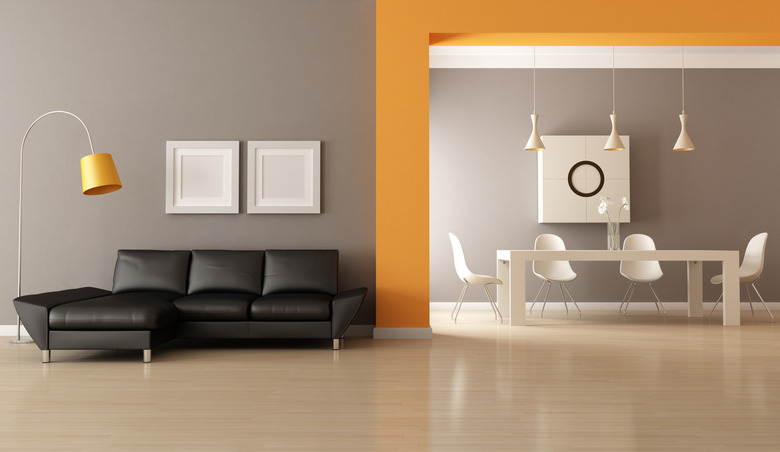
- Complementary: Colors opposite each other on the color wheel (e.g., blue and orange, red and green). They create high contrast and vibrancy. Use one as dominant, the other as an accent.
- Analogous: Colors next to each other on the color wheel (e.g., blue, blue-green, green). They offer harmony and a sense of serenity.
- Monochromatic: Different shades, tints, and tones of a single color. Creates sophistication and subtle depth.
- Neutral with Pop: A neutral base (white, gray, beige) paired with a bold, vibrant color. Always a winner for modern spaces.
Pro Tip: Always test paint samples on your wall! Colors look drastically different in various lighting conditions throughout the day. Paint a large swatch (at least 12×12 inches) of each color, side by side, and live with them for a few days.
The 60-30-10 Rule (Adaptation for Walls)
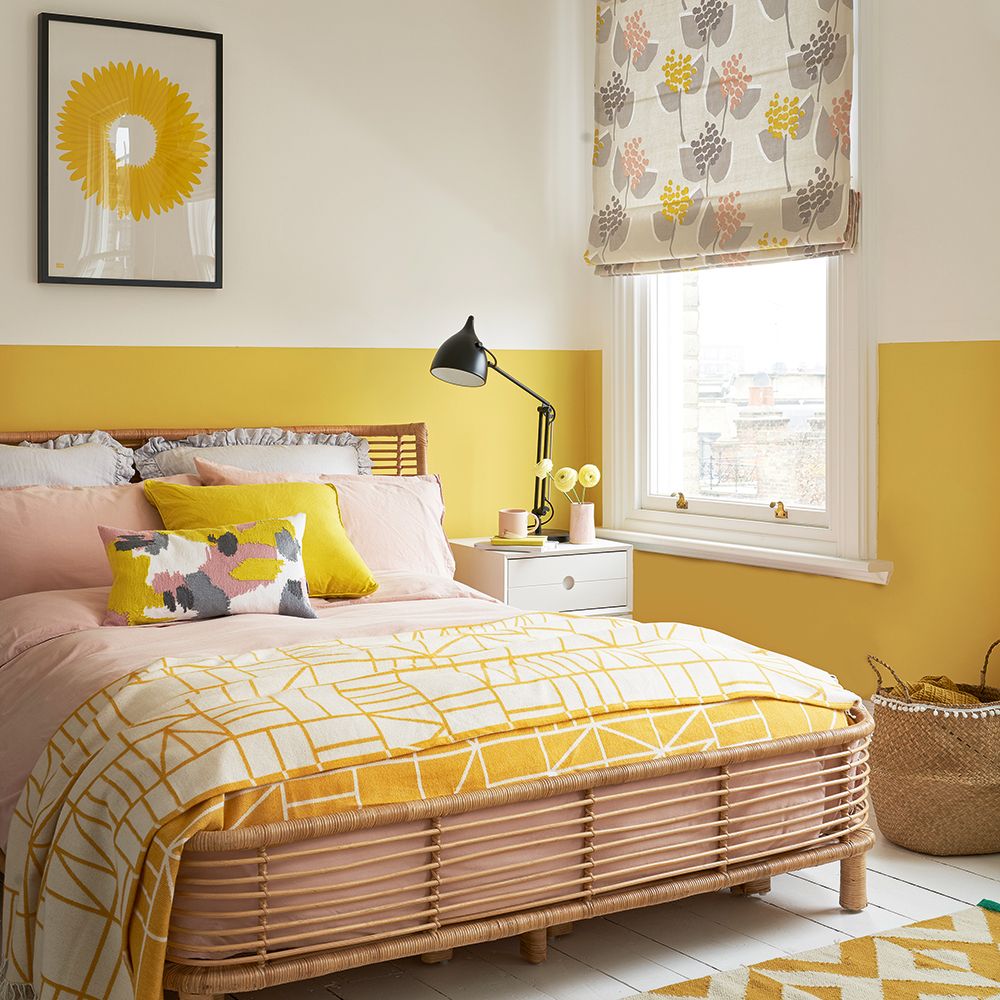
While often used for entire rooms, this rule can guide your wall division. If you’re using two colors, one typically takes up the larger percentage (e.g., 60-70%) and the other the smaller (30-40%). The lighter color often dominates the larger area to keep the room feeling open, with the darker color providing a grounding effect or accent.
Impact of Sheen and Finish
Don’t overlook paint sheen! It affects durability, cleanability, and how light reflects off the wall.
- Flat/Matte: Hides imperfections well, non-reflective, sophisticated. Less durable.
- Eggshell/Satin: Most popular for walls. Slightly more durable than flat, subtle sheen, easy to clean.
- Semi-Gloss/Gloss: Highly durable, reflective, easy to clean. Best for trim, doors, or high-traffic areas. Avoid on large wall areas with imperfections.
For two-tone walls, using the same sheen for both colors is often safest for a cohesive look, but a subtle difference (e.g., matte on top, eggshell on bottom) can add subtle texture if done intentionally.
Deciding on the Divide: Horizontal, Vertical, or Beyond?
We touched on this earlier, but let’s consider the practical implications of your chosen divide.
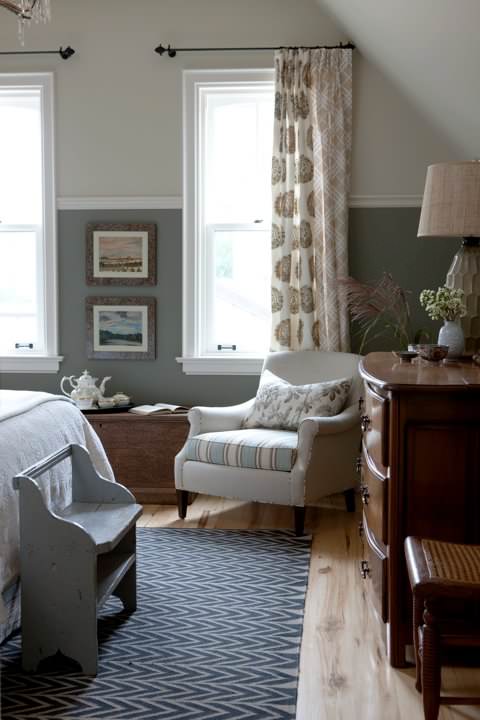
- Horizontal Divide: Most common. Consider the height. Chair rail height (32-36 inches from floor) is classic. Dividing at two-thirds height can make ceilings feel taller, especially with the lighter color on top.
- Vertical Divide: Creates a strong visual statement. Perfect for an accent wall. Ensure the division is centered on a key feature or strategically placed.
- Geometric Shapes: Requires meticulous measuring and multiple layers of tape. Plan your design on paper first.
Key Decision: Where will your line be? Use painter’s tape to mock it up on the wall and live with it for a day. This visual test is invaluable.
Essential Tools and Materials You’ll Need (Beyond the Obvious)
Having the right tools is paramount for achieving those crisp lines. Don’t skimp here!
| Tool/Material | Why It’s Essential |
|---|---|
| High-Quality Painter’s Tape | Crucial for crisp lines. Look for tape specifically designed for delicate surfaces or clean lines (e.g., FrogTape, ScotchBlue Platinum). Cheaper tape WILL bleed. |
| 2-Foot Level and/or Laser Level | Absolutely non-negotiable for straight lines. A laser level is a game-changer for speed and accuracy. |
| Measuring Tape | For precise measurements of your dividing line. |
| Pencil | For light, erasable markings. |
| Utility Knife/Box Cutter | To score and cut tape cleanly, especially in corners. |
| Caulk Gun & Paintable Acrylic Latex Caulk | The SECRET WEAPON for sealing tape edges and preventing bleeds. |
| Small Foam Roller or Angled Brush | For applying the clear caulk/base coat along the tape edge. |
| Paint Stirrers | To ensure paint is well mixed. |
| Paint Trays & Liners | For easy cleanup. |
| Drop Cloths/Plastic Sheeting | Protect your floors and furniture. |
| Spackle & Putty Knife | For filling nail holes and minor imperfections. |
| Fine-Grit Sandpaper/Sanding Sponge | For smoothing patched areas. |
| Mild Cleaner (e.g., TSP Substitute) & Sponge | For degreasing and cleaning walls. |
| Angled Sash Brush (2-2.5 inches) | For cutting in precise lines, especially critical at the tape edge. |
| Paint Rollers (Sleeve & Frame) | Choose the right nap for your wall texture (e.g., 3/8-inch for smooth, 1/2-inch for textured). |
| Paint Extender Pole | Saves your back and helps with even coverage. |
Pre-Painting Prep: Don’t Skip a Single Step
The success of your two-tone project hinges on your prep work. Seriously, this is not the time for shortcuts.
- Clear the Room: Move all furniture to the center or out of the room. Remove wall decor, switch plates, and outlet covers.
- Protect Everything: Lay down drop cloths. Tape off trim, baseboards, and window/door frames using a high-quality painter’s tape. Don’t cheap out here.
- Clean the Walls: Wash walls with a mild degreaser (like a TSP substitute) and water. Grease, dust, and grime prevent paint from adhering properly, leading to peeling or uneven finishes. Rinse thoroughly and allow to dry completely.
- Repair Imperfections: Fill nail holes and small cracks with spackle. Sand smooth once dry. If there are larger holes or damaged drywall, address those properly.
- Sand Lightly (Optional, but Recommended): A light sanding with fine-grit sandpaper (180-220 grit) can help existing paint jobs accept new paint better, especially if the old paint has a sheen. Wipe away sanding dust.
- Prime (If Necessary):
- If painting over a dark color with a lighter one.
- If painting over glossy paint.
- If patching bare drywall or using joint compound.
- If painting over stains (use a stain-blocking primer).
Primer ensures better adhesion, true color representation, and fewer coats of paint.
:strip_icc()/pink-two-toned-study-0aa4cd02-8a1f4f81ae6349a089b0ce8038d1fad0.jpg "Two-Tone Walls Are a Low-Lift, Big-Impact Paint Option") Image Source: betterhomes&gardens.com
Image Source: betterhomes&gardens.com
Step-by-Step Guide: Achieving the Perfect Two-Tone Divide
Step 1: Prepare Your Room Like a Pro
This phase is all about getting the foundation right.
Clear the Space and Protect Surfaces
Ensure furniture is out of the way, floors are covered with canvas or plastic drop cloths, and any trim you don’t want painted is carefully taped off. Use blue painter’s tape for general masking.
Clean and Repair Walls
As covered in prep, this is non-negotiable. Clean, smooth walls are essential for a professional finish. Address any holes or cracks with spackle and sand smooth.
Apply Primer (If Necessary)
If your walls are drastically changing color, heavily patched, or have a sheen you’re painting over, prime them. This creates a uniform surface for your paint to adhere to.
Step 2: Laying Down Your Base Coat (The Lighter Color First)
This is a critical step often overlooked. Always paint the entire wall with your lighter color first, covering the area where both colors will eventually meet.
Why Lighter First?
Painting the lighter color over the entire surface simplifies the process. It ensures full coverage of your base layer and provides a consistent, neutral canvas. More importantly, when you apply painter’s tape for your dividing line, you’ll seal it with this lighter base color, creating an impenetrable barrier against the darker, second color.
Full Coverage Application
Apply 1-2 coats of your lighter paint color to the entire wall, allowing adequate drying time between coats according to the manufacturer’s instructions. This is your foundation.
Step 3: Marking Your Divide with Unwavering Accuracy
This is the moment of truth for your dividing line. Precision here prevents headaches later.
Measuring and Lightly Marking
Determine your desired height (for horizontal) or position (for vertical). Use a tape measure and a pencil to make small, light marks at several points along your intended line across the wall. If you’re going horizontal, measure from the ceiling down (or floor up) at regular intervals.
The Power of the Level (Laser vs. Manual)
- Laser Level: If you have one, this is the easiest way. Set it up to project a perfectly straight, level line across your wall. It’s fast and incredibly accurate.
- Manual Level: If using a traditional level, align it with your pencil marks and gently draw a continuous, light pencil line across the wall. For long walls, you’ll need to move and realign the level multiple times. Be meticulous.
“Snap” a Chalk Line (Optional, but effective)
For very long, perfectly straight lines, a chalk line can be invaluable. Once your pencil marks are in place, have a helper hold one end of the chalk line on a mark, pull it taut to another mark, and snap it. This leaves a fine, straight line of chalk on the wall. Remember to use white or light-colored chalk that won’t show through your paint.
Step 4: The Art of Taping for Crisp Lines
This is the secret sauce to a professional finish. Don’t rush this step, and trust the process!
Applying Painter’s Tape Precisely
Carefully apply your high-quality painter’s tape directly along your pencil or chalk line. The edge of the tape will be the edge of your second (darker) color. Press the tape down firmly with your fingers as you go, ensuring no bubbles or wrinkles. For a horizontal line, press down from the center outwards. For corners, cut the tape cleanly with a utility knife.
Sealing the Edge: The Secret Weapon (Clear Caulk/Base Coat)
This is THE trick that prevents paint bleed under the tape. Once the tape is firmly in place, take a small amount of your lighter base color paint (the one already on the wall) or clear acrylic caulk. Using a small foam roller or an angled brush, paint/caulk a thin coat directly over the edge of the painter’s tape that will be covered by the new, darker color. Why does this work? Any tiny gaps under the tape will be filled with your base color (or clear caulk), creating a seal. If any of *this seeps under, it’s the same color as the wall, so it’s invisible. Once dry, it forms a barrier that the darker paint cannot penetrate.
Allow this sealing coat to dry completely (1-2 hours) before proceeding.
Extending Tape Beyond the Division
If you’re painting a horizontal line, extend the painter’s tape into the adjacent walls or corners slightly. This ensures you have a clean line all the way to the edge of the wall, preventing any accidental paint marks beyond your intended division.
Step 5: Applying the Second Color (The Divided Section)
Now for the second color!
Cutting In with a Brush
Using your angled sash brush, carefully cut in along the taped line. Apply the darker paint smoothly, brushing from the tape edge inwards, ensuring full coverage without overloading the brush. Take your time to get a clean line here, even though the tape is doing most of the work.
Rolling the Main Section
Once you’ve cut in along the tape and any other edges (ceiling, corners), use your roller to paint the larger areas of the second color. Apply in consistent W or M patterns, overlapping slightly to ensure even coverage. Apply 1-2 coats as needed, allowing proper drying time between each coat.
Avoiding Overload
Don’t apply paint too thickly, especially near the tape. Thick paint can sometimes bridge the gap between the tape and the wall, leading to uneven drying and potentially pulling off chunks of paint when the tape is removed.
Step 6: The Moment of Truth: Removing the Tape
This is the most satisfying part, but it requires finesse.
When and How to Remove
Remove the tape while the paint is still slightly damp, but not wet. If the paint is completely dry, it can bond to the tape and peel off with it. If it’s too wet, it can smudge. The ideal window is usually within an hour of your final coat, or as soon as it’s dry to the touch but not fully cured. If you waited too long and the paint is fully dry, gently score the edge of the tape with a utility knife before pulling to prevent paint from tearing.
Pull the tape slowly, at a 45-degree angle, pulling it back onto itself rather than straight out from the wall. This minimizes the risk of lifting paint.
The Angle of Removal
Remember that 45-degree angle! It’s key. Go slow, be deliberate, and celebrate your perfectly crisp line!
Advanced Techniques and Troubleshooting for a Flawless Finish
Even with the best planning, sometimes things don’t go perfectly. Here’s how to tackle common issues.

Fixing Bleeds and Imperfections
If you have a tiny bit of bleed-through (despite your sealing efforts!):
- For Light Bleeds: Wait until the paint is completely dry. Use a small, angled artist’s brush and a tiny amount of the adjacent color to carefully touch up the bleed. Less is more here.
- For Slightly Larger Bleeds: A very sharp utility knife or razor blade can sometimes be used to gently scrape away small imperfections on a fully cured, smooth surface. Proceed with extreme caution.
Painting Corners and Edges Flawlessly
When two different colors meet in a corner:
- Paint one wall completely (including the corner) with its chosen color. Let it dry fully.
- Tape off the painted wall inside the corner, ensuring the tape is perfectly straight along the corner. Seal the tape as described previously.
- Then, paint the adjacent wall with its color. Remove tape as usual.
Dealing with Textured Walls
Textured walls are notorious for paint bleed. The sealing caulk/base coat step becomes even more crucial here. Press the tape firmly into the texture, and ensure the sealing layer fills all the tiny crevices. Consider using a foam brush for the sealing step to really push the caulk/paint into the texture.
Two-Tone Faux Finishes (Brief mention, advanced)
For the truly adventurous, you can apply faux finishes (like sponging, ragging, or color washing) to one or both of your divided sections. This adds another layer of texture and visual interest, but requires practice and a keen eye.
Common Mistakes to Avoid (and How to Fix Them)
Rushing Preparation
Mistake: Skipping cleaning, patching, or priming. Fix: Unfortunately, if you’ve already painted over a dirty or uneven wall, the best fix is to go back and properly prep the area (clean, sand, spackle) and repaint. It’s painful, but it’s the only way for a lasting, quality finish.
Using Low-Quality Tape
Mistake: Generic painter’s tape that bleeds. Fix: Invest in high-quality tape next time. For current bleeds, touch up carefully with a fine brush once dry.
Not Sealing the Tape
Mistake: Applying the second color directly over the tape without a sealing layer. Fix: For future projects, always* seal the tape. For current bleeds, gently touch up.
Removing Tape Too Late (or Too Soon)
Mistake: Removing tape when paint is too wet (smudges) or too dry (peels). Fix: If paint smudged, let it dry, then carefully touch up. If paint peeled, gently sand the lifted edges, feathering them out, and then touch up with the appropriate color.
Uneven Lines
Mistake: Not using a level or rushing the marking process. Fix: This is the trickiest to fix. For minor wobbles, careful touch-ups with a small brush and the adjacent color can work. For significant unevenness, you might need to re-tape and repaint the entire section, using a laser level for absolute precision this time.
Bringing It All Together: Your Transformed Room
Painting a room with two different colors and a clean, divided line is an ambitious project, but one that yields incredibly rewarding results. It demands patience, meticulous preparation, and the right techniques, but the payoff is a space that feels custom-designed, vibrant, and uniquely yours.
By following these steps, you’re not just painting walls; you’re crafting an experience, playing with perception, and elevating your home’s aesthetic to a new level. Step back, admire your handiwork, and enjoy the dynamic beauty of your freshly transformed room!