How Much Does It Cost To Paint A House Interior Per Square Foot? (Your Definitive Guide)
So, you’re thinking about a fresh coat of paint for your home’s interior. Excellent choice! Paint is one of the most transformative and cost-effective upgrades you can make. But before you get lost in a sea of swatches, the big question looms: “How much is this actually going to cost me?”
Specifically, you want to know about the cost per square foot. That’s a smart way to think about it, giving you a baseline for budgeting. However, I’ll tell you upfront: there’s no single, simple answer. The cost to paint a house interior per square foot can vary wildly, often ranging from $2 to $12 per square foot. That’s a huge range, right?
Don’t worry, I’m going to break down exactly what causes this fluctuation, what factors you need to consider, and how you can get the most accurate estimate for your specific project. By the end of this guide, you’ll be armed with the knowledge to budget confidently and choose the right approach for your painting needs.
The Quick Answer: Average Interior Painting Costs Per Square Foot
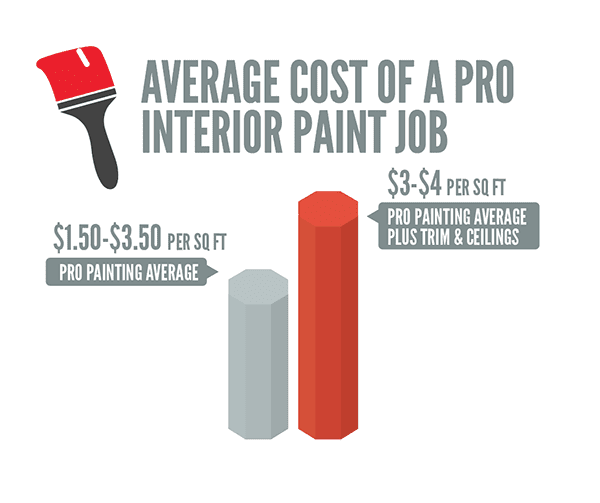
Let’s cut right to it. On average, homeowners in the U.S. can expect to pay anywhere from $3 to $7 per square foot for professional interior painting, including both labor and materials. Keep in mind, this is a general average and can shift based on various factors we’ll explore. If you’re looking to paint a 2,000 square foot home, you could be looking at a total cost between $6,000 and $14,000.

To give you a clearer picture, here’s a typical breakdown:
| Cost Tier | Cost Per Square Foot (Walls Only) | Cost Per Square Foot (Walls, Ceilings, Trim) | Typical Project Scope |
|---|---|---|---|
| Basic/Budget-Friendly | $2.00 – $3.50 | $3.00 – $5.00 | Minimal prep, single color, builder-grade paint, just walls in good condition. |
| Mid-Range/Standard | $3.50 – $5.50 | $5.00 – $8.00 | Moderate prep, multiple colors, quality paint, walls, ceilings, trim. |
| Premium/High-End | $5.50 – $8.00+ | $8.00 – $12.00+ | Extensive prep, repairs, custom colors, premium paint, intricate details, high ceilings. |
As you can see, simply stating “X dollars per square foot” isn’t enough. Let’s dive deeper into what actually drives these numbers.
Breaking Down the Numbers: What Influences Per Square Foot Painting Costs?
Understanding these factors is key to predicting your project’s true cost and ensures you’re comparing apples to apples when getting quotes.
1. Labor Costs: The Biggest Piece of the Pie
Labor typically accounts for 70-85% of your total painting cost. Professional painters aren’t just applying paint; they’re providing expertise, efficiency, and a quality finish. Several elements impact their hourly or project rate, which then translates into your per-square-foot cost:

- Experience and Reputation: Highly skilled and in-demand painters naturally charge more. They deliver better results, quicker, and with fewer headaches.
- Location: Painting services cost more in areas with a higher cost of living and stronger demand. A painter in San Francisco will charge more than one in a rural town in Alabama.
- Prep Work Required: This is huge. If your walls have holes, cracks, peeling paint, or heavy grime, the painter will spend significant time patching, sanding, cleaning, and priming. More prep equals more labor hours.
- Ceiling Height: Standard ceilings (8-9 feet) are easier. Vaulted ceilings, 10+ feet, or intricate tray ceilings require special equipment (ladders, scaffolding) and more time, increasing the cost per square foot.
- Architectural Details: Crown molding, baseboards, wainscoting, intricate trim work, built-in shelves, and decorative features all demand meticulous taping and cutting-in, significantly increasing labor time.
- Number of Coats: A fresh color over a similar existing shade might only need two coats. Changing from a dark color to a light one, or vice-versa, often requires primer plus two or even three coats of paint, adding labor.
- Furnished vs. Empty Rooms: If painters have to move and cover furniture, it adds time. Empty rooms are always quicker and cheaper to paint.
Here’s how labor costs might vary depending on complexity:
| Complexity Level | Labor Cost Per Square Foot (Approx.) | Factors |
|---|---|---|
| Low | $1.50 – $3.00 | Good wall condition, minimal prep, standard 8ft ceilings, simple color. |
| Medium | $3.00 – $5.50 | Some wall imperfections, moderate prep, standard trim, multiple colors or feature walls. |
| High | $5.50 – $9.00+ | Extensive repairs, high ceilings, intricate trim/molding, dark-to-light color changes, detailed work. |
2. Material Costs: Paint Quality & Type
Paint and supplies typically make up 15-30% of your total cost. While it might seem tempting to skimp here, remember: cheap paint often means more coats, less durability, and a less impressive finish. Higher-quality paints can save you money in the long run by requiring fewer coats and lasting longer.
- Paint Grades:
- Builder-Grade/Economy: $15-$30 per gallon. Thin, lower pigment, less durable. Often requires more coats.
- Mid-Range/Quality: $30-$50 per gallon. Good coverage, decent durability, better finish. Most common choice for homeowners.
- Premium/High-End: $50-$100+ per gallon. Excellent coverage (often 1-2 coats), superior durability, scrubbability, and richer pigments. Often low-VOC (Volatile Organic Compounds) for better air quality.
- Paint Finishes (Sheens): The sheen affects both the look and durability, and sometimes the price slightly.n
- Flat/Matte: No shine, hides imperfections well. Best for low-traffic areas like formal dining rooms or ceilings. Least durable, hardest to clean.
- Eggshell/Satin: Slight sheen, more durable and easier to clean than flat. Popular for living rooms, bedrooms, and hallways. Good balance of aesthetics and practicality.
- Semi-Gloss/High-Gloss: High shine, very durable, and easy to clean. Ideal for trim, doors, cabinets, and high-moisture areas like bathrooms and kitchens. Shows imperfections more.
- Specialty Paints: Primer-and-paint-in-one products, low-VOC or zero-VOC paints, mold-resistant paints, or specialty primers will carry a higher price tag per gallon.
- Supplies: Don’t forget the cost of brushes, rollers, painter’s tape, drop cloths, patching compound, sandpaper, and cleaning supplies. A professional painter includes these in their quote.
Here’s a look at paint costs and typical coverage:
| Paint Quality | Cost Per Gallon (Approx.) | Coverage Per Gallon (Approx.) | Key Benefit |
|---|---|---|---|
| Economy | $15 – $30 | 200 – 300 sq ft | Lowest upfront cost |
| Mid-Range | $30 – $50 | 300 – 400 sq ft | Good balance of cost and performance |
| Premium | $50 – $100+ | 350 – 450 sq ft | Superior durability, coverage, and finish |
3. Room Complexity & Surface Condition
This goes hand-in-hand with labor costs. A rectangular room with smooth, undamaged walls is far simpler and quicker to paint than a room with multiple angles, a fireplace, built-ins, or extensive wall damage.
- Number of Doors and Windows: Each one requires careful masking and cutting-in, adding time.
- Wall Repairs: Large holes, cracks, water damage, or significant texture inconsistencies require more than just a quick patch. Skim coating an entire wall or repairing drywall adds substantial labor.
- Color Changes: Going from a vibrant red to a light beige will almost certainly require a dedicated primer coat and multiple topcoats to achieve full coverage without bleed-through. This means more paint and more labor.
- Empty vs. Furnished: As mentioned, moving and protecting furniture, decor, and electronics adds significant time and effort.
4. Geographic Location
Just like real estate, painting costs are highly localized. What you pay in a major metropolitan area with high labor costs (e.g., New York City, Los Angeles) will be significantly more than in a smaller city or rural area. Demand for painters also plays a role; busy markets might see higher prices.
5. Project Scope: Walls, Ceilings, Trim, and More
When you ask for a “per square foot” quote, make sure you clarify what surfaces are included. Painting just the walls of a room is the cheapest option. Adding ceilings, trim, doors, and window frames significantly increases the cost per square foot because each element requires different techniques, tools, and meticulous attention to detail.
| Surface Included | Additional Cost Factor (Relative) | Typical Impact on Per Sq. Ft. Price |
|---|---|---|
| Walls Only | Baseline | $2.00 – $5.50 |
| Walls + Ceilings | +30-50% | Adding specific ceiling paint, more effort for overhead work. |
| Walls + Trim | +40-60% | Detailed masking, different paint sheen for trim, careful brushwork. |
| Walls + Ceilings + Trim | +50-100% | Full room treatment, often the most desired, but highest labor. |
| Doors (per door) | $75 – $150+ | Can be quoted separately or factored into overall per sq. ft. |
Calculating Your Interior Painting Project: Beyond Just Square Footage
While square footage is a great starting point, a professional painter will often look at the project holistically. Here’s what you need to understand:
1. Paintable Square Footage vs. Floor Square Footage: Your home’s total square footage (e.g., 2,000 sq ft) refers to the floor area. The “paintable” square footage for walls is roughly 3-4 times that of the floor square footage, depending on ceiling height. A 10×10 room with 8ft ceilings has 4 sides * 10ft length * 8ft height = 320 square feet of wall space. Plus, you might have a ceiling (100 sq ft) and trim.
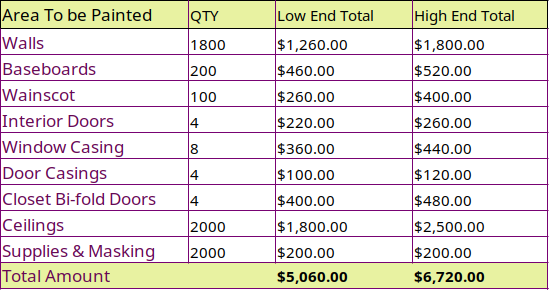
2. Understanding a Painter’s Quote: Many painters will use a per-square-foot calculation internally but present you with a flat rate for the entire project. This often works out better for you, as it covers all contingencies and ensures the job is done to completion, not just by the clock or the number of gallons. Always get a detailed quote that specifies:
- What areas are being painted (walls, ceilings, trim, doors, closets).
- The type and brand of paint to be used.
- Number of coats.
- Extent of prep work included (patching, sanding, priming).
- Cleanup details.
- Project timeline.
DIY vs. Professional: Where Does Your Money Go?
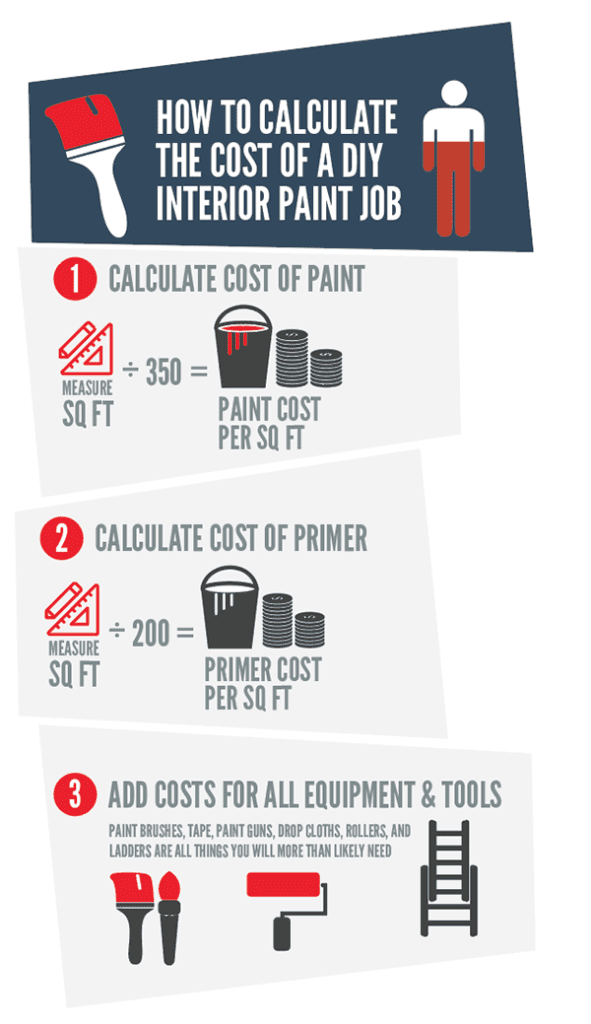
The allure of saving money by DIY painting is strong, and it’s certainly possible for smaller, simpler projects. However, it’s crucial to weigh the cost savings against the investment of your time, effort, and the potential quality difference.
| Factor | DIY Approach | Professional Painter |
|---|---|---|
| Upfront Cost (Materials Only) | Lowest (can be $0.50 – $2.00 per sq. ft.) | Included in overall per sq. ft. rate |
| Time Investment | Significant (prep, paint, cleanup) | Minimal for homeowner; project completed efficiently |
| Skill & Quality | Varies widely; can result in visible imperfections | High-quality finish, crisp lines, even coats |
| Equipment Needed | Purchase or rent rollers, brushes, drop cloths, ladders, tape, etc. | All equipment provided by painter |
| Convenience | Low; disruptive to home life | High; minimal disruption, professional handling |
| Overall Value | Good for small, simple projects if you have time/skill. | Superior for larger projects, complex areas, or when time/quality are priorities. |
While DIY saves on labor, it adds significantly to your time and effort. For a whole house interior, especially if you have high ceilings or intricate trim, the cost of a professional is often worth the investment in quality, speed, and your sanity.
Maximizing Value: Tips to Get the Best Bang for Your Buck
Even if you hire a professional, there are smart ways to ensure you’re getting excellent value for your money.
- Get Multiple Quotes (3-5): This is non-negotiable. It allows you to compare prices, approaches, and personalities. Don’t automatically go for the lowest bid; scrutinize what’s included.
- Be Crystal Clear on the Scope of Work: Misunderstandings lead to unexpected costs. Provide a detailed list of what you want painted (walls, trim, doors, ceilings in each room). Walk through each area with the painter.
- Consider Off-Season Painting: Painters are often busiest in spring and summer. Scheduling your project in fall or winter (if weather permits for any exterior work involved, or purely interior) might get you a better rate or more availability.
- Do Some Prep Work Yourself (If Comfortable): If you’re handy, tasks like moving furniture, removing outlet covers, patching small nail holes, or cleaning walls can reduce the painter’s labor time and thus your cost. Discuss this with your painter upfront.
- Choose Paint Wisely: Don’t automatically opt for the cheapest paint. A good quality, mid-range paint often offers better coverage, durability, and a nicer finish, potentially requiring fewer coats (saving on labor!) and lasting longer.
- Limit Color Changes: Each new color means more masking, cleaning of tools, and precision work. Consolidating your color palette can save money.
- Empty Rooms as Much as Possible: The less a painter has to move and protect, the faster and cheaper the job will be.
- Ask About Warranties: A reputable painter will offer a warranty on their work, giving you peace of mind.
What to Look for in a Professional Painter
Hiring the right painter is just as important as understanding the costs. Here’s your checklist:
- Licensing and Insurance: Crucial! Ensure they are licensed (if required in your state) and, more importantly, have liability insurance and worker’s compensation. This protects you from damages or injuries on your property.
- References and Portfolio: Ask for recent client references and look at their past work. A good painter will be proud to show off their projects.
- Detailed Written Quotes: A professional quote will be thorough, itemizing costs, materials, scope of work, and timelines. Avoid vague, handwritten estimates.
- Clear Communication: Do they respond promptly? Do they answer your questions clearly? Good communication is a sign of professionalism.
- Payment Schedule: A reputable painter typically asks for a deposit (e.g., 10-30%) upfront and the remainder upon satisfactory completion. Be wary of those demanding full payment upfront.
Conclusion: Paint Your Interior with Confidence
The cost to paint a house interior per square foot is a dynamic figure, shaped by a multitude of factors from labor rates and paint quality to the complexity of your home and its current condition. While the average range is often $3 to $7 per square foot for a professional job, remember that a premium finish on a detailed home could easily push that to $12 or more.
By understanding these variables, getting detailed quotes, and applying the smart tips I’ve shared, you can navigate your interior painting project with clarity and confidence. A beautifully painted interior isn’t just about color; it’s about investing in the comfort, aesthetics, and value of your home.
Now, go forth and choose those colors! You’re ready to transform your space.