How Much Paint Do I Need For a Room? Your Ultimate Calculator & Guide
Staring at an empty paint can or, worse, a half-painted wall and realizing you’ve run out of paint is a special kind of frustration. On the flip side, buying too much means wasted money and cans cluttering your garage. Sound familiar? You’re not alone. Figuring out exactly how much paint you need for a room is one of the most common DIY dilemmas.
Forget the guesswork. This guide isn’t just another paint calculator; it’s your comprehensive toolkit to confidently estimate paint quantities, understand the ‘why’ behind the numbers, and tackle your next project like a pro. We’ll break down the formulas, reveal the hidden factors that gobble up paint, and arm you with the knowledge to buy just the right amount, every time.
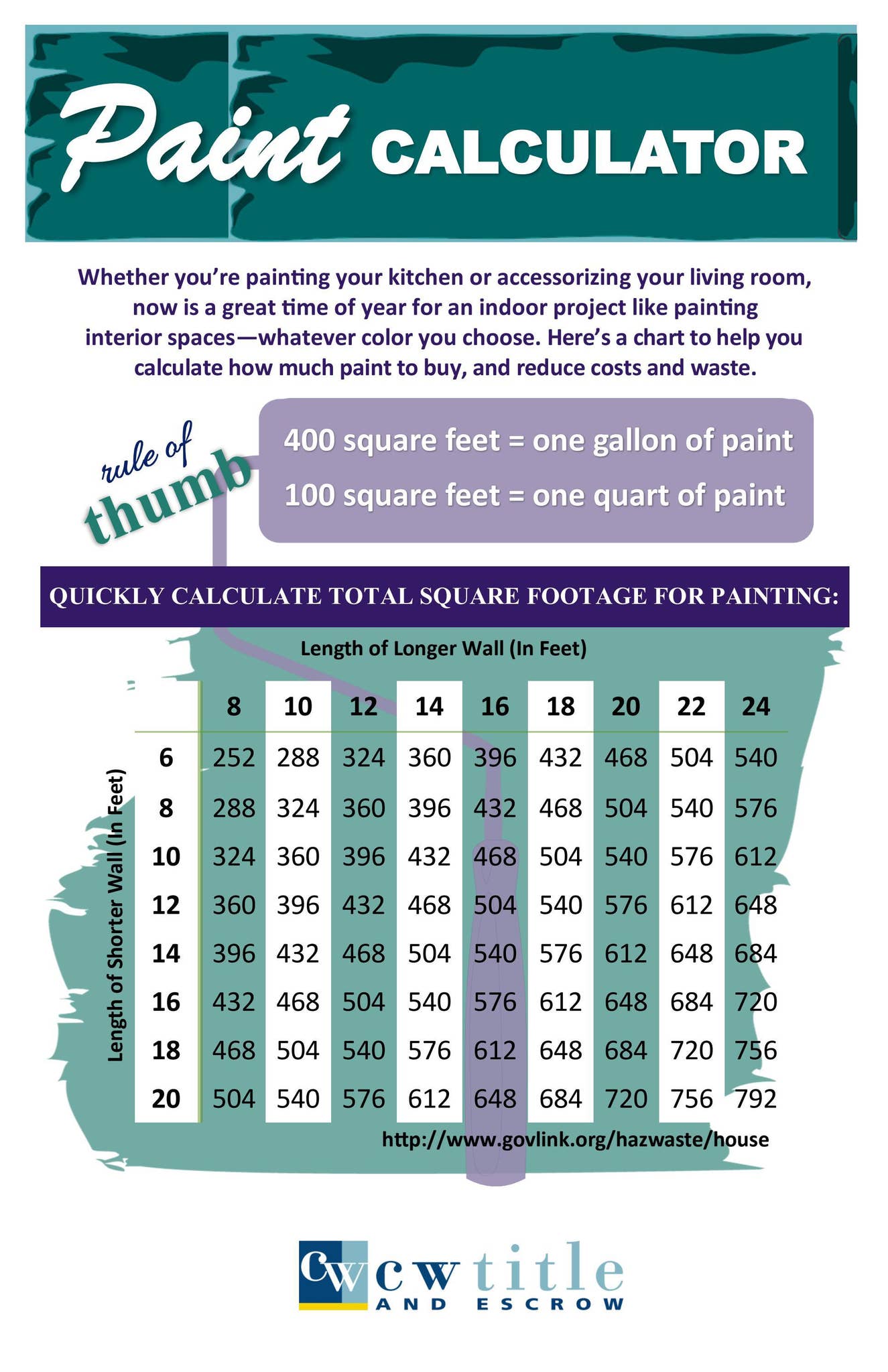
Quick Answer: For an average-sized room (e.g., 10×12 feet with 8-foot ceilings), you’ll typically need about 2 gallons of paint for two coats on the walls. A single gallon of paint generally covers 350-400 square feet per coat, but this can vary significantly.
Why Accurate Paint Calculation Matters (and Saves You Money)
Think beyond just filling your paint tray. Getting your paint estimate right has real, tangible benefits for your wallet, your time, and even the planet.
Avoiding the Paint Pitfalls: Too Much vs. Too Little
Underestimating means multiple trips to the store, potentially running into supply issues with your specific color batch (leading to slight color variations – known as ‘flashing’ – on your walls), and added stress. Overestimating? That’s money poured into unused gallons and the hassle of storing or disposing of them. Every dollar counts, and precision painting is smart budgeting.
The Environmental Angle: Smart Buying, Less Waste
Leftover paint, especially in large quantities, can be an environmental headache. It contains chemicals that shouldn’t end up in landfills or down drains. By buying only what you need, you minimize waste and contribute to a more sustainable home improvement practice. Plus, less clutter in your garage is a win for everyone!
The Core Formula: Area Calculation 101
The foundation of any paint calculation is understanding square footage. It’s simpler than you might think!
Walls: The Foundation of Your Calculation
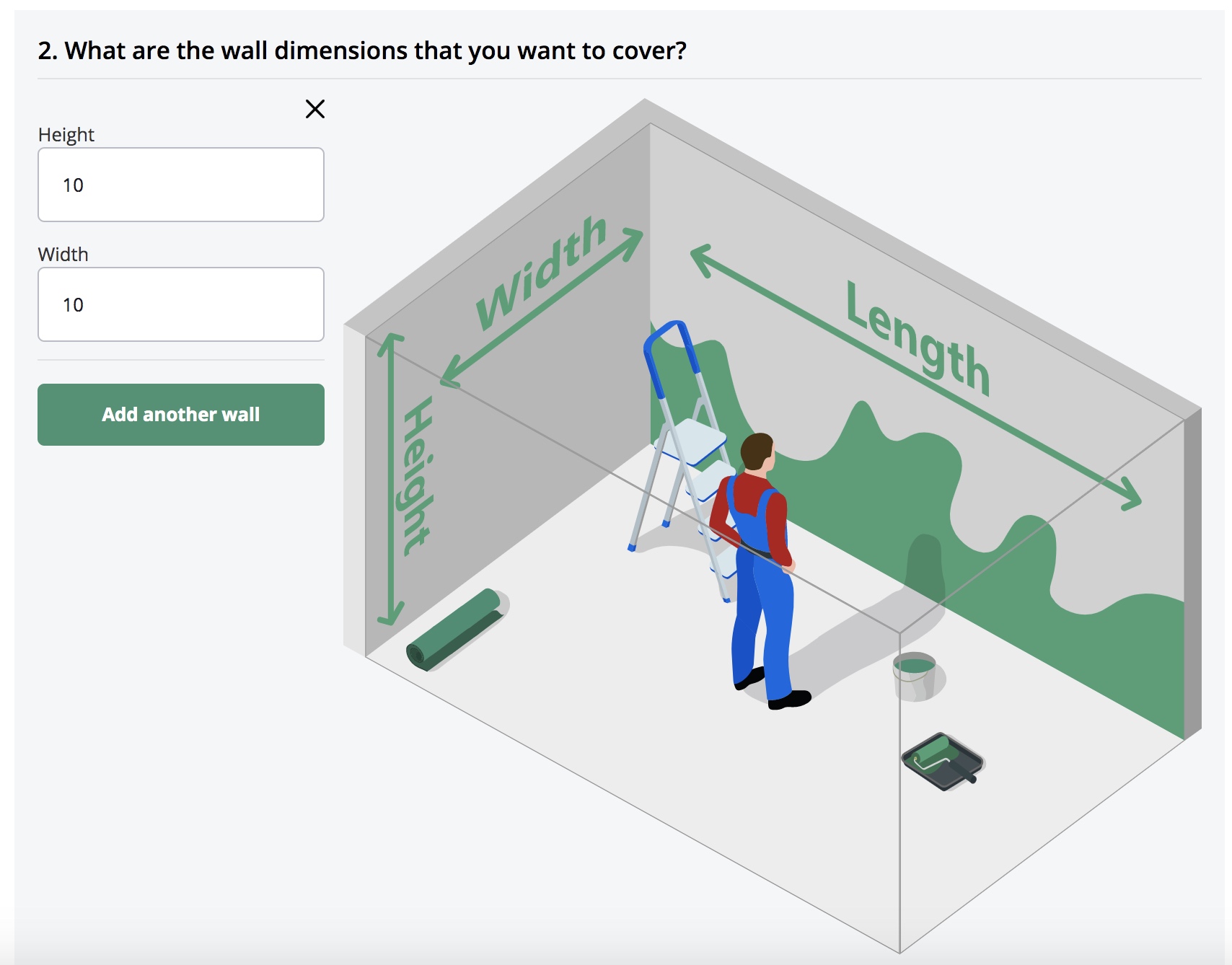
Most rooms are rectangular, making wall calculations straightforward. Here’s how you do it:
- Measure the Length of Each Wall: Grab your tape measure and get the length of all four walls.
- Add the Wall Lengths Together: This gives you the total perimeter of the room.
- Measure the Height of the Walls: From floor to ceiling.
- Calculate Total Wall Area: Multiply the total perimeter by the wall height.
Formula: (Wall 1 Length + Wall 2 Length + Wall 3 Length + Wall 4 Length) x Wall Height = Total Wall Square Footage
Alternatively, for a rectangular room: (Length + Width) x 2 x Height = Total Wall Area
Example: A room is 10 feet long and 12 feet wide, with 8-foot high ceilings.
(10 ft + 12 ft) x 2 x 8 ft = 22 ft x 2 x 8 ft = 44 ft x 8 ft = 352 square feet of wall space.
Ceilings: Don’t Forget the Fifth Wall!
Painting the ceiling can dramatically brighten a room or make it feel more expansive. Calculating ceiling area is even easier than walls.
- Measure the Length of the Room.
- Measure the Width of the Room.
- Calculate Ceiling Area: Multiply the room’s length by its width.
Formula: Room Length x Room Width = Ceiling Square Footage
Example: For our 10×12 foot room:
10 ft x 12 ft = 120 square feet of ceiling space.
Subtracting the Openings: Doors & Windows
You don’t paint doors and windows (unless they’re getting a fresh coat of trim paint, which is a separate calculation!). Subtracting their area from your total wall area is crucial for an accurate estimate.
- Measure Each Door: Typically, doors are 3 ft wide by 7 ft high (21 sq ft).
- Measure Each Window: Measure the approximate frame area of each window.
- Calculate Total Opening Area: Add up the square footage of all doors and windows.
- Subtract from Wall Area: Subtract this total from your calculated wall square footage.
General Rule of Thumb: For simplicity, many painters don’t bother subtracting areas smaller than 20-30 sq ft (like a small window), as the slight overestimation acts as a good buffer. For larger openings, definitely subtract.
Example: Our 352 sq ft wall area room has one door (21 sq ft) and two windows (each 15 sq ft).
nTotal opening area = 21 sq ft + (2 x 15 sq ft) = 21 sq ft + 30 sq ft = 51 sq ft.
nAdjusted wall area = 352 sq ft – 51 sq ft = 301 square feet.
The Magic Number: How Many Square Feet Per Gallon?
This is where paint formulas come in. A single gallon of paint typically covers between 350 to 400 square feet for one coat on a smooth, prepped surface. However, this is just an average. Several factors can influence this number, which we’ll dive into shortly.
Most paint projects require two coats for optimal color depth, durability, and a professional finish. So, you’ll generally divide your total adjusted square footage by 350-400, and then multiply by two for two coats.
Final Calculation Example for Walls Only (2 Coats):
nAdjusted Wall Area: 301 sq ft
nCoverage per Gallon: 350 sq ft (conservative estimate)
nPaint Needed for One Coat: 301 sq ft / 350 sq ft/gallon = 0.86 gallons
nPaint Needed for Two Coats: 0.86 gallons x 2 = 1.72 gallons
In this scenario, you’d likely buy 2 gallons of paint to ensure you have enough for two full coats.
For the ceiling (120 sq ft), assuming one coat for a fresh white:
nPaint Needed for Ceiling: 120 sq ft / 350 sq ft/gallon = 0.34 gallons (You’d get a quart if you only needed this much, but often you’d round up to a gallon or use from leftover wall paint if similar color).
Typical Paint Coverage Rates by Type and Finish
Here’s a general guide for how far different paint types and finishes typically stretch. Remember, these are averages, and specific product labels are your best friend!
| Paint Type/Finish | Typical Coverage (Sq Ft/Gallon) | Notes |
|---|---|---|
| Flat/Matte Finish | 350-400 | Good coverage, but can be less durable. |
| Eggshell/Satin Finish | 350-400 | Standard choice, good balance of coverage and durability. |
| Semi-Gloss/High-Gloss Finish | 300-350 | Often thicker, requiring less per coat but sometimes needing more for full opacity. |
| Primer | 200-300 | Highly variable based on primer type and surface porosity. |
| Paint & Primer in One | 300-350 | Often covers less than traditional paint for first coat due to primer properties. |
| Textured Paint | 50-150 | Significantly lower coverage due to thickness and texture. |
The "How-To" Guide: Measuring Your Room Like a Pro
Accuracy is key, and it starts with good measurement. Don’t rush this step!
Essential Tools for Accurate Measurement
- Tape Measure: A standard 25-foot tape measure is usually sufficient.
- Notepad and Pen/Pencil: To jot down all your dimensions.
- Calculator: For quick arithmetic (your phone works perfectly).
- Ladder or Step Stool: If you have high ceilings or need to reach tall windows.
Step-by-Step Measurement Process
- Clear the Way: Move any furniture that obstructs your ability to measure walls accurately.
- Measure Wall Lengths: Measure each wall individually, from corner to corner. Even if two walls look the same, measure both to be sure.
- Measure Wall Height: Measure from the floor up to the ceiling line. If your ceiling height varies (e.g., in an older home), take the average or measure each section separately.
- Measure Doors: Get the width and height of each door opening. Multiply to get the square footage.
- Measure Windows: Get the width and height of each window opening (including the frame you won’t paint). Multiply for the square footage.
- Account for Irregular Shapes: If your room has alcoves, cutouts, or a non-rectangular shape, break it down into smaller, manageable rectangles or triangles. Calculate each section separately and add them up. For example, an L-shaped room can be seen as two rectangles.
- Record Everything: Write down every measurement clearly on your notepad. It’s easy to forget if you’re relying on memory.
- Double-Check: Measure everything a second time to catch any potential errors. Better safe than sorry!
Beyond the Basics: Factors That Influence Your Paint Needs
The standard 350-400 sq ft per gallon is a good starting point, but it’s not a universal constant. Several real-world factors can significantly alter how much paint you’ll actually need.
Surface Condition: Rough vs. Smooth
Porous, rough, or unprimed surfaces (like new drywall, bare wood, or textured walls) will soak up significantly more paint, reducing your coverage per gallon. Think of it like a sponge. Smooth, previously painted, or properly primed surfaces require less paint per coat because they absorb less.
Color Change: Light to Dark, or Dark to Light?
This is a big one. Changing from a dark color to a light color (e.g., deep red to soft beige) almost always requires more coats, often three or even four, to achieve full opacity and prevent the old color from “bleeding through.” The same can be true, though less dramatic, when going from a very light color to a very dark one. Sticking to similar color families or using a tinted primer can help here.
Paint Type & Sheen: Not All Paints Are Created Equal
- Economy Paints: Often thinner, with less pigment, meaning they may require more coats for full coverage.
- Premium Paints: Typically thicker, with higher quality pigments, offering better coverage in fewer coats.
- Paint & Primer in One: While convenient, the first coat often acts more like a primer, requiring a second full coat for the true color and finish. Don’t expect “one-coat coverage” usually.
- High Sheens (Semi-Gloss, Gloss): These paints tend to be thicker and can sometimes cover slightly less per gallon than flat or eggshell finishes.
- Deep, Rich Colors: Often require more coats due to the intensity and transparency of certain pigments. Some vibrant reds, blues, and yellows are notorious for this.
Number of Coats: The Two-Coat Rule of Thumb
As mentioned, most professional painters and DIY experts recommend two coats of paint for an even, durable, and true-to-color finish. Always calculate for two coats, and then adjust down to one if you’re certain it’s not needed (e.g., refreshing an already perfectly matched color).
Roller Nap & Application Method
The tools you use matter! A thicker roller nap (e.g., 3/4 inch) designed for textured surfaces will hold more paint and apply it more heavily, potentially reducing your coverage per gallon compared to a shorter nap (e.g., 3/8 inch) on a smooth wall. Spray painting generally uses more paint than rolling or brushing because of overspray.
Don’t Forget the Primer! When and How Much You Need
Primer is the unsung hero of a great paint job. It’s often overlooked in calculations but is absolutely vital for certain projects.
Why Primer is Crucial for Many Projects
Primer serves several key functions:
- Sealing Porous Surfaces: New drywall, bare wood, or plaster needs primer to seal the surface and prevent the topcoat from being absorbed unevenly.
- Promoting Adhesion: It helps the topcoat stick better, especially over slick or glossy surfaces, or old oil-based paint.
- Blocking Stains: Stain-blocking primers can prevent water stains, smoke damage, or even knot bleed from wood from showing through your new paint.
- Ensuring True Color: A uniform, neutral primer base ensures your chosen paint color appears accurate and vibrant, especially when changing from a very dark to a very light color.
- Improving Durability: A good primer creates a more stable foundation for the topcoat, enhancing its longevity and washability.
Calculating Primer Needs: It’s Similar, But Different
The good news is that primer calculation uses the same square footage you already calculated for your walls and ceiling. However, primers often have slightly different coverage rates than paint, typically ranging from 200 to 300 square feet per gallon, especially on very porous surfaces. Always check the specific primer’s label.
If you’re using a tinted primer (highly recommended when painting a dark color over a light one, or vice-versa), you’ll treat it much like a first coat of paint in terms of coverage.

Primer Coverage & When to Use It
Here’s a helpful table to guide your primer decisions:
| Surface/Condition | Why Use Primer? | Coverage (Sq Ft/Gallon) |
|---|---|---|
| New Drywall/Unpainted Plaster | Seals porous surface, ensures even absorption. | 200-250 (may need 2 coats on very porous) |
| Bare Wood/Trim | Seals wood grain, blocks tannins/knots from bleeding through. | 250-300 |
| Changing Dark to Light Color | Hides old color, ensures true new color with fewer topcoats. | 250-350 (tinted primer) |
| Stained/Smoke-Damaged Walls | Blocks stains and odors, prevents bleed-through. | 200-250 (use stain-blocking primer) |
| Glossy/Slick Surfaces | Creates a surface for new paint to adhere, prevents peeling. | 300-350 (use bonding primer) |
| Previously Painted, Good Condition | Optional; use if significantly changing color or sheen. | N/A (often no primer needed) |
Using a Paint Calculator Effectively (Online & App Tools)
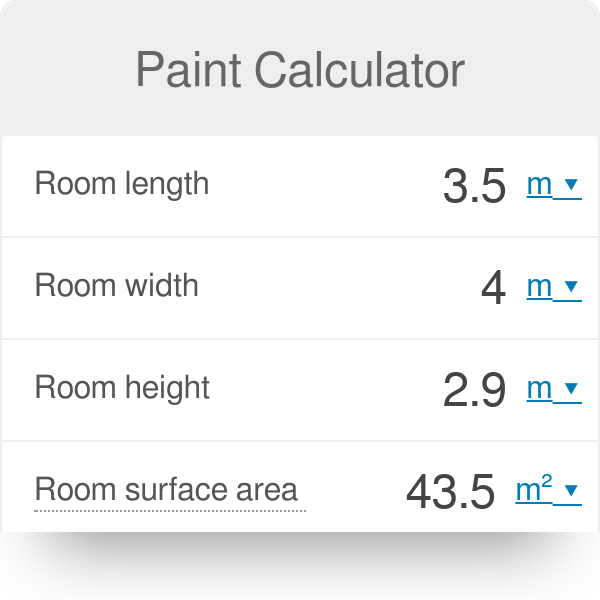
While understanding the manual calculation is empowering, online paint calculators are incredibly convenient. Major paint brands and hardware stores (like Sherwin-Williams, Benjamin Moore, Lowe’s, Behr) offer excellent tools. But remember, they’re only as good as the information you feed them.
How Online Calculators Work (and Their Limitations)
Most online calculators ask for:
- Room dimensions (length, width, height)
- Number of doors and windows (sometimes specific sizes)
- Number of coats desired
- Often, the type of surface (new drywall, previously painted)
- Sometimes, the current color and desired new color
They use internal algorithms based on average paint coverage rates for their products. Their main limitation is they can’t physically see your walls. They can’t account for extreme porosity, patching, or subtle surface imperfections that might drink up more paint.
Tips for Inputting Accurate Data
- Measure Meticulously: Even when using a calculator, your measurements are paramount.
- Be Honest About Surface: If your walls are rough or damaged, select the ‘new drywall’ or ‘unprimed’ option if available, even if they’re old. This often prompts the calculator to recommend more paint.
- Factor in Coats: Always assume two coats unless you have a very specific reason not to.
- Consider Trim Separately: Most calculators focus on walls and ceilings. Don’t forget to calculate trim (baseboards, crown molding, door/window frames) as a separate project. A rough estimate for trim is often 1 gallon per 400 linear feet for two coats.
When to Add a Buffer (The "Extra Half Gallon" Rule)
Even with the most precise calculations, it’s wise to build in a small buffer. Many pros recommend rounding up to the nearest full gallon, or if your calculation lands you squarely in between (e.g., 1.7 gallons), consider getting an extra quart or a half-gallon. Why?
- Touch-Ups: You’ll almost certainly need paint for touch-ups down the line.
- Accidents Happen: Spills, dropped cans, or needing to re-roll a section.
- Unexpected Porosity: Your walls might be thirstier than you thought.
- Future Repairs: If you ding a wall, having the exact match on hand is invaluable.
Real-World Scenarios: Estimating for Tricky Spaces
Not every room is a perfect box. Here’s how to tackle some common challenges.
High Ceilings or Vaulted Rooms
For walls that extend beyond standard 8-foot ceilings, simply use the actual height in your formula. For vaulted or cathedral ceilings, you’ll need to calculate the area of the triangles or trapezoids involved. Divide the irregular shape into basic geometric forms, calculate each area, and add them together.
Tip: For a triangular wall section (like a gable end), the formula is (Base x Height) / 2.

Accent Walls and Trim
If you’re painting an accent wall, simply calculate the square footage of that single wall. For trim, instead of square footage, you’ll need linear footage. Measure the length of all baseboards, door frames, window frames, and crown molding. As a general rule, 1 gallon of trim paint covers approximately 400 linear feet with two coats.
Irregularly Shaped Rooms
For L-shaped rooms, octagonal rooms, or those with many nooks and crannies, break them down into simpler shapes. Imagine drawing lines to divide the complex shape into multiple rectangles, squares, or triangles. Calculate the area of each individual shape and then sum them up for your total square footage.
Smart Buying & Storage Tips
Beyond the calculation, how you buy and store your paint can also impact your budget and readiness for future projects.
Buying in Bulk vs. Gallons
Paint is typically sold in quarts, gallons, and 5-gallon buckets. A 5-gallon bucket is almost always the most cost-effective per gallon, so if your project requires 4+ gallons, it’s usually worth buying the larger container. For smaller amounts, stick to gallons or quarts.
Proper Paint Storage for Longevity
You’ve got a little leftover for touch-ups? Store it correctly!
- Seal Tightly: Wipe the rim clean, place plastic wrap over the opening, then securely tap the lid back on with a rubber mallet.
- Label Clearly: Write the room it was used in, the date, and the specific color name/number directly on the can.
- Store in a Consistent Temperature: Cool, dry places are best. Avoid extreme heat or freezing temperatures, which can ruin paint. Basements or closets are ideal; uninsulated garages or attics are not.
Eco-Friendly Disposal of Leftover Paint
If you have more than a small amount of leftover paint and don’t need it for touch-ups, don’t just toss it. Paint can often be recycled or disposed of safely at household hazardous waste facilities. Check with your local waste management services for specific guidelines in your area. Many communities also host paint take-back programs or offer options for donating usable paint.
Should You Hire a Professional Painter?
Knowing how much paint you need is a big step, but sometimes, the entire project can feel overwhelming. Here’s when to consider DIY versus calling in the experts.
When DIY Makes Sense
- Small, Straightforward Rooms: A simple bedroom, bathroom, or hallway without intricate architectural details.
- Budget Constraints: DIY painting saves significantly on labor costs.
- Time and Enjoyment: You have the time to dedicate to the project and genuinely enjoy the process.
- Experience Level: You’ve painted before and are comfortable with the prep, application, and cleanup.
When to Call in the Experts (and What to Ask)
- Complex Projects: High ceilings, intricate trim work, multiple colors, or rooms with many architectural features.
- Time is of the Essence: If you need the job done quickly and efficiently.
- Lack of Skills/Confidence: You’re not comfortable with ladders, prep work, or achieving a smooth, professional finish.
- Quality Guarantee: Professional painters offer warranties on their work.
- Health/Safety Concerns: If the job involves lead paint remediation or difficult access.
If you decide to hire a professional, always get multiple bids, check references, and ask for a detailed estimate that includes both labor and materials (or specifies if you’re providing the paint). A good painter will also be able to accurately calculate paint quantities for you.
Armed with this guide, you’re now ready to tackle your painting project with confidence. Go forth and paint, knowing you’ve got your calculations covered!