Discover Your Sanctuary: The Definitive Guide to the Best Blue-Grey Paint for Bedrooms
Dreaming of a bedroom that feels like a serene escape? One where tranquility meets sophisticated style? You’re not alone. The search for the perfect bedroom color often leads us to blue-grey—and for good reason. This captivating hue offers a unique blend of calming blue and grounding grey, creating an atmosphere that’s both restful and refreshingly chic. But with countless shades available, how do you pinpoint the best blue-grey paint for *your* bedroom?
I’m here to guide you through the maze of undertones, LRVs, and lighting conditions. We’ll uncover why blue-grey is a perennial favorite for sleep spaces, break down the science behind its calming effect, and reveal top designer-approved picks that promise to transform your bedroom into the peaceful sanctuary you deserve.
Why Blue-Grey is the Bedroom MVP (Most Valuable Paint)
When it comes to creating a restful retreat, few colors rival the power of blue-grey. It’s not just a trend; it’s a scientifically backed choice for enhancing sleep and well-being.
The Psychology of Blue-Grey for Sleep and Serenity
Think about your ideal relaxing space. Does it involve soft, muted tones? That’s where blue-grey shines. Blue, inherently, is associated with the sky and ocean—vast, calming elements that promote feelings of peace and reduce anxiety. Studies have shown that blue light can slow heart rate and lower blood pressure, making it an excellent choice for a bedroom where relaxation is key. When you introduce grey into the mix, it mutes the intensity of the blue, adding a layer of sophisticated neutrality and grounding the color. This combination results in a hue that is profoundly calming, stress-reducing, and conducive to a good night’s sleep.
Versatility: A True Design Chameleon
One of blue-grey’s greatest strengths is its incredible versatility. It adapts beautifully to almost any design aesthetic. Whether your style is modern minimalist, cozy farmhouse, classic traditional, or breezy coastal, there’s a blue-grey shade that will complement it perfectly. It serves as a fantastic neutral backdrop, allowing you to layer in different textures, patterns, and accent colors without clashing. It’s like the perfect pair of jeans for your walls—always in style and always working hard.
Beyond Trends: A Timeless Choice
Unlike some highly saturated or overly vibrant colors that can feel dated quickly, blue-grey possesses a timeless quality. Its subtle sophistication ensures that your bedroom will feel current and elegant for years to come. It’s a choice that offers both immediate comfort and long-term aesthetic satisfaction, making it a smart investment for your home.
Understanding Blue-Grey: Key Factors Before You Choose
Choosing the right blue-grey isn’t as simple as picking a swatch. These nuances will make all the difference in your bedroom.
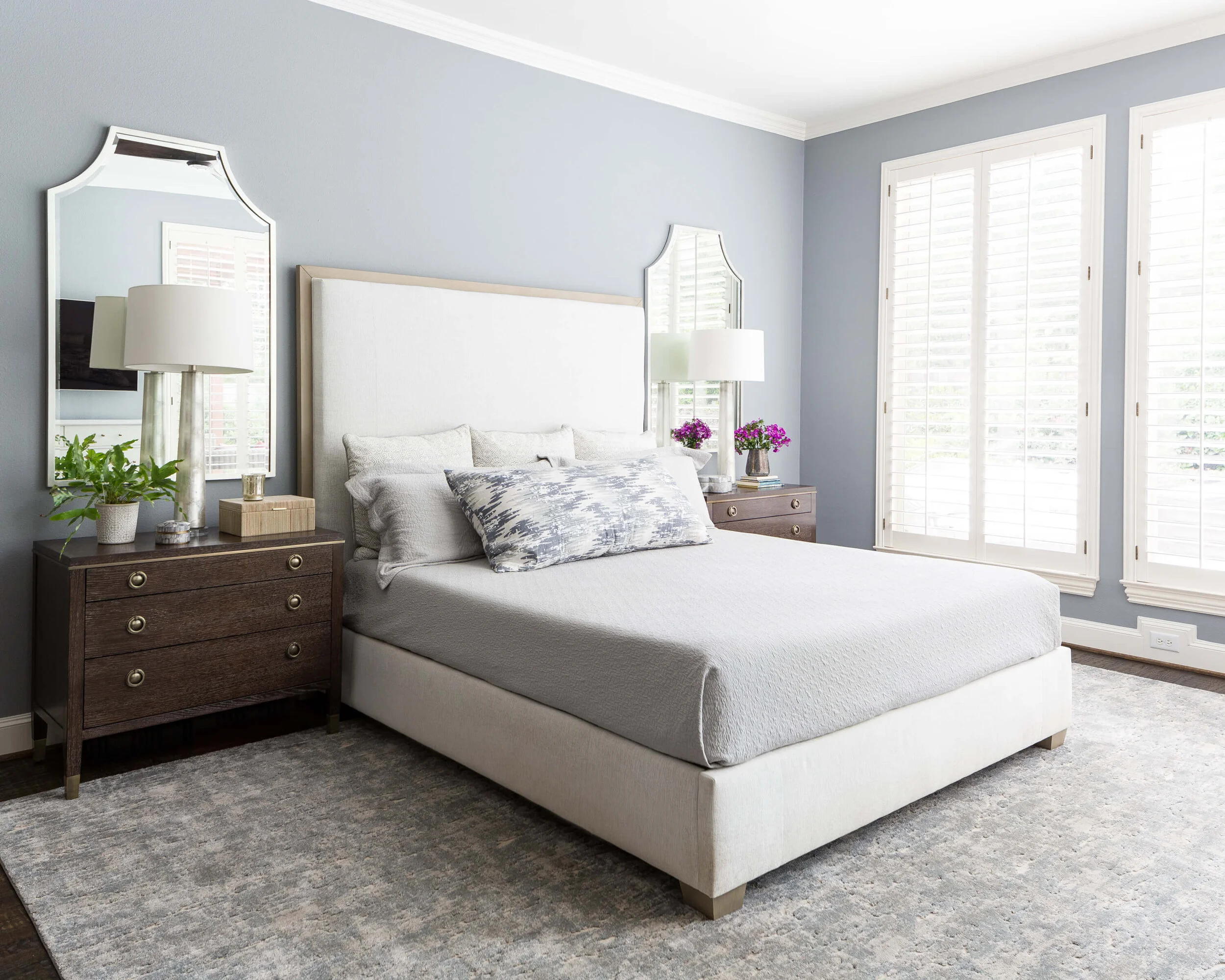
:max_bytes(150000):strip_icc()/Gibbs-Ave-134-9b2a24f2bc9448d7800258c65c193aa2.jpeg "40 Blue-Gray Paint Colors to Inspire Your Next Reno")
Light Reflectance Value (LRV): The Brightness Gauge
The Light Reflectance Value (LRV) is a numerical scale (from 0 to 100) that indicates how much light a color reflects. 0 is absolute black (no reflection), and 100 is pure white (maximum reflection).
- High LRV (60+): These blue-greys will feel lighter, airier, and more expansive. Great for smaller bedrooms or rooms with less natural light. They lean more towards the ‘blue’ end of the spectrum or are very pale.
- Medium LRV (30-59): A balanced choice that offers good saturation without making the room feel heavy. These are incredibly versatile and popular for bedrooms.
- Low LRV (below 30): Deeper, richer blue-greys that create a dramatic, cozy, and enveloping feel. Best suited for larger bedrooms or rooms with abundant natural light to prevent them from feeling too dark.
Understanding a paint’s LRV helps you predict how bright or dim a color will appear in your specific space.
Unpacking Undertones: Green, Purple, or True Grey?
This is where blue-grey gets tricky—and exciting! Undertones are subtle hints of other colors that reveal themselves under different lighting conditions. They’re what make one blue-grey feel cool and crisp, while another feels soft and warm.
- Green Undertones: These blue-greys often appear softer, more muted, and organic. They evoke a sense of nature and calm, making them incredibly popular for bedrooms. They can sometimes be called ‘blue-green-greys’.
- Purple/Violet Undertones: Blue-greys with a touch of purple tend to be a bit more sophisticated, cooler, and can feel luxurious. They pair beautifully with rich woods and metallic accents.
- True Grey Undertones: These are blue-greys where the grey is more dominant, resulting in a cleaner, crisper look. They lean into the contemporary and minimalist aesthetic.
Always examine samples carefully, as a paint that looks like a pure blue-grey in the store might reveal its subtle green or purple leanings in your bedroom lighting.
The Magic of Natural and Artificial Light
Light is a powerful transformer of color. A blue-grey paint will look drastically different depending on:
- Natural Light:
- North-facing rooms: Receive cooler, softer light, which can enhance blue tones and make a room feel crisper.
- South-facing rooms: Bathed in warm, intense light, which can make blue-greys appear warmer and sometimes bring out green or grey undertones more prominently.
- East-facing rooms: Brightest in the morning, where blue-greys will feel fresh and invigorating. They’ll look cooler and flatter in the afternoon.
- West-facing rooms: Receive warm, golden light in the afternoon and evening, making blue-greys appear softer and more muted.
- Artificial Light:
- Warm LED/Incandescent (2700K-3000K): Can soften and warm up blue-greys.
- Cool White LED (4000K+): Can emphasize the blue and grey, making the color appear more vibrant or stark.
This is why sampling paint directly in your bedroom and observing it at different times of day is absolutely non-negotiable.
Sheen Matters: Flat, Eggshell, or Satin for Bedrooms?
The paint’s finish, or sheen, also plays a crucial role in how the color appears and performs in a bedroom:
- Flat/Matte: Offers the least amount of shine, creating a soft, velvety look that absorbs light. It hides imperfections well and is ideal for creating a cozy, sophisticated, and restful atmosphere. However, it’s less durable and harder to clean.
- Eggshell: Slightly more luminous than flat, with a subtle, low sheen reminiscent of an eggshell. It’s more durable and washable than flat, making it a popular choice for bedrooms where some durability is desired without sacrificing the soft look.
- Satin: Has a noticeable sheen and is more reflective than eggshell. While durable and easy to clean, it can sometimes be too reflective for a primary bedroom, potentially disrupting the serene ambiance. It works well for trim or accent walls.
For most bedrooms, flat or eggshell finishes are recommended to maximize the calming, enveloping effect of blue-grey paint.
Our Top Picks: The Best Blue-Grey Paints for Bedrooms (and Why!)
After sifting through countless swatches, designer recommendations, and real-world applications, I’ve curated a list of blue-grey paints that consistently excel in bedrooms. These colors strike the perfect balance between serenity and style, with varying LRVs and undertones to suit diverse preferences and lighting conditions. Remember, these are starting points—always sample!
| Brand | Paint Name | LRV | Primary Undertone | Why it Works for Bedrooms |
|---|---|---|---|---|
| Benjamin Moore | Brittania Blue 1643 | 30.07 | Green | A deeper, sophisticated blue-grey with a noticeable green undertone that prevents it from feeling cold. Creates a cozy, enveloping sanctuary, especially in well-lit rooms. |
| Benjamin Moore | Mount Saint Anne 1565 | 33.32 | Violet/Grey | A mid-tone blue-grey that can lean slightly purple in certain lights, offering a refined and elegant feel. Perfect for a calming, grown-up bedroom. |
| Benjamin Moore | Stardew 1572 | 51.5 | Green | A lighter, softer blue-grey with a gentle green undertone. It’s airy and refreshing, ideal for creating a serene, spa-like atmosphere in any bedroom size. |
| Sherwin Williams | Lullaby SW 9136 | 53 | Green | Lives up to its name, offering a soft, muted blue-grey with subtle green that makes it incredibly calming. A fantastic choice for a truly restful sleep environment. |
| Sherwin Williams | Niebla Azul SW 9137 | 45 | Green | A slightly deeper sibling to Lullaby, with a beautiful muted blue and green-grey balance. Creates a sophisticated, tranquil atmosphere without being too dark. |
| Sherwin Williams | North Star SW 6246 | 62 | True Grey/Slight Blue | A lighter, airy blue-grey that leans more towards grey, giving it a crisp, clean feel. Excellent for contemporary bedrooms or smaller spaces needing to feel brighter. |
| Behr | Intercoastal Gray N400-3 | 40 | Green | Despite its name, this is a beautiful mid-tone blue-grey with a distinct green undertone. Offers a warm, inviting coastal vibe, perfect for a relaxed bedroom. |
| Farrow & Ball | Light Blue No. 22 | 51 | Green/Grey | A classic, elegant blue-grey that changes beautifully with the light, revealing subtle green undertones. Creates a truly sophisticated and serene English country house feel. |
Benjamin Moore Standouts
Benjamin Moore consistently delivers some of the most beloved blue-grey shades. Brittania Blue 1643 is a personal favorite for creating a deep, enveloping warmth. Its substantial green undertone ensures it never feels cold, instead offering a rich, sophisticated ambiance ideal for a master bedroom. If you’re looking for something with a touch more elegance and perhaps a slightly cooler, sophisticated edge, Mount Saint Anne 1565 provides a beautiful balance, especially if your room gets ample natural light.
For a lighter, airier feel, Stardew 1572 is an exceptional choice. It’s brighter with a higher LRV, and its gentle green undertone makes it incredibly versatile, suitable for creating a tranquil, spa-like retreat in almost any bedroom.
Sherwin Williams Favorites
Sherwin Williams offers fantastic options for those seeking a soft, comforting blue-grey. Lullaby SW 9136 truly lives up to its name, crafting a truly restful environment. It’s a beautifully balanced blue-grey with just enough green to keep it feeling natural and calming. Its slightly deeper cousin, Niebla Azul SW 9137, offers a touch more saturation, perfect for creating a cozy, yet still bright, atmosphere.
If your preference leans towards a lighter, crisper blue-grey with a more pronounced grey presence, North Star SW 6246 is an excellent contender. Its higher LRV makes it fantastic for smaller bedrooms or those desiring a more modern, clean aesthetic.
Beyond the Big Names: Other Excellent Choices
Don’t limit yourself to just two brands! Behr’s Intercoastal Gray N400-3, despite its name, is a gorgeous blue-grey with a distinctly warm, coastal-inspired green undertone. It’s a fabulous option for bringing a relaxed, beachy feel into your bedroom. And for those who appreciate heritage colors, Farrow & Ball’s Light Blue No. 22 is an iconic choice. It’s a chameleon color that elegantly shifts with the light, offering a sophisticated blue-grey with subtle green notes that feel incredibly classic and serene.

Matching Your Blue-Grey Bedroom: Complementary Colors and Decor
Choosing the right paint is only half the battle. How you furnish and accessorize your blue-grey bedroom will amplify its beauty and create a cohesive, harmonious space.
Trim and Ceiling Colors: The Perfect Frame
Your trim and ceiling colors are crucial for framing your blue-grey walls.
- Crisp White: For a classic, clean, and refreshing look, pair blue-grey with a bright, crisp white trim (e.g., Benjamin Moore Chantilly Lace, Sherwin Williams Extra White). This creates a striking contrast that makes the blue-grey pop.
- Soft Off-White: If you want a gentler transition and a warmer feel, opt for an off-white with subtle warm undertones (e.g., Benjamin Moore White Dove, Sherwin Williams Alabaster). This creates a softer, more inviting border.
- Matching Trim: For a truly enveloping, sophisticated look, consider painting the trim and even the ceiling the same blue-grey color as your walls. This creates a seamless, modern ‘color box’ effect that can make a room feel larger and incredibly cozy.
Furniture and Fabric Pairings
Blue-grey is wonderfully versatile when it comes to furniture and fabrics:
- Warm Woods: Balance the coolness of blue-grey with the warmth of natural wood furniture—think oak, walnut, or even lighter maple. This adds depth and a grounded feeling to the room.
- Metallics: Introduce accents like brushed brass, matte black, or polished chrome through hardware, lighting fixtures, or decorative objects. Each metal will pull out different facets of the blue-grey.
- Contrasting Textures: Layer different textures to add visual interest. Think a chunky knit throw, linen bedding, a velvet headboard, or a woven rug.
- Natural Fibers: Cotton, linen, wool, and jute all complement blue-grey beautifully, enhancing the serene and organic feel.
Accessorizing for Impact
Accessories are your chance to inject personality and pops of complementary color:
- Pops of Color: While blue-grey is calming, it can benefit from a touch of complementary color. Consider soft corals, muted mustards, terracotta, or even deep forest green in throw pillows, artwork, or decorative vases.
- Artwork: Choose art that resonates with your personal style. Abstract pieces with complementary colors, serene landscapes, or black and white photography all look stunning against a blue-grey backdrop.
- Lighting: Thoughtful lighting can enhance the mood. Soft, diffused lighting from bedside lamps and a dimmer switch for overhead lights will maintain the serene atmosphere.
- Greenery: Living plants add freshness and a touch of vibrant natural color, beautifully complementing the blue-grey palette.
Pro Tips for Painting Your Bedroom Like a Pro
You’ve picked your perfect blue-grey. Now, let’s ensure the application is flawless!
Sample, Sample, Sample! (And Why It’s Non-Negotiable)
I cannot stress this enough: DO NOT skip sampling! Paint swatches in the store are almost always misleading. Here’s how to do it right:
- Buy Sample Pots: Get small sample pots of your top 2-3 choices.
- Large Swatches: Paint large (at least 2’x2′) swatches on each wall of your bedroom, or on large pieces of poster board that you can move around.
- Observe Throughout the Day: Live with the samples for a few days. See how they look in morning light, afternoon sun, artificial evening light, and even on a cloudy day. Notice how undertones emerge or recede.
- Consider Existing Elements: How does the sample look next to your flooring, existing furniture, or window treatments?
This crucial step will save you from costly repainting and ensure you truly love your final choice.

Prep Work: The Foundation of a Flawless Finish
A beautiful paint job is 80% prep work. Skimping here will show.
- Clear the Room: Remove all furniture if possible, or move it to the center and cover it. Take down artwork, curtains, and switch plates.
- Clean Walls: Wash walls with a mild detergent solution (like TSP substitute) to remove dust, dirt, and grime. Rinse well and let dry completely.
- Patch and Sand: Fill any holes or cracks with spackle, sand smooth once dry. Sand any rough patches on the wall.
- Tape Off: Use high-quality painter’s tape to protect trim, baseboards, and ceilings where they meet the walls. Press firmly to ensure a good seal.
- Prime (If Needed): If you’re painting over a dark color, repairing patched areas, or painting new drywall, use a primer. Tinting your primer to a lighter shade of your blue-grey can also help achieve better coverage in fewer coats.
Application Techniques for a Professional Look
With good prep, painting itself becomes much easier.
- Start with Cutting In: Use a good quality angled brush to paint a 2-3 inch wide strip along all taped edges, corners, and around windows/doors.
- Use a Roller: For the main wall surfaces, use a roller with the appropriate nap (e.g., 3/8-inch nap for smooth walls).
- Work in Sections: Paint in 3’x3′ sections, working from top to bottom. Use a ‘W’ or ‘M’ pattern, then fill it in with vertical strokes for even coverage.
- Two Coats are Standard: Most colors, especially blue-greys, will require two coats for rich, even coverage. Allow adequate drying time between coats (check the paint can instructions).
- Remove Tape Promptly: Once the final coat is dry to the touch (but not fully cured), carefully remove the painter’s tape at a 45-degree angle for crisp lines.
Common Pitfalls to Avoid When Choosing Blue-Grey Paint
Even with the best intentions, it’s easy to make mistakes. Here’s what to watch out for:
Not Considering Your Room’s Orientation
As discussed, the direction your bedroom faces (North, South, East, West) profoundly impacts how light hits the walls, directly affecting the perception of your chosen blue-grey. A shade that looks perfect in a South-facing room (warm light) might appear stark or cold in a North-facing room (cool light). Always test in your specific room!
Ignoring Existing Elements
Your beautiful new blue-grey paint needs to play well with others. Don’t forget to consider:
- Flooring: Is it warm wood, cool tile, or neutral carpet?
- Fixed Finishes: Are there built-in cabinets, a fireplace, or specific window frames that aren’t changing?
- Furniture: What are the dominant colors and materials of your existing bed, dresser, and nightstands?
Hold your paint samples up against these elements to ensure harmonious coordination.
Overlooking Sheen’s Role
Choosing a paint sheen that’s too high (like semi-gloss or high-gloss) for a bedroom can be a major misstep. While durable for high-traffic areas, a high sheen in a bedroom can reflect too much light, creating an undesirable glare and undermining the calming, soft ambiance you’re aiming for. Stick to flat or eggshell for most bedroom applications to maintain that sought-after serene feel.

Ready to Transform Your Bedroom?
A blue-grey bedroom isn’t just a trend; it’s a commitment to creating a space of profound tranquility and timeless elegance. By understanding the nuances of LRV, undertones, and lighting, and by taking the time to sample thoroughly, you’re not just picking a color—you’re crafting an experience.
Whether you lean towards a deep, moody blue-grey with green undertones or a light, airy shade that whispers calm, the perfect hue awaits to transform your bedroom into your ultimate sanctuary. So go ahead, grab those samples, and embark on the journey to your dream blue-grey bedroom. Sweet dreams are just a paint can away!
Frequently Asked Questions
What LRV is best for a small bedroom with blue-grey paint?
For a small bedroom, especially one with limited natural light, I recommend choosing a blue-grey paint with a higher LRV (Light Reflectance Value), typically 60 or above. Higher LRV colors reflect more light, making the room feel brighter, more open, and less confined. Look for lighter, airy blue-greys that lean slightly more towards the grey or have subtle blue hints.
Does blue-grey paint make a bedroom feel cold?
Not necessarily! While blue is often associated with coolness, the addition of grey, especially with the right undertones, can make a blue-grey feel incredibly warm and inviting. Blue-greys with green undertones tend to feel more organic and less cold, while those with subtle purple undertones can add sophistication without being stark. The warmth of the room also depends on your lighting (warm vs. cool bulbs) and complementary decor (wood tones, soft textiles).
Can I use blue-grey paint in a child’s bedroom?
Absolutely! Blue-grey is a wonderful choice for a child’s bedroom or nursery. Its calming properties can promote better sleep and a peaceful environment. For younger children, you might opt for a lighter, more playful blue-grey with a soft green or clear blue undertone. For teens, a more sophisticated, slightly deeper shade can create a cool and stylish personal space. It’s also a great neutral backdrop that can grow with them.
What colors go well with blue-grey in a bedroom?
Blue-grey pairs beautifully with a wide range of colors. For a serene look, combine it with crisp whites, soft off-whites, and natural wood tones. For pops of color, consider muted mustards, soft corals, terracotta, or deep forest greens. Metallics like brushed brass, matte black, or polished chrome also complement blue-grey, adding elegance and depth. Don’t forget the warmth of natural textures like linen and wool.
How do I correctly test blue-grey paint samples in my bedroom?
To correctly test samples, paint large swatches (at least 2×2 feet) on multiple walls in your bedroom, or on large pieces of white poster board that you can move around. Observe the colors at different times of day—morning, afternoon, and evening—and under both natural and artificial light. Pay close attention to how the undertones appear and how the color interacts with your existing flooring, furniture, and fixed elements. Live with the samples for a few days before making a decision.
Should I use a flat or eggshell finish for blue-grey bedroom walls?
For blue-grey bedroom walls, I highly recommend a flat or eggshell finish. A flat (or matte) finish absorbs light, creating a soft, velvety look that enhances the calming effect of blue-grey and hides minor wall imperfections. Eggshell offers a very subtle sheen, making it slightly more durable and washable than flat, without being too reflective. Both are excellent choices for creating a serene and sophisticated bedroom atmosphere, whereas higher sheens like satin or semi-gloss can be too reflective and distracting in a restful space.
Is blue-grey paint a good choice for a master bedroom?
Yes, blue-grey is an outstanding choice for a master bedroom. Its inherent calming qualities promote relaxation and restful sleep, which are crucial for a master retreat. The color’s versatility allows it to adapt to various design styles, from traditional to modern, ensuring your master bedroom feels both sophisticated and deeply personal. It also provides a timeless backdrop that won’t quickly go out of style, making it a wise long-term decision.