Master the Art of Two-Tone Walls: Your Definitive Guide to Painting a Room with Style
Dreaming of a room that whispers sophistication or shouts personality? Two-tone walls are your secret weapon. They add instant depth, visual interest, and a custom feel that a single color simply can’t achieve. But let’s be honest: the thought of a perfectly crisp line separating two colors can be intimidating. Will it be straight? Will the paint bleed? Will you end up with a wobbly mess instead of a design statement?
Take a deep breath. You absolutely *can paint a room with two tones like a pro. And you’re about to learn exactly how. Forget those fears of crooked lines and messy edges; this isn’t just a basic step-by-step. This is your comprehensive guide, packed with insider tips, design principles, and foolproof techniques to transform your space with confidence and style. Let’s make those two-tone dreams a vibrant reality.
Why Go Two-Tone? More Than Just Color
Painting a room with two colors isn’t just about doubling your color options; it’s about leveraging design principles to create a space that feels larger, cozier, more dynamic, or simply more ‘you’.
Visual Impact & Design Flexibility
- Adds Depth & Dimension: Two colors break up the visual plane, preventing a room from feeling flat or boxy.
- Creates Illusions: A lighter color on top can make ceilings feel higher, while a darker color on the bottom can ground the space.
- Defines Zones: Use color splits to subtly delineate areas in an open-concept living space, creating ‘rooms within rooms’ without physical barriers.
Personal Expression: Tailor-Made Aesthetics
- Unleash Creativity: Combine colors that reflect your unique style, whether it’s bold and energetic or calm and serene.
- Highlight Features: Use a two-tone approach to draw attention to architectural elements like fireplaces, built-in shelves, or dramatic windows.
Practical Advantages: Hiding Imperfections & High Traffic
- Camouflage: A darker bottom color can be incredibly practical for high-traffic areas, effectively masking scuffs, fingerprints, and minor bumps, especially in kids’ rooms or hallways.
- Architectural Cheat Sheet: Mimic the look of a chair rail or wainscoting without the costly installation.
PHASE 1: Dream Big – Designing Your Two-Tone Masterpiece
Before you even think about primer, let’s talk vision. The magic of two-tone walls starts long before the brush hits the wall. It begins with thoughtful design decisions that will ensure your finished room is a harmonious success.
Choosing Your Colors: A Harmonious Pairing
Selecting two colors can feel overwhelming, but a few guiding principles will make it easier.
The 60-30-10 Rule & Two-Tone Magic
This classic interior design rule helps achieve balance. When applying it to two-tone walls, consider the two wall colors as your 60% and 30%, with the remaining 10% for an accent (art, pillows, decor). For example, if you split your wall 50/50, one color might be dominant overall in the room (60%), the other a strong secondary (30%).
Color Psychology & Mood Setting
Every color evokes a feeling. Think about the mood you want to create:
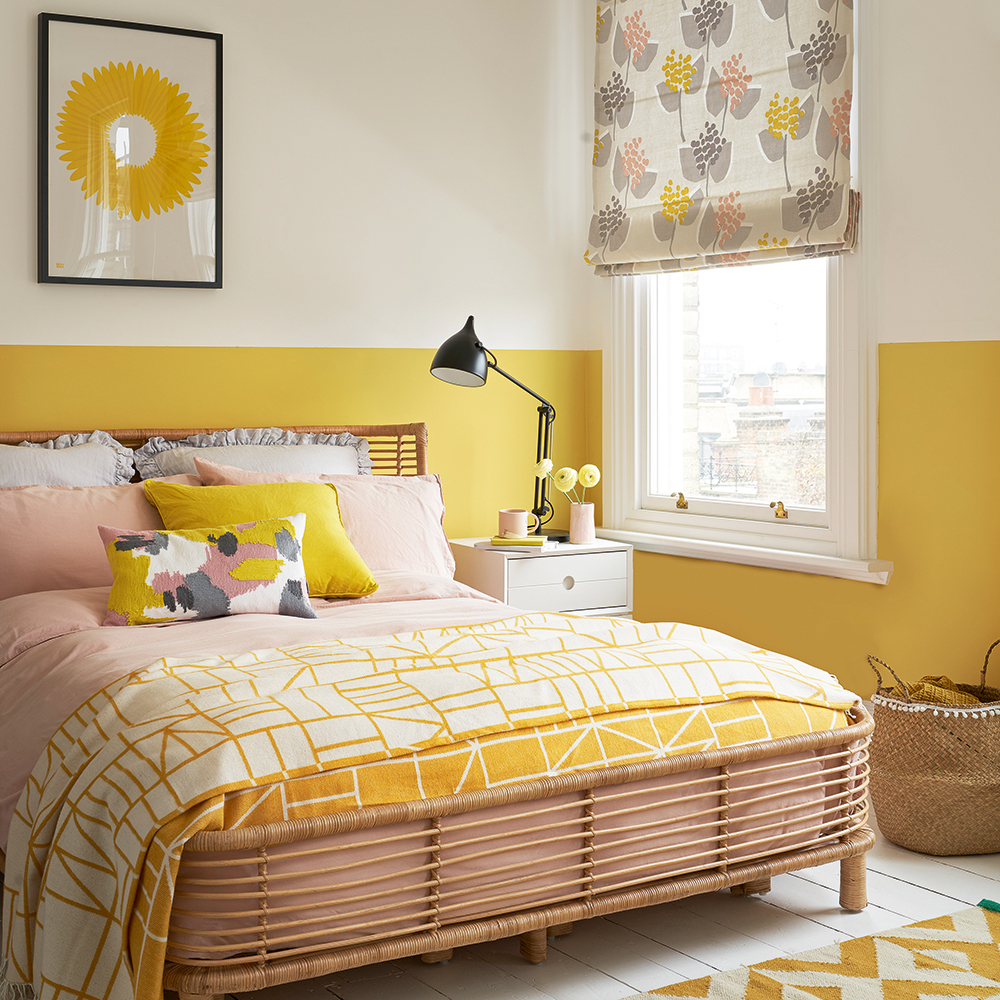
- Calm & Relaxing: Soft blues, greens, muted grays, or warm whites.
- Energizing & Playful: Brighter yellows, oranges, or bold blues.
- Sophisticated & Dramatic: Deep charcoals, navy, forest green, or even black paired with a lighter neutral.
Complementary vs. Analogous vs. Monochromatic Schemes
- Complementary: Colors opposite each other on the color wheel (e.g., blue and orange). High contrast, high energy.
- Analogous: Colors next to each other on the color wheel (e.g., blue, blue-green, green). Harmonious and calming.
- Monochromatic: Different shades or tints of the same color. Subtle, sophisticated, and always elegant.
Considering Light & Room Size
- Small Rooms: Lighter colors generally make a room feel larger and more open. Consider a lighter top color and a slightly deeper bottom color to maintain an airy feel.
- Large Rooms: Can handle darker, more saturated colors. Two bold tones can make a large room feel cozier and more intimate.
- Natural Light: Observe how light changes throughout the day. North-facing rooms benefit from warmer tones, while south-facing rooms can handle cooler colors.
Paint Sheen Matters: A Quick Guide
The finish of your paint significantly impacts both aesthetics and durability. Choosing the right sheen for each color can enhance your two-tone effect.
| Sheen | Appearance | Durability | Best Use For Two-Tone |
|---|---|---|---|
| Flat/Matte | No shine, absorbs light | Least durable, difficult to clean | Ceilings, low-traffic areas (top color often), hides wall imperfections well. |
| Eggshell/Satin | Slight sheen, soft glow | Good durability, easy to clean | Most common choice for both top and bottom colors in bedrooms, living rooms. |
| Semi-Gloss | Noticeable shine, reflective | Very durable, highly washable | Trim, doors, high-traffic areas (bottom color), creates a subtle contrast in sheen. |
Beyond the Half-Wall: Exploring Two-Tone Styles
The beauty of two-tone painting is its versatility. Don’t limit yourself to just a simple horizontal split.
The Classic Horizontal Split
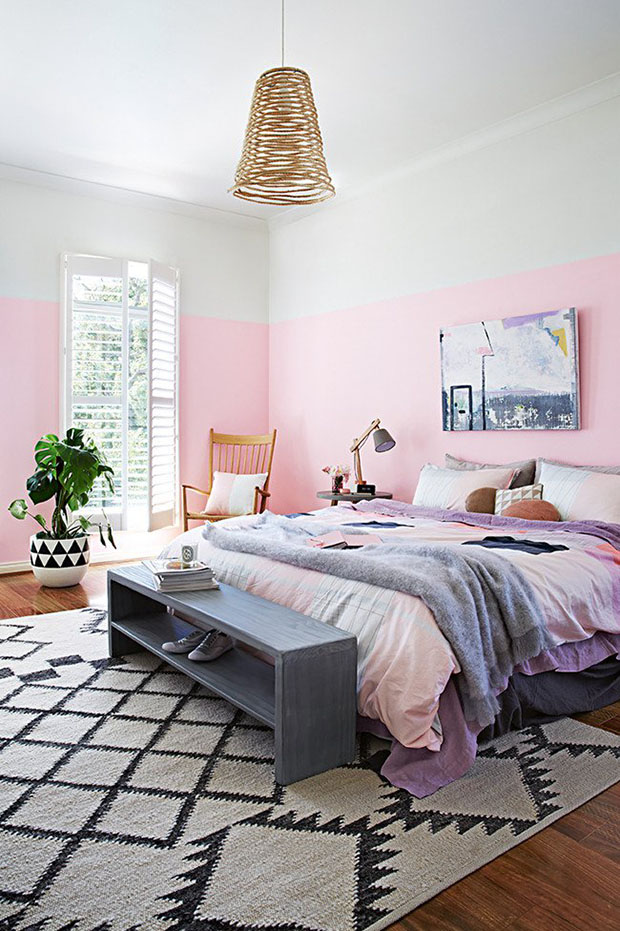
This is what most people imagine. The wall is divided into two sections, typically with a distinct line. The split can be at 50/50, but often looks more aesthetically pleasing at other ratios:
- 2/3 Bottom, 1/3 Top: Creates a grounded, wainscoting-like effect without the cost. Ideal for darker bottom colors.
- 1/3 Bottom, 2/3 Top: Lifts the eye, making ceilings appear taller. Great for adding a subtle pop of color near the floor.
Accent Walls & Geometric Shapes
Instead of splitting an entire room, choose one accent wall. On this wall, you can get creative:
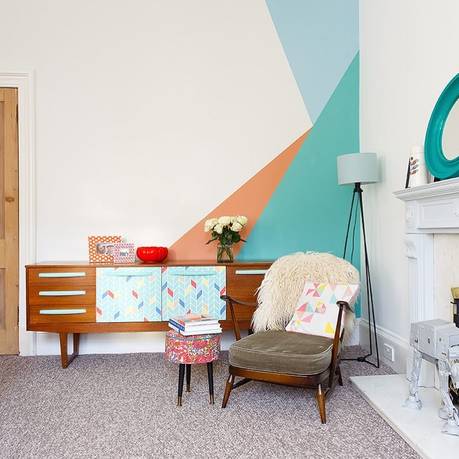
- Color Blocking: Create rectangles, squares, or even irregular shapes with your second color.
- Abstract: Embrace freehand curves or intersecting lines for a truly artistic statement.
Chair Rail Zones
If your room already has a chair rail, this is a natural dividing line. You can paint the wall below the chair rail one color and the wall above another, or even paint the chair rail itself a contrasting third color for an added layer of detail.
Vertical Stripes & Architectural Enhancements
While less common for a full room, consider using two tones for vertical elements. For example, painting the inside of an alcove a different color than the surrounding wall, or using vertical stripes (a more advanced technique) to draw the eye upwards.
Strategic Planning: Where to Split Your Wall
The placement of your dividing line is crucial. It influences how the room feels and how architectural features are perceived.
:strip_icc()/black-white-wall-behind-bed-38ebe8f5-2a1117dbc7ac463ba9961e493271216a.jpg "Two-Tone Walls Are a Low-Lift, Big-Impact Paint Option")
Eye-Level, Chair Rail, or Door Frame?
- Eye-Level: A popular choice, often between 48-60 inches from the floor. This creates a comfortable visual break.
- Chair Rail Height: Typically around 32-36 inches from the floor. This evokes a traditional wainscoting feel.
- Door/Window Frame Height: Aligning your line with the top of door or window frames can create a cohesive look and make the room feel taller.
- Above the Bed: In a bedroom, aligning the line just above the headboard can create a visual canopy effect.
The Power of the Golden Ratio
For an aesthetically pleasing division, consider the Golden Ratio (approximately 1.618). Divide the total wall height by 1.618 to find an ideal line placement. For example, on an 8-foot (96-inch) wall, a line at approximately 59 inches from the floor (96 / 1.618 ≈ 59.3) would be visually appealing. Don’t stress too much, but it’s a good reference for natural balance.
PHASE 2: Gear Up Like a Pro – Essential Supplies for a Flawless Finish
Skimping on supplies is the fastest way to compromise your results. Invest in quality tools; they’ll save you time, frustration, and ensure that crisp line you’re after.
Your Ultimate Two-Tone Tool Kit
The Right Paint – Quantity & Quality
- Paint Quantity: Measure your walls accurately. Two-tone means you’re painting different sections with different colors. Calculate the square footage for each color. Typically, one gallon covers about 350-400 square feet with one coat. Plan for two coats for each color.
- Paint Quality: Don’t compromise. Higher quality paints offer better coverage, truer color, and superior durability. They also apply more smoothly, reducing streaks and requiring fewer coats.
Essential Prep Tools
- Drop Cloths/Plastic Sheeting: Protect floors, furniture, and any items you can’t remove.
- Painter’s Tape (Low Tack & High Quality): Crucial for protecting trim and creating your dividing line. Invest in a premium brand like FrogTape or 3M Delicate Surfaces (blue tape) for the dividing line. The better the tape, the less likely you’ll have bleed.
- Spackle/Joint Compound & Putty Knife: For filling holes and cracks.
- Sandpaper (Fine-Grit): For smoothing patched areas and scuffing glossy surfaces.
- Degreaser/Wall Cleaner: To remove dirt, grease, and grime.
- Primer: Essential if you’re painting over a dark color with a light one, painting new drywall, or covering stains. Also helps with adhesion and color true-ness.
The Holy Grail of Straight Lines
This is where precision truly pays off.
- Measuring Tape: A good, long one is indispensable.
- Laser Level: An absolute game-changer for creating a perfectly level line across walls. Forget wobbles and unevenness. If you don’t have one, a long, traditional level (4-6 ft) and a steady hand can work, but a laser level is highly recommended.
- Pencil: For marking your line.
- Chalk Line (Optional but Recommended): For snapping a perfectly straight line between your pencil marks, especially useful if you don’t have a laser level or for very long walls.
Application Essentials
- Paint Brushes: High-quality angled brushes (2-3 inches) are perfect for cutting in along edges, corners, and your taped line.
- Paint Rollers & Covers: Choose the right nap (thickness) for your wall surface. Smooth walls typically use a 3/8-inch nap; textured walls might need 1/2-inch or 3/4-inch.
- Paint Trays & Liners: Make cleanup much easier.
- Extension Pole: Saves your back and helps achieve even coverage with rollers.
- Stir Sticks: To thoroughly mix your paint.
Clean-Up Crew
- Rags/Sponges: For wiping up spills and general cleanup.
- Buckets: For water (if using latex paint) and general cleanup.
PHASE 3: The Art of the Crisp Line – Step-by-Step Painting Process
You’ve got your vision, your colors, and your tools. Now, let’s get down to painting. Follow these steps meticulously, and that perfect, crisp line will be yours.
Step 1: Prep Like a Pro – Foundation for Flawless
Good prep work is 80% of a successful paint job. Do not skip this!
- Clear the Room & Protect Surfaces: Move all furniture to the center or out of the room. Cover floors with drop cloths and protect any remaining furniture with plastic sheeting.
- Remove Fixtures: Take off outlet covers, light switch plates, and any wall decor.
- Clean & Repair Walls: Wipe down walls with a mild cleaner (like TSP substitute) to remove dust, dirt, and grease. Rinse thoroughly and let dry completely. Fill any holes or cracks with spackle, allow it to dry, then sand smooth with fine-grit sandpaper. Wipe away sanding dust.
- Tape Off Trim: Use painter’s tape to protect baseboards, window frames, door frames, and ceilings. Press firmly to ensure a good seal.
- Prime for Perfection: If painting over a dark color, repairing patched areas, or working with new drywall, apply a coat of primer. Let it dry completely according to manufacturer instructions.
Step 2: First Color Down – Your Base Coat
We’ll typically start with the color that will cover the largest area or the lighter color.
- Apply the Lighter Shade First (Usually): It’s generally easier to cover a lighter color with a darker one if needed for touch-ups. If your top section is larger, paint that first. If your bottom section is larger, paint that. If it’s 50/50, pick the lighter of the two.
- Paint the Entire Section: Paint the area (top or bottom) that will receive the first color. Make sure to paint slightly beyond where your dividing line will be. Don’t worry about precision at the dividing line itself yet.
- Let it Dry. Completely.: This is CRUCIAL. Read the paint can for drying times. It’s often recommended to wait 24 hours between coats/colors, even if it feels dry to the touch sooner. Rushing this step will lead to tape peeling and messy lines. Apply a second coat if necessary, allowing ample dry time between coats.
Step 3: Marking Your Masterpiece – The Straight Line Challenge
This is the most critical step for achieving a professional look.
- Measure Precisely: Decide on your line height. Using your measuring tape, make small, light pencil marks every 12-18 inches along the wall at your chosen height. Do this across every wall you plan to paint two-tone.
- Use Your Laser Level & Pencil: Turn on your laser level and project a perfectly straight line onto your wall, aligning it with your pencil marks. Lightly connect these marks with your pencil to create a faint guide line. Do not rely solely on the laser line for tape placement; use a physical pencil line.
- The Chalk Line Secret (Optional but Effective): If you don’t have a laser level or for very long walls, place a thumb tack at each end of your measured pencil line. Hook a chalk line to one tack, stretch it tight to the other, ensure it’s perfectly aligned with your pencil marks, and snap it to create a crisp chalk line.
Step 4: Taping for Perfection – The Bleed-Proof Method
This is where we prevent those dreaded blurry edges.
- Apply Painter’s Tape Along the Line: Carefully apply your high-quality painter’s tape (e.g., FrogTape) directly over your pencil/chalk guide line. Ensure the tape is on the side of the line that will receive the second color. For example, if you painted the bottom half first and are now adding the top color, the tape goes on the top edge of the bottom painted section. If you’re doing the bottom section second, the tape goes on the bottom edge of the top painted section. You want the tape to protect the first color from the second color.
- Burnish the Edges: Once the tape is in place, use a credit card, plastic putty knife, or your fingernail to firmly press down along the entire edge of the tape that will meet the new color. This creates a strong seal and prevents paint from seeping underneath.
- The PRO TIP: Seal the Tape with the First Color! This is the ultimate secret to crisp lines. Once your tape is firmly in place, take a small amount of the first color (the one already on the wall, under the tape) and very lightly paint a thin coat along the edge of the tape where it meets the unpainted wall. This seals any tiny gaps under the tape with the same color as the wall. If any paint bleeds, it’s the first color, which is already there, creating a perfect seal for the second color. Let this sealing coat dry for 1-2 hours.
Step 5: Second Color Up – The Accent Takes Center Stage
Now for your dramatic reveal!
- Apply Your Second Color: Once the sealing coat is dry, begin applying your second color. Paint along the taped edge first with your angled brush, then fill in the rest of the section with your roller.
- Two Thin Coats are Better Than One: Always opt for two thin, even coats rather than one thick, drippy coat. Allow adequate drying time between coats (check the can, typically 2-4 hours).
Step 6: The Moment of Truth – Removing the Tape
This step can make or break your crisp line.
- When to Remove: Wet or Dry? There’s a debate, but for two-tone walls and crisp lines, the general consensus among pros is to remove the tape when the paint is wet to tacky*. If you wait until the paint is completely dry, it can bond to the tape, and you risk peeling off chunks of your beautiful new paint.
- Pulling Angle & Speed: As soon as you’ve applied your final coat of the second color (or within 30-60 minutes), start removing the tape. Pull it slowly and steadily at a 45-degree angle away from the painted surface. Don’t yank it straight off.
- Be Prepared: Keep a utility knife or razor blade handy. If you notice any paint starting to stretch or pull, lightly score along the edge of the tape before continuing to pull.
Step 7: Touch-Ups & Clean-Up
Almost done!
- Inspect Your Lines: Step back and admire your work. If there are any minor imperfections, use a small artist’s brush and the appropriate paint color to carefully touch up.
- Clean Up: Remove all drop cloths and plastic. Clean your brushes and rollers immediately with water (for latex paint) or mineral spirits (for oil-based). Store leftover paint in airtight containers. Replace outlet covers and switch plates.
Troubleshooting Common Two-Tone Painting Mistakes
Even with the best intentions, things can sometimes go wrong. Here’s how to tackle the most common issues:
Bleeding Lines
This is usually due to poor tape adhesion, low-quality tape, or not using the ‘seal the tape’ method. If bleeding occurs, let the paint dry completely. Then, use a small artist’s brush and the base color to carefully paint over the bleeds. If the bleed is significant, you may need to re-tape a small section and re-paint.
Uneven Line
A wobbly or wavy line indicates inaccurate measurement or a failure to use a level and pencil guide. To fix, let the paint dry. Then, re-measure and re-tape. Use a fine-grit sanding block to lightly sand down any raised edges of the crooked line, then carefully re-paint with the correct color over the new tape line.
:strip_icc()/two-toned-paint-kids-bedroom-61b0d0e0-a509196f68e3421bbae4ffb33236c872.jpg "Two-Tone Walls Are a Low-Lift, Big-Impact Paint Option")
Paint Peeling with Tape
This happens when the paint is either too wet (tape removed too soon, unlikely if you followed wet-to-tacky advice) or, more commonly, too dry (paint has fully cured and bonded to the tape). It can also be caused by old paint on the wall, a poorly prepared surface, or using tape that’s too aggressive. If this happens, carefully score the paint along the edge of the tape with a utility knife before pulling. For larger peels, you may need to sand, re-prime, and re-paint the affected area.
Drips & Sags
This is a sign of applying too much paint at once or using a roller with too long a nap for a smooth surface. To fix, gently sand down the dried drip with fine-grit sandpaper, being careful not to scratch the surrounding area. Then, apply a light touch-up coat with a brush or roller, using less paint this time.
Final Touches: Accessorizing Your Two-Tone Room
Once your walls are perfectly painted, it’s time to bring the room to life!
Complementary Decor
Choose furniture, textiles, and accessories that either complement your two wall colors or provide a contrasting accent. For example, if you have cool-toned walls, warm wood furniture or brass accents can add balance. If your walls are a subtle neutral two-tone, you can introduce a bold accent color through pillows, throws, or artwork.
Lighting Considerations
Lighting can drastically change how your two colors appear. Experiment with different types of lighting (warm or cool bulbs, lamps, overhead fixtures) to highlight your new walls and create the desired ambiance.
Artwork Placement
Consider placing artwork that bridges the two colors, or use framed pieces to break up a large expanse of a single color. Mirrors can also be strategically placed to reflect light and expand the visual space.
Conclusion: Transform Your Space, One Tone at a Time
Painting a room with two tones is an incredibly rewarding DIY project that offers immense design flexibility and a truly personalized aesthetic. Yes, it requires precision, patience, and a few pro tricks up your sleeve, but the result – a space with depth, character, and undeniable style – is well worth the effort.
By following this comprehensive guide, from thoughtful color selection and strategic planning to meticulous preparation and the ‘seal the tape’ secret, you’re now equipped to achieve that perfectly crisp line and stunning two-tone effect. So, grab your brushes, unleash your creativity, and get ready to transform your room into a masterpiece. Your walls are waiting!
Frequently Asked Questions
What is the best way to get a perfectly straight line when painting two-tone walls?
The most effective method involves three steps: first, use a laser level or a long traditional level to make light pencil marks for your dividing line. Second, apply high-quality painter’s tape (like FrogTape) precisely along this line, ensuring the tape covers the side of the first color. Third, and critically, paint a thin sealing coat of the *first* color over the edge of the tape. This fills any micro-gaps, creating a barrier that prevents the second color from bleeding underneath.
Should I paint the lighter or darker color first for a two-tone wall?
Generally, it’s recommended to paint the lighter color first. This is because it’s easier to cover a lighter color with a darker one if any touch-ups or overlaps occur. Also, if you use the ‘seal the tape’ method, using the lighter base color for sealing is less noticeable if any tiny amount bleeds, providing a cleaner canvas for the darker accent.
How long should I wait before removing painter’s tape from a two-tone wall?
For the crispest lines, it’s best to remove painter’s tape when the final coat of paint is still *wet to tacky*. This allows the tape to pull away cleanly without peeling off dried paint or leaving a rough edge. If you wait until the paint is completely dry and cured, it can bond to the tape, leading to tearing or peeling of your finished surface. Aim for removal within 30-60 minutes after the last coat.
What are some common mistakes to avoid when painting two-tone walls?
Key mistakes include inadequate wall preparation (not cleaning or repairing walls), using low-quality painter’s tape, not properly sealing the tape edge with the base color, rushing drying times between coats, and applying paint too thickly, which can lead to drips and sags. Skipping primer when necessary is another common oversight that affects finish and color vibrancy.
How do I choose the right height for my dividing line?
The ideal height depends on the room’s proportions and desired effect. Common placements include chair rail height (around 32-36 inches from the floor for a classic look), eye-level (48-60 inches for a comfortable visual break), or aligning with existing architectural features like door or window frames. A good rule of thumb for aesthetic balance is to avoid a perfect 50/50 split; aim for a 1/3 to 2/3 ratio (e.g., 1/3 dark, 2/3 light or vice versa) for more dynamic appeal.
Can I use different paint sheens for the two colors?
Absolutely! Using different paint sheens can add subtle sophistication and depth to your two-tone walls. For example, a more durable semi-gloss or satin on the bottom half is practical for high-traffic areas and easier to clean, while an eggshell or matte finish on the top half provides a softer look. Just ensure the colors complement each other, as sheen can slightly alter how a color appears.
Do I need to prime my walls before painting two-tone?
Primer is highly recommended if you’re painting over a significantly darker color with a lighter one, if you’ve done extensive wall repairs (spackling), or if you’re painting new, bare drywall. Primer helps block stains, ensures better adhesion of the new paint, and provides a uniform surface for your colors to appear true and vibrant. If your walls are already a similar light color and in good condition, you might be able to skip it, but it’s always a safe bet for a professional finish.