The Definitive Guide to Choosing the Best Blue Paint Color for Your Master Bedroom
Dreaming of a master bedroom that feels like a tranquil escape? A personal sanctuary where you can truly unwind and recharge? If so, you’re not alone. Many homeowners choose blue for this very reason, but picking the right blue can feel overwhelming. With endless shades, undertones, and finishes, how do you find that perfect hue that speaks to your soul and transforms your space?
You’re in the right place. Forget endless paint swatches and guesswork. I’m going to guide you through the process, revealing the secrets to selecting a blue paint color that will make your master bedroom the serene, stylish haven you deserve.
Blue Psychology: Why It’s Perfect for a Master Bedroom
There’s a reason blue is such a beloved choice for bedrooms. It’s not just a pretty color; it’s a psychological powerhouse. Blue is scientifically proven to have a calming effect, slowing heart rates and promoting feelings of peace and relaxation. Imagine walking into your master bedroom after a long day and instantly feeling a sense of tranquility wash over you – that’s the power of blue.
- Serenity & Calm: Evokes feelings of peace, quiet, and stability, ideal for winding down.
- Better Sleep: Studies suggest blue light exposure can contribute to better sleep quality (in a balanced context, not just screen time!).
- Timeless Appeal: Blue is classic and versatile, offering longevity in design trends.
- Versatility: From crisp sky blues to deep, moody navies, there’s a blue for every style and personality.
Understanding Blue Undertones: Your Secret Weapon
This is where many people go wrong. A blue isn’t just a blue; it has hidden undertones that dictate how it will look on your walls, especially under different lighting. Understanding these undertones is your secret weapon to avoiding a paint color disaster.

- Gray Undertones: These blues are muted and sophisticated. Think of a cloudy sky or soft denim. They offer a refined, often cool elegance and are less likely to feel overly bright or childish. Examples: Benjamin Moore Smoke, Sherwin-Williams Niebla Azul.
- Green Undertones: Often called “blue-greens” or “teals,” these shades bring a natural, earthy, and often spa-like feel. They’re more complex and can shift wonderfully with light. Examples: Benjamin Moore Palladian Blue, Sherwin-Williams Sea Salt, Rainwashed.
- Purple Undertones: These blues lean towards periwinkle or lavender, offering a softer, often more feminine or whimsical touch. They can add a touch of warmth and richness. Examples: Benjamin Moore Mount Saint Anne, some dusty blues.
- True Blue: These are the purest blues, with minimal leanings towards other colors. They can be vibrant or deep, often evoking classic nautical or traditional aesthetics. Examples: Benjamin Moore Hale Navy, Sherwin-Williams Debonair.
Pro Tip: Always consider the other fixed elements in your room – flooring, trim, existing furniture. Their undertones (warm wood, cool gray carpet) will interact with your blue paint, either harmonizing or clashing.
Matching Blue to Your Master Bedroom’s Lighting
Light is everything when it comes to paint color. A blue that looks stunning in a sun-drenched showroom might appear completely different in your bedroom. Here’s how to strategize based on your natural light:
North-Facing Rooms: Embracing the Cool
North-facing rooms receive indirect, cool, often bluish light throughout the day. To prevent them from feeling too chilly, opt for blues with a hint of warmth:
- Blues with Green or Gray Undertones: These can soften the cool light. Think muted, desaturated blues.
- Medium to Darker Blues: These can create a cozy, intimate den-like feel, embracing the dimness rather than fighting it.
- Avoid: Super pale, icy blues, as they can feel stark.
South-Facing Rooms: Playing with Warmth
These rooms are bathed in warm, bright light for most of the day. You have more flexibility here:
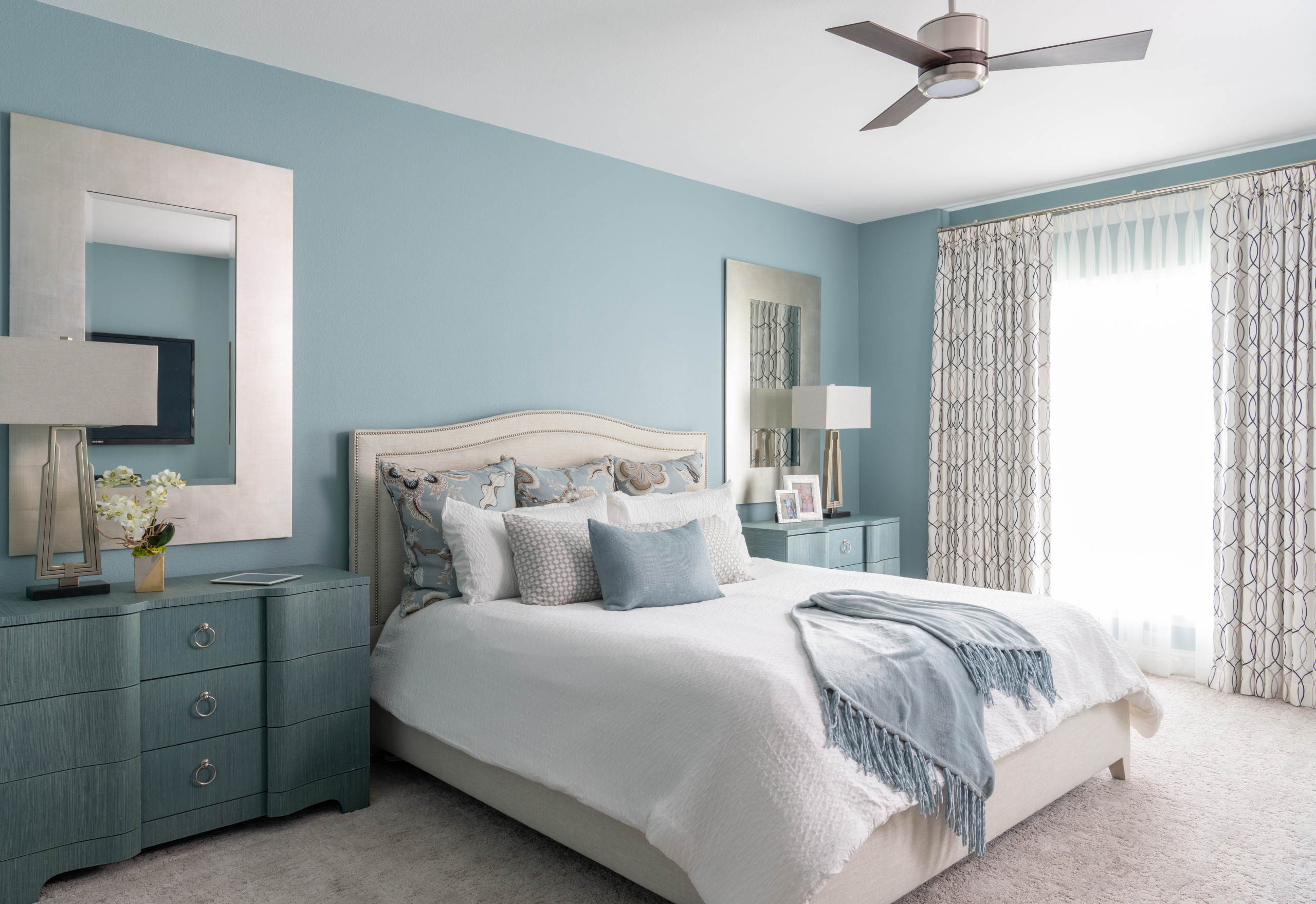
- Cooler Blues: Icy or true blues can feel refreshing and balance the intense warmth.
- Saturated Blues: The strong light can handle deeper, more vibrant blues without them feeling overwhelming.
- Blues with Gray Undertones: Can create a crisp, clean look.
East-Facing Rooms: Morning Glow
East-facing rooms get bright, warm morning light, which fades to cooler light in the afternoon. This shift means your blue will look different throughout the day:
- Muted Blue-Greens: These can be lovely, appearing brighter in the morning and softer later.
- Medium Blues: Avoid anything too dark that might feel heavy in the afternoon, or too light that might wash out in the morning.
West-Facing Rooms: Dramatic Evenings
West-facing rooms receive intense, warm light in the afternoon and evening. This can make colors appear more saturated:
- Gray-Blues: Can temper the intensity of the afternoon sun, appearing more vibrant in the evening.
- Deeper Blues: Can create a moody, sophisticated atmosphere as the light changes.
- Consider: How the color looks primarily in the evening when you’re most likely using the room.
Artificial Lighting Considerations
Don’t forget your light bulbs! Warm LED bulbs (2700K-3000K) can make blues appear softer and slightly greener, while cooler bulbs (3500K-4000K) will make blues appear truer or even a bit icier. Test your swatches with your actual light bulbs at night.
Our Top Blue Paint Colors for Master Bedrooms (The Expert Picks)
Now, for the moment you’ve been waiting for! Based on extensive design expertise and homeowner feedback, here are some of the most beautiful and versatile blue paint colors for master bedrooms. Remember to consider your room’s specific characteristics as you explore these options.
:max_bytes(150000):strip_icc()/Gibbs-Ave-134-b3240c1a18234b83a847c6bd2e11c5ad.jpg "55 Blue Bedroom Ideas for a Calming Retreat")
Light & Airy Blues: For Serenity and Space
These blues are perfect for creating a feeling of openness, calm, and spaciousness. They often have subtle green or gray undertones, making them feel soft and inviting rather than stark.
- Benjamin Moore Palladian Blue HC-144: A classic spa-like blue-green that shifts beautifully with light. It’s incredibly serene and versatile.
- Sherwin-Williams Sea Salt SW 6204: Another beloved blue-green-gray that is almost a chameleon. It’s soothing, subtle, and incredibly calming. Perfect for a coastal or cottage aesthetic.
- Benjamin Moore Whispering Spring 2136-70: A very soft, ethereal light blue with a whisper of green. It’s gentle, airy, and perfect for creating a delicate, dreamy atmosphere.
Medium & Muted Blues: The Versatile Comfort Zone
These shades offer more depth than light blues but aren’t as dramatic as dark ones. They strike a perfect balance, providing comfort and sophistication without overwhelming the space. Often featuring strong gray undertones, they feel grounded and elegant.
- Sherwin-Williams Niebla Azul SW 9137: A serene, dusty blue with a lovely gray undertone. It’s sophisticated, calming, and not too dark, making it incredibly livable.
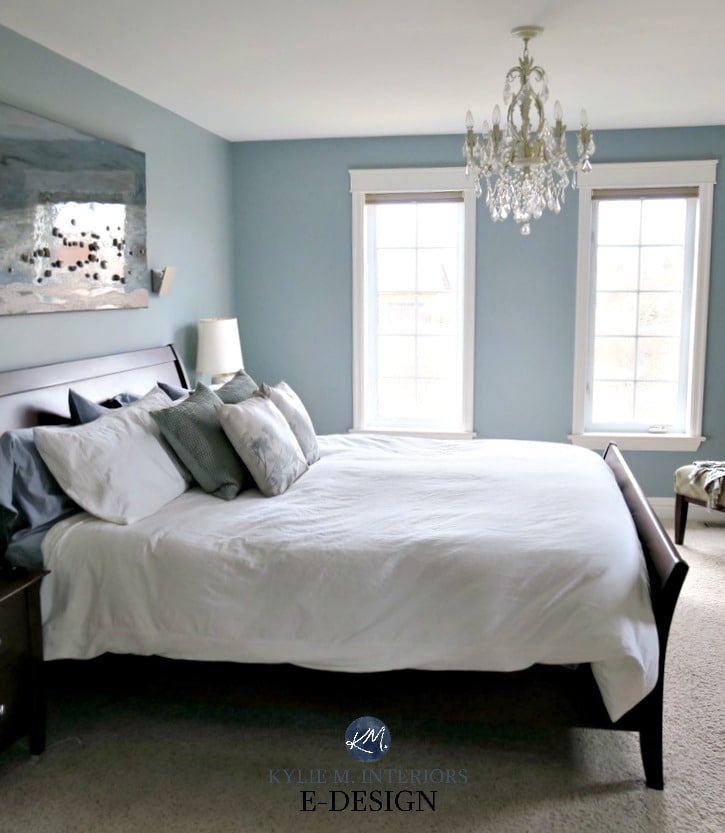
- Benjamin Moore Smoke 2122-40: A complex gray-blue that leans slightly green. It’s sophisticated, moody without being too dark, and offers a quiet elegance.
- Clare Paint Good Jeans: A perfect mid-tone denim blue – comfortable, familiar, and stylish. It’s a true blue with just enough gray to keep it from being too vibrant, making it incredibly appealing.
Deep & Dramatic Blues: For Intimacy and Sophistication
If you’re looking to create a cozy, intimate, or luxuriously dramatic master bedroom, these deeper blues are your answer. They add instant gravitas and sophistication.
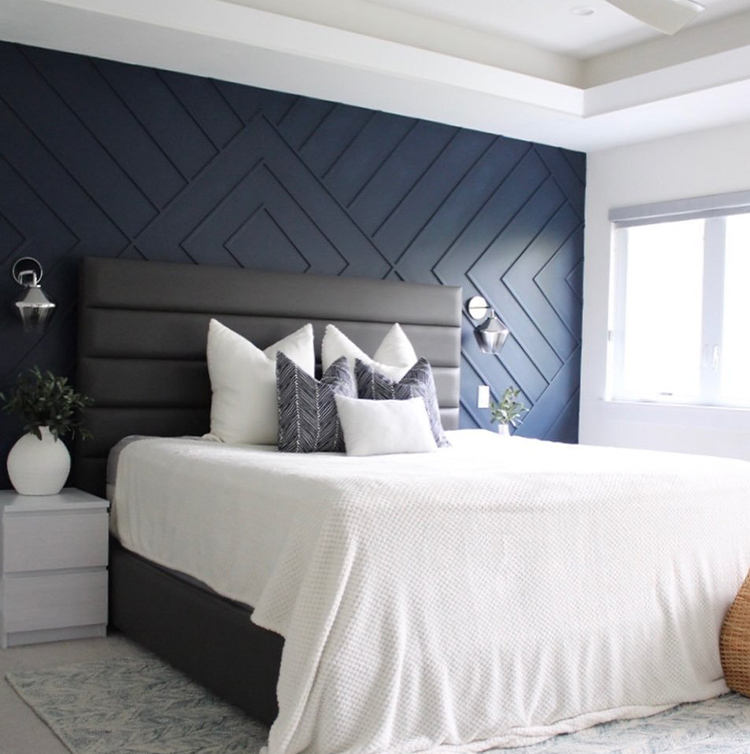
- Benjamin Moore Hale Navy HC-154: Arguably one of the most popular deep navies. It’s rich, sophisticated, and incredibly versatile. It reads as a true navy with a slight gray undertone, preventing it from feeling stark.
- Sherwin-Williams Waterloo SW 9141: A gorgeous, slightly muted deep blue with green undertones. It’s moody, organic, and incredibly inviting, perfect for creating a cocoon-like feel.
- Farrow & Ball Stiffkey Blue No. 281: A truly dark, inky blue that creates a striking and luxurious statement. It has strong black undertones, giving it immense depth and a dramatic, sophisticated presence.
Here’s a quick comparison of these top picks:
| Paint Color | Brand & Code | Primary Undertone | Light Reflection (Approx.) | Best For | Mood Evoked |
|---|---|---|---|---|---|
| Palladian Blue | Benjamin Moore HC-144 | Green-Gray | Light (59 LRV) | Spa-like, airy rooms, coastal, good for varied lighting. | Serene, refreshing, tranquil. |
| Sea Salt | Sherwin-Williams SW 6204 | Green-Gray | Light (63 LRV) | Coastal, farmhouse, calming retreat, small spaces. | Soft, comforting, restorative. |
| Whispering Spring | Benjamin Moore 2136-70 | Soft Green-Gray | Light (56 LRV) | Ethereal feel, brightens small rooms, subtle backdrop. | Dreamy, airy, delicate. |
| Niebla Azul | Sherwin-Williams SW 9137 | Gray | Medium (51 LRV) | Sophisticated, muted look, versatile in different lights. | Calming, elegant, grounding. |
| Smoke | Benjamin Moore 2122-40 | Gray-Green | Medium (56 LRV) | Contemporary, traditional, serene, adaptable to many styles. | Sophisticated, serene, quiet. |
| Good Jeans | Clare Paint | Subtle Gray | Medium (47 LRV) | Relaxed, lived-in feel, balanced without being too bright. | Comfortable, stylish, familiar. |
| Hale Navy | Benjamin Moore HC-154 | Slight Gray | Dark (8 LRV) | Accent walls, dramatic bedrooms, formal spaces, grounding. | Luxurious, sophisticated, deep, cozy. |
| Waterloo | Sherwin-Williams SW 9141 | Green-Gray | Dark (13 LRV) | Moody sanctuaries, nature-inspired themes, intimate feel. | Organic, intriguing, deep, inviting. |
| Stiffkey Blue | Farrow & Ball No. 281 | Black-Gray | Dark (16 LRV) | Dramatic statements, luxurious bedrooms, accent walls. | Bold, sophisticated, deeply cozy. |
Choosing the Right Paint Finish (Sheen) for Your Master Bedroom
The sheen of your paint also plays a critical role in the final look and feel of your master bedroom. It affects durability, washability, and how light reflects off the walls.
- Flat/Matte: Offers a velvety, non-reflective finish that hides imperfections beautifully. It’s excellent for creating a soft, sophisticated look in a bedroom, absorbing light for a cozy feel. However, it’s less durable and harder to clean.
- Eggshell/Satin: These are the most popular choices for bedrooms. Eggshell has a slight luster, while satin has a bit more sheen, mimicking the look of an eggshell. They are more durable than flat, easier to clean, and still provide a soft, welcoming glow without being too reflective.
- Semi-Gloss/Gloss: Highly durable and very reflective. Best reserved for trim, doors, and furniture, not typically for bedroom walls, as the high sheen can highlight imperfections and feel too stark.
For most master bedrooms, I recommend an eggshell or satin finish. They offer the perfect balance of durability, subtle sheen, and a soft aesthetic that complements blue paint beautifully.
Harmonizing Your Master Bedroom: Complementary Colors & Decor
Once you’ve chosen your blue, consider how it will interact with the rest of your bedroom’s elements. The right complementary colors and textures can elevate your space from merely painted to perfectly curated.
- Neutrals are Your Best Friend: Crisp whites, warm creams, soft grays, and natural beiges provide a beautiful backdrop or accent for any blue. They allow the blue to shine without competing.
- Warm Accents: Introduce warmth through wood tones (light oak, rich walnut), brass or gold hardware, woven natural fibers (jute, rattan), and cozy textiles. These provide a lovely contrast to cooler blues.
- Cooler Accents: If you want to lean into the serene vibe, incorporate silver metals, lighter grays, or even a touch of pale lavender or sage green.
- Texture is Key: Soft linens, plush velvets, chunky knit throws, and textured rugs add depth and comfort, preventing the room from feeling flat.
Pro Tip: Create a mood board! Collect fabric swatches, wood samples, and pictures of furniture. See how they all look together with your paint swatches before making final decisions.
The “Try Before You Buy” Golden Rule: Sampling Effectively
I cannot stress this enough: DO NOT skip sampling! Paint colors look different in every home, at different times of day, and on different walls. A small chip is never enough. Here’s how to sample like a pro:
- Purchase Samples: Get sample pots of your top 2-3 blue choices.
- Apply to Large Swatches: Paint two coats onto large poster boards (at least 18×24 inches) or directly onto a large section of your wall. Paint at least two different walls to see how light affects it.
- Observe Throughout the Day: Live with the samples for at least 24-48 hours. See how they look in morning light, afternoon sun, and under your artificial lighting at night.
- Consider Existing Elements: Place the painted boards next to your flooring, trim, and any significant furniture pieces.
- Trust Your Gut: Which color makes you feel calm and happy? Which one draws you in?
Common Mistakes to Avoid When Painting Your Master Bedroom Blue
Choosing paint can be tricky, but being aware of common pitfalls can save you time, money, and heartache:
- Ignoring Undertones: The biggest mistake! A blue with an unexpected purple or green undertone can clash with your decor. Always look for that subtle hint.
- Not Sampling Effectively: As mentioned, a tiny paint chip is not representative. Invest in samples.
- Forgetting Room Size and Lighting: A deep navy can feel claustrophobic in a small, dark room, while an icy blue might feel sterile in a bright, south-facing space.
- Overlooking Paint Finish: A glossy blue wall will reflect light differently and show more imperfections than a soft eggshell.
- Choosing from Online Images Alone: Screen calibration varies wildly. Always verify colors with physical samples.
- Matching Too Exactly: Don’t try to perfectly match a blue to a duvet cover. Instead, aim for complementary shades that create visual interest.
Final Thoughts: Your Master Bedroom Oasis Awaits
Selecting the perfect blue paint color for your master bedroom is an exciting step towards creating your ultimate retreat. By understanding the psychology of blue, recognizing the importance of undertones and lighting, and leveraging expert-recommended shades, you’re well on your way to a stunning transformation.
Don’t rush the process, trust your instincts (after proper sampling!), and remember that your master bedroom should be a reflection of peace and comfort for YOU. Go forth and paint that dream bedroom!
”