Bedroom Paint Ideas For Guys: Your Ultimate Guide to a Perfect Palette
Tired of staring at bland, uninspiring walls? Your bedroom isn’t just a place to crash; it’s your personal sanctuary, your retreat, your space to unwind and recharge. And the quickest, most impactful way to transform that space into something truly yours? Paint. Forget generic ‘masculine’ clichés. This isn’t about slapping up a random dark color; it’s about finding a palette that genuinely reflects your style, enhances your comfort, and creates the atmosphere you crave.
Choosing the right paint color can feel like a daunting task, especially when countless options swirl in your head. But don’t sweat it. I’m here to cut through the noise and give you a definitive, actionable guide to picking the perfect bedroom paint ideas for guys. We’re going beyond just colors and diving into the psychology, practicalities, and personal touches that will make your room genuinely stand out.
First, Understand Your Vibe: Beyond Just “Masculine”
Before you even think about swatches, let’s talk about you. What kind of energy do you want your bedroom to have? Do you want a calm retreat, an energetic hub, or a sleek, modern haven? The best paint choice aligns with your lifestyle and personality.
What’s Your Style Persona?
- Modern Minimalist: You appreciate clean lines, functionality, and uncluttered spaces. Think muted tones, cool neutrals, and perhaps a stark accent.
- Rustic Retreat: You love natural textures, warmth, and an earthy feel. Colors inspired by nature – greens, browns, deep blues – will speak to you.
- Urban Industrial: Exposed brick, metal accents, and raw materials define your aesthetic. Grays, charcoals, and even some strategic white or black work well.
- Classic & Refined: You lean towards timeless elegance, rich materials, and sophisticated comfort. Deep, saturated colors or subtle, luxurious neutrals are your go-to.
- Energetic & Bold: You’re not afraid to make a statement, bringing in vibrant personality or dramatic contrasts. Accent walls or even unexpected main colors could be for you.
Size Matters: How Paint Influences Space Perception
The size of your room plays a significant role in how paint colors will behave:
- Small Rooms: Lighter, cooler colors (like light grays, blues, or off-whites) can make a small room feel larger and more open by reflecting light.
- Large Rooms: You have more freedom! Darker, warmer, or more saturated colors can create a cozy, intimate, and sophisticated feel, preventing a large room from feeling cavernous.
Lighting It Up: Natural Light vs. Artificial Illumination
Paint colors don’t live in a vacuum. How light interacts with them changes everything:

- North-Facing Rooms: Tend to get cooler, indirect light. Warm colors (tans, yellows, reds) can counteract this and make the room feel cozier.
- South-Facing Rooms: Bathed in warm, bright light all day. Cool colors (blues, greens, grays) can balance the intensity and create a refreshing ambiance.
- East-Facing Rooms: Get bright morning light. Colors will appear truest here in the AM.
- West-Facing Rooms: Enjoy warm afternoon light. Colors can appear more intense or yellow-tinged.
- Artificial Light: Incandescent bulbs cast a warm, yellowish glow, while LED lights can be cooler or neutral depending on their kelvin rating. Always consider how your chosen color looks under the actual lighting you’ll use most often.
The Core Color Families: Unleashing Your Inner Designer
Now, let’s get into the actual colors. Think of these as broad categories, each with its own mood and potential.
Deep & Moody: The Power of Dark Hues
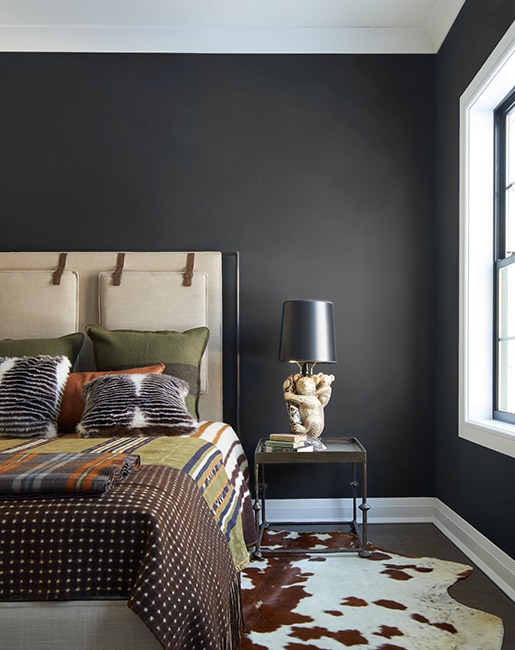
This is a go-to for many guys looking to create a sophisticated, dramatic, and incredibly cozy space. Dark colors absorb light, making a room feel more intimate and enveloping – perfect for sleep.
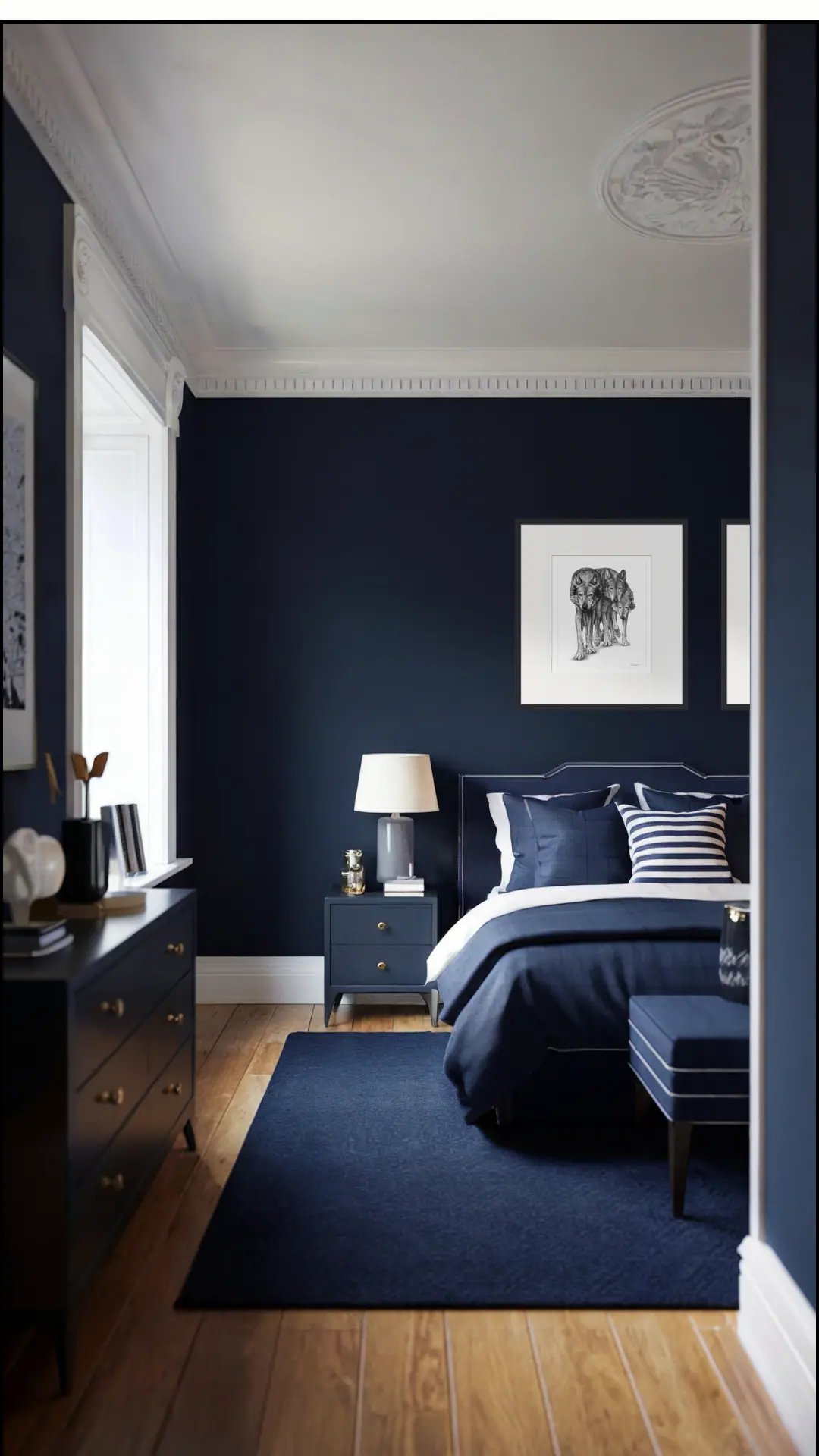
- Colors to Consider: Navy Blue, Charcoal Gray, Forest Green, Deep Teal, Rich Burgundy, or even a sophisticated Off-Black.
- Why It Works: Instantly adds gravitas, sophistication, and a sense of luxury. They provide an excellent backdrop for lighter art or decor and foster a calming, sleep-conducive environment.
- Tips: To prevent feeling like a cave, balance dark walls with lighter elements like a white or light gray ceiling, lighter bedding, natural wood furniture, or metallic accents (bronze, brass, chrome). Dark colors work especially well in larger rooms or rooms with ample natural light.
Cool & Serene: Calmness on the Walls
If you’re aiming for a tranquil, refreshing, and spacious feel, cool neutrals and blues are your friends. They evoke a sense of calm and clarity.
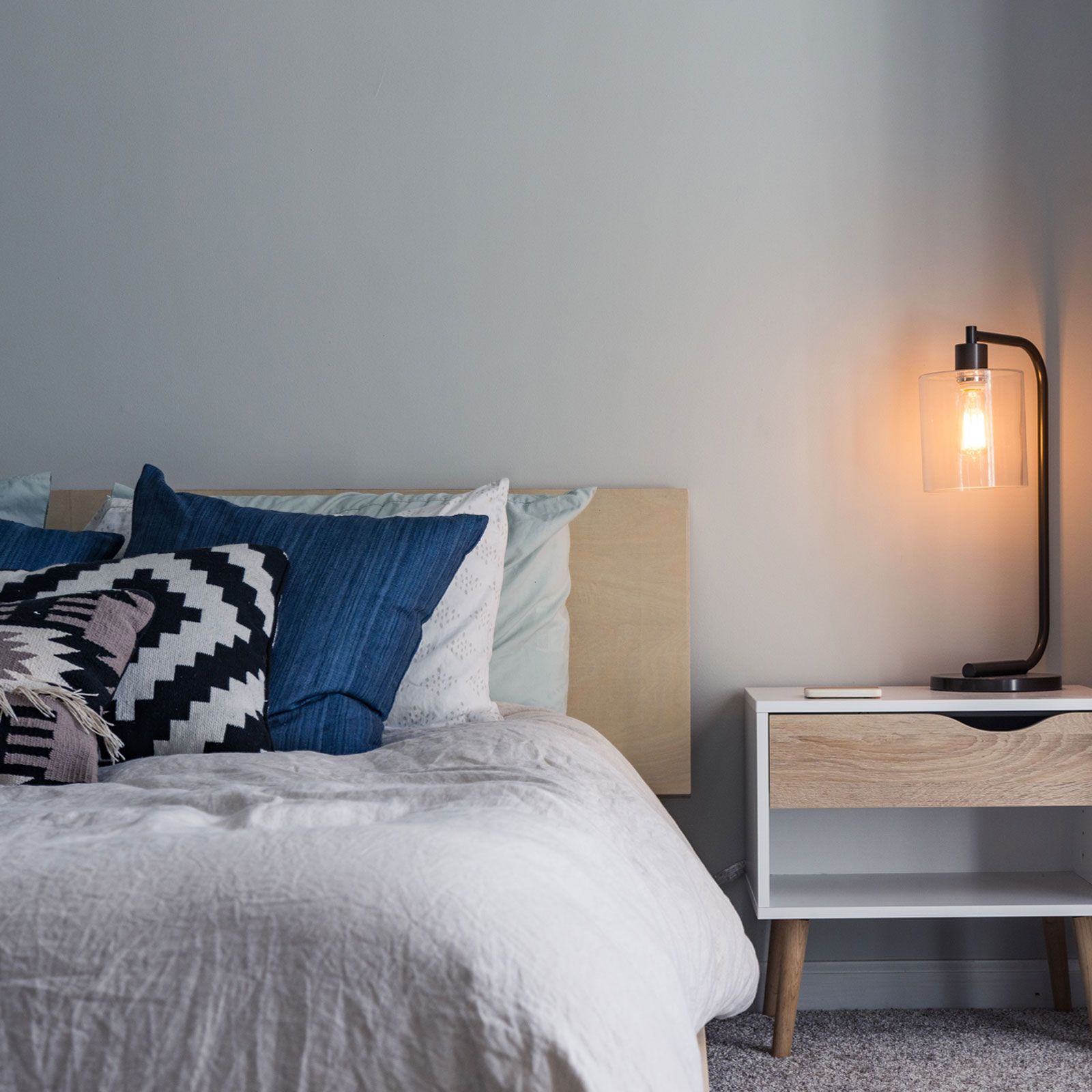
- Colors to Consider: Various shades of Gray (from light dove gray to a mid-tone slate), Light Blue, Sage Green, Greige (a mix of gray and beige).
- Why It Works: These colors are inherently relaxing and promote a sense of peace. They make rooms feel larger and brighter, reflecting light beautifully. They’re also incredibly versatile, serving as a neutral backdrop for almost any decor style.
- Tips: Pair with textures like wool, linen, or brushed cotton to add warmth. Metallic accents, crisp white trim, or even a vibrant piece of art can provide a pop without disrupting the serenity.
Warm & Earthy: Grounded and Inviting
For a bedroom that feels grounded, comfortable, and naturally inviting, look to the earthy spectrum. These colors draw inspiration from nature and create a cozy, welcoming atmosphere.
- Colors to Consider: Terracotta, Olive Green, Warm Tans, Taupe, Rust, or a soft, muted Brown.
- Why It Works: They evoke a connection to nature, offering a sense of stability and warmth. Ideal for creating a rustic, bohemian, or modern organic aesthetic. They can be incredibly soothing and comforting.
- Tips: These colors shine when combined with natural materials like wood, leather, stone, and plants. Cream or off-white accents can soften their intensity, while deep blues or charcoals can provide a sophisticated contrast.
Bold & Energetic: Making a Statement
Not everyone wants a subdued space. If your personality thrives on vibrancy and expression, don’t shy away from bolder choices – especially for an accent wall or strategic bursts of color.
- Colors to Consider: A rich Mustard Yellow (often as an accent), a sophisticated Deep Orange, a vibrant Royal Blue (different from navy), or a robust Hunter Green.
- Why It Works: These colors inject personality, create focal points, and can energize a space. They’re perfect for reflecting a unique, confident style.
- Tips: Use bold colors thoughtfully. A single accent wall is often enough to make a powerful statement without overwhelming the room. Pair with more neutral tones on the remaining walls and in your bedding to create balance. Metallic or industrial accents can complement these hues beautifully.
Beyond the Single Shade: Dynamic Paint Strategies
Painting doesn’t mean sticking to one color for all four walls. There are creative ways to use paint to add depth, dimension, and undeniable style.
The Accent Wall Advantage: A Splash of Personality
An accent wall is your secret weapon for adding drama, defining a zone, or simply experimenting with a bolder color without committing to the entire room.
- How to Choose: Typically, the wall behind your bed is the most popular choice, as it naturally serves as a focal point. Other options include a wall with a window or a significant piece of furniture.
- Ideas:
- Darker Shade: Paint the accent wall a few shades darker than the other three walls for subtle depth.
- Bold Color: Introduce a completely different, more saturated color here (e.g., a deep teal accent with light gray walls).
- Textured Paint: Consider a limewash or faux concrete finish for a unique tactile dimension.
- Geometric Patterns: For a more playful or modern look, simple geometric patterns can be surprisingly effective.
Two-Tone Walls: Adding Depth and Interest
Breaking up a wall with two different paint colors can add architectural interest and make a room feel taller or wider.
- Ideas:
- Horizontal Split: Divide the wall horizontally, with a darker color on the bottom third and a lighter color on the top two-thirds (or vice-versa). A chair rail can provide a clean dividing line.
- Wainscoting Effect: Use paint to mimic the look of traditional wainscoting, painting the bottom section a different color and potentially adding a painted stripe as a “rail.”
- Vertical Stripes: For a bold statement, wide vertical stripes can make a ceiling feel higher.
Monochromatic Masterpiece: Subtle Sophistication
A monochromatic scheme uses different shades, tints, and tones of a single color. It’s incredibly sophisticated and creates a cohesive, calming environment.
- How to Layer: Choose a base color (e.g., a medium gray). Use a lighter tint for your main walls, a darker shade for an accent wall, and perhaps a slightly warmer or cooler tone of the same color for trim or furniture. The key is using varying textures and finishes within that color family to keep it from feeling flat.
Choosing the Right Paint Finish: Sheen Matters
The finish (or sheen) of your paint dramatically impacts how the color looks, how light reflects, and how durable the surface is. Don’t overlook this crucial detail.

Flat/Matte
- Characteristics: No sheen, absorbs light, velvety look.
- Pros: Excellent at hiding imperfections on walls, provides a rich, deep color appearance, sophisticated.
- Cons: Less durable, difficult to clean, susceptible to scuffs.
- Best For: Ceilings, low-traffic areas, walls where you want a very subtle, soft look.
Eggshell/Satin
- Characteristics: A very subtle, low sheen (like an eggshell or satin fabric).
- Pros: Versatile, more durable than flat, easier to clean, good balance of hiding imperfections and providing a soft glow.
- Cons: Can show some imperfections if walls aren’t perfectly smooth.
- Best For: Bedrooms, living rooms, hallways – general wall use where durability and cleanability are desired.
Semi-Gloss/Gloss
- Characteristics: Noticeable shine, reflects a lot of light, very smooth appearance.
- Pros: Extremely durable, highly washable, highlights architectural details.
- Cons: Shows every imperfection on the surface, can be too reflective for large wall areas.
- Best For: Trim, doors, cabinets, accent pieces – not usually recommended for entire bedroom walls.
| Paint Finish | Sheen Level | Durability | Key Benefit | Best Use for Bedrooms |
|---|---|---|---|---|
| Flat/Matte | No sheen | Low | Hides imperfections, deep color | Walls (low traffic), Ceilings |
| Eggshell | Slight sheen | Medium | Versatile, easy to clean | Walls (general use) |
| Satin | Moderate sheen | Medium-High | Smooth, very washable | Walls (high traffic), Trim |
| Semi-Gloss | High sheen | High | Highlights details, very durable | Trim, Doors, Accent Furniture |
Pro Tips for Nailing Your Bedroom Paint Project
Once you’ve narrowed down your choices, here’s how to ensure your painting project goes smoothly and yields the results you envisioned.
Test, Test, Test: The Importance of Swatches
Please, I beg you, do not skip this step! Paint swatches from the store are tiny and misleading. Buy small sample pots of your top 2-3 choices. Paint large (at least 2×2 foot) swatches directly onto different walls in your bedroom. Observe them at different times of day – morning, afternoon, evening, with natural light, and with artificial light. Colors change dramatically depending on the light, and this step will save you from costly mistakes.
Consider Your Existing Decor: Furniture & Flooring
Your paint color needs to live in harmony with what’s already there. Are your floors dark wood or light carpet? Is your bed frame a bold metal or a subtle fabric? Hold your paint swatches up to your furniture, bedding, and flooring samples. Ensure they complement each other, creating a cohesive look rather than clashing.
Don’t Forget the Ceiling: White, or a Subtle Tint?
Most people default to white ceilings, which is fine, especially in darker rooms or if you want to make a room feel taller. However, a ceiling painted a slightly lighter tint of your wall color, or even a very light, soft gray or blue, can create a more enveloping, sophisticated feel. In very dark rooms, a white ceiling can provide a crucial visual lift.
Prep Work is Key: Cleaning, Taping, Priming
A great paint job is 80% prep. Don’t rush it.
- Clean: Wash your walls with a mild cleaner (like TSP substitute) to remove dirt, grease, and dust.
- Repair: Fill any nail holes or cracks with spackle, sand smooth, and wipe clean.
- Tape: Use good quality painter’s tape along trim, baseboards, and ceilings for crisp lines. Press it firmly.
- Prime: If you’re going from a very dark color to a light one, or if you’re painting over glossy paint, priming is essential for even coverage and color true to the can.
Invest in Quality Paint & Tools
Seriously, this is not the place to pinch pennies. High-quality paint provides better coverage (meaning fewer coats), truer color, and greater durability. Good brushes and rollers will give you a smoother finish and make the job easier. You’re investing your time and effort; make sure the materials match that commitment.
The Ultimate Bedroom Paint Idea Comparison
To help you visualize and compare some of the most popular and effective paint ideas for guys, I’ve put together this quick comparison table. Use it as a springboard for your own decision-making process.
| Paint Idea/Color Family | Mood/Atmosphere | Best For | Pro Tip |
|---|---|---|---|
| Deep Navy Blue | Sophisticated, calming, cozy, masculine | Medium to large rooms, modern, classic, coastal styles | Pair with crisp white trim, natural wood, or brass accents to pop. |
| Charcoal Gray | Modern, sleek, urban, versatile, dramatic | Any room size, industrial, minimalist, contemporary styles | Layer with varying shades of gray, add pops of color with art or bedding. |
| Sage Green | Relaxing, natural, earthy, fresh, organic | Any room size, rustic, modern organic, Scandinavian styles | Complements wood tones and plant life beautifully. |
| Warm Greige/Taupe | Understated, versatile, cozy neutral, elegant | Any room size, transitional, traditional, relaxed modern styles | Use varying textures (linen, wool) to add depth without more color. |
| Accent Wall: Dark Teal/Burgundy | Dramatic, luxurious, energetic focal point | Any room size (especially smaller rooms for a pop), modern, eclectic styles | Keep other walls neutral and let the accent wall do the talking. |
| White (Warm Tones) | Clean, crisp, spacious, minimalist, bright | Small rooms, minimalist, Scandinavian, industrial styles | Add contrast with dark furniture, textured fabrics, and bold art. |
Your bedroom is a personal statement. It’s where you start and end your day, so it should be a place that feels right for you. By considering your style, the room’s characteristics, and exploring these diverse paint ideas, you’re well on your way to creating a space that’s not just functional, but genuinely inspiring.
Don’t be afraid to experiment with samples. Trust your gut. And remember, paint is one of the most transformative and affordable ways to completely refresh your environment. Go ahead, grab those swatches, and paint your perfect retreat!
Frequently Asked Questions
What are the most popular paint colors for guys’ bedrooms?
Popular choices often lean towards deep, sophisticated colors like navy blue, charcoal gray, forest green, or deep teal. Neutrals such as warm greige, cool light gray, and even sophisticated off-whites are also highly favored for their versatility and calming effect.
How do I choose a paint color that reflects my personal style?
Start by identifying your personal aesthetic (e.g., modern minimalist, rustic, industrial, classic). Consider the mood you want to create (calm, energetic, sophisticated). Then, explore color families that align with those feelings and styles. Don’t forget to test samples on your walls to see how they look in your room’s unique lighting conditions.
Can dark colors work in a small bedroom?
Absolutely! While lighter colors generally make a room feel larger, dark colors can create a surprisingly cozy, sophisticated, and intimate ‘cocoon’ effect, especially conducive to sleep. The key is to balance them with lighter elements like a white ceiling, light bedding, and bright accents to prevent the room from feeling too heavy or cave-like.
Should I paint all four walls the same color?
You can, and it creates a cohesive, immersive look. However, consider an accent wall for added personality or to break up a larger space. An accent wall, usually behind the bed, allows you to introduce a bolder color or a darker shade without overwhelming the entire room, creating a strong focal point.
What paint finish is best for a bedroom?
Eggshell or satin finishes are generally ideal for bedrooms. They offer a subtle sheen that’s elegant and easy to clean, without being too reflective. Flat or matte finishes provide a rich, deep color but are less durable and harder to clean. Semi-gloss is usually reserved for trim and doors due to its high reflectivity and durability.
How do light conditions affect my paint color choice?
Lighting has a huge impact. North-facing rooms often have cooler light, benefiting from warmer paint tones. South-facing rooms get bright, warm light, which cooler colors can balance. Always paint large swatches on multiple walls and observe them throughout the day and under both natural and artificial light to see the true color.
How do I ensure my paint color matches my existing furniture and decor?
Before committing, bring paint swatches or sample boards into your room. Hold them up against your bedding, curtains, carpet, and any significant pieces of furniture. Ensure the chosen paint color complements these elements, creating a harmonious and balanced overall aesthetic rather than clashing.