The Definitive Guide to Choosing the Best Wall Colors for Small Rooms: Beyond Just ‘White’
Ever walked into a small room and felt an instant pang of claustrophobia? Or, conversely, stepped into a snug space that felt surprisingly expansive and utterly charming? The secret, more often than not, lies with one of the most powerful design tools at your disposal: paint color. If you’ve been told the only salvation for a small room is a bland coat of white, prepare to have your world, and your walls, beautifully expanded.
As someone who’s spent countless hours navigating the nuances of color, I can tell you that painting a small room isn’t about hiding its size; it’s about transforming its feel. It’s about leveraging psychology, light, and smart design choices to make it whatever you want it to be – a serene sanctuary, a vibrant hub, or an unexpectedly sophisticated nook. Forget the one-size-fits-all rules. Let’s dive into how to pick the best wall colors for small rooms that truly sing.
The Psychology of Space: How Colors Trick the Eye
Before we grab our paint swatches, let’s understand the magic at play. Color isn’t just aesthetic; it’s a powerful psychological tool that can manipulate our perception of space and create an emotional response. For small rooms, understanding these principles is your superpower.
Light Reflection: The Expansive Illusion
Think about a mirror. It doesn’t physically expand a room, but it *reflects light and images, making the space feel larger. Paint colors work similarly. Lighter colors reflect more light. This isn’t groundbreaking, but its impact is profound. When walls reflect more light, the room appears brighter, airier, and the boundaries seem to recede, giving the illusion of more space. This is why pale grays, soft blues, and crisp off-whites are perennial favorites for small rooms.
Depth Perception: The Power of Perspective
This is where things get really interesting, especially if you’re tempted to veer from light colors. Colors have inherent qualities that make them appear to advance (come forward) or recede (fall back). Cool colors (blues, greens, violets) tend to recede, creating a sense of distance and openness. Warm colors (reds, oranges, yellows) tend to advance, making a space feel cozier and more intimate.

But here’s the twist: dark, saturated colors can also create an illusion of depth. Imagine looking into a deep, dark pool – you can’t see the bottom, so it feels endlessly deep. A small room painted in a deep, rich hue can similarly blur the wall boundaries, creating a ‘cocooning’ effect that feels sophisticated rather than cramped. It’s about embracing the intimacy, not fighting it.
Mood & Atmosphere: Beyond Just Size
Ultimately, the goal isn’t just to make a small room feel bigger; it’s to make it feel better. Do you want a tranquil retreat, a vibrant workspace, or a cozy reading nook? Color dictates mood more than any other element. Soft pastels might create calm, while a rich jewel tone can evoke luxury. Consider the primary function of your small room and how you want to feel in it, not just its perceived size.
Myth vs. Reality: Debunking Small Room Color Dogma
Let’s bust some common myths that often hold people back from truly transforming their small spaces.
Myth 1: Always Choose White or Light Neutrals
This is the most pervasive myth, and while light colors do* reflect light and make a room feel airier, they aren’t the only solution. In fact, a small room painted a stark, cold white can sometimes feel sterile and uninviting, highlighting its smallness rather than enhancing it. As we discussed, deep, saturated colors can create a sense of infinite depth. When boundaries disappear into a rich, dark hue, the room takes on a sophisticated, jewel-box quality. It feels intentionally intimate, rather than just small.
Myth 2: Avoid Bold Colors Entirely
Fear of bold colors in a small room is understandable, but often misplaced. A strategically placed accent wall, or even a monochromatic scheme using a bolder base color, can add incredible personality and depth without overwhelming the space. The key is balance and intention. Instead of a busy pattern or too many contrasting colors, focus on a single, impactful statement or a harmonious blend of tones.
:max_bytes(150000):strip_icc()/morgan-farrow-interiors-meander-blue-3f2c2bdd650f4b48845bc1f27c8d80ce.jpg "12 Paint Colors That Will Make Small Rooms Feel Bigger")
Core Principles for Maximizing Small Spaces with Color
Now that we’ve cleared the air, let’s talk about the actionable strategies you can employ.
The Monochromatic Magic: Seamless Flow
This is one of my favorite tricks for small rooms. A monochromatic scheme involves using various shades, tints, and tones of a single color. Painting your walls, trim, and even the ceiling in slightly different variations of the same hue creates a seamless, enveloping effect. This reduces visual breaks, making the eye flow effortlessly around the room, which in turn makes the space feel more expansive and sophisticated. Think a light sage green on walls, a slightly darker sage on trim, and an even paler, almost white, sage on the ceiling.
Accent Walls: Strategic Drama
An accent wall in a small room can be a game-changer, but choose wisely. The goal is to draw the eye, not stop it. Paint the accent wall on the shortest wall to make the room feel wider, or on the longest wall to draw the eye further into the space. A bold color, a textured wallpaper, or even a mural can work. The key is that the other walls should be a lighter, complementary shade to provide balance.
Ceiling Colors: The Fifth Wall Advantage
Don’t neglect your ceiling! It’s often called the “fifth wall” for a reason. Here’s how to use it:
- Light Ceilings: Painting the ceiling a lighter color than the walls (often a crisp white or a very pale tint) makes the ceiling appear higher, lifting the gaze upwards and creating an airy feel.
- Dark Ceilings: In a dark, rich room, a dark ceiling can enhance the cocooning effect, making the space feel incredibly intimate and cozy. It blurs the boundary between wall and ceiling, creating an ‘endless’ box.
- Matching Ceilings: For a truly monochromatic look, paint the ceiling the same color as the walls. This eliminates visual breaks and creates a seamless, enveloping effect, often making the walls appear taller by blurring where they end.
Trim & Door Colors: Creating Definition or Disappearance
Your trim and doors play a significant role in how big or small a room feels.
:max_bytes(150000):strip_icc()/Normandy_Blue_for_Megan_Molten-2000-7c40fd3f24d64fa8a438c619ec493953.jpg "12 Paint Colors That Will Make Small Rooms Feel Bigger")
- Matching Walls: For maximum spaciousness and a seamless look, paint your trim and doors the exact same color as your walls (or a very slightly lighter tint). This minimizes visual interruptions, allowing the eye to sweep across the room without stopping.
- Crisp White: If your walls are a light to medium color, crisp white trim can provide a classic, clean border. However, be aware that this can visually ‘frame’ the walls, potentially making them feel more confined if the contrast is too stark.
- Dark Contrast: With very light walls, dark trim can create a dramatic, modern statement, though it will definitely define the edges of the room. This works best when you want to emphasize architectural features.
Paint Finish Matters: Light, Luster, and Durability
The sheen of your paint isn’t just about aesthetics; it impacts how light is reflected and how durable your walls are.
| Paint Sheen | Description & Light Reflection | Best Use in Small Rooms | Pros for Small Rooms | Cons for Small Rooms |
|---|---|---|---|---|
| Matte/Flat | No sheen, absorbs light. | Low-traffic areas like bedrooms, ceilings (hides imperfections). | Hides wall imperfections; rich, deep color appearance; sophisticated. | Less durable, harder to clean; can make walls feel ‘flat’ if not paired with texture. |
| Eggshell/Satin | Slight sheen, reflects some light. | Most walls, living rooms, bedrooms, hallways. Versatile. | Durable, washable; soft glow adds depth without being too reflective; good balance. | May highlight significant wall imperfections more than matte. |
| Semi-Gloss/High-Gloss | Highly reflective sheen. | Trim, doors, cabinetry, bathrooms, kitchens (very durable). | Highly durable, extremely washable; reflects significant light, can add glamour. | Shows every imperfection; can be too ‘shiny’ for entire walls in small rooms; can feel cold. |
For most small room walls, an eggshell or satin finish strikes the perfect balance, offering a subtle sheen that reflects light without emphasizing imperfections, and providing good durability for everyday life. Save the high gloss for trim or specific focal points.
Best Wall Colors for Small Rooms: Our Top Picks & Why They Work
Let’s get to the fun part: specific color families! Remember, these are categories and principles. Always sample colors in your own space, as light profoundly changes how they appear.
The Bright & Airy Collection (For an Expansive Feel)
These colors are your go-to for making a room feel larger, brighter, and more open. They reflect light beautifully and promote a sense of calm and serenity.
- Soft Whites & Off-Whites: Forget clinical white. Think nuanced whites with subtle undertones of gray, cream, or beige. They offer warmth and sophistication while maximizing light reflection.
- Why they work: Maximize light, create a clean canvas, incredibly versatile.
- Examples: Benjamin Moore Chantilly Lace (clean, crisp), Benjamin Moore White Dove (soft, creamy), Sherwin-Williams Alabaster (warm, inviting).
- Pale Grays: Grays with cool blue or green undertones can be wonderfully serene and expansive. Warm grays (greiges) offer a sophisticated neutral.
- Why they work: Sophisticated neutral, recede to create depth, pair well with almost anything.
- Examples: Benjamin Moore Light Pewter (cool, fresh), Sherwin-Williams Repose Gray (versatile greige), Farrow & Ball Skimming Stone (warm, earthy gray).
- Cool Pastels: Soft blues, muted greens, and delicate lavenders are inherently calming and expansive. They bring a touch of nature indoors.
- Why they work: Receding colors, serene, bring a touch of color without overwhelming.
- Examples: Sherwin-Williams Sea Salt (blue-green spa-like), Benjamin Moore Palladian Blue (classic muted blue), Farrow & Ball Cromarty (gentle green-gray).
- Light Beige & Greige: These warm neutrals are excellent for creating a cozy yet open feel. They’re less stark than white and offer a grounded elegance.
- Why they work: Warm, inviting, versatile, less harsh than pure white.
- Examples: Sherwin-Williams Accessible Beige (true greige), Benjamin Moore Pale Oak (creamy, soft beige), Farrow & Ball Dimity (warm, gentle off-white with beige hint).
The Deep & Cozy Collection (For a Cocooning Effect)
Don’t shy away from these! When used correctly, deep, saturated colors can transform a small room into a luxurious, intimate, and incredibly stylish space. Embrace the snugness!
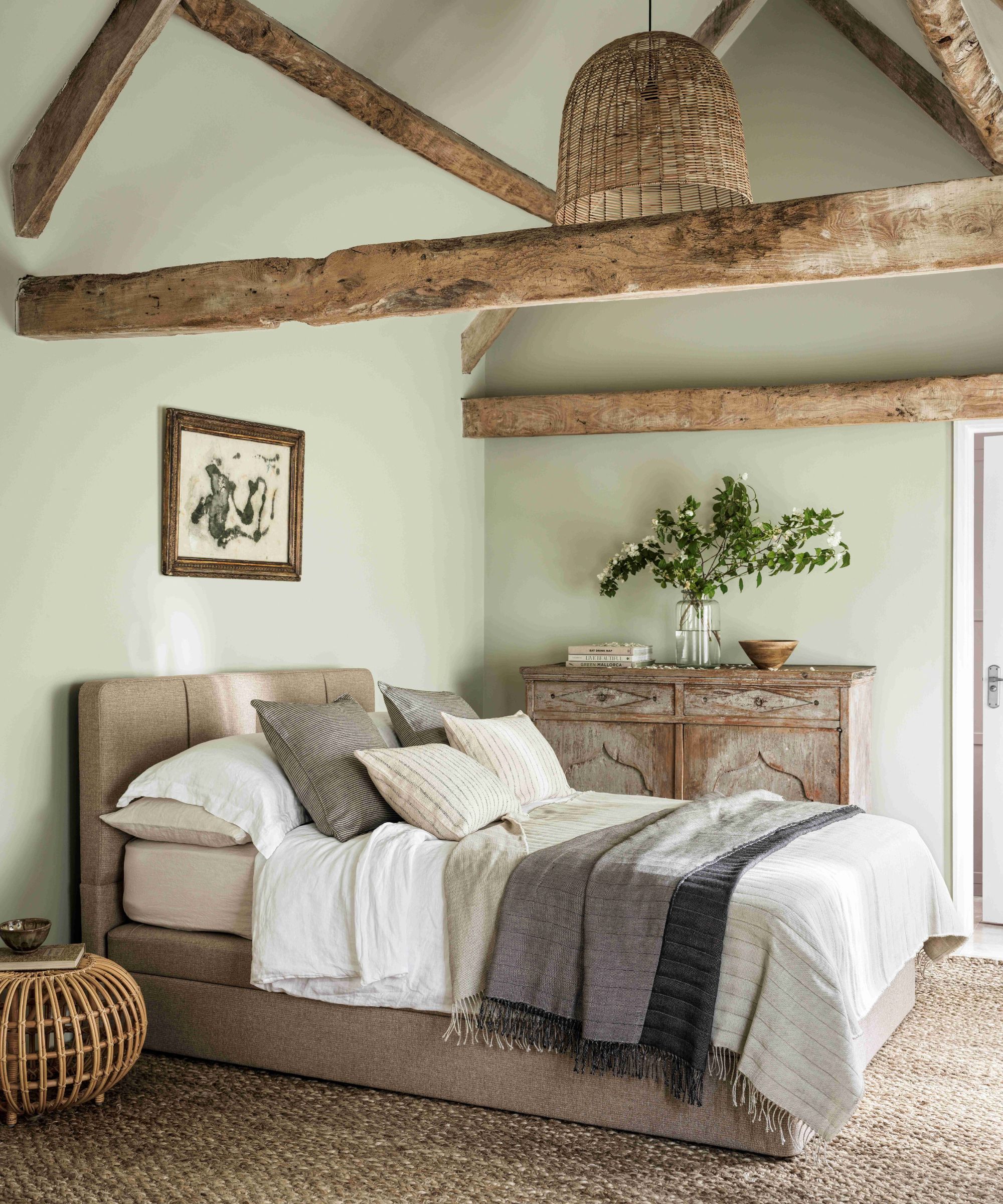
- Dark Blues & Greens: These rich, saturated hues blur boundaries and create incredible depth. They’re calming yet dramatic.
- Why they work: Create depth, sophisticated, inherently calming (especially blue/green).
- Examples: Benjamin Moore Hale Navy (classic deep blue), Sherwin-Williams Hunter Green (rich, earthy green), Farrow & Ball Down Pipe (moody blue-gray).
- Charcoal Grays & Blacks: For ultimate drama and sophistication, a deep charcoal or even an inky black can make a small room feel like a chic jewel box. Best for bedrooms, powder rooms, or accent walls.
- Why they work: Luxurious, blurs boundaries, creates intimacy, provides a stunning backdrop for art/decor.
- Examples: Benjamin Moore Wrought Iron (soft black/deep charcoal), Sherwin-Williams Tricorn Black (true black, dramatic), Farrow & Ball Railings (blue-black).
- Rich Earth Tones: Deep terracotta, warm browns, or muted burgundies can make a small space feel incredibly grounded, cozy, and inviting.
- Why they work: Warmth, intimacy, organic feel, sophisticated depth.
- Examples: Benjamin Moore Dinner Party (deep reddish-brown), Sherwin-Williams Urbane Bronze (warm gray-brown), Portola Paints Roman Clay in Burrow (textured, earthy brown).
Room-Specific Color Strategies for Small Spaces
The perfect color often depends on the room’s function.
Small Bedrooms: Sanctuary in a Snug Space
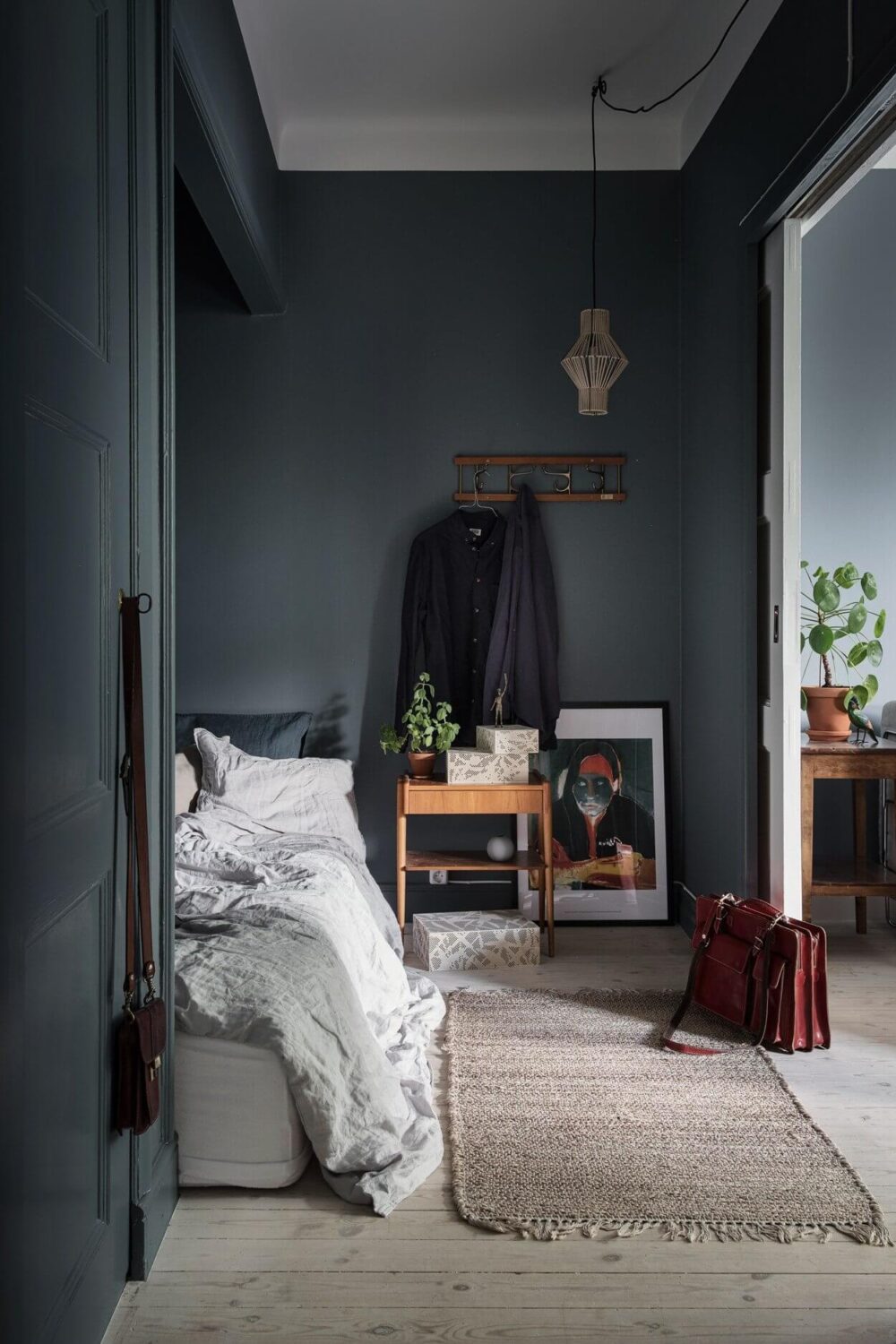
Prioritize calm and relaxation. Soft blues, muted greens, pale grays, or even a deep, enveloping navy for a cocooning effect. Consider painting the ceiling the same color for ultimate serenity. A monochromatic scheme works beautifully here.
Small Living Rooms: Welcoming & Open
Light neutrals (greige, soft white) keep it airy and versatile for entertaining. If you dare, a single accent wall in a deep blue or green can add sophistication without overwhelming. Ensure plenty of layered lighting.
Small Bathrooms: Spa-like Retreats
These are prime candidates for experimenting! Light, refreshing colors like pale aqua, seafoam green, or a crisp white can create a clean, spa-like feel. Or, go for drama with a deep jewel tone – a small bathroom painted in a rich emerald or charcoal can be incredibly luxurious and unexpected. Remember to use paint with appropriate moisture resistance (often satin or semi-gloss).
Small Home Offices/Nooks: Focus & Function
Cool, muted tones like blues or greens can enhance focus. If you need energy, a strategic pop of soft yellow or terracotta on an accent wall could work. Avoid overly stimulating colors if you spend long hours there.
Small Kitchens: Bright & Efficient
Cleanliness and energy are key. Crisp whites, light grays, or even cheerful pastels like a soft buttery yellow or light mint green can make a small kitchen feel inviting and efficient. Avoid overly dark colors that might absorb light and make it feel enclosed.
Beyond Paint: Complementary Elements for Small Rooms
Paint color is just one piece of the puzzle. These elements amplify the effect of your chosen wall colors.
Lighting: The Ultimate Space Enhancer
Good lighting is paramount in small rooms. Layer your lighting: ambient (overhead), task (under cabinet, reading lamp), and accent (spotlight on art). Use dimmer switches. Natural light is gold – don’t block windows. Mirrors can reflect both natural and artificial light, further brightening and expanding the space.
Furniture & Layout: Keep it Streamlined
Choose furniture that is proportionate to the room. Opt for multi-functional pieces (ottomans with storage, sofa beds). Furniture with exposed legs or glass elements allows light to pass through, creating a lighter visual footprint. Keep pathways clear to enhance flow.
Mirrors: Reflecting More Space
A large mirror strategically placed can work wonders. Position it opposite a window to reflect natural light and the view, or opposite an interesting piece of art. This immediately doubles the perceived space and adds a decorative element.
Decor & Art: Thoughtful Touches
Keep clutter to a minimum. Use vertical lines (tall bookshelves, floor-to-ceiling drapes) to draw the eye upwards and make the ceiling feel higher. Choose art that is proportionate – one large piece often works better than many small ones, which can feel busy. Use clear or metallic accessories to add sparkle without visual weight.
| Small Room Design Element Checklist | Strategy for Maximizing Space/Feel | Impact on Room |
|---|---|---|
| Paint Color Choice | Light, reflective colors OR deep, saturated colors (for cocooning effect) | Expansive/Airy OR Intimate/Sophisticated |
| Ceiling Color | Lighter than walls, or same as walls for seamless flow | Higher perception OR Enveloping effect |
| Trim & Door Colors | Match wall color, or very subtle contrast | Reduced visual breaks, seamless flow |
| Paint Sheen | Eggshell or Satin for walls, higher gloss for trim/doors | Subtle light reflection, durability |
| Lighting (Natural & Artificial) | Maximize natural light, use layered artificial lighting with dimmers | Brighter, more inviting, adaptable mood |
| Furniture Scale & Placement | Proportionate, multi-functional, elevated legs; clear pathways | Open feel, functional, less cluttered |
| Mirrors | Large, strategically placed to reflect light/views | Instant visual expansion, increased brightness |
| Decor & Art | Minimal clutter, vertical elements, proportionate art | Tidy, draws eye upwards, adds personality without chaos |
Conclusion: Your Small Room, Your Canvas
Painting a small room is no longer about adhering to rigid rules, but about understanding the principles of light, depth, and mood. Whether you opt for an expansive, airy feel with soft whites and cool pastels, or embrace the drama and intimacy of a deep, saturated jewel tone, your small room holds immense potential.
Don’t be afraid to experiment. Grab those swatches, observe them in different lights throughout the day, and trust your gut. Remember, it’s not just about making the room look bigger, but about making it feel truly yours. Go forth and transform that snug space into something extraordinary!
n