The Definitive Guide to Grey Paint for a Bedroom: Crafting Your Perfect Sanctuary
Staring at paint swatches, feeling overwhelmed by the endless shades of grey? You’re not alone. Choosing the right grey paint for your bedroom can feel like deciphering a secret code. Too light, it feels washed out. Too dark, it shrinks the room. The wrong undertone? Suddenly your serene sanctuary feels like a sterile hospital or a gloomy cave.
But here’s the secret: grey isn’t just one color. It’s a spectrum, a chameleon that shifts with light and context. And when chosen well, it transforms a bedroom into a haven of calm, sophistication, and pure comfort. It’s why interior designers keep returning to it, year after year.
This isn’t just another list of popular grey paints. This is your comprehensive guide to understanding grey, mastering its nuances, and confidently selecting the perfect shade that speaks to your soul and complements your space. Let’s unlock the power of grey together and create the bedroom you’ve always dreamed of.
Why Grey Reigns Supreme in the Bedroom (And Why It’s Worth Mastering)
Before we dive into the nitty-gritty, let’s talk about why grey continues to be a go-to choice for bedrooms. It’s not just a trend; it’s a timeless classic with profound benefits.
The Psychology of Grey: Calm, Serene, Sophisticated
In the realm of color psychology, grey is renowned for its calming and balancing effects. It’s often associated with peace, stability, and intelligence. For a bedroom, this translates into an environment that promotes relaxation and restful sleep. Unlike stark whites or vibrant hues that can stimulate the mind, a well-chosen grey acts as a visual anchor, allowing your eyes and mind to unwind. It’s the perfect backdrop for personal reflection and quiet moments.
Versatility Unmatched: A Canvas for Any Style
One of grey’s most incredible strengths is its adaptability. It’s not just for modern minimalist spaces. A warm greige can evoke a cozy, rustic farmhouse feel. A deep charcoal can lend a luxurious, moody vibe to a traditional room. A light, airy grey creates a coastal, serene aesthetic. Grey doesn’t dictate style; it enhances it. It provides a sophisticated neutral canvas against which your furniture, art, and personal touches truly shine, allowing you to easily update your decor without repainting your entire room.
Decoding Grey: Understanding Undertones is Your Secret Weapon
This is where most people get tripped up with grey. An undertone is the subtle hint of color that peeks through the main shade. It’s the difference between a grey that feels warm and inviting and one that feels cold and stark. Mastering undertones is the single most important step in choosing the right grey for your bedroom.
Warm Grays: Beige, Brown, or Green Undertones (Greiges)
These are the grays that contain hints of yellow, beige, brown, or even green. They often get the charming nickname “greige.” If you want your bedroom to feel cozy, welcoming, and less industrial, warm grays are your best friend. They pair beautifully with natural wood tones, cream, and earthy palettes, making them ideal for traditional, transitional, farmhouse, or even bohemian bedroom styles.
- Beige/Brown Undertones: Think of a misty morning fog with hints of earthy warmth. These grays prevent a room from feeling cold and can bridge the gap between grey and beige decor.
- Green Undertones: Often subtle, these grays can bring a grounded, organic feel, connecting your indoor space with nature. They feel fresh but still retain warmth.
Popular Examples: Sherwin-Williams Worldly Gray, Benjamin Moore Edgecomb Gray, Benjamin Moore Revere Pewter.
Cool Grays: Blue, Purple, or Green Undertones (True Grays)
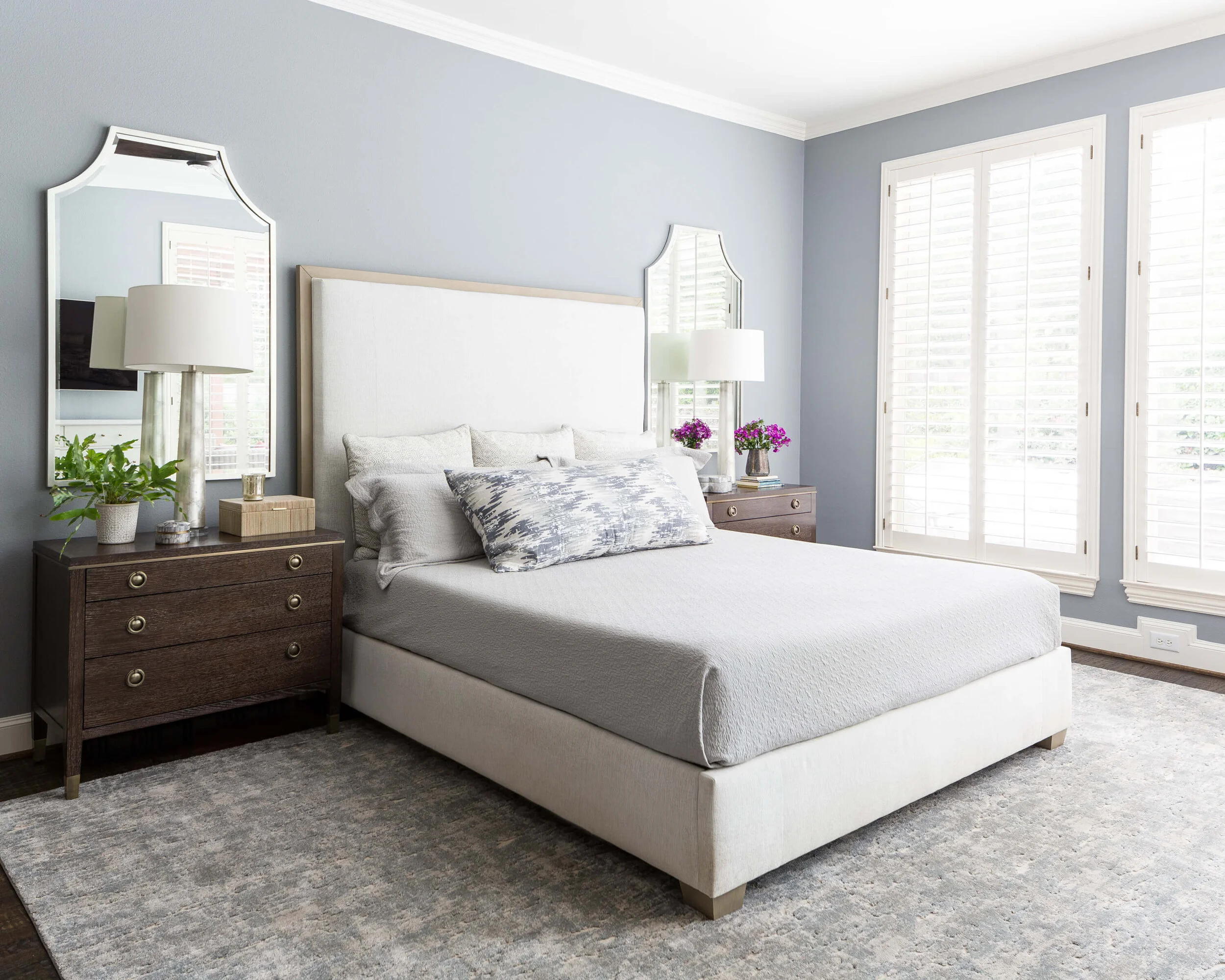
Cool grays have undertones of blue, purple, or sometimes a steely green. These are the grays that give off a crisp, clean, and often more modern vibe. They are excellent for creating a serene, tranquil, and sophisticated atmosphere, making them perfect for contemporary, Scandinavian, or coastal-inspired bedrooms. Be cautious with cool grays in north-facing rooms, as they can sometimes lean too cold without proper warmth added through decor.
- Blue Undertones: These grays are often described as serene and tranquil, reminiscent of the sky or ocean. They can make a room feel expansive and airy.
- Purple Undertones: Very subtle, a touch of purple can add a sophisticated, almost regal depth to a grey, preventing it from feeling bland.
- Steely Green Undertones: A cool green can make a grey feel incredibly fresh and clean, almost like a spa.
Popular Examples: Benjamin Moore Stonington Gray, Sherwin-Williams Repose Gray, Sherwin-Williams Silverpointe.
Neutral Grays: The Elusive “True” Grey
The quest for a “true” neutral grey—one without obvious undertones—is common but often challenging. Most grays will reveal a subtle lean in certain lighting conditions. However, some grays are so well-balanced that their undertones are minimal, making them incredibly versatile. These often appear as very light cool grays or balanced greiges that don’t lean too heavily warm or cool. They are the ultimate chameleon, adapting to the other colors in your room.
:max_bytes(150000):strip_icc()/Gibbs-Ave-134-9b2a24f2bc9448d7800258c65c193aa2.jpeg "40 Blue-Gray Paint Colors to Inspire Your Next Reno")
Popular Examples: Sherwin-Williams Light French Gray, Benjamin Moore Classic Gray.
| Grey Type | Primary Undertones | Typical Bedroom Vibe | Best Paired With |
|---|---|---|---|
| Warm Grays (Greiges) | Beige, Brown, Yellow, Green | Cozy, Inviting, Earthy, Organic | Natural Woods, Creams, Greens, Burnt Oranges |
| Cool Grays | Blue, Purple, Steely Green | Crisp, Modern, Serene, Airy, Tranquil | Whites, Blues, Silvers, Glass, Black Accents |
| Neutral Grays | Minimal, Balanced (Often very subtle cool/warm hints) | Versatile, Sophisticated, Clean, Adaptable | Almost anything, acts as a true backdrop |
The Impact of Light: Your Bedroom’s Natural Co-Designer
Light is everything when it comes to paint color. The same grey paint can look entirely different in two separate rooms, or even at different times of the day in the same room. Understanding how natural and artificial light interacts with grey is crucial.
North-Facing Rooms: Embracing Cool Tones or Warming Up
North-facing rooms receive indirect, cooler light throughout the day. If you choose a cool grey here, it can lean even colder and potentially feel unwelcoming. For these rooms, I often recommend:
- Warm Grays (Greiges): These are fantastic in north-facing rooms as their inherent warmth helps counteract the cool light, creating a balanced and inviting atmosphere.
- Light-Reflecting Grays: Very pale, almost off-white grays can help brighten the space without feeling too stark.
- Embrace the Cool: If you love a moody, crisp bedroom, a deep cool grey can work, but be sure to balance it with warm textures (wood, wool, velvet) and artificial lighting.
South-Facing Rooms: Leveraging Abundant Light
South-facing rooms are bathed in bright, warm light for most of the day. This is where you have the most flexibility with grey. The warm natural light will often bring out the warmer undertones in any grey.
- Cool Grays: A cool grey can look absolutely stunning here, as the warm light will soften its coolness, making it appear perfectly balanced and serene.
- Dark Grays: South-facing rooms can handle darker grays, including deep charcoals, without feeling like a cave, as the ample light prevents it from becoming too heavy.
East/West-Facing Rooms: Morning Glow vs. Evening Warmth
- East-Facing Rooms: Get beautiful, warm morning light, then cooler light for the rest of the day. Consider how the grey will look with that morning glow, and also how it holds up as the light fades. A balanced greige often works well, looking warm in the morning and sophisticated later.
- West-Facing Rooms: Receive intense, warm light in the afternoon and evening. This is similar to south-facing rooms in the afternoon. A cool grey here can be balanced beautifully by the warm, setting sun, creating a dynamic color experience throughout the day.
Artificial Lighting: Bulb Temperature Matters
Don’t forget your light bulbs! The color temperature of your artificial lighting can drastically alter how your grey paint looks after dark. Look for bulbs with a Kelvin (K) rating between 2700K (warm white/soft white) and 3500K (neutral white). Higher Kelvin ratings (cool white/daylight) can make any grey feel colder and sometimes sterile in a bedroom. Dimmers are a fantastic investment, allowing you to control the mood.
Choosing the Right Shade of Grey for Your Bedroom
Now that you understand undertones and lighting, let’s match the perfect grey to your specific bedroom needs and desired aesthetic.
For a Small Bedroom: Light and Airy Grays
In smaller bedrooms, light grays are your best bet. They reflect light, making the room feel more expansive and open. Opt for grays with a subtle cool undertone (like a whisper of blue) to enhance the airy feeling, or a very pale greige to keep it feeling light yet cozy. Avoid overly dark grays, as they can make a small room feel claustrophobic.
For a Large Bedroom: Adding Depth with Mid-Tones or Dark Grays
Larger bedrooms can confidently embrace mid-tone to darker grays. These shades add depth, intimacy, and a sense of sophistication. A rich charcoal grey can create a dramatic, luxurious feel, especially when paired with crisp white trim and elegant lighting. Mid-tone grays (like a Benjamin Moore Revere Pewter or Sherwin-Williams Agreeable Gray) offer versatility, providing a strong backdrop without overwhelming the space.
For a Modern Aesthetic: Cool, Crisp Grays
If your style leans modern, minimalist, or contemporary, cool grays with blue or true grey undertones are ideal. They provide a clean, sharp backdrop for sleek furniture, metallic accents, and pops of vibrant art. Think Benjamin Moore Stonington Gray or a similar crisp, clear grey. These grays create a sophisticated, uncluttered look.
For a Cozy, Rustic, or Transitional Feel: Warm Greiges
For bedrooms that prioritize warmth, comfort, and an inviting atmosphere, warm greiges are unparalleled. Their subtle brown or beige undertones prevent any hint of coldness, making them perfect for farmhouse, rustic, or transitional decor. These grays pair beautifully with natural wood, linen, chunky knits, and a soft, muted color palette. Sherwin-Williams Accessible Beige (a very light greige) or Benjamin Moore Edgecomb Gray are prime examples.
The Bold Statement: Charcoal and Deep Grays
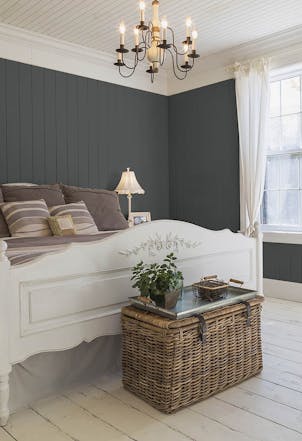
Don’t shy away from the drama of a deep charcoal or a rich, dark grey if you’re looking to make a statement. These colors can create an incredibly luxurious, enveloping, and intimate atmosphere in a bedroom. They work wonderfully in rooms with good natural light to prevent them from feeling too heavy, and they create a stunning contrast with lighter bedding and decor. Pair with rich textures like velvet, dark wood, and metallic accents for a truly opulent feel.
| Bedroom Characteristic | Recommended Grey Shade | Desired Vibe | Considerations |
|---|---|---|---|
| Small Room | Very Light Greys, Pale Cool Grays | Expansive, Airy, Bright | Reflects light, prevents claustrophobia |
| Large Room | Mid-Tone to Dark Grays, Charcoal | Intimate, Sophisticated, Luxurious | Adds depth, prevents overwhelming spaciousness |
| Modern/Minimalist | Cool Grays (Blue/True Grey Undertones) | Clean, Crisp, Sleek, Uncluttered | Sharp backdrop for modern decor |
| Cozy/Rustic/Transitional | Warm Grays (Greiges: Beige/Brown/Green Undertones) | Inviting, Warm, Grounded, Comfortable | Complements natural textures, prevents coldness |
| Dramatic/Luxurious | Deep Charcoal, Dark Moody Grays | Bold, Intimate, Elegant, Opulent | Requires good natural light or balanced artificial light |
Beyond the Walls: Pairing Grey with Furniture, Decor, and Accent Colors
Once your walls are a perfect shade of grey, the magic truly begins with your decor. Grey’s versatility means it plays well with almost everything, but thoughtful pairing can elevate your bedroom from nice to absolutely stunning.

Wood Tones: Warm vs. Cool
- Warm Grays: Harmonize beautifully with rich, warm wood tones like cherry, mahogany, or dark oak. They also look stunning with distressed, rustic woods, enhancing their natural character.
- Cool Grays: Pair exquisitely with lighter woods like ash, birch, or natural maple for a modern, Scandinavian look. They also create a striking contrast with very dark, almost black woods, adding depth.
Metallic Accents: Silver, Gold, Bronze
- Silver/Chrome: Enhances the crispness of cool grays, perfect for a sleek, contemporary feel.
- Gold/Brass: Adds warmth and luxury to any grey, especially stunning against deep charcoals or warm greiges.
- Bronze/Copper: Brings an earthy, industrial, or rustic charm, particularly effective with warmer grays or a balanced mid-tone.
Fabric Textures: Plush, Linen, Velvet
Grey walls are the perfect stage for playing with textures. Layering different fabrics adds visual interest and depth, preventing the room from feeling flat.
- Linen: Natural, airy, and relaxed, ideal for a serene or coastal grey bedroom.
- Velvet: Adds instant luxury and warmth, especially in jewel tones against a sophisticated grey.
- Chunky Knits/Wool: Creates a cozy, inviting atmosphere, perfect for greiges or even to soften a cool grey.
- Silk/Satin: Contributes to a glamorous and elegant aesthetic.
Accent Colors: Pop or Serenity? (Blues, Greens, Pinks, Whites)
This is where you inject personality!
- Blues & Greens: Natural partners for any grey. Soft blues create a tranquil, spa-like feel. Deeper blues add richness. Sage or olive greens bring an organic, calming touch, while emerald greens pop against cool grays.
- Pinks & Corals: Unexpectedly charming! Blush pinks add softness and a touch of romance to grey. Corals introduce a vibrant, playful energy.
- Crisp Whites & Creams: The classic combination. White trim, bedding, or accessories against grey walls offer a timeless, clean, and sophisticated look. Creams bring a softer contrast, particularly with warm grays.
- Metallics (Gold/Silver): As mentioned, these add sparkle and sophistication.
- Black: A powerful accent that grounds the space, adding drama and modern edge when used sparingly in frames, light fixtures, or furniture legs.
The Finishing Touch: Paint Sheen and Its Effect
The sheen, or finish, of your paint isn’t just about durability; it significantly impacts the look and feel of your grey walls. For a bedroom, you’ll generally want something on the lower end of the sheen spectrum.
Flat/Matte: Luxurious, Hides Imperfections
A flat or matte finish absorbs light, giving your grey walls a soft, velvety, and incredibly sophisticated look. It’s excellent for hiding minor wall imperfections. However, it’s less durable and harder to clean, so it’s best for low-traffic areas like a master bedroom.
Eggshell/Satin: Durable, Subtle Sheen
Eggshell and satin finishes offer a subtle, low-lustre sheen that reflects a bit more light than flat. They are more durable and easier to clean, making them a popular choice for bedrooms, especially if you have kids or pets. They still provide a soft look but with added practicality.
Semi-Gloss: For Trim and Doors, High Durability
Semi-gloss has a noticeable shine and is highly durable and easy to clean. It’s generally too shiny for bedroom walls but is the perfect choice for trim, baseboards, doors, and window frames. Using a contrasting (or even matching) semi-gloss on trim against a matte wall can create a beautiful architectural detail.

| Sheen Type | Appearance | Durability/Cleanability | Best Use in Bedroom | Ideal Grey Vibe |
|---|---|---|---|---|
| Flat/Matte | No sheen, velvety, absorbs light | Low durability, harder to clean, hides imperfections | Walls (for a luxurious, soft look) | Sophisticated, Cozy, Modern Organic |
| Eggshell/Satin | Low-lustre, soft glow, reflects some light | Medium durability, easier to clean | Walls (most popular choice for balance) | Balanced, Clean, Versatile |
| Semi-Gloss | Noticeable shine, reflective | High durability, very easy to clean | Trim, Doors, Window Frames | Accented, Defined, Modern Contrast |
Pro Tips for Painting Your Bedroom Grey
Even with the perfect color chosen, a few practical steps will ensure your grey bedroom project is a success.
Test, Test, Test: Large Swatches are Non-Negotiable
I cannot stress this enough. Paint swatches online or from tiny chips are not enough. Buy sample pots of your top 2-3 grey contenders. Paint large swatches (at least 18×18 inches) on a few different walls in your bedroom. Observe them at different times of day—morning, afternoon, evening, and with artificial light. See how they react to your existing furniture and flooring. This crucial step will prevent costly mistakes.
Consider the Existing Elements: Flooring, Bedding, Art
Your grey paint isn’t going into a vacuum. Hold your paint swatches up against your flooring, your bedding, curtains, and any significant art pieces. Ensure the undertones don’t clash. For example, a cool grey wall with warm yellow-toned wood flooring might create an undesirable contrast unless carefully balanced with other decor.
Don’t Forget the Ceiling: White, Tinted, or the Same Grey?
- Crisp White: The most common choice, making the room feel taller and brighter.
- Tinted White: A ceiling paint with a tiny drop of your wall grey can create a softer transition and make the room feel cozier without being overwhelming.
- Same Grey: Painting the ceiling the same grey as the walls creates an incredibly immersive, enveloping, and dramatic effect. Best for larger bedrooms or if you want a truly intimate, moody space.
Prep Work is Key: A Smooth Canvas
No matter how perfect your grey, poor prep work will detract from it. Clean your walls thoroughly, patch any holes or cracks, sand smooth, and prime (especially if you’re going from a dark color to a light grey, or if your walls are uneven). A smooth, clean, primed surface is the foundation for a flawless grey finish.
Choosing grey paint for your bedroom is more than just picking a color; it’s about crafting an atmosphere. By understanding undertones, acknowledging the power of light, and thoughtfully pairing with decor, you can transform your bedroom into a sophisticated, serene, and deeply personal sanctuary.
Don’t let the subtle complexities of grey intimidate you. Embrace the journey of discovery, trust your instincts (with the help of those large swatches!), and you’ll soon be relaxing in a bedroom that feels perfectly, wonderfully you. Happy painting!
”