How Much Paint For An Accent Wall? Your Definitive Guide to Flawless Color
So, you’ve picked the perfect shade, envisioned your stunning accent wall, and now you’re staring at the paint aisle, wondering: “Exactly how much paint do I need for this?” It’s a common dilemma. Buy too little, and you’re stuck mid-project, scrambling for more. Buy too much, and you’ve wasted money and created storage clutter. But don’t worry, I’m here to break it down for you. Forget the generic calculators; we’re going to get precise and give you all the pro tips to ensure your accent wall is a masterpiece, without the guesswork.
The Quick Answer: How Much Paint Do I Really Need?
Let’s cut to the chase. For most standard accent walls (think a 10-foot by 12-foot wall), you’ll typically need about a quart of paint for two coats. If your wall is larger, say 15 feet by 10 feet, or if you’re using a particularly tricky color (like a deep red or a bright yellow), you might edge closer to half a gallon. The general rule of thumb is that one gallon of paint covers approximately 350-400 square feet per coat. Since an accent wall usually requires at least two coats for a rich, even finish, you’ll need enough paint to cover the wall’s area twice.
But here’s the thing: that’s just a starting point. There are several factors that can significantly influence that number. Ready to get precise?
Calculating Your Accent Wall Paint: A Step-by-Step Breakdown
Let’s walk through the exact steps to calculate your paint needs, ensuring you’re confident when you head to the store.
Step 1: Measure Your Wall’s Dimensions
This is the foundation of your calculation. Grab a tape measure and note down the height and width of your accent wall.
- Measure the Height: From floor to ceiling.
- Measure the Width: From corner to corner.
- Multiply Height by Width: This gives you the total square footage of your wall.
Pro Tip: Measure at a few different spots if your wall isn’t perfectly square to catch any discrepancies, then use the largest measurement to be safe.
Step 2: Account for Openings (Windows & Doors)
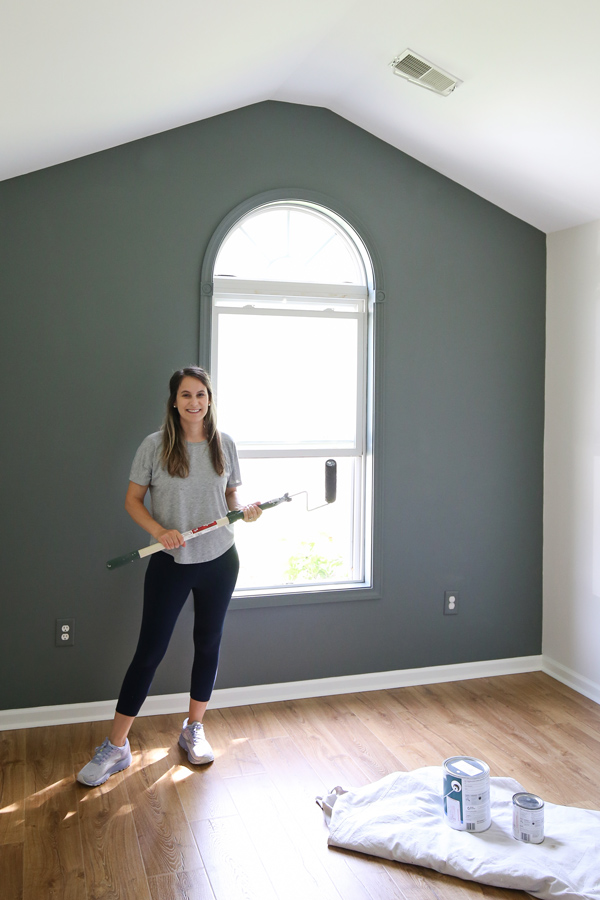
If your accent wall has a window, a door, or even a built-in bookshelf that won’t be painted, you need to subtract that unpainted area from your total wall square footage.
- Measure the height and width of each opening.
- Multiply Height by Width for each opening to get its square footage.
- Subtract the opening’s area from your total wall area.
Example: If your wall is 10 feet high by 12 feet wide (120 sq ft), and it has a window that is 3 feet high by 4 feet wide (12 sq ft), your paintable area is 120 – 12 = 108 square feet.
Step 3: Determine Your Paint Coverage Rate
Every can of paint will have a coverage rate listed, usually in square feet per gallon. This can vary based on the paint’s quality, type, and sheen. The average is 350-400 square feet per gallon, but always check your specific product label. If you can’t find it, use 350 sq ft/gallon as a safe, conservative estimate.
Here’s a general guide:
| Paint Type/Sheen | Coverage per Gallon (Sq Ft) | Notes |
|---|---|---|
| Flat/Matte | 300-350 | More porous, may require slightly more for deep colors. |
| Eggshell/Satin | 350-400 | Good balance of durability and coverage. |
| Semi-Gloss/High-Gloss | 400-450 | Smoother finish, often better coverage per coat. |
| Primer | 200-300 | Essential for drastic color changes or new/porous surfaces. Coverage varies widely. |
Step 4: Factor in the Number of Coats
This is crucial, especially for an accent wall. While one coat might technically cover, it rarely provides the depth, richness, and evenness you desire for a focal point. Plan for at least two coats of paint. For very dark or vibrant accent colors, or when painting over a significantly different existing color, a third coat might be necessary to achieve true color and hide imperfections.
Step 5: The Final Calculation Formula
Now, let’s put it all together:

- Calculate Paint Needed per Coat: (Paintable Wall Area) / (Paint Coverage Rate per Gallon)
- Calculate Total Paint Needed: (Paint Needed per Coat) x (Number of Coats)
- Convert to Quarts/Gallons: Remember, there are 4 quarts in 1 gallon.
Let’s do an Example Calculation:
- Wall Size: 10 feet high x 12 feet wide = 120 sq ft
- Window Size: 3 feet high x 6 feet wide = 18 sq ft
- Paintable Area: 120 sq ft – 18 sq ft = 102 sq ft
- Paint Coverage Rate: Let’s use 350 sq ft/gallon (conservative estimate)
- Number of Coats: 2 (standard for accent walls)
Calculation:
- Paint Needed per Coat: 102 sq ft / 350 sq ft/gallon = 0.29 gallons
- Total Paint Needed: 0.29 gallons x 2 coats = 0.58 gallons
Since 0.58 gallons is roughly 2.3 quarts (0.58 x 4), you would likely buy two quarts or one half-gallon can (if available) to ensure you have enough, accounting for a little extra. Buying a full gallon would leave you with significant leftover, but could be prudent if you anticipate touch-ups or extreme color changes.
Beyond the Basic Formula: Factors That Influence Paint Quantity
While the formula gives you a solid starting point, real-world painting often involves nuances. These factors can push your paint needs up or down.
The Original Wall Color vs. New Accent Color
- Dark to Light: Painting a dark wall a much lighter accent color is perhaps the most paint-intensive scenario. The old dark pigment can ‘bleed through’, requiring more coats and almost certainly a good quality primer (tinted if possible) to block the old color.
- Light to Dark: This is generally easier. A light wall going to a dark accent color usually covers well in two coats, sometimes even one with exceptional paint and a similar base color.
- Similar Tones: Painting a light beige accent over an off-white wall? You might get away with fewer coats or a slightly higher coverage rate per gallon.
Wall Surface Texture and Condition
The smoother the wall, the less paint it will absorb. The rougher or more porous, the more paint it will soak up, acting like a sponge.
- Smooth Drywall: Least absorbent, standard coverage.
- Textured Walls (e.g., heavily textured plaster, orange peel): More surface area means more paint. Expect to add 10-20% to your calculation.
- Unprimed Drywall or New Plaster: Highly porous. These surfaces will drink paint. Primer is non-negotiable here to seal the surface and ensure even topcoat application.
- Dirty or Uneven Surfaces: Any imperfections can lead to inconsistent coverage, potentially requiring more paint to hide.
| Surface Type | Impact on Paint Needed | Pro Tip |
|---|---|---|
| Smooth Drywall (Previously Painted) | Standard (350-400 sq ft/gal) | Ensure surface is clean and patched. |
| Textured Plaster/Drywall | 10-20% More Paint | Texture increases surface area; use a thicker nap roller. |
| Unprimed Drywall/New Plaster | 20-30% More Paint + Primer | Highly absorbent; primer is non-negotiable. |
| Previously Painted (Dark to Light Accent) | Minimum 2-3 Coats + Primer | Primer is key to block old color and reduce topcoats. |
| Previously Painted (Light to Dark Accent) | 2 Coats (possibly 1 with high-quality paint) | Less demanding, but two coats ensure richness. |
Paint Quality and Pigmentation
Not all paints are created equal. Higher-quality paints generally have better pigmentation and binders, which means they offer superior coverage in fewer coats. If you’re going for a bold, deep accent color, investing in a premium paint can actually save you time and potentially paint by reducing the number of coats required to achieve the desired effect. Cheaper paints may need an extra coat or two to look truly vibrant and opaque.
Application Method
How you apply the paint also plays a role:
- Roller: Generally the most efficient method for walls. A 3/8-inch nap roller is standard for smooth walls, while a 1/2-inch or 3/4-inch nap is better for textured surfaces, as it holds more paint and gets into crevices.
- Brush: Used for cutting in edges, corners, and detail work. Brushes are less efficient for large areas and can use more paint if not loaded correctly.
- Paint Sprayer: While fast, sprayers can result in more paint usage due to overspray and the need for more extensive masking. Not typically recommended for a single accent wall unless you’re an experienced pro.
Primer: Your Secret Weapon for Accent Walls
Think of primer as the unsung hero of a perfect paint job. While it’s an extra step and an extra product, it often saves you paint and grief in the long run. Here’s why and when to use it:
- Drastic Color Change: Going from a vibrant red to a subtle sage green? Primer will block the old color, preventing it from showing through the new, lighter shade.
- New or Bare Surfaces: Unprimed drywall, wood, or plaster are highly absorbent. Primer seals these surfaces, creating an even base that prevents your topcoat from soaking in unevenly.
- Stains or Odors: If your accent wall has any minor stains (water, grease) or retains odors, a stain-blocking primer can be invaluable.
- Enhanced Adhesion: Primer creates a surface that your topcoat can adhere to better, leading to a more durable finish.
When you use primer, you effectively create a neutral, consistent canvas, which means your expensive topcoat paint will cover more efficiently and require fewer coats to achieve its true color. In many cases, adding a coat of primer might mean you only need two coats of color instead of three, saving you time and paint!
Smart Buying: Quarts vs. Gallons and Minimizing Waste
Once you have your calculated total, the next step is deciding how much to buy. Paint typically comes in quarts, gallons, and 5-gallon buckets. For an accent wall, you’ll almost certainly be looking at quarts or a single gallon.
When to Buy a Quart:
A quart of paint typically covers about 87.5-100 square feet per coat. This is often the perfect size for most accent walls requiring two coats. If your calculated total is around 0.5 gallons (or 2 quarts), buying two quarts is a good option. Quarts are also ideal for smaller accent features, intricate designs, or touch-ups.
When to Buy a Gallon:
If your accent wall is particularly large, or if you’ve factored in three coats due to a challenging color change or textured surface, a gallon might be the most economical choice. A gallon also makes sense if you plan to use the same accent color elsewhere in your home, perhaps on a piece of furniture or another small feature wall. Many brands offer better pricing per ounce in gallon-sized containers.
The “Buy a Little Extra” Rule:
I always recommend buying slightly more than your absolute minimum calculation. Here’s why:
- Touch-Ups: Accidents happen. Having a small amount of leftover paint for future touch-ups is a lifesaver.
- Batch Variation: If you run out mid-project and buy another can, there’s a slight chance of batch variation, meaning the new paint might have a tiny, almost imperceptible color difference. Buying enough upfront from the same batch avoids this.
- Unexpected Needs: Maybe you decide to paint the inside of a niche on the wall, or a small piece of trim. A little extra gives you flexibility.
Aim for about 10% more than your calculated total. So, if you calculated 0.58 gallons, rounding up to 0.75 gallons (or three quarts) or even a full gallon would be wise.
Storing Leftover Paint:
Proper storage ensures your extra paint remains usable for touch-ups for years. Make sure the lid is sealed tightly, perhaps with a rubber mallet. Store cans upside down (to create a better seal with the paint) in a cool, dry place away from extreme temperatures.
Pro Tips for Painting Your Accent Wall Flawlessly
Getting the right amount of paint is half the battle; applying it correctly is the other. Here are a few tips to ensure your accent wall looks professionally done:
- Surface Prep is Key: Clean your wall thoroughly, patch any holes or cracks, and sand any rough spots. A smooth, clean surface is essential for even paint application.
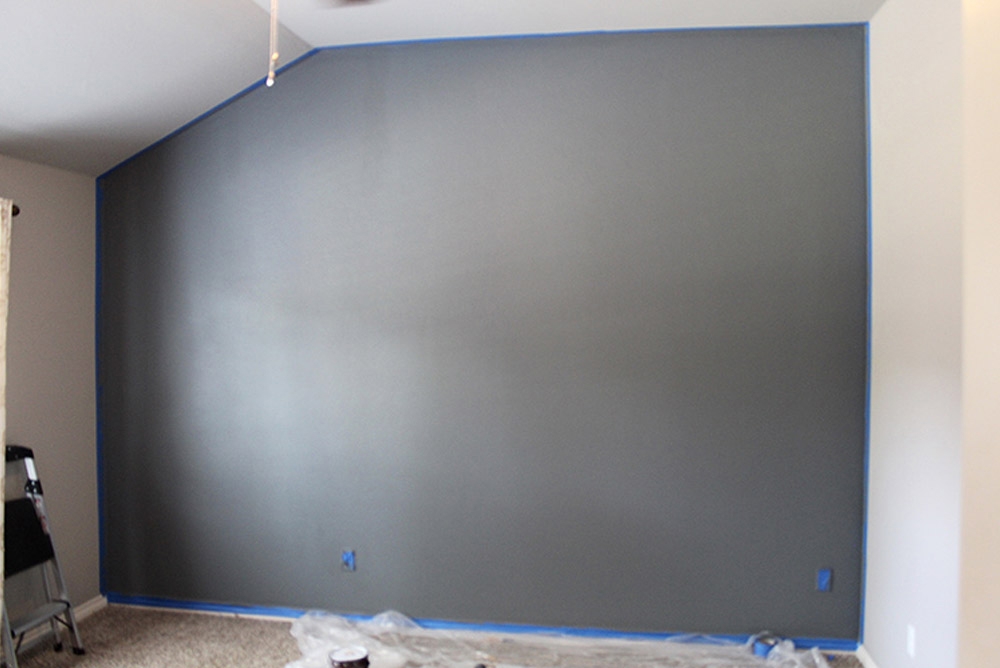
- Tape Off Edges Properly: Use high-quality painter’s tape to protect adjacent walls, ceiling, and trim. Press down firmly to create a crisp line. Remove tape when the paint is still slightly wet (but not tacky) for the sharpest edge.
- Cut In First, Then Roll: Use a brush to paint a strip along the edges, corners, and around any openings. Then, use your roller for the main wall area, overlapping the brushed areas slightly.
- Apply Even Coats: Don’t overload your roller. Apply paint in ‘W’ or ‘M’ patterns, then fill them in with straight, even strokes, working from top to bottom. Maintain a wet edge to avoid lap marks.
- Allow Adequate Drying Time: Read the paint can for recommended drying times between coats. Rushing this step can lead to a patchy finish or peeling paint.
- Ventilate: Always ensure good ventilation in the room while painting and during drying to disperse fumes and help the paint cure properly.
Common Mistakes to Avoid
Bypass these common pitfalls to ensure a smooth, successful accent wall project:
- Skipping Primer When Needed: Especially when making a drastic color change or painting over new drywall. It costs more time upfront but saves paint and frustration later.
- Not Measuring Accurately: A simple miscalculation can lead to under- or overbuying. Double-check your measurements.
- Underestimating Coats Needed: Always assume two coats. For bold colors or significant color changes, plan for a potential third.
- Ignoring Paint Can Instructions: Drying times, ideal temperatures, and coverage rates are all there for a reason. Adhere to them!
- Buying Cheap Paint for Bold Colors: While tempting, inexpensive paints often have lower pigment concentration, requiring more coats to achieve the desired vibrancy and coverage. Invest in quality for your accent wall.
- Not Mixing Paint Thoroughly: Pigments can settle at the bottom of the can. Always stir paint thoroughly before and during use for consistent color.
Conclusion: Your Accent Wall Awaits!
Calculating how much paint you need for an accent wall doesn’t have to be a daunting task. By following these simple steps, considering the unique factors of your wall and paint, and armed with a few pro tips, you can approach your project with confidence. No more mid-paint store runs or mountains of leftover cans! Go forth, pick up that perfect shade, and transform your space with a stunning accent wall.
Frequently Asked Questions
Do I need to prime an accent wall?
Yes, primer is highly recommended for accent walls, especially when making a drastic color change (dark to light), painting over new or unpainted drywall/plaster, or dealing with stained surfaces. Primer creates an even, sealed base, improving paint adhesion, coverage, and reducing the number of topcoats needed.
How many coats of paint does an accent wall usually need?
Most accent walls will require at least two coats of paint for a rich, even, and opaque finish. If you’re using a very bold or vibrant color, painting over a significantly different existing color, or dealing with a highly textured surface, a third coat may be necessary to achieve the desired depth and consistency.
What’s the difference in coverage between a quart and a gallon of paint?
A quart of paint typically covers about 87.5-100 square feet per coat. A gallon of paint generally covers 350-400 square feet per coat (since there are 4 quarts in a gallon). For most standard accent walls, a quart or two (a half-gallon) is usually sufficient for two coats.
Does textured drywall require more paint?
Yes, textured drywall or plaster walls have a larger surface area compared to smooth walls, meaning they will absorb and require more paint. You should typically add 10-20% to your paint estimate for textured surfaces and consider using a roller with a thicker nap (e.g., 1/2-inch or 3/4-inch) to ensure proper coverage.
Can I use leftover paint from another project for my accent wall?
You can, but proceed with caution. Ensure the leftover paint is still in good condition (no clumps, mold, or strong off-odor), and mix it thoroughly. Be aware that if it’s not the exact same brand and line, there could be subtle differences in finish or coverage. It’s best to use fresh paint for a primary accent wall for consistent results.
Is it better to buy too much or too little paint?
It is generally better to buy slightly too much paint than too little. Running out mid-project is frustrating, and buying more later risks batch variation in color. Having a little extra allows for touch-ups down the line. Aim to buy about 10% more than your calculated minimum.
How does paint sheen affect coverage?
Generally, paints with higher sheens (like semi-gloss or high-gloss) tend to have slightly better coverage per coat compared to flatter sheens (like matte or flat). This is because glossier paints often have a smoother finish that is less porous and absorbs less paint, allowing the color to build up more efficiently.