The Definitive Guide to Choosing the Best White Paint Color for Your Interior Doors
Let’s be honest: interior doors are often the unsung heroes of our homes. They define spaces, provide privacy, and silently contribute to your home’s overall aesthetic. But too often, they’re an afterthought, slapped with whatever white paint was left over from the trim. And let me tell you, not all whites are created equal.
Choosing the best white paint color for your interior doors isn’t just about picking “white.” It’s about understanding undertones, light reflectance, and the magic of paint sheen. Get it right, and your doors will elevate every room, creating a cohesive, polished look. Get it wrong, and they can clash, look dingy, or just fall flat.
As an expert in home aesthetics, I’m here to guide you through the dazzling (and sometimes daunting) world of white paints. We’ll break down what really matters, reveal the top contenders, and give you the confidence to pick the perfect white for your home’s hardworking doors.
Why White? The Timeless Appeal of White Interior Doors
Before we dive into the nuances, let’s appreciate why white remains the perennial favorite for interior doors:
- Unmatched Versatility: White goes with EVERYTHING. Seriously. From bold, dramatic walls to subtle neutrals, white doors provide a crisp break and a classic foundation.
- Brightness and Space: White has an incredible ability to reflect light, making hallways feel wider and rooms appear larger and airier. It’s a visual trick that never gets old.
- Clean Slate: White projects cleanliness, order, and simplicity. It allows other design elements, like artwork, furniture, or architectural details, to shine without competition.
- Timelessness: Trends come and go, but white doors are a consistent, sophisticated choice that will never truly go out of style. It’s an investment in enduring elegance.
- Enhanced Resale Value: A cohesive, well-maintained interior with classic white doors often appeals to a broader range of buyers, potentially increasing your home’s market appeal.
So, the choice of white is a smart one. Now, let’s ensure it’s the *right white.

The Core Elements: What Makes a “Best” White for Doors?
Think of white paint as a chameleon. It changes based on its surroundings, and for doors, these factors are critical.
Undertones: The Hidden Color Story
This is where most people get tripped up. No white is truly 100% pure white; they all have subtle undertones that lean either warm or cool. Understanding these is paramount:
- Warm Undertones: Whites with yellow, pink, brown, or red undertones feel soft, inviting, and cozy. They complement warmer wall colors, wood tones, and natural light from north-facing rooms.
- Cool Undertones: Whites with blue, gray, or green undertones feel crisp, clean, and modern. They work beautifully with cooler wall colors, grays, blues, and bright natural light from south-facing rooms.
Light Reflectance Value (LRV): The Brightness Meter
LRV is a number between 0 (absolute black) and 100 (pure white) that indicates how much light a color reflects. For doors, a higher LRV (typically 80+) means more light reflection, contributing to a brighter, more open feel. It’s not just about how “white” it looks on the swatch, but how it behaves in your actual space.
Paint Sheen: The Ultimate Secret Weapon for Doors
While often overlooked, the paint sheen you choose for your interior doors is arguably as important as the color itself. Doors are high-traffic areas; they get touched, kicked, and bumped. Your sheen needs to stand up to that abuse.
- Semi-Gloss: This is my go-to recommendation for interior doors. It offers excellent durability, is incredibly easy to clean (a damp cloth usually does the trick), and provides a beautiful, subtle sheen that highlights architectural details. Its reflective quality also helps bounce light around.
- Gloss: Even more durable and reflective than semi-gloss, gloss paint can create a high-impact, modern look. However, it also highlights every imperfection on the door’s surface, so meticulous prep is crucial. Best for ultra-modern or very formal spaces.
- Satin: Satin has a soft, velvety luster, less reflective than semi-gloss but more durable than eggshell or flat. While it’s a good choice for walls, it’s generally not quite durable enough for high-traffic doors, though it can work in low-use areas or for a more subdued look if durability is less of a concern.
Navigating the Nuances: Choosing White Based on Your Home’s Unique Personality
The “best” white isn’t universal; it’s contextual. Your home’s existing elements play a huge role in determining the ideal shade.
Matching Your Trim vs. Creating Subtle Contrast
This is a common dilemma. Here’s how to think about it:
- Matching Trim: The safest and most common approach. If your trim is already a specific white, using the same color for your doors creates a seamless, cohesive, and traditional look. This is especially effective in open-concept homes or spaces where you want a crisp, unified aesthetic.
- Subtle Contrast: You can absolutely choose a slightly different white for your doors than your trim, but proceed with caution. The key word is “subtle.” For instance, if your trim is a very cool, bright white, a slightly warmer or softer white on the doors can add a touch of inviting warmth without jarring. Avoid stark differences in undertone unless you’re intentionally making a bold design statement. Generally, aim for the same type* of white (e.g., cool with cool, warm with warm) even if the LRV differs slightly.
Complementing Your Wall Colors
Your wall color is the biggest factor in how your white doors will appear. The goal is harmony, not conflict.
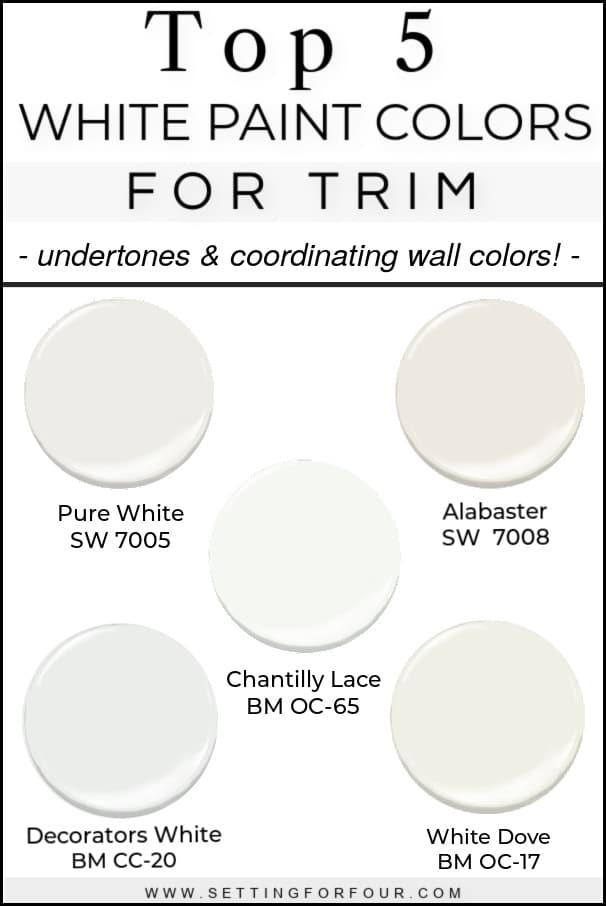
- Warm Walls (Greige, Beige, Taupe, Earth Tones): Opt for a white with warm undertones (yellow, pink, brown) to prevent your doors from looking stark or dirty by comparison. Whites like Benjamin Moore White Dove or Sherwin Williams Alabaster are excellent choices.
- Cool Walls (Gray, Blue, Green): Crisp, cool whites with blue or gray undertones will typically pair best. Benjamin Moore Chantilly Lace or Sherwin Williams High Reflective White can provide that sharp, clean contrast without feeling out of place.
- Pure White Walls: If your walls are a true, neutral white, you have more flexibility. You can match them exactly for a monochromatic, minimalist look, or introduce a very subtle warm or cool white on the doors for a touch of depth.
- Bold/Dark Walls: White doors truly pop against dark or vibrant wall colors. Almost any clean white will work here, as the contrast itself is the statement. Consider a slightly warmer white to soften the contrast against very deep tones.
Considering Natural Light
Light is everything when it comes to paint colors. What looks great in a brightly lit showroom might be completely different in your home.
- North-Facing Rooms: These rooms tend to have cooler, blue-gray light. A white with warm undertones can help counteract this coolness, preventing your doors from looking too stark or icy.
- South-Facing Rooms: Bathed in warm, bright light, these rooms can handle cooler whites without them feeling cold. However, warm whites will also feel incredibly inviting and sunny.
- East-Facing Rooms: Get bright, warm light in the morning, shifting to cooler light later in the day. A balanced, neutral white or a soft warm white often works well here.
- West-Facing Rooms: Receive warm, intense light in the afternoon/evening. This can make warm whites feel even warmer. Cool whites can provide a refreshing balance.
Always, always, test paint samples in your actual space, observing them throughout the day.
Your Home’s Overall Aesthetic
- Modern/Minimalist: Crisp, clean whites with cool or neutral undertones (e.g., Chantilly Lace) in a semi-gloss or gloss finish often complement sleek, contemporary designs.
- Traditional/Farmhouse: Softer, warmer whites (e.g., White Dove, Alabaster) that feel inviting and a bit aged are excellent choices, typically in a semi-gloss sheen.
- Transitional: A versatile warm or neutral white (e.g., Simply White, Pure White) can bridge the gap between traditional and modern elements beautifully.
Top White Paint Colors for Interior Doors: Our Expert Picks
After countless consultations and hands-on experience, I’ve curated a list of white paints that consistently perform beautifully on interior doors. These aren’t just popular; they’re versatile, durable-friendly, and simply stunning.
The True Whites (Clean & Crisp)
These whites are your go-to for a modern, bright, and utterly clean aesthetic. They have minimal discernible undertones or lean slightly cool.
- Benjamin Moore Chantilly Lace (OC-65)
LRV: 92.2
Primary Undertone: Very slight cool/clean. Often considered a “true white.”
Why it’s great for doors: It’s incredibly crisp and bright without being stark. It pairs beautifully with cool grays, blues, and even vibrant colors, providing a sharp, clean contrast. Ideal for modern, minimalist, or coastal homes. - Sherwin Williams High Reflective White (7757)
LRV: 93
Primary Undertone: Clean, slightly cool.
Why it’s great for doors: As its name suggests, it’s one of the brightest whites available, reflecting maximum light. Perfect for making small spaces feel larger and for a truly pure, gallery-like aesthetic. It’s a fantastic choice when you want your doors to practically disappear into the light. - Behr Ultra Pure White (PR-W15)
LRV: 94.4
Primary Undertone: Closest to a true, un-tinted white.
Why it’s great for doors: Often touted as the whitest white on the market, it’s a brilliant choice for achieving a stark, contemporary look. If you want no yellow, no blue, just pure, unadulterated white, this is it. Excellent for modern homes or to make a bold statement against darker walls.
The Warm Whites (Soft & Inviting)
These whites have just enough warmth to feel inviting and soft, preventing any hint of sterile starkness.
- Benjamin Moore White Dove (OC-17)
LRV: 85.38
Primary Undertone: Soft gray/greige.
Why it’s great for doors: A universally loved classic. White Dove is a creamy, elegant white that’s warm without being yellow. It’s incredibly versatile and plays well with both warm and cool wall colors, offering a soft contrast. Perfect for traditional, farmhouse, or transitional homes. - Sherwin Williams Alabaster (7008)
LRV: 82
Primary Undertone: Soft beige/greige.
Why it’s great for doors: A beautiful, creamy off-white that feels incredibly cozy and welcoming. It has a subtle warmth that prevents it from looking cold, even in cooler light. Ideal for creating a relaxed, organic, or Southern charm aesthetic. It pairs beautifully with other warm neutrals. - Farrow & Ball Wimborne White (No. 239)
LRV: 89
Primary Undertone: Hint of warm yellow.
Why it’s great for doors: A truly traditional white that is soft and sympathetic, never stark. Its subtle warm undertone creates a gentle, inviting glow. Excellent for period homes or those wanting a refined, heritage feel. It’s a sophisticated choice for doors.
The Versatile/Off-Whites (Chameleon Whites)
These whites often have a balanced blend of undertones, allowing them to adapt to various lighting conditions and color palettes with grace.
- Benjamin Moore Simply White (OC-117)
LRV: 91.7
Primary Undertone: Slight yellow/warm, very clean.
Why it’s great for doors: A perennial favorite that hits the sweet spot between crisp and warm. Simply White is bright and clean but has just enough warmth to avoid feeling sterile. It’s incredibly adaptable, making it a fantastic choice for doors in almost any home style, from contemporary to classic. - Sherwin Williams Pure White (7005)
LRV: 84
Primary Undertone: Very slight cool gray.
Why it’s great for doors: Despite its name, SW Pure White isn’t the brightest white, but it’s one of the most balanced. It has a faint whisper of gray that prevents any yellowing, making it a reliable, clean, and refreshing choice. It’s a great choice when you want a versatile white that won’t lean too warm or too cool. - Benjamin Moore Swiss Coffee (OC-45)
LRV: 83.95
Primary Undertone: Creamy beige/yellow.
Why it’s great for doors: A wonderfully soft, cozy off-white that leans more towards beige. It’s perfect for creating a relaxed, comfortable atmosphere, especially in homes with other warm tones or natural wood. It’s less stark than a pure white, offering a gentler contrast.
Expert Comparison: Top White Paints for Interior Doors
| Paint Color | Brand | LRV | Primary Undertone | Best Sheen for Doors | Ideal Pairing/Style |
|---|---|---|---|---|---|
| Chantilly Lace | Benjamin Moore | 92.2 | Clean, slight cool | Semi-Gloss | Modern, Cool Tones, Bright Spaces |
| High Reflective White | Sherwin Williams | 93 | Clean, slightly cool | Semi-Gloss | Ultra-Bright, Minimalist, Dark Walls |
| Ultra Pure White | Behr | 94.4 | True, no discernible undertone | Semi-Gloss / Gloss | Stark Modern, Pure White Aesthetic |
| White Dove | Benjamin Moore | 85.38 | Soft gray/greige | Semi-Gloss | Traditional, Farmhouse, Versatile Neutrals |
| Alabaster | Sherwin Williams | 82 | Soft beige/greige | Semi-Gloss | Warm Neutrals, Organic, Cozy Spaces |
| Wimborne White | Farrow & Ball | 89 | Hint of warm yellow | Semi-Gloss | Traditional, Heritage, Refined Aesthetics |
| Simply White | Benjamin Moore | 91.7 | Slight yellow/warm, clean | Semi-Gloss | Highly Versatile, Bright & Balanced |
| Pure White | Sherwin Williams | 84 | Very slight cool gray | Semi-Gloss | Balanced, Clean, Avoids Yellowing |
| Swiss Coffee | Benjamin Moore | 83.95 | Creamy beige/yellow | Semi-Gloss | Cozy, Earthy Tones, Gentle Contrast |
The Essential Role of Paint Sheen for Interior Doors
Let’s double down on this because it’s that important. I cannot overstate the impact of sheen on your doors. While you might opt for a flat or eggshell on your walls for a soft, matte look, doors require something more robust.
Semi-gloss is the undisputed champion for interior doors for several reasons:

- Durability: Doors are high-touch surfaces. Semi-gloss is significantly more durable and chip-resistant than lower sheens, standing up to daily wear and tear.
- Washability: Fingerprints, scuff marks, pet smudges – doors collect them all. Semi-gloss finishes are smooth and non-porous, making them incredibly easy to wipe clean with a damp cloth without damaging the paint.
- Light Reflection: The subtle sheen of semi-gloss helps reflect light, enhancing the brightness of your hallway or room. This also helps highlight the architectural lines of your doors, making them feel more substantial and intentional.
- Visual Distinction: Using a higher sheen on doors (and trim) compared to walls (e.g., eggshell walls, semi-gloss doors) creates a professional, finished look. It subtly defines the architectural elements of your home.
While satin can be used for a slightly softer look, particularly in very low-traffic areas or for a specific design aesthetic, it won’t offer the same level of durability and easy cleaning as semi-gloss. Gloss can be stunning but demands perfect prep work to avoid highlighting every tiny imperfection.
Beyond the Brush: Practical Tips for Painting Your Interior Doors
Choosing the color is just the first step. Proper preparation and application are critical for a professional, long-lasting finish.
Preparation is Paramount: Don’t Skip This!
- Remove Hardware: Take off door knobs, hinges, and any other hardware. Trust me, it’s easier to remove and reattach than to meticulously tape around them.
- Clean Thoroughly: Doors accumulate grime, dust, and oils. Wash them down with a mild detergent (like TSP substitute) and water. Rinse thoroughly and let dry completely.
- Sand (Lightly): For previously painted doors, a light sanding with 180-220 grit sandpaper will de-gloss the old finish and create a better surface for new paint adhesion. For new, primed doors, a light scuff sanding helps smooth out any factory imperfections. Wipe away all dust.
- Prime (if needed): If you’re going from a dark color to white, painting over an oil-based paint with latex, or dealing with bare wood/MDF, a good quality primer (e.g., a stain-blocking primer) is essential. It ensures better adhesion, hides previous colors, and provides a uniform base for your white paint.
Application Techniques for a Flawless Finish
- Brushing vs. Rolling vs. Spraying:
- Brushing: Ideal for small touch-ups, edges, and cutting in. Use a high-quality angled brush for smooth strokes.
- Rolling: A small foam roller (4-inch) is excellent for applying paint smoothly and quickly to the flat panels of the door, minimizing brush marks.
- Spraying: For the most professional, factory-smooth finish, spraying is unmatched. It requires specialized equipment and practice, but the results are impeccable.
- Painting Order: If painting the door on its hinges, start with the recessed panels, then the horizontal rails, followed by the vertical stiles. Always follow the grain (if wood) or the direction of the panel.
- Number of Coats: White paint, especially over a darker color, often requires two to three thin coats for full, opaque coverage. Don’t try to get full coverage in one thick coat, as this leads to drips and an uneven finish.
- Drying Time: Always adhere to the manufacturer’s recommended drying times between coats. Rushing will lead to tacky paint, poor adhesion, and a less durable finish.
Maintenance for Long-Lasting Beauty
Once your beautiful white doors are painted, keep them looking fresh with simple maintenance. Regularly wipe them down with a damp cloth and mild soap (avoid harsh chemicals). Address scuffs and marks promptly to prevent them from setting in.
Common Door Painting Mistakes to Avoid
Steer clear of these pitfalls to ensure your doors look their absolute best:
- Skipping Prep Work: This is the number one mistake. Painting over dirty, greasy, or unsanded surfaces guarantees poor adhesion and a short-lived, peeling finish.
- Using the Wrong Sheen: As discussed, flat or eggshell paint simply won’t hold up on doors. Stick to semi-gloss for durability and easy cleaning.
- Not Testing Samples: White is complex. What looks good on a tiny swatch or online can look completely different in your home’s unique lighting. Buy sample pots and paint large swatches on poster board (or directly on an inconspicuous part of the door) and observe them throughout the day.
- Ignoring Undertones: Choosing a cool white for a warm-toned room or vice-versa can lead to clashing visuals, making one look dingy or the other too stark.
- Applying Too-Thick Coats: This is an amateur move that causes drips, runs, and an uneven texture. Multiple thin coats are always superior.
Your interior doors are more than just functional barriers; they’re integral design elements. By investing a little time in understanding white paint’s nuances and applying it correctly, you can transform your home with stunning, sophisticated results. Go on, give those doors the attention they deserve!

Frequently Asked Questions
Should interior doors and trim always be the same white color?
While it’s a popular and safe choice to match doors and trim for a cohesive look, it’s not a strict rule. You can create subtle contrast by using different whites, but ensure their undertones complement each other. For example, use a slightly warmer white on doors if your trim is a very crisp, cool white to add softness without clashing. Consistency generally creates a more polished aesthetic.
What’s the best paint sheen for interior doors?
The best paint sheen for interior doors is almost always semi-gloss. It offers superior durability, making doors resistant to chips and scuffs. Semi-gloss is also incredibly easy to clean, which is essential for high-touch surfaces like doors, and its subtle reflectivity helps brighten spaces and highlight architectural details.
How do I test white paint colors for my doors?
To test white paint colors, purchase sample pots of your top contenders. Paint large swatches (at least 12×12 inches) on poster board or directly on an inconspicuous part of your door. Observe them throughout the day in different lighting conditions (morning, afternoon, evening) and next to your existing wall colors and flooring to see how the undertones truly appear in your home.
Can I use a different white for my doors than my walls?
Yes, absolutely! It’s common and often recommended to use a different white for doors (and trim) than your walls. Typically, walls are painted in a lower sheen like flat, eggshell, or satin, while doors benefit from a more durable semi-gloss finish. You can also choose whites with slightly different undertones or LRVs to create subtle depth and distinction between surfaces, as long as they harmonize with your overall color palette.
Why do some white paints look yellow or blue?
White paints can appear yellow or blue due to their inherent undertones and how they interact with your home’s lighting and surrounding colors. Whites with warm undertones (yellow, pink, brown) will lean yellow, especially in warm natural light. Whites with cool undertones (blue, gray, green) will appear bluer or grayer, particularly in cool, northern light or when contrasted with warm wall colors.
How many coats of white paint do interior doors usually need?
Interior doors typically require two to three thin coats of white paint for optimal coverage and a smooth, even finish. If you’re painting over a dark color, or if the paint has a low hide, a third coat may be necessary. Always allow adequate drying time between coats according to the paint manufacturer’s instructions.
Is painting interior doors difficult for a DIYer?
Painting interior doors is a manageable DIY project, but it requires patience and proper preparation for a professional finish. The key is thorough cleaning, light sanding, and potentially priming before applying multiple thin coats of paint. Removing hardware and choosing the right tools (quality brush, small foam roller) will significantly improve the outcome for DIYers.